Advanced Micro-Variation Techniques for Hyper-Realistic Seamless PBR Textures
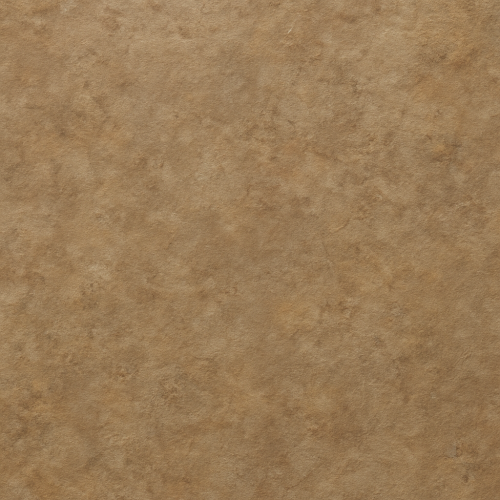
Physically Based Rendering (PBR) workflows have revolutionized the creation of digital materials by enabling consistent, realistic interaction of light with surfaces under diverse lighting conditions. Central to this realism is the nuanced interplay between a material’s intrinsic properties and its micro-structural variations. Within this framework, micro-variation refers to the subtle, often imperceptible deviations in surface attributes that exist at a fine spatial scale—variations that are critical to breaking the uniformity inherent in tiled textures and elevating the believability of seamless PBR materials. Understanding and harnessing micro-variation is foundational for producing hyper-realistic textures that convincingly translate from static renders to real-time game engines or complex VFX pipelines.
At its core, micro-variation encompasses the minute fluctuations in a material’s albedo, roughness, normal, ambient occlusion (AO), height, and metallic parameters. These are not large-scale pattern changes but rather subtle, localized modulations that mimic the natural irregularities found in real-world surfaces. For instance, even a seemingly homogeneous surface like brushed metal or painted concrete exhibits micro-scratches, slight changes in glossiness, microscopic dents, or dust accumulation. Capturing and replicating these details in PBR textures is essential because the human visual system is exceptionally sensitive to anomalies in texture uniformity and lighting response. Without micro-variation, tiled textures manifest repetitive artifacts that break immersion, revealing their synthetic origin.
In practical terms, micro-variation is tightly coupled with the process of texture acquisition and authoring. High-fidelity photogrammetry and material scanning technologies, such as photometric stereo or multi-light capture rigs, facilitate the capture of these subtle surface nuances with high spatial and angular resolution. These methods allow artists to extract calibrated PBR maps that accurately encode micro-variations in reflectance and geometry. For example, subtle roughness fluctuations are encoded as grayscale variations within the roughness map, influencing the microsurface scattering and specular sharpness at the pixel level. Similarly, micro-height variations captured in the height or displacement map contribute to enhanced parallax and silhouette detail when implemented in shaders or tessellation stages.
Once acquired, the challenge shifts to authoring and refining these micro-variations for seamless tiling without visually obvious repetition. Traditional tiling methods often result in visible seams or repeating patterns, which are detrimental to visual fidelity. Advanced techniques leverage stochastic texturing algorithms, procedural noise overlays, or multi-layer blending of micro-variation details to disrupt uniformity. For instance, blending multiple micro-variation detail maps with subtle offsets and varying channel weights can create a composite texture that maintains seamlessness while preserving realistic surface irregularities. This approach is particularly effective for roughness and normal maps, where slight variations significantly influence specular highlights and light scattering at the microfacet scale.
Calibration plays a pivotal role in ensuring that micro-variations behave predictably across different rendering engines and lighting environments. Each PBR map channel must be carefully linearized, gamma-corrected, and normalized to conform to the engine’s shading model assumptions. For example, Unreal Engine’s physically based shading pipeline requires roughness values to be perceptually uniform; thus, micro-variation in roughness maps must be calibrated so that local changes produce consistent microfacet distribution without introducing artifacts. In Blender’s Cycles or Eevee renderers, accurate normal map encoding and tangent space conventions are crucial for preserving micro-normal detail fidelity. This calibration extends to ambient occlusion maps, where micro-variation impacts subtle shadowing cues that enhance depth perception, especially in high-frequency surface detail regions.
Optimization is an indispensable consideration when integrating micro-variation into production assets, particularly for real-time applications like games or AR/VR experiences. High-frequency micro-variations increase texture resolution demands and shader complexity, potentially impacting performance. Efficient authoring pipelines often involve baking micro-variation details into combined texture channels or leveraging detail maps layered on top of base textures with minimal overhead. For example, detail normal maps containing micro-variation information can be blended with base normal maps in shader code using inexpensive operations, allowing engines like Unreal to maintain high frame rates while preserving material richness. Mipmapping strategies must also be carefully designed to avoid blurring or losing micro-variation at distant LODs, often by employing anisotropic filtering or detail map blending that activates based on camera proximity.
Incorporating micro-variation effectively requires an intimate understanding of how each PBR map influences material perception. Albedo variations, while often subtle, create chromatic and luminance shifts that prevent flatness. These variations should be carefully desaturated and calibrated to avoid color bleeding or unnatural contrast that contradicts the material’s physical properties. Roughness micro-variation modulates glossiness and highlight sharpness, directly impacting specular reflections and perceived surface smoothness. Normal and height micro-variations sculpt the fine geometry that interacts with lighting, producing soft shadows and highlight gradients critical for tactile realism. Metallic channel variation, though less common at micro scales, can add irregularities in reflectance behavior, often employed in weathered or corroded metal surfaces. Ambient occlusion micro-variations deepen subtle shadowing cues, anchoring details visually without over-darkening.
From a practical standpoint, artists and technical directors must balance the fidelity of micro-variation with constraints imposed by target platforms and rendering pipelines. Photorealistic archviz scenes, rendered offline, can exploit high-resolution micro-variation textures and complex layered shaders without performance penalties. Conversely, game assets require iterative optimizations—such as compressing micro-variation maps into fewer channels, utilizing procedural detail overlays, or employing engine-specific features like Unreal’s virtual texturing—to maintain performance while preserving visual complexity. In Blender’s shader nodes, artists can experiment with layered noise textures modulating roughness or normal parameters to simulate micro-variation dynamically, providing rapid iteration before committing to baked textures.
In summary, micro-variation is a critical, yet often underappreciated, aspect of creating hyper-realistic seamless PBR textures. It bridges the gap between physically accurate material definitions and the rich, imperfect reality observed in natural surfaces. By meticulously capturing, authoring, calibrating, and optimizing these fine-scale surface differences across all PBR map channels, artists can significantly elevate the quality and authenticity of 3D assets. Whether deployed in real-time engines like Unreal or offline renderers integrated within Blender, micro-variation techniques empower the creation of materials that transcend synthetic uniformity, delivering immersive visual experiences that withstand close inspection and dynamic lighting conditions. Mastery of these techniques is essential for any serious practitioner aiming to push the boundaries of digital material realism in games, archviz, and VFX.
Capturing and generating micro-variation details within PBR textures is a cornerstone for achieving hyper-realistic, seamless materials that convincingly respond to lighting and environmental conditions. These micro-variations—minute imperfections, subtle surface undulations, and fine-grained noise—break up uniformity and avoid the artificial flatness often encountered in digital assets. The process of acquiring such data, whether through high-resolution photogrammetry scanning or procedural generation, demands both precision in capture and sophistication in translation to the various PBR texture maps, including albedo, roughness, normal, ambient occlusion (AO), height, and metallic channels.
High-resolution photogrammetry remains a gold standard for acquiring authentic micro-variation details from real-world surfaces. When executed with care, photogrammetry captures the intricate interplay of light and shadow at a micro scale, enabling extraction of multi-channel texture data that preserves surface subtleties. The key to successful acquisition is in the capture setup: a stable, calibrated camera rig with controlled lighting conditions minimizes noise and specular highlights that can corrupt texture fidelity. Using polarized light filters and cross-polarized illumination techniques helps isolate diffuse albedo from specular reflections, ensuring that albedo maps maintain color fidelity devoid of unwanted highlights. Additionally, capturing multiple exposures at varied angles facilitates the generation of high dynamic range imagery, crucial for accurately determining roughness and metallic variations that respond dynamically under different lighting intensities.
Once the photogrammetric data is acquired, the challenge becomes translating raw scans into usable PBR maps. Normal maps derived from high-density mesh scans encode the fine surface undulations fundamental to micro-variation. However, raw normal maps often contain noise or high-frequency artifacts that can cause aliasing when tiled or viewed at different distances. Applying frequency-based filtering techniques, such as bilateral or Gaussian blurs, selectively smooths noise while preserving significant detail. Moreover, generating height maps from disparity or depth data extracted during scanning enables parallax occlusion or displacement effects, enhancing the perception of depth without increasing mesh complexity. These height maps should be meticulously calibrated to match engine-specific units; for example, Unreal Engine’s displacement scales differ from Blender’s, necessitating conversion factors to maintain consistent visual fidelity across platforms.
Ambient occlusion and roughness maps benefit immensely from photogrammetry when subtle dirt, dust, or wear patterns are present on the scanned surface. AO maps derived from ambient light simulations baked onto the high-poly scanned mesh capture localized shadowing effects where micro-geometry occludes ambient light. This data can be refined by blending baked AO with procedural noise to avoid repetitive patterns in tiled textures. Roughness maps, which control microsurface light scattering, often require careful extraction from the data’s glossiness or specular channels; calibrating the roughness curve to reflect physical material properties ensures that micro-variations translate into believable reflections in real-time engines.
Procedural generation techniques complement photogrammetry by enabling artists to inject or amplify micro-variations in a controlled, non-destructive manner. Procedural tools excel at producing seamless noise patterns, scratches, pores, and other micro-imperfections that are either absent or insufficiently detailed in scanned data. Utilizing noise functions such as Perlin, Worley, or fractal Brownian motion (fBm) allows for the creation of complex surface irregularities that can be layered and blended across the various PBR maps. These procedural elements can be dynamically adjusted to maintain seamless tiling without obvious repetition, a crucial factor for large surfaces or modular assets.
A critical best practice when integrating procedural micro-variation is to maintain consistency across all texture channels. For instance, roughness noise should correspond spatially with normal map perturbations to avoid visual dissonance. This coherence can be achieved through shared noise masks or coordinate spaces, ensuring that a scratch affecting the normal map also influences roughness and albedo maps accordingly. Moreover, leveraging node-based authoring environments such as Substance Designer or Blender’s shader editor provides a non-linear, parametric workflow that encourages experimentation and fine-tuning of micro-variation intensity and scale.
Calibration between captured or generated micro-variation data and the target rendering engine is essential to preserve intended visual outcomes. Both Unreal Engine and Blender’s Cycles or Eevee renderers interpret PBR maps with engine-specific shading models and scaling conventions. For example, Unreal’s roughness channel is linear and inverted compared to some workflows, which might interpret roughness as a glossiness factor. Understanding these nuances, artists must often invert or remap roughness data before export. Normal maps require correct channel orientation—OpenGL versus DirectX conventions differ in Y-axis sign—and consistent bit-depth to avoid banding artifacts. Height maps intended for tessellation or displacement in Unreal should be exported with a normalized range and appropriate tessellation factors set in the material instance to prevent over- or under-exaggerated micro-variation.
Optimization plays a pivotal role in leveraging micro-variation without incurring prohibitive performance costs. High-frequency details embedded in normal and height maps can increase sampling overhead, especially when combined with tessellation or parallax occlusion techniques. Mipmapping strategies that preserve detail at close range but progressively filter out micro-variations at distance optimize rendering load. Additionally, channel packing—combining AO, roughness, and metallic into a single texture map’s RGB channels—reduces texture fetches, but demands careful balancing to avoid compression artifacts that degrade micro-variation quality. Artists should perform iterative testing within the target engine’s viewport, using close-up and wide shots to verify the perceptual impact of micro-variation and adjust texture resolutions or filtering methods accordingly.
Capturing fine surface imperfections often requires attention to scale and context. Micro-variations at the millimeter or micron scale manifest differently depending on the asset’s intended use and viewing distance. For example, skin pores on a character model demand different micro-variation density and amplitude than the subtle grain on a wooden floorboard. Photogrammetry setups should consider macro-to-micro capture passes, where multiple data sets at varying resolutions are merged to retain multi-scale detail. Procedural augmentation can fill gaps where physical scanning resolution is limited, blending macro patterns with micro noise seamlessly.
In summary, the acquisition and generation of micro-variation details for seamless PBR textures is a multifaceted endeavor blending high-fidelity photogrammetry with sophisticated procedural authoring. It requires meticulous capture setups to isolate diffuse albedo and fine surface topology, rigorous post-processing to translate raw data into calibrated, engine-ready texture maps, and thoughtful optimization to balance visual richness with performance. Mastery over these techniques enables 3D artists and technical directors to produce materials whose subtle surface nuances react convincingly to light, elevating the realism and immersion of digital environments across modern rendering engines.
In the pursuit of hyper-realistic, seamless PBR textures, the integration of micro-variation maps has emerged as a critical enhancement beyond the traditional core maps—albedo, roughness, normal, ambient occlusion, height, and metallic. While conventional PBR workflows focus on capturing the macroscopic material characteristics, micro-variation maps introduce subtle, stochastic details that emulate the natural irregularities and micro-structures present in real-world surfaces. These fine-scale variations not only enrich the tactile perception of materials but also help mitigate the artificial uniformity often introduced by tiling textures, thereby substantially elevating realism without compromising seamlessness.
Micro-variation maps can be conceptualized as high-frequency detail overlays that coexist with and complement the physical properties encoded in the core maps. To effectively create and integrate these maps, one must first understand their relationship to the traditional PBR channels. The albedo map governs the base color without lighting influence; roughness defines microsurface scattering characteristics; normal maps encode surface perturbations affecting light direction; ambient occlusion approximates local shadowing; height maps provide parallax or displacement cues; metallic maps delineate metal versus dielectric behavior. Each of these channels operates on a different scale and physical principle, and the micro-variation layer primarily targets the roughness and normal channels to subtly modulate surface reflectance and microgeometry.
Acquisition of micro-variation data often starts with high-resolution photogrammetry or microscopic surface scans that capture the finest surface granularity invisible to the naked eye but essential for convincing material response under varied lighting. When such scans are unavailable, procedural generation techniques or hand-painting in specialized tools like Substance Designer or Mari can simulate plausible micro-variation patterns. These patterns are typically grayscale or normal data representing minute roughness fluctuations or tiny bumps and scratches. The critical challenge lies in ensuring that these micro-variations are seamlessly tileable and non-repetitive, as obvious repetition breaks immersion and reveals texture tiling.
Authoring micro-variation maps requires careful calibration with the base PBR maps. For roughness, micro-variation maps function as high-frequency modulations that overlay the base roughness values without overriding the principal material characteristics. This is typically achieved by blending the micro-variation roughness map using a multiplicative or overlay blend mode, which injects subtle fluctuations that respond dynamically to lighting angles. One must avoid excessive contrast or amplitude in these maps, as overly pronounced micro-variation can disrupt the material’s global roughness signature or create unrealistic noise artifacts.
In normal maps, micro-variation integration involves layering fine-scale normal detail atop the base normal map. This is commonly executed via tangent-space normal map blending, where the micro-variation normal map is combined with the base normal through vector addition and renormalization. The result is a composite normal map that preserves large-scale surface contours while adding the intricate micro-bumps and scratches that catch specular highlights more realistically. It is crucial to maintain the seamless tiling of both normal maps and to ensure their tangent-space orientation consistency to prevent shading artifacts in real-time engines.
Ambient occlusion and height maps can also benefit from micro-variation overlays, though with more subtle effects. For instance, micro-scale occlusion maps can be multiplied with the base AO map to deepen shadows in crevices and surface pits, enhancing perceived depth. Height maps used for parallax occlusion mapping can incorporate micro-height variations to simulate fine surface undulations, improving silhouette fidelity and contact shadows. However, height micro-variation must be carefully balanced to avoid excessive parallax artifacts or distortion during extreme viewing angles.
Metallic and albedo maps generally remain unaffected by micro-variation overlays since their physical meanings correspond to the intrinsic material composition and diffuse color, where micro-scale changes are less impactful. However, in materials with complex surface oxidation, dust, or dirt accumulation, subtle micro-variation can be painted into albedo and metallic masks to simulate surface heterogeneity, but this is a specialized use case beyond standard micro-variation workflows.
From a workflow perspective, micro-variation maps are best authored and integrated in a non-destructive, node-based texture authoring environment. Tools like Substance Designer excel at procedural generation and blending of micro-variation with base maps, allowing iterative refinement and real-time preview. A typical pipeline involves starting with the core PBR maps, generating or importing micro-variation maps, and then blending these into roughness and normal channels with adjustable parameters controlling intensity, scale, and blending mode. Importantly, the tileable nature of all maps must be verified through repeated pattern inspection and edge blending to guarantee seamlessness in the final output.
Calibration of micro-variation maps is paramount; artists should iteratively test textures under multiple lighting conditions and viewing angles, preferably within the target rendering engine such as Unreal Engine or Blender’s Eevee and Cycles. Unreal offers powerful material graph systems where micro-variation maps can be dynamically blended and controlled via parameters, enabling real-time tuning of variation amplitude and scale. Similarly, Blender’s node editor allows precise layering of normal maps via the Normal Map and Vector Math nodes, accommodating micro-variation integration with immediate viewport feedback. Calibration should focus on achieving a balance where micro-variation enriches surface detail without overpowering the base material or causing noticeable tiling artifacts.
Optimization is another critical consideration. Micro-variation maps, by virtue of their high-frequency nature, often require higher resolution or detail preservation techniques such as normal map compression-aware encoding or mipmap bias adjustments to prevent blurring. Using grayscale micro-variation maps for roughness modulation is generally more performance-friendly than adding additional normal maps or height layers. When targeting real-time engines, artists should consider channel packing strategies to consolidate roughness micro-variation into unused channels of existing maps (e.g., packing into the alpha channel of the roughness map) to minimize texture fetches. Additionally, employing procedural noise functions or runtime detail normal maps can offload some micro-variation detail generation to the shader, reducing texture memory overhead.
In practice, one effective approach to seamless micro-variation is to generate multiple tileable micro-variation textures at different scales and blend them in a fractal manner. This multi-scale blending mimics natural surface detail hierarchies and prevents obvious repetition at any zoom level or angle. Moreover, introducing subtle randomized offsets or rotation in shader parameters can further reduce tiling perception. Careful attention must be paid to ensure that these transformations preserve the seamless edge continuity of the micro-variation patterns.
Ultimately, successfully creating and integrating micro-variation maps demands a deep understanding of material physics, texturing principles, and rendering pipeline constraints. When done correctly, micro-variation elevates PBR textures from convincing to truly immersive by simulating the nuanced, intricate imperfections that define real-world materials. This results in surfaces that dynamically interact with light in complex ways, exhibiting subtle shifts in gloss, reflectance, and shadowing that engage the viewer’s perception on a tactile level. By combining rigorous acquisition or procedural generation, calibrated blending with core maps, and careful optimization for target engines, artists and technical directors can achieve hyper-realistic, seamless PBR textures that stand up to the scrutiny of next-generation rendering environments.
FAQ
What is covered in this guide?
This guide explains Advanced Micro-Variation Techniques for Hyper-Realistic Seamless PBR Textures with practical notes for seamless PBR materials, texture setup, and production use.
Can I use these texture techniques in Blender, Unreal Engine, and Unity?
Yes. The workflow focuses on standard PBR maps and tileable materials that can be used in Blender, Unreal Engine, Unity, archviz, games, and VFX pipelines.
Where can I find textures for this workflow?
Use the AITextured texture library and the related texture links on this page to find seamless PBR materials and preview them before download.
Related Textures
 Procedural Dark Tree Bark PBR Texture
 Procedural Aged Oak Plank PBR Texture
 Seamless PBR Wood Planks Texture Featuring Natural Grain in 4K
 Seamless Wooden Facade PBR Texture in 4K Resolution
 Rustic Aged Wood Planks Texture for 3D Modeling and Rendering
 PBR Texture of Vertical Wooden Planks Wall
 Seamless PBR Wood Texture Featuring Vertical Natural Grain Patterns
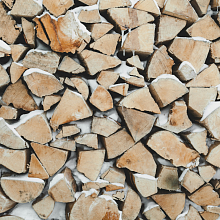 Natural Wood Logs Texture with Snow for 3D PBR