Advanced Pattern Textures for PBR Workflows in Games Archviz and VFX
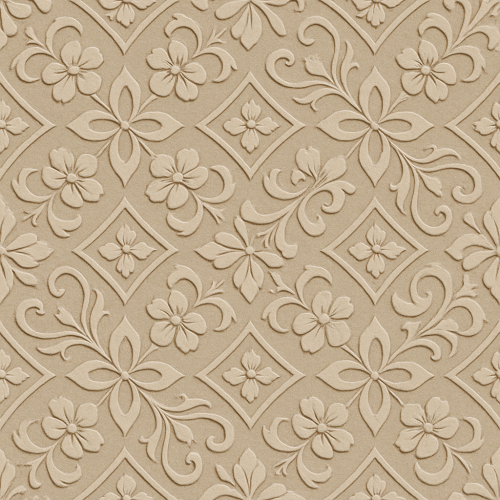
Acquiring high-quality pattern textures for physically based rendering (PBR) workflows demands a nuanced approach that balances fidelity, tileability, and accurate material representation across all relevant texture maps. Patterns—whether geometric repeats, organic motifs, or complex ornamental designs—pose specific challenges: their inherent repetition can quickly betray artificial tiling, and capturing the subtle interplay of surface detail, micro-variations, and material response is critical for realistic shading. To address these challenges, practitioners typically combine traditional acquisition techniques such as photogrammetry and scanning with emerging AI-assisted generation methods, each with distinct advantages and limitations when applied to pattern textures.
Photogrammetry remains a cornerstone method for capturing intricate pattern textures directly from real-world surfaces. When executed properly, photogrammetry can yield highly detailed albedo, normal, height, and ambient occlusion maps that reflect the true micro-geometry and color variations of the patterned surface. However, photogrammetry of patterns introduces specific complications. The repetitive nature of patterns can confuse feature matching algorithms, leading to alignment errors or incomplete mesh reconstruction. To mitigate this, it is essential to capture the pattern from multiple angles with sufficient parallax to enable robust depth calculation, while avoiding uniform lighting that flattens detail. Employing polarized light filters or cross-polarization techniques can reduce specular highlights, improving the clarity of diffuse color data and enhancing the accuracy of normal and roughness extraction.
Achieving seamless tileability from photogrammetry requires careful planning during capture and post-processing. Since natural patterns rarely align perfectly to a grid, the artist must isolate a representative tile region with consistent pattern repetition. This often involves photographing an extended surface area larger than the intended tile, followed by precise cropping and alignment in image editing software. The height and normal maps derived through photogrammetry may need additional correction to ensure edge continuity, preventing seams in the final tiled texture. Techniques such as edge blending, gradient domain stitching, or seamless cloning can smooth transitions without compromising detail. For ambient occlusion and roughness maps, capturing multiple lighting conditions and baking the data into a consistent PBR channel is crucial, especially since pattern motifs frequently include variations in reflectivity and micro-surface relief that affect specular behavior.
Surface scanning technologies, including structured light scanners and laser scanners, offer an alternative for acquiring high-fidelity pattern textures with accurate geometric data. Scanners excel at capturing precise surface topology, enabling the generation of highly detailed height and normal maps that capture micro-variations essential for realistic shading. When scanning patterned surfaces, the uniformity of the motif can again be a challenge for registration algorithms; therefore, it is advisable to apply temporary markers or use high-contrast targets to facilitate alignment. Scanners produce raw mesh data that may require retopology and decimation before baking maps suitable for real-time engine usage, such as Unreal Engine or Blender’s shader pipeline.
One advantage of scanning over photogrammetry is the direct measurement of surface geometry, which can result in more accurate height maps useful for parallax occlusion mapping or displacement in PBR workflows. However, scanning often lacks color information or produces inconsistent albedo data, necessitating a complementary high-resolution image capture for the base color channel. Integrating scanned geometry with photographic albedo requires precise UV unwrapping and calibration to avoid color bleeding or misalignment. Additionally, roughness and metallic maps are rarely obtainable via scanning alone and must be authored manually or inferred through material analysis.
AI-assisted generation tools have recently emerged as a powerful adjunct or alternative for pattern texture acquisition, offering capabilities to synthesize tileable textures based on learned material characteristics. These generative models can produce albedo, normal, roughness, and other PBR maps with impressive detail and seamless tiling, often from minimal input such as a single sample image or a set of parameters defining pattern style and material properties. The advantage of AI generation lies in its flexibility and speed, enabling rapid iteration and customization of patterns without extensive physical capture.
Nevertheless, generated textures require rigorous validation and calibration to ensure physical plausibility within PBR workflows. Since generative models may produce artifacts or inconsistent micro-surface detail, it is essential to inspect and refine output maps in texture authoring software, adjusting roughness values to correspond with expected reflectivity and verifying normal maps against height data to avoid shading anomalies. Furthermore, integrating generated patterns into real-time engines necessitates optimization, including mipmap generation, anisotropic filtering considerations, and compression settings that preserve detail without introducing banding or color shifts.
A critical consideration across all acquisition techniques is the management of micro-variation within pattern tiles. Purely uniform patterns tend to appear artificial under dynamic lighting and camera movement; subtle variations in roughness, color hue, or normal detail help break repetition and enhance realism. When capturing physical samples, these micro-variations are naturally embedded, but for generated or post-processed textures, artists must introduce procedural noise or overlay detail maps to simulate these effects. Tools such as Substance Designer facilitate layering micro-variation masks that modulate roughness or height channels, supporting non-destructive iteration.
Calibration is another fundamental step in producing usable pattern textures. Ensuring accurate color profiles, exposure consistency, and scale reference during acquisition is vital to match the captured pattern with other assets in the scene. For photogrammetry, using calibrated color targets and grey cards during capture helps maintain color fidelity, which is critical since albedo maps directly influence the base color in PBR shading models. Similarly, measuring surface roughness with devices like gloss meters or referencing manufacturer data allows more precise authoring of roughness maps, enhancing material accuracy.
Optimizing pattern textures for engine usage involves balancing resolution, tile size, and compression. High-resolution captures provide detail but can strain memory budgets, especially when patterns tile repeatedly across large surfaces. Techniques such as texture atlasing, virtual texturing, or runtime texture streaming can alleviate performance costs. In engines like Unreal Engine, leveraging the built-in texture compression (e.g., BC7 for base color, BC5 for normals) and enabling features like texture streaming with appropriate LODs ensures quality is maintained at different viewing distances. Blender users benefit from procedural tiling shaders combined with baked maps to control detail density dynamically.
In conclusion, acquiring pattern textures for PBR workflows is a complex process that demands a comprehensive strategy encompassing precise capture, meticulous post-processing, and thoughtful integration into rendering engines. Photogrammetry and scanning provide robust foundations for physically accurate pattern data, while AI-assisted generation offers scalable creative flexibility. Achieving seamless tileability without sacrificing micro-variation or material authenticity requires deliberate editing and calibration. Properly optimized and validated pattern textures empower artists and technical directors to faithfully recreate patterned surfaces that withstand close inspection and dynamic lighting, ultimately elevating the realism and immersion of 3D scenes.
Patterns in Physically Based Rendering (PBR) texturing present a unique challenge and opportunity for artists aiming to create materials that are both visually compelling and physically accurate. The methods of authoring these textures—primarily through procedural generation and photographic editing—necessitate a careful balance between artistic control, technical precision, and efficient integration into real-time engines or offline renderers. This discussion delves into the nuances of producing pattern-based PBR textures, focusing on the creation pipeline, software tools, and practical considerations for maintaining seamless tiling, micro-variation, and overall aesthetic coherence.
Procedural generation of pattern textures leverages algorithmic control to produce complex, repeatable designs without the inherent limitations of photographic sources. Software such as Substance Designer, Blender’s procedural shader nodes, and bespoke tools like Material Maker or Houdini’s VEX scripting environment provide robust frameworks for constructing geometric, floral, or abstract patterns. The procedural approach excels in generating fully tileable textures where parameters can be adjusted dynamically, which is especially beneficial for patterns requiring strict repetition or modularity. When authoring albedo (base color) maps procedurally, it is crucial to simulate realistic material responses by integrating subtle color variations and avoiding overly flat or synthetic appearances. This often involves layering multiple noise functions and gradient controls to introduce naturalistic imperfections or color shifts that mimic real-world materials.
In parallel, procedural workflows for roughness and metallic maps demand attention to the interplay between pattern geometry and material properties. For instance, a geometric tile pattern made from glazed ceramic will have sharply defined regions of low roughness (glossy glaze) contrasted by grout lines with higher roughness values. By generating these maps procedurally, artists can precisely control the spatial distribution of these attributes, ensuring that specular highlights and reflections behave consistently across the pattern. Normal and height maps, essential for conveying surface relief, benefit from the procedural domain’s ability to create crisp, scalable details that respond well to different lighting scenarios. Height maps can be derived using noise and shape blending nodes, allowing for the accurate simulation of etching, embossing, or layered materials within the pattern.
Photographic authoring, on the other hand, begins with high-resolution captures of real-world patterned surfaces, which are then meticulously edited and calibrated into PBR texture sets. This workflow is especially valuable when seeking authentic, organic complexity inherent in natural patterns such as floral motifs, fabric weaves, or weathered tiles. To convert photographic inputs into usable PBR maps, the initial step involves color correction and normalization of the albedo map to remove lighting information and shadows. Tools like Adobe Photoshop, Affinity Photo, or dedicated texture processing software such as Quixel Mixer and Substance Painter facilitate this correction, ensuring that the base color strictly represents diffuse reflectance.
The generation of roughness and metallic maps from photographs typically requires manual or semi-automated techniques, as these properties are rarely encoded explicitly in captured images. Artists often rely on grayscale masks derived from selective desaturation, thresholding, or channel extraction to approximate roughness distribution. For example, glossy ceramic tiles may be represented by bright specular highlights in the source photo, which need to be translated into low roughness values. Metallic maps are more situational but can be created similarly by isolating metallic elements in the pattern and assigning binary or gradient values. Height and normal maps in photographic workflows are frequently obtained via photogrammetry, displacement extraction, or normal map baking from high-poly scanned geometry. When such data is unavailable, artists recreate these maps through manual sculpting in ZBrush or by leveraging height map generation filters within Substance Designer or CrazyBump, taking care to maintain the coherence of pattern elements.
A critical aspect in both procedural and photographic workflows is achieving seamless tiling of pattern textures. Patterns, by nature, require repetition without visible seams or discontinuities, which can disrupt the illusion of a coherent surface. Procedural methods inherently facilitate seamlessness through the use of tileable noise functions, coordinate wrapping, and modular node structures designed to loop in both U and V directions. However, attention must be paid to the scale and frequency of pattern elements to avoid obvious repetition artifacts, especially in high-detail areas. Introducing micro-variations through subtle randomization in color, height, or roughness parameters within the procedural graph mitigates visual monotony and enhances realism.
Photographic patterns demand more meticulous editing to ensure seamless tiling. This involves cloning, healing, and blending edges in image editing software, often combined with offset filters to reveal seam positions. The use of high-resolution source images and multiple overlapping photographs can aid in constructing seamless textures. When photographic textures are not perfectly tileable, blending procedural noise or hand-painted details around seams can alleviate obvious transitions. Additionally, normal and height maps derived from photographs must be carefully adjusted to maintain continuity across tile borders. Baking or filtering techniques that respect tile boundaries prevent artifacts in the normal map that would otherwise cause shading inconsistencies.
Calibration of texture maps within the PBR framework is another indispensable step in pattern authoring. Both procedural and photographic sources must be calibrated to conform to physically plausible ranges for roughness, metallicity, and reflectance. For example, roughness values should be clamped within [0,1], with meaningful gradations reflecting material microstructure rather than arbitrary noise. Metallic maps, often binary, should be precisely masked to avoid unintended reflections. Albedo maps must avoid values exceeding 1.0 in linear space to prevent energy conservation violations. Calibration can be conducted by sampling real-world references, comparing rendered results in engines like Unreal Engine or Blender’s Eevee/Cycles, and iteratively adjusting texture curves and parameters. In Unreal Engine, the material editor allows real-time feedback on how patterns respond under complex lighting, enabling artists to fine-tune roughness and normal intensity interactively. Similarly, Blender’s node-based shading system supports procedural texture previews and shader adjustments that ensure pattern materials behave predictably in both viewport and final renders.
Optimization plays a pivotal role in deploying patterned PBR textures, especially for real-time applications. Procedural textures offer significant advantages here, as their resolution independence and parameter-driven variability reduce the need for large texture memory footprints. By baking procedural patterns into texture atlases or runtime-generated assets, artists can balance quality and performance. When photographic patterns are used, optimizing texture resolution, compressing maps without excessive quality loss, and employing mipmapping strategies are essential. It is also advisable to pack multiple grayscale maps (e.g., roughness, metallic, ambient occlusion) into single texture channels to economize memory usage and shader complexity.
Finally, understanding the target engine’s material system and rendering pipeline is crucial for integrating pattern PBR textures effectively. Unreal Engine, for instance, supports layered materials and complex blending modes, which can be leveraged to combine procedural patterns with photographic details or micro-variation masks. This hybrid approach enables artists to maintain the precision and repeatability of procedural patterns while enriching them with photographic nuance. Blender’s procedural nodes provide flexible shader authoring that can be baked into texture maps or used directly within the engine for non-destructive iteration. Both platforms benefit from careful UV mapping strategies that align with the pattern’s tiling requirements and minimize distortion, preserving the fidelity of the pattern across model surfaces.
In summary, the procedural and photographic authoring of pattern PBR textures demands a thorough understanding of material properties, texture creation workflows, and engine-specific constraints. Procedural methods offer unparalleled control over seamless tiling and parameter-driven variability, while photographic techniques provide rich, authentic surface detail. Both approaches require meticulous calibration, micro-variation integration, and optimization to produce patterns that are visually coherent and physically plausible within PBR pipelines. Mastery of these techniques empowers technical artists to craft patterned materials that hold up under diverse lighting conditions and contribute meaningfully to the realism and stylistic goals of their projects.
Creating physically based rendering (PBR) maps for pattern textures requires a methodical approach that balances fidelity, efficiency, and adaptability across various material types. Patterns—ranging from organic, hand-crafted motifs to geometric, industrial repeats—pose unique challenges in generating coherent and realistic PBR maps. Each essential map—BaseColor (albedo), Normal, Roughness, Metallic, Ambient Occlusion (AO), and Height/Displacement—serves a distinct functional role in defining the material’s interaction with light and environment. Understanding how to extract, author, and optimize these maps from pattern sources underpins the creation of convincing surfaces in modern rendering engines such as Unreal Engine and Blender’s Cycles or Eevee.
The BaseColor map forms the chromatic foundation of a pattern texture. Unlike traditional diffuse maps, the BaseColor in PBR must be devoid of lighting information such as shadows or specular highlights, preserving pure color and pigment data. When generating BaseColor maps from photographic pattern sources, careful color correction and desaturation of baked lighting is crucial. Techniques such as baking out lighting in high-dynamic-range (HDR) environments or using calibrated scanning can help acquire color information unpolluted by environmental lighting. For hand-painted or digitally authored patterns, maintaining color consistency through calibrated color profiles (e.g., sRGB or ACEScg workflows) ensures that colors remain stable across different rendering engines. Tiling is critical here: patterns often rely on seamless repetition, so the BaseColor must be meticulously cleaned to avoid visible seams. Subtle micro-variations in hue or saturation can be introduced across the tile to prevent uniformity, which breaks realism by mimicking natural material inconsistencies.
Normal maps translate the surface detail and micro-topography of a pattern into directional perturbations of lighting, simulating bumps and grooves without adding geometry. For pattern textures, Normal map creation depends heavily on the nature of the pattern. Organic or hand-drawn motifs benefit from high-resolution displacement baking or sculpted details transferred into Normal maps via software like Substance Designer or ZBrush. For geometric or industrial patterns, procedural generation or vector-based height information can be converted directly into Normal maps, maintaining crisp edges and uniform depth. When authoring Normal maps, it is essential to calibrate their intensity to match the scale of the pattern and the target engine’s normal space conventions (OpenGL vs. DirectX). Over-exaggeration leads to unnatural shading; under-representation flattens surface detail. In Unreal Engine, for example, the engine assumes DirectX normal space by default, so Normal maps must be authored accordingly or converted during import. Additionally, introducing subtle noise or secondary normal detail layers can simulate microstructure that enhances the tactile feel of the surface, especially in close-up renders.
Roughness maps control the microsurface scattering of light, dictating how glossy or matte the pattern appears. This map is perhaps the most nuanced and variable among PBR textures for patterns. Patterns with fabric, leather, or painted surfaces may exhibit heterogeneous roughness values correlating with worn edges, stains, or material weave. Acquiring accurate Roughness maps can be achieved through photogrammetric capture under controlled lighting or by procedural authoring in tools like Substance Painter, where roughness values are painted or generated based on curvature and ambient occlusion. When working with patterns, roughness should be tailored to emphasize material-specific qualities without masking the pattern’s visual features. For example, a patterned ceramic tile might have a high-gloss finish with tight specular reflections on flat areas but slightly roughened grout lines. Calibration of roughness values relative to the engine’s BRDF model is vital; Unreal Engine’s roughness input is linear and inverted compared to some other tools, so values must be correctly remapped. Additionally, roughness maps can be optimized by limiting bit-depth precision or compressing less perceptible channels without compromising visual quality, which is essential for real-time applications.
The Metallic map is often less prominent for pattern textures, as many patterns are applied to non-metallic substrates such as textiles, ceramics, or painted surfaces. However, when patterns are embedded on metallic materials like brushed steel, anodized aluminum, or decorative metalwork, the Metallic map becomes indispensable. Metallic maps are typically binary or grayscale masks indicating metal vs. non-metal regions, directly affecting reflectance and Fresnel behavior. For patterns involving metal inlays or accents, precise masking is critical to avoid artifacts such as unintended specular highlights. When authoring Metallic maps, it is advisable to leverage vector masks or baked ID maps from 3D models to isolate metal regions accurately. In some cases, subtle gradients in metallic values can simulate tarnished or oxidized edges, but care must be taken as most PBR workflows treat metallic as a binary parameter. Engine-specific considerations include ensuring the Metallic map is imported without color space conversion and stored in the correct channel—commonly the red or blue channel depending on the workflow.
Ambient Occlusion (AO) maps augment the realism of pattern textures by simulating self-shadowing and occluded areas where light penetration is limited. AO is especially important in patterns with depth variance, such as embossed leather, quilted fabrics, or patterned stone surfaces with recesses. AO maps are generally baked from high-poly models using ray-tracing or screen-space techniques, capturing subtle shadowing in crevices and folds. For pattern textures, the AO bake must be carefully matched to the tiling UVs to avoid seams and to maintain consistent occlusion across repeating tiles. In procedural workflows, AO can be approximated using curvature maps or cavity masks to simulate localized shading effects. When integrating AO maps in engines like Unreal, combining AO with the BaseColor or Roughness channels can optimize texture memory usage, but this requires ensuring that the maps remain linear and do not interfere with color or roughness perception. Calibration includes adjusting AO intensity to balance subtlety and visibility under different lighting conditions.
Height or Displacement maps add true geometric depth to pattern textures, enabling parallax effects, tessellation, or actual surface displacement in high-fidelity renders. Height maps are grayscale images encoding the relative elevation of surface features within the pattern. Their creation often involves converting sculpted high-poly details or photogrammetric scans into height data. Unlike Normal maps, Height maps provide scalar displacement information and can be used to drive tessellation shaders or adaptive subdivision in engines like Unreal Engine or Blender’s Displacement Modifier. For pattern textures, height maps are invaluable in replicating raised embroidery, engraved metalwork, or relief carving. When authoring height maps, it is crucial to normalize the height range to avoid excessive displacement that can cause UV distortion or geometry intersection. Additionally, the height data should be smoothed or filtered to reduce aliasing during tessellation. Tiling height maps requires seamless transitions in elevation to prevent visible discontinuities at pattern edges, which can be achieved through careful edge blending or procedural noise overlay.
Across all PBR maps, micro-variation plays a pivotal role in enhancing realism. Perfectly uniform maps lead to unnatural, artificial appearances. Injecting subtle noise, random variation, or layered detail—whether through procedural textures, hand-painting, or baked data—breaks repetition and simulates the inherent imperfections of real-world materials. For patterns, this approach is doubly important because the repeat nature of the design can quickly become visually monotonous. Micro-variation can be introduced in roughness to simulate wear, in normal maps to mimic fiber or grain irregularities, or in BaseColor to represent pigment inconsistencies.
Optimization is another critical consideration. High-resolution PBR maps provide exceptional detail but come at a computational cost. For tiled patterns, reusing a single tile’s PBR maps with carefully designed seams and micro-variations is more efficient than unique textures per instance. Mipmapping and anisotropic filtering settings in engines like Unreal or Blender help maintain quality at varying camera distances. Channels can be packed efficiently—for example, storing AO, Roughness, and Metallic maps in different color channels of a single texture—reducing memory footprint without sacrificing quality.
Finally, calibrating PBR maps for engine-specific workflows requires understanding each engine’s interpretation of inputs. Unreal Engine’s physically based shading model expects linear space inputs for Normal and Height maps and sRGB for BaseColor, with precise channel packing strategies for AO/Roughness/Metallic. Blender’s Cycles renderer accommodates both linear and sRGB spaces but demands consistent color management to maintain energy conservation in lighting. Testing pattern textures under various lighting conditions, including HDRI environments and direct lights, is essential to verify that the PBR maps collectively produce the intended material response.
In summary, generating PBR maps for pattern textures is a multi-faceted process that demands technical rigor and artistic sensitivity. Each map must be carefully authored and calibrated to represent the pattern’s structural and material characteristics faithfully. Success lies in balancing realism with efficiency, ensuring seamless tiling and injective micro-variations, and adapting to the specific requirements of target rendering engines. Mastering these workflows enables the creation of rich, believable pattern materials that hold up under diverse lighting and viewing conditions.
FAQ
What is covered in this guide?
This guide explains Advanced Pattern Textures for PBR Workflows in Games Archviz and VFX with practical notes for seamless PBR materials, texture setup, and production use.
Can I use these texture techniques in Blender, Unreal Engine, and Unity?
Yes. The workflow focuses on standard PBR maps and tileable materials that can be used in Blender, Unreal Engine, Unity, archviz, games, and VFX pipelines.
Where can I find textures for this workflow?
Use the AITextured texture library and the related texture links on this page to find seamless PBR materials and preview them before download.
Related Textures
 Procedural Lime Plaster Wall PBR Texture
 Procedural Stamped Sidewalk Concrete PBR Texture
 Procedural Fine Asphalt Road PBR Texture
 Procedural Pitted Concrete PBR Texture
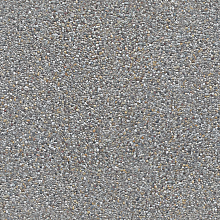 Seamless Concrete Pebble PBR Texture in 4K Resolution
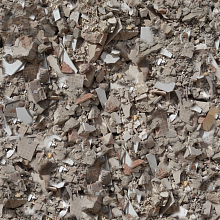 Seamless PBR Concrete Rubble Texture with Debris and Fragments
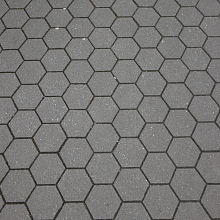 Seamless Hexagonal Concrete Tile PBR Texture 4K
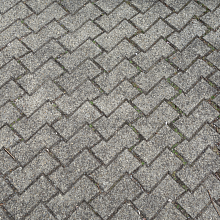 Realistic Concrete Paving Brick Pattern Texture