Advanced Techniques for Creating and Optimizing Seamless PBR Rock and Boulder Textures
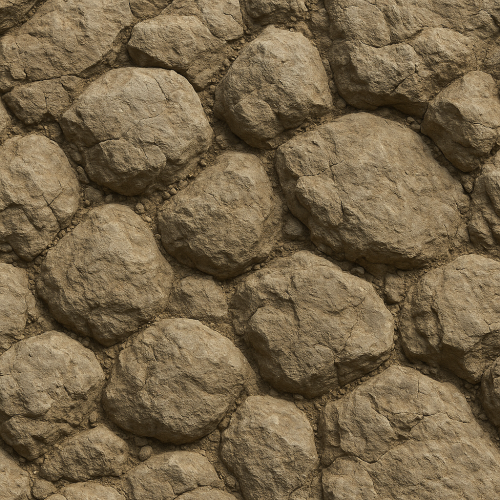
In the pursuit of photorealism within 3D environments, the accurate representation of natural materials such as rocks and boulders remains a cornerstone challenge. These elements are ubiquitous in a wide range of applications—from sprawling open-world games to finely crafted architectural visualizations and high-fidelity visual effects sequences—serving as foundational environmental anchors that contribute significantly to immersion and believability. The fidelity of rock and boulder surfaces hinges not only on geometric complexity but critically on the quality and physical accuracy of their textures. Physically Based Rendering (PBR) workflows have revolutionized how artists approach material creation, offering a principled framework that simulates light interaction with surfaces based on underlying physical properties. However, the unique characteristics of natural stone materials introduce particular challenges and considerations that demand specialized expertise in PBR texture authoring and optimization.
Rocks and boulders, by their nature, exhibit a complex interplay of micro and macro surface variations. Unlike manufactured materials, whose surface properties can often be idealized or simplified, natural stones are inherently heterogeneous. Their albedo varies subtly due to mineral composition, weathering, and organic accretions; their roughness and specularity fluctuate with microfacet distributions shaped by fracture patterns and grain size; and their geometric surface relief spans multiple scales, from fine-grained roughness to large cracks and protrusions. Capturing this multi-scale detail in texture maps requires meticulous acquisition and authoring processes, often combining high-resolution photogrammetry or 3D scanning with sophisticated procedural and manual editing techniques to achieve seamlessness and continuity.
The core PBR maps essential to realistic rock and boulder texturing include the albedo (diffuse color), roughness (microfacet distribution controlling specular spread), normal (surface detail), ambient occlusion (AO), height (displacement or parallax data), and metallic maps. While metallic is typically minimal or zero for stone materials, it remains an important channel to consider within standardized PBR workflows, ensuring compatibility across engines and pipelines. Each map serves a distinct function in simulating light-surface interaction: the albedo encodes intrinsic color without shadows or lighting baked in; roughness governs how glossy or matte the surface appears under various lighting conditions; normals impart fine detail without increasing geometric complexity; AO enhances perceived depth by simulating occlusion from ambient light; and height maps provide accurate displacement cues that can be leveraged in tessellation or parallax occlusion mapping for enhanced silhouette and microstructure realism.
Achieving seamless tiling in rock textures presents a nontrivial problem. Natural surfaces rarely repeat in a manner conducive to traditional tiling, and visible repetition can quickly break immersion. Effective seamless PBR textures leverage micro-variation techniques that introduce subtle noise and detail variation across tiled areas, masking repetition without sacrificing the physical accuracy of the material. This is often accomplished by blending multiple texture sets, utilizing procedural noise overlays, or incorporating vertex color-based variation in engines. Calibrating these textures to maintain consistent scale and detail fidelity relative to the 3D model geometry is equally essential. For instance, mismatch between texture detail scale and model surface features can result in visual dissonance, where textures appear either unnaturally stretched or overly noisy. Calibration is typically performed by referencing real-world scale data during acquisition and maintaining consistent texel density when authoring and exporting textures.
Optimization remains a critical factor, especially when deploying rock and boulder textures in real-time environments such as Unreal Engine or Blender’s Eevee renderer. High-resolution texture maps derived from photogrammetry or scanning can easily exceed memory budgets if left unprocessed. Artists and technical directors must employ a combination of mipmapping strategies, channel packing (e.g., combining AO, roughness, and metallic into a single texture), and resolution scaling based on camera distance and importance. Normal map compression techniques and efficient UV layouts further contribute to performance gains without compromising visual quality. In game engines, the use of material instances and parameter-driven variations allows for dynamic adjustment of roughness or albedo tinting to simulate environmental factors such as wetness or moss growth without duplicating texture sets.
Practical tips for integrating seamless PBR rock textures into pipelines emphasize iterative validation within the target engine’s lighting environment. For example, in Unreal Engine, textures should be tested under both dynamic and static lighting scenarios to ensure consistent appearance, while leveraging engine features such as distance-based tessellation or virtual texturing to maximize detail retention at various viewing distances. Blender users benefit from the Cycles and Eevee renderers’ support for NVIDIA’s OptiX denoising and adaptive sampling, which can highlight subtle imperfections in roughness or normal maps that might otherwise go unnoticed. Furthermore, artists should consider the impact of post-processing effects like ambient occlusion passes and global illumination on the perceived quality of rock materials, calibrating texture maps accordingly to avoid over-darkening or flattening of detail.
In sum, the creation and optimization of seamless PBR rock and boulder textures necessitate a rigorous understanding of both physical material properties and technical constraints within modern 3D workflows. By meticulously acquiring accurate surface data, authoring comprehensive texture maps that represent the multifaceted nature of stone, and optimizing their integration within real-time or offline rendering engines, artists can significantly elevate environmental authenticity. This process not only enhances visual fidelity but also ensures efficient resource usage and scalability across diverse project requirements, ultimately grounding digital worlds in tangible realism that resonates with viewers.
Capturing authentic rock surface details forms the foundational step in developing physically based rendering (PBR) textures that convincingly integrate into real-time engines such as Unreal Engine or offline renderers within Blender. The fidelity and versatility of your textures hinge on the quality of the acquisition methods employed, which broadly divide into two categories: photogrammetry-based scanning of actual rock surfaces and procedural generation techniques for creating adaptable base textures. Both approaches offer distinct advantages and constraints in terms of data fidelity, control, and optimization potential.
Photogrammetry remains the gold standard for acquiring high-resolution, physically accurate surface detail from real-world rock specimens. The process commences with careful planning of the capture environment and equipment calibration to minimize lighting inconsistencies and geometric distortion. Ideally, a DSLR or mirrorless camera with a prime lens providing minimal chromatic aberration and sharp optics forms the core imaging device. Macro or close-focus capabilities allow for capturing micro-variations in roughness and microgeometry, critical for generating detailed normal and height maps. Consistent, diffuse lighting conditions—achieved via overcast daylight or controlled softboxes—help avoid harsh shadows and specular highlights that complicate albedo extraction and subsequent texture baking.
To maintain geometric accuracy, camera calibration is essential. Utilizing calibration targets and software such as Agisoft Metashape or RealityCapture ensures intrinsic and extrinsic parameters are computed precisely, enabling robust alignment of photos into dense 3D point clouds. Capturing the subject from multiple angles with significant overlap (typically 70-80%) facilitates high-fidelity mesh reconstruction, preserving fine crevices and grain structures essential for believable roughness and normal map generation. Attention must be paid to avoid motion blur and exposure variation across images, as these artifacts propagate through the texture pipeline, degrading the consistency of derived PBR maps.
Once the raw photogrammetric dataset is processed, the resulting high-poly mesh and texture maps undergo specialized cleanup. Retopology and mesh decimation optimize the geometry for real-time use without sacrificing critical surface detail, which is then baked into texture maps. Baking workflows produce the core PBR channels: albedo, roughness, normals, ambient occlusion (AO), and height maps. The albedo map must be carefully color-calibrated, often using reference color charts captured in the scene to neutralize color casts and maintain accurate diffuse reflectance. Roughness maps derived from microstructure data or grayscale channel blending require fine-tuning to ensure material response under varied lighting conditions is physically plausible and artistically correct. AO baked from ambient occlusion raytracing enhances depth perception by simulating self-shadowing in crevices, while height and normal maps introduce micro-displacement and surface irregularities critical for dynamic lighting and parallax effects.
Complementing photogrammetry, procedural generation methods have matured into robust workflows capable of producing seamless, tileable rock textures with controllable parameters. Software such as Substance Designer leverages noise functions, cellular patterns, and erosion simulations to algorithmically recreate geological features, from stratified sedimentary layers to rough volcanic surfaces. Although procedurally generated textures may lack the absolute fidelity of scanned data, their inherent flexibility allows artists to tailor the scale, roughness variance, and micro-variation to suit diverse project requirements. Moreover, procedural textures excel in minimizing tiling artifacts by generating large seamless texture sets or employing randomized masks to break up repetition.
When authoring procedural PBR textures, a critical consideration involves the synthesis of height and normal maps from displacement sources, ensuring these channels complement each other to simulate realistic surface depth. Height maps drive parallax occlusion mapping or tessellation shaders in engines like Unreal, while normal maps provide the detailed light interaction necessary for specular highlights and shading variation. Integrating ambient occlusion into procedurally generated textures often involves simulating global illumination effects within the graph or baking AO from a generated high-poly mesh. Roughness maps can be crafted by blending multiple noise layers, calibrated to replicate the microsurface scattering behavior observed in natural rocks. The metallic map is typically zeroed out for rocks unless mineral veins or metallic inclusions are present, in which case selective masking can be applied.
An essential optimization step for both acquisition methods is the calibration and normalization of texture maps to conform with engine-specific PBR workflows. For instance, Unreal Engine's metallic-roughness workflow expects roughness values in the green channel of a packed texture, often combined with metallic and AO in the red and blue channels respectively. Proper channel packing reduces memory consumption and draw calls without compromising visual quality. Likewise, Blender's shader nodes require precise input ranges; roughness textures must be gamma-corrected and linearized for accurate shader responses. Using consistent color spaces and linear workflows throughout acquisition and authoring pipelines ensures that textures behave predictably under physically based lighting models.
Beyond base map creation, achieving convincing seamlessness in rock textures involves addressing tiling and micro-variation. Photogrammetric textures, inherently non-tileable, benefit from specialized software tools such as Substance Alchemist or custom shader blending techniques that generate tileable patches from large scans by edge blending and noise injection. Procedural textures naturally excel here, permitting infinite variation through parameter modulation and mask layering. Introducing subtle hue, saturation, or roughness shifts across tiled textures prevents perceptible repetition, which is crucial for large environment applications where rocks cover expansive surfaces. Micro-variation at the scale of millimeters to centimeters can be enhanced through detail normal maps or overlaying procedural noise, enriching the perceived complexity of the surface.
Practical tips for maximizing data acquisition quality include maintaining a consistent distance and angle during photogrammetry capture to avoid parallax errors, and capturing reference materials such as gray cards and color checkers for post-processing calibration. When working with procedural generation, iterative testing within target engines is invaluable; real-time feedback allows tuning of roughness and height parameters to match desired material properties, accounting for engine-specific lighting models and shadowing techniques. Additionally, combining both methods—using photogrammetry scans as high-fidelity base textures supplemented by procedural overlays—can yield optimized, versatile assets that balance authenticity with control and efficiency.
In summary, the acquisition of rock surface details through photogrammetry and procedural generation constitutes a sophisticated interplay between hardware calibration, software processing, and artistic judgment. Mastery of these techniques enables the creation of seamless PBR textures that convincingly replicate the complex interplay of light and geometry inherent in natural rock surfaces, while ensuring they remain performant and adaptable across diverse rendering environments.
Achieving high-fidelity, seamless PBR textures for rocks and boulders fundamentally hinges on the precise crafting and calibration of the essential PBR maps: albedo, roughness, normal, ambient occlusion (AO), height, and metallic. Each map encodes specific physical and visual properties that collectively define the material’s interaction with light and environment, thereby achieving photorealistic results. For rocky surfaces, which exhibit complex micro- and macro-structural variations, the authoring process must not only capture these details but also ensure seamless tiling and optimal performance across diverse rendering engines such as Unreal Engine and Blender’s Cycles or Eevee.
Beginning with the albedo map, it serves as the core color information devoid of lighting or shadow data. When authoring albedo for rocks, one must carefully isolate the diffuse reflectance by removing baked shadows, specular highlights, and environmental color bleeding from source photographs or scans. This can be achieved through calibrated photogrammetry workflows or manually adjusted in software like Substance Designer or Photoshop. The color palette typically spans desaturated earth tones—greys, browns, muted greens—reflecting mineralogical variations. To avoid visual monotony and emphasize natural heterogeneity, layering subtle color noise or procedural variation is critical. This can be realized by blending multiple albedo sources with procedural masks that simulate lichen, moss, or mineral deposits, introducing micro-variation which breaks repetitive patterns when tiled. Moreover, ensuring the albedo remains within a physically plausible range (generally below 0.95 reflectance) prevents energy conservation violations in subsequent shading stages.
The roughness map governs the microsurface scattering characteristics and is pivotal for conveying variations from polished to weathered, matte areas on rock surfaces. Unlike albedo, roughness is a grayscale map where darker values indicate smooth, shiny surfaces and lighter values denote rough, diffuse scattering. For rocks and boulders, roughness is rarely uniform; polished veins, wet patches, and eroded surfaces create intricate patterns. Constructing roughness maps often begins with high-resolution scans or photographs capturing these micro-variations, followed by manual refinement to emphasize geological features. Procedural noise functions layered atop base roughness can simulate fine grain or sand deposits lodged in crevices. Calibration involves ensuring the roughness range conforms to engine-specific workflows—for Unreal Engine, roughness maps are linear, and values need to be carefully adjusted to avoid overly glossy or flat shading results. It is also beneficial to apply subtle blur or mipmap biasing in texture settings to maintain consistent roughness perception at varying distances and LODs.
Normal maps are indispensable for simulating fine surface detail without increasing geometric complexity. For rocks, normal maps encode the micro-facets generated by cracks, grains, and erosion patterns. Generating normals typically involves baking high-poly sculpted detail onto low-poly meshes or deriving them from height maps via filters in tools such as xNormal, Substance Painter, or Blender’s baking system. When authoring normal maps for natural rock, it is crucial to integrate multi-scale detail: a base normal capturing broad undulations and a detail normal overlay representing micro-roughness. This can be achieved by blending normal maps in Substance Designer using vector blend nodes or normal combine operations. Proper calibration requires normal maps to use the correct color space (tangent space normals, usually in OpenGL or DirectX format depending on the engine) and ensuring consistent tangent basis orientation to avoid lighting artifacts. Additionally, seamless tiling of normals demands edge continuity, which can be enforced by mirroring or procedural symmetry techniques during bake or generation.
Ambient occlusion maps add depth by simulating self-shadowing in crevices and recessed areas, enhancing the perception of volume and texture complexity. Unlike baked global illumination, AO maps are static and complement dynamic lighting by darkening occluded regions. For rocks and boulders, AO is typically baked from high-poly meshes or generated from height maps using curvature and cavity detection algorithms. It is critical to isolate AO from color information and avoid over-darkening, as excessive AO can flatten the appearance when combined with environmental lighting in engines. Fine tuning AO intensity and blending it multiplicatively or additively with albedo or roughness channels depends on the renderer’s shader pipeline. For example, Unreal Engine’s default PBR shader multiplies AO into the final output, so AO maps should be calibrated between 0.4 to 1.0 to prevent unnaturally dark recesses. Furthermore, to maintain tiling consistency, AO maps often incorporate procedural noise layers and seamless edge blending to avoid visible seams or repeating shadow patterns.
Height maps, or displacement maps, provide geometric parallax by encoding surface elevation relative to a base plane. They are essential for rocks where macro-scale surface relief like cracks, fissures, and protrusions significantly influence the silhouette and light interaction. Height maps are generally grayscale, with black representing the lowest point and white the highest elevation. Authoring height maps from scanned data or sculpted models requires careful normalization and smoothing to preserve detail without introducing artifacts. In practice, height maps are often used in tessellation or parallax occlusion mapping shaders, demanding optimization to balance detail and performance. For tiling, height maps must be seamless and free from abrupt discontinuities; this can be achieved via procedural tileable noise combined with hand-painted features, or by edge-cloning techniques during texture generation. Calibration involves adjusting the height scale parameter within the engine to match the physical scale of the modeled asset, avoiding exaggerated displacement that breaks immersion or causes shadowing errors.
The metallic map is somewhat atypical for natural rock materials, which predominantly behave as dielectrics with near-zero metallic reflectance. Nonetheless, certain mineral veins or ore inclusions may exhibit metallic properties requiring subtle metallic mapping. The metallic map is a binary or grayscale mask where white denotes metallic surfaces and black dielectrics. Authoring this map demands precise material identification and masking, often derived from reference images or geological knowledge. For most rock PBR workflows, the metallic map remains uniformly black, simplifying shader complexity and memory usage. However, when metallic inclusions are present, the map must be carefully calibrated to ensure minimal values do not create unrealistic reflections or energy conservation breaches. In engines like Unreal, the metallic channel directly modulates Fresnel reflectance, so even small inaccuracies can produce visual anomalies.
Beyond individual map creation, an overarching consideration is the integration of these maps into a unified PBR workflow. Layering techniques enable combining procedural and hand-authored data to enrich micro-variation and break repetition inherent in tiled textures. Tools like Substance Designer excel at blending multiple noise functions with mask inputs to simulate natural erosion, sediment deposition, and mineralization patterns. Calibration across maps ensures consistent scale and tonal balance—normal map intensities must correspond logically with height map displacement, while roughness and albedo variations should reflect plausible weathering states. It is advisable to maintain a consistent texel density and resolution for all maps to avoid sampling artifacts and maintain sharpness across LODs.
Optimization is critical for practical deployment. Compressing maps with appropriate settings—BC5 for normal maps, BC7 or ASTC for albedo and roughness—preserves fidelity while minimizing memory footprint. Mipmap generation must be carefully managed, especially for height and AO maps, to prevent loss of detail or edge bleeding. In dynamic engines like Unreal, setting correct sRGB flags for albedo and linear space for roughness, normal, AO, and height maps is mandatory to ensure correct shader interpretation. Additionally, utilizing channel packing—embedding roughness, metallic, and AO into a single RGB texture—reduces texture fetches and improves performance, provided each channel is properly calibrated and devoid of cross-channel interference.
In Blender, the principled BSDF shader leverages all these maps to simulate realistic rock materials. The albedo feeds base color, roughness controls microsurface scatter, normal imparts fine detail, AO darkens occluded areas, height influences displacement nodes, and metallic toggles metalness. Artists must ensure seamless texture coordinates and consistent UV layouts to prevent visual discontinuities. Utilizing procedural blending and noise modifiers can further enhance naturalism, especially in large-scale terrains or assets requiring extended tiling.
In conclusion, crafting seamless PBR textures for rocks and boulders involves a meticulous, multi-faceted approach to map generation and calibration. Each map must be authored with physical accuracy and tuned for the target engine’s shading model. Layering procedural and photographic data enriches natural variation, while attention to tileability and optimization ensures both visual fidelity and runtime efficiency. Mastery of these techniques enables artists and technical directors to push beyond simple texture replication, achieving immersive, believable rocky surfaces in real-time and offline rendering contexts alike.
FAQ
What is covered in this guide?
This guide explains Advanced Techniques for Creating and Optimizing Seamless PBR Rock and Boulder Textures with practical notes for seamless PBR materials, texture setup, and production use.
Can I use these texture techniques in Blender, Unreal Engine, and Unity?
Yes. The workflow focuses on standard PBR maps and tileable materials that can be used in Blender, Unreal Engine, Unity, archviz, games, and VFX pipelines.
Where can I find textures for this workflow?
Use the AITextured texture library and the related texture links on this page to find seamless PBR materials and preview them before download.
Related Textures
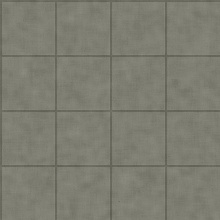 Procedural Stamped Sidewalk Concrete PBR Texture
 Procedural Fine Asphalt Road PBR Texture
 Procedural Pitted Concrete PBR Texture
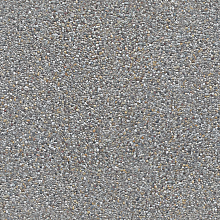 Seamless Concrete Pebble PBR Texture in 4K Resolution
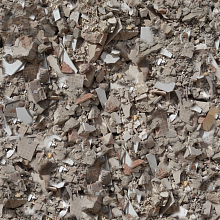 Seamless PBR Concrete Rubble Texture with Debris and Fragments
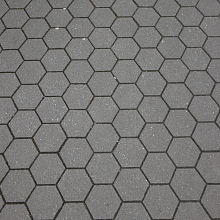 Seamless Hexagonal Concrete Tile PBR Texture 4K
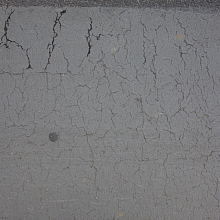 Cracked Asphalt Texture with Weathering