Advanced Techniques for Creating Seamless PBR Vegetation Textures with Micro-Detail and Real-Time Optimization
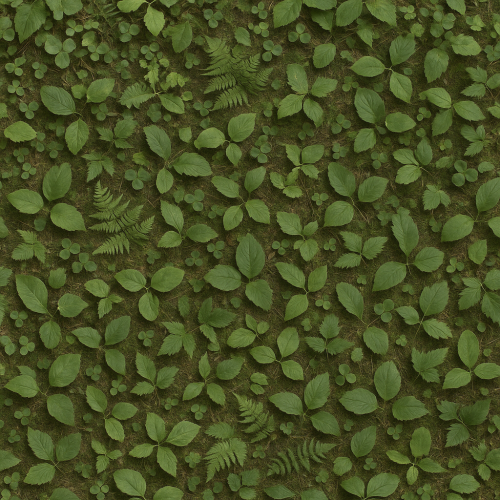
In the pursuit of photorealism within 3D environments, vegetation textures occupy a critical role, particularly in applications spanning interactive games, architectural visualization, and visual effects production. The complexity and organic diversity found in natural foliage present a unique set of challenges that differentiate vegetation texturing from other material categories such as hard surfaces or urban elements. Mastering these challenges is essential to achieving believable, immersive greenery that harmonizes with physically based rendering (PBR) workflows, which demand both physical accuracy and artistic nuance.
At the core of PBR vegetation texturing lies the necessity to replicate the intricate interplay of light with leaves, grass, bark, and other plant components. Unlike opaque, uniform materials, vegetation often exhibits semi-translucency, anisotropic reflectance, and a wide spectrum of microstructural details that influence its appearance under varied lighting conditions. Traditional diffuse maps alone are insufficient to capture these effects; instead, a comprehensive suite of PBR texture maps is required. These typically include albedo for base color information calibrated to avoid baked-in lighting, roughness maps controlling surface microfacet scattering, normal maps encoding surface detail and micro-topology, ambient occlusion (AO) maps to simulate self-shadowing in crevices, height or displacement maps for parallax effects or tessellation, and occasionally metallic maps to define conductive properties, though vegetation generally exhibits minimal metallic characteristics.
The acquisition and authoring of these maps must be approached with a keen understanding of biological and optical properties. For instance, albedo textures in vegetation should maintain spectral fidelity, accurately reflecting the scattering of chlorophyll and other pigments without incorporating shadow or highlight information. This often necessitates careful photography under diffuse lighting conditions or the use of calibrated scanning techniques. Roughness values are particularly critical in foliage materials, as the micro-surface variance—from waxy leaf cuticles to rough bark textures—significantly affects specular reflection intensity and spread. These maps require precise calibration against reference materials or physically measured data to ensure that the rendered vegetation responds correctly to dynamic lighting.
Normal maps are indispensable for conveying the fine-scale surface irregularities present in leaves and bark. However, generating high-quality normal maps for vegetation is complicated by the often thin, overlapping geometry and the presence of subtle veins and pores. Capturing these details from high-resolution scans or photogrammetry can provide a solid foundation, but subsequent manual refinement in tools like Substance Painter or xNormal is frequently necessary to optimize detail fidelity and minimize artifacts. Complementing normals, height maps enable micro-displacement or parallax occlusion effects, enhancing the perception of depth and realism especially at close viewing distances, yet their use must be balanced with performance considerations in real-time engines.
Ambient occlusion maps play a nuanced role in vegetation shading. Given the complex geometry of foliage, AO can accentuate shading in leaf axils, bark crevices, and soil contact points, improving depth cues. However, care must be taken to avoid over-darkening, which can undermine the translucency and vibrant appearance of plant materials. Techniques such as baked AO from high-resolution models, or screen-space AO in engines like Unreal, are often combined to achieve a subtle balance.
A particularly challenging aspect of vegetation texturing is managing translucency and subsurface scattering (SSS). While PBR workflows traditionally focus on surface reflectance, vegetation demands incorporation of volumetric light transport phenomena. Leaves transmit and scatter light internally, producing characteristic soft glows and color bleeding that are essential for realism. Creating textures that accommodate these effects involves generating opacity or translucency maps linked with subsurface parameters within shader frameworks. In engines like Unreal Engine, subsurface profiles can be calibrated using measured data or artist-driven values to simulate light transmission, while Blender’s Principled BSDF shader allows for nuanced control over subsurface scattering settings combined with texture-driven modulation.
Natural variation in vegetation is another vital consideration that distinguishes high-quality texturing. Unlike man-made surfaces, plant materials do not exhibit uniformity but instead display heterogeneity across scales—from macro-level differences between species to micro-level variations in leaf venation and surface roughness. To avoid repetitiveness and tiling artifacts, PBR workflows incorporate techniques such as multi-layered tiling with randomized UV offsets, detail masks blending micro-variation maps, and procedural noise overlays. Authoring these micro-variation textures requires a blend of photographic source material and procedural generation, often using tools like Substance Designer to create patternable noise that respects the organic nature of foliage. These micro-details are integrated into roughness and normal maps to break up uniformity and enhance visual complexity without imposing heavy geometric costs.
Calibration of vegetation textures within PBR pipelines is a meticulous process. It involves iterative comparison against reference photographs under controlled lighting, adjusting map values to achieve consistent responses across different lighting environments. This calibration extends to tuning shader parameters in target engines, where factors such as global illumination, shadow softness, and translucency strength influence final appearance. For example, in Unreal Engine, specifying accurate lightmap resolutions and enabling subsurface scattering profiles can profoundly impact how vegetation textures read in both static and dynamic lighting scenarios. Similarly, Blender’s Eevee and Cycles renderers require different optimizations; Eevee demands efficient texture setups and screen-space effects, while Cycles benefits from high-fidelity maps and physically accurate subsurface scattering computation.
Optimization remains a paramount concern in real-time applications, where vegetation is often rendered in vast quantities across expansive scenes. Achieving seamless PBR vegetation textures with rich micro-detail necessitates balancing texture resolution, compression, and shader complexity. Techniques such as texture atlasing reduce draw calls by combining multiple texture maps into single sheets, while mipmapping and anisotropic filtering help maintain detail at varying distances and viewing angles. Additionally, leveraging engine-specific features like Unreal’s Virtual Texturing or Blender’s texture painting layers can provide performance gains without sacrificing visual fidelity. Artists must judiciously decide where to allocate texture resolution and shader intricacy, often prioritizing close-up foliage for high detail and employing lower-resolution or impostor systems for distant vegetation.
In sum, vegetation textures in PBR workflows demand an integrated approach that combines precise acquisition, physically accurate map authoring, nuanced shader calibration, and rigorous optimization. This synthesis enables the creation of seamless, believable plant materials that not only withstand scrutiny in high-end rendering pipelines but also perform efficiently in real-time engines. The following sections will delve deeper into advanced techniques for capturing micro-detail, managing translucency, and optimizing vegetation textures to meet the rigorous demands of modern 3D production pipelines.
Capturing the nuanced complexity of vegetation surfaces for physically based rendering (PBR) workflows demands a meticulous approach to texture acquisition. Photogrammetry, when executed with precision, offers a direct pipeline to high-fidelity albedo, normal, roughness, ambient occlusion (AO), height, and occasionally metallic maps that faithfully represent the intricate micro-structures and chromatic subtleties of leaves, bark, and moss. However, the organic variability and delicate nature of vegetation often present significant challenges in scanning, motivating a complementary reliance on procedural generation techniques that simulate natural patterns algorithmically. Both methods require careful calibration and optimization to integrate seamlessly into real-time engines such as Unreal Engine or authoring suites like Blender, ensuring textures maintain fidelity without sacrificing performance.
In photogrammetric acquisition of vegetation, the first critical hurdle is the controlled capture of high-resolution imagery that preserves surface detail without introducing artifacts from lighting inconsistencies or motion blur. Leaves, for instance, exhibit translucency and fine venation that are essential for realistic subsurface scattering and surface roughness characterization. Using a combination of polarized lighting and diffuse dome illumination can minimize specular highlights and shadows, improving the accuracy of albedo extraction. Multi-angle captures with overlapping fields of view are necessary to reconstruct the leaf’s micro-geometry, which informs the normal and height maps. To mitigate deformation or curling during scanning, leaves should be mounted on neutral, non-reflective mounts or scanned in situ with stabilization rigs where possible. Bark and moss surfaces, by contrast, are highly textured with irregular relief and organic micro-variation. Here, photogrammetry benefits from ultra-high-resolution captures with macro lenses, allowing the reconstruction algorithms to generate dense point clouds that resolve micro-bumps and fissures critical for normal and displacement mapping.
Post-capture processing plays a decisive role in transforming raw photogrammetric data into usable PBR maps. Software such as RealityCapture or Agisoft Metashape generates dense meshes and texture atlases, but the derived maps often require manual retouching and recalibration. Albedo maps must be desaturated of specular contamination and color calibrated using reference color charts captured alongside the subject. Normal maps extracted from mesh geometry benefit from smoothing algorithms that preserve high-frequency detail while eliminating scanning noise. Height maps derived from displacement data are often scaled and inverted to suit engine-specific displacement or parallax occlusion mapping workflows, such as those in Unreal Engine’s material editor. Ambient occlusion maps, which accentuate crevices and shadowed microgeometries, can be baked from the mesh or approximated through curvature maps generated procedurally from the photogrammetric normals. Roughness extraction remains one of the most complex tasks; it often requires a combination of photometric stereo methods or indirect inference from the surface microstructure and specular highlight distribution across captures. Metallic maps are generally negligible for vegetation, except in rare cases such as wet bark or mineral deposits on moss, where subtle metallicity can be hand-painted or derived from material masks.
While photogrammetry excels at capturing authentic, high-detail textures, it is not always feasible due to environmental constraints, time, or the fragility of subjects. Procedural generation emerges here as a pragmatic alternative to fabricate versatile base textures that simulate natural complexity with parametric control. Procedural workflows leverage noise functions—Perlin, Simplex, Worley, and their fractal variants—to synthesize organic patterns such as leaf venation, bark striation, or moss tuft distribution. These noise algorithms enable the generation of base albedo maps with natural color variation and gradient transitions that mimic chlorophyll distribution or lichen overlays without relying on photographic sources. Crucially, procedural approaches offer infinite tiling potential, avoiding the obvious repetition often plaguing photographic textures, by employing seamless noise tiling techniques and domain warping to break uniformity.
Normal and height maps generated procedurally are often derived directly from the noise function outputs or through layered displacement passes that simulate surface roughness and relief. For example, combining fractal Brownian motion noise with directional noise can reproduce the rough linearity of bark grain, while cellular noise algorithms can mimic the clustered, irregular bumps of moss cushions. Ambient occlusion approximations can be algorithmically baked by analyzing noise-based curvature or by integrating ambient occlusion shaders within the procedural pipeline itself. Roughness maps, critical for the PBR workflow, can be similarly synthesized by correlating noise intensity and frequency with microfacet distribution, thereby simulating varying levels of surface glossiness and moisture. Metallic maps are typically absent but can be introduced procedurally for scenarios requiring subtle metallic sheens on wet or resinous vegetation.
One of the principal advantages of procedural generation lies in its adaptability and scalability within real-time engines like Unreal or authoring platforms such as Blender. Procedural textures can be dynamically tweaked through exposed parameters to generate micro-variation across large terrain patches, significantly reducing draw calls and texture memory usage by leveraging material instances and runtime shader permutations. For example, a single procedural bark shader can be parameterized to change vein density, color variation, or roughness based on height or slope inputs, creating heterogeneous forest environments with minimal authoring overhead. In Blender, procedural nodes such as noise textures, voronoi, and musgrave patterns can be layered and combined with color ramps and vector math nodes to create complex textures that are fully tileable and optimized for baking into texture maps for export.
Calibration and optimization are paramount when integrating either photogrammetric or procedural textures into production pipelines. Photogrammetry-derived textures must be downsampled carefully to preserve essential detail while fitting within engine texture budget constraints, often requiring mipmap generation and anisotropic filtering settings to maintain fidelity at multiple viewing distances. Procedural textures, while inherently resolution-independent, need shader complexity profiling to balance visual quality against frame-time costs in real-time engines. Hybrid approaches are increasingly common—using photogrammetry to capture high-detail albedo and normal maps for focal assets, supplemented by procedural roughness and AO overlays to add micro-variation and reduce tiling artifacts. This blending harnesses the strengths of both acquisition methods, delivering naturalistic vegetation surfaces optimized for diverse rendering scenarios.
In summary, the acquisition of PBR vegetation textures hinges on a strategic interplay between photogrammetry and procedural generation, each with unique strengths and challenges. Photogrammetry provides unparalleled realism through direct capture of complex organic surfaces but requires rigorous capture conditions, post-processing, and calibration to produce accurate PBR maps. Procedural generation offers limitless variation, seamless tiling, and real-time parameterization, filling gaps where photogrammetry is impractical or resource-intensive. Mastery of both techniques, coupled with an understanding of engine-specific material systems and optimization strategies, empowers artists and technical directors to craft seamless, micro-detailed vegetation textures that elevate the visual authenticity of real-time environments without compromising performance.
Creating complete PBR maps for vegetation materials demands a nuanced understanding of both botanical surface properties and the physical principles underpinning light interaction with organic matter. Vegetation, especially foliage, presents unique challenges due to its complex microstructure, translucency, and the interplay of surface reflectance with subsurface scattering. An expertly crafted suite of PBR textures—encompassing albedo, roughness, normal, ambient occlusion (AO), height, metallic, and translucency maps—forms the backbone for achieving photorealistic, real-time optimized vegetation assets.
Starting with the albedo map, this texture encodes the diffuse reflectance of the leaf or plant surface without direct lighting or shadow information. Accuracy in albedo is paramount; subtle chromatic variations and micro-patterns such as vein networks, pigmentation gradients, and surface blemishes define the vegetation’s visual identity. Acquisition methods range from calibrated macro-photography with diffuse illumination to photogrammetric capture. When authoring manually or refining scans, it is critical to neutralize any baked-in shadows or specular highlights to avoid light baking artifacts in real-time engines. Tools like Substance Painter and Designer facilitate procedural noise overlays and color variation masks, which can simulate natural pigment heterogeneity and mitigate visible tiling. Introducing micro-variation through multi-scale noise or directional patterns aligned with leaf venation enhances realism and reduces repetitiveness, especially in large foliage arrays.
The roughness map governs the microfacet distribution controlling the specular highlight spread and intensity. Vegetation surfaces are rarely uniform in roughness; waxy cuticles yield low roughness (high gloss), while hairy or matte leaf surfaces exhibit higher roughness values. Generating a roughness map often begins with grayscale conversions of microscopic surface detail captures, such as photomicrographs or height-derived curvature maps. It is advisable to extract roughness indirectly from physically measured BRDF data when available or to derive it procedurally by blending curvature and ambient occlusion channels to mimic micro-shadowing effects that visually dull specular reflections. Careful calibration in engines like Unreal Engine 5 or Blender’s Eevee/PBR viewport is essential, as roughness values strongly influence the perceived wetness or dryness of vegetation. Subtle anisotropy may be introduced where leaf fibers are pronounced, though this is a higher-order effect often reserved for advanced shader setups.
Normal maps for foliage require high fidelity detailing to capture both macroscopic undulations and microscopic ridges, such as veinlets and epidermal cell patterns. Captured via high-resolution photogrammetry or sculpting in ZBrush or Blender’s Multiresolution modifier, normal maps must be tangent-space encoded and baked with minimal smoothing to preserve crispness. When tiling, it is critical to blend normals carefully to prevent abrupt directional shifts; techniques such as vector blending or specialized texture-space normal interpolation can maintain continuity. Additionally, generating a secondary normal map layer to encode fine-scale microdetails can enhance surface complexity without excessive texture resolution. In real-time engines, normal maps must be gamma-corrected and previewed under varying light angles to ensure they correctly modulate specular highlights and shadowing on curved leaves.
Ambient occlusion maps are indispensable for simulating self-shadowing within crevices and folds of leaves and branches, enhancing depth perception without heavy performance costs. AO textures can be baked from high-poly models or generated procedurally using curvature and cavity extraction algorithms. For vegetation, where translucency and subsurface scattering dominate, AO maps should be carefully moderated to avoid over-darkening semi-transparent regions. Integrating AO with translucency shaders requires nuanced masking strategies to prevent visual conflict between occlusion and light transmission. In engine pipelines, AO maps are often combined with roughness or metallic maps in packed textures to optimize texture fetches, but this demands precise channel management and calibration to maintain visual fidelity.
Height maps, encoding per-pixel surface displacement, enable parallax occlusion mapping or tessellation-based displacement, crucial for augmenting the perceived complexity of leaves and thin plant parts without excessive geometry. Height data can be derived from photogrammetry or sculpted detail, then normalized and contrast-enhanced to emphasize veins and edge crispness. When authoring height maps for vegetation, it is important to balance depth exaggeration with silhouette integrity since overly aggressive displacement can lead to silhouette artifacts or unnatural shadowing. In real-time engines, height maps should be tuned to the camera distance and tessellation settings, often requiring iterative adjustments to avoid popping or aliasing. Height maps also contribute indirectly to normal map generation via derivative calculations, so maintaining a consistent scale between these maps is essential.
Metallic maps for vegetation are typically minimal or flat zero values, reflecting the non-metallic nature of plant matter. However, subtle specular reflectance variations due to surface waxes or cuticle layers can sometimes be encoded here when using custom shaders that interpret the metallic channel beyond the standard metallic/roughness workflow. In practice, vegetation materials almost universally adopt a non-metallic workflow, and the metallic map is often omitted or set to black to optimize texture memory. Exceptions include specialized cases such as wet leaves or synthetic plant elements where localized metallic reflections might be artistically justified.
Translucency and subsurface scattering (SSS) effects are arguably the most critical components for achieving believable vegetation shading. Leaves exhibit significant light transmission, with subsurface scattering producing characteristic soft glows around edges when backlit. While PBR workflows traditionally focus on surface reflectance, integrating translucency maps or subsurface masks enables shaders to approximate these complex light transport phenomena in real time. Translucency maps, often grayscale or with RGB channels encoding scattering radius or density, can be derived from leaf thickness data captured via photogrammetry or manually painted based on botanical references. Techniques such as screen-space subsurface scattering in Unreal Engine or Blender’s Principled BSDF with subsurface inputs rely on these maps to modulate scattering intensity and color diffusion, reproducing the warm, diffused light observed in thin foliage.
Moreover, combining translucency with height and normal maps enhances volumetric light interaction; for instance, subtle thickness variations can be emulated by modulating translucency strength with height map data, while normal map detail influences directional scattering. Fine-tuning translucency maps requires iterative calibration against real-world reference renders under various lighting conditions, ensuring translucency does not wash out surface detail or conflict with shadowing. When authoring translucency maps, it is advisable to maintain high bit-depth precision and avoid compression artifacts, as subtle tonal shifts significantly affect perceived leaf translucence.
In optimizing these maps for real-time engines, careful channel packing strategies and resolution balancing are essential. Vegetation assets often require multiple texture sets, but leveraging packed textures—such as combining roughness, metallic, and AO in a single texture’s RGB channels—reduces draw calls and memory bandwidth. Resolution should be matched to the asset’s screen space footprint, with mipmapping and anisotropic filtering settings calibrated to preserve critical micro-detail in foliage clusters. Tools like Substance Designer facilitate procedural generation of packed textures with dynamic parameter control, enabling rapid iteration and fine-tuning.
Finally, calibration within engines such as Unreal Engine 5’s Material Editor or Blender’s Shader Editor is a vital step. Real-time previewing under directional, ambient, and subsurface lighting setups reveals subtle inconsistencies across PBR maps, guiding iterative adjustments. Utilizing engine-native features such as Unreal’s subsurface profile or Blender’s transmission and subsurface scattering nodes ensures the authored maps translate into physically plausible shading. Employing reference materials and photographic benchmarks during this phase cements a cohesive workflow, ensuring that each map contributes optimally to the final layered material response.
In sum, the creation of complete PBR maps for vegetation is an intricate process demanding rigorous data acquisition, precision authoring, and iterative engine calibration. Through detailed capture and procedural enhancement of albedo, roughness, normals, AO, height, metallic (where applicable), and especially translucency and subsurface scattering inputs, artists can unlock the full potential of physically based vegetation shading, achieving rich, believable foliage that performs efficiently in real-time environments.
FAQ
What is covered in this guide?
This guide explains Advanced Techniques for Creating Seamless PBR Vegetation Textures with Micro-Detail and Real-Time Optimization with practical notes for seamless PBR materials, texture setup, and production use.
Can I use these texture techniques in Blender, Unreal Engine, and Unity?
Yes. The workflow focuses on standard PBR maps and tileable materials that can be used in Blender, Unreal Engine, Unity, archviz, games, and VFX pipelines.
Where can I find textures for this workflow?
Use the AITextured texture library and the related texture links on this page to find seamless PBR materials and preview them before download.
Related Textures
 Procedural Lime Plaster Wall PBR Texture
 Procedural Stamped Sidewalk Concrete PBR Texture
 Procedural Fine Asphalt Road PBR Texture
 Procedural Pitted Concrete PBR Texture
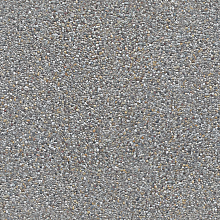 Seamless Concrete Pebble PBR Texture in 4K Resolution
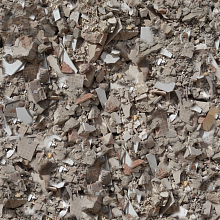 Seamless PBR Concrete Rubble Texture with Debris and Fragments
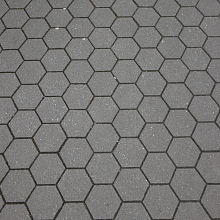 Seamless Hexagonal Concrete Tile PBR Texture 4K
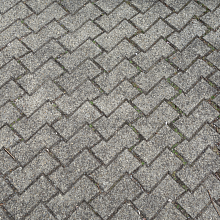 Realistic Concrete Paving Brick Pattern Texture