Comprehensive Guide to All Christmas Digital Paper PBR Textures for 3D Projects

Acquiring Christmas digital paper textures suitable for physically based rendering (PBR) workflows requires a nuanced approach that balances fidelity, authenticity, and technical rigor. The objective is to capture the intricate details and rich color palettes characteristic of traditional holiday motifs—such as holly leaves, snowflakes, candy canes, and festive ribbons—while generating a comprehensive set of texture maps that seamlessly integrate into modern PBR pipelines. This process extends beyond mere surface color capture; it demands meticulous attention to secondary surface attributes like roughness variations, normal perturbations, ambient occlusion, height information, and, where relevant, metallic components. These maps collectively enable realistic light interaction within real-time engines such as Unreal Engine or offline renderers like Blender’s Cycles, ensuring that the final materials respond authentically under varied lighting scenarios.
A foundational method for acquiring Christmas digital paper textures involves high-resolution scanning of traditional media. This approach often begins with sourcing physical samples—printed wrapping papers, hand-painted holiday cards, or embossed decorative sheets—that inherently carry the tactile qualities and micro-structural imperfections desired in a PBR asset. Flatbed scanners with optical resolutions exceeding 2400 dpi are typically preferred to preserve fine detail, especially when the surface contains subtle embossing or foil stamping. However, scanning alone captures primarily the albedo (base color) and to a limited extent, normal cues through subtle shadows cast by surface relief. To extrapolate full PBR data from these scans, subsequent image processing and supplementary capture methods must be employed.
Calibration during scanning is critical, particularly for maintaining accurate color fidelity. Festive textures often feature saturated reds, greens, and golds, which are prone to gamut clipping or color shifts if scanning profiles are not properly managed. Utilizing color calibration targets (such as X-Rite ColorChecker charts) alongside the scanned samples allows for precise profile adjustments and linearization of color data. This step ensures that the albedo maps reflect true colors under neutral lighting, a prerequisite for physically correct shading. Furthermore, scanning should be conducted in a controlled lighting environment to minimize stray reflections or uneven illumination that could compromise the consistency of the texture tile.
To derive a roughness map from a scanned Christmas paper, one effective practice is to photograph the physical sample under directional lighting conditions that accentuate surface reflectivity differences. A cross-polarized lighting setup can help isolate diffuse and specular components, allowing the extraction of roughness variations based on reflectance intensity. Alternatively, a grayscale interpretation of the scanned image’s micro-contrast can serve as a starting point, refined manually or by using procedural generators within software like Substance Designer. For example, smooth glossy sections corresponding to metallic foil or varnished areas should register as low roughness values, while matte paper fibers exhibit higher roughness, enhancing micro-variation that prevents visual monotony during tiling.
Capturing normal maps from traditional Christmas papers poses additional challenges. While embossing or raised patterns can be partially inferred from shading in the scan, photogrammetry or specialized height mapping techniques provide more robust results. Photogrammetry involves photographing the textured paper from multiple angles under consistent lighting and reconstructing a high-fidelity 3D surface mesh. This mesh can then be baked into normal and height maps with software such as Agisoft Metashape or RealityCapture. The normal maps generated this way encapsulate accurate surface microstructure, including creases, embossing, and subtle paper grain, essential for realistic light scattering and shadowing in PBR materials.
An alternative to photogrammetry for normal and height data acquisition is using a high-resolution height scanner or a focus variation microscope, which can capture surface topology at micron-level precision. Though more specialized and less accessible, these tools can provide unmatched detail for intricate Christmas patterns involving foil textures, glitter, or layered paper effects. Height maps derived here are instrumental for parallax occlusion mapping or displacement in engines like Unreal Engine, elevating the perceived depth and tactility of the digital paper.
Ambient occlusion (AO) maps, while sometimes baked from 3D geometry in photogrammetry, can also be derived by simulating light occlusion on the reconstructed surface mesh. AO enhances the perception of depth by darkening crevices and folds, which is crucial in representing folded ribbons or embossed snowflake patterns. For flat scanned media without 3D capture, AO can be approximated by generating curvature and cavity maps via image processing algorithms, though this is less accurate and requires fine-tuning to avoid over-darkening.
Metallic maps are generally less pertinent for Christmas digital paper textures unless the paper contains metallic foil elements. In such cases, the metallic channel should be binary or graded to represent foil patches that reflect light with near-metallic properties. These can be isolated via UV fluorescence photography or by careful manual masking informed by visual inspection of the foil areas. Correct metallic channel generation is vital to achieve convincing reflectivity and anisotropic highlights in renderers, especially when simulating gold or silver foils common in holiday wrapping.
A critical consideration during acquisition is the tiling capability of the digital paper textures. Christmas patterns are frequently designed as seamless repeats to cover large surfaces without visible seams. Scanning physical samples often results in unique, non-repeating areas; thus, post-processing is essential to create tileable textures. Techniques include offsetting and blending edges in image editing software, reconstructing edges using procedural texturing tools, or even capturing repeating patterns directly from patterned wrapping papers. Maintaining detail integrity during tiling, especially preserving micro-variation to avoid obvious repetition, requires careful balancing of cloning, noise addition, and detail preservation filters.
Once the texture sets are acquired and processed, optimization for engine usage is paramount. PBR textures intended for real-time engines must balance resolution and performance. While initial scans and photogrammetry outputs are often at ultra-high resolutions (e.g., 8K or above), downsampling to 2K or 4K with appropriate mipmap generation facilitates efficient GPU memory use without sacrificing perceptible detail at typical viewing distances. Compression artifacts must be minimized by selecting appropriate texture compression formats (BC7 for albedo, BC5 for normals) and ensuring the roughness, AO, and height maps are encoded with sufficient precision.
Integration into engines such as Unreal Engine or Blender requires consistent color space management and shader setup. Albedo maps should be linearized and gamma-corrected appropriately, while roughness and metallic maps are treated as linear grayscale inputs. Normal maps must adhere to engine-specific conventions, including channel order and handedness, to avoid rendering artifacts. Ambient occlusion can be either multiplied with the base color in shader graphs or used as a separate mask depending on the material complexity.
In summary, the acquisition of Christmas digital paper textures for PBR workflows is a multifaceted endeavor that blends traditional media capture with modern digital processing. High-resolution scanning serves as a cornerstone for color fidelity and base detail, while photogrammetry and height scanning expand the dimensional fidelity of surface features. Calibration and controlled lighting are indispensable for accurate color and reflectance data capture, and post-processing enables seamless tiling and micro-variation essential for believable PBR materials. Optimizing these assets for engine-specific requirements ensures that the festive textures not only look visually authentic but also perform efficiently in interactive or rendered environments.
Creating seamless festive patterns for “All Christmas Digital Paper” PBR textures requires a nuanced approach that balances procedural generation and photographic source integration, particularly when aiming to authentically reproduce the tactile qualities of holiday materials. The challenge lies not only in crafting patterns that tile flawlessly but also in delivering a compelling visual richness through physically accurate shading channels—albedo, roughness, normal, ambient occlusion, height, and where relevant, metallic. This section dissects the technical workflows and considerations involved in authoring these textures, with a focus on incorporating pastel and vibrant palettes alongside glitter and shimmer effects, essential to evoking the characteristic warmth and sparkle of holiday-themed digital paper.
Procedural generation serves as a powerful foundation for establishing the base festive motifs—think holly leaves, snowflakes, stars, or stylized ornaments—in a way that ensures perfect tiling without visible seams. Key to this process is leveraging node-based tools within software like Substance Designer or Blender’s procedural texture nodes, which facilitate parametric control over pattern repetition, scale, and variation. The procedural approach enables the creation of micro-variations in pattern elements that prevent artificial uniformity. For instance, subtly modulating the size, rotation, or placement randomness of holly berries or snowflake branches introduces naturalistic variation that mimics hand-crafted paper or fabric prints. These variations directly influence the normal and height maps by altering surface undulations, enhancing the tactile illusion when rendered with proper PBR lighting.
Photographic sources complement procedural methods by contributing high-fidelity detail and complex material characteristics difficult to generate algorithmically—such as fabric weave, paper texture grain, or the irregular glitter particles scattered across a surface. High-resolution macro photography, carefully captured under controlled, diffuse lighting conditions, is indispensable for acquiring albedo maps free from specular contamination. Capturing the same material or pattern under directional lighting enables extraction of normal and height information via photogrammetry or photometric stereo techniques, which can then be refined in texture authoring suites. Ambient occlusion maps derived from such sources add subtle shadowing effects that anchor pattern elements in perceived depth, critical for realism in holiday papers where embossed or raised motifs are common.
The integration of pastel and vibrant color palettes demands careful calibration of the albedo channel to maintain physical plausibility and consistent energy conservation across the shading model. Pastel hues, often desaturated and low in value, risk appearing flat or washed out if not balanced by appropriate roughness settings. Typically, pastel-colored areas benefit from slightly higher roughness values to diffuse reflections softly, mimicking matte paper finishes or chalky pigments. Conversely, vibrant reds, greens, and golds associated with Christmas themes should be calibrated to maintain chromatic intensity without exceeding the energy budget—achieved by adjusting both albedo saturation and roughness interplay. For example, a glossy red ornament pattern requires an albedo that reflects the pigment’s depth but is paired with a corresponding low roughness map to create crisp specular highlights and subtle reflections.
Glitter and shimmer effects, quintessential to holiday textures, introduce complexity in both authoring and rendering. These effects are best represented through a combination of detail normal maps, height variations, and roughness channel manipulation. Procedurally, scattered micro-facets can be simulated by generating high-frequency noise patterns that modulate roughness locally, creating sparkling highlights when viewed at oblique angles. Photographic glitter captures, when properly aligned and corrected, provide realistic detail but often require decomposition into separate maps. For instance, a glitter photograph can be processed into a detail normal map emphasizing the microfacet facets, a height map to simulate the surface relief of glitter flakes, and a roughness mask to represent the specular variance across the surface.
Incorporating these glitter elements into the overall texture workflow mandates careful tiling strategies. Because glitter patterns are inherently stochastic, seamless tiling is achieved through technique such as tileable noise textures combined with random offset nodes in procedural graphs, or by patching photographic samples with edge-blending algorithms and careful clone-stamping to avoid repetition artifacts. A common approach is to overlay procedural glitter noise atop the base festive pattern, blending with alpha masks derived from pattern shapes to localize sparkle effects without overwhelming the design. This separation also allows for dynamic roughness variation in shader graphs within Unreal Engine or Blender’s Eevee/Cycles, where glitter highlights can respond to lighting angles realistically.
Once all channels are authored, texture calibration across the PBR stack is crucial. Albedo maps must be gamma-corrected and linearized appropriately, ensuring that the color data conforms to the rendering engine’s expectations. Roughness maps are often encoded in grayscale but require precise level adjustments to avoid overly broad or narrow specular reflections. Normal maps must be normalized and tiled seamlessly; any seams or interpolation errors can disrupt the illusion of continuous surfaces. Ambient occlusion maps should be multiplied with albedo or integrated in the engine’s shading pipeline carefully to avoid overly darkening the texture under indirect lighting. Height maps, when used for parallax or displacement effects, must be scaled to realistic depths consistent with the physical thickness of paper or embossing on holiday cards.
Optimization is paramount given the high resolution often demanded by digital paper textures, which are repeatedly tiled across large surfaces. Using detail maps and triplanar projection techniques can reduce the need for extremely large base maps, while maintaining visual fidelity through layered micro-variation. In Unreal Engine, leveraging virtual texturing and runtime mipmap generation helps manage memory footprint without sacrificing sharpness at close inspection. In Blender, baking procedural details into combined texture maps where possible streamlines shader complexity, especially when exporting assets to real-time applications.
Practical authoring tips include maintaining a consistent texel density across all pattern elements to avoid scaling mismatches, crucial when combining photographic and procedural elements. Working in linear color space throughout the pipeline ensures that blending and adjustment operations behave predictably, especially when layering glitter effects atop pastel backgrounds. When exporting textures, using 16-bit float formats for normal and height maps preserves subtle surface detail, while PNG or TGA formats suffice for albedo and roughness channels, depending on the engine's requirements. Finally, testing textures under multiple lighting scenarios—daylight, warm interior light, and low-light conditions typical of holiday ambiance—validates the PBR parameters and reveals any discrepancies before integration.
In summary, the authoring of “All Christmas Digital Paper” PBR textures demands a hybrid approach that marries procedural generation’s parametric flexibility with the nuanced detail of photographic sources. Mastering the interplay of pastel and vibrant palettes alongside realistic glitter and shimmer effects requires meticulous channel calibration and optimization for seamless tiling and dynamic rendering in engines like Unreal and Blender. By managing micro-variations, carefully extracting and refining maps, and rigorously testing the final textures under diverse lighting, artists can achieve richly detailed, physically plausible digital papers that convincingly embody the festive spirit.
Creating physically based rendering (PBR) maps for All Christmas Digital Paper textures demands a methodical approach that balances artistic intent with technical precision. These digital papers often feature intricate patterns—ranging from traditional motifs like holly leaves, snowflakes, and candy canes to stylized geometric layouts—requiring careful translation into PBR channels to achieve believable surface interaction under varied lighting conditions. The foundational step is the acquisition or generation of a high-fidelity albedo map, which serves as the color and diffuse reflectance basis without baked-in lighting or shadow information. For Christmas-themed papers, color fidelity is paramount; reds, greens, golds, and whites must retain their vibrancy while avoiding color bleeding or desaturation across tile seams. When authoring albedo, it is critical to work from calibrated digital sources—scanned hand-painted papers or digitally drawn assets in color-managed workflows—ensuring linear workflow compliance and gamma correction. Avoid embedding shadows or highlights typical of scan artifacts, as these will interfere with the physically based lighting model.
Following albedo preparation, the roughness map defines the microsurface scattering characteristics that dictate how light diffuses across the paper surface. Christmas digital papers typically exhibit a range of finishes, from matte wrapping papers to subtly glossy foils and embossed designs. To simulate these finishes, roughness maps must be derived with nuance. When starting from physical references, a combination of photographic capture of surface microdetails under controlled lighting and procedural noise generation can yield convincing roughness variations. For instance, a matte paper base should have a high roughness value nearing 0.8 to 1.0, while small foil accents or metallic inks require lower roughness values around 0.2 to 0.4 to produce specular highlights. In software like Substance Painter or Designer, it is effective to layer procedural noises with custom masks derived from pattern elements to localize roughness variation—this micro-variation breaks up uniformity and enhances realism. Calibration against reference materials, such as measured BRDF data from actual wrapping papers, helps ensure roughness values correspond accurately to physical phenomena.
Metallic maps are less commonly utilized in Christmas digital papers unless the design incorporates genuine metallic inks or foils. In such cases, the metallic map functions as a binary or grayscale mask controlling where metallic reflections occur. Accurate metallic mask creation involves isolating foil or metallic print areas in grayscale and ensuring crisp, anti-aliased edges to avoid artifacts during shading. Where metallic elements are subtle or stylized, a partial metallic value (e.g., 0.5) may simulate semi-metallic behavior, but this requires careful engine-side testing to prevent unrealistic highlights. When metallics are not applicable, the map is set to zero to maintain a dielectric response.
The normal map is crucial for simulating surface relief and embossed effects common in festive digital papers. Traditional 2D patterns often lack actual depth, so normal maps provide the illusion of embossing, debossing, or textured finishes like linen or parchment fibers. Creating a convincing normal map starts with a high-resolution height input, either from sculpted displacement or from grayscale height maps extracted from bump height details. If the original artwork contains scanned surface texture, extracting height information via photogrammetry or height-from-shading algorithms can be beneficial. In procedural workflows, height maps can be generated by layering noise textures modulated by the pattern’s mask to simulate subtle paper grain or fabric weave. Once the height map is established, converting it to a tangent-space normal map using tools like xNormal or integrated baking in Blender enables the final surface detail to react dynamically to lighting. During this process, it is important to calibrate the normal map strength to avoid exaggerated surface distortions that break the illusion of a flat paper sheet.
Height maps, distinct from normal maps, provide scalar displacement data for parallax or tessellation effects in real-time engines. For Christmas digital papers, height maps can simulate slight embossing or raised print without heavy geometry. When authoring height maps, subtlety is key—excessive height values can cause unrealistic shadowing or silhouette artifacts. Typically, height map values remain within a normalized range of 0 to 1, with maximal displacement values no greater than a few millimeters equivalent, scaled to the model’s UV space. In engines like Unreal Engine, height maps are often fed into parallax occlusion mapping nodes or tessellation shaders, requiring consistent tiling and seam management to prevent popping or edge artifacts. Blender’s displacement modifiers and shader nodes also support height map-based displacement, though careful subdivision is necessary to avoid geometry distortion.
Ambient occlusion (AO) maps, though sometimes optional, enhance the overall shading by simulating localized shadowing where surface crevices or overlaps occur. For Christmas digital papers, AO adds depth especially around complex pattern intersections or embossed areas. AO maps are typically baked from high-poly to low-poly models during the texturing pipeline or generated from procedural sources. When incorporating AO into the PBR workflow, it is common to multiply AO with the albedo or the ambient term in the shader to subtly darken crevices without overpowering the base color. Proper calibration ensures that AO does not introduce unnatural darkening or color shifts.
Tiling and micro-variation considerations are essential when creating PBR maps for Christmas digital papers intended for large surfaces or repeated patterns. Seamless tiling ensures that pattern repetition does not manifest as obvious seams, which would break immersion. Achieving this requires seamless texture authoring techniques such as edge mirroring, clone stamping, and texture synthesis. For normal and height maps, particular attention must be given to edge continuity to prevent lighting discontinuities. Micro-variation can be introduced by overlaying subtle noise or grain layers within roughness, normal, and height maps to break uniformity, mimicking the natural imperfections found in physical papers. These micro-details are crucial in preventing the “digital flatness” often associated with tiled textures.
Optimization of PBR maps is a critical step to balance visual fidelity with performance, especially when deploying in game engines like Unreal Engine or real-time renderers in Blender’s Eevee. Map resolutions should be chosen based on the model’s viewing distance and screen coverage; for example, 2K or 4K textures are common for hero assets, whereas 1K or 512x512 may suffice for background elements. Compression formats must preserve critical channel data; for instance, normal maps typically use BC5 or similar high-quality compression to retain vector precision. Packing multiple grayscale maps into different channels of a single texture (e.g., roughness, AO, and metallic) optimizes memory bandwidth and draw calls. Careful channel packing is especially effective for Christmas digital papers with limited metallic content.
During engine integration, it is imperative to verify that PBR maps conform to the engine’s shading model and input expectations. Unreal Engine’s standard material setup expects albedo in sRGB space, roughness and metallic in linear, and normal maps in tangent space with green channel inversion depending on engine version. Blender’s Principled BSDF shader similarly requires consistent input spaces and scale calibrations. Testing under multiple lighting conditions, including HDR environment maps and direct light sources, ensures that the texture’s visual properties translate as intended. Additionally, leveraging engine-specific features such as Unreal’s material instances or Blender’s node groups allows for flexible parameter tweaking, enabling fine-tuning of roughness values or normal map intensity at runtime without reauthoring textures.
In summary, the creation of PBR maps for All Christmas Digital Paper textures involves a nuanced balance between artistic pattern fidelity and physically accurate surface representation. Each map—albedo, roughness, metallic, normal, height, and ambient occlusion—must be authored or acquired with attention to color management, pattern continuity, micro-detail variation, and engine compatibility. These technical considerations ensure that 3D models and designs adorned with festive digital papers achieve compelling realism and seamless integration across diverse rendering environments.
FAQ
What is covered in this guide?
This guide explains Comprehensive Guide to All Christmas Digital Paper PBR Textures for 3D Projects with practical notes for seamless PBR materials, texture setup, and production use.
Can I use these texture techniques in Blender, Unreal Engine, and Unity?
Yes. The workflow focuses on standard PBR maps and tileable materials that can be used in Blender, Unreal Engine, Unity, archviz, games, and VFX pipelines.
Where can I find textures for this workflow?
Use the AITextured texture library and the related texture links on this page to find seamless PBR materials and preview them before download.
Related Textures
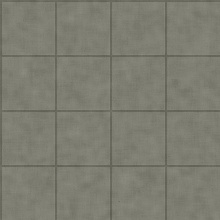 Procedural Stamped Sidewalk Concrete PBR Texture
 Procedural Fine Asphalt Road PBR Texture
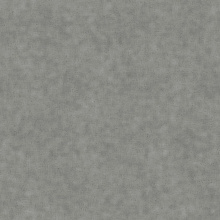 Procedural Pitted Concrete PBR Texture
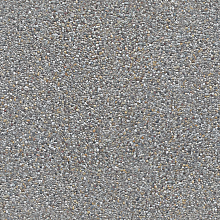 Seamless Concrete Pebble PBR Texture in 4K Resolution
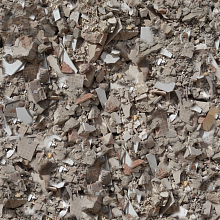 Seamless PBR Concrete Rubble Texture with Debris and Fragments
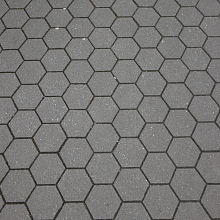 Seamless Hexagonal Concrete Tile PBR Texture 4K
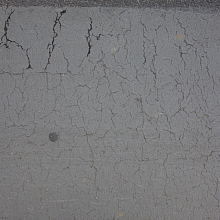 Cracked Asphalt Texture with Weathering