Comprehensive Guide to Lava Textures for PBR Workflows in 3D Art
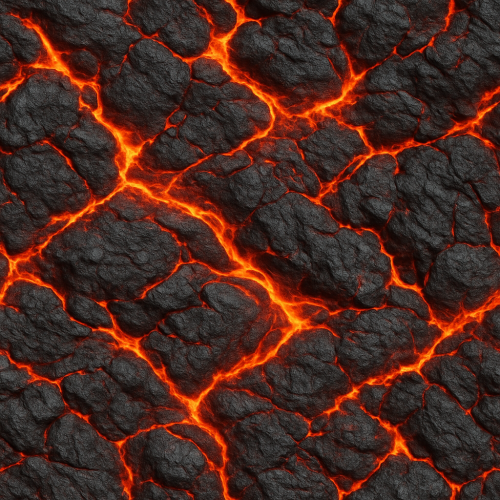
Capturing high-quality lava textures for physically based rendering (PBR) workflows demands a rigorous approach to acquisition that navigates the inherent difficulties of extreme environments while maximizing data fidelity and fidelity to natural variation. The fundamental goal is to acquire comprehensive, high-resolution datasets that serve as robust bases for albedo, roughness, normal, ambient occlusion (AO), height, and—where relevant—metallic maps, enabling the subsequent creation of seamless, tileable, and physically plausible materials. Achieving this requires a combination of specialized photogrammetry and scanning methodologies, careful calibration processes, and post-capture optimization tailored to real-time engines such as Unreal Engine or offline tools like Blender’s shading system.
Photogrammetry remains the primary technique for capturing natural lava surfaces, leveraging high-resolution photography to reconstruct detailed 3D geometry and texture maps. However, lava fields pose unique challenges: the extreme heat, irregular surface topology, and lack of uniform lighting conditions complicate both data acquisition and the subsequent alignment and reconstruction stages. Fieldwork often involves the use of remote-operated drones equipped with stabilized cameras, as direct human proximity is unsafe or impossible. These drones must be outfitted with calibrated, high-dynamic-range (HDR) capable sensors to capture the wide luminance variations of volcanic terrain, from glowing fissures to matte basalt crusts. HDR imaging is critical for preserving accurate albedo information without clipping highlights or losing shadow detail, which directly informs the base color and roughness interpretations in PBR materials.
To mitigate the effects of harsh lighting and specular highlights, capturing multiple images at varying exposures and polarizations is advisable. Polarizing filters can reduce glare from glassy obsidian surfaces, allowing for more accurate diffuse color capture. The photographic coverage must be dense and overlapping—minimum 70-80% overlap between images—to ensure robust feature matching during photogrammetric reconstruction. This dense coverage is essential to generate high-fidelity normal and height maps, as subtle undulations and micro-variations in the lava crust contribute significantly to the tactile realism of the final PBR texture.
Complementing photogrammetry, structured-light 3D scanning or LiDAR may be employed where operationally feasible. Structured-light scanning offers higher geometric precision, especially for capturing micro-geometry critical to accurate normal and height map generation. However, most portable scanners struggle to operate safely near active lava flows or hot volcanic surfaces. Instead, scanning is more practical on cooled, solidified lava samples collected from the field or in controlled laboratory settings. These scans allow for the capture of micro-variations in surface roughness and geometry that are otherwise difficult to discern from photogrammetric data alone. Integrating these scans with photogrammetric color data through meticulous registration enhances overall material fidelity.
Post-capture calibration is essential to align the various data channels accurately. This involves not only geometric registration of color and geometry but also color calibration to compensate for atmospheric distortions, sensor color biases, and lighting inconsistencies. Using standardized color targets during capture sessions—or referencing known surface reflectance targets placed in the environment—facilitates the correction of albedo maps to physically plausible reflectance values. Maintaining physically accurate albedo is paramount in PBR workflows, as it underpins energy-conserving shading and realistic light interaction.
Once raw data is acquired and calibrated, the creation of seamless, tileable lava textures begins with careful segmentation and projection. Lava fields rarely exhibit uniform repeating patterns, so generating tiles requires identifying and extracting representative patches that contain natural variation without obvious repetition. Tools such as Substance Designer or Blender’s texture node editor can assist in blending edges and introducing stochastic noise or micro-variation to break up tiling artifacts. Height and normal maps, derived from photogrammetry and scanning data, are essential in this phase to preserve the depth cues and surface detail that drive believable shading under dynamic lighting.
Roughness maps for lava surfaces demand particular attention, as these surfaces often exhibit a complex interplay between matte, weathered basalt and glossy, glass-like obsidian regions. Empirical testing with captured data and in-engine previews is critical to fine-tune roughness values so that the material responds correctly to reflections and specular highlights. In Unreal Engine, using the forward rendering path with proper roughness channel input calibrated from real-world measurements yields the most convincing results. Blender’s Principled BSDF shader also benefits from physically accurate roughness maps derived from high-resolution captures, especially when combined with micro-normal detail to simulate small-scale surface irregularities.
Ambient occlusion maps are typically baked from high-poly photogrammetric meshes, capturing self-shadowing effects that enhance the perception of crevices and fissures common in lava surfaces. Incorporating AO maps into the final PBR material adds depth and contrast without altering the albedo, which is vital for consistent shading under variable lighting environments. Height maps serve a dual purpose: they can be used for parallax occlusion mapping or displacement in game engines to add geometric complexity, and they provide the subtle relief cues that enhance the realism of normal map interpretation.
Optimization is a crucial final step before integrating lava textures into a production pipeline. Raw photogrammetry outputs are often excessively dense, with resolution far beyond what real-time engines can handle efficiently. Decimation and retopology workflows reduce polygon counts while preserving critical surface detail for baking maps. Texture resolution must be balanced between fidelity and performance, often requiring mipmapping strategies and channel packing (e.g., storing roughness, AO, and metallic in separate channels of a single texture map) to minimize draw calls and memory usage. Given that lava is non-metallic, the metallic channel typically remains zeroed, but it should still be included and verified to avoid shader artifacts.
In practice, the use of these high-quality lava PBR textures within engines like Unreal Engine benefits from physically accurate material setup within the shader graph, ensuring that the base color, roughness, normal, and height maps interact correctly with dynamic lighting and global illumination. Utilizing engine-specific features such as Unreal’s Virtual Texturing or Blender’s adaptive subdivision for displacement allows artists to leverage the full detail captured during acquisition without compromising runtime performance.
In summary, the acquisition of high-quality lava textures for PBR materials is a multidisciplinary process that requires navigating environmental hazards, employing advanced capture technologies, and applying stringent calibration and optimization workflows. The resulting textures, when correctly integrated, provide unparalleled realism and physical accuracy, capturing the subtle interplay of surface roughness, color variation, and micro-geometry that define volcanic terrains. This foundation empowers artists and technical directors to create immersive, believable environments where lava surfaces respond authentically to lighting, enhancing both visual fidelity and narrative impact.
Creating realistic and versatile lava PBR textures demands a nuanced integration of procedural generation and photographic authoring techniques, leveraging the strengths of both approaches to capture the complex interplay of molten fluidity, crustal fracturing, and incandescent glow. This hybrid methodology facilitates the production of highly detailed, tileable textures that can be efficiently calibrated and optimized for real-time rendering engines such as Unreal Engine and Blender’s Eevee or Cycles. The workflow typically involves distinct yet interrelated passes for albedo (base color), roughness, normal, ambient occlusion (AO), height (displacement), and occasionally metallic maps, each tailored to represent specific physical phenomena characteristic of lava surfaces.
Starting with procedural generation, software like Substance Designer provides a robust environment for algorithmically crafting the organic forms inherent to lava. The molten flows and cracked basalt crust can be modeled parametrically by combining noise functions such as Perlin, cellular, and fractal Brownian motion (fBm), layered with directional warp and slope blur nodes to simulate the fluid dynamics and cooling patterns. For instance, a base height map can be built by blending a turbulent flow map—representing the viscous molten rock—with high-frequency noise to generate sharp, jagged fracture lines emulating the cracked basalt. This height information is critical not only for displacement but also for generating accurate normal maps that convey the rough topology of solidified lava crust versus smooth liquid surfaces.
The albedo or base color map in procedural lava texturing hinges on simulating the thermal gradient visible in real lava flows. This gradient typically ranges from deep charcoals and blacks of cooled basalt to bright reds, oranges, and yellows in actively molten regions. In Substance Designer, gradient maps controlled by the height or temperature parameter can be applied to generate this color variation. By assigning warmer hues to lower height areas (molten lava pools) and cooler, desaturated tones to higher, solid crust regions, artists can achieve a realistic emissive transition. It is essential to keep the albedo physically plausible by avoiding oversaturated colors and maintaining energy conservation principles, ensuring that the base color does not artificially contribute to specular intensity or metallic reflections.
Photographic inputs play a complementary role and can be integrated in Substance Designer or Photoshop to introduce micro-variations and realistic surface detail that purely procedural methods might miss. High-resolution photographs of volcanic rock, cooled lava fields, and molten rock samples—preferably captured under neutral lighting—can be processed to extract albedo, roughness, and normal information. These photo-based maps are typically desaturated and normalized to avoid baked lighting or shadows, using techniques such as high-pass filtering and retouching to isolate surface detail. When these photographic details are blended with procedural outputs, they inject natural imperfections, such as subtle mineral veining, ash deposits, and irregular surface roughness, which enhance the believability of the texture at close inspection.
The roughness map requires careful attention to accurately simulate the varying reflectivity of lava surfaces. Fresh molten lava exhibits low roughness (high glossiness) due to its liquid, viscous state, whereas cooled basalt crust is much rougher and matte. Procedural masks driven by height or temperature maps can be used to dynamically assign roughness values, with smooth, low-height regions set to a roughness around 0.1–0.2 and cracked, elevated basalt areas closer to 0.7–0.9. Photographic roughness inputs can refine this distribution, particularly to add micro-roughness variations caused by ash and cooling patterns. Calibration of roughness values against reference images or real-time engine feedback is recommended to ensure the correct interaction with engine lighting models, especially in PBR workflows where roughness heavily influences specular reflections.
Normal maps should be derived from the high-resolution height maps generated procedurally or from photo-based displacement maps. In Substance Designer, the height map outputs can be converted to normal using standard nodes, but it’s critical to maintain a balanced detail scale to avoid overly sharp or noisy normals that might cause lighting artifacts. Combining procedural noise with photographic normal detail via blending modes (e.g., overlay or multiply) can produce rich surface complexity, including fine cracks and bubbles in the lava. To optimize for engine performance, artists should consider baking out normal maps at multiple resolutions, employing mipmapping and normal map compression formats supported by Unreal Engine (e.g., BC5) or Blender, ensuring that texture memory is used efficiently without sacrificing visual fidelity.
Ambient occlusion maps play a subtle but important role in enhancing depth perception in lava textures. Procedurally generated AO can be derived by simulating self-shadowing on the height map using curvature or cavity detection nodes within Substance Designer. When combined with photographic AO derived from ambient occlusion passes or curvature maps extracted from high-detail scans of volcanic rock, AO maps provide nuanced shadowing in cracks and crevices, which aids the engine’s global illumination calculations. It is advisable to keep AO maps grayscale with smooth gradations and avoid harsh edges, as this can interfere with engine-based dynamic lighting and baked GI solutions.
Height maps or displacement maps are central to achieving volumetric surface detail in lava textures. Procedural height maps must capture both large-scale undulations of lava flows and fine-scale crack networks. When authoring in Substance Designer, careful layering of noise scales enables control over macro and micro surface features. For real-time engines like Unreal, height maps are often used in parallax occlusion mapping (POM) or tessellation shaders to simulate depth without requiring heavy geometry. Calibration of height map intensity is crucial; excessive displacement can cause geometry popping or silhouette artifacts, whereas insufficient displacement loses the perception of ruggedness. Photographic height or displacement maps, derived from photogrammetry or normal-to-height conversions, can be integrated to add realistic surface irregularities, but should be retouched to ensure seamless tiling and consistent scale.
The metallic channel is generally not applicable for lava textures, as molten rock and basalt are non-metallic. However, some artists experiment with low metallic values in certain mineral-rich areas to simulate subtle conductive properties or specular highlights, though this must be done with caution to avoid unrealistic reflections.
Tiling and micro-variation techniques are paramount in avoiding visible repetition, particularly when lava textures are used over large terrains or assets. Procedural generation excels here by enabling seamless tileable outputs and randomization parameters that vary noise seeds, pattern scales, and color gradients. Photographic elements must be carefully edited in Photoshop or Substance Painter to remove hard edges and match tonal ranges for seamless tiling. Additionally, overlaying subtle, randomized detail maps driven by world-space UVs or triplanar projections in engine shaders can break repetition artifacts further. Incorporating vertex colors or vertex-blended masks can introduce localized variation without increasing texture memory footprint.
Calibration and optimization form the final critical phases. Artists should consistently validate textures under the target engine’s lighting environment, including dynamic and static lighting scenarios, to ensure albedo colors, roughness, and emissive properties behave as intended. In Unreal Engine, using the material editor’s preview alongside real-time lighting builds helps in fine-tuning emissive lava glow and subtle reflections. Baking out texture maps in appropriate bit depths (e.g., 8-bit for albedo and roughness, 16-bit for height maps when needed) balances quality with performance. Normal map compression settings, mipmap generation, and LOD bias must be adjusted to prevent aliasing and maintain crisp detail at varying camera distances.
In Blender, similar attention applies when using PBR shaders such as Principled BSDF. The height map can drive displacement modifiers or bump maps, while the roughness map controls specularity within the shader node tree. Blender’s viewport and Cycles render previews are useful for iterative refinement of texture maps, especially when replicating the emissive properties of molten lava by combining emission shaders with subsurface scattering or volumetric effects.
In sum, the convergence of procedural and photographic authoring techniques provides a powerful toolkit for 3D artists and technical directors aiming to create believable, physically accurate lava textures. Procedural generation offers parametric control over large-scale forms and seamless tiling, while photographic inputs inject organic detail and surface complexity. By carefully managing each PBR channel, calibrating textures within real-time engines, and optimizing for performance without sacrificing visual fidelity, artists can replicate the dynamic, harsh, and glowing characteristics of lava surfaces suitable for a variety of applications from game environments to cinematic assets.
Creating a comprehensive set of PBR maps for lava materials demands careful consideration of the distinctive visual and physical characteristics inherent to molten rock. Unlike conventional solid surfaces, lava presents a complex interplay of emissive glow, rough cooled crust, and dynamic surface details that must be accurately captured to achieve convincing realism in real-time engines such as Unreal Engine or offline rendering environments like Blender’s Cycles. Each essential map—BaseColor (Albedo), Normal, Roughness, Metallic, Ambient Occlusion, and Height/Displacement—serves a unique role in conveying the material’s response to light and geometry, necessitating precise generation and calibration.
Starting with the BaseColor map, lava’s albedo is fundamentally non-metallic but highly emissive in nature. Since emissive behavior is typically handled in a separate emissive map, the BaseColor texture should focus on the underlying diffuse coloration of both the molten and solidified portions. This texture requires a careful balance between the dark, almost blackened cooled crust and the bright orange to yellow gradients of the molten veins. When authoring the BaseColor, it is advisable to avoid baked lighting or shadows to maintain physical accuracy; the albedo should represent the pure material color under neutral lighting conditions. This can be achieved by sampling or painting spectral reference colors derived from high-quality photographic sources of lava flows, ensuring the tonal range covers deep charred blacks through vibrant fiery hues without bleeding into emissive territory. Calibration often involves isolating the emissive components in a separate texture or shader channel, preserving the BaseColor’s role as a neutral reflector, which is essential for accurate energy conservation in PBR workflows.
The Normal map is critical for simulating the intricate surface irregularities of lava, including the cracked crust patterns, small bubbles, and flowing ridges. Generating a Normal map typically requires high-resolution sculpting in a 3D application or deriving detail from displacement or height maps through a normal map baking process. Photogrammetry can also be employed to capture authentic micro-variations, but care must be taken to remove global curvature or tilt to prevent unnatural shading artifacts. When authoring the Normal map, the scale of detail must correspond to the intended viewing distance and texture tiling strategy; micro-variation should be incorporated to break up repetitive patterns and enhance realism. For lava, the Normal map often contains sharp edges corresponding to the cooling crust’s cracked geometry juxtaposed against smoother, flowing molten areas. Calibration should ensure the normal vectors remain within a physically plausible range to prevent rendering errors, and the intensity of the normal details should be fine-tuned to avoid exaggerated bumpiness that could detract from the material’s natural fluidity.
Roughness maps for lava materials present unique challenges due to the stark contrast between the glossy molten regions and the matte, rough crust. The roughness map controls the microsurface scattering, and for lava, it needs to represent the high glossiness of molten lava veins against the roughness of the cooling rock. Typically, molten lava exhibits very low roughness values, approaching mirror-like reflections, while the crust has high roughness, scattering light diffusely. When authoring roughness, it is effective to use grayscale maps where near-black values correspond to molten surfaces and near-white to the cooled crust. The roughness transitions can be softened or hardened depending on the specific lava type and desired effect. Calibration involves fine-tuning these values in the target engine to match real-world reflectance behavior; for instance, in Unreal Engine, the roughness channel directly influences the BRDF and should be tested with varying light angles to ensure correct specular highlights. Additionally, roughness maps may be combined with emissive or detail masks to simulate the heat glow bleeding into the reflections, a subtle but important aspect for realism.
The Metallic map for lava is generally straightforward, as lava is non-metallic and should consistently use a zero or black channel in the metallic slot. However, exceptions exist if the lava contains metallic mineral inclusions or slag deposits, which might warrant localized metallic values. This map, when used, must be carefully authored to avoid unintended metallic reflections that would violate the physical properties of molten rock. When in doubt, it is best practice to maintain a fully non-metallic metallic map to preserve energy-conserving PBR behavior.
Ambient Occlusion (AO) maps are indispensable for enhancing the perception of depth and shadowing in the complex topology of lava surfaces. AO maps simulate occlusion of ambient light in crevices, cracks, and cavities within the lava crust, adding subtle shadowing that improves spatial definition without the cost of real-time global illumination. For lava, AO maps should be generated from high-resolution geometry or baked from displacement maps to capture the intricate fissures and roughened surfaces accurately. Given the organic and irregular nature of lava, AO textures benefit from high-frequency detail and subtle gradations rather than harsh black-and-white contrasts. When calibrating the AO map, it is important to control its intensity and blending mode within the engine to avoid overly darkening emissive or molten regions, which would counteract the natural glow effect. In engines like Unreal or Blender, AO is typically multiplied with the BaseColor or combined within the material shader, so ensuring proper gamma correction and linear workflow consistency is crucial.
Height or Displacement maps provide geometric displacement information that enhances the surface realism of lava through parallax or tessellation techniques. Unlike Normal maps, which simulate fine surface detail, Height maps can drive actual geometric offsets, useful for large cracks, ridges, and flow structures. Authoring height maps for lava requires high-resolution grayscale textures where brighter values represent raised areas such as cooled crust ridges, and darker values denote lower molten pools or fissures. These maps can be derived from sculpted geometry or converted from grayscale photographs, but should be carefully normalized to prevent excessive geometric distortion during tessellation. Calibration involves adjusting displacement strength in the rendering engine to balance between noticeable relief and performance constraints. In Unreal Engine, height maps can be plugged into tessellation or displacement inputs, with parameters such as displacement scale and bias finely tuned to avoid unnatural stretching or seam artifacts. In Blender, displacement maps are often combined with subdivision modifiers and material nodes to achieve similar effects, with attention paid to UV layout to minimize visible tiling or seams.
Tiling and texture repetition are paramount considerations when working with lava PBR maps. Given the organic and chaotic nature of lava flows, uniform tiling patterns can rapidly break immersion. To mitigate this, it is advisable to author tileable base textures that incorporate micro-variation and noise to mask repetition. Techniques such as blending multiple texture layers with rotated or offset UVs, using procedural noise overlays, or employing triplanar projection can be effective. Additionally, detail maps at higher frequencies can be multiplied over the base textures to add small-scale variation without increasing the primary texture resolution. Calibration of tiling scale must also consider the scale of the 3D asset and camera proximity to maintain consistent visual density.
Optimization plays a critical role in the practical usage of lava PBR textures. Given the potentially high resolution of detail required to capture fine surface cracks and emissive veins, careful channel packing can reduce memory usage. For example, combining Roughness, AO, and Metallic maps into separate channels of a single texture (e.g., R, G, B) is a common optimization strategy, provided their ranges and blending modes are compatible. Emissive maps are often stored separately due to their unique HDR requirements. Normal maps should remain uncompressed or use high-quality compression to preserve subtle details, especially because lava surfaces rely heavily on normal-based lighting cues. Furthermore, the use of mipmaps and anisotropic filtering in engines must be calibrated to maintain sharpness of detail at oblique viewing angles without introducing aliasing artifacts.
Within Unreal Engine, the PBR workflow for lava materials typically involves setting up a master material with parameters controlling emissive intensity, roughness variation, and normal map strength. The engine’s physically accurate lighting model benefits from linear color space textures and correct sRGB settings for BaseColor and emissive maps. Height maps feed into tessellation or world displacement nodes, with careful attention to performance trade-offs on different hardware. Similarly, Blender’s Cycles renderer uses Principled BSDF shaders where BaseColor, Normal, Roughness, and Displacement inputs are connected with texture nodes, allowing fine control over displacement via vector displacement or bump mapping. Blender’s node-based workflow facilitates procedural blending of noise and detail maps to enhance micro-variation.
In summary, the creation of complete PBR map sets for lava materials demands a rigorous, detail-oriented approach that respects the physical and optical properties of molten rock. By accurately authoring and calibrating each map—BaseColor for diffuse color without baked lighting, Normal for intricate surface detail, Roughness for contrasting glossiness, Metallic generally set to zero, AO for shadow occlusion, and Height for geometric displacement—artists can achieve a convincing lava material that responds realistically to lighting and geometry in diverse rendering engines. The careful integration of tiling strategies, channel packing, and engine-specific calibration ensures that these textures not only look authentic but also perform efficiently in production pipelines.
FAQ
What is covered in this guide?
This guide explains Comprehensive Guide to Lava Textures for PBR Workflows in 3D Art with practical notes for seamless PBR materials, texture setup, and production use.
Can I use these texture techniques in Blender, Unreal Engine, and Unity?
Yes. The workflow focuses on standard PBR maps and tileable materials that can be used in Blender, Unreal Engine, Unity, archviz, games, and VFX pipelines.
Where can I find textures for this workflow?
Use the AITextured texture library and the related texture links on this page to find seamless PBR materials and preview them before download.
Related Textures
 Procedural Lime Plaster Wall PBR Texture
 Procedural Stamped Sidewalk Concrete PBR Texture
 Procedural Fine Asphalt Road PBR Texture
 Procedural Pitted Concrete PBR Texture
 Seamless Concrete Pebble PBR Texture in 4K Resolution
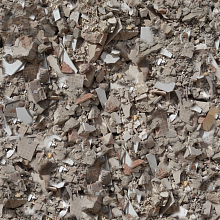 Seamless PBR Concrete Rubble Texture with Debris and Fragments
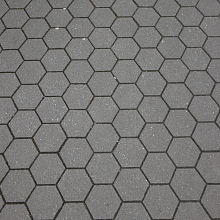 Seamless Hexagonal Concrete Tile PBR Texture 4K
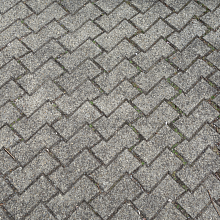 Realistic Concrete Paving Brick Pattern Texture