Comprehensive Guide to Mermaid Scale Seamless PBR Textures for 3D Design
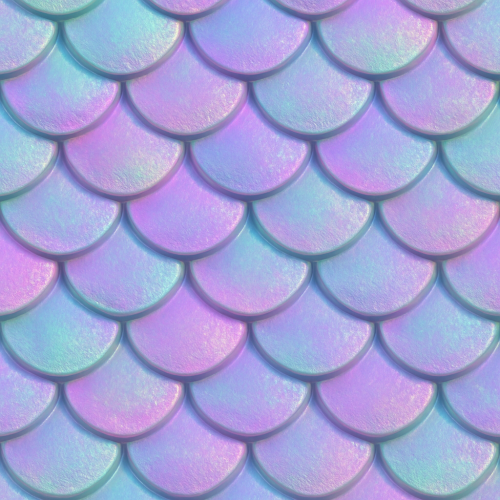
Acquiring high-fidelity mermaid scale textures for physically based rendering (PBR) demands a nuanced approach to capturing the distinct microstructure, subtle iridescence, and intricate overlapping patterns characteristic of these organic surfaces. Unlike typical reptilian or fish scales, mermaid scale textures often incorporate a delicate interplay of translucency, varying reflectance, and micro-geometry that challenges conventional capture and scanning techniques. This section explores the practical methodologies for obtaining high-resolution data through scanning and photogrammetry, addresses the inherent difficulties posed by the scales’ optical properties, and outlines best practices for preparing raw captures into coherent PBR texture sets suitable for integration into modern engines such as Unreal Engine and Blender.
The foundation of any credible mermaid scale texture is a high-resolution, physically accurate capture of the surface’s microstructure and color variation. While the subject is fictional, artists typically reference real-world analogs such as fish scales, reptile skin, or synthetic scale props fabricated with appropriate materials. When working with physical samples, flat or gently curved scale surfaces are preferable to minimize distortion during capture. The goal is to generate a suite of texture maps—albedo (or base color), roughness, normal, ambient occlusion (AO), height, and, if applicable, metallic—that collectively define the appearance under PBR principles.
High-resolution scanning, particularly with structured light or laser scanners, can capture precise normal and height data of the scale surface. These devices project controlled light patterns onto the sample and measure surface deviations at sub-millimeter precision. The resulting point clouds or mesh scans provide essential micro-geometry that informs normal and height maps, crucial for simulating the subtle ridges and overlap of individual scales without relying solely on bump or normal map illusions. However, the reflective and translucent properties of mermaid scales complicate structured light capture. The scales’ iridescence—caused by thin-film interference in real-world analogs—can introduce specular highlights and color shifts that interfere with the scanner’s projected pattern detection. To mitigate this, polarizing filters on both the light source and camera sensor can reduce glare, though this often requires careful calibration to avoid attenuating the signal excessively.
Photogrammetry offers a complementary method, leveraging multiple high-resolution photographs taken from diverse angles to reconstruct the surface geometry and texture. This technique excels in capturing color fidelity and subtle gradient shifts in the albedo map, which is essential for reproducing the mermaid scale’s characteristic pearlescent hues. To optimize photogrammetry for this purpose, diffuse, even lighting setups are mandatory to minimize specular hotspots and maintain consistent exposure across the scale surface. Employing cross-polarized lighting—polarizer on the light sources and a matched polarizer on the camera lens—significantly reduces specular reflections and enhances the visibility of diffuse color information, thereby improving the quality of the albedo texture.
However, photogrammetry alone struggles to retrieve accurate normal and height information for fine-scale overlapping patterns due to the limited resolution of reconstructed meshes and the tendency of software to smooth out intricate details. Thus, combining photogrammetry for color and roughness data with high-resolution laser or structured light scans for geometry often yields the best results. The normal maps derived from scanned geometry can then be baked into the photogrammetry mesh to embed micro-variations reflective of real scale overlaps and undulations.
Documenting the subtle iridescence intrinsic to mermaid scales presents a significant challenge. Traditional PBR workflows do not natively account for angle-dependent color shifts caused by thin-film interference or multilayered structures. Hence, capturing this optical phenomenon requires specialized acquisition strategies. Multi-angle photometric capture setups, where images are taken under varying lighting and viewing angles, help sample the reflectance anisotropy and specular color shifts. These images can be integrated into layered shader workflows or used to generate custom specular or sheen maps. When authoring textures for engines like Unreal Engine 5, artists often exploit subsurface scattering (SSS) and anisotropic shading models to simulate iridescence. The acquired data informs parameters controlling these effects, although the bulk of the iridescent appearance is typically artist-driven post-processing rather than purely data-derived.
Raw data preparation is critical before integrating captures into PBR pipelines. Starting with the albedo map, it is essential to remove specular contamination and color casts caused by lighting during capture. Cross-polarized image sequences assist in isolating the true diffuse color, but minor manual or procedural corrections may still be necessary to ensure the albedo texture contains no baked-in shadows or highlights, preserving energy conservation in the PBR workflow. The roughness map can be extrapolated from the variance in specular highlight intensity across the multi-angle captures, or approximated via grayscale conversion of photographic data emphasizing micro-surface imperfections. Scanning data, especially from structured light or laser scans, should be cleaned and retopologized to remove noise and artifacts, then baked into normal and height maps at resolutions compatible with intended real-time or offline usage.
Ambient occlusion maps derived from high-poly geometry or captured via cavity extraction algorithms enhance the perception of scale overlap depth and crevice detail. However, AO must be carefully balanced with indirect lighting in the engine to prevent excessive darkening of scale intersections. Metallic maps are generally not applicable unless the source material is artificially metallic, as natural mermaid scales analogs tend to exhibit dielectric properties with low or zero metallic reflectance.
Tiling and micro-variation are crucial for avoiding repetitive patterns that break immersion in game or film environments. Since mermaid scale surfaces consist of repeated but non-uniform overlapping elements, seamless tiling of captured textures requires meticulous edge matching and retouching. Techniques such as cloning, offset wrapping, and micro-normal map blending help maintain continuity without visible seams. In addition, authoring micro-variation maps—noise or detail maps layered over base textures—injects stochastic surface irregularities that mimic natural imperfections like scale wear, scratches, or biological variance. These can be procedural or hand-painted and blended within material shaders to add realism, especially when tiling large surfaces.
Calibration between capture devices and color management workflows is indispensable for consistency. Cameras and scanners must be profiled using color targets and gray cards to ensure linear color space capture, which is essential for accurate PBR albedo textures. Similarly, scale models or samples should be imaged under spectrally neutral lighting conditions, ideally using standardized light sources such as D65, to minimize color shifts that complicate shader setup downstream. Maintaining a linear workflow from capture through texture baking and shader authoring safeguards the physical plausibility of the final material.
From an optimization standpoint, balancing texture resolution with performance constraints is pivotal. High-resolution captures, often exceeding 8K in dimension, must be downsampled or mipmapped appropriately to fit memory budgets without sacrificing detail critical to close-up shots. Normal and height maps benefit from compression formats that preserve quality, such as BC5 or BC7 for GPU efficiency. Unreal Engine’s virtual texturing and Blender’s adaptive subdivision tools facilitate handling of large texture sets while maintaining fidelity.
In practical engine usage, integrating mermaid scale PBR textures involves leveraging material nodes that blend multiple maps to replicate the complex interplay of diffuse reflection, specular highlights, and subsurface scattering. For example, Unreal Engine’s material editor allows the combination of normal, roughness, and AO maps with SSS profiles and anisotropic shading to simulate the subtle light diffusion through scale layers. Blender’s Principled BSDF shader enables similar setups with node groups for layering micro-surface details and fine-tuning specular response. Artists often incorporate custom shader code or material functions to approximate iridescence through Fresnel-based color shifts or layered reflectance models informed by the acquired multi-angle data.
In summary, acquiring authentic mermaid scale textures for PBR involves a hybrid approach combining high-resolution structured light or laser scanning with multi-angle photogrammetry, meticulous raw data calibration, and detailed post-processing to generate coherent texture sets. Overcoming challenges related to iridescence and scale overlap necessitates both advanced capture techniques and thoughtful shader authoring. Proper preparation and optimization ensure the resulting materials integrate seamlessly into real-time and offline rendering pipelines, enabling physically plausible and visually compelling mermaid scale surfaces.
Creating convincing mermaid scale textures within a physically based rendering (PBR) workflow requires a nuanced approach that combines procedural generation techniques with photo-based editing to capture the subtleties of natural scale patterns, iridescence, and surface complexity. The intricate layering of pastel hues and delicate shimmer effects, along with precise control over glossiness and microstructure, challenges artists to balance artistic intuition with technical rigor, ensuring the textures not only look organic but also respond accurately under varying lighting conditions in real-time engines such as Unreal Engine or offline renderers like Blender’s Cycles.
At the core of effective mermaid scale texture authoring lies the generation of a seamless base color (albedo) map that harmonizes pastel gradients with the characteristic pearlescent quality of underwater scales. Procedural generation proves invaluable here, allowing the creation of complex, tileable scale patterns without obvious repetition or tiling artifacts. This typically involves leveraging noise functions and pattern generators—such as Voronoi or cellular noise—to simulate the overlapping, slightly offset hexagonal or rounded scale shapes. By combining these with gradient ramps and color variation nodes, artists can emulate the subtle shifts in hue characteristic of iridescence, where colors softly transition across scales, often blending soft pinks, aquamarines, lilacs, and pale greens. Importantly, these procedural maps are often exported at high resolution (4K or above) to preserve detail when applied to high-poly models, but must be optimized through mipmapping and anisotropic filtering to maintain performance in game engines.
Photo-based editing complements procedural generation by adding realistic surface detail and natural imperfections that purely algorithmic methods struggle to replicate. High-resolution photographs of fish scales, reptile skin, or actual mermaid tail references (fabric or costume materials) can be used as base textures or masks to introduce organic micro-variations in color and texture. These photos undergo extensive calibration—color correction, tonal adjustment, and desaturation or selective color shifts—to align with the desired pastel and iridescent palette. Masks extracted from photo references help isolate scale edges or highlight fine ridges, which are crucial for generating accurate roughness and normal maps.
The roughness map in mermaid scale textures is particularly critical, as it governs how light interacts with the surface gloss, thereby simulating the wet, reflective quality of scales. Procedurally, roughness can be modulated across individual scales to avoid uniform shininess, which would appear unnatural. This is achieved by layering noise textures or using height-based masks derived from the scale pattern to vary roughness dynamically—edges may be glossier to simulate the thin keratin layer often observed on natural scales, while central scale areas may be more matte to suggest subsurface scattering or micro-abrasion. When using photo references, roughness maps can be derived from the luminance or specular characteristics of the source images, combined with hand-painted adjustments to enhance contrast where sparkle or wetness is desired.
Normal maps demand a delicate balance to replicate the fine ridges and subtle curvature of overlapping scales without introducing hard edges that disrupt silhouette smoothness. Procedural generation of normal maps often involves layering base shape normals derived from the scale pattern with high-frequency detail noise to simulate micro-bumps and scratches. Height maps, which feed into normal map baking or parallax occlusion mapping, can be created by converting grayscale procedural masks into depth information, ensuring the scale edges have a convincing raised profile. In photo-based workflows, displacement or height maps can be extracted through photogrammetry or dedicated height-from-shading algorithms, though these require additional cleanup to remove noise and ensure tileability.
Ambient occlusion (AO) maps complement this by simulating soft shadowing in the crevices between scales, enhancing depth perception and realism. AO can be generated procedurally by simulating self-shadowing based on the scale pattern’s geometry or baked from 3D high-poly models. When baked, the AO map must be carefully calibrated to avoid overly dark occlusion that would desaturate the pastel hues in the albedo texture. In procedurally generated AO, the scale overlap and curvature can be modeled using curvature maps or cavity maps, which help to modulate occlusion intensity naturally across the texture.
The metallic channel is generally minimal or unused in mermaid scale textures unless the artistic direction calls for an exaggerated metallic sheen reminiscent of certain fish species. If employed, it must be carefully integrated with iridescence effects to avoid flat, unrealistic reflections. Instead, artists often simulate metallic reflections through anisotropic specular highlights and layered gloss variations in the roughness map rather than relying on metallic workflow parameters.
A critical dimension of mermaid scale texture authoring is the incorporation of iridescence and sparkle, which are challenging to represent within standard PBR workflows due to their angle-dependent color shifts and specular complexity. While physically accurate iridescence requires complex shader setups beyond traditional PBR channels, the base texture maps can be optimized to support such effects by encoding subtle hue shifts and gloss variations. For example, layering noise masks with slightly shifted hue values in the albedo can mimic the diffraction of light across scales. Additionally, glossiness variations and specular masks can be fine-tuned to enhance sparkle in specific regions, often near scale edges or raised ridges, which catch light differently at varying viewing angles.
Software tools like Substance Designer and Substance Painter are central to this process, offering robust procedural generation capabilities alongside powerful photo-editing and painting tools. In Substance Designer, artists can construct a node-based graph that procedurally generates the scale pattern, controls color variation, and outputs all essential PBR maps in a synchronized manner. The graph can include curvature and ambient occlusion baking nodes, height map generation, and roughness modulation layers, enabling iterative and non-destructive workflows that facilitate precise calibration. Substance Painter complements this by allowing direct painting over the procedural base, integrating photo-sourced details, and adding localized sparkle effects with emissive or gloss channels. The software’s real-time viewport preview, supporting PBR shading models with IBL (Image-Based Lighting), enables artists to evaluate the interplay of pastel colors, gloss, and normal details under various lighting environments akin to underwater scenes.
When integrating these textures into engines such as Unreal Engine, attention must be paid to texture coordinate scaling to ensure seamless tiling without visible seams or scale repetition patterns. The use of triplanar mapping can mitigate UV stretching on complex mermaid tail models, especially where organic deformation occurs. Furthermore, Unreal’s material editor supports anisotropic shading models and layered materials, which can be utilized to simulate iridescence more convincingly by combining base textures with dynamic fresnel or angle-dependent effects. Calibration of texture parameters within the engine—such as specular intensity, roughness, and normal map strength—is key to achieving a balanced look that preserves the softness of pastel colors while maintaining the sharpness of scale micro-details.
In Blender, the node-based shader editor allows similarly precise control, with the added benefit of procedural texture nodes directly within the material graph. Artists can combine procedural scale patterns with image textures, manipulate roughness and normal inputs dynamically, and leverage Blender’s advanced subsurface scattering and anisotropic shaders to simulate the complex light behavior of mermaid scales. Baking high-poly detail to low-poly maps within Blender also facilitates efficient texture authoring, enabling the capture of sculpted scale relief in normal and height maps that are then refined procedurally or photo-enhanced.
Optimization remains a crucial consideration throughout all stages of mermaid scale texture creation. High-frequency details that contribute to realism must be balanced against memory constraints and rendering budgets, particularly in real-time applications. Employing texture atlases, channel packing (e.g., storing roughness, metallic, and AO in separate channels of a single texture), and mipmap generation are standard practices that preserve detail fidelity at various distances. Additionally, introducing controlled micro-variation through noise and subtle color shifts helps break uniformity without increasing texture resolution, maintaining visual richness with less resource consumption.
In summary, the synthesis of procedural methods and photo-based editing within a PBR workflow enables the creation of mermaid scale textures that are rich in detail, color complexity, and physical accuracy. Mastery of procedural pattern generation, nuanced color calibration, layered roughness and gloss control, and precise normal and height map authoring, combined with strategic engine integration and optimization, empowers artists to craft underwater scale surfaces that respond realistically to varied lighting while retaining the ethereal qualities that define mermaid aesthetics.
Creating physically based rendering (PBR) maps for mermaid scale materials requires a nuanced approach that balances the intricate surface detail of scales with the unique optical characteristics of underwater environments. The process begins by establishing a solid foundation in the essential maps: albedo (base color), roughness, metallic, normal, and height. Each map plays a critical role in simulating the complex interplay of light on iridescent, reflective surfaces, and it is through their careful generation, refinement, and calibration that a convincing mermaid scale material emerges.
Starting with the albedo map, it is important to capture the subtle color shifts and translucency inherent in mermaid scales. Unlike flat surfaces, scales often exhibit a pearlescent or opalescent quality, where base hues transition softly across the scale surface due to microstructural interference. When authoring the albedo, it is advisable to avoid baking direct lighting or shadows into the texture, as these should be handled dynamically by the rendering engine. Instead, focus on mapping the diffuse reflectance—essentially the intrinsic color—while factoring in slight color variations between adjacent scales to prevent a monotonous tiled appearance. High-resolution photo references of fish or reptilian scales can serve as a starting point, but must be extensively color-corrected and stylized to achieve the fantastical tones typical of mermaid skin. Techniques such as hand-painting subtle gradients or using layered procedural masks in software like Substance Designer or Blender’s texture painting tools are effective for introducing these nuanced chromatic shifts.
Moving to the roughness map, this channel controls the microsurface scattering and glossiness, which are pivotal for capturing the wet, slippery look of scales submerged in water. Mermaid scales tend to have a low roughness value overall, imparting a glossy, reflective sheen, but with localized micro-variations to replicate natural imperfections and surface complexity. To author this map, start by defining broad areas of smoothness interspersed with slightly rougher regions corresponding to scale edges, ridges, or minor surface damage. Procedural noise and curvature maps are invaluable here, as they help isolate scale borders and small crevices where roughness subtly increases. Additionally, layering fine-grained noise at a small scale introduces believable micro-roughness, breaking up uniform glossiness that can otherwise look artificial. Calibration of the roughness values should be performed within the target engine—Unreal Engine or Blender’s Eevee/Cycles renderer—using environment maps that mimic underwater lighting to assess how light scatters and reflects off the surface. It is critical to ensure the roughness range is well balanced; values that are too low result in overly sharp reflections, while values too high produce a dull, plastic-like finish.
The metallic map for mermaid scales is generally more restrained. Since scales are organic and do not possess metallic properties in the traditional sense, this channel often remains at or near zero. However, subtle use of metallicity can enhance the perception of iridescence if the material is designed to simulate biogenic structural coloration or thin-film interference effects. In such cases, a grayscale metallic map can be used to accentuate the reflective qualities of certain scale regions, especially along edges or ridges where microscopic metallic flakes or mineral deposits might exist. Careful blending between non-metallic and slightly metallic areas helps create a material that interacts more realistically with environment lighting without appearing overtly artificial. When working within PBR workflows, remember that metallic and roughness maps interact closely; metallic surfaces should generally have lower roughness to maintain their characteristic specular response.
The normal map is one of the most critical maps in defining the scale geometry without adding excessive polygonal detail. Given the repetitive yet organically varied structure of mermaid scales, normal maps must encode the subtle convex curvature of individual scales, the raised ridges along scale edges, and any micro-scratches or surface imperfections. Generating normal maps can begin with high-poly sculpting in software such as ZBrush or Blender’s sculpt mode, where scales can be individually modeled or generated using alpha brushes specifically designed for scale patterns. Alternatively, procedural generation approaches in tools like Substance Designer allow for parametric control over scale shape, orientation, and density, facilitating the creation of tileable normal maps with adjustable variation. Once the high-poly detail is baked onto a low-poly mesh, refinement can continue by layering small-scale noise and micro-detail normal maps to simulate fine surface texture, such as the minute undulations caused by the skin’s elasticity and water movement. Calibration involves inspecting the normal map under diverse light angles and intensities in your target engine’s viewport, ensuring that the highlights and shadows behave naturally to enhance the three-dimensional illusion.
Height maps complement the normal maps by providing displacement or parallax information. While normal maps convey surface direction, height maps describe actual depth variation, which is particularly effective for simulating the layered arrangement of overlapping scales. For mermaid scales, height maps should emphasize the raised edges and subtle dips between scales, enhancing silhouette detail when viewed at grazing angles. When authoring height maps, it is essential to maintain a consistent scale and avoid excessive displacement values that could cause mesh distortion or shadow artifacts. Procedural generation using curvature or edge detection filters applied to the base scale pattern can yield a height map emphasizing scale boundaries. In engines like Unreal Engine, height maps can be used with tessellation or parallax occlusion mapping to add real geometric complexity dynamically, improving realism without a heavy polygonal cost. Calibration involves iterative testing with the displacement settings in the shader, ensuring that the parallax effect remains believable and does not introduce popping or unnatural silhouette changes during camera movement.
Ambient occlusion (AO), while sometimes considered ancillary, plays a vital role in anchoring the scales visually by simulating the subtle shadowing where scales overlap or curve inward. AO maps can be baked from the high-poly mesh or generated procedurally and should be integrated into the material’s overall lighting response, often multiplied with the albedo in the shader to darken occluded areas. For mermaid scales, AO must be carefully balanced to avoid overly harsh shadows that contradict the soft underwater lighting conditions. Instead, the AO should be subtle, enhancing depth perception without overwhelming the reflective highlights.
Tiling and micro-variation in all maps are crucial given that mermaid scales often cover large surface areas. Repeating patterns risk appearing artificial and break immersion. To mitigate this, introduce randomization in scale orientation, color variation, and micro-surface detail across the maps. In Substance Designer, for example, non-uniform scale generators and directional noise nodes can prevent obvious repetition, while hand-painting or vertex color masks can help blend between different tile sets. In Blender, texture coordinate manipulation and layered procedural textures serve similar purposes. Calibration of tiling density must consider the character’s scale and viewing distance, ensuring texture resolution is sufficient to maintain detail without excessive memory cost.
Optimization is another important aspect. Given the potentially high resolution and number of maps required, it is vital to balance visual fidelity with performance. Compressing textures using appropriate formats such as BC7 or ASTC, and packing grayscale maps like roughness, metallic, and AO into separate channels of a single texture (e.g., ORM maps) can significantly reduce memory usage. When working in Unreal Engine, take advantage of material instances and parameter masks to control map influence dynamically, enabling runtime variation without duplicating assets. Similarly, Blender’s shader nodes allow for efficient map blending and procedural detail addition, which can reduce the need for multiple high-resolution texture maps.
In summary, the creation and refinement of PBR maps for mermaid scale materials demand a multi-faceted approach that carefully integrates color fidelity, surface microgeometry, and reflective properties. The albedo map sets the foundation with subtle color gradients and translucency; roughness controls glossiness and wetness; metallic adds nuanced reflectivity where appropriate; normal and height maps sculpt the three-dimensional scale topology; and AO anchors the material’s depth perception. Calibration within the target rendering engine, mindful tiling strategies, and performance optimization ensure that the final material convincingly simulates the shimmering, iridescent, and dynamic nature of mermaid scales in underwater lighting conditions. This comprehensive workflow enables artists and technical directors to push beyond static textures and achieve compelling, physically plausible representations of one of the most challenging organic materials in digital content creation.
FAQ
What is covered in this guide?
This guide explains Comprehensive Guide to Mermaid Scale Seamless PBR Textures for 3D Design with practical notes for seamless PBR materials, texture setup, and production use.
Can I use these texture techniques in Blender, Unreal Engine, and Unity?
Yes. The workflow focuses on standard PBR maps and tileable materials that can be used in Blender, Unreal Engine, Unity, archviz, games, and VFX pipelines.
Where can I find textures for this workflow?
Use the AITextured texture library and the related texture links on this page to find seamless PBR materials and preview them before download.
Related Textures
 Procedural Stamped Sidewalk Concrete PBR Texture
 Procedural Fine Asphalt Road PBR Texture
 Procedural Pitted Concrete PBR Texture
 Seamless Concrete Pebble PBR Texture in 4K Resolution
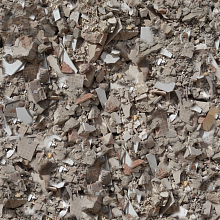 Seamless PBR Concrete Rubble Texture with Debris and Fragments
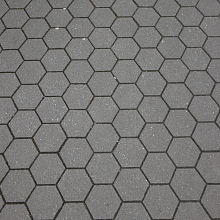 Seamless Hexagonal Concrete Tile PBR Texture 4K
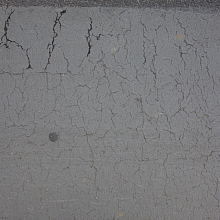 Cracked Asphalt Texture with Weathering