Comprehensive Guide to Seamless Granite Textures for PBR Workflows
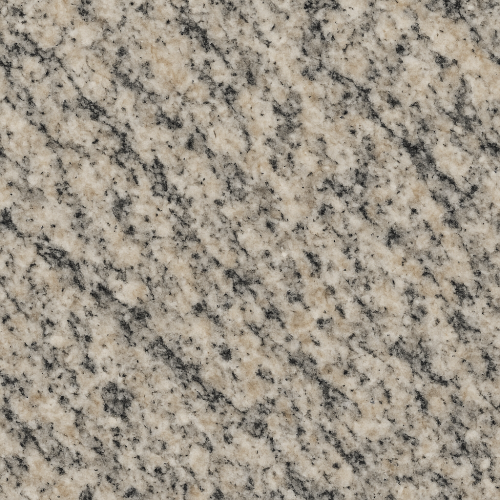
Capturing authentic granite surface data for physically based rendering (PBR) workflows demands a meticulous balance between high-fidelity acquisition techniques and practical considerations for integration within real-time engines such as Unreal Engine or offline renderers like Blender's Cycles. Granite’s inherent complexity—stemming from its heterogeneous mineral composition, intricate veining, and subtle micro-structural variations—necessitates acquiring multi-channel data sets that accurately represent both its macroscopic and microscopic features. Achieving this begins with an informed choice among available acquisition methods, predominantly high-resolution 3D scanning and photogrammetry, each presenting unique strengths and challenges in capturing color, geometry, and fine surface detail.
High-resolution 3D scanning, often employing structured light or laser scanning devices, excels at capturing precise geometric information critical for generating normal maps, height maps, and ambient occlusion (AO) data. Granite’s surface, while generally non-metallic, exhibits complex micro-reliefs corresponding to mineral grain boundaries and weathering patterns, which can be effectively resolved by scanners capable of sub-millimeter accuracy. However, granite’s reflective and occasionally specular surface properties—due to quartz and mica inclusions—can complicate laser scans by introducing noise or dropout points. To mitigate this, pre-scan preparation such as applying a removable matte spray may be necessary to reduce reflectivity and improve scan fidelity. This step, while invasive, ensures the acquisition of clean geometry data without sacrificing the subtle topographical cues essential for realistic roughness and normal map generation.
Photogrammetry complements scanning by offering a robust solution for capturing high-resolution albedo or base color textures with natural lighting conditions, critical for preserving granite’s variegated coloration and complex mineral inclusions. Using a calibrated multi-angle photographic setup, often with controlled diffuse lighting, photogrammetry reconstructs both geometry and texture data simultaneously, producing dense point clouds and textured meshes. However, photogrammetry’s reliance on surface texture contrast poses challenges with granite, as its grain boundaries and veins sometimes lack sufficient color differentiation to resolve geometry at the micro-scale, especially in uniform regions dominated by feldspar or quartz. Thus, combining photogrammetry with high-resolution scanning often yields the best results: scanning provides precise geometry for normal and height maps, while photogrammetry captures rich, physically accurate color variations and subtle translucency effects.
For PBR texturing workflows, the acquisition process must anticipate the generation of multiple texture maps beyond albedo. Roughness maps, for instance, benefit from direct capture or derivation from scanned micro-geometry data. Given granite’s heterogeneous surface finish—sometimes polished and reflective, other times rough and matte—capturing spatial roughness variation is critical. This can be achieved by analyzing micro-surface normals or via specialized reflectance measurement setups such as gonioreflectometers, although these instruments are less accessible and more time-consuming. Alternatively, roughness can be inferred by combining geometric detail from height and normal maps with calibrated photographic data under controlled lighting, ensuring the roughness map reflects real-world specular response variations across mineral phases.
Ambient occlusion maps derived from high-resolution geometry scans provide a crucial layer of depth perception for granite surfaces, accentuating grain boundaries, micro-crevices, and vein intersections. Generating AO requires careful processing to avoid over-darkening areas with shallow cavities, which could lead to unnatural shading in PBR workflows. Calibration against photographic references ensures AO maps complement rather than dominate the lighting model, preserving the subtle interplay of light on granite’s complex surface.
Height maps, often extracted directly from scanned geometry or through displacement map baking, facilitate parallax and tessellation effects in engines like Unreal Engine and Blender. Granite’s stratified and fractured structure benefits from accurate height data to produce realistic surface depth without relying solely on normal maps. However, height data must be optimized for tileability and memory efficiency. Granite’s natural patterns rarely repeat perfectly, so techniques such as seamless tiling via texture synthesis or blending multiple scanned patches are essential. This requires careful alignment of height discrepancies and color discontinuities across tile boundaries, often leveraging procedural tools in Blender or Unreal’s material editor to mask and blend seams dynamically.
Metallic maps are generally negligible for granite, as its constituent minerals are non-metallic by nature. However, in rare cases where minor metal inclusions or oxidized veins appear, subtle metallicity values can be introduced, but this remains an exception rather than a rule. Instead, focus should be placed on accurately capturing subsurface scattering and translucency in quartz-rich regions, which influence light diffusion and contribute to granite’s characteristic depth and luster under certain lighting conditions. While not always straightforward to acquire, incorporating subsurface scattering parameters into shader setups enhances realism, especially in close-up renders.
Calibration of acquired data is a critical step to ensure the fidelity of the PBR textures. This involves correlating photographic color data with measured reflectance and geometric detail to maintain consistent scale and lighting response. Color calibration targets and neutral gray cards used during photogrammetry sessions help normalize albedo textures, preventing color shifts that could disrupt material consistency in the engine. Similarly, geometric calibration ensures that normal, height, and AO maps derived from scanning data align perfectly with texture maps, avoiding shading artifacts. Tools within Blender’s texture baking suite or Unreal Engine’s material editor facilitate this alignment, enabling artists to visualize and tweak maps interactively.
Optimization is paramount given the high-resolution nature of granite surface data. Raw scans and photogrammetric meshes are often dense and unwieldy for real-time applications. Decimation and retopology reduce polygon counts without compromising critical surface details, while texture atlasing and mipmapping manage memory usage efficiently. Baking detail maps at multiple resolutions preserves micro-variation, maintaining visual complexity even at lower LODs. Furthermore, layering detail normal maps with tiled base textures in Unreal Engine’s material graph allows for scalable detail across large surfaces without repetitive patterns. Procedural noise masks blended with scanned data introduce natural variation, breaking up uniformity and enhancing realism.
When integrating granite textures into engines like Unreal Engine or Blender, leveraging material functions and node-based workflows streamlines the use of acquired maps. In Unreal, combining albedo with roughness and normal maps within a physically based material ensures accurate energy conservation and light interaction. Height maps can drive tessellation or parallax occlusion mapping, adding depth without excessive geometry cost. Blender’s Principled BSDF shader similarly benefits from well-calibrated inputs, with the ability to layer additional detail maps or procedural textures as needed. Both platforms support PBR texture sets that include base color, roughness, normal, AO, and height, enabling artists to exploit the full scope of acquired data for photorealistic granite representation.
In conclusion, acquiring granite surface data for PBR texturing is a multi-faceted process that hinges on the complementary use of high-resolution scanning and photogrammetry to capture granite’s complex veins, grains, and mineral inclusions. The challenges posed by reflective minerals, subtle color variation, and intricate micro-structure require calibrated workflows that produce aligned, optimized texture maps tailored for physically accurate shading models. Through careful acquisition, calibration, and optimization, granite textures can achieve a level of realism compatible with demanding real-time and offline rendering pipelines, preserving the nuanced beauty of this natural stone in digital form.
Creating high-fidelity granite textures for physically based rendering workflows requires a careful balance between capturing the inherent natural complexity of the stone and optimizing the texture maps for real-time or offline rendering engines. Granite, as a material, exhibits a rich interplay of mineral grains and surface finishes that challenge straightforward texturing methods. Both procedural and photographic authoring approaches offer distinct advantages and limitations, and often a hybrid workflow is optimal to achieve convincing variations such as polished, rough, and speckled granite surfaces.
In photographic workflows, the acquisition of granite textures begins with high-resolution, controlled lighting photography of real granite slabs. These images capture the base color (albedo) variations and mineral inclusions that define granite’s characteristic speckled appearance. Since granite is primarily non-metallic, the metallic channel in PBR workflows remains zeroed, simplifying the shader setup slightly but placing greater emphasis on accurate albedo and roughness calibration. The albedo map should be carefully corrected to remove any baked-in shadows or highlights, as these artifacts can distort the material’s response to scene lighting. This is particularly critical when replicating polished granite, where light reflection and glossiness must be driven by separate roughness and specular maps rather than baked illumination.
To faithfully recreate the polished granite surface, a corresponding roughness map is essential. Photographed roughness can be approximated by capturing the surface under varying lighting angles or using specialized equipment like a gonioreflectometer; however, this is often impractical. Instead, artists typically use a combination of grayscale roughness maps derived from diffuse photographs and manual painting or procedural noise to simulate micro-surface variation. The highly reflective nature of polished granite means roughness values are generally low but not zero, with subtle microfacet variations contributing to natural highlights and glossiness. For rough or honed granite, roughness values increase significantly, and the map should encode spatial variation reflective of the surface treatment and natural porosity.
Normal maps and height maps are critical for emphasizing the three-dimensionality of granite grains and surface imperfections. Photogrammetry or photobashing techniques can generate height data from high-resolution photos, which can then be converted into normal maps. The surface microstructure of granite, composed of interlocking crystals of quartz, feldspar, and mica, can be accentuated through careful normal map authoring or procedural detail layers. When authoring these maps, it is important to maintain a balance between exaggerated relief—useful for visual impact—and subtlety to prevent physically implausible light interaction. Ambient occlusion maps complement these by simulating the occlusion of indirect light in crevices and grain boundaries, further grounding the texture in realism.
Procedural approaches to granite texturing, often implemented in node-based systems such as Blender’s shader editor or Substance Designer, offer unparalleled flexibility in generating seamless, tileable textures with controllable grain patterns and surface finishes. Procedural granite textures typically begin with noise functions layered and combined to simulate the stochastic distribution of mineral grains. Voronoi noise, simplex noise, and cellular noise functions are common bases for generating the characteristic speckling and grain boundaries of granite. By manipulating the scale, contrast, and blending modes of these noise layers, artists can replicate a wide range of granite varieties—from coarse grains with large mineral inclusions to fine-grained, subtle speckling.
The procedural base color is constructed by assigning color palettes to the noise layers that represent the typical mineral colors in granite—white and gray quartz, pink or red feldspar, and black mica flecks. These colors are often blended with gradients or noise to avoid uniform patches and introduce natural variation. The roughness map in procedural workflows is derived by correlating the mineral pattern with expected surface roughness. For example, mica inclusions may be slightly glossier than feldspar areas, and this subtlety can be encoded by modulating roughness values based on noise masks. This approach enhances realism by simulating the anisotropic reflectance behavior of different minerals within the granite.
Normal and height maps in procedural systems are generated by interpreting the noise patterns as surface displacements. Height maps created from noise functions can be fed into normal map generators to produce microfacet detail matching the grain distribution. Importantly, these maps should be tiled carefully, using seamless noise patterns and blending techniques to avoid visible repetition, which can break immersion especially on large surfaces. Procedural texturing also facilitates the addition of secondary detail layers such as small pits, scratches, or weathering effects, which can be parameterized and randomized to avoid uniformity.
Calibration and optimization are vital in both photographic and procedural workflows. When using photographic input, color calibration against reference materials ensures that the base color matches real granite samples under standard lighting conditions, such as D65 illuminant and sRGB or ACEScg color spaces. Similarly, roughness values should be calibrated using reference measurements or visually compared against real granite under HDR lighting conditions within the engine. This process often involves iterative tweaking of the roughness and normal maps to achieve natural-looking reflections without unrealistic gloss or diffuseness.
In procedural workflows, parameter ranges must be carefully constrained to maintain plausible physical properties. Excessive noise amplitude in height maps can produce unnatural surface normals leading to shading artifacts or shadowing inconsistencies. Procedural shaders should be tested extensively within the target engine environment—such as Unreal Engine’s Material Editor or Blender’s Eevee and Cycles renderers—to validate the appearance under varied lighting scenarios and camera angles. For real-time engines like Unreal, optimization involves balancing texture resolution, map channel packing (e.g., packing roughness, AO, and metallic into a single texture’s channels), and normal map compression to achieve performance without sacrificing detail.
Tiling strategy is another critical consideration. Granite patterns are complex and relatively large scale, so textures must be designed to tile seamlessly over surfaces like countertops or architectural cladding. In photographic workflows, this often requires careful photo selection and post-processing techniques such as edge blending or cloning to remove seams. Procedural methods naturally support seamless tiling by leveraging noise functions that intrinsically wrap around texture coordinates. However, care must be taken to avoid obvious repetition by incorporating multi-scale noise and randomization, or by blending multiple tiled textures with noise-driven masks.
Micro-variation is essential to avoid the “flat” or artificial look that often plagues stone materials. This includes subtle color shifts within the base color to simulate mineralogical heterogeneity, fine-scale roughness variation to reflect surface wear or polishing inconsistencies, and nuanced normal map detail to simulate crystal facets and pits. In both photographic and procedural texturing, layering multiple detail maps at different scales and blending them with noise or masks enhances micro-variation. This layered approach reinforces the perception of depth and complexity, which is vital for convincing granite surfaces.
Integrating granite PBR textures into engines such as Unreal Engine or Blender requires attention to material setup. In Unreal, the albedo, roughness, normal, and ambient occlusion maps are plugged into the corresponding material inputs, with the metallic channel left at zero. Roughness maps must be inverted or adjusted if the source data uses a different convention (for example, some tools output glossiness instead of roughness). Unreal’s material instances can be leveraged to vary parameters slightly across instances, introducing further natural variation. Blender’s Principled BSDF shader similarly uses albedo, roughness, and normal inputs; artists can use node groups to procedurally add detail or blend photographic textures with procedural noise for enhanced realism.
Overall, the choice between procedural and photographic granite textures depends largely on the project requirements, asset reuse, and desired control. Photographic textures provide unparalleled authenticity when sourced and processed correctly, but can be limited in scalability and variation. Procedural methods enable infinite variation and seamless tiling with relatively small memory footprints but require careful tuning to avoid unnatural repetition or synthetic appearance. Hybrid workflows, where photographic albedo maps are augmented with procedural roughness, normal, or detail layers, often yield the best results by combining the strengths of both approaches. In all cases, rigorous calibration, micro-variation layering, and engine-specific optimization ensure that granite PBR textures achieve the nuanced visual complexity demanded by high-end rendering pipelines.
The creation and calibration of physically based rendering (PBR) texture maps for granite demands a meticulous approach to faithfully reproduce its unique optical and surface characteristics. Granite, a coarse-grained igneous rock composed primarily of quartz, feldspar, and mica, exhibits complex light interactions that hinge on subtly varied reflectivity, microfaceted roughness, and intricate surface microgeometry. Accurately capturing these nuances within PBR workflows requires generating and calibrating several key texture maps—albedo (base color), roughness, metallic, normal, height, and ambient occlusion (AO)—each contributing a distinct aspect to the material’s realism.
The albedo map for granite must be carefully derived to represent the rock’s intrinsic color properties without baked-in lighting or shadow information. Since granite’s appearance depends largely on the mineral composition—quartz’s translucent, milky white, feldspar’s pinkish or off-white hues, and mica’s dark, reflective flakes—the albedo map must encode these variations at a micro-scale while remaining neutral to lighting conditions. Typically, high-resolution source photographs of granite slabs or tiles are captured under diffuse, controlled lighting to avoid specular highlights and shadows. These images are then processed to remove any baked ambient occlusion or directional lighting cues, often through a combination of color correction, desaturation of specular highlights, and careful manual or automated shadow removal techniques. This ensures the albedo map represents purely the diffuse reflectance of the granite surface, critical for physically accurate light interaction.
In many granite PBR workflows, the metallic map is unnecessary and generally set to zero (black), as granite is a non-metallic material. This map distinguishes materials with conductive surface properties, which granite lacks, so any non-zero metallic values would mislead the shader and produce unrealistic specular reflections. Instead, emphasis is placed on the roughness and normal maps to simulate granite’s complex interplay of matte and glossy regions resulting from its mineral grains and surface weathering.
The roughness map plays a crucial role in defining the microsurface scattering and glossiness variations across the granite. Granite exhibits a predominantly matte, diffuse reflection with sporadic glossy highlights caused by mica flakes and polished feldspar crystals. To generate a convincing roughness map, a combination of photogrammetry, microscopic imaging, or manual hand-painting is employed. Photogrammetric approaches involve capturing multiple images under varying illumination angles to extract specular intensity variations, which are then inverted and remapped to represent roughness values. Regions of the map corresponding to mica inclusions receive lower roughness values (glossier), while quartz and feldspar-dominant areas feature higher roughness (more matte). Calibration is essential here: roughness values must be linearly mapped to physically plausible ranges to avoid unnaturally sharp or dull reflections. In practical terms, roughness values for granite typically fall between 0.6 and 0.9, with mica flakes dipping closer to 0.3–0.5 depending on polish level. Testing these maps within real-time engines like Unreal Engine or Blender’s Eevee renderer helps fine-tune the balance by adjusting contrast and gamma to match observed surface behavior under directional lighting.
Normal maps for granite are vital to simulate the rock’s micro-geometric surface irregularities without incurring the high polygon count of actual geometry. Granite’s surface features a heterogeneous assembly of mineral grains with subtle bumps, pits, and fissures. High-fidelity normal maps are commonly generated from high-resolution scanned geometry or photogrammetric data, capturing these microvariations in fine detail. Alternatively, displacement or height maps can be converted into normal maps via baking or procedural generation. The normal map must be calibrated to avoid over-exaggeration, which would give the surface an unnatural sharpness or “plastic” feel. Proper calibration involves adjusting the strength parameter within the engine or the normal map’s intensity during authoring to ensure the microfacets produce believable light scattering without overwhelming the base color and roughness contributions. Careful tiling is also necessary; granite’s natural pattern is inherently non-repetitive, so tileable normal maps should incorporate randomized noise or detail to reduce obvious repetition artifacts.
Height maps complement normal maps by encoding relative surface elevations, enhancing parallax effects and displacement-based tessellation. The height map for granite is often derived from photogrammetry or grayscale height data extracted from scanned granite samples. When authoring height maps, it is essential to maintain subtle elevation changes consistent with granite’s relatively coarse but not exaggerated relief; typical height map displacement ranges should be calibrated to millimeter-scale surface variations rather than large-scale bumps. In real-time engines, height maps can be used in parallax occlusion mapping or tessellation shaders to provide additional depth cues, but overuse can cause performance hits and visual artifacts. Therefore, optimizing height map resolution and displacement scale is a balancing act—too little, and the surface appears flat; too much, and the material becomes visually noisy or unrealistic.
Ambient occlusion (AO) maps for granite serve to simulate the self-shadowing effect caused by occluded microcavities and crevices between mineral grains. AO maps are typically baked from high-resolution geometry or generated through curvature and cavity detection algorithms in texturing software. For granite, the AO map must accentuate the subtle shadowing in grain boundaries and fissures without darkening the surface excessively, which would contradict the inherently reflective nature of some mineral facets. Calibration involves adjusting AO intensity and blending modes to ensure it acts as a soft shadow enhancer rather than a global darkening agent. In engine implementations, AO maps are often multiplied with the albedo or integrated into the ambient lighting calculation to improve perception of depth and surface complexity under indirect lighting.
Tiling and micro-variation strategies are especially important for granite, given its natural randomness and scale-dependent patterning. Granite textures are prone to visible repetition when tiled naively, which breaks immersion and material authenticity. To mitigate this, texture authors employ multiple techniques: generating large seamless texture sets with high-frequency detail, layering noise-based micro-variation maps, or utilizing triplanar projection methods with blended offsets to disguise seams. Furthermore, incorporating subtle color variation within the albedo and roughness maps—such as slight tint shifts or roughness fluctuations—helps simulate the heterogeneous mineral distribution and weathering effects. These micro-variations enhance the material’s complexity and prevent it from appearing artificially uniform.
When importing and calibrating granite PBR textures in engines like Unreal Engine or Blender, it is critical to review the maps under various lighting conditions, including direct sunlight, overcast, and artificial sources. Unreal Engine’s Material Editor allows fine-tuning of roughness and normal map intensities, as well as the use of subsurface scattering or translucency nodes to simulate quartz’s partial translucency if desired. Blender’s shader graph (Cycles or Eevee) benefits from layered shaders where the glossy and diffuse components can be mixed with the roughness map controlling the blend, offering granular control over the granite’s reflectivity. Real-time previewing with HDR environment maps is essential to verify that specular highlights and shadows behave consistently with physical observations of granite surfaces.
Optimization of granite PBR textures also requires balancing resolution and performance. Granite’s detailed grain structure often demands high-resolution maps (4K or higher) for close-up realism; however, mipmapping and level-of-detail (LOD) management are crucial to prevent aliasing and maintain performance. Compression artifacts must be minimized, particularly in roughness and normal maps, as these directly influence perceived surface quality. Employing texture compression formats that preserve precision, such as BC5 for normal maps or BC7 for color data, is recommended. Additionally, baking combined maps—such as ambient occlusion into the albedo or roughness channels—can reduce shader complexity while maintaining visual fidelity.
In summary, the creation and calibration of PBR texture maps for granite is a multifaceted process requiring precise extraction and manipulation of albedo, roughness, normal, height, and ambient occlusion data. Each map must be carefully crafted to reflect granite’s characteristic non-metallic nature, subtle glossiness, and complex microgeometry. Through rigorous calibration, tiling strategies, and engine-specific tuning, granite materials can achieve a high level of realism, faithfully simulating their intricate light interactions and surface authenticity in real-time and offline rendering environments.
FAQ
What is covered in this guide?
This guide explains Comprehensive Guide to Seamless Granite Textures for PBR Workflows with practical notes for seamless PBR materials, texture setup, and production use.
Can I use these texture techniques in Blender, Unreal Engine, and Unity?
Yes. The workflow focuses on standard PBR maps and tileable materials that can be used in Blender, Unreal Engine, Unity, archviz, games, and VFX pipelines.
Where can I find textures for this workflow?
Use the AITextured texture library and the related texture links on this page to find seamless PBR materials and preview them before download.
Related Textures
 Procedural Lime Plaster Wall PBR Texture
 Procedural Stamped Sidewalk Concrete PBR Texture
 Procedural Fine Asphalt Road PBR Texture
 Procedural Pitted Concrete PBR Texture
 Seamless Concrete Pebble PBR Texture in 4K Resolution
 Seamless PBR Concrete Rubble Texture with Debris and Fragments
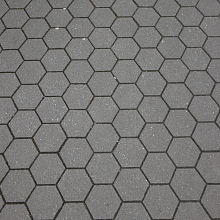 Seamless Hexagonal Concrete Tile PBR Texture 4K
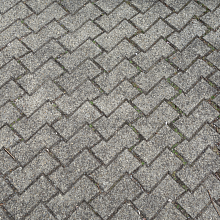 Realistic Concrete Paving Brick Pattern Texture