Comprehensive Workflow for Creating Seamless PBR Fabric Textures with Micro-Variation and UDIM Support
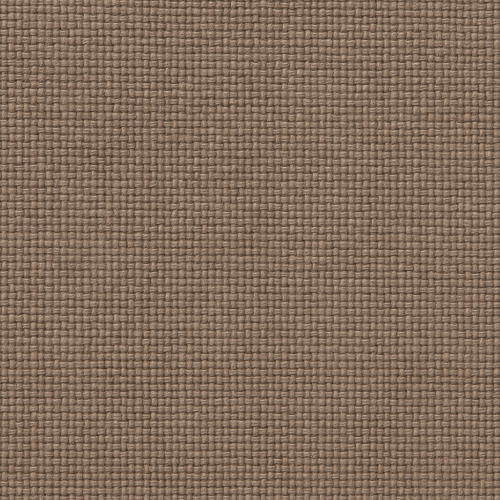
In contemporary 3D art disciplines—ranging from real-time game environments and architectural visualization to high-end visual effects—fabric materials remain a pervasive and challenging subject for digital artists and technical directors alike. The visual fidelity of fabric textures plays a pivotal role in grounding scenes in believable reality, influencing viewer perception by conveying tactile qualities such as softness, weave density, and subtle surface irregularities. However, achieving a truly seamless physically based rendering (PBR) fabric texture that holds up under scrutiny across various lighting conditions and camera proximities is far from trivial. This complexity arises not only from the intrinsic properties of textile surfaces but also from the technical constraints and demands imposed by modern production pipelines.
At the core of fabric texturing lies the necessity to balance photorealism with technical efficiency. Unlike rigid materials such as metals or polished stone, fabrics exhibit a complex interplay of diffuse light scattering, microfibrous surface detail, and subtle variations in reflectance and normal perturbations. These characteristics must be captured and encoded accurately across multiple PBR texture maps to maintain fidelity. The canonical PBR workflow for fabric typically includes an albedo (diffuse) map that reflects the base coloration modulated by the weave pattern; a roughness map controlling microsurface reflectivity variance; a normal map encoding fine bump detail from thread fibers and weave structure; an ambient occlusion (AO) map to simulate self-shadowing within the weave; a height or displacement map for parallax or tessellation effects; and occasionally a metallic map, though fabrics are generally non-metallic and this map remains largely black or zeroed. Each channel contributes uniquely to the final shading equation, making their accurate creation and calibration essential for realism.
One of the primary hurdles in fabric texturing is achieving seamless tiling without visible repetition artifacts. Fabrics, by nature, are often patterned or woven, featuring regular geometric structures that can betray tiling when textures are repeated across large surfaces. Simple tiling can lead to obvious pattern repetition, breaking immersion. To overcome this, artists and TDs rely on advanced techniques such as incorporating micro-variation—small-scale randomness embedded within texture maps—to disrupt uniformity. This micro-variation can be introduced during texture authoring through procedural noise overlays, multi-layered detail maps, or manual hand-painting nuances in albedo and roughness channels. The goal is to simulate the natural irregularities found in real textiles: inconsistent thread thickness, dye inconsistencies, and minute surface wear, which collectively prevent the eye from detecting tiling.
From an acquisition standpoint, high-quality source data is paramount. Photogrammetry and high-resolution scanning of real fabric samples provide a reliable foundation for generating accurate base maps. Such scans capture the minute fiber structures and color variations necessary for convincing fabric materials. However, raw scan data often needs substantial cleanup and conversion before it is suitable for seamless tiling. This involves retouching seams, normalizing color and luminance, and extracting the individual PBR channels using software like Substance Designer, Mari, or Quixel Mixer. These tools allow for the creation of tileable patterns from imperfect source data via techniques such as edge mirroring, seam removal, and procedural cloning, while preserving the essential micro-variation that keeps the material visually rich.
Calibration and optimization of fabric textures are critical to ensure they behave predictably under various lighting models and engines. Physically based workflows depend on accurate reflectance values that correspond to real-world fabric properties; for example, cotton tends to have a relatively high roughness and low specular reflectance, while silk exhibits smoother surfaces with subtle sheen effects. When authoring roughness maps, it is essential to calibrate values against reference materials and assess their response under image-based lighting (IBL) environments within engines such as Unreal Engine or Blender’s Eevee and Cycles renderers. One practical method is to use standardized HDRI environments and shader preview tools to verify that the fabric’s specular highlights and diffuse behavior align with physical expectations. Overly smooth or excessively noisy roughness maps can result in unnatural reflections or a plastic-like appearance, undermining realism.
Height maps, often derived from displacement or parallax occlusion mapping, play a complementary role by adding depth perception to the weave without dramatically increasing polygon counts. Properly calibrated height maps enable subtle surface undulations and thread relief to catch light directionally, enhancing the tactile feel of fabric. However, care must be taken to avoid exaggerated displacement that can cause shading artifacts or silhouette distortion. The height map’s amplitude should be fine-tuned relative to the model scale and engine tessellation settings to maintain visual consistency.
A further consideration in modern production workflows is support for UDIM (U-Dimension) texturing. UDIMs allow for tiled texture sets that extend beyond a single UV space, facilitating extremely high-resolution details without compromising memory budgets or texture streaming performance. This is especially beneficial for large fabric surfaces where a single tile’s resolution would be insufficient to capture all micro-details. UDIM workflows require meticulous UV layout planning and consistent texture map naming conventions to integrate smoothly with engines and DCC tools. Advanced authoring suites now offer native UDIM support, enabling artists to paint or bake fabric details across multiple tiles while maintaining seamless transitions at tile borders. When combined with micro-variation techniques, UDIMs allow for both macro and micro-scale visual complexity, resulting in fabric textures that retain their realism regardless of camera proximity or scene scale.
Optimization remains a constant concern throughout the process. Fabric textures can be notoriously heavy in texture memory due to the necessity of multiple high-resolution maps. Techniques such as channel packing—storing roughness, AO, and metallic information in the RGB channels of a single texture—are commonly employed to reduce draw calls and memory overhead. Additionally, mipmapping strategies and anisotropic filtering settings should be carefully adjusted to preserve fine thread detail at oblique viewing angles without introducing blurriness or aliasing. Shader complexity must also be balanced; physically accurate subsurface scattering or sheen models improve fabric realism but increase rendering costs, prompting artists to make informed trade-offs depending on the target platform.
In real-time engines like Unreal Engine, native support for fabric-specific shader models, including the cloth shading model with anisotropic specular highlights and subsurface scattering, provides a powerful framework for integrating physically based fabric materials authored with the aforementioned maps. Unreal’s material editor enables dynamic layering of micro-variation masks and procedural detail maps, allowing artists to fine-tune fabric appearance interactively. Blender’s shader nodes, especially under Cycles, offer comparable flexibility for offline rendering, with the added benefit of node-based procedural texture generation and UDIM handling. Both platforms benefit from careful calibration of texture values and shader parameters to ensure consistent results across different lighting scenarios.
In summary, the creation of seamless PBR fabric textures demands a multidisciplinary approach that encompasses accurate acquisition, meticulous channel authoring, sophisticated tile and variation strategies, and rigorous calibration within the target rendering environment. Micro-variation techniques and UDIM workflows represent critical advancements that address the core challenges of repetition and resolution, enabling artists to produce fabric materials that convincingly replicate the complex interplay of light and surface inherent in real textiles. As production pipelines continue to evolve, mastering these elements becomes essential for any artist or technical director aiming to deliver state-of-the-art fabric assets that elevate the visual quality of games, archviz, and VFX projects alike.
Achieving high-quality, physically based rendering (PBR) fabric textures begins fundamentally with the acquisition of accurate and detailed source imagery and data. The fidelity of your base material directly influences the realism and versatility of the resultant PBR maps—albedo, roughness, normal, ambient occlusion (AO), height, and metallic—so investing time and technical rigor at this stage is paramount. Among the most reliable and increasingly accessible methods for fabric texture acquisition are high-resolution photogrammetry scanning and procedural texturing. Each approach carries distinct advantages and constraints, and understanding their nuances is critical to producing optimal source material tailored for seamless tiling, micro-variation, and UDIM workflows.
High-resolution photogrammetry scanning has become a cornerstone for capturing authentic fabric details. This technique leverages multiple photographs taken from various angles under controlled lighting to reconstruct detailed surface geometry and color information. When executed correctly, photogrammetry can yield exceptionally high-fidelity albedo maps with accurate color rendition and subtle fiber coloration nuances that procedural methods often struggle to replicate. However, the efficacy of photogrammetry for fabric acquisition hinges on several tightly controlled parameters.
Lighting setup during capture is foremost among these considerations. Fabric surfaces exhibit complex light interactions, including subsurface scattering in some textiles (like silk or thin cotton) and specular reflection variations depending on weave and finish (e.g., matte wool versus glossy satin). To extract physically meaningful albedo data, lighting must be diffuse and even, minimizing harsh shadows and highlights that would skew base color. Employing a light tent or dome with calibrated, daylight-balanced sources ensures a near-neutral environment. This environment enables more straightforward post-processing color calibration and linearization, essential for physically accurate albedo textures.
In addition to diffuse lighting, capturing separate highlight passes under directional light sources can assist in isolating specular components, which inform roughness and specular response maps later in the pipeline. Polarized lighting and filters can further reduce specular glare on shiny fabrics, preserving subtle weave details for normal and height map extraction. Multi-angle captures at varying lighting angles also facilitate photometric stereo techniques, producing high-resolution normal and height data critical for recreating micro-variation in fabric surface topologies.
Resolution is another pivotal factor in photogrammetry acquisition. Fabric textures demand extremely high spatial frequency detail to convincingly portray weave patterns, fiber fuzz, and subtle irregularities that break up artificial tiling. Targeting photographic input at resolutions exceeding 50 megapixels per capture, with tight camera proximity and macro lenses, enables the reconstruction of surface detail at sub-millimeter precision. This scale is essential for generating height and normal maps that preserve micro-variation, which in turn enhances the physical accuracy of roughness and AO maps by simulating realistic light scattering and occlusion at the fiber level.
Not all fabrics are equally amenable to photogrammetry. Highly reflective or transparent textiles—such as metallic threads, sheer chiffons, or iridescent synthetics—pose challenges due to specular interference and light transmission disrupting surface reconstruction. For these materials, hybrid approaches combining photogrammetry with manual authoring or procedural augmentation may be necessary. Additionally, some soft or deformable fabrics exhibit non-rigid surface behavior that complicates multi-angle capture consistency, requiring specialized rigs or scanning techniques like structured light scanning or laser scanning to maintain geometric fidelity.
Procedural texturing offers a complementary or alternative acquisition pathway, particularly advantageous when physical scanning is infeasible or when infinite tiling and parametric control are priorities. Procedural methods leverage algorithmic noise functions, pattern generators, and fiber simulation algorithms to synthesize fabric textures with controllable weave structures, fiber density, and coloration. When integrated with physically based shading models, procedural textures can produce dynamic roughness, normal, and height maps that respond realistically to lighting changes, and can be easily adapted to different resolutions and UDIM tiles without repetition artifacts.
A key strength of procedural fabric texturing lies in the generation of seamless, tileable patterns with embedded micro-variation. By layering fractal noise and subtle randomization within the weave algorithms, procedural systems can simulate the inherent irregularities and imperfections found in real textiles—variations in thread thickness, dye inconsistencies, and weave tightness—thereby mitigating the artificial uniformity that plagues many tiled textures. This micro-variation is critical for maintaining visual interest in large surface areas, especially in real-time engines like Unreal Engine or physically based renderers in Blender’s Cycles and Eevee, where repeated patterns can break immersion.
However, procedural generation requires rigorous calibration to match real-world fabric behavior. Albedo color palettes should be informed by spectrophotometer data or calibrated photographic references to ensure that diffuse reflections fall within realistic chromaticity and brightness ranges. Roughness parameters must correspond to empirical measurements or references, as fabric roughness directly affects specular highlight sharpness and glossiness, which are major visual cues for material identification. Height map generation algorithms should replicate actual fiber elevations and weave geometry, considering the scale to maintain consistency relative to the engine’s unit system. Metallic maps are typically uniform zero for fabrics, except for textiles with metal threads or foil prints, which should be captured or procedurally added with care to avoid unrealistic reflections.
Optimization during acquisition is critical to balance detail and performance. Capturing excessively high-resolution data without appropriate downscaling or mipmap generation can burden texture memory and shader complexity, particularly in real-time applications. Employing multiresolution workflows enables artists to extract base detail via photogrammetry or procedural methods at ultra-high resolution, then progressively bake or filter down to lower mip levels while preserving key detail and avoiding aliasing. For UDIM workflows, consistent calibration across tiles ensures seamless transitions without visible seams or texture shifts, requiring precise alignment of texture space and normalization of color and height values.
When integrating these acquired textures into engines like Unreal or Blender, attention must be paid to color space management and shader calibration. Albedo maps should remain in linear space without baked-in lighting, roughness and metallic maps must be stored in appropriate channels with gamma correction disabled, and normal maps need to conform to engine-specific tangent space conventions. Ambient occlusion maps, often baked from high-poly geometry or derived from photogrammetry mesh data, must be combined carefully to avoid darkening albedo or disrupting global illumination calculations. Height maps can be used for parallax occlusion mapping or displacement but require scale normalization relative to mesh UVs and engine tessellation settings.
In practice, blending photogrammetry and procedural techniques often yields the best results. For instance, photogrammetry can provide authentic base albedo and geometry detail, which procedural noise and variation layers can augment to introduce micro-variation and eliminate tiling artifacts across UDIM tiles. This hybrid approach also facilitates rapid iteration and customization, allowing artists to tweak procedural parameters without reshooting or rescanning, while maintaining a physically grounded visual foundation.
Ultimately, the acquisition of high-quality fabric textures for PBR workflows demands a holistic understanding of the interplay between capture technology, lighting calibration, material physics, and engine integration. By carefully controlling photographic capture conditions, leveraging procedural algorithms for micro-variation, and rigorously calibrating acquired data to real-world standards, artists and technical directors can produce fabric textures that are not only visually compelling but also robust, scalable, and optimized for diverse rendering contexts. This foundational rigor enables seamless integration within complex UDIM workflows and ensures that fabric materials maintain their physical plausibility and aesthetic fidelity across all stages of production and presentation.
Achieving accurate and physically consistent PBR maps for fabric surfaces is a nuanced endeavor that demands a precise balance of technical understanding, artistic intuition, and methodical calibration. Unlike hard surfaces, fabrics exhibit complex interactions with light due to their fibrous microstructure, subsurface scattering, and inherent anisotropy. Therefore, the process of generating essential PBR maps—albedo, roughness, normal, ambient occlusion (AO), height, and metallic—requires specialized attention to capture these subtleties while maintaining seamlessness and consistency across UDIM tiles.
The foundation begins with the albedo map, which represents the diffuse reflectance of the fabric without any lighting or shadow influence. For fabrics, the albedo must avoid baked-in shadows or highlights to preserve physical accuracy during shading. This typically entails capturing reference photographs under controlled, diffuse lighting conditions or utilizing calibrated scan data. When authoring albedo maps procedurally or in software such as Substance Designer, one must carefully isolate color information from shading cues. Calibrating albedo involves ensuring the RGB values correspond to realistic diffuse reflectivity—usually below 1.0 in linear space—to avoid energy conservation violations. For natural fibers like cotton or wool, the albedo will generally be muted with subtle chromatic variations, whereas synthetic fabrics might display more saturated or uniform tones. It is critical to linearize albedo textures and maintain a consistent gamma curve across all UDIM tiles to ensure seamless transitions and accurate color reproduction in engines like Unreal Engine or Blender’s Eevee and Cycles.
Next, the roughness map demands particular scrutiny because it governs the microsurface scattering and glossiness of the fabric. Unlike metals, fabrics rarely exhibit mirror-like reflections; instead, their roughness values tend toward the higher end of the spectrum, often ranging between 0.6 and 1.0 depending on the weave and fiber type. However, fabric roughness is rarely uniform. Micro-variation is paramount here—the slight irregularities in fiber orientation, weave tightness, and surface wear must be encoded to avoid flat, artificial shading. When authoring roughness maps, one effective approach is to derive them from high-resolution microdetail height or normal data, converted into roughness variance using curvature or slope-based filters. This micro-roughness can then be blended with macro roughness information to simulate worn or compressed areas realistically. Calibration involves cross-verifying the roughness map's visual appearance under standardized lighting conditions in the target engine, adjusting midtones to ensure reflections blur appropriately and energy conservation is preserved. Additionally, roughness maps must be optimized for tiling and UDIM workflows by carefully blending edges and maintaining consistent statistical distribution of roughness values across tiles to prevent visible seams.
Normal maps for fabric require special attention due to the anisotropic nature of most weaves. Unlike typical hard-surface normal maps, fabric normal maps seek to replicate the subtle bumpiness created by individual threads and the directional pattern of the weave. Acquiring these normal maps can involve photogrammetry combined with high-frequency detail extraction or procedural generation using weave pattern generators with noise overlays to simulate fiber fuzziness. When authoring normal maps, it is essential to encode directional information accurately, especially if the shading model supports anisotropic reflections. This directional data enhances specular highlights and adds realism by simulating how light glances off elongated fibers. Calibration entails verifying normal map intensity to avoid exaggerated or flattened surface details and ensuring tangent space alignment across UDIM tiles to maintain consistent lighting. In engines like Unreal, proper import settings and normal map compression must be applied to preserve fine detail without introducing artifacts.
Ambient occlusion (AO) maps for fabric serve to simulate self-shadowing in crevices of the weave and subtle occlusion between fibers. While AO does not represent global illumination in PBR, its inclusion enhances perceived depth and material definition. Generating AO for fabric typically involves baking high-poly mesh occlusion or employing curvature-based procedural methods that account for the micro-geometry of threads. Since AO maps modulate diffuse lighting, it is crucial that they are grayscale, calibrated to avoid excessive darkening that can distort perceived albedo, and blended carefully with other maps to maintain energy conservation. For seamless UDIM sets, AO must be baked or generated with consistent parameters and edge padding to prevent seams, with intensity adjusted to complement but not overpower the fabric’s inherent shadowing.
Height maps provide critical parallax and displacement information, enhancing the tactile feel of fabric by simulating thread elevation and weave topology. Generating height maps for fabric involves capturing or authoring fine-scale elevations corresponding to fibers and weave ridges, often through photogrammetry or procedural height layering techniques. Unlike hard surfaces, fabric height maps benefit from subtle gradients rather than abrupt height changes to preserve softness. Calibration of height maps includes normalizing height values to a physically plausible range—typically within a few millimeters in real-world scale—and ensuring that displacement intensity settings in the rendering engine correspond accurately to the height map’s dynamic range. In Blender’s Cycles or Unreal Engine’s displacement pipeline, this calibration is essential to prevent over-exaggerated surface undulations that break physical realism. Seamless tiling and UDIM consistency demand that the height data blends smoothly at UV borders to avoid popping artifacts during displacement or parallax occlusion mapping.
The metallic map is generally the simplest for fabrics, as most textiles are non-metallic and should have metallic values set to zero across the entire texture set. Exceptions exist for specialized fabric types, such as metallic threads or woven metallic fibers, where localized metallic values must be painted or generated carefully to preserve PBR accuracy. When present, metallic maps for fabric require precise calibration to ensure values are strictly binary or in narrow ranges to avoid energy conservation issues—fabric metallic reflections behave fundamentally differently than metals and must be constrained accordingly. For standard fabric workflows, metallic maps remain a flat black texture, but their inclusion is vital for engine compatibility and shader consistency.
Throughout the process, maintaining physical accuracy and consistency across the entire texture set is paramount. This begins with working in linear color space and ensuring all maps are properly gamma-corrected and aligned with engine expectations. Utilizing tools such as Substance Painter or Designer allows for iterative calibration—previewing how maps interact under standardized lighting setups to fine-tune parameters. Additionally, adhering to a real-world scale reference when authoring height and normal maps ensures that micro-variations correspond to physically plausible dimensions, enhancing believability. Tiling and UDIM support introduce complexity that necessitates edge-blending techniques, such as mipmap-aware seam stitching and manually feathering map borders, to prevent visible discontinuities during rendering.
Optimization is crucial to balance fidelity and performance, especially in game engines. Albedo maps should avoid excessive saturation or brightness that can cause shading anomalies, roughness maps must maintain sufficient variation without introducing noise, and normal maps should be compressed without losing critical directional data. Ambient occlusion and height maps should be baked or generated at the highest practical resolution, then downsampled with care to preserve detail while minimizing texture memory footprint. When integrating into engines like Unreal, leveraging material instances and layered materials can facilitate dynamic variation and blending of fabric textures, accounting for wear, dirt, or other environmental effects.
In summary, creating accurate PBR maps for fabric surfaces is a multi-faceted workflow that hinges on meticulous acquisition or authoring of each map type, thorough calibration to ensure physical consistency, and careful optimization for seamless UDIM tiling and real-time rendering. By respecting the inherent micro-variations and anisotropic qualities of fabric and leveraging modern texturing tools and engine pipelines, artists can produce compelling, physically plausible fabric textures that elevate the realism and tactile quality of 3D assets.
FAQ
What is covered in this guide?
This guide explains Comprehensive Workflow for Creating Seamless PBR Fabric Textures with Micro-Variation and UDIM Support with practical notes for seamless PBR materials, texture setup, and production use.
Can I use these texture techniques in Blender, Unreal Engine, and Unity?
Yes. The workflow focuses on standard PBR maps and tileable materials that can be used in Blender, Unreal Engine, Unity, archviz, games, and VFX pipelines.
Where can I find textures for this workflow?
Use the AITextured texture library and the related texture links on this page to find seamless PBR materials and preview them before download.
Related Textures
 Procedural Lime Plaster Wall PBR Texture
 Procedural Stamped Sidewalk Concrete PBR Texture
 Procedural Fine Asphalt Road PBR Texture
 Procedural Pitted Concrete PBR Texture
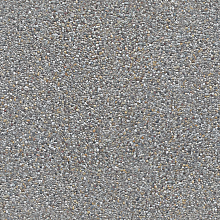 Seamless Concrete Pebble PBR Texture in 4K Resolution
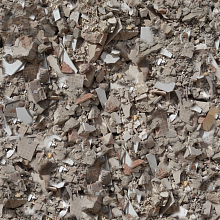 Seamless PBR Concrete Rubble Texture with Debris and Fragments
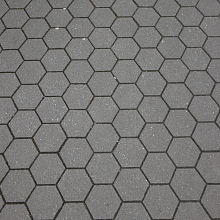 Seamless Hexagonal Concrete Tile PBR Texture 4K
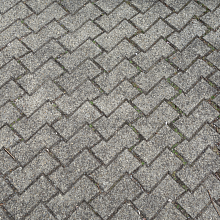 Realistic Concrete Paving Brick Pattern Texture