Comprehensive Workflow for Creating Seamless PBR Textures from Synthetic Materials

Synthetic materials—such as plastics, rubbers, and composite laminates—occupy a foundational role in contemporary digital asset creation, especially within PBR-based workflows. Their ubiquity across industrial design, automotive visualization, consumer electronics, and game environments necessitates a nuanced understanding of their optical and surface characteristics to achieve photorealistic results. Unlike natural materials like wood or stone, synthetics exhibit a diversity of surface behaviors derived from their engineered microstructures, polymeric compositions, and manufactured finishes. This diversity, combined with their often highly controlled and repeatable appearances, imposes unique challenges and opportunities in PBR texturing pipelines that demand specialized authoring techniques and calibration strategies.
At the core of PBR texturing lies the accurate capture and reproduction of a material’s bidirectional reflectance distribution function (BRDF), which governs how light interacts with surfaces under varying lighting conditions. Synthetic materials typically manifest complex reflectivity profiles that straddle the divide between diffuse and specular components in distinctive ways. For instance, many plastics and rubbers feature a predominantly diffuse albedo with a subtle specular component controlled by surface finish, while composites may integrate multiple layers with differing optical densities, leading to subsurface scattering and anisotropic reflections. This inherent complexity mandates careful generation and balancing of multiple PBR texture maps—albedo, roughness, normal, ambient occlusion, height, and metallic—to faithfully recreate their appearance in real-time engines like Unreal Engine or offline renderers such as Blender’s Cycles.
The albedo map for synthetic materials requires precise calibration to avoid common pitfalls. Plastics, for example, often contain pigments and fillers that produce saturated yet muted diffuse colors, rarely exhibiting the chromatic richness found in organic materials. Consequently, the albedo textures must be authored to reflect this restrained coloration, avoiding overly bright or desaturated tones that break physical plausibility. Furthermore, since many synthetic surfaces are manufactured to tight color tolerances, micro-variation within albedo channels tends to be subtle but critical; minute noise or patterning can simulate injection molding marks, tool wear, or polymer grain. Achieving this demands high-resolution source scans or procedurally generated detail maps, carefully blended to prevent visible tiling artifacts during UV mapping.
The roughness map is arguably the most sensitive parameter in synthetic material workflows, as it directly controls the microsurface scattering and glossiness that define their tactile perception. Plastics often range from highly polished, mirror-like finishes to matte, granular coatings, and rubbers typically present a soft, velvety roughness that diffuses highlights. Accurately capturing this variability requires either calibrated photogrammetry combined with calibrated light setups or meticulously crafted procedural roughness maps informed by empirical measurements. The use of specialized roughness masks can simulate multi-scale surface effects, such as fine micro-scratches or wear patterns, which are integral to realism but challenging to acquire with conventional scanning methods. In authoring software like Substance Painter or Designer, layering procedural noise with hand-painted masks and fine-tuning contrast curves is essential to replicate the anisotropic scattering behaviors occasionally found in composite laminates or textured rubbers.
Normal maps serve a dual purpose for synthetic surfaces: they enhance perceived surface detail and simulate micro-geometry variations critical for accurate light interaction. Plastics molded with textured finishes—such as pebble grain or brushed surfaces—benefit from high-frequency normal detail that breaks up specular highlights naturally. Rubber materials, with their elastomeric properties, often display subtle undulations and fine pore structures, which require high-fidelity normal map baking or synthetic generation through fractal noise functions. Crucially, normal maps for synthetic materials must be optimized to balance detail fidelity against engine performance constraints, particularly in real-time applications. Techniques such as detail normal layering, where a secondary high-frequency normal map is blended atop a base normal, allow for scalable detail without excessive texture resolution. Calibration of normal map strength is also vital to prevent exaggerated shading artifacts that betray the synthetic origin of the material.
Ambient occlusion (AO) maps, while sometimes considered optional, play an important role in enhancing depth perception on synthetic surfaces. Unlike natural materials, synthetics often feature engineered geometries—ribs, grooves, injection points—that create localized shadowing effects captured through ambient occlusion. Generating accurate AO requires high-quality mesh topology and baking workflows that preserve subtle cavity details without over-darkening smooth planar areas. In complex composite materials, AO can also subtly modulate specular reflections by simulating light trapping in layered structures. When authoring AO maps for synthetics, artists must carefully balance contrast and blur parameters to maintain clarity without introducing unnatural shadows, especially when combined with dynamic lighting in Unreal Engine or Eevee.
Height maps contribute an additional dimension of realism by defining micro-relief variations that influence parallax effects and silhouette edges. For synthetic materials, height data can capture injection mold seams, embossed logos, or surface texturing like knurling on rubber grips. Unlike the relatively rough and irregular height variations of natural materials, synthetic height maps often feature precise, repetitive patterns that must tile seamlessly to avoid visual repetition. Achieving this requires careful pattern synthesis and edge blending, often facilitated by procedural noise layers combined with hand-drawn detailing. In real-time engines, height maps also enable advanced techniques such as parallax occlusion mapping or tessellation, which further enhance the tactile quality of synthetic surfaces without incurring the cost of additional geometry.
The metallic map demands particular consideration in synthetic workflows due to the inherently non-metallic nature of most plastics and rubbers. Correctly setting metallic values to zero is a fundamental baseline, but exceptions exist in composite materials that integrate metallic fibers or coatings. In these cases, partial metallic values or channel blending may be necessary to approximate the hybrid reflectance behavior. Misuse of the metallic channel—such as introducing metallic values into purely dielectric synthetics—can lead to physically implausible shading and undermine the realism of the final asset. Therefore, rigorous validation using engine-specific shading models is recommended to confirm that metallic parameters behave as expected within the target renderer’s BRDF implementation.
Tiling and micro-variation strategies are especially critical for synthetic materials due to their manufactured origins. Unlike organic surfaces, which often contain irregular and non-repeating features, synthetic materials are frequently designed to exhibit uniformity and repeatability. However, visually perfect tiling is typically undesirable, as it breaks immersion and reveals texture repetition. To mitigate this, artists employ micro-variation techniques that introduce subtle noise, color shifts, or normal detail offsets within tiled patterns. Procedural tools in software like Substance Designer enable the generation of seamless tileable base patterns combined with randomized detail masks, allowing the final texture to maintain a controlled uniformity while avoiding the artificial flatness of repetition. Additionally, the use of decals or detail overlays can break uniformity at runtime, especially in game engines where dynamic blending can simulate wear or dirt accumulation on plastics and rubbers.
Calibration and optimization are indispensable throughout the synthetic PBR texturing process. Given the controlled reflectance properties of synthetic materials, physically-based measurements or reference captures are invaluable for aligning texture parameters with real-world counterparts. Techniques such as gonioreflectometer measurements or calibrated photograph capture under standardized lighting conditions provide data to tune albedo and roughness maps accurately. Moreover, iterative validation within the target engine—Unreal Engine’s real-time viewport or Blender’s path-traced preview—ensures that textures respond correctly to diverse lighting setups, including HDR environment maps and dynamic shadows. Optimization focuses on maintaining a balance between texture resolution, memory footprint, and visual fidelity. Synthetic materials often benefit from mid-range texture resolutions (e.g., 2048x2048) with smart mipmapping and compression settings tailored to the specific gloss and normal detail requirements.
In practical terms, mastering synthetic material texturing in PBR workflows demands a solid grasp of both physical material science and the technical constraints of digital pipelines. Artists must blend empirical observation with procedural authoring, leveraging the strengths of software suites like Substance Painter, Designer, and engine-native tools. Recognizing the subtleties of polymer surface finishes, the interplay of diffuse and specular components, and the correct interpretation of metallic behavior is fundamental. Ultimately, the goal is to construct a material representation that is not only visually convincing but also computationally efficient and adaptable across rendering platforms. By approaching synthetic materials with a calibrated, detail-oriented methodology, artists ensure that these ubiquitous engineered surfaces achieve a level of realism and immersion commensurate with the expectations of modern digital media.
Acquiring high-fidelity PBR textures from synthetic materials demands a nuanced approach that synergizes procedural generation with photogrammetric capture of carefully fabricated samples. Synthetic surfaces—plastics, silicones, polymers, composites—pose unique challenges due to their complex reflectance characteristics, subtle micro-variations, and manufactural homogeneity, which often result in repetitive patterns if naively tiled. To produce convincing, seamless PBR textures, it is essential to capture and generate data that faithfully represent the base color, surface detail, and reflectance maps, while optimizing for real-time or offline rendering engines such as Unreal Engine or Blender’s Cycles.
The foundation of this workflow begins with the preparation of physical synthetic samples designed explicitly for photogrammetry. Unlike natural materials, synthetic surfaces often lack sufficient macro-scale detail, necessitating the introduction of controlled micro-variation. This can be achieved by fabricating samples with intentional surface imperfections—slight tooling marks, micro-scratches, or varied injection molding textures—ensuring the photogrammetry process captures meaningful geometry rather than flat, featureless planes. The goal is to record subtle surface variations that translate into accurate normal and height maps, crucial for simulating light interaction in PBR shading models.
Photogrammetric acquisition itself requires meticulous calibration and lighting control to isolate the intrinsic material properties. Multi-angle image capture under diffuse, uniform illumination minimizes specular highlights that would otherwise contaminate the albedo map with reflective artifacts. Using a diffuse dome or integrating sphere setup, or alternatively a custom rig with cross-polarized lighting and camera filters, helps separate diffuse reflectance from specular components. This separation is vital because the albedo texture must be free of specular color bleed, preserving only the base color information. A common pitfall is allowing glossy reflections or environmental colors to bake into the albedo, which compromises the physical accuracy of the texture and its behavior under varied lighting in engines like Unreal or Blender.
Beyond diffuse capture, reflectance properties such as roughness and metallicity require additional acquisition strategies. Synthetic materials often exhibit spatially varying roughness due to manufacturing processes or wear patterns. To capture this, reflectance measurements can be augmented with microfacet distribution data derived from multi-angular photometric stereo or gonioreflectometer setups, although these are specialized and not always accessible. Practically, one can approximate roughness variations by analyzing the glossiness or highlight falloff in calibrated photographs taken under controlled directional lighting. This data can be mapped into roughness textures by converting highlight sharpness to roughness levels, which PBR engines interpret for microfacet scattering. Metallic maps are usually binary or near-binary for synthetics but may require nuanced gradients for composite materials with embedded metal fibers or conductive coatings, demanding careful visual and spectral analysis.
Procedural generation complements photogrammetry by providing the micro-variation and seamless tiling necessary to avoid repetitive artifacts in large surfaces. Once a high-resolution base capture is obtained, procedural noise functions, fractal displacement, and detail masks can be layered to introduce stochastic variation at multiple scales. This augmentation is crucial for synthetic materials, which often lack the organic randomness of natural surfaces. For instance, subtle procedural noise can simulate micro-scratches, dirt accumulation, or surface wear, enhancing realism beyond the static photogrammetric capture. Tools such as Substance Designer or Blender’s procedural shader nodes enable the blending of photographic source maps with generated detail, producing seamless textures that tile without obvious repetition while retaining the authenticity of the underlying synthetic material.
Normal and height maps derived from photogrammetric geometry require careful post-processing to optimize for real-time rendering. Raw photogrammetry meshes often contain noise and artifacts that can manifest as unwanted surface bumps or shading errors. Retopology and mesh cleanup, along with baking high-detail meshes to low-poly counterparts, produce clean normal maps compatible with engines like Unreal Engine’s PBR pipeline. Height maps extracted from displacement data facilitate parallax occlusion or tessellation effects, enhancing depth perception without costly geometry. It is critical to calibrate the displacement scale to avoid unnatural exaggeration, preserving the subtlety characteristic of synthetic surfaces.
Ambient occlusion (AO) maps, while not strictly a material property, contribute significantly to perceived realism by simulating self-shadowing in crevices and surface irregularities. AO is especially impactful on synthetic textures with fine tooling marks or embossed patterns. AO can be baked from high-poly photogrammetric meshes or generated procedurally, then multiplied with albedo or combined in shader networks to modulate diffuse lighting. Ensuring AO maps are free from global shadowing and only represent local occlusion maintains consistency across lighting environments.
Calibration is paramount throughout the acquisition pipeline. Color calibration targets embedded within the photogrammetry scene ensure accurate albedo reproduction, compensating for camera sensor characteristics and lighting conditions. Spectrally neutral gray cards and color checker charts enable linear color workflows, which are critical as nonlinear or gamma-corrected images distort physical reflectance data. Similarly, roughness and metallic textures benefit from reference materials or standardized measurement procedures to maintain consistency across projects and engines. This calibration supports predictable material response when imported into physically based shaders in Unreal Engine or Blender, where parameters such as specular intensity, roughness, and base color directly influence shading models like Disney’s principled BRDF.
Optimization considerations involve balancing resolution and file size. Synthetic materials often require high-frequency detail to maintain realism, but excessively large textures can hinder performance. Techniques such as mipmapping, texture atlasing, and channel packing optimize resource usage while preserving quality. For example, roughness, metallic, and AO maps can be combined into separate channels of a single texture to reduce draw calls. Procedural variation generators can be designed to operate at runtime or baked into textures depending on engine capabilities and project constraints.
In practice, integrating photogrammetry with procedural methods streamlines iterations and material authoring. Initial photogrammetric captures provide a physically grounded base, while procedural augmentations allow artists to tailor textures to specific visual requirements or environmental contexts. This hybrid approach offers superior flexibility over purely photographic or procedural workflows, enabling the creation of synthetic material textures that not only look authentic but respond accurately to dynamic lighting conditions, surface wear, and environmental factors.
Ultimately, mastering acquisition techniques for synthetic material textures entails embracing the complementarity of precise physical capture and versatile procedural detail synthesis. By controlling sample fabrication, refining photogrammetric capture settings, rigorously calibrating color and reflectance data, and applying procedural micro-variation, artists can produce seamless, high-fidelity PBR texture sets. These textures—comprising albedo, roughness, normal, AO, height, and metallic maps—form the backbone of realistic synthetic material rendering pipelines in contemporary 3D engines, enabling immersive visual experiences that withstand scrutiny across scales and lighting scenarios.
Creating and calibrating essential PBR maps for synthetic materials demands a rigorous approach to both the acquisition and authoring stages, ensuring that each map contributes accurately to the final rendered appearance under physically based lighting models. Unlike organic surfaces, synthetic materials such as plastics, painted metals, rubber composites, or industrial polymers exhibit a characteristic interplay of reflectance, microstructure, and subsurface behaviors that must be carefully encoded across the albedo, roughness, normal, ambient occlusion, height, and metallic channels to achieve photorealistic fidelity.
The albedo map, often the foundational layer, represents the diffuse reflectance devoid of shading, shadows, or specular highlights. For synthetic materials, albedo frequently embodies uniform color fields or subtly variegated hues influenced by surface treatments like anodizing, powder coating, or injection molding discolorations. Acquisition via calibrated photography or synthetic generation must ensure the removal of any specular contribution, often achieved by polarizing filters during capture or by physically-based separation algorithms like specular-diffuse dichromatic decomposition. In procedural or software-based generation (e.g., Substance Designer workflows), albedo values should be carefully balanced to avoid energy conservation violations; the RGB values should never exceed physical reflectance limits, typically below 1.0 linear reflectance, and must consider the underlying material’s index of refraction when estimating diffuse albedo contribution.
Roughness maps for synthetic materials are perhaps the most critical in defining surface response to microfacet-based microgeometry. Roughness dictates the spread and clarity of specular highlights, influencing perceived glossiness and tactile qualities such as smoothness or grit. Synthetic surfaces range from highly polished automotive paints with roughness values approaching 0.05 to matte injection-molded plastics exhibiting roughness above 0.6. When authoring roughness, it is essential to include micro-variation through noise or grunge overlays that mimic manufacturing imperfections, tooling marks, or wear patterns. This micro-variation prevents the surface from appearing overly uniform or artificial, especially when tiled over large UV spaces. Calibration involves iterative rendering tests under HDRI lighting and direct sources to ensure the roughness map produces physically plausible highlight falloff and reflection sharpness. Tools like Unreal Engine’s material editor or Blender’s Principled BSDF shader allow real-time feedback loops for fine-tuning roughness behavior across different lighting scenarios.
Normal maps encapsulate fine-scale surface detail that modulates light interaction without altering geometry. For synthetic materials, normal maps are often derived from high-resolution scans, photogrammetry, or procedural texturing tools. These maps must be carefully authored to capture subtle tooling textures such as injection mold ejector pin marks, brushed finishes, or micro-scratches while maintaining tangent space consistency. When baking normals from high-poly meshes, paying close attention to cage settings and smoothing groups is vital to avoid artifacts that can distort synthetic surface cues. Furthermore, blending procedural noise or anisotropic directional patterns into normal maps can simulate polished plastics or brushed metals realistically. Calibration of normal maps is typically validated through viewport inspection and test renders, ensuring the bump directions remain consistent with the intended material orientation, and that exaggerated normals do not break energy conservation or produce unnatural shading halos.
Ambient occlusion (AO) maps contribute to the simulation of self-shadowing effects in crevices and cavities, enhancing perceived depth and realism. For synthetic materials, AO is often subtler than for organic surfaces but remains crucial around seams, fasteners, or embossed logos. AO maps can be generated through high-poly mesh baking or ambient occlusion passes in software like Marmoset Toolbag or xNormal. However, care must be taken to avoid over-darkening synthetic surfaces, as these materials typically exhibit less diffuse occlusion due to their often smoother and less porous nature. Calibration involves balancing AO intensity and blending it multiplicatively or as a mask to modulate roughness or albedo components in the shader, depending on the engine’s material model. For example, Unreal Engine allows AO to be integrated into the Base Color or Roughness inputs to subtly enhance realism without overwhelming the material’s signature reflectivity.
Height maps serve as displacement or parallax occlusion inputs, offering a means to introduce macro and micro relief detail without additional geometry. In synthetic materials, height maps can replicate weld beads, embossed patterns, or seams resulting from manufacturing processes. When authoring height maps, linearity and scale must be carefully controlled to avoid exaggerated displacement artifacts that break silhouette cohesion. Often, height maps are derived from grayscale scans or procedural height generation algorithms tuned to the surface’s typical scale of detail. Calibration is crucial here; displacement scales must be tested within the target rendering engine to ensure compatibility with tessellation or parallax occlusion mapping settings. In Blender’s Cycles or Eevee, for instance, height maps may require manual scaling adjustments to harmonize with the scene’s unit system and shader node parameters, while Unreal Engine’s tessellation settings demand balancing displacement intensity against performance budgets.
The metallic map plays a pivotal role in synthetic material workflows, especially for painted metals, coated alloys, or composite substrates with partial metallic content. Unlike purely dielectric plastics, these materials exhibit localized metallic reflections that inherently alter Fresnel response and specular intensity. Metallic maps are typically binary or grayscale masks indicating the presence of metallic surfaces versus dielectrics. For synthetic materials, it is common to see metallic maps with soft transitions or noise to represent surface contamination, wear, or layered coatings. Crafting metallic maps requires precise calibration to maintain the correct energy reflection balance because incorrect metallic values can lead to physically implausible highlights or off-color reflections. Testing metallic maps under various lighting conditions in real-time engines is essential to confirm that the specular intensity and tint correspond accurately to physical metal properties as defined by PBR standards.
A critical aspect across all these maps is the integration of tiling and micro-variation to avoid obvious repetition artifacts, which are particularly pronounced in synthetic materials due to their typically smooth and uniform surfaces. Introducing subtle randomization, variation in roughness noise, or micro-normal perturbations can dramatically increase the realism and break the tiled patterns inherent to UV mapping. These variations can be authored procedurally or baked from high-resolution sources and then composited into the final maps during the texturing pipeline.
Optimization is another layer of consideration, especially when deploying these maps in game engines or real-time applications. Balancing the resolution of each map with perceptual importance and GPU memory budgets is paramount. For instance, roughness and normal maps often benefit more from higher resolutions than AO or height maps, which may be downscaled or combined into shared channels without significant visual degradation. Additionally, compression artifacts can severely impact the fidelity of smooth synthetic surfaces, making it crucial to select appropriate texture formats and compression settings within Unreal Engine or Blender’s texture baking modules.
Finally, iterative calibration under physically accurate rendering environments remains indispensable. Testing PBR maps under diverse HDRI lighting conditions, directional lights, and area lights in engines like Unreal Engine or Blender’s Cycles ensures that the synthetic materials respond correctly across the full range of expected illumination scenarios. This step includes verifying that the albedo avoids energy loss or gain, roughness produces realistic highlight diffusion, normals maintain consistent shading, AO subtly enhances crevices, height maps integrate seamlessly with geometry, and metallic maps produce accurate specular tinting. Only through a disciplined workflow that couples scientific understanding of material physics with artistic refinement can synthetic materials be convincingly rendered using PBR textures.
FAQ
What is covered in this guide?
This guide explains Comprehensive Workflow for Creating Seamless PBR Textures from Synthetic Materials with practical notes for seamless PBR materials, texture setup, and production use.
Can I use these texture techniques in Blender, Unreal Engine, and Unity?
Yes. The workflow focuses on standard PBR maps and tileable materials that can be used in Blender, Unreal Engine, Unity, archviz, games, and VFX pipelines.
Where can I find textures for this workflow?
Use the AITextured texture library and the related texture links on this page to find seamless PBR materials and preview them before download.
Related Textures
 Procedural Dark Tree Bark PBR Texture
 Procedural Aged Oak Plank PBR Texture
 Seamless PBR Wood Planks Texture Featuring Natural Grain in 4K
 Seamless Wooden Facade PBR Texture in 4K Resolution
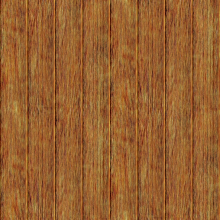 Rustic Aged Wood Planks Texture for 3D Modeling and Rendering
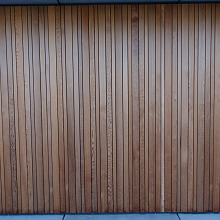 PBR Texture of Vertical Wooden Planks Wall
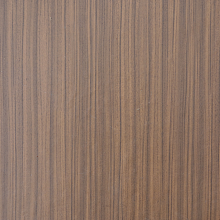 Seamless PBR Wood Texture Featuring Vertical Natural Grain Patterns
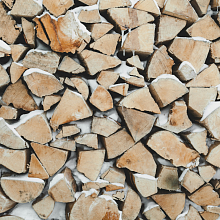 Natural Wood Logs Texture with Snow for 3D PBR