Creating and Calibrating Accurate Emissive PBR Textures for Realistic Light Effects
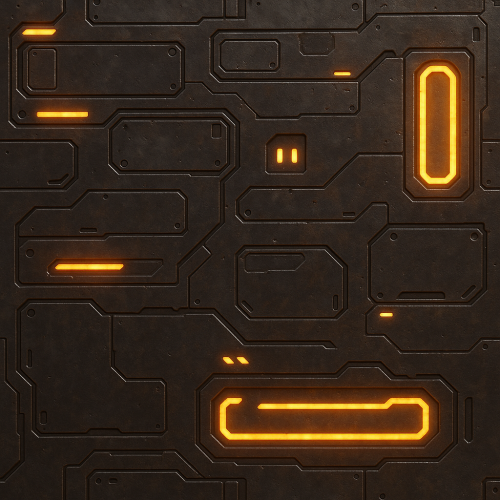
Physically Based Rendering (PBR) has become the cornerstone methodology for achieving photorealistic material representation in real-time and offline rendering pipelines. Within this framework, emissive textures occupy a unique and critical niche: they simulate surfaces that generate light intrinsically, independent of external illumination sources. Unlike conventional PBR maps that describe how surfaces interact with incident light—such as albedo dictating diffuse color, roughness controlling microfacet scattering, or metallic defining conductor versus dielectric behavior—emissive textures define a material’s self-illumination property, fundamentally altering its contribution to the overall lighting environment.
Emissive textures are effectively radiance maps that encode the intensity and color of light a surface element emits. This emission bypasses the classical bidirectional reflectance distribution function (BRDF), acting instead as a direct light source in the scene. Within the mathematical formalism of PBR, emissive values are added as an additional term in the shading equation, supplementing reflected radiance with emitted radiance. This property enables diverse visual phenomena, from neon signs and LED panels to glowing lava or bioluminescent flora, and even complex VFX like magical energy or sci-fi holographic displays.
The role of emissive textures extends beyond mere aesthetic embellishment; they are essential for simulating physically plausible light sources embedded in materials, thereby enhancing realism and immersion. In game development, emissive maps are indispensable for creating dynamic environments where light originates from within objects, such as illuminated screens, vehicle headlights, or architectural lighting fixtures. Since PBR workflows emphasize energy conservation and physically grounded material responses, accurate emissive texture calibration ensures that these self-lit surfaces interact consistently with global illumination solutions, shadowing, and post-processing effects.
In architectural visualization (archviz), emissive textures enable realistic representation of artificial lighting integrated into building materials—think recessed ceiling lights, illuminated signage, or backlit panels—allowing artists to simulate complex lighting scenarios without resorting exclusively to baked or dynamic lights. When properly calibrated, emissive materials contribute to global illumination bounces, soft shadows, and subtle light bleed, reinforcing spatial coherence and enhancing photorealistic presentation.
Visual effects (VFX) pipelines leverage emissive PBR textures to simulate fantastical or semi-realistic phenomena where light emission is a narrative or stylistic element. Here, emissive maps often intersect with volumetric lighting, bloom, and particle systems, requiring precise control over intensity and color temperature to maintain believability while supporting artistic flexibility. Achieving physical accuracy in emissive textures in VFX contexts enables seamless integration with other scene lighting and materials, preventing visual dissonance and maintaining consistent energy budgets.
From a technical perspective, emissive textures are authored and calibrated in conjunction with the canonical PBR maps—albedo, roughness, normal, ambient occlusion (AO), height, and metallic—to maintain material fidelity. The albedo map provides the base color without lighting influence, while roughness and metallic maps define surface reflectance behavior; normals and height maps contribute to microgeometry detail, and AO enhances shadowing in crevices. Emission is orthogonal to these properties but must be balanced with them to avoid unrealistic appearances. For instance, a highly emissive surface with a low roughness value might produce unnaturally sharp light hotspots, whereas a rough emissive surface diffuses emitted light more realistically.
The typical emissive texture is often a grayscale or RGB map where pixel values represent relative radiance, sometimes stored in high dynamic range (HDR) formats to capture intensities beyond the standard 0-1 range. HDR emission maps enable artists to define light intensities that physically correspond to luminous flux, which is crucial for advanced rendering engines that simulate energy transport accurately. In practice, emission maps may be authored by painting light shapes directly in texturing software or generated procedurally to simulate flickering, gradients, or patterned emissivity.
Calibration of emissive textures requires a multi-faceted approach. First, the emission intensity must be scaled appropriately relative to the scene’s unit system and the renderer’s light units. Unreal Engine, for example, uses candelas and lumens as reference units, so emissive materials must be tuned to emit physically plausible values to interact correctly with real-time global illumination solutions like Lumen or baked lightmaps. Blender’s Cycles and Eevee also demand attention to emission strength, with Cycles capable of unbiased path tracing that benefits from absolute radiance values, while Eevee relies more on screen space approximations. Establishing a consistent calibration workflow involves iterative testing against known light sources and reference photographs to achieve believable glow and light bloom without unintended artifacts.
Tiling and micro-variation are critical considerations during emissive texture creation. Unlike diffuse or normal maps, emissive patterns often represent discrete light sources or signage that should not excessively tile or repeat, as repetition breaks immersion and realism. One approach is to incorporate micro-variation through subtle noise or variation in intensity within the emissive texture, breaking up uniformity and simulating real-world imperfections such as flickering bulbs or uneven panel lighting. Additionally, blending emissive maps with ambient occlusion or height maps can simulate self-shadowing effects, enhancing depth and dimensionality in emitted light regions.
Optimization is paramount in real-time applications. Emissive textures, particularly those encoded in HDR, can be expensive in terms of texture memory and shader complexity. To mitigate this, artists often leverage emissive atlases and channel packing, multiplexing emission data with other maps where possible. Another strategy involves masking emissive regions tightly to limit expensive bloom and glow post-processing to only necessary pixels. Mipmapping must be carefully controlled to avoid bleeding of emission into non-emissive areas at lower LODs, which can cause visual artifacts.
Within modern engines, the integration of emissive textures into the PBR pipeline has matured significantly. Unreal Engine’s Material Editor offers robust nodes to modulate emissive intensity and color, factoring in exposure and post-processing effects. Its global illumination systems can leverage emissive materials as indirect light sources, enabling dynamic lighting scenarios without the overhead of additional light actors. In Blender, Cycles allows emission shaders with spectral and energy-based parameters, while Eevee uses emissive inputs combined with screen-space reflections and ambient occlusion to approximate emissive contributions. Effective use of engine-specific features such as Unreal’s emissive boost parameters or Blender’s light linking can further refine emissive appearance and interaction.
Practical authoring tips for emissive PBR textures emphasize the importance of working within a physically consistent color space, often linear, to maintain accurate light energy transfer. Artists should avoid arbitrary color saturation or intensity exaggeration that leads to clipping or unnatural bloom. Utilizing HDR painting tools and referencing physical light measurements or photographic light probes can guide accurate emission levels. Furthermore, iterative rendering tests under varied lighting conditions help ensure that emissive materials remain visually coherent without overpowering the scene or causing visual noise.
In summary, emissive textures within the PBR framework serve as indispensable tools for simulating self-illuminated materials that contribute actively to scene lighting. Their accurate creation and calibration rely on a comprehensive understanding of PBR material interactions, careful management of emission intensity and color, and thoughtful integration into rendering engines’ lighting models. Mastery of emissive PBR texturing empowers artists and technical directors to craft visually compelling, physically plausible environments where light originates naturally from within the materials themselves, enhancing realism and storytelling potential across games, archviz, and VFX domains.
Capturing accurate emissive texture maps for physically based rendering (PBR) workflows demands a nuanced approach that bridges photometric precision with artistic control. Unlike traditional surface maps such as albedo or roughness, emissive maps encode self-illumination properties, conveying both spectral radiance and intensity data that drive realistic glow and light emission within real-time engines like Unreal Engine or offline renderers including Blender’s Cycles. Achieving fidelity in emissive textures entails carefully calibrated acquisition techniques that extend beyond conventional photography and into high dynamic range (HDR) imaging, spectral scanning, and procedural synthesis—each method addressing unique challenges posed by emissive surfaces.
At the core of emissive map acquisition lies the necessity to capture the actual light emitted from a surface rather than simply its reflected ambient light. Standard low dynamic range (LDR) photography often fails here because camera sensors saturate quickly when exposed to bright emissive sources, clipping intensity values and losing crucial gradations in luminance. To circumvent this, HDR photography becomes the foundational tool. HDR imaging involves capturing multiple exposures across a wide dynamic range and merging them into a single radiometrically linear image that preserves the full intensity scale of the emissive material. This technique is critical when dealing with light sources such as LED panels, neon signs, or phosphorescent coatings, where light intensity can span several orders of magnitude.
When capturing emissive textures via HDR photography, the setup must be meticulously controlled. A neutral, diffuse environment minimizes indirect lighting contamination, ensuring the sensor records only the direct emission from the subject. Using a calibrated photometric workflow, including a color calibration target and a radiometrically linear camera profile, ensures that the recorded color and intensity data translate accurately into the digital texture. The exposure bracketed shots should encompass the entire range of emissive brightness—often requiring stops well beyond typical photographic limits. The resulting HDR files, generally stored in formats such as OpenEXR or Radiance HDR, retain the linear luminance values necessary for physically accurate light emission in PBR shaders.
Beyond capturing intensity, color fidelity is paramount in emissive maps. Many emissive materials exhibit complex spectral characteristics, with emission spectra that can shift subtly based on temperature, angle, or aging. Standard RGB captures can miss these nuances, leading to desaturated or inaccurate glow effects in the final render. To address this, multispectral or hyperspectral scanning techniques can be employed, though these are more specialized. Such scanners capture narrow spectral bands across the visible range, enabling reconstruction of emissive color with greater precision. While less accessible than HDR photography, spectral data can be converted into calibrated RGB values tailored for the target rendering engine’s color space, ensuring that the emissive maps reproduce the real-world hues and intensities faithfully.
Scanning-based approaches also extend to emissive materials with spatially complex emission patterns, such as electroluminescent wires or OLED displays. In these cases, high-resolution photometric scanning using calibrated luminance meters or gonioreflectometers can map directional emission properties, informing not just the emissive texture map but also anisotropic emission characteristics. While these directional effects often exceed the capabilities of standard PBR shaders, they can be baked into texture atlases or layered maps for advanced materials in engines like Unreal Engine 5, which supports multi-layered emissive inputs and subsurface scattering interactions.
In scenarios where physical acquisition is impractical—due to scale, dynamic emission, or artistic intent—procedural generation of emissive maps offers a powerful alternative, especially within node-based authoring tools like Substance Designer or Blender’s Shader Editor. Procedural emissive textures leverage mathematical noise functions, gradient ramps, and dynamic masks to simulate emission patterns such as flickering neon, pulsating screens, or organic bioluminescence. The critical advantage here is the ability to author emission intensity curves that respond to environmental parameters, such as temperature or time, enabling dynamic emissive effects without relying on static photo captures.
Procedural emissive textures must still adhere to PBR principles to integrate seamlessly with other maps like roughness or albedo. For example, emission intensity should correlate with surface microstructure: a highly rough emissive surface may scatter emitted light differently than a smooth one, requiring complementary roughness or normal maps that modulate emission falloff or bloom effects. Additionally, introducing micro-variations and tiling artifacts—whether procedurally generated or baked from scanned data—prevents repetitive patterns that betray digital origin. Subtle noise overlays or detail masks can break uniformity, enhancing realism in tiled emissive surfaces such as illuminated floor tiles or large LED billboards.
Calibration remains central across all acquisition techniques. The raw emissive data must be normalized and linearized to the target engine’s unit system, often based on candela, luminance (cd/m²), or radiance units. Unreal Engine, for instance, expects emissive textures to be specified in linear color space with intensity values properly gamma-corrected to ensure physically plausible energy conservation within the lighting pipeline. Without this, emissive surfaces risk appearing either unnaturally flat or excessively glowing, breaking immersion. Calibration workflows commonly involve measuring a known light source during capture to establish exposure baselines and applying tone mapping curves tailored to the rendering context.
Optimization of emissive textures must also be considered, particularly for real-time applications. High dynamic range emissive maps tend to require 16-bit or floating-point texture formats to preserve intensity fidelity, but these can be costly in memory and bandwidth. Techniques such as mipmapping, adaptive LOD, and selective emissive channel packing are essential to maintain performance. For example, emissive intensity and color may be stored separately or compressed using HDR-specific codecs like BC6H, balancing quality and size. Engine-specific tools, such as Unreal Engine’s emissive occlusion and Lumen global illumination, also influence how emissive textures are authored and optimized, encouraging artists to tailor maps for real-time ray-traced indirect lighting effects.
Finally, integrating emissive maps with the full suite of PBR inputs—albedo, roughness, normal, ambient occlusion, height, and metallic—ensures that the emissive contribution behaves coherently within the material. Emissive intensity can be modulated by ambient occlusion maps to simulate self-shadowing of emitted light, while normal maps influence the apparent directionality and spread of emission. Height maps can create subtle depth that affects emission falloff or flare, and metallic parameters determine whether the emission originates from a conductive or dielectric surface, influencing energy reflection and scattering. A holistic approach that considers these interdependencies is critical for pushing emissive texturing beyond flat glow effects into truly immersive, physically consistent light sources within PBR workflows.
In sum, acquiring accurate emissive PBR textures is a multidisciplinary endeavor combining precise HDR capture, spectral awareness, procedural flexibility, rigorous calibration, and engine-tailored optimization. Mastery of these techniques enables artists and technical directors to craft emissive surfaces that not only replicate real-world luminous phenomena but also integrate seamlessly into complex shading networks, elevating the realism and visual impact of digital scenes.
Creating emissive maps alongside the traditional suite of PBR textures necessitates a workflow that balances accurate light emission representation with the physically based shading principles underpinning modern rendering engines. Unlike albedo, roughness, metallic, normal, ambient occlusion (AO), and height maps—each serving distinct roles in defining surface reflectance and microgeometry—emissive maps inject radiance as a self-illuminating component, contributing light independently of external sources. This fundamental difference demands a deliberate approach to their generation, calibration, and integration to maintain material fidelity and prevent visual artifacts in real-time or offline renders.
The initial stage of emissive map creation involves careful texture authoring that aligns with the spatial detail and scale of other PBR maps. Typically, emissive data is authored as an RGB texture, with channel values representing the intensity and color of emitted light per texel. As with albedo and roughness, it is crucial to ensure consistent UV alignment and texel density to avoid mismatches that would break the material’s coherence. Software such as Substance Painter, Quixel Mixer, or Mari are well-suited for painting emissive patterns directly onto high-resolution meshes, allowing artists to leverage stencil masks, procedural generators, and layering techniques to define glowing regions with precision. For example, in Substance Painter, emissive channels can be painted and previewed in real-time using emissive shaders, enabling immediate feedback on brightness and color balance relative to the base material.
A key consideration during emissive map authoring is the interplay between emissive output and the underlying material’s physical properties. Emissive light emission does not inherently obey energy conservation constraints as reflectance channels do, so careful calibration is required to avoid over-bright or physically implausible results. Artists must calibrate emissive intensity values relative to scene exposure and the material’s albedo reflectivity. This calibration often involves iterative testing within the target rendering engine, such as Unreal Engine or Blender’s Eevee and Cycles, where emissive textures are assigned to the emissive input slot of the PBR shader. Many engines expose parameters for emissive intensity or exposure compensation, but the base texture must be authored with an understanding of these downstream multipliers. A common workflow involves painting emissive colors in a linear color space, then adjusting brightness either in-texture or via shader parameters to maintain consistent luminance across different materials and lighting scenarios.
Integrating emissive maps seamlessly with other PBR textures requires attention to both texture format and compression. Emissive maps often benefit from high dynamic range (HDR) formats or at least 16-bit precision to preserve subtle variations in glow intensity and color shifts, especially for materials simulating neon lights, LEDs, or bioluminescence. When working within engines like Unreal, using HDR emissive textures can significantly improve the quality of bloom and light scattering post-process effects, enhancing realism. However, HDR textures increase memory footprint and may require careful performance profiling, particularly on constrained hardware. To optimize, artists commonly employ tiling emissive patterns combined with vertex color masks or decals to add micro-variation without duplicating large textures. This approach reduces GPU load while maintaining visual richness.
Another critical aspect is the relationship between emissive maps and ambient occlusion. AO maps modulate indirect lighting and shadowing but do not typically influence emissive contributions directly, as emissive light is self-generated. However, spatial correlation between emissive and occluded areas can affect perceived realism. For instance, emissive elements placed in crevices or shadowed regions may require adjusted intensity or bloom to appear natural within the scene’s global illumination framework. Some advanced workflows incorporate a separate mask or ambient occlusion multiplier for emissive maps to simulate occlusion effects on emitted light, though this is engine-dependent and often custom shader-driven.
Height and normal maps, while not directly influencing emissive output, play an indirect role in how emissive light interacts with the environment. Accurate normal maps are essential for ensuring that emissive surfaces reflect light in a physically plausible manner, especially when combined with specular or metallic layers. For example, a rough metallic surface with emissive paint will reflect and scatter light differently from a matte or smooth emissive surface. Height maps can add micro-relief that modulates shadowing and can be used in parallax occlusion mapping to enhance the perception of illuminated depth. Ensuring that emissive regions align precisely with these microgeometry cues reduces visual discrepancies and maintains material coherence.
In practice, artists often begin by authoring base PBR textures—albedo, roughness, metallic, normals, height, and AO—using photogrammetry, procedural generation, or hand-painting techniques. Once the base material is established and tested for visual integrity under various lighting conditions, emissive data is layered on top. One effective method is to isolate emissive elements in a separate texture set or channel, allowing independent adjustments without altering core material properties. This modular approach facilitates iterative refinement of emissive intensity and color without the risk of contaminating base reflectance data.
Software pipelines increasingly support exporting combined texture sets optimized for specific engines. For instance, Unreal Engine encourages packing roughness, metallic, and AO into a single RGB texture to reduce draw calls, while emissive maps are maintained separately to leverage their additive light contribution in the shader. In Blender, node-based materials provide flexible control over how emissive textures interact with principal shader components, allowing artists to tweak emission strength, color grading, and exposure compensation non-destructively. When exporting emissive textures, ensuring correct color space is paramount—emissive maps must be linear to avoid gamma-related brightness inconsistencies.
Optimization strategies are essential for real-time applications where emissive lighting can significantly impact performance. Baking emissive contributions into lightmaps or light probes can reduce runtime calculations, but this limits dynamic emissive behavior. Alternatively, using emissive maps with dynamic global illumination (e.g., Unreal’s Lumen or Blender’s real-time GI) can produce highly realistic lighting but at a computational cost requiring careful level-of-detail management. Artists should profile emissive texture resolution and channel precision, balancing visual fidelity with memory and bandwidth constraints. Employing mipmapping with bias toward emissive textures can prevent unwanted glow bleeding at longer distances while preserving sharpness up close.
In summary, creating emissive maps alongside standard PBR textures demands a workflow that harmonizes spatial and physical accuracy with renderer-specific requirements. From precision authoring in tools like Substance Painter, through calibration in linear color spaces, to thoughtful integration and optimization in engines such as Unreal and Blender, each step influences the final material’s capacity to convincingly simulate radiant surfaces. Mastery of this pipeline enables artists to craft emissive materials that not only glow convincingly but interact credibly within complex lighting environments, elevating the realism and immersion of PBR-based scenes.
FAQ
What is covered in this guide?
This guide explains Creating and Calibrating Accurate Emissive PBR Textures for Realistic Light Effects with practical notes for seamless PBR materials, texture setup, and production use.
Can I use these texture techniques in Blender, Unreal Engine, and Unity?
Yes. The workflow focuses on standard PBR maps and tileable materials that can be used in Blender, Unreal Engine, Unity, archviz, games, and VFX pipelines.
Where can I find textures for this workflow?
Use the AITextured texture library and the related texture links on this page to find seamless PBR materials and preview them before download.
Related Textures
 Procedural Dark Tree Bark PBR Texture
 Procedural Aged Oak Plank PBR Texture
 Seamless PBR Wood Planks Texture Featuring Natural Grain in 4K
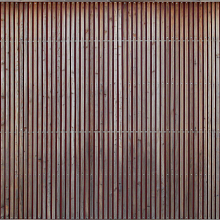 Seamless Wooden Facade PBR Texture in 4K Resolution
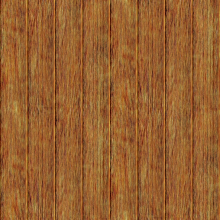 Rustic Aged Wood Planks Texture for 3D Modeling and Rendering
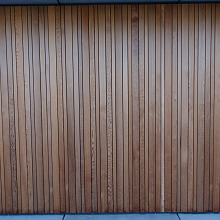 PBR Texture of Vertical Wooden Planks Wall
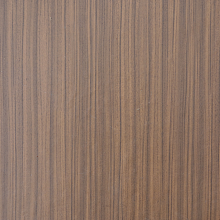 Seamless PBR Wood Texture Featuring Vertical Natural Grain Patterns
 Natural Wood Logs Texture with Snow for 3D PBR