Creating and Calibrating Accurate Subsurface Scattering Maps for Realistic PBR Materials
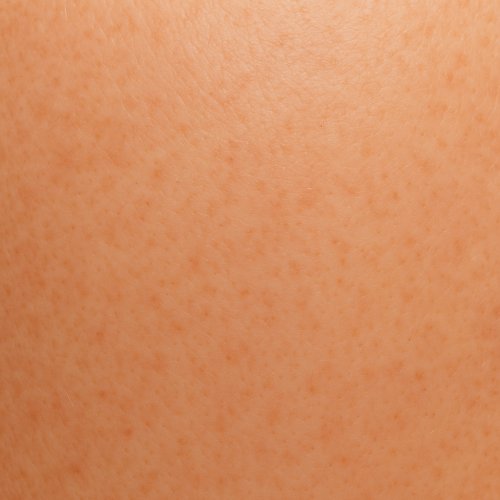
Subsurface scattering (SSS) represents a critical phenomenon in physically based rendering (PBR) workflows, especially when striving for photorealism in materials such as human skin, wax, marble, leaves, and various organic surfaces. Unlike purely opaque surfaces where light reflects only at the surface interface, subsurface scattering occurs when incoming light penetrates the material’s outer layer, diffuses internally, and exits at a different point. This intricate interplay between absorption and scattering within a medium imparts a distinctive softness and translucency that conventional PBR maps alone—such as albedo, roughness, or normal maps—cannot fully capture. Understanding the theory behind SSS and integrating it thoughtfully within the PBR texture pipeline enables artists and technical directors to elevate material fidelity beyond conventional surface shading.
At its core, subsurface scattering addresses the volumetric transport of light inside a semi-translucent medium. The phenomenon is governed by the material’s scattering coefficient, absorption coefficient, and phase function, which collectively define how far light penetrates and how it diffuses before re-emerging. For example, human skin consists of multiple layers like the epidermis and dermis, each with distinct optical properties; light penetrates the epidermis, scatters within the dermis, and returns with a characteristic reddish glow due to blood beneath the surface. Wax, on the other hand, has a more uniform scattering distribution and lower absorption, resulting in a smooth, glowing appearance when backlit. Leaves exhibit complex directional scattering influenced by their cellular structure and pigment concentration. These nuanced interplays necessitate careful subsurface scattering map creation and calibration to faithfully replicate the interplay of light and material.
In the context of PBR workflows, SSS does not replace traditional texture maps but rather complements them. The standard PBR texture set—comprising albedo (diffuse color), roughness (surface microfacet distribution), normal (surface detail and curvature), ambient occlusion (shadowing in crevices), height (geometric displacement or parallax), and metallic (defining conductor versus dielectric behavior)—establishes a baseline for surface interaction with light. However, these maps primarily encode surface-level information, assuming light interacts at or near the surface. Subsurface scattering maps extend this paradigm by encoding parameters that control the depth and intensity of internal light diffusion. Typically, this involves a subsurface color or albedo map that defines the color of scattered light, alongside a scalar map or parameter controlling the scattering radius or scale. The latter governs how deep light penetrates and how broadly it diffuses inside the medium, often adjusted per color channel to simulate wavelength-dependent scattering.
Acquisition and authoring of SSS maps pose unique challenges compared to conventional PBR textures. Unlike albedo or roughness, which can often be captured via photogrammetry or high-resolution texture scans, subsurface scattering properties require specialized measurement techniques or careful artistic interpretation. Spectral measurements using devices like spectrophotometers or integrating spheres can yield scattering and absorption coefficients for a material sample, but such data is rarely available for practical asset creation. Consequently, artists often rely on iterative hand-painting or procedural generation of subsurface color and radius maps, guided by photographic reference and empirical knowledge of material behavior. For example, skin SSS maps typically feature warm reddish tones concentrated in thinner areas such as ears or fingertips, with scattering radius values varying to simulate differences in skin thickness and subdermal blood flow. When working with organic materials like leaves, variation in chlorophyll concentration and vein structure must be subtly encoded to avoid uniformity.
A critical consideration in the PBR texture pipeline is the integration of subsurface scattering with existing maps without disrupting material consistency. For instance, the albedo map used for direct surface reflection should be desaturated or modified for subsurface color, because light scattered internally often presents a softer, more diffuse hue than surface reflection. Moreover, preserving micro-variation and tiling fidelity is essential to avoid repetitive or artificial patterns that break immersion. Artists must leverage high-frequency detail in normal and roughness maps while ensuring subsurface scattering parameters respect the underlying geometry and scale. Multichannel masks or packed textures are commonly employed to optimize texture memory and shader complexity, combining subsurface radius, scattering intensity, and other relevant parameters into compact texture sets.
Calibration of subsurface scattering maps is a nuanced process that directly impacts realism and performance. In real-time engines such as Unreal Engine or Blender’s Eevee and Cycles, achieving physically plausible SSS requires balancing accuracy with computational constraints. Unreal Engine’s subsurface profile system permits fine-tuning of scattering radius, falloff, and color per material, offering artists interactive feedback to match reference imagery. Blender’s principled BSDF shader incorporates subsurface scattering parameters allowing similar iterative refinement. However, the artist must be cognizant of engine-specific differences in scattering models—such as directional versus isotropic scattering—and adjust maps accordingly. It is often beneficial to calibrate SSS maps alongside lighting setup and camera response to ensure consistent appearance under varied illumination. Photorealistic skin shaders, for instance, rely on carefully matched subsurface color and radius values combined with specular and roughness maps to simulate sheen and microfacet distribution accurately.
Optimization strategies for SSS in PBR assets involve both texture and shader-level considerations. Given the additional complexity introduced by volumetric light transport, minimizing texture footprint and shader cost is paramount. Techniques such as channel packing, mipmap biasing, and texture streaming help manage memory overhead, while shader optimizations like pre-integrated scattering profiles, importance sampling, or screen-space approximations reduce real-time cost. Artists should also consider the scale of the object and camera distance; fine-grained subsurface detail may be unnecessary on small or distant objects and can be replaced with simpler diffuse or translucency shaders. Additionally, leveraging baked or cached lighting solutions for static assets can offload computation, preserving interactive frame rates.
In summary, subsurface scattering represents an indispensable component in the PBR toolkit for materials with semi-translucent characteristics. Its inclusion elevates realism by capturing the subtle interplay of light within a material’s volume, supplementing the surface interaction encoded by traditional PBR maps. Mastery of subsurface scattering requires a thorough understanding of the underlying physical phenomena, careful map authoring and calibration, and mindful integration within engine-specific rendering pipelines. By addressing the unique challenges of SSS acquisition, texture authoring, and optimization, artists and technical directors can achieve compellingly lifelike materials that respond naturally to complex lighting environments, thereby significantly enhancing the verisimilitude of digital assets.
Accurate subsurface scattering (SSS) maps are instrumental for achieving lifelike realism in physically based rendering (PBR) workflows, particularly when dealing with organic materials such as skin, wax, marble, or translucent foliage. The acquisition of these maps can significantly influence the fidelity and performance of the final shader, making the choice of method critical for production pipelines. Broadly, SSS data acquisition falls into two main categories: empirical capture techniques—such as photogrammetry-based scanning and multi-spectral imaging—and procedural generation methods. Each approach offers distinct advantages and trade-offs related to material complexity, project scope, and target rendering environments like Unreal Engine or Blender’s Cycles/Eevee.
Photogrammetry-based scanning, traditionally employed to capture albedo, normal, and roughness maps, has evolved to include subsurface parameters through specialized setups. By leveraging controlled lighting conditions and multi-view image capture, it is possible to infer scattering properties indirectly. Techniques such as polarized light photography or structured light scanning can help isolate subsurface contributions by subtracting or modulating surface reflections. This data can then be transformed into SSS-related maps—often an SSS radius map or thickness map—used in conjunction with the base albedo to drive scattering shaders.
One of the primary advantages of photogrammetric approaches lies in their ability to retain the intricate mesoscopic details and micro-variation inherent in real-world materials. These subtle variations in scattering parameters, when baked into maps, prevent the “plastic” or overly uniform look common in procedural approximations. Moreover, photogrammetry naturally integrates with other PBR maps (albedo, roughness, normal, AO, height, metallic), ensuring consistency across the shading model. However, the indirect nature of extracting SSS parameters means that photogrammetry alone cannot fully capture the volumetric light transport within a material. This limitation is especially pronounced for thick or highly translucent subjects where subsurface scattering dominates appearance.
Multi-spectral capture addresses this deficiency by directly measuring light transport at various wavelengths, providing richer data on how light penetrates and scatters within a material. Using narrow-band lighting or hyperspectral cameras, one can isolate absorption and scattering coefficients across the visible spectrum. These measurements enable the generation of physically plausible SSS maps that precisely define scattering radius, absorption, and phase functions, which are critical for simulating materials like skin or milk with spectral accuracy. When combined with calibrated albedo and roughness maps, multi-spectral data feeds into subsurface models in PBR engines, yielding nuanced translucency and color bleeding effects.
Despite its superior accuracy, multi-spectral scanning is resource-intensive, requiring specialized hardware and controlled environments, which may not be feasible for all studios or projects. The large data sets produced also demand careful optimization to ensure real-time performance, especially in game engines like Unreal Engine, where subsurface scattering calculations are often approximated or limited to a few scattering profiles. Furthermore, integrating multi-spectral data with standard PBR maps necessitates meticulous calibration and conversion workflows, often involving custom shaders or engine-specific adaptations to map spectral data into usable scattering parameters.
Procedural generation of SSS maps offers an alternative route that balances flexibility and efficiency, especially for stylized or tileable materials where absolute physical accuracy is less critical. Procedural techniques rely on noise functions, curvature maps, and simulated thickness maps derived from the mesh to create spatially varying scattering parameters. These maps can be authored or refined in software like Substance Designer or Blender’s Shader Editor, where node-based networks enable artist-driven control over scattering radius, absorption, and translucency gradients.
The strength of procedural methods resides in their adaptability to diverse material types and seamless integration into PBR texture sets. Procedurally generated SSS maps can be tailored to the scale and tiling requirements of a material, ensuring micro-variations that break repetition and enhance realism without the need for extensive scanning setups. This approach also facilitates rapid iterations and parameter tweaking, which is advantageous in production pipelines constrained by time or hardware resources. Procedural maps can be combined with existing albedo, roughness, and normal maps to simulate complex subsurface effects while maintaining consistency with the overall shading model.
However, procedural generation is inherently an approximation and may struggle to replicate the subtle spectral nuances or volumetric light transport captured by empirical methods. For materials with highly irregular or anisotropic scattering, such as human skin, procedural maps often require manual calibration against photographic references or scanned data to avoid unrealistic translucency or color shifts. Furthermore, procedural approaches may lack the fine-grained micro-variation present in real materials unless explicitly designed to incorporate mesh curvature and ambient occlusion data, which increases shader complexity.
In practical pipeline terms, a hybrid approach frequently yields the best balance between fidelity and efficiency. For instance, one might employ photogrammetry to obtain a high-resolution albedo, roughness, and normal map set, then overlay a procedural thickness or scattering radius map calibrated to match the material’s known subsurface characteristics. In more demanding scenarios, multi-spectral data can refine or validate these maps, ensuring spectral consistency and physical plausibility. Such workflows benefit from tight integration with authoring tools and render engines. Unreal Engine 5, for example, supports subsurface profiles that can be driven by texture assets, while Blender’s Principled BSDF shader allows for custom SSS radius maps and thickness maps, facilitating direct experimentation and calibration.
When authoring or calibrating SSS maps, it is critical to consider the interplay between scattering parameters and other PBR maps. The albedo map should ideally represent the surface reflectance exclusive of subsurface color bleed, which is instead encoded in the SSS maps. Roughness and normal maps affect surface microfacet reflection and light diffusion, influencing how subsurface scattering manifests visually. Ambient occlusion maps can be used to modulate scattering intensity, simulating occluded regions where light penetration is limited. Additionally, height or displacement maps aid in generating accurate thickness maps by providing mesh depth cues, which are fundamental for correct subsurface scattering falloff.
Optimization strategies are equally important, especially for real-time applications. Reducing the resolution of SSS maps or compressing them using appropriate texture formats can significantly reduce memory footprint without perceptible quality loss. Leveraging tiling and micro-variation techniques in procedural maps helps maintain visual complexity in large scenes while minimizing unique texture usage. Implementing level-of-detail (LOD) systems that progressively simplify scattering parameters at distance can also improve runtime performance. Since subsurface scattering computations are often expensive, pre-baked or artist-authored maps help shift complexity away from shader execution, making them indispensable for production-ready materials.
Ultimately, the choice of acquisition method hinges on the material’s optical complexity, project constraints, and the target rendering platform’s capabilities. Photogrammetry-based scanning excels at capturing detailed micro-variations for moderately translucent materials but requires supplemental processing for volumetric accuracy. Multi-spectral capture delivers unparalleled physical accuracy for materials with complex spectral scattering at the cost of hardware and integration complexity. Procedural generation provides flexible, cost-effective solutions for stylized or repetitive materials but demands careful calibration and may fall short for highly detailed organic surfaces. Understanding these trade-offs enables 3D artists and technical directors to craft subsurface scattering maps that not only enhance realism but also align seamlessly with their PBR texturing pipelines and rendering engines.
Subsurface scattering (SSS) is a nuanced yet vital component in the pursuit of photorealistic physically based rendering (PBR) materials, especially when simulating organic surfaces such as skin, wax, marble, or fruit. The creation and calibration of SSS maps—primarily scattering color, scattering radius, and thickness or opacity maps—demand a precise balance between empirical data, artistic interpretation, and technical optimization. This balance ensures that the light transport beneath the surface convincingly mimics real-world materials under diverse lighting conditions. Achieving this requires a methodical approach to acquiring accurate base data, generating coherent maps that integrate seamlessly with standard PBR workflows, and iterative calibration within target render engines such as Unreal Engine or Blender’s Cycles and Eevee.
At the foundation of any SSS workflow lies the scattering color map, often misconstrued as merely a tint overlay. In reality, the scattering color encodes the spectral absorption and scattering coefficients of a material's subsurface, representing how different wavelengths of light penetrate and diffuse through the medium. Unlike the diffuse albedo map, which captures surface reflectance, the scattering color map controls the subsurface diffuse reflection component, frequently appearing as a soft, subsurface glow effect. To acquire a physically plausible scattering color, measurement-based workflows are invaluable. Spectrophotometric data from real samples can be converted into scattering color parameters by integrating absorption and reduced scattering coefficients across visible wavelengths, then mapping these into RGB space consistent with the rendering engine’s color encoding. When direct measurement is impractical, high-resolution photo references under controlled lighting, combined with spectral extrapolation, serve as a strong starting point. Care must be taken to avoid conflating surface coloration with subsurface scattering hues; for example, human skin’s scattering color tends to be a warm, reddish tone due to hemoglobin absorption, while the albedo might include surface blemishes and pigmentation. Within software like Substance Painter or Mari, scattering color maps are authored as part of the material’s layered composition, often as a dedicated channel or mask. The artist can adjust these maps in conjunction with albedo and roughness to maintain a coherent look.
Parallel to scattering color, the scattering radius map defines the spatial extent of subsurface light diffusion, effectively controlling how deeply light penetrates before re-emerging. This parameter is critical because it governs the softness and spread of the SSS effect, influencing perceived material thickness, translucency, and internal structure. Unlike a uniform scalar, a scattering radius map is typically authored as a per-channel RGB texture, where each channel corresponds to a different scattering radius for red, green, and blue light. This channel-specific radius accounts for wavelength-dependent scattering—blue light tends to scatter more than red, leading to a larger radius value for the blue channel. Generating an accurate scattering radius map involves combining empirical data with artistic tuning. Databases such as the Separable Subsurface Scattering profiles or scattering parameters from research papers provide baseline radii for common materials. These values are then mapped into texture space, modulated by local material properties such as thickness or density variations. For instance, in skin, thinner areas like earlobes exhibit smaller effective radii compared to thicker cheeks. Software workflows typically involve procedural or painted inputs to define spatial variation, sometimes enhanced with curvature maps or cavity masks to highlight fine geometric features affecting scattering. Calibration is iterative: in real-time engines like Unreal, the scattering radius values are adjusted in conjunction with light intensity and color temperature to ensure the subsurface glow neither bleeds unnaturally nor appears too harsh under different environmental lighting setups.
The thickness or opacity map is the third critical component in SSS texturing, serving as a mask that modulates the amount of subsurface scattering based on local geometry or material density. Thickness maps effectively simulate how much volume lies beneath each texel, influencing how much light can penetrate and scatter. This map is especially essential when working with complex models where geometry alone cannot fully represent volumetric depth, such as thin creases, lips, or translucent leaves. Generating thickness maps can be approached via multiple methodologies. One common technique involves baking the model’s internal thickness from a high-poly mesh or a volume representation, measuring the shortest distance between the front and back faces along the view or light direction. Tools like xNormal, Substance Designer, or Blender’s baking system can produce these maps efficiently. Another approach utilizes ambient occlusion or cavity maps as proxies, though these are less precise and require manual refinement. Thickness maps are often stored as grayscale textures, where white denotes maximum thickness (full scattering) and black denotes thin or transparent areas (minimal scattering). Calibration involves balancing the thickness map’s influence with scattering radius and color to prevent artifacts such as over-blown translucency or loss of volume cues. In engines like Unreal, thickness maps are integrated into the subsurface parameter set, and their effect is modulated further by scene lighting and post-processing effects like bloom or volumetric fog.
Integrating these three maps—scattering color, radius, and thickness—into a PBR pipeline necessitates careful attention to consistency with the material’s other texture channels. The albedo map, for instance, must be calibrated to avoid double-counting diffuse color contribution; the surface color is typically desaturated or adjusted to complement the subsurface scattering color rather than compete with it. Roughness maps influence specular reflection and microfacet distribution and thus impact how much direct surface reflection contrasts with subsurface diffusion. Normal maps provide surface detail that affects light incidence angles and shadowing, which in turn modulates how subsurface scattering appears at edges and creases. Ambient occlusion (AO) maps, while primarily used for shadow attenuation, can also be layered to subtly influence subsurface light absorption in occluded regions. Height maps or displacement data, when used, contribute to more accurate thickness calculation or micro-variation in scattering parameters by modifying the perceived surface geometry.
Tiling and micro-variation techniques are also crucial for avoiding repetitive or unnatural SSS effects across large surfaces. Procedural noise patterns, curvature-based masks, or micro-detail normal perturbations can be used to slightly modulate scattering radius or thickness maps, breaking uniformity and enhancing realism. For example, subtle variations in scattering radius at a microscale can simulate skin pores or wax granularity, preventing the characteristic “plastic” look of overly smooth SSS. These micro-variations are often layered as detail maps or combined with the primary scattering textures through blending modes in authoring tools.
Calibration of SSS maps is an inherently iterative process that benefits from reference-based validation under diverse lighting setups. In offline renderers like Blender’s Cycles, physically accurate path tracing allows for precise measurement of scattering parameters’ visual impact, but render times are long. Conversely, real-time engines like Unreal Engine employ approximations optimized for speed, such as separable subsurface scattering or multi-bounce diffuse SSS, which requires recalibration of map intensity and radius to compensate for lighting model differences. Practical tips include starting calibration under neutral, white light to gauge scattering intensity, then testing under directional HDRI environments to evaluate color bleeding and shadow softness. Scene exposure, camera response curves, and post-processing tonemapping also significantly influence perceived scattering and must be considered during tuning.
Optimization is another key consideration. SSS maps can be memory-intensive, particularly when stored as high-resolution RGB textures with per-channel radius data. Artists often employ channel packing strategies, encoding thickness and radius components into different channels of a single texture to minimize texture lookups. Mipmapping must be managed carefully to avoid blurring critical thickness edges or radius variations, which can cause subsurface effects to “bleed” unnaturally at lower LODs. Additionally, level-of-detail (LOD) approaches can be used to reduce scattering complexity at distance, switching to simpler diffuse approximations or baked translucency maps.
In summary, the generation and calibration of scattering color, radius, and thickness maps form the backbone of realistic subsurface scattering in PBR materials. Anchoring these maps in empirical data, integrating them seamlessly with standard PBR textures, and carefully calibrating them within the target rendering environment is essential for achieving believable organic materials. Through a combination of measurement, procedural texturing, and iterative tuning, artists and technical directors can unlock the subtle interplay of light beneath surfaces that defines visual authenticity in modern 3D rendering.
FAQ
What is covered in this guide?
This guide explains Creating and Calibrating Accurate Subsurface Scattering Maps for Realistic PBR Materials with practical notes for seamless PBR materials, texture setup, and production use.
Can I use these texture techniques in Blender, Unreal Engine, and Unity?
Yes. The workflow focuses on standard PBR maps and tileable materials that can be used in Blender, Unreal Engine, Unity, archviz, games, and VFX pipelines.
Where can I find textures for this workflow?
Use the AITextured texture library and the related texture links on this page to find seamless PBR materials and preview them before download.
Related Textures
 Procedural Stamped Sidewalk Concrete PBR Texture
 Procedural Fine Asphalt Road PBR Texture
 Procedural Pitted Concrete PBR Texture
 Seamless Concrete Pebble PBR Texture in 4K Resolution
 Seamless PBR Concrete Rubble Texture with Debris and Fragments
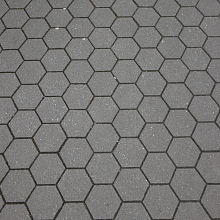 Seamless Hexagonal Concrete Tile PBR Texture 4K
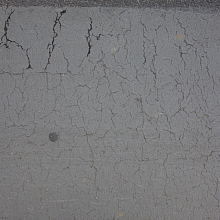 Cracked Asphalt Texture with Weathering