Creating and Optimizing Seamless PBR Ceramic and Porcelain Textures for Realistic 3D Surfaces

Ceramic and porcelain materials occupy a unique niche in physically based rendering workflows due to their distinctive optical and tactile qualities. Unlike metals or rough stone surfaces, these materials exhibit a nuanced interplay between diffuse reflection, subtle specular highlights, and often a degree of translucency, all layered atop finely detailed micro- and meso-scale surface variations. Accurately recreating these characteristics within a PBR framework demands a thorough understanding of their physical properties, as well as a carefully calibrated texturing pipeline that can reconcile complex light behavior with real-time rendering constraints.
At the core of ceramic and porcelain’s visual identity is their fundamentally non-metallic nature, which dictates a low or zero metallic response in the PBR metallic-roughness workflow. These materials are dielectric, meaning they do not conduct electricity and consequently lack the free-electron surface reflections that metals exhibit. Instead, their specular component arises primarily from Fresnel reflectance at the interface between air and the glazed or unglazed ceramic surface. This Fresnel effect is tightly coupled to the material’s index of refraction (IOR), typically ranging from approximately 1.4 to 1.6 depending on the glaze composition and firing process. This relatively moderate IOR produces modest but crisp specular highlights that shift in intensity with viewing angle, a critical detail that must be preserved in the specular or roughness map to avoid a visually flat or plasticky appearance.
The surface finish on ceramic and porcelain can vary dramatically—from glossy, highly reflective glazes to matte, unglazed textures with micro-roughness that scatters light diffusely. Capturing this range requires precise authoring of roughness maps. High-gloss glazes necessitate roughness values approaching zero in the specular channel, emphasizing sharp, mirror-like reflections. Conversely, unglazed or matte ceramics exhibit higher roughness values, diffusing specular highlights and enhancing the perception of tactile porosity. The roughness map must often be layered with subtle micro-variation to replicate the natural irregularities of kiln firing and glaze application. Uniform roughness values typically yield unrealistic, sterile surfaces, so integrating procedural noise or hand-painted detail—calibrated against high-quality photogrammetry or scan data—is essential.
Normal maps play a pivotal role in conveying surface microstructure, especially for ceramics and porcelain, which frequently exhibit minute imperfections such as glaze cracks, crazing, and subtle relief patterns. These details, often invisible in diffuse color alone, modulate local light reflection and contribute to the material’s tactile realism. When authoring normal maps for ceramics, it is crucial to maintain fidelity at multiple scales: micro-scale variations that affect specular behavior, and meso-scale features that catch shadows and occlusions. Height maps can complement normal data by enabling parallax or displacement effects in engines capable of tessellation, such as Unreal Engine or Blender’s Cycles and Eevee renderers, adding depth to tile edges, chip marks, or embossed motifs common in ceramic surfaces.
Ambient occlusion (AO) maps further enhance realism by simulating the self-shadowing inherent in textured ceramics, particularly within crevices and around raised details. However, AO must be carefully balanced and often baked from high-resolution geometry or derived from photogrammetric sources to avoid over-darkening or flattening the albedo appearance. In PBR workflows, AO is usually multiplied with the albedo or combined in a separate channel to modulate indirect lighting, thereby reinforcing the perception of volume and surface complexity without compromising the material’s color fidelity.
Porcelain, a subtype of ceramic, introduces additional complexity due to its semi-translucent nature. Its fine-grained, vitrified body allows subsurface scattering (SSS) of light beneath the surface, which contributes to its characteristic soft glow and depth. Standard metallic-roughness workflows do not natively account for SSS, necessitating either the use of dedicated subsurface scattering maps or materials with SSS shaders in engines like Unreal Engine’s subsurface profile system or Blender’s principled BSDF shader. These subsurface maps often derive from carefully calibrated translucency data or are approximated through thickness maps that modulate scattering strength. Properly capturing this effect is paramount for porcelain, as its absence leads to unnaturally flat or opaque renders that betray the material’s intrinsic delicacy.
Albedo maps for ceramic and porcelain textures must be meticulously calibrated to represent both the base body color and the glaze coloration without baked-in lighting or shading artifacts. Unlike organic materials, ceramics rarely exhibit significant color variation driven by specular effects; thus, the albedo channel should focus on diffuse reflectance and subtle pigmentation. Achieving neutral, physically plausible albedo values typically involves linearizing color data, removing gamma corrections, and ensuring no overlap with specular intensity to preserve energy conservation principles. Additionally, the albedo texture should accommodate localized color deviations such as stains, mineral deposits, or kiln marks while remaining tileable for seamless application.
Tiling and micro-variation present particular challenges in ceramic and porcelain PBR texturing workflows. These materials are frequently used in repetitive architectural or decorative contexts, such as tiled floors, walls, or pottery patterns. Naive tiling often results in visible repetition artifacts that detract from realism. To mitigate this, micro-variation layers—implemented as detail normal maps, roughness overlays, or subtle albedo noise—are integrated into the shader stack to break uniformity. Techniques such as texture blending, randomized UV offsets, or vertex painting can further enhance spatial variation. High-quality scanned data or procedural noise generators, carefully tuned to mimic the natural heterogeneity of ceramic surfaces, are invaluable for this purpose.
The optimization of ceramic and porcelain PBR textures for real-time engines demands a balance between fidelity and performance. Texture resolutions must be chosen judiciously, often favoring 2K or 4K maps depending on screen proximity and mesh UV layouts, while compression settings must preserve critical detail in normal and roughness channels. In Unreal Engine, the use of virtual texturing and runtime virtual texture systems can improve texture streaming efficiency and reduce memory overhead without sacrificing visual quality. Blender’s Eevee renderer offers real-time preview capabilities that facilitate iterative tuning of specular and roughness parameters, allowing artists to achieve physically plausible results before export.
Calibration is a recurring theme in this workflow. Accurate representation of ceramic and porcelain materials hinges on empirical data collection—whether through photogrammetry, multi-angle photography, or direct scanning of physical samples—to derive baseline PBR maps. This data must then be refined and validated against known physical properties and test renders. Shader settings such as IOR, specular intensity, and subsurface scattering parameters require iterative adjustment within the target engine to ensure visual fidelity under diverse lighting conditions. Color grading and tone mapping also influence the final appearance and should be considered integral to the texturing pipeline.
In summary, the creation of seamless PBR ceramic and porcelain textures involves a nuanced synthesis of physical understanding, empirical data acquisition, and shader optimization. These materials’ subtle reflectance properties, combined with their intricate surface detail and translucency characteristics, demand specialized workflows that go beyond conventional PBR texturing approaches. Mastery of these techniques empowers 3D artists and technical directors to produce ceramic and porcelain surfaces that not only appear photorealistic but also behave convincingly under dynamic lighting, thereby elevating the visual authenticity of their 3D scenes.
Achieving photorealistic ceramic and porcelain textures in physically based rendering workflows hinges fundamentally on the quality and fidelity of the reference material and source textures used during creation. These materials’ visual complexity—driven by subtle surface imperfections, intricate gloss variations, and nuanced subsurface scattering effects—demands meticulous acquisition strategies to capture their multi-dimensional characteristics. Without a robust and accurate foundation of reference data, the downstream process of authoring seamless PBR maps risks devolving into guesswork, often resulting in materials that appear either overly synthetic or visually flat under dynamic lighting conditions.
Photogrammetry scanning remains a cornerstone technique for acquiring high-detail references, especially when capturing real-world ceramic or porcelain samples. Utilizing high-resolution DSLR or mirrorless cameras, ideally paired with macro lenses, allows for the documentation of micro-surface features such as fine crazing, hairline cracks, or subtle glaze variations that define ceramic authenticity. The importance of controlled lighting cannot be overstated; diffuse, even illumination helps capture accurate albedo without baked shadows, while additional cross-polarization setups minimize specular interference, enabling cleaner color data. Simultaneously, multiple angular captures are required to feed structure-from-motion algorithms, reconstructing dense point clouds and mesh geometry that inform height and normal maps. While photogrammetry excels at capturing diffuse color and geometric detail, it falls short in isolating material-specific parameters such as roughness or metallicity, necessitating complementary capture methods or manual authoring to refine these channels.
To complement photogrammetry, specialized reflectance acquisition setups can extract spatially varying BRDF data, which is particularly valuable for ceramics exhibiting complex gloss distributions. Devices such as gonioreflectometers or multi-angle imaging rigs enable precise measurement of specular lobes and anisotropy across the surface. This data, albeit more challenging to obtain, informs physically accurate roughness and specular maps, crucial for reproducing the subtle interplay of light on glazed porcelain. For studios without access to such hardware, multi-image techniques leveraging varying illumination angles and polarization provide a practical alternative. Capturing the same ceramic sample under different light directions and polarizations yields images that, when processed with advanced algorithms, approximate glossiness and specular intensity maps. These maps feed directly into PBR roughness channels, ensuring the texture convincingly interacts with environment lighting in render engines like Unreal or Blender’s Eevee and Cycles.
Photographic capture remains the most accessible and versatile method for reference acquisition but requires rigorous calibration and workflow discipline to ensure usable PBR texture outputs. Key to this approach is maintaining a consistent, neutral color space and exposure across all shots to prevent discrepancies that would propagate as visual artifacts in the final maps. Using color calibration charts and gray cards allows for precise white balance and exposure correction, stabilizing the albedo map’s color fidelity. To capture normal map detail, photometric stereo techniques—where the same surface is imaged under multiple known lighting directions—can extract high-resolution surface normals, revealing micro-variations in the glaze or subtle texturing from the ceramic firing process. These micro-variations break up otherwise uniform reflections, a critical factor in avoiding the “plastic” look common in poorly authored ceramic materials.
Equally important is capturing ambient occlusion (AO) and height information, which provide depth cues and shadowing effects that reinforce the perceptual realism of the surface. While AO maps can be baked from high-poly scans or approximated through ambient occlusion passes in photogrammetry software, height maps require precise displacement capture, often derived from photogrammetric mesh data or height-from-shading algorithms. Height maps enable subtle parallax and displacement effects in render engines, enhancing tactile realism in close-up views and under dynamic lighting. When authoring these maps for tileable textures, care must be taken to ensure seamlessness—photogrammetry meshes and images rarely tile perfectly due to irregular sampling and lighting conditions. Therefore, the acquired data must undergo meticulous retouching and blending to remove visible seams while preserving the granular surface information critical to ceramic materials.
Procedural generation techniques have emerged as a powerful adjunct or alternative to direct capture, particularly for authoring supplementary micro-variation layers that enhance tiling realism. Procedural methods excel at synthesizing repeatable noise patterns, crackle glazes, and subtle roughness fluctuations that mimic natural firing inconsistencies or surface wear without relying solely on photographic detail. These generated maps can be layered atop or blended with base photogrammetric or photographic data, introducing controlled randomness that breaks monotony in tiled textures. For example, procedural curvature or cavity maps can dynamically modulate roughness in shaders, simulating edge wear or accumulation of dirt in recesses, which are difficult to capture cleanly in a single scan. Integrating procedural elements with calibrated photographic data requires careful channel management and calibration—ensuring procedural noise does not disrupt the measured albedo or normal fidelity but instead complements and enhances perceptual depth.
An often-overlooked but crucial factor in acquiring reference material for ceramics is capturing cues for subsurface scattering (SSS). Porcelain’s partial translucency arises from light penetrating the thin ceramic walls and scattering internally before re-emerging, a feature that profoundly affects its appearance under backlighting or soft illumination. Standard PBR workflows typically lack dedicated SSS maps, so texture acquisition must inform the creation of scattering profiles either through specialized multispectral imaging or empirical observation. Photographic reference under varied lighting conditions, including backlight and rim light, can guide the artist in authoring SSS parameters and tuning subsurface profiles in shader graphs. In engines like Unreal Engine, subsurface maps and transmission profiles can be calibrated based on captured translucency gradients, improving realism in interactive scenes where subsurface effects significantly shape the material's visual identity.
Calibration and optimization of the acquired data for real-time engines or offline renderers is the final critical step. Raw captures often contain noise, lighting inconsistencies, or excessive resolution that must be balanced against performance constraints. Baking down to optimized texture sizes while preserving detail, as well as compressing maps using appropriate formats (e.g., BC5 for normals, BC7 for albedo), ensures efficient memory use without sacrificing visual fidelity. Furthermore, channel packing strategies—such as storing roughness, metallic, and AO maps into separate channels of a single texture—reduce draw calls and improve shader performance. Calibration between channels is essential to maintain physical plausibility; for instance, ensuring roughness maps accurately correspond to glossiness observed in the captured reference, and that ambient occlusion is correctly balanced to avoid unrealistic shadowing.
In practice, integrating acquired textures into shading networks within tools like Blender’s Principled BSDF or Unreal’s Material Editor requires iterative refinement. Artists should leverage viewport feedback under HDRI environments and dynamic lighting setups to verify that the subtle imperfections, gloss variations, and translucency cues manifest as intended. Utilizing micro-variation and detail normal overlays further breaks up uniformity, preventing ceramic surfaces from appearing artificially smooth or digitally generated. Maintaining a feedback loop between reference acquisition, map authoring, and shader tuning ensures that the final PBR ceramic and porcelain textures achieve both technical accuracy and artistic believability.
Ultimately, the acquisition of reference material for seamless PBR ceramic textures is a multi-modal process, synthesizing photographic accuracy, measured reflectance data, and procedural augmentation. By prioritizing the capture of fine surface imperfections, spatially varying gloss, and subsurface scattering cues, artists equip themselves with the foundational maps necessary to craft materials that respond authentically across lighting conditions and viewing angles. When properly calibrated and optimized, these assets empower rendering pipelines—whether in Unreal Engine, Blender, or bespoke engines—to deliver immersive, convincing ceramic surfaces that withstand the scrutiny of close inspection and dynamic interaction.
Producing seamless, physically accurate PBR textures for ceramic and porcelain surfaces demands a meticulous approach to generating and calibrating each core texture map. These maps—albedo, roughness, normal, ambient occlusion (AO), height, and metallic—must collectively convey the nuanced optical and tactile qualities intrinsic to these materials, from subtle translucency and specular reflections to micro-surface imperfections and the interplay of light within their semi-porous structures. Achieving this requires an integrated workflow combining high-fidelity capture techniques, procedural authoring, and iterative calibration within target rendering engines such as Unreal Engine or Blender’s Cycles and Eevee.
The albedo map for ceramics and porcelain fundamentally captures the diffuse color devoid of lighting influences. Unlike metals, ceramics have no inherent color contribution from specular reflections; thus, albedo textures must be meticulously free of baked-in shadows or highlights to maintain physical plausibility. Photogrammetry or high-resolution scans of ceramic surfaces often serve as an excellent base, but raw captures typically necessitate extensive post-processing to remove baked lighting and normalize color balance. When authoring procedurally, subtle variations are crucial—ceramic glazes often exhibit slight chromatic heterogeneity due to firing processes and mineral deposits, so introducing micro-variation in hue and saturation at sub-pixel levels prevents a flat, unrealistic appearance. To ensure seamless tiling, techniques such as frequency separation can isolate low-frequency color gradients from high-frequency textural detail, facilitating edge blending without loss of detail. Calibration involves verifying that the albedo values remain within a physically plausible range, typically avoiding excessively dark or saturated pixels that can skew energy conservation in the shader pipeline.
Roughness maps play a critical role in defining the microsurface scattering behavior of ceramic and porcelain glazes, dictating how light interacts with the surface at microfacet levels. Unlike metals, these materials exhibit a predominantly dielectric response with generally high roughness values due to their glazed coatings, but with localized glossiness variations—such as smoother, more reflective areas around edges or raised decorations, and rougher patches where the glaze is thinner or weathered. Generating roughness maps often begins with analyzing specular response captured through controlled lighting setups or reflectance transformation imaging (RTI), which can reveal spatial roughness heterogeneity. Procedural noise and curvature-based masks enhance realism by simulating wear patterns or micro-cracks. When authoring roughness textures, it is vital to maintain coherence with the albedo and normal maps, ensuring that roughness variations correspond with surface features; for example, raised glaze ridges should present lower roughness values than recessed, matte-finished areas. Calibration in the rendering engine involves iterative adjustment of the roughness channel, observing reflections under HDR environment maps to confirm that highlights are neither unrealistically sharp nor overly diffused, thereby preserving the characteristic glazed sheen without veering into plastic or wet-look territory.
Normal maps encode fine surface details such as micro-cracks, glaze asymmetries, and subtle embossing that cannot be captured through geometry alone. For ceramic and porcelain, these micro-details are critical for adding tactile realism, especially under grazing light conditions. Generating normal maps can combine high-resolution photogrammetric displacement data with procedural noise to introduce stochastic micro-variations that break repetitive tiling. Baking from high-poly sculpts allows precise control over surface features like pitting or crazing patterns typical of aged porcelain. Seamless tiling requires careful edge blending and noise modulation to avoid obvious repetition artifacts. It is important to maintain a consistent tangent space orientation when generating these maps, especially if the target engine uses different normal map conventions (e.g., OpenGL vs. DirectX). Calibration includes inspecting surface response under directional lighting to ensure normals produce believable light scattering and self-shadowing, which reinforces the material’s depth and prevents flattening in the final render.
Ambient occlusion (AO) maps reinforce the perception of depth by simulating the occlusion of ambient light in crevices and recessed areas. For ceramic and porcelain surfaces, AO is subtle yet essential, especially around joints, embossed patterns, and chipped edges where ambient shadows accumulate. AO maps are typically extracted from high-poly models or derived from baked global illumination passes, but care must be taken to avoid over-darkening smooth, convex surfaces that would contradict ceramic’s generally soft shadowing. Procedural AO generation can complement baked maps by adding localized occlusion noise to simulate dirt accumulation in cracks or glaze imperfections. When calibrating AO maps, artists need to balance intensity so that occlusion enhances detail without flattening the surface or creating harsh shadows inconsistent with the diffuse interreflections characteristic of ceramics. In engines like Unreal, AO maps often multiply with the base color and are modulated by indirect lighting, so testing under various lighting conditions is necessary to maintain subtlety.
Height maps provide a grayscale displacement or parallax cue, accentuating surface relief beyond normal maps. For ceramics and porcelain, height maps convey the depth of glaze pooling, engraved motifs, or micro-cracks. Generating height maps involves converting displacement data from photogrammetry or sculpted meshes into tileable textures, often refined through edge-aware filters to preserve sharpness without introducing tiling seams. Procedural height variations can simulate surface roughness transitions or worn spots where glaze has thinned. Importantly, height and normal maps must be coherent; discrepancies between them can cause inconsistent lighting or silhouette artifacts. Calibration includes adjusting the height map’s intensity to avoid unnatural surface exaggeration, which can compromise the material’s smooth, glossy appearance. In real-time engines, height maps often drive parallax occlusion mapping or tessellation, so performance constraints may influence resolution and amplitude settings, balanced against visual fidelity.
The metallic map for ceramic and porcelain is effectively a zero-value mask, since these materials are non-metallic dielectrics. However, explicit inclusion of a metallic channel set to black is still required for correct PBR shading workflows, ensuring the rendering engine applies appropriate Fresnel reflectance and energy conservation principles. Some complex glazes or decorative trims may introduce subtle metallic elements (for example, gold or platinum inlays), in which case metallic maps are selectively painted or masked to isolate these regions. Calibration here involves verifying that the metallic channel does not unintentionally bleed into dielectric areas, which can cause unrealistic reflections and color shifts.
Throughout the generation of these maps, tiling and micro-variation strategies are paramount to avoid the artificial repetition that can break immersion. Ceramic and porcelain surfaces inherently possess micro-roughness and stochastic glaze features; replicating these requires layered noise functions or blended detail masks that operate at multiple spatial frequencies. Techniques such as detail texturing—overlaying high-frequency noise at runtime—can enhance perceived resolution without increasing base map sizes. Additionally, subtle chromatic variations in albedo combined with corresponding roughness and normal variations prevent uniform surfaces from appearing sterile.
Calibration across different rendering engines demands attention to the specific shader implementations and material models. Unreal Engine’s default Lit shader, for example, utilizes a metallic-roughness workflow with specific sRGB and linearization requirements for albedo and other maps. Testing ceramic materials under HDR lighting conditions, with environment maps representing realistic studio or daylight scenarios, provides critical feedback. Blender’s Cycles renderer offers physically accurate subsurface scattering (SSS) nodes that can be leveraged to simulate the semi-translucency of thin porcelain, though this requires integrating SSS maps or masks in conjunction with the base PBR textures. Iterative testing includes adjusting roughness and normal map intensities to balance glossiness against surface detail, and fine-tuning height map displacement scales to ensure micro-relief enhances rather than detracts from realism.
Optimization for real-time applications involves compressing texture maps using appropriate formats (BC7 for albedo and roughness, BC5 for normals) while preserving fidelity. Mipmapping strategies must maintain high-frequency detail at close distances without introducing blurring that conceals micro-variations critical to ceramic surfaces. Where possible, channel packing—combining AO, roughness, and metallic into a single texture—reduces memory footprint without compromising map quality.
In summary, the generation and calibration of PBR texture maps for ceramic and porcelain require a synergistic approach that respects the physical properties of these materials. Accurate albedo captures free from baked lighting, roughness maps that reflect glazed heterogeneity, normal maps conveying micro-surface imperfections, delicately balanced AO for subtle ambient shadows, carefully scaled height maps for surface relief, and correctly zeroed metallic maps collectively enable realistic shading. Coupled with seamless tiling, micro-variation techniques, and engine-specific calibration, these maps form the foundation for convincing, high-fidelity ceramic and porcelain materials in both offline and real-time rendering contexts.
FAQ
What is covered in this guide?
This guide explains Creating and Optimizing Seamless PBR Ceramic and Porcelain Textures for Realistic 3D Surfaces with practical notes for seamless PBR materials, texture setup, and production use.
Can I use these texture techniques in Blender, Unreal Engine, and Unity?
Yes. The workflow focuses on standard PBR maps and tileable materials that can be used in Blender, Unreal Engine, Unity, archviz, games, and VFX pipelines.
Where can I find textures for this workflow?
Use the AITextured texture library and the related texture links on this page to find seamless PBR materials and preview them before download.
Related Textures
 Procedural Dark Tree Bark PBR Texture
 Procedural Aged Oak Plank PBR Texture
 Seamless PBR Wood Planks Texture Featuring Natural Grain in 4K
 Seamless Wooden Facade PBR Texture in 4K Resolution
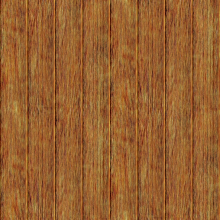 Rustic Aged Wood Planks Texture for 3D Modeling and Rendering
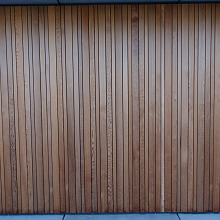 PBR Texture of Vertical Wooden Planks Wall
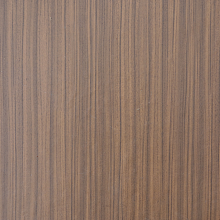 Seamless PBR Wood Texture Featuring Vertical Natural Grain Patterns
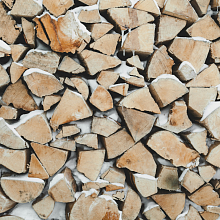 Natural Wood Logs Texture with Snow for 3D PBR