Creating and Optimizing Seamless PBR Fabric Leather Hybrid Textures for Realistic 3D Materials
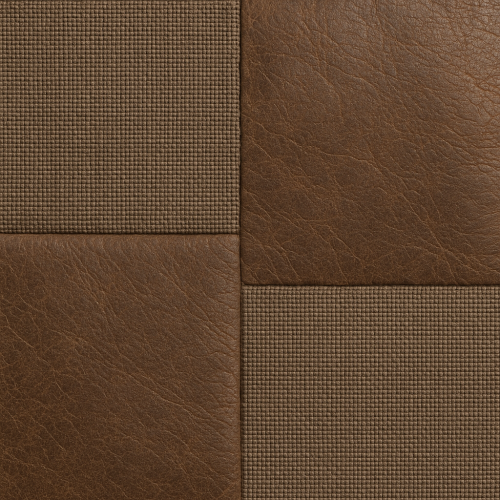
The creation of fabric leather hybrid textures within physically based rendering (PBR) workflows represents a sophisticated endeavor that demands a nuanced understanding of both material science and digital authoring techniques. Unlike homogeneous materials, hybrid textures involving fabric and leather components inherently combine two distinct surface characteristics—each with unique optical, tactile, and structural properties—that must cohesively coexist within a single seamless texture set. This complexity elevates the challenges in producing believable PBR maps, necessitating a rigorous approach to acquisition, calibration, and optimization to satisfy the exacting standards of modern real-time and offline rendering engines such as Unreal Engine and Blender’s Cycles or Eevee.
At the core of PBR texturing lies the accurate simulation of light-material interaction through a suite of texture maps that collectively define the surface’s physical attributes. For hybrid fabric-leather surfaces, the albedo map must capture the chromatic subtleties of intertwined fibers and the nuanced color variations of tanned or finished leather. Fabric typically exhibits a diffuse, low-specular response, often with intricate weave patterns and micro-variation in color saturation due to yarn twists and fiber orientation. In contrast, leather surfaces demonstrate a more complex reflectance profile, generally higher specularity with a characteristic anisotropic sheen, and color shifts influenced by tanning processes, wear, and natural grain. Thus, the albedo texture must be meticulously authored or acquired to represent these divergent elements without creating visual dissonance.
Roughness maps for hybrid materials pose a particularly demanding challenge. Fabric regions tend to have higher roughness values with significant micro-variation caused by the fiber topology, which scatters light diffusely. Conversely, leather’s surface roughness is often smoother yet irregular, featuring localized gloss variations due to creases, pores, and polished patches. Accurate roughness calibration requires high-resolution data capture or procedural generation techniques that embed this heterogeneity seamlessly across the material boundary. Employing height or displacement maps to subtly accentuate fabric weave relief alongside leather grain undulations helps enhance the tactile realism, especially when coupled with parallax occlusion or tessellation in engines like Unreal Engine. Normal maps must be carefully baked or generated to preserve fine-scale detail, such as yarn twists and leather pores, ensuring that the transition between fabric and leather does not appear abrupt or artificial.
Ambient occlusion (AO) maps contribute critically to the perception of depth and contact shadows, particularly in hybrid textures where interstitial shadows between fabric fibers and leather crevices enhance material authenticity. AO must be baked or authored with spatial awareness of both subsurface geometry and macro-structure, avoiding uniform occlusion that would flatten the dual-material interface. This demands high-fidelity source geometry or photogrammetric scans capable of capturing intricate surface details. Moreover, AO maps can be optimized to work synergistically with global illumination and screen-space ambient occlusion techniques within target engines, reducing computational overhead while maintaining visual fidelity.
Metallic maps in fabric-leather hybrids are typically sparse or zeroed out since neither fabric nor leather possess significant metallic properties. However, certain leather finishes, such as patent leather or leather with metallic threads woven into fabric components, can justify localized metallic values. Authoring metallic maps with precision avoids unintended specular highlights that can break immersion. When metallic elements are present, they must be spatially coherent with roughness and normal data to preserve physical plausibility.
Seamlessness in these hybrid textures is paramount, especially given their frequent use in tiling across large surfaces such as upholstery, garments, or vehicle interiors. Achieving seamless tiling requires careful pattern design and texture synthesis that respects the directional anisotropy of fabric weaves and leather grain orientation. Micro-variation within tileable textures mitigates the repetitiveness typical of tiled maps, employing noise functions, procedural overlays, or subtle color shifts to break uniformity without compromising the overall material impression. This micro-variation is essential not only for visual realism but also for masking tiling artifacts that become evident under dynamic lighting and close-up inspection.
Calibration to real-world physical units underpins the efficacy of PBR workflows in achieving perceptual accuracy. This demands that albedo values remain within physically plausible reflectance ranges, roughness parameters correspond to measured surface roughness, and normal maps encode surface normals in a consistent tangent space orientation. Utilizing calibrated references—whether from high-end scanning equipment, photogrammetry, or standardized material libraries—enables artists and technical directors to maintain consistency across hybrid materials and scenes. Color management workflows integrating linear workflows and gamma correction further ensure that textures respond predictably to engine lighting setups.
Optimization is another critical axis in fabric leather hybrid texture production. High-resolution texture sets capturing fine detail can quickly become resource-intensive, impacting real-time performance. Strategies such as mipmapping, texture array usage, and judicious channel packing (e.g., combining roughness, metallic, and AO maps into single texture channels) help balance fidelity with efficiency. Normal map compression schemes must preserve detail without introducing artifacts, and alpha channels should be reserved for masks or detail maps only when indispensable. Within Unreal Engine, for instance, material instances can leverage parameter blending to dynamically adjust roughness or albedo values to simulate wear or dirt accumulation without requiring multiple texture sets, while Blender’s node-based shader system facilitates procedural layering and blending of fabric and leather components to reduce texture memory footprint.
From a practical standpoint, successful hybrid PBR texture authoring entails an iterative pipeline that integrates acquisition, procedural enhancement, and engine-specific calibration. Photogrammetry or multispectral scanning can capture base data, which is then refined through digital sculpting and texturing software such as Substance Painter or Mari. Procedural noise and curvature maps help generate secondary detail layers that enrich the micro-variation crucial for fabric and leather fidelity. Artists must also consider the anisotropic reflection models inherent to leather in shader development, ensuring that specular highlights respond realistically to view and light direction changes, a challenge less pronounced in isotropic fabric surfaces. Testing textures under diverse lighting conditions in preview environments like Unreal’s Material Editor or Blender’s LookDev mode is essential to validate appearance and performance.
In summary, fabric leather hybrid PBR textures represent a confluence of diverse material properties that challenge traditional texturing pipelines. Their successful creation hinges on the seamless integration of distinct optical and structural characteristics through carefully calibrated, high-fidelity maps that encompass albedo, roughness, normal, AO, height, and occasionally metallic data. Mastery over tiling techniques, micro-variation introduction, and engine-specific optimization ensures these textures fulfill the realism demands of contemporary games, architectural visualization, and visual effects pipelines. By embracing a disciplined, physically grounded approach to hybrid material authoring, artists and technical directors can elevate the visual complexity and authenticity of their 3D scenes to compelling new heights.
Acquiring high-quality base data for seamless PBR fabric-leather hybrid textures demands a nuanced approach that respects the distinct physical and optical properties of both materials while ensuring their coherent integration within a single texture set. The complexity arises not only from the disparate microstructures—woven fibers versus natural grain and pores—but also from the subtle interplay of reflectance, subsurface scattering, and roughness variations that characterize these surfaces. Effective acquisition techniques must thus be tailored to capture these multi-scale details with fidelity and translate them into PBR maps—albedo, roughness, normals, ambient occlusion (AO), height, and metallic—that respect the physical accuracy required by modern real-time engines such as Unreal Engine and authoring tools like Blender.
Photogrammetry remains a predominant technique for capturing hybrid fabric-leather surfaces, primarily because it preserves real-world color and geometry information. However, standard photogrammetry pipelines often struggle with materials exhibiting mixed reflectance properties, especially when one component—typically leather—displays specular highlights and anisotropic reflections, while fabric sections tend to have more diffuse and microstructured scattering. To overcome these challenges, a calibrated multi-light setup is indispensable. Employing a dome or ring light array with variable intensity and polarization filters enables separate captures emphasizing either diffuse albedo or specular reflections. This multi-pass approach facilitates the extraction of accurate albedo maps by minimizing specular contamination, which is crucial for PBR workflows where albedo should remain free of lighting artifacts or gloss.
To capture micro-details and surface imperfections crucial for convincing hybrid textures, close-range photogrammetry or macro photogrammetry is recommended. High-resolution cameras paired with macro lenses allow the acquisition of fine weave patterns in fabric fibers and subtle grain details in leather, such as creases, pores, and natural blemishes. Ensuring uniform focus and depth of field across the surface minimizes blur and distortion, which can compromise normal and height map fidelity. Additionally, capturing with consistent scale references and ensuring overlap between passes helps in generating tiled, seamless texture sets where micro-variations remain coherent and natural.
Normal map extraction benefits significantly from the combination of photogrammetry-derived geometry and complementary techniques like photometric stereo or structured light scanning. Photometric stereo, which uses varied lighting angles to infer surface normals, excels at revealing surface micro-reliefs such as fabric fibers and leather grain. When fused with geometry from photogrammetry, this yields normal maps with both macro and micro detail fidelity. Height maps can similarly be derived by converting displacement data procured from dense point clouds or depth maps created via structured light scanning, allowing for realistic parallax or tessellation effects in PBR materials.
Procedural generation offers an alternative or complementary path to hybrid texture acquisition. While it cannot yet fully replace the organic complexity captured through scanning, procedural tools excel at creating repeatable, tileable base patterns with controlled parameters for micro-variation, which is especially useful for fabric weaves. By leveraging procedural noise functions, anisotropic patterns, and fiber simulations, artists can generate base albedo and roughness maps that seamlessly tile without obvious repetition, a frequent challenge in scanned textures. More importantly, procedural workflows enable fine control over roughness variation—critical for fabric’s matte patches and leather’s subtle glossiness fluctuations—allowing dynamic adjustment to match reference materials or game engine requirements.
Integrating procedural elements with scanned data can optimize texture sets further. For instance, combining a photogrammetry-based base albedo with procedurally generated roughness and height maps enhances micro-variation and reduces tiling artifacts during runtime. This hybrid approach can be calibrated through iterative feedback loops in engines like Unreal, where roughness and normal maps can be dynamically adjusted using material shaders to respond to lighting conditions, improving realism without increasing texture resolution.
Calibration and optimization steps after acquisition are paramount to ensure that hybrid textures perform well within real-time environments. Raw photogrammetry data often contains noise, lighting inconsistencies, and scale variance that must be corrected during authoring. Tools within Blender, such as the Texture Paint workspace or the Node Editor, allow for manual refinement of base maps. For example, albedo maps require desaturation and gamma correction to remove baked-in shadows or highlights, ensuring energy-conserving reflectance in accordance with PBR principles. Roughness maps are frequently derived from grayscale versions of the albedo or from specular captures but require careful manual or procedural adjustment to replicate leather’s variable sheen and fabric’s diffuse scattering properly.
Normal maps extracted from photogrammetry often contain low-frequency shape information that should be separated from high-frequency detail maps. This separation prevents exaggerated surface deformation when applied in game engines and allows artists to use parallax occlusion mapping or tessellation for macro details while preserving micro-detail for lighting interaction. Ambient occlusion maps, often baked from high-resolution geometry, are critical for accentuating crevices and folds in both fabric and leather, but they must be balanced to avoid overly darkening fabric fibers or gloss highlights in leather.
Optimization for tiling is another critical consideration. Hybrid textures inherently risk visible seams due to the disparate material transitions. To mitigate this, acquisition captures should be planned to include overlapping regions of fabric and leather, enabling seamless blending in texture space. When tiling, micro-variation is essential to break repetition; this can be achieved by introducing randomized procedural noise overlays or using multi-channel masks to subtly alter roughness and normal detail per tile iteration. Engines like Unreal support runtime blending and detail layering, which can be exploited by authoring additional micro-detail maps or detail normals that overlay base textures, enhancing realism without increasing base texture resolution.
Finally, the metallic map for fabric-leather hybrids is typically sparse or uniform, as both materials are generally non-metallic. However, subtle metallic reflections in leather hardware or thread components can be captured during photogrammetry or added procedurally. Accurate material blending in the metallic channel ensures correct specular response and prevents artifacts during rendering.
In summary, acquiring base data for seamless PBR fabric-leather hybrid textures requires a hybridized acquisition strategy combining calibrated photogrammetry, photometric stereo, and procedural techniques. This multi-faceted approach captures the essential micro-details and surface imperfections that define realistic hybrid materials. Subsequent calibration, map separation, and optimization tailored for real-time engines ensure that these textures maintain physical accuracy, visual fidelity, and efficient performance in diverse rendering contexts.
Generating accurate Physically Based Rendering (PBR) texture maps for hybrid materials that combine fabric and leather presents a nuanced challenge, demanding meticulous attention to their inherently distinct physical and optical characteristics. The core PBR maps—albedo, roughness, normal, height, ambient occlusion (AO), and metallic—must be crafted and calibrated to reflect these materials not only individually but also in seamless conjunction, ensuring the final composite texture convincingly conveys the heterogeneous nature of the surface under varying lighting environments. This process begins at the acquisition or authoring stage, where capturing or synthesizing high-fidelity data for fabric and leather requires divergent approaches, followed by careful map generation, calibration, and optimization tailored to real-time rendering engines like Unreal Engine or offline workflows in Blender.
The albedo map is arguably the foundational element, representing the diffuse reflectance without shadows or specular highlights. For fabric and leather composites, it is critical to preserve the unique color saturation and subtle variations intrinsic to each material. Fabric albedo usually exhibits a softer, more matte appearance with micro-variations in weave patterns and potential dye irregularities, whereas leather albedo often carries richer pigmentation, slight translucency effects, and localized discoloration due to wear or tanning processes. When authoring the albedo, whether through high-resolution photo captures or procedural texturing, it is essential to neutralize any baked-in lighting information. This often involves using calibrated capture setups with diffuse-only illumination or applying sophisticated software workflows (e.g., Substance Alchemist or Quixel Mixer) to remove shadows and highlights. In the case of hybrid textures, creating masks or vertex color blends helps isolate fabric and leather areas, enabling tailored albedo adjustments that respect their color fidelity and avoid unnatural blending or desaturation at material borders.
The roughness map controls the microsurface scattering by defining how smooth or coarse a material appears, which critically influences perceived glossiness. Fabric roughness tends to be higher and more diffuse due to the fibrous microstructure, often exhibiting subtle anisotropy aligned with the weave direction. Leather, conversely, generally shows lower roughness with localized specular highlights that correspond to surface oils and natural grain patterns. Accurately representing these distinctions requires high-resolution roughness data, ideally captured using a gonioreflectometer or derived from multi-angle photogrammetry combined with specular separation algorithms. When authoring roughness maps, it is important to encode fabric roughness with sufficient micro-variation to avoid flatness, introducing stochastic noise patterns that mimic fiber bundles and yarn twists. Leather roughness should capture the nuanced interplay of smoother regions and rough grain, often necessitating hand-painting or procedural noise layers to simulate scratches, pores, or scars. The roughness map’s values must be carefully calibrated in linear space, ensuring that the final render engines interpret them consistently—Unreal Engine 5, for instance, expects roughness values in direct correlation with physical roughness parameters, so proper gamma correction and linear workflow adherence are mandatory.
Normal maps are pivotal for simulating small-scale surface detail without geometry overhead. For fabric and leather hybrids, generating accurate normal maps involves different strategies because the surface microstructures differ substantially. Fabric normal maps typically emphasize the weave pattern’s depth and directional fiber orientation. These can be acquired using photometric stereo techniques or high-resolution scans, then processed with software such as CrazyBump or xNormal to extract fine detail. Alternatively, procedural generation using vector noise aligned to the weave direction can supplement or replace photographic data, especially when tiling is required. Leather normal maps, on the other hand, focus on grain, pores, wrinkles, and creases. Capturing these details demands either macro photography with macro lenses and controlled lighting or scanning methods like structured light or laser scanning for fine displacement cues. Given leather’s organic irregularities, normal maps often require manual refinement to emphasize key features without introducing noise that conflicts with roughness or height maps. When blending fabric and leather normals into a single texture set, consider using channel packing or layered blending methods within shader graphs to preserve directional information and avoid unnatural transitions across material boundaries.
Height maps, or displacement maps, complement normal maps by encoding per-pixel depth information that can be used for parallax occlusion mapping or tessellation. For fabric, height maps accentuate the weave’s periodic topography and the micro-bumps of individual threads, which are essential for convincing close-up renders. Leather height maps accentuate grain depth, scars, and wrinkles, contributing to the material’s tactile realism. Acquiring height data is often achieved via photogrammetry or depth maps derived from stereo imaging, but for seamless tiling and hybrid materials, procedural height generation can provide controlled periodicity and micro-variation. When authoring height maps, it is crucial to maintain consistent scale between fabric and leather features so that neither overwhelms the other visually or physically within the shader. Height maps must also be carefully optimized to avoid excessive tessellation costs when used in real-time engines. Unreal’s displacement shaders, for example, require height maps normalized to a specific range, and excessive contrast can cause artifacts or unrealistic shadowing, so applying subtle Gaussian blurs or frequency separation helps balance detail and performance.
Ambient occlusion maps serve to enhance global illumination effects by simulating self-shadowing in crevices and folds. For fabric and leather hybrids, AO maps must accurately represent the complex topology of both materials. Fabric’s AO highlights the intricate shadowing between yarns and weave intersections, while leather AO emphasizes wrinkles, pores, and surface undulations. When generating AO maps, baking from high-poly geometry is the gold standard, but for hybrid materials, this can be challenging due to the multiscale nature of the surface. A hybrid approach combining baked AO from scanned geometry and procedural ambient occlusion layers can yield better results. For example, procedural AO can enhance fabric weave shadows where geometry lacks sufficient resolution, while baked AO captures leather’s macro folds. AO maps should be combined multiplicatively with the albedo or separated as independent inputs depending on the target engine’s PBR workflow. Unreal Engine typically expects AO maps to be packed into the ambient occlusion channel of the material mask, and Blender’s Principled BSDF shader can utilize AO as a separate input or baked into indirect lighting.
The metallic map is generally the simplest for fabric and leather composites because both materials are non-metallic by nature, thus the metallic channel is almost always set to zero. However, careful consideration is warranted when the hybrid includes elements like metal zippers, studs, or decorative hardware embedded within the fabric-leather surface. In such cases, the metallic map must encode the precise locations of these features to ensure correct reflectance behavior. This can be achieved via mask channels or vertex color information, isolating metallic components from the organic base materials. If the texture set is purely organic, it is important to explicitly zero out the metallic channel to avoid unintended specular interactions in physically based shaders. Unreal Engine and Blender’s PBR shaders use the metallic map as a binary or grayscale input to modulate the Fresnel reflectance, so incorrect values can cause visually jarring artifacts, especially at grazing angles.
Tiling and micro-variation are crucial considerations throughout the texture creation process, particularly for seamless fabric and leather hybrids. Fabric weaves require careful tiling alignment to prevent obvious repetitive patterns, which can be mitigated by introducing random offsets, noise, or mask-driven variation in roughness and normal maps. Leather, with its organic grain and blemishes, benefits from stochastic texturing techniques such as triplanar projection combined with detail maps to break tiling uniformity. When blending fabric and leather regions, it is advantageous to generate transition zones with interpolated micro-variation, ensuring the maps blend naturally without visible seams or abrupt changes in surface properties. This can be efficiently achieved using mask-driven blending layers within authoring software like Substance Painter or Designer, or shader-based blending in Unreal’s Material Editor using height-based or curvature-driven blending nodes.
Calibration and optimization are the final yet ongoing steps to ensure the texture maps perform accurately within target rendering engines. Calibration involves iterative testing under physically plausible lighting setups, adjusting map intensities, gamma, and contrast to match real-world reference materials. Using HDRI environments in Unreal or Blender’s Cycles/Eevee allows artists to preview how fabric and leather respond to various lighting conditions, enabling refinement of roughness and normal maps to balance specular highlights and subtle diffuse scattering. Optimization addresses performance constraints by resizing textures, compressing channels, and selectively reducing map complexity while maintaining visual fidelity. For instance, normal maps can be compressed using BC5 or ASTC formats, height maps downsampled or converted to parallax maps to save memory, and AO maps combined with roughness to minimize texture fetches. Additionally, packing multiple grayscale maps into different channels of a single texture sheet (e.g., roughness in R, AO in G, metallic in B) is a common optimization technique supported by both Unreal and Blender’s shader systems.
In conclusion, authoring accurate PBR maps for fabric and leather composites necessitates a deep understanding of the materials’ physical characteristics and their optical interplay. Through a combination of precise acquisition, careful map generation, sophisticated tiling and micro-variation techniques, and rigorous calibration, artists and technical directors can create seamless hybrid textures that elevate realism in both real-time and offline rendering contexts. Mastering these processes ensures that the final materials not only look authentic under diverse lighting scenarios but also remain optimized for efficient deployment in complex 3D environments.
FAQ
What is covered in this guide?
This guide explains Creating and Optimizing Seamless PBR Fabric Leather Hybrid Textures for Realistic 3D Materials with practical notes for seamless PBR materials, texture setup, and production use.
Can I use these texture techniques in Blender, Unreal Engine, and Unity?
Yes. The workflow focuses on standard PBR maps and tileable materials that can be used in Blender, Unreal Engine, Unity, archviz, games, and VFX pipelines.
Where can I find textures for this workflow?
Use the AITextured texture library and the related texture links on this page to find seamless PBR materials and preview them before download.
Related Textures
 Procedural Lime Plaster Wall PBR Texture
 Procedural Stamped Sidewalk Concrete PBR Texture
 Procedural Fine Asphalt Road PBR Texture
 Procedural Pitted Concrete PBR Texture
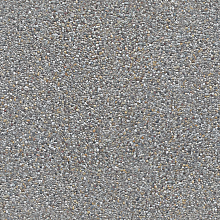 Seamless Concrete Pebble PBR Texture in 4K Resolution
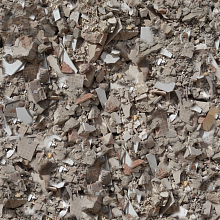 Seamless PBR Concrete Rubble Texture with Debris and Fragments
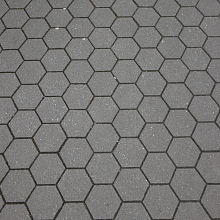 Seamless Hexagonal Concrete Tile PBR Texture 4K
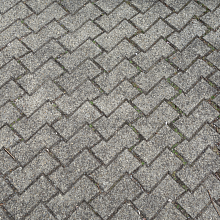 Realistic Concrete Paving Brick Pattern Texture