Creating and Optimizing Seamless PBR Textures for Realistic Metallic Paint Materials
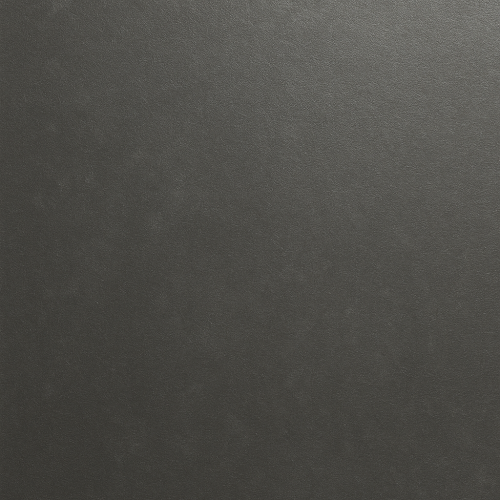
Metallic paint materials occupy a distinctive niche within physically based rendering (PBR) workflows due to their complex light interaction mechanisms and layered microstructure. Unlike purely dielectric or simple metallic surfaces, metallic paints combine a conductive base with a translucent clear coat embedding reflective metallic flakes. This intrinsic complexity mandates specialized texture authoring and optimization strategies to capture the nuanced optical phenomena accurately while maintaining real-time performance viability in modern engines such as Unreal Engine and Blender’s Eevee or Cycles. Understanding the foundational characteristics of metallic paint is essential for producing seamless PBR textures that convey their signature iridescent sparkle, anisotropic highlights, and depth without resorting to expensive shader tricks or baked solutions.
At the core of metallic paint’s unique appearance lies its multi-layered construction. Typically, a metallic paint system consists of a pigmented base layer containing microscopic metal flakes—often aluminum or mica-based particles—suspended within a colored binder. This base is then sealed under a clear coat layer, which not only protects the paint physically but also modulates the reflection and refraction of incident light. The clear coat is a key element in PBR workflows because it introduces a secondary specular reflection component with its own roughness and index of refraction, often necessitating a separate clear coat specular or roughness map in shader setups. The interplay between the base layer and clear coat creates characteristic visual effects such as depth, wetness, and subtle color shifts depending on viewing angle and lighting conditions.
From a texturing perspective, capturing the interplay between the metallic flakes and the transparent clear coat requires careful consideration of the PBR texture sets. The albedo map in a metallic paint workflow is not a simple diffuse color but rather an approximation of the base pigment combined with the scattering and absorption properties of the flakes. Unlike pure metals where the albedo is generally black or very dark, metallic paints exhibit vibrant base colors modulated by the reflective flakes, which effectively increase the perceived brightness and introduce micro-scale specular variation. Consequently, authors must ensure the albedo texture encodes this complexity without violating energy conservation principles, typically by avoiding oversaturated values and calibrating the color space to account for the underlying physical phenomena.
The metallic map is another pivotal element, controlling where the material behaves as a metal versus a dielectric. In metallic paints, the base layer with embedded flakes is represented as metallic in the texture, often with values approaching 1.0 to simulate the conductive properties of the flakes. However, the clear coat layer itself behaves as a dielectric with a refractive index near 1.5, meaning that certain shader models require a clear coat mask or parameter separate from the main metallic map. This separation is critical because the clear coat contributes a specular reflection that is independent of the base layer’s metallicity and must be handled accordingly to reproduce accurate Fresnel reflections and highlight behavior.
Roughness maps in metallic paint workflows require particular attention due to the dual-scale surface structure. The clear coat surface is generally very smooth, yielding low roughness values to simulate the glossy finish, while the underlying flake-containing base layer exhibits micro-roughness and anisotropic scattering effects due to the orientation and distribution of flakes. To achieve realistic results, artists often author roughness maps that encode this layered complexity, sometimes leveraging channel packing or multi-texture blending techniques to allow shaders to differentiate between clear coat roughness and base layer micro-roughness. Furthermore, anisotropic reflections are a hallmark of metallic paint surfaces, arising from the elongated or plate-like shape of the metallic flakes that preferentially reflect light along certain axes. Incorporating anisotropic parameters or tangent maps as part of the texture set can substantially enhance realism, but this must be balanced against performance constraints and the capabilities of the target rendering engine.
Normal maps play a dual role in metallic paint texturing. They are essential for conveying surface detail such as subtle flake edges and micro-bumps, which contribute to the sparkling, dynamic reflections characteristic of metallic paints. However, since the flakes themselves are microscopic and embedded within the paint layers, normal maps must be authored with micro-variation in mind. This often involves high-frequency detail sculpted or baked from scanned data or procedural noise sources that mimic the irregular distribution of flakes. Additionally, height maps can be employed to drive parallax occlusion or tessellation shaders, further enhancing the perception of depth within the paint layers. Ambient occlusion (AO) maps, while less critical for highly reflective surfaces, still provide valuable shadowing information in crevices or recessed areas, enhancing overall spatial perception without compromising the material’s glossy nature.
Tiling and micro-variation are crucial for metallic paint materials due to their inherently repetitive flake patterns and the need to avoid obvious texture repetition across large surfaces. Unlike diffuse materials, where subtle noise or detail can mask tiling artifacts, metallic paint’s high-frequency specular highlights and anisotropic reflections amplify any repetition, breaking immersion. To counteract this, artists must integrate micro-variation techniques within their texture authoring pipelines. This can be achieved by employing procedural overlay textures, randomized flake distribution masks, or layered detail normal maps that introduce stochastic variation in flake orientation and density. When working within engines like Unreal, leveraging material functions and instance parameters to blend multiple texture sets can further mitigate tiling while maintaining consistent performance.
Calibration and optimization become particularly important given the computational demands of simulating metallic paint’s layered optical effects. Artists and technical directors must calibrate their PBR textures against reference photographs and measured BRDF data to ensure physical plausibility. This involves iterative adjustments of albedo brightness, metallic values, and roughness to match real-world reflectance and scattering behavior. Tools such as HDR light probes and physically based shader previewers facilitate this process by providing real-time feedback under controlled lighting environments. Optimization also entails texture resolution balancing, where high-frequency normal and roughness details may require higher resolution maps, while base albedo and metallic maps can be downscaled without significant loss of fidelity. Efficient channel packing and the reuse of texture data across shader inputs aid in reducing memory footprint and draw calls, crucial for interactive applications.
Modern rendering engines have evolved to accommodate the specific needs of metallic paint materials within PBR workflows. Unreal Engine’s advanced material editor supports layered materials and clear coat shading models that natively handle dual roughness parameters and anisotropy, enabling artists to implement complex metallic paint shaders without extensive custom code. Similarly, Blender’s Principled BSDF shader includes clear coat inputs and anisotropic controls, allowing for physically accurate representation of metallic paint within its viewport and Cycles renderer. However, these engines still rely on well-prepared, calibrated texture sets to maximize visual fidelity. Practical tips include baking layered maps from high-resolution scanned data, leveraging procedural masks for flake variation, and validating textures under multiple lighting scenarios to confirm consistent behavior.
In summary, metallic paint materials challenge standard PBR texturing workflows by requiring a nuanced approach that encompasses layered reflections, embedded metallic flakes, and anisotropic light scattering. Successful creation and optimization of seamless PBR textures for such materials hinge on a deep understanding of their physical construction and optical characteristics, judicious use of multi-channel texture maps, and targeted calibration against real-world references. Mastery of these factors enables 3D artists and technical directors to produce metallic paint surfaces that convincingly replicate the dynamic sparkle, depth, and glossiness that define this complex material class in real-time rendering environments.
Acquiring high-fidelity base materials for realistic metallic paint textures demands a nuanced approach that reconciles the intricate optical phenomena distinctive to such surfaces with the technical constraints of PBR workflows. Metallic paint, characterized by its layered structure—comprising a pigmented base coat with reflective metallic flakes enveloped beneath a transparent clear coat—presents unique challenges. Capturing not only the base color but the subtle interplay of microgeometry, specular variation, anisotropic reflections, and clear coat gloss is crucial to recreating its visual complexity in digital environments. Consequently, advanced acquisition techniques must be carefully devised to extract physically accurate and artistically versatile texture sets, encompassing albedo, roughness, normal, ambient occlusion, height, and metallic maps, all calibrated to function within modern rendering engines such as Unreal Engine and Blender’s Eevee or Cycles.
Photogrammetry remains a fundamental method for capturing real-world surface detail, but standard setups often fall short in faithfully representing the optical intricacies of metallic paints. Traditional diffuse-driven workflows inadequately resolve the anisotropic highlights and the microfacet distribution imparted by metallic flakes, as these features rely heavily on directional lighting and angular reflectance. To overcome this, specialized photogrammetry rigs deploy multi-angle, polarized lighting arrays combined with high dynamic range imaging to isolate and quantify the reflectance properties under various incidence angles. Polarization filters on both the light sources and camera lenses enable partial separation of specular reflections from diffuse albedo, facilitating the extraction of physically meaningful base color maps devoid of highlight contamination.
Moreover, capturing the clear coat layer’s subtle variation in gloss and micro-scratches demands macro-to-micro imaging techniques at multiple scales. A dual-step photogrammetry approach, integrating close-range focus stacking with global surface scans, achieves this. The first captures fine-scale microgeometry—minute flake orientations, surface roughness anisotropies, and clear coat imperfections—while the second establishes the overall macro shape and large-scale occlusion patterns. The combined data sets enable the generation of high-resolution normal and height maps that accurately reflect flake orientation and depth variance, crucial for driving anisotropic specular highlights in PBR shaders.
Calibration of acquired data is paramount to ensure texture maps conform to the linear color spaces and energy-conserving BRDF models employed in modern engines. Post-capture, albedo maps undergo linearization and demodulation by their corresponding roughness and metallic values, extracted through controlled lighting experiments where reflectance intensity and angular distribution are sampled. Utilizing custom calibration charts embedded with neutral, gloss, and metallic reference patches during capture sessions aids in mapping sensor responses to physical reflectance units. This process facilitates the generation of physically consistent metallic maps that encode the presence and density of metallic flakes, guiding the renderer’s specular response accurately.
Complementing photogrammetry, procedural generation techniques have gained traction in authoring metallic paint base materials, particularly when aiming for tiling seamlessness and micro-variation that surpasses the limits of photographic acquisition. Procedural methods excel in simulating the stochastic distribution and orientation of metallic flakes embedded within the paint matrix, as well as the clear coat’s variable thickness and micro-scratch patterns. Leveraging multi-layered noise functions—such as anisotropic Gabor noise or oriented Worley noise—allows the creation of tileable maps that mimic the random yet directionally biased flake alignment observable in real metallic paints.
Procedural workflows typically begin by defining a base albedo reflecting the pigment color, modulated by a flake distribution mask generated from noise patterns. This mask informs both the metallic map, marking flake presence, and the roughness map, encoding flake edge sharpness and clear coat smoothness. Height and normal maps are derived by displacing the base surface according to the flake topology, incorporating subtle perturbations to simulate microfacet geometry. To replicate the clear coat’s gloss layer, procedural layering applies a secondary specular map with anisotropic parameters, driven by noise that simulates microscopic abrasion and wear. The result is a physically plausible, artistically controllable base material that can be seamlessly tiled and customized without the artifacts sometimes introduced by photographic seams or lighting inconsistencies.
Integration with engines such as Unreal requires careful consideration of texture map formats and compression artifacts that can degrade the subtle metallic paint effects. Unreal’s material editor facilitates blending of clear coat and base layers through layered materials or specialized shading models, where procedural maps can be combined with photogrammetric data to augment realism. For instance, photogrammetric albedo and flake distribution maps can be overlaid with procedural micro-scratch noise to introduce controlled wear, enhancing perceived authenticity. In Blender, node-based shader graphs enable similar layering, using Principled BSDF’s clear coat parameters and normal map blending to simulate the multi-layered nature of metallic paints. Optimizing texture resolution and employing mipmapping strategies that preserve high-frequency flake detail at close ranges while reducing aliasing at distance is imperative for performance without sacrificing fidelity.
Practically, achieving seamlessness in metallic paint textures, both photogrammetric and procedural, hinges on addressing the inherent directionality and anisotropy of flake orientation. Tileable noise functions must be carefully parameterized to maintain consistent flake alignment across edges, and photogrammetric data may require edge blending techniques or projection mapping corrections. Additionally, care must be taken to maintain energy conservation across the clear coat layer, ensuring that specular and diffuse components balance correctly to avoid unnatural brightness or dullness. Employing adaptive roughness scaling tied to viewing angle and flake distribution further enhances the dynamic response of the material under environmental lighting.
In sum, advanced acquisition of metallic paint base materials for PBR texturing is a hybrid endeavor. It leverages sophisticated photogrammetry setups tailored to isolate and quantify metallic flake reflectance and clear coat gloss, alongside procedural generation pipelines that simulate the layered microstructures and directional anisotropies defining the material’s signature look. Calibrated and optimized for real-time engines, these techniques empower artists and technical directors to create seamless, physically grounded textures that convincingly reproduce the mesmerizing interplay of light and material inherent in metallic paints.
Creating a comprehensive set of physically based rendering (PBR) texture maps for metallic paint materials demands rigorous attention to both the physical properties of the underlying surfaces and the optical phenomena that define their visual characteristics. Metallic paints, often found in automotive finishes and high-end industrial products, combine complex microstructures—such as metallic flakes embedded within a clear coat—with multilayered reflectivity and subtle color shifts. To authentically simulate these traits in a real-time or offline engine, the artist must generate and calibrate an integrated suite of maps including albedo, roughness, normal, ambient occlusion (AO), height, and metallic. Each map serves a unique function but must cohesively interact within the rendering pipeline to achieve convincing realism and maintain physical accuracy.
The albedo map for metallic paint stands apart from non-metallic surfaces in its treatment of color and reflectivity. Unlike dielectric materials, where albedo represents diffuse reflectance, metallic surfaces are inherently reflective with minimal diffuse components. This implies that the albedo should predominantly encode the intrinsic coloration of the metal flakes themselves—commonly variations of gold, copper, aluminum, or steel—while excluding any specular highlights or reflections that are handled by the metallic and roughness channels. For metallic paints with a clear coat, the albedo typically corresponds to the paint pigment layer beneath the flakes, often a translucent base color that modulates the final appearance. Authoring this map requires careful color calibration to avoid energy conservation violations; albedo values should remain within physically plausible ranges (generally below 1.0 in linear space) and reflect the spectral response of the chosen pigment. Utilizing calibrated color references or measured spectrophotometer data can significantly enhance accuracy. In practice, artists often begin with high-resolution scanned data or procedurally generated base colors that simulate subtle inhomogeneities and tint variations inherent in automotive paint.
The roughness map is crucial for mimicking the gloss variations characteristic of the clear coat layer. Metallic paints are typically layered with a transparent, highly polished clear coat that governs macroscopic reflections and glossiness. This clear coat exhibits a spatially varying roughness profile, influenced by micro-scratches, polishing marks, and the underlying flake distribution. To capture this, the roughness map should encode subtle gradients from near-zero roughness—representing mirror-like reflections on smooth areas—to higher roughness values in regions where micro-structure or wear reduces specular intensity. When authoring roughness, it is important to consider the interaction between the clear coat and the metallic flakes beneath; the roughness map effectively controls the distribution and intensity of specular highlights without altering the metallic coloration. Procedural noise and micro-variation generators can simulate the stochastic nature of clear coat imperfections, while scanned or photogrammetric data can provide realistic base patterns. Calibration involves ensuring the roughness values map correctly to the engine’s BRDF model—Unreal Engine’s standard PBR shader, for instance, interprets roughness non-linearly, so artist adjustments often require iterative feedback loops, leveraging viewport previews and LUT-based roughness remapping for precision.
Normal maps play a pivotal role in conveying the micro- and meso-scale surface details that define the tactile quality of metallic paint. Unlike simple smooth surfaces, metallic finishes incorporate embedded flakes—tiny, reflective particles with angular facets—and a clear coat that can exhibit fine surface undulations. Creating normal maps that capture this complexity involves a multi-step approach. High-resolution scans of real painted surfaces or microphotography can be converted into displacement maps and then baked into tangent-space normal maps, preserving critical flake geometry and subtle surface noise. Alternatively, procedural techniques blending noise, Voronoi patterns, and anisotropic detail simulate the random orientation and distribution of flakes. The normal map must be carefully balanced to avoid excessive perturbations that disrupt shading or cause aliasing artifacts, especially when tiled. Employing mipmap biasing and anisotropic filtering within the engine can help maintain crispness without introducing noise. In Blender or Unreal Engine, artists can preview the interaction between normal maps and lighting environments, iteratively refining the intensity and scale of normals to harmonize with roughness and albedo cues.
Ambient occlusion (AO) maps enhance the perception of depth and shadowing by simulating self-shadowing effects where ambient light is occluded by surface geometry. For metallic paint, AO is subtle but significant; it accentuates crevices, flake boundaries, and micro-indentations beneath the clear coat, improving visual richness without introducing harsh shadows. Given the smoothness of clear coats, AO effects are often low-contrast and finely tuned to avoid overwhelming the specular response. AO can be baked from high-poly meshes with detailed micro-geometry or generated through procedural means. It is essential to ensure that the AO map is integrated multiplicatively with the diffuse lighting term in the shader pipeline and does not inadvertently darken specular reflections. In engines like Unreal, AO is often combined with indirect lighting or curvature maps to enhance the final shading subtly but effectively.
Height maps, while sometimes overlooked in metallic paint workflows, provide critical displacement information that can simulate the clear coat’s micro-variation and flake protrusions. Unlike normal maps that encode directional perturbations of surface normals, height maps represent relative elevation data, enabling parallax occlusion mapping or tessellation-based displacement in modern engines. Creating height maps involves extracting fine-scale topography from scanned data or procedural textures modeling the flakes’ thickness variance and surface undulations. Height maps must be carefully calibrated to maintain physical plausibility—excessive displacement can cause silhouette artifacts or self-intersections, especially on curved surfaces. In Blender’s shader editor or Unreal Engine’s material graph, height maps can drive parallax effects that add perceptual depth to the paint surface without increasing mesh complexity, offering a potent optimization strategy for real-time rendering.
Finally, the metallic map is indispensable for defining which areas of the texture behave as metal versus dielectric. For metallic paints, this map typically delineates the flake regions as fully metallic (value of 1.0) and the clear coat or basecoat as non-metallic (value of 0.0). Ensuring crisp transitions and minimal leakage between these regions is vital; any gray values can cause ambiguous shading and energy conservation errors. When authoring the metallic map, artists should strive for binary precision, leveraging high-resolution masks extracted from microscopic imagery or procedural flake distribution generators. The metallic channel’s accuracy directly influences the Fresnel reflectance behavior and specular color in PBR workflows, making it a critical parameter for achieving the characteristic sparkle and reflectivity of metallic paint.
Beyond individual map creation, attention to seamless tiling and micro-variation is paramount. Metallic paints rarely exhibit uniform, repetitive patterns; rather, they display stochastic distributions of flakes and gloss variations that break up tiling artifacts. Implementing multi-scale noise layers within roughness and normal maps, combined with subtle color modulations in albedo, helps maintain visual complexity across large surfaces. Techniques such as triplanar projection or detail blending in engines like Unreal can further mitigate seams, while procedural layering in Blender’s texture nodes allows for controlled randomness. Artists must also consider texture resolution and compression schemes; high-frequency details in normal and roughness maps are particularly susceptible to quality loss under aggressive compression, which can dull the metallic sparkle. Utilizing lossless or high-quality texture formats and carefully balancing resolution versus performance is a key optimization step.
Calibration of the entire texture set requires iterative testing within target rendering environments. Both Unreal Engine and Blender’s Eevee or Cycles renderers provide tools for real-time preview and fine-tuning, including HDRI lighting setups that reveal the reflective nuances of metallic paints. Adjusting texture gamma, remapping roughness curves, and fine-tuning normal map intensity are standard practices to align artistic intent with physical correctness. Additionally, leveraging engine-specific post-processing features, such as anisotropic highlights and clear coat layering in Unreal’s material model, can amplify realism when supported by accurate texture inputs.
In conclusion, crafting seamless and physically accurate PBR textures for metallic paint materials involves a meticulous synthesis of multiple map types, each carefully generated and calibrated to replicate the interplay of color, reflectivity, micro-geometry, and ambient shading. By grounding the workflow in measured references, leveraging advanced scanning or procedural authoring techniques, and optimizing for engine-specific rendering models, the artist can achieve compelling visual realism while maintaining performance and scalability in real-time applications.
FAQ
What is covered in this guide?
This guide explains Creating and Optimizing Seamless PBR Textures for Realistic Metallic Paint Materials with practical notes for seamless PBR materials, texture setup, and production use.
Can I use these texture techniques in Blender, Unreal Engine, and Unity?
Yes. The workflow focuses on standard PBR maps and tileable materials that can be used in Blender, Unreal Engine, Unity, archviz, games, and VFX pipelines.
Where can I find textures for this workflow?
Use the AITextured texture library and the related texture links on this page to find seamless PBR materials and preview them before download.
Related Textures
 Procedural Lime Plaster Wall PBR Texture
 Procedural Stamped Sidewalk Concrete PBR Texture
 Procedural Fine Asphalt Road PBR Texture
 Procedural Pitted Concrete PBR Texture
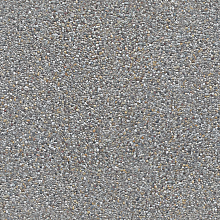 Seamless Concrete Pebble PBR Texture in 4K Resolution
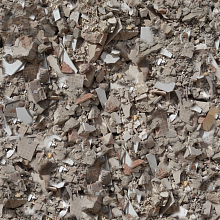 Seamless PBR Concrete Rubble Texture with Debris and Fragments
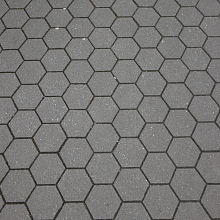 Seamless Hexagonal Concrete Tile PBR Texture 4K
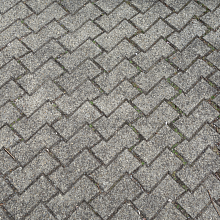 Realistic Concrete Paving Brick Pattern Texture