Creating and Optimizing Seamless PBR Textures for Realistic Wood Weathering Effects
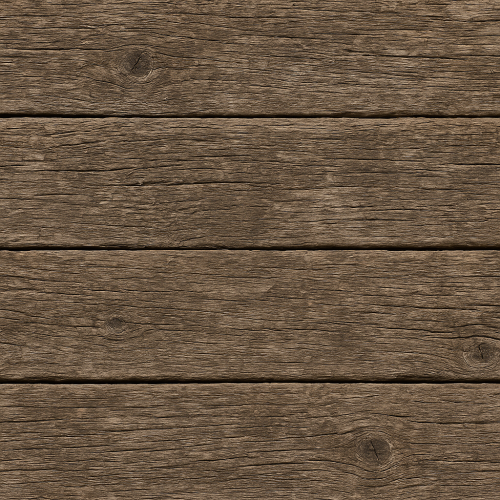
In physically based rendering (PBR) pipelines, achieving a convincing representation of weathered wood demands a nuanced understanding of both the material’s intrinsic physical properties and the complex interactions of environmental factors over time. Wood, by its very nature, is an organic substrate whose surface characteristics evolve under the influence of sun exposure, moisture, temperature fluctuations, biological growth, and mechanical wear. When these effects are accurately captured and integrated into a PBR workflow, the resulting textures elevate realism in game environments, architectural visualizations, and visual effects pipelines. Conversely, oversimplified or poorly calibrated wood materials can break immersion, betraying the digital nature of the asset despite potentially sophisticated geometry or lighting setups.
At the core of PBR workflows lies the principle of energy conservation and physically plausible light response, which mandates that each texture map must encode specific surface parameters with precision. For weathered wood, this means carefully dissecting the material’s appearance into its constituent PBR maps: albedo, roughness, normal, ambient occlusion (AO), height, and occasionally metallic. Unlike metals, wood is a dielectric, so the metallic map is typically black or near-zero, but subtle exceptions exist in cases of embedded metallic paint layers or nails contributing to localized specularity variations—details critical in close-up shots or high-fidelity renders.
The albedo map for weathered wood must be crafted to represent the faded, bleached, or stained colors characteristic of sun-bleached planks or rain-soaked boards. This entails capturing not just the base wood grain coloration but also the discoloration patterns induced by UV degradation and organic matter such as lichen or moss. Accurate color calibration is essential here; albedo textures must remain within plausible reflectance values to avoid energy inconsistencies, often requiring desaturation or hue shifts that correspond to weathering stages. When authoring albedo maps, it is advantageous to source high-resolution photogrammetry scans or carefully lit reference photography that reveal subtle pigment shifts and micro-variations, which can later be enhanced by procedural masks for increased realism and tiling flexibility.
Roughness maps hold particular importance in weathered wood since the surface microgeometry and chemical composition heavily influence specular behavior. As wood weathers, its surface becomes uneven and porous, with raised fibers and eroded regions altering microfacet distributions. A well-crafted roughness map must communicate these variations, often displaying a heterogeneous pattern where polished, worn areas appear glossier against matte, splintered zones. Generating these maps can involve a hybrid approach: photogrammetric roughness capture supplemented by hand-painted or procedural noise layers to simulate dust accumulation, water stains, or biofilms. Calibration against physically measured roughness values from reference materials ensures that the rendered highlights and reflections behave realistically under diverse lighting conditions.
Normal and height maps complement each other in conveying the wood’s topographical intricacies. While normal maps encode fine-scale surface orientation variations critical for accurate light scattering, height maps provide depth information for parallax occlusion or displacement effects, enriching the tactile quality of the material. For weathered wood, the challenge is to faithfully reproduce the interplay of grain patterns, cracks, splinters, and surface erosion without introducing noticeable tiling artifacts or unnatural repetition. This often requires generating multi-scale detail by combining macro height displacement of larger fissures with micro normal perturbations representing grain roughness. The acquisition pipeline may include photogrammetry with high-resolution depth capture, augmented by procedural carving or noise to fill in missing detail or enhance wear patterns specific to certain environmental exposures.
Ambient occlusion maps in PBR workflows for wood serve to darken crevices and recessed details, enhancing perceived depth and separating overlapping surface features. For weathered wood, AO must be carefully balanced to avoid excessive darkening that can flatten subtle color transitions or create artifacts when combined with global illumination. Often, AO maps are baked from high-poly models or derived from curvature and cavity maps, then refined to emphasize cracks and splits typically accentuated by weathering processes. Integrating AO with roughness and height maps in a coherent manner is essential to prevent conflicting visual cues that degrade the believability of the surface under dynamic lighting.
Tiling and micro-variation represent another critical consideration when authoring weathered wood textures for PBR. Wood is inherently non-repetitive, with unique grain and wear patterns that challenge conventional texture tiling approaches. To avoid obvious repetition in real-time engines like Unreal or offline renderers such as Blender’s Cycles, artists employ techniques such as trim sheets with layered variation, procedural detail overlays, and stochastic tiling. Micro-variation—small-scale, subtle differences in color, roughness, and surface relief—breaks up uniformity and contributes to the perception of natural randomness. In practical terms, this involves generating multiple texture sets with slight parameter shifts or integrating procedural noise nodes that modulate individual PBR channels during shader evaluation. These techniques must be optimized carefully to balance visual fidelity against performance constraints, especially in game engines where texture memory and shader complexity are at a premium.
Calibration is fundamental throughout the texture creation process. Working with physically accurate reference data—whether measured reflectance values, BRDF samples, or calibrated photographic captures—ensures that each map adheres to plausible physical limits. This is especially true for albedo and roughness channels, where subtle deviations can cause unrealistic energy behavior under dynamic lighting. Tools such as spectrophotometers or calibrated HDRI imaging setups can provide quantitative data that guide texture authoring and adjustments. Furthermore, iterative testing in target rendering engines is indispensable: Unreal Engine’s real-time viewport and material editor allow rapid feedback on texture responses under various lighting scenarios, while Blender’s principled shader node setup facilitates detailed offline inspection and fine-tuning. These workflows enable artists to identify and correct issues such as overly bright albedo values, inconsistent roughness transitions, or normal map compression artifacts that could otherwise compromise realism.
Optimization is another pillar of effective PBR texturing for weathered wood. High-resolution textures with multiple channels and layered details can quickly become resource-intensive. Artists must balance detail fidelity with memory budgets by employing techniques like channel packing (e.g., combining AO, roughness, and metallic into a single texture), mipmap biasing, and texture streaming. Additionally, procedural detail masks can reduce the need for ultra-high-resolution bitmap data by dynamically injecting variation at runtime. Compression choices also play a pivotal role; selecting appropriate texture formats that preserve critical detail without introducing compression artifacts is essential for maintaining visual integrity, especially in roughness and normal maps where subtle gradients influence light behavior profoundly.
Finally, the integration of weathered wood PBR textures into engines such as Unreal and Blender requires a holistic approach that encompasses shader setup, lighting environment calibration, and material layering. In Unreal Engine, leveraging the Material Editor’s node-based system enables the combination of base textures with dynamic weathering overlays, dirt masks, and wetness effects controlled by material parameters or vertex painting. Physically based lights and reflection captures further enhance the interaction of weathered wood surfaces with the scene environment, revealing nuanced highlights and shadowing consistent with real-world behavior. Blender’s Cycles renderer, with its node-based shader graphs and displacement capabilities, offers detailed control over texture-driven surface properties, facilitating high-quality offline renders and baking workflows that feed into real-time engines.
In summary, the accurate representation of weathered wood in PBR workflows is a multifaceted endeavor requiring meticulous acquisition, authoring, calibration, and optimization of texture maps. Each PBR channel must articulate a specific aspect of the material’s physical and environmental history, and these layers must harmonize within the rendering engine’s lighting model to produce believable results. Mastery of these processes enables 3D artists and technical directors to create wood materials that not only look authentic but also respond dynamically to lighting and environmental conditions, enriching the visual storytelling across games, archviz, and VFX projects.
Capturing the intricate surface data of weathered wood for physically based rendering (PBR) demands a meticulous approach to acquisition that balances fidelity, repeatability, and efficient integration into real-time engines. Unlike pristine wood, weathered wood exhibits complex microstructures—cracks, peeling paint layers, moss growth, and subtle discolorations—that challenge conventional texture capture workflows. To achieve realistic PBR textures that convincingly replicate these aged characteristics, the acquisition process must be optimized both in hardware setup and subsequent data processing, ensuring that all relevant material channels—albedo, roughness, normal, ambient occlusion (AO), height, and metallic—are faithfully represented and calibrated.
Photogrammetry remains the gold standard for obtaining high-resolution, photorealistic base color and geometry data of weathered wood surfaces. However, its success hinges on carefully controlled lighting environments and capture strategies tailored to the material’s heterogeneous nature. Natural weathering introduces a wide range of reflectance properties: matte peeling paint, semi-translucent moss patches, and rough, eroded grain patterns. To capture these variances, diffuse and specular reflections must be isolated. Employing a polarized light setup with cross-polarization filters on the camera lens and light sources effectively suppresses specular highlights during albedo acquisition, yielding a clean, physically accurate diffuse color map free from glare artifacts. This is crucial for weathered wood, where peeling paint or varnish remnants can otherwise skew albedo values, leading to unrealistic shading in game engines like Unreal or Blender's Eevee.
For normal and height map extraction, multi-view photogrammetry paired with dense mesh reconstruction algorithms (e.g., via Agisoft Metashape or RealityCapture) provides detailed surface topology that captures cracks, splits, and raised grain. However, raw meshes often contain noise or exaggerated displacement in weathered areas due to shadowing or occlusions during capture. Applying mesh filtering and retopology workflows refines these scans, while baking normal and height maps from high-resolution meshes onto optimized low-poly UV layouts ensures engine compatibility and performance. When capturing peeling paint layers, close-up macro photography combined with photometric stereo techniques can further enhance micro-detail fidelity, resolving subtle surface undulations and fine-scale crevices that standard photogrammetry may miss.
Ambient occlusion maps for weathered wood are particularly important to emulate the depth and shadowing in crevices and under moss growth, which strongly influence perceived material depth and realism. While AO can be baked from high-poly meshes, it is often beneficial to augment these bakes with hand-painted or procedural masks that account for moss accumulation or dirt deposits, as these organic elements produce shadowing effects not always captured in geometry alone. Integrating procedural noise functions within texturing software (e.g., Substance Designer) allows artists to simulate the soft occlusion gradients and subtle fading typical of aged surfaces, enhancing realism without excessive geometry.
Roughness and metallic maps require nuanced acquisition methods, as weathered wood surfaces rarely exhibit true metallic behavior but rather complex roughness variations from smooth varnished spots to coarse, eroded patches. Reflectance transformation imaging (RTI) or gonioreflectometer setups can measure directional reflectance properties under controlled illumination angles, enabling precise roughness estimation. In practice, applying multiple calibrated photographs captured under varying incident light angles allows reconstruction of roughness variations. When such hardware is inaccessible, artists can infer roughness from diffuse/specular separation and contrast in the albedo channel, supported by procedural masks representing peeling paint edges or moss coverage. Metallic maps for wood are generally flat zero, but in cases where metal fasteners or embedded nails are present, localized metallic masking derived from object segmentation ensures physical correctness within the PBR workflow.
To address the inherent challenge of tiling and micro-variation in weathered wood textures, especially for large surfaces like siding or fences, acquisition strategies must incorporate both large-area scans and high-frequency detail captures. Macro scans deliver broad-scale color and geometry variation, while micro-detail maps—created from close-up captures of grain, cracks, or moss—can be overlaid as detail maps or blended within shader networks. Calibration between scales is critical: ensuring that micro-detail normal and roughness data tile seamlessly without obvious repetition requires the use of randomized offsets, blending masks, or procedural noise overlays. This multiscale approach is essential in engines like Unreal Engine, where combined usage of base color maps with detail normal and roughness inputs can simulate the complex visual layering of weathered wood without excessive texture memory costs.
Procedural generation techniques complement physical data acquisition by filling gaps and enhancing variation that raw captures may lack. In software like Substance Designer, node-based workflows enable the synthesis of weathering patterns such as paint peeling, moss growth, and fading by simulating erosion, noise, and biological growth algorithms. These procedurally generated masks and maps can be blended with captured data to amplify realism and provide artist-driven control over the degree and distribution of weathering. Moreover, procedural height maps derived from noise functions help exaggerate or soften surface irregularities, contributing to compelling parallax and displacement effects in real-time engines. Procedural roughness variations likewise inject the necessary micro-roughness fluctuations that static captures may underrepresent, especially under dynamic lighting conditions.
Calibration between acquired data and target rendering engines is a crucial step often underestimated. For instance, albedo maps must be linearized and gamma-corrected to match the engine’s color space expectations (e.g., sRGB to linear workflow in Unreal). Similarly, roughness and metallic maps require normalization to ensure physically plausible BRDF responses. Height and normal maps must be carefully oriented and scaled to conform to engine-specific conventions—Unreal Engine, for example, uses a different normal map channel order than Blender’s default settings. Ensuring consistent texel density across all maps prevents visual artifacts during mipmapping or texture streaming, which is paramount when weathered surfaces are viewed at varying distances.
Optimization strategies during acquisition also impact final texture performance. Capturing source data at resolutions that balance detail and file size, typically 4K or 8K maps for base color and normals, ensures sufficient fidelity without overburdening memory budgets. When possible, compressing maps using engine-supported formats (e.g., BC7 for albedo, BC5 for normals) reduces runtime costs. Multi-channel packing—such as combining roughness, metallic, and ambient occlusion into a single texture’s RGB channels—further economizes texture usage, provided the source data acquisition accommodates this packing by producing clean and separable maps. Additionally, careful UV layout during scanning or retopology minimizes seams and maximizes usable texture space, which is especially challenging with irregular weathered wood shapes.
In summation, acquiring high-quality source data for weathered wood PBR textures is an interdisciplinary process blending advanced photogrammetry, specialized lighting and scanning setups, and procedural augmentation. Attentive calibration and optimization throughout acquisition and post-processing ensure that the nuanced details of cracks, peeling paint, moss, and fading translate accurately into PBR material channels. This robust foundation enables 3D artists and technical directors to deliver photorealistic, performant wood weathering effects that hold up under dynamic lighting in modern engines like Unreal and Blender, ultimately elevating immersive environmental storytelling.
The foundation of convincingly replicating weathered wood within a physically based rendering (PBR) workflow lies in the meticulous creation and calibration of its essential texture maps. Each map—albedo, roughness, normal, ambient occlusion (AO), height, and metallic—acts in concert to encode distinct facets of the material’s interaction with light, surface microstructure, and environmental context. For weathered wood, where subtle gradations in surface decay, discoloration, and grain distortion inform visual authenticity, a nuanced approach to map generation and optimization is paramount.
Starting with the albedo map, the primary color information must capture the complex chromatic shifts inherent in aged wood. Unlike fresh timber, weathered wood exhibits desaturated, often uneven coloration due to prolonged exposure to UV radiation, moisture infiltration, and biological growth such as lichen or moss. When authoring the albedo, it is critical to avoid embedding shadow or specular information, as these will be accounted for separately in roughness and AO maps. Acquisition techniques often involve high-dynamic-range (HDR) photogrammetry or carefully controlled flat lighting photography to minimize baked lighting artifacts. Subsequent processing should include desaturation balancing and hue shifts that reflect typical weathering patterns—faded midtones, bleached highlights, and darkened crevices—while maintaining the subtle chroma of organic materials. Specialized software like Substance Designer or Quixel Mixer facilitates layering procedural weathering masks atop base timber scans, enabling a controlled yet natural color variation that enhances tiling without obvious repetition.
The roughness map plays a pivotal role in simulating the microsurface scattering characteristics of weathered wood, which diverge significantly from polished or freshly cut wood. Weathered wood surfaces tend to have heterogeneous roughness distributions: some areas become smoother due to erosion, while others remain rough or even rougher due to raised grain and accumulated debris. Calibration here is crucial; roughness values must reflect realistic energy conservation principles to avoid unnatural glossiness or diffuse scattering. Empirically, roughness values for weathered wood often range from 0.6 to 0.9, with micro-variation introduced via noise functions or high-frequency detail maps to replicate local inconsistencies. Procedural generation is beneficial, allowing modulation of roughness based on simulated environmental factors (e.g., wind-driven rain paths or fungal colonization spots). When authoring roughness maps, it is also advisable to cross-validate results in multiple engines—Unreal Engine’s physically based shading model and Blender’s Principled BSDF shader handle roughness slightly differently, necessitating slight adjustments or remapping to preserve consistency across platforms.
Normal maps for weathered wood must encapsulate the intricate grain patterns, surface erosion, and micro-cracks that define the tactile feel of aged timber. Unlike artificially generated normal maps that rely solely on height data, the most accurate results emerge from capturing high-resolution surface detail via photogrammetry or laser scanning and then baking this geometry onto a low-poly mesh. The challenge lies in balancing fine grain details with larger-scale weathering features such as splintering or gouges to avoid normal map “flattening” or excessive noise. A multi-scale approach to normal map authoring—combining a base normal representing macrogeometry and an overlay of fine grain normals created procedurally or from detail scans—ensures depth consistency and natural light response. Calibration within target engines is necessary to verify that normal strength does not overshoot, which can produce unnatural shading artifacts or silhouette distortions. Tools like xNormal or the baking suite within Substance Painter provide the granular control required for such layered normal map workflows.
Ambient occlusion maps contribute subtle shadowing cues that reinforce crevices, cracks, and depressions typical of weathered wood. While AO is sometimes baked from geometry, it can also be enhanced or generated procedurally to emphasize areas where dirt and moisture would accumulate naturally, such as knot holes or grain boundaries. Given the porous and uneven nature of aged wood, AO maps benefit from a high level of spatial fidelity and should be tuned to avoid overly darkening the material, which can flatten the appearance. Calibration involves ensuring that AO complements rather than conflicts with the roughness and height maps; for example, excessive AO in concave areas coupled with high roughness can result in an unrealistically matte and dark surface. In real-time engines like Unreal, AO maps often multiply with base lighting and require gamma correction to maintain linearity. Additionally, dynamic ambient occlusion techniques such as screen space AO can supplement baked AO, but the base map remains essential for offline rendering or engine workflows with limited dynamic AO support.
Height maps serve to provide parallax and displacement effects, enhancing the perceived depth of weathered wood surfaces. Unlike normal maps, height maps encode vertical relief and are essential for techniques such as parallax occlusion mapping (POM) or tessellation-based displacement. For weathered wood, height maps must capture the uneven erosion patterns, raised grain, shallow cracks, and chipped edges characteristic of long-term environmental exposure. Accurate height maps are often derived from grayscale captures of surface topology obtained via photogrammetry or height scanning, followed by contrast enhancement and noise reduction to isolate meaningful relief features. When authoring height maps, attention should be paid to the dynamic range and scale calibration to prevent exaggerated displacement that breaks silhouette integrity or causes shadowing artifacts. In engines like Unreal Engine, height maps are typically stored in a single channel and can be used in conjunction with tessellation to provide true geometric displacement, but performance considerations often necessitate balancing resolution and offset scale. Blender’s displacement modifiers allow similar workflows but may require adaptive subdivision to optimize computational load.
The metallic map for weathered wood is, by its nature, typically a near-zero value map, since wood is an insulating organic material without conductive metallic components. However, subtle exceptions may arise when simulating embedded metal hardware corrosion or metallic paint remnants on wooden surfaces. In such cases, the metallic map must be carefully localized and calibrated to reflect the presence of metal without contaminating the organic wood regions, as incorrect metallic values can drastically skew reflections and energy conservation in the shader. When metallic is zero throughout the wood regions, it ensures that reflections are governed primarily by the Fresnel effect and roughness rather than mirror-like metallic reflections. This strict delineation is essential for realistic weathered wood rendering, as any inadvertent metallic contamination can cause unnaturally bright specular highlights inconsistent with organic materials.
Tiling and micro-variation are critical considerations across all PBR maps to avoid perceptible repetition, which breaks immersion in large-scale environmental assets like wooden planks, fences, or decking. Weathered wood surfaces rarely exhibit perfectly uniform patterns; therefore, introducing controlled randomness in albedo tones, roughness variation, and normal map detail is essential. Techniques such as blending multiple texture sets via masks, applying procedural noise overlays, or employing triplanar projection in shader setups help distribute micro-variation without visible seams. Furthermore, map resolution must be optimized to balance fidelity and performance: overly high-resolution maps deliver diminishing returns if viewed from a distance, while low-resolution maps can blur fine weathering details. Mipmapping strategies and anisotropic filtering in engines like Unreal and Blender help maintain sharpness at oblique angles while preserving efficient memory usage.
Calibration of these maps within rendering engines is a nontrivial step that often reveals discrepancies between authored textures and their in-engine appearance. For instance, roughness values may appear too glossy or too matte due to differences in lighting models or tone mapping. Iterative adjustments, often guided by reference photography and shader debug views, enable artists and technical directors to fine-tune maps to match real-world behavior. In Unreal Engine, the combination of the Material Editor’s preview and real-time lighting environment, along with post-processing volumes, assists in visualizing the interplay of roughness, normal, and AO maps. Blender users benefit from the Eevee and Cycles renderers, which provide quick feedback cycles and advanced shader nodes for procedural enhancement. It is also advisable to verify the linearity of textures, ensuring proper color space assignments—albedo maps in sRGB, and roughness, normal, AO, height, and metallic maps in linear color space—to maintain physical accuracy.
Optimization is equally critical when preparing PBR maps for production pipelines. Efficient packing of grayscale maps into channels to reduce texture count—such as combining roughness, AO, and metallic into a single RGB map—is commonplace, but for weathered wood, care must be taken to avoid cross-channel artifacts. Compression schemes should preserve detail in critical areas like micro-cracks and grain without introducing banding or noise. When targeting real-time engines, texture streaming budgets and LOD transitions must be considered to maintain consistent appearance across distances and angles.
In sum, the creation of essential PBR maps for weathered wood demands a balanced combination of precise acquisition, procedural augmentation, and rigorous calibration within target rendering engines. Each map must not only faithfully represent its physical counterpart but also harmonize with others to produce a composite material that convincingly reacts to light and environment. By integrating high-resolution detail capture with procedural micro-variation, carefully tuned map values, and engine-specific adjustments, artists and technical directors can achieve the nuanced, tactile realism that embodies convincingly weathered wood in any PBR-driven pipeline.
FAQ
What is covered in this guide?
This guide explains Creating and Optimizing Seamless PBR Textures for Realistic Wood Weathering Effects with practical notes for seamless PBR materials, texture setup, and production use.
Can I use these texture techniques in Blender, Unreal Engine, and Unity?
Yes. The workflow focuses on standard PBR maps and tileable materials that can be used in Blender, Unreal Engine, Unity, archviz, games, and VFX pipelines.
Where can I find textures for this workflow?
Use the AITextured texture library and the related texture links on this page to find seamless PBR materials and preview them before download.
Related Textures
 Procedural Stamped Sidewalk Concrete PBR Texture
 Procedural Fine Asphalt Road PBR Texture
 Procedural Pitted Concrete PBR Texture
 Seamless Concrete Pebble PBR Texture in 4K Resolution
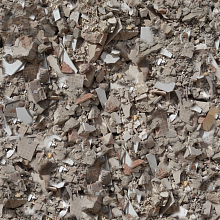 Seamless PBR Concrete Rubble Texture with Debris and Fragments
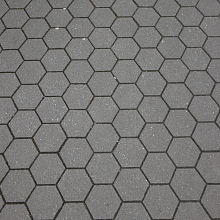 Seamless Hexagonal Concrete Tile PBR Texture 4K
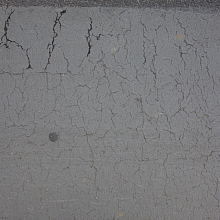 Cracked Asphalt Texture with Weathering