Creating and Optimizing Seamless PBR Textures for Realistic Subsurface Scattering Effects
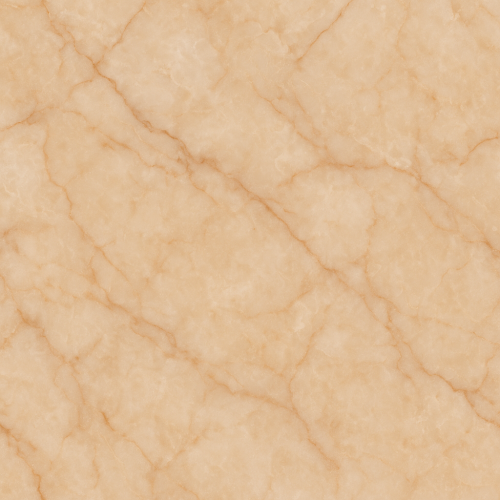
Subsurface scattering (SSS) represents a pivotal phenomenon in physically based rendering (PBR) workflows, fundamentally enhancing the depiction of translucent materials by simulating the complex interplay of light beneath their surfaces. Unlike traditional surface shading models, which primarily account for direct reflection and absorption at the immediate interface between light and matter, subsurface scattering captures the nuanced diffusion of photons as they penetrate, scatter internally, and eventually exit at varying points on or near the surface. This internal light transport is responsible for the characteristic softness, translucency, and depth observed in materials such as human skin, marble, wax, leaves, and certain plastics, and its accurate reproduction is indispensable for achieving photorealistic renders.
In conventional PBR pipelines, the foundational texture maps—albedo, roughness, normal, ambient occlusion (AO), height, and metallic—are meticulously crafted to define the surface’s optical and geometric response to incident light. Albedo maps encode the intrinsic color of the material without shading or lighting information, while roughness maps modulate the microfacet distribution, influencing specular reflection sharpness. Normal maps enhance surface detail by perturbing surface normals, and AO maps accentuate crevices and occluded regions. Height maps provide displacement or parallax cues that contribute to perceived depth, and metallic maps delineate conductive from dielectric areas, affecting reflectivity and energy conservation. These maps collectively inform the Bidirectional Reflectance Distribution Function (BRDF) calculations that describe how light reflects off a surface.
However, the standard BRDF framework is inherently limited to surface-level interactions, rendering it insufficient for materials where volumetric light transport dominates visual appearance. Subsurface scattering extends beyond this limitation by incorporating a Bidirectional Surface Scattering Reflectance Distribution Function (BSSRDF), which accounts for the spatial translation of light beneath the surface before re-emission. This necessitates a complementary set of texture inputs and parameters tailored to the subsurface properties of the material, such as scattering coefficients, absorption rates, and phase functions, which describe how light is scattered directionally within the volume.
From a texturing standpoint, integrating subsurface scattering into a PBR workflow requires both the acquisition and authoring of specialized maps that guide the renderer’s SSS algorithms. While the albedo map remains central, it often needs adaptation to represent the diffuse color as it would appear beneath the surface rather than the direct surface pigment. This “subsurface albedo” or “diffuse scattering color” must be carefully calibrated to avoid over-saturating or flattening the material appearance, as it directly influences the perceived translucency and color bleeding caused by internal scattering. The roughness and normal maps continue to play a significant role, as they affect the surface’s microstructure and how light refracts into the volume, but their interpretation may be subtly adjusted in SSS-enabled shaders to account for the altered light paths.
Moreover, height maps and ambient occlusion textures acquire additional importance in SSS workflows. Height maps contribute to micro-variations in thickness, which directly impact the scattering distance and thus the intensity and spread of subsurface light diffusion. For instance, thinner regions allow more light transmission and pronounced subsurface glow, while thicker areas produce deeper color saturation and softer transitions. AO maps, traditionally used to darken crevices and cavities, must be balanced carefully, as excessive occlusion shading can suppress the volumetric light transport effects critical to subsurface realism.
An often-overlooked aspect in authoring SSS textures is the incorporation of micro-variation and subtle imperfections at tiled texture boundaries. Seamless tiling is fundamentally important for large-scale assets or environments where repetition could break immersion. However, seamless tiling alone is insufficient if the internal scattering behavior lacks natural heterogeneity. Introducing controlled noise and variation within scattering-related maps—while maintaining tileability—can emulate natural inhomogeneities such as vein structures in skin or mineral inclusions in stone, thereby enriching the subsurface complexity.
Calibrating these maps to match the physical parameters of real-world materials is a non-trivial task that demands close attention to both empirical data and artistic intent. Spectrophotometric measurements can provide invaluable guidance, particularly in capturing accurate scattering and absorption coefficients. Nonetheless, since real-time engines such as Unreal Engine and offline renderers like Blender’s Cycles employ different SSS implementations and optimizations, artists must iteratively adjust their textures and shader parameters to achieve consistent and plausible results across platforms. Unreal’s subsurface profile system, for example, leverages precomputed scattering profiles and allows artists to blend between multiple subsurface materials, requiring texture maps to conform to these profiles in terms of color space and channel packing. Conversely, Blender’s principled shader integrates SSS as part of its subsurface scattering input, where the artist can directly control the scattering radius and scale, demanding precise alignment with texture data for believable effect.
Optimization remains a critical consideration throughout the development of SSS-enabled PBR textures. Volumetric light transport is computationally expensive, and texture map resolution and channel usage must be judiciously managed to balance fidelity and performance. Packing multiple subsurface parameters into unused channels of existing maps—such as embedding scattering radius or absorption coefficients into roughness or AO texture channels—can reduce memory footprints. Additionally, leveraging procedural noise to complement texture detail can economize texture resolution without sacrificing visual complexity. Maintaining a consistent texel density across albedo, scattering, and thickness maps ensures coherent sampling within shaders, minimizing artifacts such as color shifts or splotches.
Practically, artists should adopt a workflow where initial texture authoring focuses on high-fidelity capture of albedo and surface detail, followed by dedicated passes for subsurface parameters. Utilizing specialized tools and plugins for texture baking and channel packing can streamline the process. Real-time viewport feedback in engines like Unreal and hybrid renderers within Blender allows iterative refinement, ensuring that adjustments to scattering parameters harmonize with the base PBR textures. Testing under varied lighting conditions, including backlighting and rim lighting, is essential to validate the subsurface response, as these scenarios most clearly reveal scattering behavior.
In summary, subsurface scattering introduces a volumetric dimension to the PBR texturing workflow, demanding a nuanced approach to texture acquisition, authoring, and calibration. By extending beyond surface BRDF characteristics and carefully leveraging complementary texture maps tailored for internal light diffusion, artists and technical directors can unlock a higher echelon of material realism. This complexity, while challenging, is made tractable through an informed understanding of the interplay between physical parameters, textural data, and engine-specific implementations, enabling the creation of compellingly translucent materials that respond convincingly to the subtleties of real-world lighting.
Achieving photorealistic subsurface scattering (SSS) effects in physically based rendering (PBR) workflows demands a fundamentally different approach to texture acquisition than conventional surface-only materials. The translucency and volumetric light transport intrinsic to SSS materials hinge on accurately capturing or synthesizing subtle subsurface cues—chromatic diffusion, scattering profiles, and internal color bleed—that standard PBR maps only approximate. Consequently, the initial data acquisition stage becomes critical, as the fidelity of albedo, roughness, normal, ambient occlusion, height, and metallic maps must be complemented or augmented to reflect the specific optical properties of the material’s interior structure. This section explores advanced techniques for acquiring textures optimized for subsurface scattering, emphasizing photogrammetry-based scanning methods tailored to SSS, procedural generation paradigms that simulate organic translucency, and the inherent challenges faced in both domains.
Photogrammetry remains a cornerstone for high-fidelity texture capture in production workflows, but its application toward SSS-ready materials necessitates specialized considerations. Traditional photogrammetric pipelines prioritize surface geometry and reflectance, often relying on diffuse albedo captures under uniform, neutral lighting to minimize shadows and specular interference. However, subsurface scattering materials—such as human skin, wax, marble, or plant leaves—exhibit complex light transport phenomena beneath their surfaces that standard photogrammetry workflows tend to obscure or misrepresent. To address this, acquisition setups must incorporate multi-angular, multi-spectral lighting conditions designed to elicit and record subsurface color bleed and translucency gradients.
One advanced technique involves controlled backlighting or subsurface illumination during photo capture. By positioning a calibrated light source behind thin or semi-translucent samples, photogrammetry can sample the diffusion characteristics directly, enabling the generation of specialized texture maps that encode scattering intensity and color dispersion beneath the surface. This method often demands a high dynamic range (HDR) capture system to preserve subtle tonal variations, as subsurface illumination tends to produce low-contrast, soft gradients that are easily lost in standard 8-bit captures. Coupling HDR photography with polarized filters further reduces specular highlights, isolating the diffuse subsurface contribution more effectively.
The resulting image sets feed into customized texture extraction pipelines. Instead of merely extracting albedo maps, artists and technical directors must derive scattering profiles or subsurface color maps that feed into the shader’s SSS inputs. For example, some PBR engines and shaders accept a separate “subsurface color” map distinct from the albedo, representing the tint imparted by internal scattering. Precise alignment and calibration of these maps with accompanying roughness and normal data are paramount; any misregistration introduces shading artifacts that break immersion. Photogrammetry-derived height maps and ambient occlusion data retain their importance, as micro-variations in surface topology influence the perceived translucency by modulating local light penetration and shadowing.
Capturing accurate roughness and metallic maps for SSS materials often requires supplementary techniques beyond photogrammetry. Since subsurface scattering materials generally exhibit low metallicity—organic materials rarely contain conductive metals—the metallic channel is typically near zero or used sparingly for layered materials. Roughness, however, must reflect the microfacet distribution that governs surface reflection and the balance between specular and diffuse scattering. In practice, roughness maps are generated via specular response imaging, where cross-polarized or time-of-flight methods isolate surface reflections from subsurface diffusion. These maps are critical for physically accurate integration of SSS within PBR shaders since the roughness controls the amount of direct specular reflection versus subsurface scattering.
Procedural generation techniques have emerged as a powerful complement or alternative to capture-based methods, particularly when physical acquisition is impractical or when artists require fine control over translucency and internal variation. Procedural texturing algorithms leverage noise functions, volumetric layering, and physically inspired scattering models to simulate the organic complexity inherent in subsurface materials. For instance, to mimic the heterogeneous composition of skin or marble, procedural approaches generate multi-channel maps that encode spatially varying scattering coefficients, color tints, and micro-geometry simultaneously. This affords unparalleled flexibility in authoring, enabling iterative adjustments to subsurface depth, coloration, and scattering strength without the constraints imposed by physical samples.
One common procedural approach involves generating a base albedo map with embedded translucency cues via layered noise and gradient masks, which then modulates an additional subsurface color map. Height and normal maps derived from fractal noise or cellular patterns introduce micro-variations that break up uniform translucency, simulating the complex internal structures that cause light diffusion. Procedural roughness maps are crafted to complement these layers, ensuring that surface reflectance and subsurface scattering interact realistically within the PBR shader model. This integrated approach is particularly advantageous in real-time engines such as Unreal Engine or Blender’s Eevee, where procedural parameters can be adjusted dynamically to optimize performance and visual fidelity.
However, generating truly accurate subsurface scattering textures procedurally remains challenging. Unlike surface reflectance, subsurface light transport depends on volumetric scattering coefficients and anisotropy factors that cannot be directly encoded in 2D texture maps. Many engines approximate these volumetric effects through screen-space or baked subsurface scattering techniques, relying on artist-authored parameters and texture inputs to simulate the effect convincingly. Thus, procedural methods often prioritize perceptual plausibility over strict physical accuracy, leveraging artistic heuristics and empirical reference to strike a balance between performance and realism.
The core difficulty in both acquisition and procedural generation lies in capturing the spatially varying scattering behavior intrinsic to organic materials. Subsurface scattering depends not only on surface color and roughness but also on the depth-dependent attenuation and chromatic shifts caused by internal scattering and absorption. While photogrammetry can capture surface detail and albedo variations with high precision, it struggles to resolve volumetric scattering parameters directly without specialized setups such as multi-spectral tomography or optical coherence tomography, which are often impractical in production pipelines. Procedural methods, meanwhile, lack direct physical measurements and must rely on approximations calibrated against empirical data or artist intuition.
Calibration and optimization thus become essential downstream steps. When importing SSS-ready textures into engines like Unreal or Blender, artists must carefully tune scattering radius parameters, subsurface color weights, and falloff curves to align with the acquired or generated texture data. This often involves iterative shader adjustments and real-time previews to balance translucency, color bleeding, and shadowing effects. Tiling and micro-variation considerations are also critical; seamless texture sets must avoid repetitive patterns that betray the volumetric complexity of real-world subsurface materials. Techniques such as stochastic tiling, detail masks, and multi-layer blending help mitigate repetition and enhance perceived realism in large surfaces.
In practical terms, maintaining consistency across all PBR maps is non-negotiable. For example, a highly translucent wax material demands that the albedo, subsurface color, roughness, and normal maps all reflect the same internal structure and scattering profile. Discrepancies between these maps lead to visual discordance, breaking immersion. Moreover, optimization strategies such as mipmapping with appropriate LODs for the subsurface color map or using compressed texture formats that preserve subtle gradients without banding are essential to maintain performance without sacrificing visual fidelity.
In conclusion, acquiring and authoring textures suitable for realistic subsurface scattering in PBR workflows is a multifaceted endeavor that blends advanced photogrammetry techniques, procedural generation, and meticulous calibration. While photogrammetry excels at capturing detailed surface and partial subsurface information when augmented by specialized lighting and capture protocols, procedural methods provide indispensable flexibility for simulating complex internal translucency where physical capture falls short. Regardless of the acquisition methodology, the integration of consistent, high-precision PBR maps—carefully tuned to support volumetric light transport—forms the foundation for convincing SSS effects in modern real-time and offline rendering engines. Mastery of these acquisition techniques thus empowers artists and technical directors to push the envelope of realism in materials that transcend traditional surface shading paradigms.
In the domain of physically based rendering (PBR), achieving realistic subsurface scattering (SSS) effects hinges fundamentally on the precise creation and calibration of several interconnected texture maps. These maps serve as the backbone for defining how light interacts with a material’s surface and its subsurface layers, dictating the nuanced interplay of light absorption, scattering, and reflection that gives organic materials their characteristic translucency and softness. Understanding the role of each texture map—albedo, subsurface scatter maps, roughness, normal, ambient occlusion, height, and metallic—is imperative for creating convincing SSS materials and optimizing them for real-time engines such as Unreal Engine or offline renderers like Blender’s Cycles.
The albedo map, often referred to as the diffuse map in traditional workflows, is arguably the most critical texture in the SSS pipeline. However, unlike non-SSS materials where albedo defines the surface color directly visible to the eye, in subsurface scattering materials the albedo map must represent the unoccluded base color of the material beneath the surface. This distinction is crucial because the albedo feed into the SSS shader influences how light is tinted and scattered beneath the skin or wax-like surfaces. When authoring albedo maps, it is essential to avoid baked shadows, specular highlights, or ambient occlusion information; instead, the map should capture the intrinsic color of the object’s sublayer. Acquisition techniques such as calibrated photogrammetry or multispectral scanning can aid in capturing pure albedo data, which can later be refined in texturing software. Artists should also ensure that the map maintains consistent gamma encoding—linear workflow is best practice for physically based shading to prevent color distortions during lighting calculations.
Complementing the albedo, subsurface scatter maps define spatial variation in the material’s scattering properties, essentially dictating where and how deeply light penetrates and diffuses within the medium. These maps differ from the albedo in that they are typically grayscale or channel-packed textures controlling parameters like scatter radius, scatter tint, and subsurface intensity. In practice, scatter maps are authored by isolating regions with distinct subsurface characteristics—such as thinner skin areas that allow deeper light penetration or thicker wax components that scatter more broadly. The calibration of these maps requires iterative testing within the target engine’s SSS shader parameters, as scattering behavior is highly sensitive to scale and light conditions. For instance, Unreal Engine’s subsurface profiles allow per-material tuning where the scatter radius map can be used to modulate the subsurface scattering intensity, providing micro-variation crucial to breaking uniformity and enhancing realism. Best practice involves layering procedural noise or hand-painted detail over base scatter values to simulate natural heterogeneity found in organic materials.
Roughness maps play a pivotal role in controlling the microsurface reflectance and the angular distribution of specular highlights, which profoundly affect the perceived translucency and wetness of SSS materials. Roughness dictates how much incoming light reflects at the surface versus penetrating to scatter subsurface. A low roughness value results in sharp, mirror-like highlights that can overpower subtle scattering cues, while higher roughness diffuses reflections, allowing the subsurface glow to be more apparent. Crafting roughness maps for SSS surfaces demands fine-grained attention to micro-variation, as uniform roughness often yields unrealistic, plasticky appearances. Techniques such as using high-resolution scans of surface microdetails or procedurally generating noise patterns can imbue roughness maps with naturalistic irregularities. Calibrating roughness involves balancing the specular response to complement the subsurface effect—too rough and the surface appears matte and dull, too smooth and the material loses its translucent depth. Both Unreal Engine’s physically based material framework and Blender’s Principled BSDF shader provide intuitive roughness inputs that respond predictably when mapped with properly linearized grayscale textures.
Normal maps are indispensable for simulating the fine surface perturbations that influence light scattering at the micro-level, enhancing the tactile realism of SSS materials. While normal maps do not directly affect subsurface light transport, they modulate local surface normals, altering how light refracts and reflects before entering the material. High-frequency details such as pores, wrinkles, and fine vein structures embedded in the normal map contribute to the complex interaction between direct reflection and subsurface diffusion. Authoring normal maps requires high-resolution source geometry or sculpted detail, often baked from high-poly models or generated via texture authoring tools like Substance Painter or xNormal. To optimize for real-time use, normal maps should be compressed carefully to retain directional accuracy without introducing artifacts that can disrupt shading continuity. Calibration is also crucial: the normal map intensity (strength) must be tuned to avoid exaggerated bumps that can visually conflict with the soft transitions inherent in subsurface scattering.
Ambient occlusion (AO) maps are often overlooked but serve a vital function in SSS workflows by simulating self-shadowing effects that light scattering alone cannot replicate. Although SSS diffuses light beneath the surface, macro-scale occlusions—such as creases or cavities—still reduce light penetration and affect the overall shading. The AO map modulates the ambient lighting contribution, providing localized shadowing that enhances depth and contrast. When authoring AO maps for SSS materials, it is important to avoid baked lighting artifacts; instead, AO should be generated from geometric occlusion baked from high-poly to low-poly models or derived from curvature and cavity maps. In real-time engines, AO is often multiplied or blended with the base color or subsurface color to subtly darken occluded areas, preserving the softness of scattering without flattening detail. Optimization strategies include using AO as a grayscale mask with controlled influence to maintain performance budgets while maximizing visual fidelity.
Height maps, or displacement maps, contribute indirectly to subsurface scattering by defining macro surface topology, which affects light incidence angles and shadowing. While height maps do not influence scattering coefficients directly, their use in parallax occlusion mapping or tessellation enhances the volumetric perception of the material, reinforcing the sense of depth and structure critical for believable SSS effects. Authoring height maps demands precise control over depth range and detail scale to prevent artifacts such as self-intersections or unnatural silhouettes. Best practices involve deriving height from high-resolution scans or sculpted displacement and ensuring consistent scale with normal and roughness maps for coherent shading. When deployed in engines like Unreal, height maps can be leveraged for tessellated displacement, adding geometric complexity that complements the subsurface scattering by creating realistic light blockage and penetration patterns at silhouette edges.
Finally, the metallic map is generally less critical for traditional subsurface scattering materials, as metals exhibit negligible subsurface transmission due to their opacity and high reflectance. However, in hybrid materials or stylized assets where partial metallicity is desired alongside scattering—such as certain translucent gems or synthetic polymers—the metallic map controls the blend between dielectric and metallic reflection models. Accurate metallic maps are binary or near-binary grayscale textures, defining which areas behave as conductors (metal) versus insulators (dielectric). For authentic SSS effects, metallic regions should be carefully masked to avoid conflicting scattering behavior, as metals do not exhibit subsurface diffusion but reflect light at the surface. In authoring metallic maps, artists must ensure clean delineation and avoid intermediate values that can cause shading artifacts. In engines like Blender’s Principled BSDF or Unreal Engine’s metallic workflow, the metallic input is tightly coupled with roughness and albedo to produce physically plausible reflections and light transmission, making it imperative to calibrate metallic maps in concert with other texture channels.
Across all these maps, maintaining proper tiling and micro-variation is paramount to preventing visual repetition that breaks immersion. Seamless texture creation techniques, such as edge mirroring, offset painting, or procedural noise overlays, should be applied judiciously to maintain natural irregularities critical for organic SSS materials. Furthermore, leveraging channel packing—where compatible grayscale maps are combined into the RGB channels of a single texture—can optimize memory usage without compromising detail, provided that compression artifacts are minimized. Calibration workflows typically involve iterative rendering tests under varied lighting conditions, using tools within Unreal Engine’s Material Editor or Blender’s Shader Editor to preview the combined effect of these maps in real-time or offline renders. Adjustments to scatter radius, subsurface color tints, and map intensities must be made in tandem, as subtle shifts in one channel can drastically alter the perceived material softness and translucency.
In summary, the orchestration of albedo, subsurface scatter, roughness, normal, ambient occlusion, height, and metallic maps forms the foundation of realistic subsurface scattering materials in PBR pipelines. Each map carries distinct and complementary information that, when authored with technical rigor and calibrated precisely, enables the complex light-material interactions that define organic realism. Mastery over their creation, optimization, and integration within modern rendering engines unlocks the potential to craft compelling, believable surfaces that convincingly mimic the subtle beauty of light diffusing beneath translucent materials.
FAQ
What is covered in this guide?
This guide explains Creating and Optimizing Seamless PBR Textures for Realistic Subsurface Scattering Effects with practical notes for seamless PBR materials, texture setup, and production use.
Can I use these texture techniques in Blender, Unreal Engine, and Unity?
Yes. The workflow focuses on standard PBR maps and tileable materials that can be used in Blender, Unreal Engine, Unity, archviz, games, and VFX pipelines.
Where can I find textures for this workflow?
Use the AITextured texture library and the related texture links on this page to find seamless PBR materials and preview them before download.
Related Textures
 Procedural Stamped Sidewalk Concrete PBR Texture
 Procedural Fine Asphalt Road PBR Texture
 Procedural Pitted Concrete PBR Texture
 Seamless Concrete Pebble PBR Texture in 4K Resolution
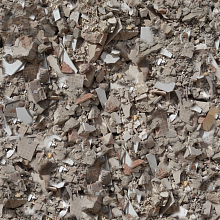 Seamless PBR Concrete Rubble Texture with Debris and Fragments
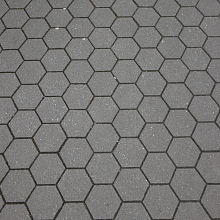 Seamless Hexagonal Concrete Tile PBR Texture 4K
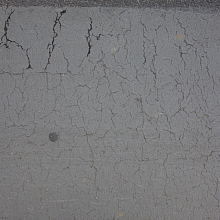 Cracked Asphalt Texture with Weathering