Creating and Optimizing Seamless PBR Wood Grain Textures for Photorealistic 3D Materials
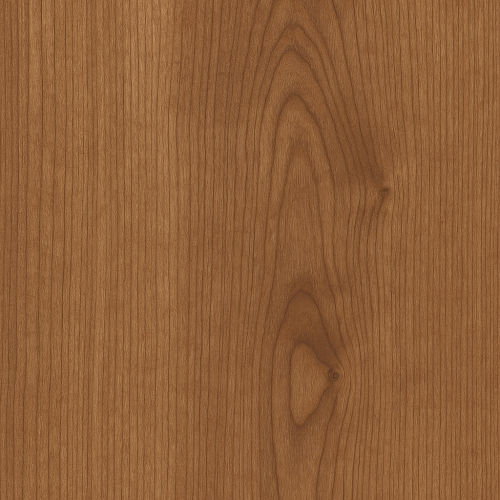
High-quality wood grain textures form the backbone of convincing photorealistic 3D materials, serving as a critical visual element in diverse digital content creation pipelines—from real-time game engines to offline architectural visualization (archviz) and high-end visual effects (VFX). The natural complexity embedded within wood surfaces, characterized by intricate grain patterns, subtle color variations, and tactile surface irregularities, demands a meticulous approach to texture creation and optimization. Physically Based Rendering (PBR) workflows have revolutionized the way these materials are represented, enabling artists and technical directors to simulate wood’s nuanced interaction with light more faithfully than ever before. Achieving this fidelity, however, hinges on the acquisition and authoring of a comprehensive suite of PBR maps that accurately encode wood’s physical and optical properties, while simultaneously addressing the imperatives of seamless tiling and minimizing visual repetition.
In practical terms, wood grain textures in PBR workflows are not mere color images but a multi-channel dataset that includes albedo, roughness, normal, ambient occlusion (AO), height, and metallic maps. Each of these maps plays a specialized role in conveying the wood’s appearance under various lighting conditions. The albedo map captures the diffuse coloration of the wood, isolating surface color from lighting information to prevent baked shadows or highlights from distorting the material’s response in dynamic environments. Wood’s albedo is often complex, featuring gradients, knots, and streaks that reflect the species and cut of the timber, so high-resolution, color-calibrated source imagery—acquired via calibrated photographic capture setups or carefully constructed procedural generation—is paramount.
Roughness maps encode microsurface variations that dictate how light scatters across the wood, influencing glossiness and specular reflection intensity. Since wood surfaces range from raw, untreated planks with matte, fibrous finishes to polished hardwoods exhibiting pronounced specular highlights, the roughness map must capture this heterogeneity with high fidelity. Normal maps add microgeometry by simulating the fine ridges and grooves of wood grain, critical for enhancing tactile realism without the performance cost of geometric detail. These are often generated from high-resolution displacement captures or sculpted and baked in 3D software but require careful calibration to avoid exaggerated or flattened surface features.
Ambient occlusion maps augment shadowing in crevices and grain valleys, increasing perceived depth and grounding the texture within 3D spaces. Though AO can sometimes be baked into other maps or approximated in shaders, dedicated AO maps remain invaluable for subtle shadowing effects in wood grain. Height maps provide displacement or parallax information, enabling dynamic surface relief that reacts convincingly to changes in viewpoint and lighting, crucial in close-up renders or interactive applications. Metallic maps, typically negligible for wood since it is a dielectric material, are generally set to zero but must be included to maintain PBR workflow consistency and compatibility with engine shader pipelines.
Wood grain textures pose unique challenges in seamless tiling and natural variation. Unlike synthetic or patterned materials, wood’s organic randomness makes tiling conspicuous when patterns repeat without variation. This is especially problematic in game engines like Unreal Engine or real-time viewers like Blender’s Eevee, where texture repetition can break immersion. Addressing this requires advanced authoring techniques such as edge blending, directional clamping, or the incorporation of micro-variation layers that introduce subtle noise and stochastic detail at multiple scales. Procedural noise overlays or detail masks can break up uniformity without compromising the underlying grain structure. Additionally, leveraging multi-texture blending or triplanar projection shaders can mitigate visible seams.
Calibration during texture creation ensures that all maps correspond physically and visually. For instance, the roughness map must correlate with the albedo’s material type and the expected tactile finish, while normal and height maps must align spatially to prevent shading artifacts. Consistency in scale is crucial; wood grains often have species-specific dimensional characteristics, so scale calibration relative to world units in the target engine ensures that the texture conveys realistic proportions. This calibration process often integrates feedback loops between authoring tools like Substance Designer, Mari, or Quixel Mixer and target engines, iteratively optimizing the texture set for shader compatibility and lighting response.
Optimization is another critical factor, particularly in real-time applications. High-resolution textures can dramatically impact memory budgets and performance, so techniques such as mipmapping, channel packing (e.g., storing AO and roughness in separate channels of a single texture), and selective map resolution scaling are employed. Artists must balance detail retention with resource constraints, often prioritizing normal and roughness map fidelity where lighting cues are most sensitive. Compression artifacts must be carefully managed, as they can introduce unwanted noise or banding, especially in smooth roughness gradients or subtle albedo transitions. Testing textures under varied lighting conditions and camera distances within Unreal Engine or Blender’s Cycles renderer ensures that optimization choices do not degrade visual quality.
In summary, the creation of seamless PBR wood grain textures demands a rigorous, technically informed approach that integrates high-fidelity map generation, precise calibration, and strategic optimization. The goal is not only to replicate the visual complexity of wood but to embed it within physically plausible shading models that respond dynamically in diverse rendering environments. Mastery of these processes empowers 3D artists and technical directors to deliver materials that convincingly bridge the gap between digital and real-world wood, enhancing immersion and realism across games, archviz, and VFX projects.
Acquiring high-fidelity wood grain textures for physically based rendering (PBR) materials demands a nuanced balance between technical precision and artistic intent. The authenticity of a PBR wood material hinges primarily on the quality and accuracy of its base maps—albedo, roughness, normal, ambient occlusion (AO), height, and occasionally metallic—each derived from or influenced by the chosen acquisition method. A thorough understanding of available capture techniques, their inherent strengths and limitations, and strategic hybridization can dramatically enhance both the photorealism and practical usability of seamless wood grain textures in real-time or offline rendering engines such as Unreal Engine and Blender.
One of the most comprehensive acquisition methods is high-resolution photogrammetry, which excels in capturing the complex micro-variations and subtle surface irregularities characteristic of natural wood. Photogrammetry leverages multiple overlapping photographs taken from varied angles to reconstruct detailed 3D geometry and texture data. When executed with meticulous calibration—using high-quality DSLRs or mirrorless cameras equipped with prime lenses to minimize distortion—photogrammetry can yield exceptionally accurate normal and height maps alongside high-fidelity albedo captures. The key to success lies in controlling lighting conditions to avoid specular highlights and shadows that obscure grain details. Diffuse, even lighting setups such as softboxes or light tents ensure consistent illumination, preserving the intrinsic color and texture nuances of the wood surface.
During photogrammetric capture, calibration extends beyond camera parameters; it encompasses color calibration targets and neutral gray cards within the scene to facilitate linear color workflow and accurate reflectance capture. This is critical because albedo textures must represent diffuse reflectance devoid of lighting artifacts or color casts, which can otherwise skew the PBR shading model. Post-capture, the generated 3D mesh can be baked down into tangent-space normal maps and height maps, providing the necessary detail for micro-surface interactions with light. Ambient occlusion maps derived from geometry or baked from photogrammetric meshes further enhance depth perception in the material, adding realism in engine-based lighting scenarios.
Manual photography remains a complementary and sometimes preferable alternative or supplement to photogrammetry, particularly when capturing large, uniform wood surfaces or specific grain patterns. This approach typically involves shooting flat, orthogonal images of wood samples under controlled lighting. The advantage here is the ability to fine-tune camera settings (aperture, ISO, shutter speed) and lighting setups to isolate and emphasize grain features, enabling superior control over exposure and focus. Polarizing filters can be employed to reduce surface reflections, revealing deeper grain contrast crucial for accurate roughness and albedo map generation. However, manual photography is inherently limited in capturing three-dimensional micro-geometry and must be augmented with additional techniques to produce convincing normal and height maps.
To bridge this gap, hybrid workflows that combine manual photography with procedural or scanned data are increasingly popular. For instance, a high-resolution albedo map captured photographically can be paired with procedurally generated or scanned normal and height maps, which mimic the wood’s natural undulations and imperfections. Procedural generation, often implemented through software such as Substance Designer or Blender’s node-based shading system, utilizes algorithmic noise, directional grain patterns, and fractal functions to synthesize seamless wood textures. Although procedurally generated maps may lack the unpredictable complexity of natural wood, they offer unparalleled flexibility in parameterization, tiling control, and variation, allowing artists to tailor grain scale, directionality, and roughness distribution dynamically.
An effective hybrid approach might involve using photogrammetric or photographic albedo bases overlaid with procedural detail maps to introduce micro-variation, avoiding the telltale repetition that plagues tiled textures. This micro-variation is essential for large surface applications such as flooring or paneling, where uniform patterns quickly become visually monotonous. Techniques such as blending multiple normal maps with varying frequency or applying subtle vertex painting for AO modulation in engines like Unreal can break uniformity and elevate realism. Additionally, baking procedural height maps into displacement or parallax occlusion maps enables nuanced surface depth effects that respond dynamically to lighting and viewpoint changes.
Throughout any acquisition process, attention to seamless tiling is paramount. Wood grain textures often exhibit strong directional patterns that, when tiled naively, produce obvious seams and unnatural repetition. During capture, this can be mitigated by shooting larger samples with ample overlap or by using photogrammetric scans covering extended areas to allow for carefully crafted crop regions that transition smoothly. In procedural generation, algorithms can be explicitly designed to create tileable outputs by matching edge noise and grain continuity. Post-processing techniques such as edge mirroring, frequency separation, and gradient blending in Photoshop or Quixel Mixer further refine seamlessness without sacrificing detail fidelity.
Optimization for real-time engines imposes additional constraints on acquisition and authoring. High-resolution captures, while rich in detail, must be downsampled or mipmapped carefully to retain critical grain features at varying distances. Normal maps should be stored in optimized formats with proper compression—such as BC5 or BC7 in Unreal—to balance quality and memory footprint. Roughness maps derived from either direct capture or procedural masks need to reflect the wood’s anisotropic scattering properties, often requiring channel packing into combined maps to minimize texture count. Calibration of these maps against physically accurate references ensures that the material responds predictably under engine lighting, including dynamic directional lights and global illumination.
In Blender, node-based workflows allow for rapid iteration on acquired textures, enabling artists to layer procedural noise on top of photographic bases, tweak roughness levels, and generate displacement maps that feed into Cycles or Eevee renderers. Calibration here means checking the roughness distribution against HDRI-lit preview scenes to verify that specular highlights and diffuse reflection mimic real wood surfaces under varied lighting conditions. Similarly, in Unreal Engine, material instances can modulate parameters like roughness and normal strength in real-time, leveraging the acquired maps to drive realistic shading while maintaining performance budgets.
Ultimately, the acquisition strategy for seamless PBR wood grain textures is dictated by project scope, desired fidelity, and resource availability. High-resolution photogrammetry offers unparalleled detail and authenticity but demands rigorous setup and post-processing. Manual photography grants artistic control and simplicity but requires supplementation for full PBR map generation. Procedural generation provides scalability and variation but may sacrifice the organic complexity of natural wood. By thoughtfully integrating these methods—capturing precise albedo and macro grain features photographically or photogrammetrically and augmenting them with procedural or scanned micro-geometry and detail maps—artists and technical directors can craft seamless wood materials that convincingly replicate the nuanced interplay of light and surface characteristic of real wood, fully optimized for contemporary rendering engines and real-time applications.
Creating essential PBR maps from wood textures demands a rigorous approach that balances technical precision with an artistic sensitivity to the material’s inherent complexity. Wood, as an organic surface, exhibits a rich interplay of subtle grain variations, micro-roughness, and natural imperfections that must be faithfully captured and conveyed through physically based rendering workflows. The process begins with the acquisition of high-quality source imagery or scans, ideally captured under controlled, neutral lighting conditions to minimize color bias and shadows that could compromise albedo fidelity. Using a medium to high-resolution camera or a structured-light scanner, one can acquire detailed diffuse color data alongside bump or height information, which forms the foundation for all subsequent texture maps.
The albedo map represents the wood’s intrinsic color information, stripped of direct lighting and shadowing effects. It is critical to separate the diffuse reflectance from any ambient occlusion or specular highlights during preprocessing. Techniques such as photogrammetric color calibration and color grading using linear workflow principles ensure the albedo map remains physically plausible and consistent across different lighting environments. Employing linear color space conversion and avoiding gamma artifacts is essential when preparing albedo textures for PBR engines like Unreal Engine or Blender’s Cycles and Eevee renderers. When authoring seamless albedo textures from photographic sources, careful edge blending and cloning are necessary to eliminate visible tiling seams, while retaining the natural micro-variation of the wood grain. This micro-variation—subtle color shifts and tonal irregularities—prevents the texture from appearing artificially uniform and enhances perceived realism especially under dynamic lighting.
Roughness maps play a pivotal role in defining how light scatters off the wood’s surface at micro scales. For wood grain, roughness is spatially heterogeneous; polished areas such as varnished sections exhibit low roughness values, while unpolished or weathered regions show higher roughness. Extracting accurate roughness data from source images is non-trivial because roughness is a physical property related to surface microfacets and must be inferred rather than directly photographed. One common approach involves using grayscale scanned data or deriving roughness from the wood’s luminance contrast—higher local contrast often correlates with rougher surfaces due to micro-shadowing. Alternatively, artist-driven roughness maps can be generated by applying directional noise or procedural grain overlays calibrated against photographic references. This is particularly effective in Unreal Engine where roughness maps are utilized in metallic-roughness workflows to control specular reflection fidelity. Maintaining the natural imperfections such as scratches, dents, and subtle fiber disruptions within the roughness map amplifies realism and prevents the material from appearing artificially pristine.
Normal maps encode fine surface detail by perturbing surface normals at the pixel level to simulate bumps and dents without additional geometry. For wood textures, normal maps capture the undulating grain patterns, growth rings, and subtle surface irregularities that define tactile perception. Generating these maps can be achieved via photogrammetric software, height-to-normal conversions, or manual sculpting in tools like Substance Designer or Blender’s texture painting workspace. Height maps, which store per-pixel displacement values, often serve as the source for normal map generation through filters or baking processes. When converting height to normal, it is crucial to calibrate the map intensity to avoid exaggerated surface features that break scale or cause shading artifacts in real-time engines. Techniques such as channel packing—storing smoothness or curvature data alongside normal vectors—can further enhance the perception of depth and the interplay of light on wood’s surface. In Unreal Engine, normal maps are typically plugged into the normal input of the material shader, and their quality directly impacts the visual richness of the reflections and shadows.
Ambient Occlusion (AO) maps capture self-shadowing effects due to occluded geometry, accentuating crevices and pores within the wood grain. AO is indispensable for grounding the texture in spatial context, especially when global illumination or screen-space ambient occlusion is insufficient or unavailable. Generating AO maps from wood textures often involves baking from high-resolution geometry or approximating via curvature-based filters in texturing tools. A high-fidelity AO map must preserve subtle concavities like wood knots, cracked fibers, and micro-pores without overly darkening the surface, which can desaturate the appearance when multiplied over the albedo. Calibration of AO intensity is essential; in Unreal Engine, AO typically modulates the indirect lighting term, so over-application can lead to unnatural shadowing. It is advisable to keep AO maps grayscale and avoid color bleeding, ensuring compatibility and consistency across rendering pipelines. In Blender, AO can be baked directly from sculpted geometry or enhanced procedurally to simulate environmental occlusion effects.
Height maps, also referred to as displacement maps, provide a scalar representation of surface elevation relative to a base plane. For wood textures, height maps capture depth cues such as grain ridges, grooves, and natural surface irregularities. While normal maps simulate micro-detail, height maps enable actual geometry displacement when tessellation or parallax occlusion mapping is employed, adding a tangible depth that enhances silhouette variation and parallax effects during camera movement. The creation of height maps requires high-precision data acquisition, often from laser scanning or photogrammetry, or can be artist-generated by painting grayscale values corresponding to surface height. It is imperative to normalize and calibrate the height map scale to match the anticipated displacement effect; excessive height values can cause unnatural silhouette distortion or clipping artifacts in real-time rendering. In Unreal Engine, height maps are commonly plugged into tessellation shaders or used for parallax occlusion effects, while Blender supports both displacement and bump mapping workflows. Practical optimization involves balancing texture resolution against performance, often employing mipmapping techniques and screen-space adaptive tessellation.
Although wood is generally a non-metallic material, the metallic map in PBR workflows still requires attention. In metallic-roughness workflows, this map is binary or grayscale, indicating whether a surface behaves like a conductor or dielectric. Wood is almost universally assigned a value of zero (non-metallic), but subtle metallic reflections can occasionally appear when varnished or coated with metallic-infused finishes. To maintain physical correctness and prevent unintended specular responses, it is best to keep the metallic map uniformly black unless the specific wood variant or finish dictates otherwise. This map also serves as a mask to separate specular behavior from diffuse reflections, making its correct calibration critical. In engines like Unreal, improper metallic values can cause rendering issues, such as overly bright reflections or incorrect Fresnel falloff.
Throughout the process of generating these maps from wood textures, maintaining seamless tiling is a fundamental challenge. Natural wood grain exhibits directional patterns and unique knots that resist naive tiling approaches. Techniques such as directional cloning, seam hiding through controlled noise overlays, and the use of advanced texture synthesis algorithms mitigate tiling artifacts while preserving micro-variation. Micro-variation itself—small-scale color and roughness fluctuations—is vital to avoid repetitive patterns that break immersion. Pattern variation can be enhanced procedurally or through layered texturing approaches, blending multiple wood grain samples with subtle offset and rotation.
Calibration of each map relative to one another is critical to ensure cohesive material behavior. For example, the roughness map must complement the albedo’s tonal range to prevent conflicting reflectance cues, and the normal map intensity must align with the height map’s displacement to maintain consistent surface depth perception. Iterative testing in target engines—whether Unreal Engine’s Material Editor or Blender’s shader graph—is indispensable. Real-time previewing under varying lighting conditions, including HDR environment maps and directional lights, reveals inconsistencies and guides refinement. Optimization strategies include channel packing (e.g., storing AO, roughness, and metallic maps in separate RGB channels of a single texture), careful mipmap generation to preserve detail at distance, and resolution balancing to maintain performance without sacrificing fidelity.
In summary, creating essential PBR maps from wood textures is an intricate synthesis of accurate data acquisition, meticulous map generation, and careful calibration. Capturing the nuanced interplay of wood grain micro-variations, surface roughness heterogeneity, and natural imperfections enables the production of photorealistic, physically plausible materials. Leveraging both procedural techniques and hand-crafted adjustments, combined with rigorous testing in real-time engines, ensures that the resulting PBR wood materials exhibit convincing depth, reflectance, and tactile authenticity under all lighting conditions.
FAQ
What is covered in this guide?
This guide explains Creating and Optimizing Seamless PBR Wood Grain Textures for Photorealistic 3D Materials with practical notes for seamless PBR materials, texture setup, and production use.
Can I use these texture techniques in Blender, Unreal Engine, and Unity?
Yes. The workflow focuses on standard PBR maps and tileable materials that can be used in Blender, Unreal Engine, Unity, archviz, games, and VFX pipelines.
Where can I find textures for this workflow?
Use the AITextured texture library and the related texture links on this page to find seamless PBR materials and preview them before download.
Related Textures
 Procedural Dark Tree Bark PBR Texture
 Procedural Aged Oak Plank PBR Texture
 Seamless PBR Wood Planks Texture Featuring Natural Grain in 4K
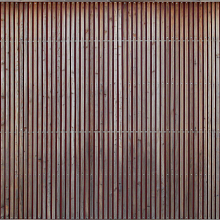 Seamless Wooden Facade PBR Texture in 4K Resolution
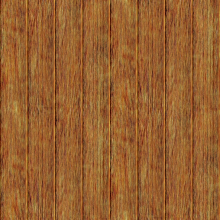 Rustic Aged Wood Planks Texture for 3D Modeling and Rendering
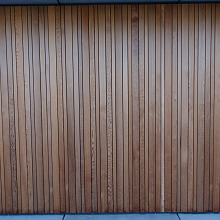 PBR Texture of Vertical Wooden Planks Wall
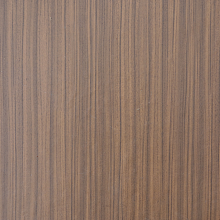 Seamless PBR Wood Texture Featuring Vertical Natural Grain Patterns
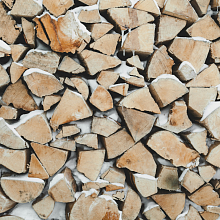 Natural Wood Logs Texture with Snow for 3D PBR