Creating Seamless PBR Textures for Organic Surfaces with Dynamic Micro-Detail and UDIM Support
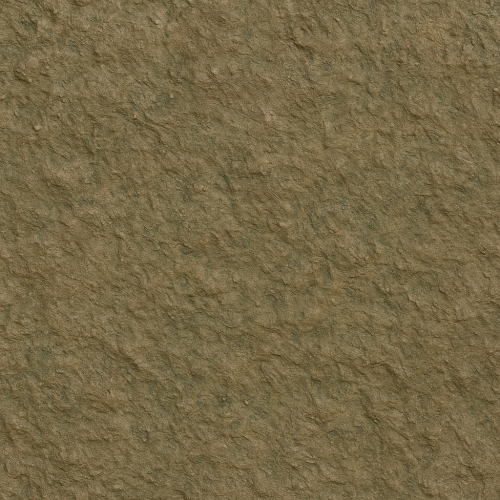
Organic surface texturing within Physically Based Rendering (PBR) workflows presents a multifaceted challenge that extends well beyond the capabilities of conventional texture authoring. Unlike hard surface materials—metals, plastics, or ceramics—organic materials such as human skin, tree bark, and foliage demand a nuanced approach that accommodates their inherent complexity, heterogeneity, and subtle surface variations. The quest for photorealism in these contexts hinges on meticulous control over multiple texture maps, seamless tiling strategies, dynamic micro-detail integration, and sophisticated UV management systems like UDIMs. Understanding the interplay between these elements is essential for any 3D artist or technical director aiming to produce convincing organic materials in contemporary rendering engines such as Unreal Engine or Blender’s Cycles.
At the core of organic surface texturing is the acquisition and accurate authoring of multiple PBR texture maps. The standard PBR workflow typically involves albedo (diffuse color), roughness, normal, ambient occlusion (AO), height (displacement), and metallic maps. Each carries unique information critical to simulating the physical properties of organic materials. For instance, albedo maps for skin or bark require careful capture or painting to avoid baked-in shadows or lighting information, as these would interfere with the physically correct shading of the asset under dynamic lighting conditions. This often necessitates high-quality photogrammetry scans or hand-painted textures calibrated against neutral lighting references, ensuring color fidelity and consistency across different assets.
Roughness maps are particularly significant in organic texturing due to the highly variable microsurface qualities found on living surfaces. Skin exhibits subtle transitions from oily, reflective zones to drier, matte areas; bark surfaces possess rough, fractured topographies interspersed with smoother patches; leaves show varying specular highlights depending on age and moisture content. Properly calibrated roughness maps encode these micro-variations, allowing physically based shaders to reproduce complex light scattering and reflection behavior realistically. Normal maps complement this by simulating fine-scale surface geometry, capturing intricate features like pores, wrinkles, or bark fissures that would be impractical to model directly. Height maps further enhance the illusion of depth and relief through displacement or parallax techniques, augmenting the tactile sense of the organic surface.
The ambient occlusion channel plays a critical, albeit sometimes underestimated, role in organic surface texturing. While AO is not strictly a PBR necessity, it significantly improves perceived depth and contact shadowing within crevices, folds, and overlapping elements. For organic materials, AO maps must be carefully baked or generated to avoid exaggerating shadows or diminishing subtle surface details, which can detract from realism. Since AO tends to be scene-dependent, artists often blend baked AO with dynamic real-time lighting to achieve optimal results, especially in engine environments like Unreal, where dynamic global illumination workflows coexist with baked texture data.
Seamlessness and tiling present another layer of complexity in organic materials. Unlike man-made surfaces with repetitive patterns, organic surfaces are inherently irregular and non-uniform. Achieving seamless tiling without noticeable repetition or pattern artifacts requires advanced techniques such as stochastic texturing, procedural blending, or the use of multiple layered tiling maps. This is particularly crucial for large-scale assets like terrains covered with foliage or extensive bark surfaces on trees, where texture repetition can break immersion. Incorporating micro-variation through subtle color shifts, noise, or normal perturbations helps mitigate the visual impact of tiling, preserving the organic randomness necessary for believable materials.
Implementing dynamic micro-detail layers is equally vital. These detail maps are often authored at higher resolutions and blended dynamically over the base textures to simulate fine-scale surface irregularities that respond realistically to changes in viewing distance and lighting conditions. This approach allows artists to optimize texture memory usage by reserving high-frequency details for close-up views while maintaining lower-resolution base maps for distant rendering. In practical terms, engines like Unreal support material layering and runtime tessellation, enabling the integration of micro-detail normal and roughness maps that dynamically enhance surface complexity without overwhelming GPU resources.
UDIM workflows have become indispensable for managing the high-resolution texture requirements of organic surfaces. The UDIM system expands UV space beyond the traditional 0–1 range, allowing artists to tile multiple texture sets across a single model with non-overlapping UV tiles. This is particularly advantageous for organic assets with complex topology, such as characters or large trees, where a single texture atlas would either sacrifice resolution or introduce distortion. UDIMs facilitate scalable texture authoring, enabling seamless integration of high-fidelity detail maps and simplifying iterative workflows, as artists can update individual tiles independently without reauthoring the entire texture set. Moreover, most modern engines and renderers, including Blender’s Cycles and Unreal Engine, offer robust UDIM support, streamlining asset import and shader setup.
Calibration and optimization occupy a critical space in the organic PBR texturing pipeline. Proper calibration ensures that the texture maps adhere to physically plausible values, preventing shading anomalies such as overbright albedo, incorrect roughness ranges, or normal map inconsistencies. Artists typically employ reference materials and standardized lighting rigs during texture capture and authoring to maintain a consistent baseline. Optimization strategies focus on balancing texture resolution against performance constraints, often involving mipmap generation, compression techniques, and selective detail distribution. For example, skin textures may prioritize higher resolution in facial regions and lower resolution in less visible areas, while bark textures can leverage tiling combined with detail maps to conserve memory without sacrificing visual quality.
Practical considerations in engine integration further influence the texturing approach. Unreal Engine’s material system supports physically based shading models that expect input textures to conform to sRGB or linear color spaces appropriately, with albedo maps in sRGB and roughness or normal maps in linear space. Mismanagement of color spaces can lead to visual discrepancies, especially in subtle organic materials where tonal gradations are critical. Similarly, Blender’s node-based shader editor allows for fine control over texture sampling and color space conversions but requires deliberate workflows to maintain PBR accuracy. Additionally, real-time engines often benefit from baking curvature or cavity maps alongside AO and normal maps to enhance micro-surface shading, providing artists with additional tools to fine-tune organic material response under various lighting scenarios.
In summary, texturing organic surfaces in a PBR workflow demands a holistic understanding of material properties, texture map interplay, UV layout strategies, and engine-specific requirements. The combination of seamless tiling, dynamic micro-detail layering, and UDIM-based texture management enables artists to tackle the inherent complexity of organic materials without compromising on flexibility or photorealism. Mastery of these techniques not only elevates the visual fidelity of organic assets but also streamlines production pipelines, ensuring that high-resolution, physically accurate textures can be deployed efficiently across a broad spectrum of 3D applications.
Achieving high-fidelity, seamless PBR textures that convincingly replicate the complexity of organic surfaces begins with meticulous texture acquisition. The interplay between naturally occurring micro-details and the physical properties of materials demands a hybrid approach, where high-resolution photogrammetry serves as the foundational capture method, while procedural techniques complement and extend the dataset, addressing inherent limitations and enhancing variability. This synergy is critical for producing maps that retain photorealistic authenticity while offering the flexibility and optimization necessary for modern real-time engines such as Unreal Engine or offline renderers like Blender’s Cycles.
Photogrammetry remains the gold standard for acquiring detailed surface information from organic subjects due to its ability to capture real-world color, geometry, and material nuances. The process involves capturing extensive photographic data from multiple angles, carefully calibrated to maintain consistent lighting conditions and minimal shadows, ensuring accurate albedo and reflectance capture. Using high-resolution DSLR or mirrorless cameras with prime lenses—ideally in the 24-50mm range to reduce distortion—enables the acquisition of fine-grained texture details. Consistent exposure and color calibration, often achieved via a color checker chart and grey card, are essential to maintain accurate albedo maps, which serve as the color basis in PBR shading. Avoiding specular highlights during capture prevents contamination of the diffuse albedo, which can be corrected later through software workflows that separate specular reflection from diffuse color.
Once image acquisition is complete, photogrammetry software such as RealityCapture, Agisoft Metashape, or Capturing Reality is employed for dense point cloud generation and mesh reconstruction. The resulting high-density mesh carries micro-geometry crucial for deriving normal and height maps. Post-processing steps involve decimation and retopology to optimize mesh density without sacrificing surface detail, balancing fidelity with performance constraints. Baking detail from the high-poly photogrammetric mesh onto a low-poly counterpart produces tangent-space normal maps that capture micro-surface undulations and imperfections indispensable for realistic shading in PBR workflows. Simultaneously, ambient occlusion maps are baked to simulate self-shadowing within crevices and folds, enriching the perception of depth and material complexity.
Beyond normal and AO maps, photogrammetry workflows can extract height maps by converting displacement information from the high-poly scan. Height maps are particularly valuable when combined with tessellation or parallax occlusion mapping in engines like Unreal, enabling dynamic micro-detail that adjusts with camera proximity. Roughness maps, which govern microsurface reflectance variance, often require more nuanced authoring since photogrammetry alone cannot directly capture surface microfacet scattering properties. Instead, roughness is inferred via indirect methods such as analyzing specular highlight variation under controlled lighting or supplemented by reference material studies. Metallic maps are generally binary for organic surfaces—almost invariably zero—except when capturing organic materials with embedded mineralization or bio-metallic inclusions, which must be identified and masked manually.
While photogrammetry excels at capturing macro and meso-scale detail, it often struggles with seamless tiling and micro-variation crucial for large, repetitive surfaces. Organic materials such as bark, moss, or skin typically exhibit stochastic, non-repeating patterns that photogrammetry cannot replicate ad infinitum without noticeable tiling artifacts. Here, procedural texture generation acts as a vital supplement. Procedural methods utilize mathematically defined noise functions, fractals, and pattern generators to synthesize micro-variation that seamlessly tiles and blends naturally with photogrammetric data. Software like Substance Designer or Blender’s procedural shader nodes allow artists to author height, roughness, and normal variations algorithmically, creating detail layers that can be overlaid on or integrated with scanned maps.
Combining photogrammetry with procedural texturing requires a calibrated blending approach. One effective strategy involves using the photogrammetric albedo and baked normal maps as a base layer, then layering procedural noise-based normal and roughness variations at a subtle intensity to break uniformity. For example, a low-frequency procedural noise can modulate roughness maps to emulate the natural heterogeneity of organic surfaces, preventing the “plastic” look caused by uniform roughness values. Similarly, procedural height maps can be blended additively with photogrammetric displacement to enrich micro-relief without overwhelming the authentic scanned detail. Masking techniques driven by curvature or ambient occlusion maps help constrain procedural detail to appropriate surface regions such as cracks, pores, or raised features, preserving the photogrammetric integrity in flatter areas.
Calibration between the photogrammetric and procedural layers is crucial to avoid visual dissonance. This involves matching scale and orientation, ensuring procedural noise frequencies correspond to the real-world scale captured by photogrammetry. Uniform UV scaling across UDIM tiles facilitates consistent micro-detail distribution, while procedural patterns must respect the spatial continuity of the scanned surface to prevent artifacts at UDIM seams. Utilizing UDIM workflows allows large organic surfaces to be subdivided into manageable texture tiles, enabling high-resolution detail capture and efficient texture streaming in engines. Within each UDIM tile, the procedural detail can be varied subtly to avoid repeated patterns across tiles, further enhancing perceived natural variation.
Optimization remains a key consideration throughout acquisition and authoring. Photogrammetric datasets can be enormous, with textures often exceeding 8K resolution per UDIM tile to preserve detail. Efficient texture compression formats such as BC7 or ASTC, combined with mipmapping, ensure real-time engines handle these textures without excessive memory overhead. Baking combined procedural detail into texture maps before engine import reduces shader complexity and runtime cost. Alternatively, engines like Unreal Engine 5 support procedural shader layers natively, allowing dynamic blending of photogrammetric and procedural inputs, but this requires careful performance profiling to balance quality and frame rate.
Finally, practical tips for scanning organic surfaces include controlling environmental lighting to achieve uniform diffuse illumination, using polarizing filters to minimize specular reflections, and capturing supplementary reference materials for roughness and metallic properties. When integrating procedural methods, iterative testing within target engines is essential to verify that blended maps maintain visual coherence across different lighting conditions and viewing distances. Leveraging material instances and parameterized procedural nodes allows artists to fine-tune micro-detail intensity dynamically, adapting to specific scene requirements.
In summary, the union of high-resolution photogrammetry with carefully calibrated procedural texture generation forms a robust framework for creating seamless, richly detailed PBR textures of organic surfaces. This approach not only preserves the inherent complexity and natural variation critical for believability but also provides scalability and optimization pathways necessary for deployment across diverse rendering platforms. Mastery of these acquisition and authoring techniques empowers artists and technical directors to push the boundaries of realism in digital organic materials.
The foundation of convincing organic PBR textures lies in the meticulous creation and calibration of the core texture maps—albedo, roughness, normal, ambient occlusion (AO), height, and metallic—that collectively define the material’s appearance under physically based rendering principles. Unlike hard-surface materials, organic surfaces such as skin, bark, foliage, or soil possess intricate, often stochastic micro-variations that demand a nuanced approach to texturing. Achieving both realism and engine compatibility requires not only technical precision in map generation but also careful calibration to ensure visual fidelity and physical plausibility across diverse lighting environments and rendering pipelines.
The albedo map, arguably the most visually dominant component, encodes the surface’s diffuse reflectance and demands accurate color representation that respects the absence of direct lighting influence. For organic materials, albedo should capture subtle pigment variations, translucency hints, and surface imperfections without baked shadows or highlights—elements that would otherwise complicate the energy conservation principle fundamental to PBR workflows. Acquisition often begins with high-resolution, calibrated photography under diffuse, neutral lighting conditions, employing color targets such as X-Rite ColorChecker charts to facilitate post-capture color correction. In the digital authoring phase, it is imperative to desaturate any baked occlusion or lighting information from the texture. This can be done by analyzing and isolating high-frequency albedo detail from shadowed regions using techniques like high-pass filtering or retouching channels in a perceptually uniform color space (e.g., linear sRGB or ACEScg). For organic surfaces, subtle hue shifts and chromatic noise must be preserved to maintain natural variability, but calibrated exposure and white balance are essential to avoid color bias that might mislead specular and roughness interactions downstream.
Roughness maps convey the microsurface scattering behavior of the organic material, controlling the sharpness and spread of specular reflections. Unlike metals that tend toward low roughness values, organic materials typically exhibit a broad roughness range within the same surface, reflecting variable microstructure such as skin pores, leaf cuticles, or bark fissures. This spatial heterogeneity necessitates roughness maps with high dynamic range and finely tuned contrast. The initial creation may involve photogrammetric BRDF sampling or procedural noise combined with scanned microgeometry data. Calibration involves linearizing the roughness channel (often stored in the alpha or a dedicated grayscale map) and normalizing values to the expected physical range (0 to 1), ensuring no values fall outside the plausible domain. A common pitfall is the inadvertent inversion or gamma encoding of roughness, which can yield non-physical highlights. It is advisable to preview roughness maps in real-time engines like Unreal Engine 5 or Blender’s Eevee and Cycles, verifying that highlights respond correctly to directional light sources and that micro-variation is perceptible at typical viewing distances. Adjustments may include curve remapping and blending procedural noise to introduce controlled micro-roughness without overwhelming the base texture.
Normal maps are indispensable for conveying surface detail beyond mesh geometry, simulating micro-reliefs and undulations that modulate light interaction. Organic surfaces benefit from normal maps that incorporate multi-scale detail—from mesoscale features like bark cracks to finer scales such as skin pores or leaf veins. The generation pipeline typically involves photogrammetric normal map baking or sculpting in software like ZBrush or Substance Painter, with subsequent refinement to reduce seams and maintain tangent space consistency. Calibration focuses on verifying correct orientation and amplitude of normal vectors, ensuring the map conforms to the engine’s expected tangent space conventions (left-handed vs. right-handed coordinate systems). It is critical to preserve subtle high-frequency details without introducing excessive noise or artifacts that can cause aliasing or unrealistic specular highlights. For UDIM workflows, consistent normal map resolution and seamless edge blending between tiles are essential to avoid visible tiling or discontinuities across the texture set. Tools like Marmoset Toolbag or the Unreal Material Editor provide valuable feedback loops for iterating normal map fidelity and intensity.
Ambient occlusion maps complement normal and roughness channels by approximating the self-shadowing of the microgeometry, enhancing perceived depth and contact shadows in shaded areas. For organic textures, AO maps should be derived from high-resolution geometry or baked from detailed mesh scans, capturing subtle occlusions in crevices and folds without excessive darkening that can flatten albedo perception. Calibration involves balancing AO intensity to avoid over-darkening and ensuring that the AO channel is properly linearized, as some engines expect AO in a gamma-encoded space while others do not. When integrating AO with roughness or metallic maps in packed textures, careful consideration of channel encoding and compression artifacts is necessary to maintain sharpness and avoid bleed-through. In real-time engines like Unreal, adjusting AO intensity dynamically through material parameters allows fine-tuning in context, ensuring compatibility with global illumination and ambient lighting conditions.
Height maps serve a dual role in organic PBR workflows: they provide parallax or displacement data for surface relief enhancement and serve as input for generating additional normal map detail. Unlike normal maps, height maps encode scalar depth information and are often derived from grayscale photogrammetry or sculpted displacement passes. For organic materials, height maps must capture the full range of surface variation without clipping, typically normalized between 0 and 1 but sometimes stored in signed formats to represent concavities and convexities. Calibration includes verifying the amplitude scale to correspond physically to the mesh displacement parameters in the renderer, avoiding exaggerated or flattened relief that breaks scale cues. In engines like Unreal, displacement precision can be constrained by tessellation settings or virtual displacement mapping, making pre-visualization of height map intensity critical. When working with UDIMs, consistent height map scaling across tiles ensures seamless parallax effects and avoids popping artifacts during mipmapping.
The metallic map, although often less varied for organic materials, remains essential for physically accurate PBR shading. Most organic surfaces are dielectric and thus have metallic values close to zero; however, certain biological materials, such as insect exoskeletons or mineralized stones, may exhibit localized metallic reflections. Creating metallic maps for organic textures involves careful masking of these regions and strict binary or near-binary value encoding to prevent ambiguous material responses. Calibration demands verification that metallic values conform to engine expectations—usually a 0 to 1 grayscale map—with no intermediate values unless intentionally blended. Metallic maps also influence the correct energy conservation behavior in the shader, impacting albedo and roughness interpretation. In complex materials with partial metallicity, artist-driven hand-painting informed by reference capture and microstructure analysis is often necessary.
Tiling and micro-variation represent interrelated challenges in organic PBR texturing. Organic surfaces rarely exhibit uniform repetition; thus, creating seamless base maps with embedded stochastic micro-detail is crucial to avoid visible tiling artifacts under close inspection. This requires leveraging high-quality photographic or scan data combined with procedural noise overlays and detail masks to generate randomized surface features. Calibration of these micro-details hinges on maintaining consistent statistical distributions of albedo variations, roughness heterogeneity, and normal bumpiness across UDIM tiles. Proper edge blending and color matching between UDIM coordinates prevent seams in large-scale texture sets, particularly when viewed at varying distances. Engine workflows in Unreal or Blender facilitate real-time previewing of repeated patterns, allowing iterative refinement of micro-variation intensity and scale to achieve naturalistic organic surfaces.
Optimization, while maintaining physical accuracy, is a balancing act. Texture resolution must be sufficient to capture micro-detail without inflating memory budgets, especially when working with UDIM sets for high-resolution assets. Compression settings must preserve channel fidelity—normal maps often require BC5 or ASTC formats that avoid color bleeding, while roughness and metallic maps benefit from high-precision grayscale formats. Calibration includes gamut mapping and channel packing strategies that minimize artifacts in engine shaders. Furthermore, consistent color space management—linear for roughness and height, sRGB for albedo—ensures predictable shading responses. Cross-engine considerations require validating that texture maps behave consistently in both offline renderers (Cycles) and real-time engines (Unreal), particularly regarding gamma correction, normal map handedness, and material parameter ranges.
In summary, the creation and calibration of PBR maps for organic materials necessitate a holistic approach encompassing accurate acquisition, physically grounded authoring, and rigorous cross-platform validation. Each map—albedo, roughness, normal, ambient occlusion, height, and metallic—must be carefully crafted and calibrated to maintain color accuracy, physical correctness, and seamless integration within dynamic lighting environments. Mastery of these principles, combined with strategic optimization and micro-variation management, enables the production of organic PBR textures that convincingly replicate the subtle complexity of natural surfaces across diverse rendering engines and workflows.
FAQ
What is covered in this guide?
This guide explains Creating Seamless PBR Textures for Organic Surfaces with Dynamic Micro-Detail and UDIM Support with practical notes for seamless PBR materials, texture setup, and production use.
Can I use these texture techniques in Blender, Unreal Engine, and Unity?
Yes. The workflow focuses on standard PBR maps and tileable materials that can be used in Blender, Unreal Engine, Unity, archviz, games, and VFX pipelines.
Where can I find textures for this workflow?
Use the AITextured texture library and the related texture links on this page to find seamless PBR materials and preview them before download.
Related Textures
 Procedural Stamped Sidewalk Concrete PBR Texture
 Procedural Fine Asphalt Road PBR Texture
 Procedural Pitted Concrete PBR Texture
 Seamless Concrete Pebble PBR Texture in 4K Resolution
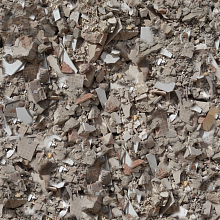 Seamless PBR Concrete Rubble Texture with Debris and Fragments
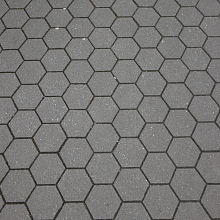 Seamless Hexagonal Concrete Tile PBR Texture 4K
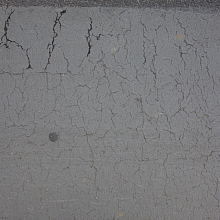 Cracked Asphalt Texture with Weathering