Developing Seamless PBR Textures for Complex Man-Made Materials in 3D Art
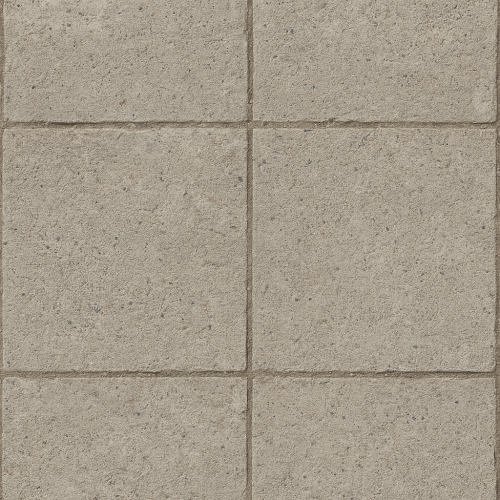
The pursuit of photorealism in 3D art has steadily elevated the importance of physically based rendering (PBR) workflows, where the accurate representation of material properties under diverse lighting conditions is paramount. While standard PBR texturing techniques have matured significantly, their direct application to complex man-made materials often falls short of delivering the nuanced visual fidelity required for high-end real-time and offline rendering. Materials such as plastics with subtle subsurface scattering, multilayered painted surfaces exhibiting wear and intricate micro-detail, engineered composites blending heterogeneous constituents, and industrial finishes layered through multiple manufacturing stages all pose distinct challenges that transcend conventional texturing paradigms. This complexity demands a refined approach to texture acquisition, authoring, and optimization that respects the unique physical and visual characteristics inherent to these materials.
At the core of PBR texturing lies the decomposition of a material’s appearance into a set of standardized texture maps—primarily albedo (diffuse reflectance), roughness (surface microfacet distribution), normal (microgeometry perturbation), ambient occlusion (local shadowing), height (microdisplacement), and metallic (conductor vs. dielectric classification). For many natural or relatively homogenous materials, these maps can be derived or hand-painted with reasonable assumptions, and tiling or micro-variation techniques can be applied straightforwardly to avoid visible repetition. However, complex man-made materials frequently defy these assumptions due to their inherent structural and compositional heterogeneity.
Consider plastics, which often integrate subtle subsurface scattering effects that interact intricately with surface roughness and specular reflections. Standard PBR workflows treat these materials primarily as opaque dielectrics with simplified Fresnel behavior, which can lead to overly flat or unrealistic results when attempting to simulate translucent depth or internal scattering. Accurately capturing such phenomena typically requires augmenting base maps with additional data channels or employing specialized shader setups in engines like Unreal Engine or Blender’s Eevee and Cycles, where subsurface scattering models must be carefully calibrated against reference scans or photogrammetric captures.
Painted surfaces present another layer of complexity. Industrial paint finishes commonly consist of multiple layers—primer, basecoat, clearcoat—each contributing distinct optical and physical properties. The clearcoat introduces a second specular lobe with its own roughness and index of refraction, while subtle imperfections such as micro-scratches, orange peel texture, and dirt accumulation modulate the appearance dynamically. Conventional PBR maps struggle to incorporate this multilayered reflectance without resorting to expensive layered shader models or cumbersome texture stack blending. Consequently, advanced authoring techniques often involve baking layered information into separate texture sets or utilizing height and curvature maps to drive procedural wear and edge detailing in the shader, ensuring these layers interact convincingly under varying lighting environments.
Composites and engineered materials, such as carbon fiber reinforced polymers or laminated metals, introduce pronounced anisotropy and directional reflectance behaviors. Their microgeometry varies not only in magnitude but also in orientation, requiring normal maps that encode anisotropic detail and roughness maps that reflect direction-dependent scattering. Standard isotropic PBR workflows are insufficient here; instead, artists must leverage specialized tools and shader features that support anisotropic BRDF models and carefully calibrate textures to physical reference data. This often involves high-resolution micro-variation baked from real samples or procedural generation techniques that embed fiber weave patterns and resin matrix irregularities seamlessly across tiled textures, preventing noticeable repetition while maintaining physical plausibility.
The calibration of PBR textures for these materials is a critical, iterative process that combines empirical data acquisition with artistic interpretation. Photogrammetry and material scanning technologies—such as multi-light capture rigs and spectrophotometers—can provide high-fidelity input textures that capture subtle nuances in reflectance and microgeometry. However, raw data must be meticulously processed and converted into engine-compatible maps. For instance, albedo maps must be linearized and desaturated to exclude any baked-in lighting or shadowing, roughness maps require careful calibration to match measured gloss values, and normal maps need consistent tangent space orientation for correct shading. Calibration is often engine-specific; Unreal Engine’s physically based shading model, for example, expects roughness values in a certain gamma space and metallic maps with precise binary classification, while Blender’s shader nodes may require different parameter ranges and map encodings. Ensuring cross-engine consistency requires rigorous testing under standardized lighting conditions and may necessitate bespoke shader adjustments.
Optimizing these complex textures for real-time applications adds another layer of difficulty. The high resolution and multiple texture sets demanded by layered finishes and anisotropic materials can quickly exhaust GPU memory budgets. Techniques such as channel packing—where roughness, metallic, and ambient occlusion are combined into a single texture—remain essential but must be executed with caution to preserve fidelity. Mipmapping strategies for normal and height maps should maintain micro-detail without introducing blurring artifacts that compromise anisotropic effects. Additionally, seamless tiling remains a formidable challenge, especially for materials with directional patterns or irregular wear. Micro-variation methods, including randomized detail overlays and procedural noise masks, are indispensable to break up tiling artifacts but must be carefully balanced to avoid visual noise or patterning that conflicts with the material’s inherent structure.
Pragmatically, artists and technical directors working on complex man-made materials must embrace a hybrid workflow that blends photorealistic data capture, procedural texturing, and shader-driven layering. For example, leveraging Blender’s node-based texturing system to generate height and curvature maps procedurally can supplement scanned data, enhancing wear patterns and edge highlighting without additional texture memory cost. In Unreal Engine, the use of Material Functions and layered material instances enables dynamic control over clearcoat parameters and anisotropic shading, facilitating iterative tuning and optimization. Furthermore, the integration of tools such as Substance Painter or Designer allows for targeted authoring of micro-detail and layered effects, with exporter pipelines that maintain metadata crucial for engine calibration.
In summary, the texturing of complex man-made materials within a PBR framework demands a comprehensive understanding of both the physical properties of these materials and the technical constraints of modern rendering engines. Standard PBR texturing approaches—while effective for simpler surfaces—lack the flexibility and precision to capture the layered complexity, anisotropic behavior, and subtle subsurface phenomena characteristic of plastics, composites, painted finishes, and industrial coatings. Addressing these challenges requires a multidisciplinary approach that synergizes high-fidelity data acquisition, advanced procedural authoring, meticulous map calibration, and engine-specific optimization. Only by embracing these advanced techniques can 3D artists and technical directors achieve the seamless, physically plausible textures necessary to convincingly render the multifaceted reality of complex man-made materials.
Capturing the intricate detail and authenticity of complex man-made surfaces for PBR texturing often demands a hybrid approach that leverages both photogrammetry and procedural generation. Photogrammetry excels in faithfully reproducing real-world surface nuances—grain, scratches, wear patterns—directly from high-resolution imagery, while procedural methods fill in gaps, ensure seamless tiling, and introduce controlled micro-variations essential for breaking up repetitive artifacts in game engines or renderers like Unreal Engine or Blender’s Cycles. This synthesis not only enhances the fidelity of PBR maps but also streamlines workflow efficiency and the scalability of texture assets.
Starting with the acquisition, the photogrammetry pipeline hinges on meticulous equipment setup and scanning strategies tailored to the specific man-made material. A calibrated DSLR or mirrorless camera paired with a high-quality macro or prime lens is indispensable for capturing the fine geometric and chromatic detail inherent in surfaces such as corroded metal panels, painted concrete, or industrial plastic. Calibration here refers to both intrinsic camera calibration—correcting lens distortion, focal length, and sensor alignment—and extrinsic calibration—precisely documenting camera orientation relative to the object. Utilizing calibration targets or checkerboards during capture sessions allows photogrammetry software like RealityCapture or Agisoft Metashape to generate highly accurate camera pose estimations, minimizing reconstruction errors that could propagate into normal or height maps.
The scanning strategy must ensure comprehensive coverage with overlapping photographs, typically 60–80% overlap, to facilitate robust feature matching. For complex geometry, multi-angle capture regimes—360-degree horizontal sweeps combined with varied elevation angles—are critical. Controlled, diffuse lighting conditions reduce shadows and specular highlights that can confuse reconstruction algorithms. Employing a turntable for smaller objects or a rigged array of lights and cameras for larger surfaces accelerates acquisition and yields consistent illumination. When scanning flat or near-flat surfaces, flat lighting combined with cross-polarization filters helps isolate albedo from specular reflections, enabling cleaner base color maps essential for physically accurate PBR albedo textures.
Once the photogrammetric mesh and texture maps are generated, the normal, height, ambient occlusion (AO), and roughness maps often require refinement. Raw photogrammetry outputs tend to contain noise or incomplete data in occluded or repetitive pattern areas. Here procedural methods become invaluable. Procedural noise functions—Perlin, Worley, or cellular noise—can be layered and parameterized within software like Substance Designer or Blender’s shader editor to synthesize micro-variations that emulate surface imperfections such as micro-scratches, pitting, or subtle roughness fluctuations. These procedural layers are blended carefully with photogrammetric data using masks derived from curvature or ambient occlusion maps to avoid disrupting high-fidelity features.
Moreover, procedural pattern synthesis addresses the perennial problem of tiling. Photogrammetry captures are inherently non-tileable due to their dependence on physical object boundaries. To create seamless PBR textures suitable for large, repeating surfaces, one must either isolate tileable patches during scanning or transform the photogrammetry output via procedural warping and blending techniques. For instance, edge-aware blending combined with noise-based offsetting can stitch multiple photogrammetry patches into a continuous tile. Alternatively, the procedural generation of secondary detail layers—such as rust streaks, paint cracking, or embossed patterns—can be tiled independently and composited over the photogrammetric base maps to mask repetition. This approach preserves the organic complexity of the scanned data while offering the flexibility demanded by real-time rendering engines.
Regarding metallic and roughness channels, photogrammetry alone seldom captures accurate physical reflectance properties, necessitating either manual authoring or procedural augmentation. Metallic maps, often binary or near-binary in man-made materials (e.g., metal vs. non-metal), benefit from mask extraction techniques applied to albedo or height maps, supplemented by procedural edge wear generators that simulate paint peeling or oxidation at edges and corners. Roughness maps benefit greatly from procedural noise that introduces stochastic micro-roughness, breaking up uniformity and mimicking subtle surface contaminations or milling marks. These procedural roughness variations can dynamically respond to curvature or ambient occlusion inputs, enhancing realism by reinforcing light scattering variations at crevices or protrusions.
Optimization is another critical facet linking acquisition and procedural enhancement. Photogrammetry datasets can be unwieldy, with high polygon counts and large texture resolutions. Retopologizing the mesh to a low-poly proxy suitable for real-time engines, followed by baking high-resolution detail into normal and height maps, is standard practice. During baking, care must be taken to preserve the fidelity of photogrammetric detail while avoiding baking artifacts such as seams or projection errors. Procedural detail layers can then be added atop these baked maps, allowing for lower resolution photogrammetric bases supplemented with high-frequency procedural noise, optimizing memory and performance without sacrificing visual quality.
Integration within engines like Unreal or authoring tools such as Blender reveals further practical considerations. Unreal’s material editor supports complex layering and blending of procedural textures with base PBR maps, enabling dynamic adjustments to roughness or AO intensity in response to gameplay parameters or environmental conditions. Blender’s node-based shader system offers granular control over procedural noise synthesis and its fusion with photogrammetry-derived textures, facilitating rapid iteration and preview. Both environments benefit from consistent color space management, ensuring albedo maps are in sRGB while roughness, metallic, and normal maps remain in linear space to maintain physical accuracy.
In practice, it is advisable to establish a feedback loop between photogrammetry acquisition, procedural authoring, and engine integration. Early tests in target engines can reveal tiling artifacts or lighting inconsistencies that inform adjustments in procedural noise scale, blending weights, or photogrammetry capture density. Calibration of scale between scanned objects and engine units is essential to ensure that micro-variation noise frequencies correspond to physically plausible sizes, preventing unnatural surface appearances. Additionally, leveraging engine-specific tools such as Unreal’s virtual texturing or Blender’s adaptive subdivision can further optimize texture streaming and shader complexity, balancing fidelity with performance.
Ultimately, the hybrid acquisition technique marrying photogrammetry and procedural generation empowers artists and technical directors to produce seamless, physically accurate PBR textures for complex man-made materials that are both visually rich and technically robust. It unlocks the ability to capture the unique character of real surfaces while maintaining the flexibility and scalability required for diverse production pipelines, from architectural visualization to high-end game environments.
Physically Based Rendering (PBR) relies fundamentally on a suite of meticulously crafted texture maps, each encoding distinct material attributes that collectively simulate light-matter interaction with high fidelity. For complex man-made surfaces—such as weathered metals, layered composites, or engineered plastics—the generation and calibration of these maps become particularly intricate due to the nuanced interplay of material heterogeneity, wear patterns, and micro-geometry. In this context, understanding both the acquisition and authoring of albedo, roughness, normal, ambient occlusion (AO), height, and metallic maps, alongside rigorous cross-map calibration, is critical to achieving seamless, physically consistent results adaptable across production pipelines and real-time engines like Unreal Engine or offline platforms such as Blender’s Cycles.
The albedo map functions as the base color representation stripped of lighting and shadows, encoding the diffuse reflectance of the surface. For complex man-made materials, the albedo should be derived from calibrated photographic captures under controlled, diffuse illumination conditions or procedurally generated with physically plausible color values. It is essential to exclude any baked-in shadows, highlights, or emissive effects to maintain energy conservation in PBR workflows. When authoring albedo textures, particular attention must be paid to the color gamut and linear workflow compatibility. For instance, albedo data should be stored and manipulated in a linear color space to preserve accurate light response, avoiding sRGB or gamma-corrected spaces that distort energy representation. Additionally, micro-variation in hue and saturation—arising from manufacturing defects, surface contamination, or aging—should be subtly introduced to break uniformity, either through procedural noise layers or high-resolution photo references. This micro-variation enhances visual complexity without overwhelming the base color fidelity, crucial for large-scale tiling textures where repetition artifacts are common.
Roughness maps control the microsurface scattering, dictating how sharp or diffused specular reflections appear. For engineered surfaces with complex finishes—ranging from polished metals to roughened paints—roughness must be calibrated against measured or reference data to ensure physical plausibility. Since roughness values are often inverted or conflated with glossiness in legacy workflows, modern PBR texturing mandates a consistent interpretation where roughness ranges from 0 (perfectly smooth) to 1 (fully rough). The subtle gradation of roughness across a surface can be derived from microphotogrammetry or micro-CT data for extreme fidelity, though more commonly, it is authored via grayscale maps refined in tools like Substance Painter or Designer. Calibration is critical here; the roughness map must correlate with the material’s index of refraction (IOR) and metallicity to yield realistic specular energy. Cross-referencing roughness with specular response curves in the target engine’s shader graph helps avoid physically implausible highlights or washed-out reflections. For tiled textures, introducing micro-roughness variation and noise prevents unnatural uniformity, especially in materials like brushed metals or coated plastics where directional anisotropy may be present.
Normal maps encode small-scale geometric perturbations, enhancing surface detail without increasing polygon count. For complex man-made textures, normal maps are typically derived from high-resolution sculpting in ZBrush or photogrammetric captures followed by baking onto low-poly meshes. Precision in normal map generation is paramount to avoid artifacts that can cause shading inconsistencies or light leakage. Calibrating normals to match the height map ensures coherent bump mapping, maintaining the illusion of depth and surface complexity. When authoring normal maps, tangent space normals should conform to engine-specific conventions—Unreal Engine uses a left-handed Y-up tangent space, while Blender’s normals can be customized—necessitating validation via viewport previews or shader test renders. For micro-variation, layering multiple normal maps with varying detail scales can simulate complex surface finishes like embossed patterns atop roughened bases. Optimization techniques, such as compressing normal maps with BC5 or ASTC formats, must balance fidelity and memory footprint, particularly for real-time applications.
Ambient occlusion (AO) maps approximate the self-shadowing caused by occluded geometry, enhancing perceived depth and contact shadows in the absence of full global illumination. AO maps for man-made materials should be generated from high-poly meshes or using baking tools like Marmoset Toolbag or Blender’s Cycles, preserving subtle crevices, weld seams, and fastener indents. However, AO is an indirect lighting term and should not be conflated with shadow maps or baked lighting. Calibration involves ensuring AO intensity aligns with the overall global illumination model of the engine, as excessive AO can darken textures unrealistically, while insufficient AO flattens detail. A common approach is to use AO as a multiplicative factor on the albedo or indirect lighting channel, but this must be balanced with engine-specific post-processing features, such as screen-space ambient occlusion (SSAO), to avoid double occlusion. For tiled textures, AO maps often require edge padding and seamless tiling techniques to prevent visible seams, especially in modular asset workflows.
Height maps, or displacement maps, encode scalar values representing surface elevation relative to a base plane, enabling parallax effects or tessellated displacement in shaders. For complex man-made surfaces, height maps can emphasize layered paint buildup, corrosion pitting, or engraved details. These maps are typically generated from sculpted high-poly models or extracted from grayscale photographic data using height-from-shading algorithms. Calibration of height data involves ensuring relative elevation ranges are physically meaningful—exaggerated displacement can break scale perception and cause silhouette artifacts. When integrating height maps into engines such as Unreal Engine, it is necessary to harmonize height scale with tessellation factors and camera distance thresholds to optimize performance without compromising visual fidelity. In Blender’s shader nodes, height maps can be converted into bump or vector displacement inputs, but care must be taken to preserve linearity and avoid artifacts from compression. Micro-variation in height maps is crucial to avoid perfectly flat surface patches, which can betray the artificiality of the texture.
Metallic maps define the binary or graded metalness of a surface, controlling the blend between dielectric and conductor reflectance models. For complex man-made materials, metallicity is rarely a uniform 0 or 1 but often exhibits subtle gradations due to paint chipping, rust patches, or composite layering. Accurate metallic map creation requires an understanding of the material’s physical properties: metals have high reflectance and colored specular highlights derived from complex IOR values, while dielectrics reflect light diffusely with minimal specular tint. When authoring metallic maps, it is imperative to maintain strict black-and-white or near-binary values to avoid ambiguous reflectance behavior, unless the material genuinely exhibits partial metal content, such as anodized aluminum. Calibration involves cross-checking metallic values against albedo and roughness maps to maintain energy conservation; for example, metallic areas should have low albedo values since metals do not exhibit diffuse reflection. In real-time engines, metallic maps typically reside in the red channel of packed textures for optimization, so careful channel assignment and compression management are essential.
Beyond individual map creation, the calibration of these textures in relation to one another is paramount to achieving a coherent and physically plausible material. Cross-map consistency involves verifying that albedo values correspond to non-metallic regions, that roughness modulates specular reflectance appropriately, and that normal and height maps align spatially and visually. An iterative workflow is advisable: author maps in dedicated texturing software, import into the target engine or renderer, and perform shader-based validation against reference materials and physically measured data. Tools like Unreal Engine’s Material Editor offer real-time feedback on how maps interact under dynamic lighting, allowing artists to adjust parameters such as roughness intensity or metallic thresholds. Similarly, Blender’s Eevee and Cycles renderers provide viewport previews for iterative refinement. This feedback loop ensures that the final textures do not merely look plausible in isolation but integrate seamlessly into complex lighting environments.
Optimization strategies must be integrated early in the texturing pipeline since complex man-made materials often demand high-resolution textures to capture intricate detail. Efficient use of texture channels—such as packing ambient occlusion, roughness, and metallic maps into a single composite texture—reduces memory overhead without sacrificing quality. Attention to tileability is crucial: micro-variation patterns should be designed so that their high-frequency detail does not repeat conspicuously when tiled, which can break immersion in large-scale environments. Techniques such as blending multiple noise layers with different scales, leveraging procedural masks, or utilizing detail maps superimposed on base textures help mitigate tiling artifacts. Moreover, adopting standardized UV layouts with consistent texel density across assets facilitates uniform map resolution and predictable shader behavior, critical for complex modular assets.
In summary, creating and calibrating essential PBR maps for complex man-made surfaces demands a rigorous, physics-informed approach that integrates accurate data acquisition, precise authoring, and iterative validation within the final rendering environment. By maintaining strict control over color spaces, value ranges, and cross-map coherence, artists and technical directors can deliver seamless, optimized textures that uphold the physical realism and visual complexity required in modern 3D art pipelines. Mastery of these techniques ensures that complex materials not only withstand close inspection but also perform efficiently across diverse rendering engines, enhancing the immersion and believability of virtual environments and assets.
FAQ
What is covered in this guide?
This guide explains Developing Seamless PBR Textures for Complex Man-Made Materials in 3D Art with practical notes for seamless PBR materials, texture setup, and production use.
Can I use these texture techniques in Blender, Unreal Engine, and Unity?
Yes. The workflow focuses on standard PBR maps and tileable materials that can be used in Blender, Unreal Engine, Unity, archviz, games, and VFX pipelines.
Where can I find textures for this workflow?
Use the AITextured texture library and the related texture links on this page to find seamless PBR materials and preview them before download.
Related Textures
 Procedural Lime Plaster Wall PBR Texture
 Procedural Stamped Sidewalk Concrete PBR Texture
 Procedural Fine Asphalt Road PBR Texture
 Procedural Pitted Concrete PBR Texture
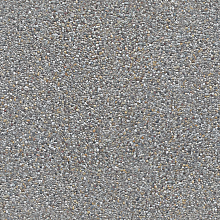 Seamless Concrete Pebble PBR Texture in 4K Resolution
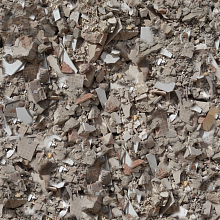 Seamless PBR Concrete Rubble Texture with Debris and Fragments
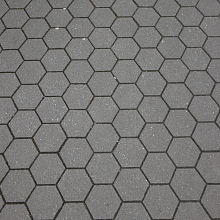 Seamless Hexagonal Concrete Tile PBR Texture 4K
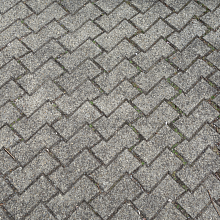 Realistic Concrete Paving Brick Pattern Texture