Expert Guide to Creating and Using Moss Textures for PBR Workflows
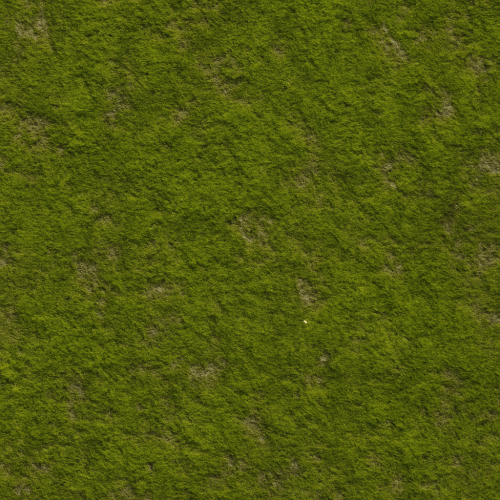
Capturing moss for physically based rendering (PBR) textures presents unique challenges due to its intricate microstructure, subtle color variations, and complex interplay of surface properties. To achieve highly realistic moss textures suitable for modern PBR workflows, careful consideration must be given to acquisition techniques, lighting conditions, equipment selection, and subsequent processing steps. This section delves into advanced methodologies such as photogrammetry and high-resolution scanning, emphasizing how to extract detailed, physically accurate source data for albedo, roughness, normal, ambient occlusion (AO), height, and—where relevant—metallic maps.
Photogrammetry remains one of the most effective approaches for capturing the natural complexity of moss surfaces. Given moss’s fine, filamentous growth patterns and soft, uneven topology, photogrammetry requires meticulous setup to resolve micro-variations in height and color without introducing noise or artifacts. High-resolution images are paramount; DSLR or mirrorless cameras with macro-capable lenses are recommended to capture fine detail. A focal length between 60mm and 105mm provides an optimal balance between working distance and magnification, minimizing lens distortion while preserving depth of field. The use of a sturdy tripod and remote shutter release reduces camera shake, ensuring sharp image capture.
Lighting conditions play a crucial role in photogrammetry of moss. Diffuse, even lighting mitigates harsh shadows that can confuse image matching algorithms, but some directional lighting is necessary to reveal subtle topography. An effective approach is to use a light tent or softbox setup that provides ambient illumination, supplemented by low-angle fill lights to accentuate surface relief. Avoid direct sunlight or overly specular reflections, which can cause highlights that interfere with texture extraction. Color calibration targets included in the scene enable post-processing linearization and color correction, preserving the true albedo values essential for accurate base color maps.
For photogrammetric capture, overlapping images with 60 to 80 percent coverage in both horizontal and vertical directions ensure robust 3D reconstruction, especially important for moss’s fine geometry. Multiple passes from varying angles help resolve occluded areas and generate a dense point cloud with sufficient surface detail to extract high-fidelity normal and height maps. When processing, software like RealityCapture or Agisoft Metashape allows fine-tuning of mesh generation parameters to maintain small-scale features without over-smoothing. The resulting mesh can be baked to generate normal and height maps. Ambient occlusion maps can be derived either from the mesh by calculating occlusion based on geometric proximity or from ambient occlusion passes within rendering software that simulates indirect light occlusion.
High-resolution 3D scanning offers an alternative or complementary method for moss texture acquisition, particularly when photogrammetry faces limitations due to translucency or complex surface scattering. Structured light scanners or laser scanners with micron-level accuracy can capture moss’s surface geometry with exceptional precision. However, scanning moss in situ can be problematic due to its delicate nature and environmental constraints. Portable scanners with adjustable scanning distance and resolution, combined with stabilization rigs, can help capture detailed surface data without damaging the specimen.
When employing scanning, it is critical to manage the interplay between the scanner’s light source and the moss’s subsurface scattering. Moss often exhibits semi-translucent properties that cause light diffusion, potentially blurring scan data. Using shorter wavelength light sources or multi-spectral scanning can improve edge detection and surface fidelity. Additionally, scanning should be conducted in controlled environments with minimal ambient light to prevent interference.
Key to both photogrammetry and scanning is the calibration of equipment and the color pipeline. Using standardized color charts (e.g., X-Rite ColorChecker) and neutral gray cards during capture sessions allows for later correction of white balance and exposure, ensuring that the albedo maps reflect the true physical coloration of the moss. It is important to capture linear or raw image data to avoid gamma compression artifacts that can degrade roughness and base color accuracy. Post-capture, the images should be converted to a linear color space and then processed to extract the albedo texture, separating out lighting effects to maintain consistency across PBR maps.
Once the base color is established, roughness maps can be derived through a combination of photographic data and procedural enhancement. Moss roughness varies across its surface, with denser clusters exhibiting higher roughness due to the matte, fibrous nature, while wet or decomposed patches might appear smoother. Capturing this variation directly from photographs can be challenging; therefore, a hybrid approach is often employed where photographic roughness data is supplemented by hand-painting or procedural noise to simulate micro-roughness. This ensures that when applied in engines like Unreal, the material reacts realistically to light, exhibiting the correct glossiness range.
Normal maps are generated by baking the high-resolution mesh or from displacement maps created during photogrammetry or scanning. Given moss’s fine surface undulations, it is crucial to maintain high-frequency details in the normal map to capture the tactile quality of the texture. Care should be taken to avoid normal map artifacts such as seams or compression-induced distortion, particularly when textures are tiled. Techniques such as edge padding, proper UV unwrapping, and using seamless tile generation tools help maintain fidelity and continuity.
Ambient occlusion maps derived from geometry are particularly important for moss as they accentuate the crevices and shadowed areas between moss strands, adding depth and realism. These AO maps are typically baked from the detailed mesh with ray-tracing or hemisphere sampling methods. In real-time engines, AO maps can be combined with dynamic ambient occlusion solutions to enhance performance while preserving visual quality.
Height maps extracted from photogrammetry or scanning data provide displacement information that can be used for parallax occlusion mapping or tessellation in modern game engines and rendering software. Accurate height data enhances the perception of depth and surface complexity beyond normal maps alone. Given moss’s soft and irregular surface, the height map should capture subtle gradations without harsh transitions to avoid unnatural silhouettes or shadow artifacts.
Metallic maps are generally not applicable to moss given its organic, non-metallic nature; however, in rare cases where moss is intermixed with metallic debris or mineral deposits, a selective metallic channel may be incorporated. This requires additional targeted capture and masking during texture authoring.
Optimization is essential to maintain performance without sacrificing detail. High-resolution captures often exceed the texture resolution limits of real-time engines, necessitating downscaling with carefully applied mipmapping and detail-preserving filtering. Techniques such as detail masks or micro-variation overlays can simulate fine-scale randomness, preventing repetition in tiled textures. UV layout should be optimized to maximize texel density on moss areas, with careful consideration of seams to maintain seamless tiling.
When integrating moss textures into engines like Unreal Engine or authoring software such as Blender, it is important to ensure that the PBR maps conform to the engine’s expected input formats and color spaces. Unreal Engine, for example, expects roughness and metallic maps in linear grayscale, while base color maps should be in sRGB color space unless otherwise specified. Normal maps require tangent space orientation and specific compression settings to prevent artifacts. Blender’s shader nodes allow for flexible combination and tweaking of these maps, enabling artists to fine-tune the moss material’s appearance under different lighting conditions.
In summary, acquiring moss textures for PBR workflows demands a highly controlled capture environment, precise equipment calibration, and a hybrid approach combining photogrammetry and scanning to resolve the subtle surface details and color nuances. Through careful processing and map generation, artists can produce comprehensive texture sets that faithfully reproduce moss’s complex visual and physical characteristics, enabling realistic rendering across diverse platforms and engines.
Creating high-quality moss PBR textures demands a thoughtful synthesis of procedural and photographic authoring techniques to faithfully replicate the complex organic structures and subtle visual nuances of moss in natural environments. The inherent variability and fine details of moss—ranging from densely packed clumps to sparse, filamentous growth—require a layered approach to texture generation that accommodates both macro patterning and micro-variations critical for photorealism.
Photographic acquisition remains a foundational step for capturing the authentic albedo and microstructure of moss. High-resolution, well-controlled photographs of moss patches should be taken under diffuse lighting conditions to minimize harsh shadows and preserve color fidelity. Macro or close-up shots with shallow depth of field losses must be carefully managed to ensure consistent focus across the surface, allowing for sharp detail extraction. Multiple photographic samples from varied specimen types and growth stages enable a broader palette of moss appearances. These photos then undergo meticulous post-processing, including color calibration against neutral gray or color checker targets to maintain consistent albedo rendition across the texture set. Photogrammetry-derived height and normal data can be extracted when available, enabling highly detailed surface relief capture; alternatively, height maps can be generated through grayscale conversion combined with edge detection and manual refinement.
However, photographic approaches alone often struggle with seamless tiling and scale adaptability, particularly given moss’s inherently irregular growth patterns. Procedural generation complements photography by enabling the synthesis of base patterns and detail layers that tile seamlessly and accommodate parameter-driven variation. Procedural noise functions, such as Perlin, Worley (cellular), or fractal Brownian motion (fBm), provide core driving elements for simulating moss clumping, tufts, and underlying substrate texture. For example, Worley noise is effective in defining clustered moss nuclei, while fBm layering introduces the chaotic randomness of moss filaments. These noise functions can be combined and modulated via masks derived from photographic albedo maps to preserve natural color distribution while enhancing structural variance.
In the procedural workflow, texture channels are generated in tandem to ensure physical plausibility and coherence within the PBR framework. The albedo channel often starts as a base color gradient ranging from deep greens and earthy browns to yellowish tones, reflecting moss species diversity and decay states. Procedural color variation is introduced through subtle hue shifts and desaturation parameters driven by noise masks to avoid uniform patches, which would break realism. The roughness channel benefits from procedural micro-variation simulating the wetness and softness of moss surfaces; typically, roughness values range from mid to high (0.6–0.9) but are modulated with noise to reflect moisture pooling and filament directionality. Normal maps are generated either by converting the synthesized height maps into tangent space normals or by using dedicated procedural normal synthesis tools that emphasize filament orientation and moss clump edges. Ambient occlusion maps can be baked from high-poly moss models or approximated through procedural curvature and cavity detection algorithms, enhancing shadowing in dense crevices.
Height maps are critical for believable displacement or parallax effects in modern engines such as Unreal Engine and Blender’s Eevee and Cycles renderers. Procedurally generated height maps must capture the subtle undulations of moss clumps as well as sharper peaks of filament tips. Calibration against photographic height data is advisable to avoid exaggerated surface relief that breaks scale perception. Height detail can be layered—broad low-frequency height variations define moss clusters, while high-frequency noise simulates fine filament tips and leaflets. This layered approach ensures efficient LOD transitions and reduces aliasing artifacts.
Optimization during procedural and photographic texture authoring is essential for real-time applications. Moss textures typically require high-resolution maps (2K to 4K) to preserve detail at close inspection, but tiling strategies mitigate memory demands. Creating smaller, well-seamless texture tiles of 512x512 or 1K followed by strategic variation through shader-driven vertex blending or texture atlas randomization enhances perceived scale diversity without excessive texture memory usage. In Unreal Engine, using material functions to blend moss textures with underlying surfaces—such as rock or bark—via slope-based masks or curvature maps facilitates natural integration and prevents floating or sticker-like appearances. Utilizing world-aligned texture mapping or triplanar projection reduces visible seams on complex geometry, especially when combined with procedural masks controlling moss density and growth direction.
Blender’s node-based shader system excels in procedural moss texture authoring and preview. By combining noise textures with color ramps and vector displacement nodes, artists can iterate quickly on moss appearance and surface relief. Baking procedural normals and height maps to image textures allows exporting to external engines while maintaining the benefits of procedural control during authoring. The ability to layer multiple noise types and blend in photographic detail maps within Blender’s compositor or external tools like Substance Designer offers a hybrid workflow maximizing realism and flexibility.
A key practical consideration is the simulation of micro-variation across the moss surface to avoid repetitiveness and enhance the perception of natural randomness. This involves introducing subtle shifts in hue, roughness, normal directionality, and ambient occlusion density at a scale smaller than the primary tile pattern. Procedural noise generators with different frequencies and seed values can be composited to achieve this effect. Additionally, leveraging material instances or shader parameters to dynamically manipulate moss attributes such as wetness (roughness), color saturation, or displacement height in response to environmental conditions (rain, shade) further increases believability.
When authoring moss textures, the metallic channel is generally unused or set to zero since moss is an organic, non-metallic material. However, in rare cases where moss grows on metallic substrates or contains mineral deposits, subtle metallic contributions can be introduced via masks derived from procedural or photographic data to simulate those inclusions.
In summary, the effective authoring of moss PBR textures lies in the balanced integration of photographic data for authentic base colors and fine detail with procedural generation techniques that provide seamless tiling, scalable micro-variation, and channel coherence across the PBR workflow. Calibration and iterative refinement across albedo, roughness, normal, AO, and height maps ensure that moss assets respond accurately to lighting and environmental context in rendering engines. Optimizing texture resolution and employing shader-level blending techniques enable the creation of versatile moss materials suitable for high-fidelity offline rendering and performance-sensitive real-time engines alike.
Achieving photorealistic moss surfaces in physically based rendering workflows requires careful attention to the generation and calibration of multiple texture maps, each serving a distinct role in simulating the complex interplay of light, material properties, and microstructure inherent to moss. Unlike many hard surfaces or more uniform organic materials, moss presents unique challenges due to its intricate micro-geometry, variable moisture content, and subtle color and reflectance transitions. Consequently, the process of creating accurate PBR maps for moss involves a combination of meticulous source capture, nuanced authoring, and thoughtful optimization to preserve detail while maintaining performance across target engines such as Unreal Engine or Blender’s Cycles and Eevee renderers.
Starting with the BaseColor (Albedo) map, which defines the diffuse reflectance without lighting or shadow information, it is critical to capture the true coloration of moss in various hydration states. Moss exhibits a broad spectrum of greens, often punctuated by yellowish or brownish hues as it dries, and these color shifts correspond to changes in surface moisture and health. Photogrammetry or high-resolution scanning under controlled lighting conditions is typically the best approach to acquire a natural and nuanced color base. It is important to avoid direct sunlight or harsh directional light during capture, as it introduces specular highlights that contaminate the albedo with baked-in reflections, breaking PBR assumptions. Instead, diffuse, soft lighting—such as overcast daylight or light tents—ensures the color information remains consistent and free from shading artifacts. Post-capture, the albedo map benefits from careful desaturation of specular bleed and normalization of global brightness to avoid overly saturated or dark patches that can distort roughness perception downstream.
Capturing the Normal map for moss requires a delicate balance between emphasizing the fine, filamentous structures and maintaining plausible surface continuity. Unlike hard surfaces with distinct geometric edges, moss is composed of dense mats of tiny leaves and stems, producing a highly irregular micro-relief. Generating normals from high-resolution displacement or height scans using photogrammetry data or micro-normal capture techniques such as photometric stereo yields the best results. This approach preserves micro-variations that catch light realistically without relying solely on bump maps, which can flatten the visual complexity. Care must be taken to avoid over-exaggerating normal intensity; excessive contrast in normal maps can lead to unnatural shading, especially in engine shaders sensitive to normal vector variance. Calibration often involves comparing the normal map in engine viewport renders with reference photographs, adjusting intensity sliders, or blending with a low-frequency normal base to smooth transitions.
The Roughness map is paramount for simulating the wet-to-dry transitions and the corresponding reflectance behavior of moss. Wet moss exhibits lower roughness values due to the smooth water film coating the surface, resulting in increased specular reflectance and subtle glossiness. Conversely, dry moss is highly diffuse, scattering light broadly due to the fibrous, matte structure of its surface. To author this map, one must analyze the source material’s specular response, typically obtained through gonioreflectometer measurements or by isolating specular highlights in well-controlled photographic captures. When access to such equipment is limited, a practical method involves extracting roughness from the inverse of the specular intensity in cross-polarized images or from a combination of UV-fluorescence imaging, which highlights moisture content, and standard diffuse captures. The roughness map should encode a gradient of values corresponding to the moisture distribution, enabling dynamic blending in engine shaders for animated wetness effects. Spatially, roughness tends to vary at the scale of moss clumps and individual leaves, so preserving micro-variation through high-frequency noise overlays or procedural detail layers enhances realism and avoids uniform, flat appearances.
Metallic maps are generally not applicable to moss surfaces, as moss is an organic, non-metallic material with no inherent conductive properties. Therefore, this map can be safely set to zero across the entire texture unless the moss is interspersed with metallic debris or mineral deposits, in which case careful masking is required to localize metallic values without polluting the organic base.
Ambient Occlusion (AO) maps significantly contribute to the perception of depth and contact shadows within the moss clumps. Given moss’s dense, tufted structure, AO maps must capture the self-shadowing of individual leaflets and stems, accentuating the crevices where light penetration is minimal. AO can be baked from high-poly models or derived from photogrammetry depth data, but for moss, high-resolution capture is essential due to the fine scale of occlusion features. In authoring, it is crucial to avoid excessive AO intensity that unnaturally darkens the diffuse color or contradicts global illumination, especially since modern real-time engines employ dynamic AO and global lighting models. Instead, AO maps should be calibrated to complement engine lighting setups, often requiring iterative adjustment within Unreal Engine’s material editor or Blender’s shader nodes to find a balance that enhances detail without crushing midtones.
Height maps, representing displacement or parallax occlusion data, are particularly useful for moss due to its pronounced three-dimensional structure. Height maps enable tessellation or parallax mapping techniques in engines to simulate the subtle relief of mossy surfaces without increasing polygon counts excessively. Generating height maps from high-resolution displacement scans or photogrammetry depth data provides the best fidelity. When authoring, normalizing height values is critical to ensure consistent displacement magnitude; excessive height values can cause geometry clipping or shadow artifacts in real-time engines. Attention should be paid to the scale and tiling of height maps to maintain believable surface undulations without noticeable repetition. In practice, blending procedural noise or detail maps with captured height data can break tiling patterns and introduce micro-variation, critical for moss surfaces that rarely exhibit large-scale uniformity.
Tiling and seamlessness present additional challenges for moss PBR textures, given the natural irregularity of moss growth patterns. While photogrammetry captures provide authentic detail, they rarely tile seamlessly out of the box. Creating tileable textures often requires manual retouching in software like Substance Designer or Photoshop, where edge blending, cloning, and procedural noise generation can hide seams. In addition, introducing randomized variation through vertex color masks or shader-driven detail variation mitigates the mechanical repetition that can betray synthetic textures in large environments. Micro-variation is essential; moss surfaces vary not only in color and roughness but also in microstructure and moisture content across small spatial scales. Layering subtle detail maps driven by noise or curvature within the shader network enhances this effect, reducing visual monotony.
Calibration across multiple engines is another critical step. Unreal Engine’s physically based shading model interprets roughness and normal maps with specific gamma and intensity assumptions, and its material editor allows for dynamic wetness blending via parameter-driven masks. Testing moss materials in Unreal’s deferred rendering pipeline requires attention to how subsurface scattering or translucency settings interact with the moss’s thin, semi-translucent leaves. Blender’s Cycles renderer, by contrast, benefits from principled BSDF shaders that can simulate subsurface scattering and roughness with high fidelity, but care must be taken with normal map orientation and displacement scaling to avoid artifacts. Eevee, Blender’s realtime renderer, may require baking additional maps or using screen-space reflections and AO to approximate physically based lighting under performance constraints.
Optimization strategies are essential to balance visual fidelity and runtime performance. Moss texture sets can be heavy due to the need for high-resolution detail across multiple maps. Employing mipmapping, channel packing (e.g., storing AO and roughness in separate channels of a single texture), and careful resolution scaling based on camera distance improves efficiency. Additionally, utilizing mask-based blending within materials allows dynamic switching between wet and dry states without duplicating entire texture sets, conserving memory. Shader complexity should be managed to maintain frame rates, especially when using tessellation or parallax displacement for height mapping.
In summary, creating accurate PBR maps for moss involves an integrated approach that respects the material’s optical and geometric complexity. High-quality capture and authoring of BaseColor, Normal, Roughness, AO, and Height maps are foundational, with special emphasis on representing moisture-driven transitions and intricate surface detail. Leveraging engine-specific tools for calibration and optimization ensures that the final moss material behaves realistically under varied lighting conditions, enhancing immersion in both real-time and offline rendered scenes.
FAQ
What is covered in this guide?
This guide explains Expert Guide to Creating and Using Moss Textures for PBR Workflows with practical notes for seamless PBR materials, texture setup, and production use.
Can I use these texture techniques in Blender, Unreal Engine, and Unity?
Yes. The workflow focuses on standard PBR maps and tileable materials that can be used in Blender, Unreal Engine, Unity, archviz, games, and VFX pipelines.
Where can I find textures for this workflow?
Use the AITextured texture library and the related texture links on this page to find seamless PBR materials and preview them before download.
Related Textures
 Procedural Stamped Sidewalk Concrete PBR Texture
 Procedural Fine Asphalt Road PBR Texture
 Procedural Pitted Concrete PBR Texture
 Seamless Concrete Pebble PBR Texture in 4K Resolution
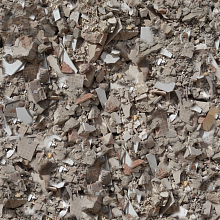 Seamless PBR Concrete Rubble Texture with Debris and Fragments
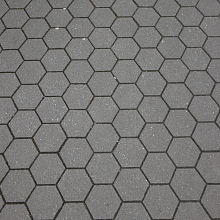 Seamless Hexagonal Concrete Tile PBR Texture 4K
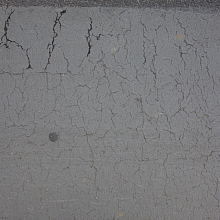 Cracked Asphalt Texture with Weathering