Expert Guide to Furniture Leather PBR Textures for Photorealistic 3D Upholstery
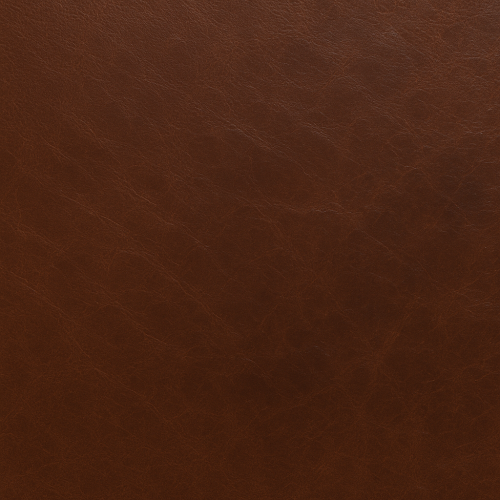
Capturing authentic furniture leather textures for physically based rendering (PBR) workflows demands a nuanced approach that balances fidelity, consistency, and efficiency. Leather, as a material, exhibits complex surface characteristics including subtle micro-variations in grain, anisotropic reflectivity, and a layered response to light that complicates straightforward texture acquisition. When aiming to produce high-quality PBR texture sets—comprising albedo (base color), roughness, normal, ambient occlusion (AO), height, and occasionally metallic maps—the choice of acquisition techniques profoundly impacts the final realism and usability of the asset.
Photogrammetry and high-resolution scanning stand out as the primary methods for capturing genuine leather surfaces, each with distinct advantages and challenges. Photogrammetry, leveraging a series of overlapping photographs taken under controlled lighting conditions, excels at reproducing color fidelity and large-scale surface detail. High-resolution scanning, often employing structured light or laser scanning, specializes in capturing precise geometry and micro-structure, which are essential for accurate normal and height map extraction.
One of the foremost challenges in acquiring furniture leather textures is managing the material’s complex reflectivity. Leather often exhibits a semi-glossy surface, where diffuse and specular reflections interplay dynamically depending on viewing and lighting angles. This anisotropic behavior—caused by the aligned fiber structure beneath the surface—necessitates careful calibration of lighting setups to isolate and capture the base color without contamination from specular highlights. Diffuse albedo maps must represent the intrinsic color of the leather devoid of direct reflections. To achieve this, diffuse light sources combined with cross-polarization techniques are frequently employed. Cross-polarization involves aligning linear polarizing filters on both the light source and camera lens at perpendicular angles, effectively suppressing specular reflections and isolating diffuse albedo. This approach aids in producing clean base color textures vital for physically accurate shading.
In photogrammetry, uniform and diffuse lighting is critical to avoid hard shadows that can distort the perceived grain and surface topology. Overcast sky simulations or light tents provide ideal environments, diffusing light evenly across the surface. Multiple camera angles with sufficient overlap ensure comprehensive coverage of the leather surface, capturing subtle undulations that define its tactile character. The resulting images feed into photogrammetry software pipelines, such as RealityCapture or Metashape, which reconstruct detailed meshes and texture maps. However, photogrammetry alone often struggles with capturing the fine-grain details necessary for convincing normal and height maps due to limitations in depth resolution and potential noise in the mesh.
To complement photogrammetry, high-resolution scanning techniques can target micro-geometry. Structured light scanners project known patterns onto the surface, capturing minute deviations with sub-millimeter accuracy. Laser scanners similarly provide high-fidelity depth data but may be more sensitive to the semi-reflective nature of leather, requiring careful surface preparation or coating to reduce glare. The dense point clouds or meshes generated allow for precise extraction of height maps, which translate into detailed normal maps through software tools like Substance Designer or xNormal. These normal maps enhance the perception of graininess and surface roughness when applied in engine shaders, contributing significantly to the tactile realism of furniture leather materials.
Ambient occlusion maps, which simulate self-shadowing in crevices, can be baked from the high-detail mesh or approximated from the scanned geometry. AO is crucial in leather textures to emphasize the natural depressions and wrinkles that characterize aged or worn furniture surfaces. Baking AO maps with high geometric fidelity ensures these subtle shadows integrate seamlessly into the PBR shader, enhancing depth perception without relying solely on normal mapping.
The roughness map for leather is one of the most complex to derive accurately. Leather’s surface roughness varies not only spatially across the material but also in response to microscopic wear, oils, and finishing treatments. Unlike metals, leather is non-metallic, so the metallic map remains uniformly zero or black, simplifying the PBR workflow in that respect. However, the roughness map must capture this spatial variation to direct the shader on how diffuse or glossy different areas should appear. Acquiring roughness data typically involves either photometric stereo methods—where multiple images under varying lighting angles infer surface reflectivity properties—or indirect estimation from reference photographs and calibrated light probes. Cross-polarized photographic setups can be combined with specular highlight analysis to isolate roughness values. Alternatively, manual authoring based on photographic reference remains a fallback when acquisition proves impractical.
Calibration during acquisition is vital. Using color calibration charts in the capture environment ensures that albedo maps align with industry-standard color profiles, facilitating consistent material appearance across different projects and engines. Similarly, including scale references within the scene allows accurate real-world measurement conversion, crucial for tiling and seamless texture creation. Furniture leather textures often require tiling to cover large surfaces without visible repetition. To achieve this, captured texture patches must be processed to remove seams and ensure micro-variations persist across tile boundaries. Techniques like edge feathering, clone stamping, and procedural blending assist in creating seamless tiling textures that maintain natural irregularities characteristic of leather.
Optimization for real-time engines like Unreal Engine or content creation tools such as Blender requires a balance between resolution and performance. High-resolution captures (4K or 8K) provide the fidelity necessary for close-up renders but must be downsampled or mipmapped effectively for distant views. Generating efficient normal maps from height maps reduces shader complexity and improves runtime performance without compromising visual quality. In Unreal Engine, leveraging material instances and parameterization for roughness and AO maps allows dynamic adjustment of material properties, simulating wear or environmental effects interactively. Blender’s shader nodes can utilize the acquired PBR maps to build physically accurate leather materials, with the normal and roughness maps driving the principled BSDF shader for realistic subsurface scattering and reflection behavior.
In sum, acquiring furniture leather textures for PBR workflows is an intricate process demanding careful control over lighting, scanning resolution, and calibration. Photogrammetry excels in capturing color and macro detail, while high-resolution scanning provides the micro-geometry vital for convincing normals and height maps. Cross-polarization and calibrated lighting reduce specular contamination, ensuring accurate albedo capture. Roughness maps require specialized techniques to reflect leather’s complex surface properties accurately. Finally, thoughtful tiling and optimization strategies ensure that these rich datasets integrate efficiently into real-time and offline rendering engines, preserving the nuanced character of leather surfaces essential to high-fidelity furniture visualization.
The creation of authentic and practical furniture leather PBR textures hinges on a balanced integration of procedural methods and photographic source material, each offering unique advantages in replicating the complex surface qualities inherent to leather. Leather’s defining characteristics—its subtle grain, natural creases, and nuanced patina—pose a challenge for texturing workflows aiming to maintain both realism and seamless tiling while providing reliable input for physically based rendering. The process begins with a thorough understanding of leather’s material properties and how they translate into PBR texture maps: albedo (or base color), roughness, normal, ambient occlusion (AO), height, and, in rare cases, metallic, which is typically omitted given leather’s dielectric nature.
Photographic acquisition remains foundational for capturing the organic irregularities and micro-variations that define leather surfaces. High-resolution scans or carefully shot macro photographs under controlled lighting conditions provide a detailed base for albedo and surface detail extraction. The albedo map must preserve the inherent color variation caused by grain density, tanning processes, wear, and patina without baked-in shadows or specular highlights, which would otherwise impede physically accurate reflections. This often requires meticulous desaturation and high-dynamic-range adjustments, coupled with leveraging image editing techniques such as frequency separation to isolate and refine base color from lighting artifacts. Photographs of leather from multiple angles and lighting conditions are beneficial for reconstructing a comprehensive texture pipeline that includes roughness and normal derivation.
The roughness map is crucial in simulating the way light interacts with leather’s surface microstructure. Leather’s roughness varies subtly across its grain and becomes more pronounced in areas subjected to wear or creasing. Procedural generation plays a significant role here; while photographic roughness extraction can serve as a starting point, it often requires refinement to tile seamlessly or to exaggerate micro-variation for realism. Procedural noise functions—such as fractal Brownian motion combined with Perlin or simplex noise—can be layered and modulated to simulate the stochastic nature of leather grain and creases. This procedural roughness mask can then be blended with photographic data to maintain authenticity while enabling seamless tiling. Fine-tuning contrast and smoothing transitions between roughness levels ensures plausible specular responses in real-time engines like Unreal Engine or Blender’s Eevee and Cycles.
Normal maps capture the tactile quality of leather grain and wrinkles, providing depth to the otherwise flat albedo texture. Photogrammetry or photometric stereo techniques offer excellent sources for these maps by extracting surface normals from real leather samples. However, these often require cleanup to remove noise and artifacts, especially at tile edges. Procedural normal generation can complement photographic normals by creating continuous grain patterns that tile seamlessly. Height maps derived procedurally can also contribute to normal map generation via software tools such as Substance Designer or Materialize. These height inputs are valuable for parallax occlusion mapping or displacement, which enhances realism in engines supporting advanced tessellation techniques. The subtle embossing of grain and fine creases should be carefully balanced; overly aggressive normal details can produce unnatural highlights or harsh silhouettes under dynamic lighting.
Ambient occlusion (AO) maps for leather generally emphasize the creases and depressions where light occlusion occurs naturally. While baked AO from 3D geometry is ideal, leather’s micro-occlusion is often too fine for standard AO baking. Instead, AO maps can be derived or enhanced through procedural means, simulating the diffuse shadowing in grain valleys and crease intersections. Combining procedural AO with subtle photographic input ensures the occlusion feels integral rather than artificially imposed. AO maps improve the perception of depth and contact shadows without significantly increasing render cost, especially when used as a multiply layer on the albedo or as an input for indirect lighting calculations.
Height maps are particularly useful for furniture leather textures, where the surface exhibits both macro-geometry such as folds and wrinkles and micro-geometry in the form of grain detail. Procedural height generation allows for scalable control over these features, enabling artists to adjust the prominence of creases and grain independently. For instance, fractal noise can simulate grain, while directional noise or curvature-based masks can create realistic crease patterns. Height maps can be calibrated by referencing real leather samples and adjusting displacement scale to avoid unnatural exaggeration. These maps become essential when deploying tessellation or parallax occlusion in modern game engines, adding a tactile quality that normal maps alone cannot convey.
Calibration and optimization are critical when integrating procedural and photographic leather textures into production pipelines. Photographic inputs must be color calibrated against reference materials or color charts to ensure consistent albedo representation under varying lighting environments. Likewise, roughness and normal values require adjustment to align with physically accurate reflectance models—for leather, typically a Fresnel reflectance at normal incidence around 0.04 to 0.06 and a roughness range between 0.3 and 0.6 depending on the finish and wear. Procedural elements should be parameterized to allow iterative tuning, enabling artists to balance realism, tiling, and performance requirements. For example, in Unreal Engine, roughness and normal maps can be combined with engine-specific shaders that simulate subsurface scattering or anisotropic reflections, necessitating texture inputs within calibrated ranges.
Seamless tiling is a persistent challenge given leather’s organic and non-repeating nature. Pure photographic textures often exhibit visible seams unless carefully edited; procedural techniques offer a solution by generating continuous noise and grain patterns that wrap naturally. Hybrid approaches use photo-based detail maps layered with procedural noise masks to break repetition and introduce micro-variations. Tools like Substance Designer excel in this domain, enabling the creation of tileable leather textures by blending directional noise for grain orientation with curvature masks for crease placement. Edge blending and smart tiling filters further mitigate visible seams. Additionally, shader-based detail blending in engines can overlay high-frequency procedural grain at runtime, preserving the large-scale photographic detail while masking tiling artifacts.
Micro-variation contributes significantly to the perception of realism in furniture leather textures. Leather surfaces are rarely uniform; localized alterations in roughness, albedo, and normal detail reflect usage patterns, stretching, and aging. Procedural masks driven by noise or curvature data can introduce these variations dynamically, supporting wear maps or dirt accumulation layers. For instance, creases typically exhibit lower roughness and altered albedo due to compression and oils, which can be simulated by modulating roughness and color maps through directional masks. Embedding this variation procedurally within the texture pipeline reduces the need for large unique textures or complex UV layouts, optimizing memory usage and runtime performance.
In practical workflows, artists often start with high-quality photographic captures for albedo and initial roughness/normal generation, then leverage procedural tools to enhance tiling and introduce micro-variation. Calibration against physical reference spheres or standardized materials ensures the texture maps behave predictably under PBR lighting models. During engine integration, these textures are tested under a variety of lighting scenarios, and shader parameters are adjusted to fine-tune specular highlights and subsurface scattering effects, which are subtle but important in simulating leather’s semi-translucent qualities.
In Blender, procedural texture nodes can replicate leather grain and creasing by combining noise textures with vector displacement and curvature information derived from geometry. This approach facilitates real-time preview and iterative refinement without the need for extensive image editing. Similarly, Unreal Engine’s material editor allows the layering of procedural noise and curvature-based masks atop photographic textures, enabling dynamic control over appearance and wear effects. Both environments support baking procedural detail into texture maps for optimized asset delivery.
Ultimately, the synthesis of procedural and photographic authoring techniques in furniture leather PBR texturing provides a robust and flexible approach. It allows artists to preserve the nuanced realism of leather surfaces while ensuring the textures are practical for real-time applications, seamlessly tileable, and physically accurate within PBR workflows. Mastery of this hybrid methodology enables the creation of leather materials that convincingly convey tactile authenticity and visual richness across diverse rendering contexts.
Creating and refining PBR maps for leather materials, particularly in the context of furniture leather, involves a thorough understanding of how each texture channel contributes to the final render and how subtle variations influence the material’s perceived authenticity. Leather’s complex surface properties—combining organic micro-geometry, variable reflectivity, and distinctive color nuances—demand precise calibration of the BaseColor (albedo), Normal, Roughness, Ambient Occlusion, Height, and occasionally Metallic maps, even though leather is generally non-metallic.
Starting with the BaseColor map, it is critical to capture the intrinsic color variations that define leather’s natural or treated appearance. Unlike purely synthetic surfaces, leather exhibits subtle chromatic shifts due to grain, dye penetration, and aging effects. When authoring BaseColor textures, whether derived from photogrammetry, high-resolution scans, or hand-painting, it is essential to remove baked lighting information to maintain physical correctness in PBR workflows. This involves desaturating or balancing shadows and highlights to isolate pure albedo data, ensuring that color fidelity is not compromised by shading artifacts. For furniture leather, the BaseColor should reflect the finish type—aniline leathers retain a translucent, rich tonal range with visible pores and scars, whereas corrected grain or semi-aniline finishes often have more uniform, saturated colors with less pronounced blemishes. In practice, subtle hue shifts across the grain can be maintained by layering color variation maps or utilizing procedural noise to simulate dye inconsistencies, adding depth without overwhelming the base tone.
The Normal map is pivotal in conveying the leather’s micro-geometry—its fine grain, wrinkles, creases, and pores that break up specular highlights and define tactile realism. Effective Normal maps for leather are typically generated through a combination of high-resolution displacement baking from scanned or sculpted meshes and procedural detail maps that simulate fine grain patterns. When refining Normal maps, it is vital to balance the strength of the micro-detail to avoid unnatural exaggeration that can lead to visual noise or aliasing, especially when tiled across large furniture surfaces. One practical approach is to author multi-scale Normal maps: a base Normal map capturing larger wrinkles and folds combined with a secondary detail Normal map for micro grain, blended in the shader or material graph. This separation allows greater control over scale-dependent detail and optimizes tileability by preventing repetitive patterns from becoming noticeable. Additionally, when exporting Normal maps for engines like Unreal Engine or Blender’s Eevee/Cycles, ensure the correct Normal map format and compression settings—Unreal expects tangent space normals in a specific orientation, and improper channel swaps can cause lighting artifacts.
Roughness maps are arguably the most nuanced textures for leather, as they dictate how light interacts with the material’s surface at the microfacet level. Leather exhibits a wide range of roughness values depending on the finish: aniline leather is relatively smooth and slightly glossy, while pull-up or nubuck leathers have a more matte, velvety appearance. Roughness maps should be authored with high dynamic range, capturing the subtle specular variations caused by grain orientation, surface wear, and finishing treatments such as waxing or embossing. When generating Roughness maps, one common mistake is relying solely on inverted gloss maps from photographic sources without further refinement. Instead, a combination of hand-painting, procedural masks based on grain patterns, and physically measured reference data yields more accurate results. It is beneficial to apply micro-variation within Roughness maps to break up uniform reflections—introducing noise or detail layers simulating oil accumulation or slight abrasions enhances realism under varied lighting conditions. Testing roughness under multiple environment maps is crucial; a map that looks plausible in one lighting setup might appear unnaturally shiny or flat in another. In engine workflows, roughness maps should be linear (non-sRGB) to preserve physical accuracy.
The Metallic map for leather is typically trivial since leather is non-metallic by nature, and thus this channel is usually set to zero or black. However, in some stylized or hybrid materials—such as leather with embedded metallic studs or coated surfaces—metallic values need precise masking to isolate metallic regions. In standard furniture leather PBR workflows, metallic is omitted or uniformly zeroed to avoid unwanted specular reflections that break material believability.
Ambient Occlusion (AO) maps serve to enhance shadowing in crevices and grain depressions, reinforcing depth and spatial differentiation. While AO is not strictly required in all PBR pipelines, its strategic use in leather materials can significantly improve visual richness. AO maps are often baked from high-poly geometry or generated using curvature and cavity extraction algorithms. When authoring AO maps for leather, it is important to preserve soft occlusion that corresponds to natural grain indentations and seams rather than harsh shadows that could appear artificial. AO should complement rather than replace or exaggerate the normal map shading. Furthermore, AO maps are commonly multiplied by the BaseColor or integrated into the shader as a separate mask—this integration needs careful calibration to avoid darkening the leather unnaturally or masking subtle color details. In real-time engines like Unreal, AO maps can be combined with indirect lighting or global illumination to maintain consistent shading across dynamic lighting conditions.
Height maps (displacement maps) are essential when physical surface variation beyond normal mapping is required, particularly for highly detailed leather materials on close-up renders or in cinematic sequences. Height maps capture macro surface undulations such as deep folds, scars, and embossing patterns that normals alone cannot simulate effectively. When generating height maps, it is crucial to maintain a balanced depth range calibrated to the scale of the furniture model. Excessive displacement exaggerates the surface and can cause silhouette artifacts or shadowing anomalies. Height maps should be authored in 16-bit grayscale or higher precision to preserve smooth gradients and prevent banding during displacement or parallax occlusion mapping. In real-time engines, height maps are often optimized for parallax occlusion or screen-space displacement, requiring low-frequency detail and careful tiling to avoid repetition. In offline renderers or Blender’s Cycles, true displacement can be used with adaptive subdivision to leverage the height map’s fidelity.
Tiling and micro-variation considerations are paramount in furniture leather PBR textures due to the often large surface areas involved, such as sofas or armchairs. Repetitive patterns quickly betray procedural or photographic textures lacking sufficient variation. To mitigate this, it is advisable to incorporate subtle randomization layers—such as noise overlays in roughness or albedo, variation in grain orientation in normal maps, and localized AO adjustments—to break up repetition. UV layout strategies that minimize visible seams and leverage UDIM workflows further assist in managing tiling artifacts. Calibration of PBR maps should always be performed within the target engine environment, as rendering engines interpret textures differently based on shader implementations and lighting setups. For example, roughness perception in Unreal Engine’s default material shader may differ from Blender’s Principled BSDF, necessitating iterative adjustments.
Optimization is another critical factor. Leather textures often require high-resolution maps to capture fine grain and pores, but this comes at a performance cost. Efficient use of mipmaps, normal map compression techniques, and texture atlasing can help maintain fidelity without excessive memory overhead. Baking multi-scale details into separate channels or using detail maps combined with shader-based blending can reduce the need for ultra-high resolution base maps. Additionally, leveraging engine-specific features such as Unreal’s virtual texturing or Blender’s adaptive subdivision enables better resource management while preserving detail.
In summary, creating and refining PBR maps for furniture leather demands meticulous attention to how each channel represents leather’s unique surface characteristics. The BaseColor must convey natural color complexity without baked lighting; Normal maps require multi-scale grain and wrinkle detail balanced for tileability; Roughness maps capture nuanced specular variation reflecting finish type; AO maps enhance subtle shadowing without overpowering; Height maps provide macro surface displacement for close-up realism; and Metallic maps are generally zeroed unless integrating metallic elements. Throughout this process, iterative testing and calibration in the target rendering engine ensure the leather material maintains physical plausibility and visual richness under diverse lighting scenarios. Integrating micro-variation and optimizing for performance further solidifies the fidelity and usability of leather PBR textures in furniture applications.
FAQ
What is covered in this guide?
This guide explains Expert Guide to Furniture Leather PBR Textures for Photorealistic 3D Upholstery with practical notes for seamless PBR materials, texture setup, and production use.
Can I use these texture techniques in Blender, Unreal Engine, and Unity?
Yes. The workflow focuses on standard PBR maps and tileable materials that can be used in Blender, Unreal Engine, Unity, archviz, games, and VFX pipelines.
Where can I find textures for this workflow?
Use the AITextured texture library and the related texture links on this page to find seamless PBR materials and preview them before download.
Related Textures
 Procedural Lime Plaster Wall PBR Texture
 Procedural Stamped Sidewalk Concrete PBR Texture
 Procedural Fine Asphalt Road PBR Texture
 Procedural Pitted Concrete PBR Texture
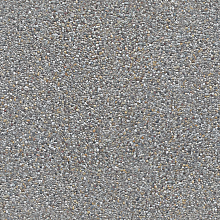 Seamless Concrete Pebble PBR Texture in 4K Resolution
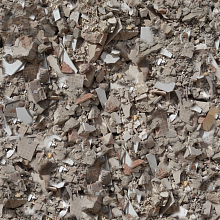 Seamless PBR Concrete Rubble Texture with Debris and Fragments
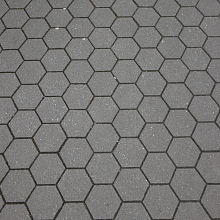 Seamless Hexagonal Concrete Tile PBR Texture 4K
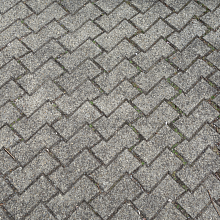 Realistic Concrete Paving Brick Pattern Texture