Expert Guide to Graffiti Seamless PBR Textures for Urban 3D Art
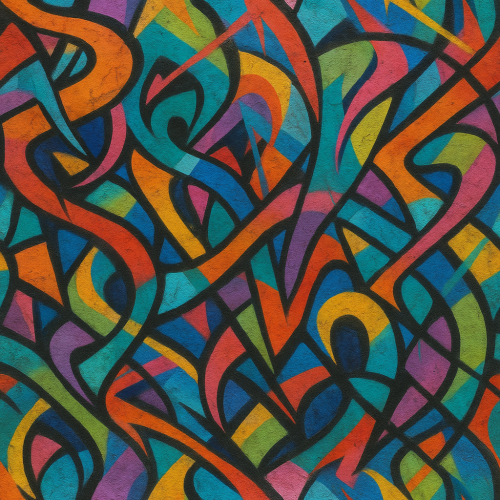
Capturing graffiti textures for physically based rendering (PBR) workflows demands a meticulous approach to acquisition that balances fidelity with practical constraints in data processing and integration. Graffiti surfaces present unique challenges due to their inherent complexity: vibrant, often layered paint applications over varied substrates such as concrete, brick, or metal, combined with environmental weathering and surface irregularities. Successful capture techniques must therefore preserve color accuracy, detail in paint stratification, and the subtle interplay of surface roughness and microgeometry that define the tactile quality of graffiti.
Photogrammetry remains a cornerstone method for acquiring high-resolution graffiti textures because it can capture both color and geometric detail simultaneously. When deploying photogrammetry for graffiti surfaces, careful control of lighting conditions is paramount. Overcast natural light or diffuse artificial lighting is preferable to direct sunlight to minimize harsh shadows and specular highlights that can distort albedo capture and complicate subsequent texture baking. Polarizing filters on camera lenses can further reduce glare from glossy paint layers, aiding in the acquisition of true base color information. The use of calibrated color targets within the capture scene is essential to ensure color fidelity, especially given graffiti’s reliance on saturated pigments that can shift significantly under varying illumination.
Camera equipment should prioritize high-resolution sensors with good dynamic range to capture subtle variations in paint application and substrate texture. Lenses with minimal chromatic aberration and distortion preserve edge fidelity, facilitating more accurate alignment and dense reconstruction. A combination of high overlap (70–90%) and varying camera angles ensures comprehensive coverage of surface geometry, crucial for generating reliable normal, height, and ambient occlusion maps. To optimize photogrammetry results for PBR, the capture must be dense enough to resolve micro-variations in paint thickness and surface roughness—these microdetails often influence the roughness and height maps that drive realistic shading in engines like Unreal or Blender.
Post-processing photogrammetry data involves generating a clean mesh of the graffiti surface, followed by texture baking workflows that extract the PBR maps. The albedo texture should be carefully separated from lighting and shadow information; this often requires manual or semi-automated correction to remove baked-in ambient occlusion and shadows, which can otherwise skew base color perception. Generating roughness maps from photogrammetric data can be challenging as the variations in paint glossiness may not be captured directly. Techniques such as analyzing specular reflections during capture, or leveraging multispectral imaging, can supplement roughness extraction. Alternatively, artists may hand-paint or procedurally derive roughness maps informed by captured height and normal data, ensuring that glossy spray paint and matte faded areas are differentiated.
Height and normal maps benefit greatly from the high spatial resolution of photogrammetric meshes, capturing subtle paint layering and surface erosion. These maps are critical in PBR workflows for adding microgeometry that interacts with light realistically. Ambient occlusion maps derived from high-resolution geometry help define crevices and paint overlaps, enhancing depth cues on flat surfaces. Metallic maps are rarely applicable to graffiti textures unless the substrate itself is metallic or the paint contains metallic flakes; in such cases, reflectance properties must be carefully measured or approximated during capture.
High-resolution scanning using structured light or laser scanners offers an alternative or complementary approach to photogrammetry. These devices can provide precise geometric data independent of surface color, which is useful for isolating microgeometry from albedo information. However, scanners often struggle with highly reflective or transparent surfaces, such as glossy paint layers, requiring surface treatment or specialized scanning parameters. Combining the geometric precision of scanning with photographic albedo capture can yield PBR textures with enhanced fidelity. Calibration between devices is crucial to align the geometric and color data accurately.
In practice, preparing graffiti surfaces for capture is limited by access and preservation concerns, so non-contact methods like photogrammetry and scanning are preferred. Careful planning of capture sessions includes establishing a capture grid, controlling environmental variables, and documenting lighting conditions meticulously to reproduce consistent results across sessions. Calibration targets for color and scale are non-negotiable elements that support accurate post-processing and material authoring.
Once acquired and processed, graffiti textures require optimization for real-time engine usage. Large texture atlases can be generated by tiling and blending captured graffiti panels, introducing controlled micro-variations to avoid noticeable repetition. Techniques such as texture variation masks, channel packing, and detail overlays help maintain visual richness while managing memory footprint. In Unreal Engine, for instance, normal and roughness maps can be fine-tuned with engine-specific nodes to adjust response under varying lighting scenarios, ensuring the graffiti’s vibrancy and roughness remain believable. Blender’s shader editor facilitates layering procedural noise or curvature-based masks atop the base textures to simulate subtle wear or paint peeling, enhancing realism.
Calibration and color management throughout the pipeline are critical to preserving the graffiti’s vibrancy and authenticity. Utilizing color profiles such as sRGB for albedo and linear space for other maps aligns with PBR shading models. Consistency from capture to render ensures that the complex interplay of spray paint pigment, substrate reflectance, and environmental effects is faithfully represented. This rigor in acquisition and authoring enables 3D artists and technical directors to produce graffiti textures that not only look compelling in isolation but integrate seamlessly within diverse virtual environments.
In summary, successful acquisition of graffiti PBR textures hinges on leveraging high-resolution photogrammetry supplemented where possible by scanning, under carefully controlled lighting and calibration protocols. Post-processing must disentangle color from lighting artifacts, extract nuanced roughness and microgeometry, and optimize for real-time workflows. When executed with technical precision, these methodologies enable the creation of graffiti textures that capture the medium’s vibrancy and complexity, supporting physically based materials that respond authentically to lighting in engines like Unreal and Blender.
Creating convincing graffiti PBR textures demands a nuanced balance between procedural generation and photographic manipulation, leveraging the strengths of both methods to achieve authenticity and visual complexity. Graffiti, as a form of street art, presents a unique challenge: its chaotic, layered nature and diverse material interactions require textures that capture not only color and form but also subtle surface details and weathering effects. The goal is to produce seamless, tileable textures that retain the raw vibrancy and physicality of graffiti while integrating seamlessly into PBR workflows within engines like Unreal Engine and authoring tools such as Blender.
Procedural generation offers a powerful approach to creating dynamic shapes and patterns characteristic of graffiti tags, stencils, and murals. Utilizing node-based software or custom scripts, artists can algorithmically generate stylized strokes, drips, splatters, and spray patterns. These elements can be parameterized by noise functions, fractal distortions, and directional gradients to simulate realistic paint dispersion and layering. The procedural approach excels at producing micro-variation and randomness that prevent obvious tiling artifacts, which is critical for graffiti textures that often cover large surfaces such as walls or train cars. By controlling parameters such as stroke density, edge roughness, and color jitter procedurally, artists can quickly iterate on diverse graffiti motifs while maintaining consistent style and composition.
However, procedural generation alone can lack the tactile nuances and organic imperfections inherent in real-world graffiti. Photographic manipulation complements this by grounding the texture in reality. High-resolution photographs of graffiti walls provide invaluable source material for albedo (base color) maps, capturing authentic pigment variations, spray paint gradients, and surface staining. When sourcing photographs, it is crucial to obtain images with even lighting and minimal perspective distortion to facilitate tileable texture creation. Photogrammetry can be employed to acquire accurate height and normal data from graffiti surfaces, capturing the subtle relief caused by layered paint, cracks, and wall substrate irregularities.
To integrate photographic data into a PBR workflow, careful calibration and extraction of texture maps are necessary. The albedo map must be color-corrected to remove lighting information and shadows, often using tools like Substance Designer or Photoshop’s high-pass filtering techniques combined with manual retouching. Deriving roughness maps involves isolating specular highlights and worn paint areas to differentiate between glossy spray paint and matte wall materials. Techniques such as channel blending and edge detection can help create masks that define roughness variations, reflecting the uneven surface absorption and weathering of graffiti paint. Normal maps can be generated either from photogrammetry scans or through height map generation using grayscale interpretations of paint thickness and surface texture. Ambient occlusion (AO) maps are typically baked from the 3D model or synthesized from height data to emphasize crevices and layered paint edges, enhancing depth perception when rendered.
Height maps play a crucial role in graffiti PBR textures, especially when combined with parallax occlusion mapping or tessellation in modern engines like Unreal Engine. They allow digital surfaces to respond realistically to lighting and viewing angles, simulating paint buildup, drips, and wall imperfections. Procedural methods can supplement photographic height data by introducing fine noise patterns and additional displacement details, ensuring micro-variation at different scales. This approach prevents the texture from appearing flat or overly repetitive when tiled, maintaining the illusion of a naturally weathered street art surface.
Tiling graffiti textures presents particular challenges due to their inherently irregular and chaotic composition. Seamless tiling requires careful edge blending, which can be achieved through both procedural border generation and manual cloning techniques. One effective approach is to extend graffiti elements beyond the texture’s borders procedurally, so that shapes wrap around edges, preserving continuity. Alternatively, photographic textures can be adjusted using offset filters and clone stamping to remove seams, although this process is labor-intensive and benefits greatly from high-resolution source images. To maintain visual interest, tiling textures should incorporate subtle variations such as layered paint opacity, color shifts, and micro-detail differences, which can be procedurally introduced through noise masks and gradient overlays.
Micro-variation within graffiti textures enhances realism and prevents artificial repetition. This can be achieved by layering procedural noise with varying frequencies and intensities on top of photographic base layers. For example, adding fine-grain noise modulated by the roughness map can simulate paint granularity and wall surface texture. Similarly, slight color hue shifts and saturation variations, driven by procedural masks, can replicate the effects of paint fading, sunlight exposure, and grime accumulation. When authoring these variations, it is important to maintain physical plausibility within the PBR framework; for instance, rougher patches should correspond with lower specularity and altered normal details.
Calibration of graffiti textures to specific rendering engines is vital for accurate material response. Unreal Engine’s physically based shading model, for example, expects metallic maps to be binary or near-zero for non-metal surfaces, which generally applies to graffiti on masonry or concrete. Metallic channels are typically unused unless the graffiti paint contains metallic flakes or reflective pigments, a rare but possible variation. Albedo maps should avoid self-illumination and keep color values within sRGB space, while roughness maps often require inversion from photographic glossiness data. Normal maps must be authored in the correct tangent space format and validated for consistency to avoid lighting artifacts. Testing graffiti textures under various lighting conditions—direct sunlight, ambient occlusion-heavy environments, and artificial illumination—will reveal if the material parameters accurately convey the intended surface qualities.
Optimization considerations are equally critical when authoring graffiti PBR textures for real-time applications. While high-resolution photographs provide detail, textures must be downscaled judiciously to fit memory budgets without sacrificing key surface features. Mipmapping strategies should be configured to preserve sharp edges of graffiti strokes at distant viewing ranges, possibly by packing detail into normal or roughness maps rather than albedo. Compression artifacts must be minimized, as they can blur the crispness of graffiti lines and degrade color fidelity. Where procedural elements are used, leveraging engine-native procedural materials or decals can reduce texture memory usage and increase flexibility, allowing dynamic variation on surfaces without repeated texture memory costs.
Blender and Substance Designer represent complementary toolsets for graffiti texture authoring in PBR pipelines. In Blender, texture painting combined with procedural modifiers enables artists to create base color and roughness maps interactively while previewing normal and height maps in real-time. The node editor facilitates blending photographic inputs with procedural noise and masks to generate layered effects. Substance Designer excels in creating tileable procedural patterns, automating edge blending, and synthesizing complex roughness and height maps derived from noise and curvature data. Both tools support exporting textures in formats optimized for Unreal Engine, including packed maps and appropriate color spaces.
In practice, a hybrid workflow often yields the best results: starting from high-quality photographic captures of graffiti surfaces, artists can isolate and retouch core elements before overlaying procedural noise and edge treatments to ensure seamless tiling and micro-variation. Height and normal data can be refined through procedural displacement enhancements to accentuate surface irregularities. This layered approach ensures that the final graffiti PBR texture maintains the gritty, vibrant, and tactile qualities of real-world street art, while meeting the technical demands of modern rendering engines. By paying close attention to map calibration, tiling strategies, and optimization, artists can create graffiti textures that convincingly integrate into urban digital environments without sacrificing performance or visual fidelity.
Creating physically based rendering (PBR) maps that convincingly capture the complex surface qualities of graffiti paint involves a meticulous balance of accurate material representation and practical optimization. Graffiti surfaces inherently combine multiple layers of paint, underlying wall substrates, weathering effects, and micro-scale paint irregularities. Each of these components must be thoughtfully encoded across the standard PBR channels—albedo, roughness, normal, ambient occlusion (AO), height, and occasionally metallic—to ensure the final texture exhibits realistic behavior under dynamic lighting conditions typical in modern 3D engines like Unreal Engine or Blender’s Cycles and Eevee.
The albedo, or base color map, is the foundational element in graffiti texturing. Unlike uniform paint finishes, graffiti often consists of layers of vibrant spray paint, marker ink, stencil patterns, and faded or chipped areas revealing the substrate beneath. Therefore, albedo creation should start with high-resolution photographic capture or hand-painted scans that preserve subtle color shifts, overspray edges, and pigment saturation variation. It is critical to avoid baked-in shadows or lighting in the albedo map; any perceived shading must be deferred to the roughness, normal, and AO maps to maintain physically accurate light interaction. When capturing photographic source images, use diffuse lighting setups or cross-polarized photography to minimize specular highlights and shadow contamination on the base color. This approach ensures the albedo reflects only surface color information and not lighting artifacts.
Layering methods are particularly effective in graffiti PBR workflows. One common practice is to separate the graffiti paint layer from the wall substrate in the texture authoring stage, allowing for independent control of roughness and normal variations. This separation can be achieved by masking paint regions in the albedo and generating corresponding roughness and normal detail maps for the paint and the exposed wall surface underneath. Such layered workflows facilitate dynamic tweaking in engine shaders, for example, increasing paint glossiness without affecting the rough concrete beneath. Additionally, this stratification helps simulate paint thickness and edge fraying effects, by blending height or opacity maps at the graffiti borders to mimic peeling or chipping paint.
The roughness map is crucial for defining how the graffiti paint interacts with light, revealing surface wear, gloss variation, and micro-surface detail. Graffiti paint typically exhibits a semi-gloss to satin finish, with localized roughness variation caused by paint layering, drying inconsistencies, and environmental degradation. Instead of a uniform roughness value, it is essential to introduce micro-roughness variation that reflects these real-world material nuances. For example, freshly applied spray paint areas can be mapped with lower roughness (higher gloss), whereas older, sun-faded, or dirt-affected regions should show increased roughness. Capturing this variation often requires a combination of photographic roughness capture via specialized equipment or procedural generation using noise and grunge masks calibrated to the paint type and application style.
Normal maps serve to convey the microsurface irregularities and small-scale geometry changes inherent in graffiti paint. Unlike flat painted surfaces, graffiti frequently features overspray halos, drips, cracking paint, and subtle brush or spray strokes, all of which create intricate surface detail that modifies light direction and reflection. To accurately capture these details, high-resolution normal maps can be derived from displacement or height data obtained via photogrammetry or micro-detail scans. When such data is unavailable, artists can hand-paint normal detail informed by reference imagery and procedural noise to simulate spray mist and paint thickness. Careful calibration of normal map strength is essential—over-exaggeration can produce unnatural shading artifacts, while underrepresentation results in a visually flat surface. In practice, tuning normal intensity within the engine shader, such as Unreal Engine’s material editor or Blender’s normal map node, allows fine control over how subtle the surface irregularities appear under various lighting angles.
Height maps complement normal maps by encoding larger-scale surface variations and depth information. For graffiti, height data is critical for reproducing paint buildup, peeled edges, and cracks where paint has chipped away revealing the substrate. Height maps also enable the use of parallax occlusion mapping or tessellation in real-time engines, enhancing the three-dimensional perception of the graffiti surface without increasing mesh complexity. When authoring height maps, the layering approach again proves beneficial: the paint layer can be given a positive height offset relative to the wall surface, while chipped or eroded areas are represented by negative offsets. This differential height data enables accurate self-shadowing and edge definition that reinforce the physicality of the graffiti. It is important to balance height map contrast and scale carefully; excessive displacement can cause visual artifacts or seams, especially when textures are tiled.
Ambient occlusion (AO) maps are integral to simulating localized shadowing effects from surface cavities and paint topology. In graffiti texturing, AO helps define the subtle darkening around paint edges, cracks, or areas occluded by paint layers and wall roughness. AO can be derived from high-poly geometry baking or approximated via procedural approaches using curvature and cavity detection on the height map. Combining AO with roughness and normal maps in engine shaders increases material depth perception and realism, particularly under soft and ambient lighting conditions. When integrating AO, it is often advantageous to keep it as a separate grayscale map or embed it within a packed texture channel (e.g., roughness or metallic) to optimize performance without sacrificing visual fidelity.
Metallic maps are generally of limited use in graffiti texturing because typical graffiti paints are non-metallic, composed of organic binders and pigments. However, some specialty paints or certain spray cans with metallic flakes may require a low-value metallic channel. In such cases, the metallic map should be carefully constrained to these localized areas to avoid unrealistic reflections. More commonly, metallic is left at zero, simplifying shader complexity.
Tiling and texture repetition considerations are paramount for graffiti PBR workflows, especially when creating tileable textures for large surfaces like expansive concrete walls or underpasses. Graffiti patterns are inherently irregular, so perfect tiling can break immersion if obvious repetition occurs. To mitigate this, artists employ micro-variation techniques—subtle color shifts, noise overlays on roughness and normal maps, and randomized paint layer masks—to disrupt pattern repetition. Additionally, generating multiple variations of graffiti texture sets and blending them procedurally within the engine can further reduce tiling artifacts. When authoring tileable PBR textures, seamless edge blending must be preserved across all maps, including height and normal, to prevent visible seams under dynamic lighting.
Calibration between texture maps is another critical step to ensure consistent material response. The albedo’s perceived brightness and color saturation should align with roughness and normal maps to avoid contradictory visual cues—for instance, a highly saturated and glossy paint surface paired with rough or flat normals will appear unrealistic. Iterative testing within the target engine’s shader environment is necessary, adjusting map contrast, intensity, and color balance to achieve a harmonious physical appearance. Using engine-specific preview tools such as Unreal Engine’s material instances or Blender’s material preview modes expedites this process, enabling real-time feedback on lighting response and map interaction.
Optimizing graffiti PBR textures for engine usage involves balancing resolution, channel packing, and shader complexity. High-resolution scans or photographs often exceed practical texture sizes for real-time applications; therefore, downsampling while preserving critical detail—especially in normals and height maps—is essential. Channel packing strategies, such as combining AO, roughness, and metallic into a single texture’s RGB channels, reduce texture fetches and improve performance. However, care must be taken that packed maps do not compromise the independent control of individual material properties. Additionally, implementing shader features like detail normal maps or blended micro-roughness masks can add surface complexity without significant cost.
Finally, integrating the authored graffiti PBR textures into 3D engines requires attention to material setup and lighting conditions. In Unreal Engine, setting correct texture compression settings, enabling sRGB for albedo, and linear for roughness or normal maps ensures accurate rendering. Utilizing Material Functions to modularize layered paint effects, paint edge blending, and dirt overlays enhances reusability and control. In Blender, leveraging the Principled BSDF shader with properly connected maps and using viewport shading modes allows for precise previewing. Both engines benefit from the use of light probes, global illumination, and post-processing effects to fully realize the subtleties of graffiti paint reflections, translucency, and surface wear.
In summary, the creation of PBR maps for graffiti textures demands a layered, detail-oriented approach that captures the multifaceted nature of paint surfaces on urban substrates. Accurate albedo capture, nuanced roughness variation, fine normal and height detail, and calibrated AO integration are essential to produce a texture set that behaves realistically under diverse lighting environments. Through careful layering, micro-variation, calibration, and optimization, graffiti PBR textures can convincingly replicate the worn, vibrant, and tactile qualities of real-world painted walls within any modern rendering pipeline.
FAQ
What is covered in this guide?
This guide explains Expert Guide to Graffiti Seamless PBR Textures for Urban 3D Art with practical notes for seamless PBR materials, texture setup, and production use.
Can I use these texture techniques in Blender, Unreal Engine, and Unity?
Yes. The workflow focuses on standard PBR maps and tileable materials that can be used in Blender, Unreal Engine, Unity, archviz, games, and VFX pipelines.
Where can I find textures for this workflow?
Use the AITextured texture library and the related texture links on this page to find seamless PBR materials and preview them before download.
Related Textures
 Procedural Stamped Sidewalk Concrete PBR Texture
 Procedural Fine Asphalt Road PBR Texture
 Procedural Pitted Concrete PBR Texture
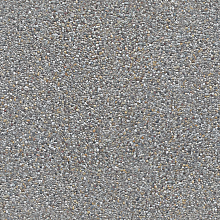 Seamless Concrete Pebble PBR Texture in 4K Resolution
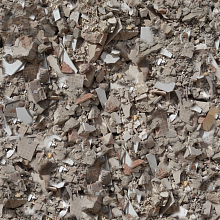 Seamless PBR Concrete Rubble Texture with Debris and Fragments
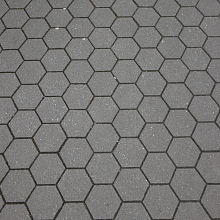 Seamless Hexagonal Concrete Tile PBR Texture 4K
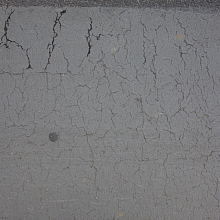 Cracked Asphalt Texture with Weathering