Expert Guide to Moss Textures for Realistic PBR Workflows in Games and Archviz
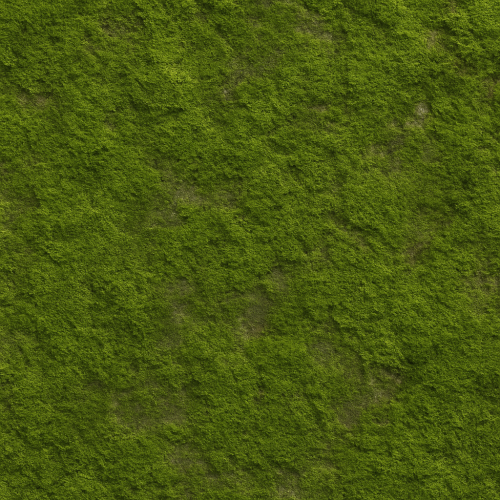
Capturing high-quality moss textures for physically based rendering (PBR) workflows demands a rigorous approach to acquisition that balances fidelity, resolution, and practical constraints inherent in natural environments. Moss, as a subject, presents unique challenges: its intricate microstructure, subtle color variations, and complex surface reflectance properties require meticulous data collection methods to ensure the resulting textures convey realistic material behavior under various lighting conditions. Two primary acquisition techniques dominate professional moss texture capture: photogrammetry and laser scanning, each offering distinct advantages and limitations that influence subsequent authoring stages.
Photogrammetry remains the most accessible and flexible method for acquiring detailed moss surface data. By capturing a series of overlapping high-resolution photographs under controlled or natural lighting conditions, photogrammetry software reconstructs a dense 3D point cloud representing the moss geometry. For PBR workflows, this geometry serves as the basis for baking normal, ambient occlusion (AO), and height maps, while the source imagery provides the albedo (base color) data. Achieving high-quality moss textures begins with careful planning of the photographic session. Optimal image resolution is critical; full-frame or APS-C sensors paired with macro lenses (typically in the 60-100mm focal length range) enable close focusing distances and capture fine-scale details such as individual moss filaments and sporophyte capsules. Maintaining a low ISO setting preserves color fidelity and minimizes noise, ensuring clean texture outputs.
Lighting conditions during capture are crucial. Diffuse, overcast daylight minimizes harsh shadows and specular highlights that can interfere with accurate albedo extraction. However, subtle directional lighting can enhance surface detail and inform height and roughness map generation if properly managed. Employing a polarizing filter can reduce unwanted reflections from moisture or resinous moss surfaces, which otherwise skew albedo textures and roughness calibration. Consistency in lighting across all images is essential to prevent visible seams and color discrepancies in the final texture sets.
When photographing moss in situ, tripod stabilization and a remote shutter release mitigate motion blur from camera shake, preserving sharpness necessary for micro-variation capture. Overlapping each frame by approximately 60-80% ensures robust photogrammetric reconstruction, especially given moss’s complex geometry with overlapping leaves and filaments. To capture sufficient micro-variation and avoid excessive repetition, it is advisable to photograph multiple moss patches exhibiting natural growth variability, including different species or hydration states, which can later be blended or tiled intelligently during authoring.
Laser scanning complements photogrammetry by providing precise geometric data, particularly in capturing subtle height variations and surface topology. Structured light scanners or handheld laser scanners with sub-millimeter accuracy can record moss surface undulations that are difficult to resolve through photogrammetry alone due to texture homogeneity or specular interference. This geometric precision directly benefits the generation of normal and height maps, critical for realistic micro-detail and parallax effects in PBR shading. However, laser scanning typically lacks color information, necessitating integration with photographic data for albedo textures.
Combining laser scan geometry with photogrammetric color data requires careful calibration and registration. Using scale bars or reference markers during acquisition facilitates consistent spatial alignment between datasets. Post-processing tools enable mesh cleanup, decimation, and retopology to optimize the moss geometry for baking without sacrificing detail. Given the high density of moss surface complexity, balancing mesh resolution and performance is vital for real-time engine use, such as Unreal Engine or Blender’s Eevee renderer, where excessive polygon counts can impede frame rates.
Reference data acquisition must also consider the moss’s environmental context. Moisture content significantly affects the moss’s reflectance properties, altering roughness and specular response. Capturing data in different hydration states allows authors to create parameterized textures or layered material setups that simulate wet and dry conditions dynamically. For example, albedo saturation and roughness values shift subtly between these states, influencing the shader’s subsurface scattering and reflectivity parameters. Documenting ambient environmental data—such as temperature, humidity, and light direction—can inform physically accurate material authoring and shader calibration.
To create tileable moss textures suitable for large surface coverage, acquisition should encompass multiple adjacent patches with natural variation. While photogrammetry inherently produces non-tileable scans, careful cropping, blending, and procedural editing using tools like Substance Designer or Mari enable seamless tiling without obvious repetition. Micro-variation in color and height maps is essential to avoid artificial uniformity; this can be enhanced by layering scanned data with procedural noise or hand-painted detail maps that introduce randomized filament orientation, sporophyte distribution, and subtle color shifts. This approach ensures that the PBR textures maintain natural complexity when applied to large-scale environments in game engines or film production.
Calibration of captured textures against known material standards is another critical step. Using color calibration targets during photography ensures accurate albedo reproduction, which is vital since moss’s subtle green hues and brown undertones are sensitive to lighting and white balance shifts. Similarly, reflectance calibration using a gray card or spectrophotometer readings can guide the generation of physically plausible roughness and metallic maps. While moss is generally non-metallic, occasional mineral inclusions or wet surfaces may necessitate localized metallic or specular adjustments to the shader parameters. Ensuring these maps adhere to the energy conservation principles of PBR workflows guarantees consistent rendering results across different engines.
During authoring, normal and height maps derived from photogrammetric meshes or laser scans can be enhanced by applying tangent-space normal map baking techniques and height map filtering to preserve fine details while minimizing artifacts. Ambient occlusion maps baked from the high-resolution geometry add depth and realism by simulating self-shadowing effects within the moss's intricate structure. These AO maps are often combined multiplicatively with the albedo texture or used as a mask for ambient lighting in shaders. In Unreal Engine, for instance, the AO map can be plugged into the material’s ambient occlusion slot to improve shading fidelity under indirect lighting. Blender’s Cycles and Eevee also benefit from these maps to create convincing subsurface scattering and shadow interplay.
Optimization is paramount for real-time applications. While raw photogrammetric data can be voluminous, generating intermediate texture resolutions and utilizing mipmapping ensures performance without compromising visual quality at varying camera distances. Baking multiple levels of detail (LODs) with corresponding normal and height maps aids in maintaining frame rates while preserving the moss’s distinctive surface traits. Additionally, using texture compression formats compatible with target engines reduces memory overhead. Employing mask maps that combine roughness, metallic, ambient occlusion, and height channel data into single textures can further streamline rendering pipelines.
In summary, acquiring high-quality moss textures for PBR requires an integrated workflow combining precise photographic capture, laser scanning where feasible, environmental calibration, and thorough post-processing. Attention to micro-variation, hydration states, and tiling strategies ensures that moss materials behave convincingly under dynamic lighting in engines like Unreal or renderers like Blender. This holistic approach to acquisition and authoring facilitates the creation of moss textures that not only visually replicate natural complexity but also meet the technical demands of physically based rendering systems.
Crafting moss textures for physically based rendering (PBR) workflows demands a nuanced approach that balances procedural synthesis and photographic fidelity to achieve both realism and artistic control. Moss, as a subject, presents unique challenges: its fine, chaotic surface detail, variable coloration, and subtle interplay of moisture and roughness require careful attention across all texture channels. Achieving convincing moss textures involves not only capturing or generating accurate albedo but also correctly authoring roughness, normal, ambient occlusion, height, and, where relevant, subsurface effects, while ensuring seamless tiling, micro-variation, and effective optimization for real-time engines such as Unreal Engine or offline renderers like Blender’s Cycles.
Procedural generation of moss textures leverages noise functions, procedural masks, and layered material blending to simulate the organic complexity of moss patches without the constraints of photographic source material. In software like Substance Designer or Blender’s node editor, the creation process often begins by constructing a base shape using fractal noise or cellular patterns to mimic moss clumps and their irregular distribution. These procedural bases serve as masks that define the spatial variation of moss density and growth patterns. For instance, using Perlin or Worley noise variants modulated by curvature or AO maps can simulate moss accumulation in crevices and shaded areas, replicating natural growth tendencies.
A critical advantage of procedural methods lies in their ability to generate multi-channel maps simultaneously with inherent coherence. The albedo map can be synthesized by blending multiple base colors—ranging from deep emerald greens to lighter chartreuse and yellow-green hues—modulated by procedural masks that simulate dry or damp patches. Incorporating subtle chromatic noise or gradient variation across the moss surface prevents flatness and adds organic diversity. Roughness maps are derived from the same procedural masks, where wetter, denser patches have lower roughness values to simulate moisture-induced glossiness, whereas drier, more fibrous areas exhibit higher roughness. The procedural workflow enables direct control over these relationships, allowing artists to fine-tune physical properties without re-sampling photographic data.
Normal and height maps are essential to conveying moss’s soft, tufted surface. Procedural height generation typically utilizes layered noise to create micro-bumps and clumps, carefully scaled to the intended texture resolution to avoid repetition artifacts. For example, combining low-frequency noise for larger moss patches with high-frequency noise to simulate individual strands or leaflets can produce a convincing depth impression. The generated height is then converted into normal maps via standard normal map baking or derivation nodes. Additionally, ambient occlusion maps are often calculated procedurally by evaluating local curvature or cavity masks, enhancing perceived depth and grounding moss in crevices or porous surfaces.
While procedural moss textures offer unparalleled flexibility and infinite resolution scaling, they can sometimes lack the subtle organic irregularities and complex color nuances found in real moss. Here, photographic authoring complements procedural methods by providing authentic detail drawn from high-quality source images. Photographic capture of moss surfaces for PBR texturing typically involves controlled lighting to minimize harsh shadows and specular highlights, often employing diffuse dome lighting or softbox setups to preserve true color and subtle shading. Macro photography is ideal to capture the fine filamentous structures and color micro-variation inherent in moss.
When authoring photographic moss textures for PBR, the first step is creating a seamless tileable albedo map. This requires careful edge blending and cloning to avoid visible seams, as moss’s chaotic patterns can easily betray repetition. Tools like Photoshop or specialized texture tools (e.g., PixPlant, Substance Alchemist) assist in seam correction and blending. The albedo map must be calibrated to avoid baked-in shadows or highlights that would disrupt the PBR response. A neutral, consistent lighting environment during capture and post-processing ensures the albedo represents only the diffuse reflectance.
Roughness maps derived from photographic sources can be extracted by desaturating and inverting gloss maps captured under controlled lighting or by interpreting the luminance variations in the albedo for indirect cues. However, manual painting or procedural refinement is often necessary to remove noise or inconsistent specular artifacts. Moss roughness exhibits subtle variation correlated with moisture and surface texture, so the roughness map should reflect this heterogeneity without overwhelming the base color.
Normal maps from photographic sources are typically generated by baking high-resolution geometry scans or using specialized software that converts height or displacement data into normal maps. Alternatively, height maps can be extracted through grayscale conversion of macro photos or photogrammetric depth data. However, photographic normal maps may require smoothing or noise reduction to prevent excessive surface detail that can cause shading artifacts or performance issues in real-time engines. Ambient occlusion maps are often baked from high-poly moss geometry or synthesized by algorithms that simulate light occlusion in crevices and between moss clusters.
Integrating procedural and photographic data can yield superior moss textures by combining procedural masks and height detail with photographic color fidelity. For example, an artist might use a photographic albedo base combined with procedural roughness and normal maps to enhance surface complexity and control moisture variation dynamically. This hybrid approach allows for parametric tweaking while anchoring the texture in real-world detail.
Tiling is a critical consideration for moss textures, especially in large environments where repetition becomes apparent. Procedural generation inherently supports seamless tiling by generating noise patterns constrained within UV space, but care must be taken to avoid obvious repetition patterns by introducing random offsets or blending multiple noise layers. Photographic textures require meticulous edge correction and sometimes the creation of multiple texture variants that can be blended or rotated to reduce visible tiling. Additionally, introducing micro-variation through detail normal maps or procedural noise overlays can break up uniformity at close viewing distances.
Calibration of moss textures within a PBR workflow must consider the physical properties of moss surfaces. Albedo values should remain within plausible reflectance ranges for organic vegetation—typically low to moderate reflectance in the visible spectrum, avoiding unnatural saturation or brightness. Roughness values should correspond to the expected surface water retention, with damp moss having lower roughness and dry moss higher; this can be subtly animated or varied to simulate environmental changes. Normal and height maps must be scaled appropriately to match the material scale in the 3D scene, preventing exaggerated or undersized surface details that break immersion.
Optimization for real-time engines like Unreal Engine involves balancing texture resolution with memory budgets and shader complexity. Moss textures often benefit from tiled texture sets with masks controlling moss coverage rather than unique textures per asset. Using packed texture channels, such as storing roughness, AO, and metallic in the same texture’s RGB channels, can reduce texture fetches. While metallic maps are generally unnecessary for moss, as it is non-metallic, certain wet moss variations may require subtle specular adjustments handled within roughness or specular maps. Normal maps should be compressed with appropriate settings to maintain detail without introducing compression artifacts.
In Unreal Engine, moss materials often employ layered materials with procedural masks driving moss growth over underlying rock or bark surfaces. The engine’s material editor supports blending between moss and base materials using curvature or AO maps as masks, enhancing natural integration. Tessellation or parallax occlusion mapping can augment the height detail for moss clumps, but must be used judiciously to maintain performance. In Blender, moss textures authored procedurally or from photos can be precisely calibrated using shader nodes, allowing for physically accurate subsurface scattering or translucency effects that capture moss’s semi-translucent nature. Combining micro-displacement with normal mapping can yield rich surface detail in offline renders.
In summary, the synthesis of moss textures in PBR workflows benefits from a hybrid approach that leverages the generative power of procedural systems alongside the authenticity of photographic capture. Procedural authoring provides control over distribution, surface properties, and variation, while photographic data anchors the textures in real-world complexity and color nuance. Mastery of multi-channel texture creation, seamless tiling, micro-variation techniques, and calibration across albedo, roughness, normal, AO, and height maps ensures moss materials that behave realistically under diverse lighting conditions and scale convincingly within 3D environments. Optimization and engine integration considerations complete the workflow, enabling moss textures that are both visually compelling and performant in modern rendering pipelines.
The creation and calibration of physically based rendering (PBR) maps for moss textures demand a nuanced understanding of the material’s complex microstructure and optical properties. Moss, being a soft, fibrous, and often moist organic surface, presents unique challenges for accurately capturing its appearance and behavior under diverse lighting environments. To achieve photorealistic results, the artist must meticulously craft and calibrate each PBR texture map—BaseColor (Albedo), Normal, Roughness, Metallic, Ambient Occlusion (AO), and Height—ensuring the interplay between these maps replicates the subtle variations inherent in moss surfaces.
Starting with the BaseColor map, it is essential to avoid embedding any lighting or shadow information, as PBR workflows expect albedo textures to represent pure diffuse reflectance. Moss typically exhibits a range of greens, from vibrant chartreuse to muted olive and brownish tones, often intermixed with yellows or even faint reds depending on species and environmental conditions. Capturing this chromatic diversity requires high-resolution, well-lit photographs or carefully hand-painted textures that emphasize color variation at both macro and micro scales. When authoring BaseColor, subtle gradients and noise textures should be incorporated to reflect the uneven pigmentation and moisture-induced color shifts. It is advisable to desaturate the texture slightly during calibration to prevent oversaturation in-game, where dynamic lighting may amplify colors beyond realism. Efficient tiling strategies involve creating seamless texture patterns that incorporate randomization through vertex color blending or detail masks in the engine, avoiding repetitive visual artifacts common in organic surfaces.
The Normal map for moss is critical to convey its fine, dense filamentous structure and soft undulating surface. Unlike hard surfaces, moss normals must simulate the intricate interplay of tiny leaflets and stems, which scatter light diffusely but still produce micro-highlights and subtle shadowing. Generating normals from high-resolution displacement or photogrammetric data of real moss patches is an effective approach to capture authentic detail. However, when authoring normals procedurally or through hand-sculpted high-poly meshes, attention must be paid to avoid overly sharp or exaggerated features; moss normals should remain soft with gentle curvature to mimic the plush texture. The Normal map’s intensity often requires calibration within the shader or material editor in Unreal Engine or Blender to avoid unnatural bumpiness. A typical approach is to start with a low-to-medium strength setting (approximately 0.3 to 0.5 in engine strength parameters), adjusting based on the lighting setup and camera distance to preserve realism without introducing noise.
Roughness maps must be carefully calibrated to reflect moss’s semi-matte, slightly damp surface characteristics. Moss rarely exhibits full glossiness; instead, it has a complex roughness profile driven by the tiny trichomes and surface moisture layers. When creating Roughness maps, it is important to consider micro-variations: dry moss areas should have higher roughness values (around 0.7 to 0.9), while wetter spots or regions with dew or rain glisten exhibit lower roughness values (0.3 to 0.5). These subtle heterogeneities can be achieved by layering noise textures modulated by moisture masks or by painting roughness directly based on reference imagery. Calibration often involves iterative feedback in the rendering engine, observing how light sources interact with the surface at various angles. It is also beneficial to incorporate detail roughness maps at a smaller scale, blended multiplicatively with the primary roughness texture, to enhance micro-variation and break uniformity.
Metallic maps are generally unnecessary for moss surfaces, as moss is an organic, non-metallic material. The metallic channel should be set uniformly to zero, ensuring no metallic reflections contaminate the shading model. Occasionally, if the moss texture is part of a composite material involving metallic elements—such as moss growing on rusted metal—then the metallic map must be carefully masked to isolate moss areas from metal, preserving physical accuracy.
Ambient Occlusion (AO) maps play a vital role in accentuating the fine crevices and dense layering of moss clumps, enhancing depth perception in shading. AO is best derived either from high-poly mesh baking or photogrammetric data to capture the self-shadowing effects of the complex geometry. Given moss’s soft and porous nature, AO values tend to be moderate, rarely approaching full black shadows, since light penetrates and scatters through the fibrous mass to some extent. When authoring AO maps, it is important to avoid overly dark occlusion areas which can cause unrealistic flattening or loss of detail under indirect lighting. Calibration involves adjusting the AO intensity multiplier within the shader to balance contrast—typically, a subtle AO effect (0.3 to 0.6 strength) is sufficient to improve visual richness without overpowering the diffuse shading. In real-time engines like Unreal Engine, combining AO with global illumination and screen-space ambient occlusion settings ensures a cohesive lighting response.
Height maps are indispensable for simulating fine surface relief and displacement effects, especially in tessellation or parallax occlusion mapping workflows. Moss’s height variation is characterized by small, dense protrusions and soft valleys rather than sharp edges or steep cliffs. When authoring Height maps, it is advisable to capture subtle variations in elevation derived from displacement scans or high-resolution sculpting, emphasizing the soft undulations and micro-topography of the moss mat. The height map must be calibrated to avoid excessive displacement values that break silhouette or cause unrealistic shadowing artifacts. Optimal height scale values vary by engine and the specific shader implementation; in Unreal Engine, typical height intensity is set low (often below 0.05 world units) to maintain plausible surface detail without compromising performance. Height maps should tile seamlessly and incorporate procedural noise to mitigate obvious repetition, especially for large surface areas. When using Height maps in Blender’s shader system, combining them with bump maps can enhance fine detail without necessitating heavy geometry subdivision.
Throughout the authoring process, it is critical to maintain consistency and physical plausibility across all maps. For example, areas of the BaseColor map depicting moisture should correlate with lower roughness and slightly elevated height values, while the Normal map should reinforce the subtle fibrous details suggested by these parameters. Cross-referencing reference photography and physically based rendering guidelines ensures that the interplay between light and material properties remains believable under various lighting conditions, including direct sunlight, overcast skies, and artificial illumination.
In practical engine usage, leveraging material instances or node groups to control map intensity parameters dynamically allows artists and technical directors to fine-tune moss appearance in situ without reauthoring textures. This approach facilitates rapid iteration and optimization, particularly important when targeting real-time applications where texture memory and shader complexity impact performance. Using mipmapping effectively reduces aliasing artifacts on distant moss surfaces, while detail maps layered at close range preserve fine-scale texture fidelity.
In summary, the production of PBR maps for moss textures requires meticulous acquisition or procedural generation of data that respects the material’s organic complexity. Calibration across BaseColor, Normal, Roughness, AO, Height, and Metallic channels must be approached holistically, ensuring each map complements the others to produce a physically accurate and visually compelling representation of moss. The end result, when integrated thoughtfully into rendering engines such as Unreal Engine or Blender’s Cycles/Eevee, delivers a convincing simulation of moss’s soft, fibrous surface that responds authentically to lighting and environmental factors.
FAQ
What is covered in this guide?
This guide explains Expert Guide to Moss Textures for Realistic PBR Workflows in Games and Archviz with practical notes for seamless PBR materials, texture setup, and production use.
Can I use these texture techniques in Blender, Unreal Engine, and Unity?
Yes. The workflow focuses on standard PBR maps and tileable materials that can be used in Blender, Unreal Engine, Unity, archviz, games, and VFX pipelines.
Where can I find textures for this workflow?
Use the AITextured texture library and the related texture links on this page to find seamless PBR materials and preview them before download.
Related Textures
 Procedural Lime Plaster Wall PBR Texture
 Procedural Stamped Sidewalk Concrete PBR Texture
 Procedural Fine Asphalt Road PBR Texture
 Procedural Pitted Concrete PBR Texture
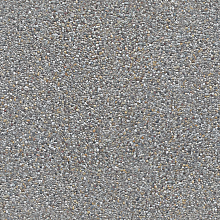 Seamless Concrete Pebble PBR Texture in 4K Resolution
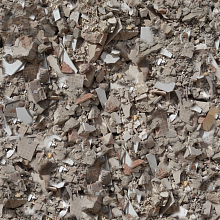 Seamless PBR Concrete Rubble Texture with Debris and Fragments
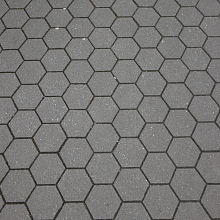 Seamless Hexagonal Concrete Tile PBR Texture 4K
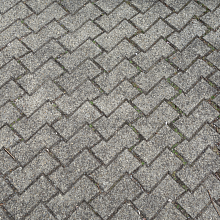 Realistic Concrete Paving Brick Pattern Texture