Expert Guide to Seamless PBR Mosaic Tile Textures for Realistic 3D Environments
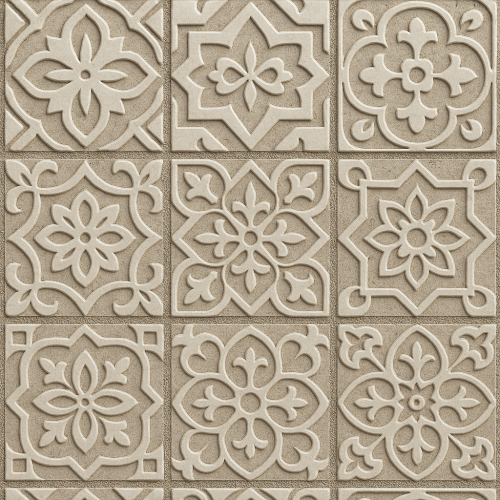
Acquiring high-quality mosaic textures for physically based rendering (PBR) workflows demands meticulous attention to detail and a nuanced understanding of both the material properties and the digital capture methods. Mosaic tiles, often composed of ceramic, glass, or stone, present unique challenges due to their intricate surface details, subtle variations in glossiness, and the complex interactions between tile surfaces and grout lines. The goal of acquisition is to produce a comprehensive set of texture maps—albedo, roughness, normal, ambient occlusion (AO), height, and occasionally metallic—that accurately represent the physical and optical characteristics of the mosaic in a form readily integrated into real-time engines or offline renderers like Unreal Engine or Blender.
Photogrammetry, when executed with precision, is one of the most effective techniques for capturing mosaic tile textures. The process begins with a methodical photographic capture under controlled lighting conditions to minimize shadows and specular highlights that could obscure surface detail. Using diffuse, polarized light sources arranged in a dome or ring setup helps flatten the illumination across the mosaic surface, allowing the camera to capture consistent albedo information without strong reflections or glare. A high-resolution DSLR or mirrorless camera, paired with a macro lens or a lens with minimal distortion, is essential to record the fine-grained patterns and subtle imperfections characteristic of ceramic glazes or stone finishes.
The photographic capture must include multiple angles and focal depths to ensure comprehensive coverage of the mosaic’s microstructure. Since mosaics often have raised edges and grout recesses, capturing parallax and depth cues is crucial to reconstruct accurate normal and height maps. To this end, overlapping images with approximately 60-80% coverage are recommended, accompanied by a calibrated scale reference to maintain dimensional accuracy during reconstruction. A tripod with a macro rail can improve consistency and focus stacking if necessary, particularly when capturing small tiles with high detail fidelity.
Post-capture, photogrammetry software such as Agisoft Metashape or RealityCapture generates high-density mesh models and orthophotos from the image sets. These outputs serve as the foundation for texture map extraction. The high-resolution mesh captures the micro-geometry, which is then baked into normal and height maps. Careful mesh decimation and retopology may be required to optimize geometry for engine usage without sacrificing detail in the baked maps. During baking, attention must be paid to the preservation of grout recesses and tile edges, as these features contribute significantly to realistic AO and height map outputs.
A critical step in photogrammetry-based acquisition is the calibration of albedo textures to remove baked-in lighting and shadow information. This can be achieved using neutral gray calibration targets photographed alongside the mosaic or by employing high dynamic range (HDR) environment maps to normalize diffuse color data. The goal is to isolate the intrinsic color of the tile surfaces, independent of illumination, ensuring physically plausible base color maps for PBR shading models.
High-resolution scanning offers an alternative or complementary approach, particularly when capturing the surface polish and micro-texture of ceramic tiles. Devices such as confocal microscopes, structured light scanners, or laser scanners provide sub-millimeter to micron-level surface detail, which is invaluable for creating micro-normal maps that simulate surface roughness variations. This data is especially beneficial for roughness and specular workflow calibration, as it captures the subtle undulations and polish marks typically present on glazed mosaics.
When employing scanning, it is advisable to scan both the tile surface and grout areas separately if possible, due to their differing material properties and scales of texture. Grout, often composed of cementitious compounds or epoxies, exhibits a rougher, more matte surface compared to the glazed tile, and capturing this contrast accurately informs the roughness and AO maps. Scanning captures the micro-roughness that influences specular reflectance and anisotropy, thereby improving the realism of reflections and highlights in engine shaders.
After acquisition, the raw data must be processed and integrated into a PBR texture set. Normal maps derived from photogrammetry or scanning are refined using high-pass filters and smoothing algorithms to remove noise while retaining critical edge detail. Height maps, crucial for parallax occlusion or displacement mapping, are generated by normalizing scanned depth data or photogrammetric mesh displacement. Ambient occlusion maps are baked from the high-poly mesh, focusing on the interplay between tile edges and grout recesses, which produce localized shadowing effects essential for depth perception in real-time rendering.
Roughness maps require particular care in calibration. Photographically derived roughness often carries unwanted specular highlights or reflections that need to be neutralized. Techniques such as polarized image capture or cross-polarization filters during photography help isolate diffuse reflectance, allowing for more accurate roughness extraction. In the absence of such filters, roughness maps can be inferred by analyzing the micro-geometry data from scans combined with controlled lighting captures, converting surface variance into roughness values. Since ceramic tiles can have mixed glossiness—glazed surfaces next to matte grout—separating these regions using masks during authoring improves shader fidelity. Metallic maps are typically unnecessary for ceramic mosaics but must be included if the mosaic incorporates metallic inlays or reflective materials.
To ensure seamless tiling, the captured textures must be carefully edited to avoid visible repetition and artifacts. Photogrammetry captures rarely produce tileable textures natively due to varying lighting conditions and perspective distortion. The workflow often involves cropping, edge blending, and texture synthesis techniques in software like Substance Designer or Photoshop. Micro-variation is introduced through procedural noise or subtle overlay textures derived from scanned micro-details to break uniformity and simulate natural wear, dirt, or manufacturing inconsistencies. These micro-variations enhance realism in tiled surfaces, preventing the “patterned” look common in naive tiling.
Integration into engines such as Unreal Engine or Blender requires further optimization. Texture resolutions should balance fidelity and performance, typically ranging from 2K to 4K depending on the visible scale of the mosaic. Mipmaps are generated with gamma-correct filtering to maintain accurate albedo color transitions. Normal maps are stored in the appropriate color space (usually tangent space, encoded in standard RG channels) and compressed judiciously to preserve detail without bloating memory. Roughness maps are linearized and combined with AO maps where appropriate to reduce shader complexity.
Finally, practical considerations for real-time usage include the creation of mask maps that combine roughness, metallic, ambient occlusion, and height data into packed textures, optimizing shader input slots and draw calls. In Blender’s node-based shader editor or Unreal Engine’s material graph, these packed maps streamline material creation, allowing dynamic adjustment of roughness or AO intensity via parameters. When creating mosaic textures from photogrammetry or scanning, maintaining an organized pipeline that tracks calibration targets, scale references, and lighting setups is essential for reproducibility and quality assurance.
In summary, acquiring mosaic textures for PBR workflows is a complex interplay of capturing albedo, normal, roughness, AO, and height data through high-fidelity photogrammetry and scanning, followed by careful calibration and optimization. Success hinges on meticulous lighting control, precise scale calibration, and thoughtful post-processing to produce authentic, tileable textures that accurately convey the nuanced material properties of ceramic mosaics within modern rendering engines.
Developing mosaic tile textures that convincingly replicate the intricate tessellated patterns and rich color variations found in ornamental designs demands a nuanced approach combining procedural generation with photographic input. This hybrid workflow capitalizes on the strengths of both methods, enabling the creation of versatile, high-fidelity PBR materials suitable for real-time rendering engines such as Unreal Engine and offline software like Blender’s Cycles or Eevee. The focus is to produce a comprehensive set of texture maps—albedo, roughness, normal, ambient occlusion (AO), height, and occasionally metallic—each calibrated to contribute coherently to the final material’s physical accuracy and visual complexity.
Starting with the albedo or base color, the primary challenge lies in capturing the tessellation’s repetitive yet non-uniform character. Procedural generation excels here by allowing parametric control over tile shapes, grout lines, and color distribution. One effective approach is to utilize node-based tools or scripting environments (e.g., Blender’s Geometry Nodes, Substance Designer’s graph editor) that can algorithmically generate tile outlines with adjustable edge profiles and spacing. This permits seamless tiling through UV wrapping without obvious repetition artifacts. Incorporating noise functions or Voronoi patterns modulated by masks can simulate the natural imperfections of hand-laid tiles, breaking uniformity while preserving pattern coherency.
Color variation is critical for authenticity. Procedural workflows should integrate multi-channel color ramps or palette nodes driven by spatial noise or tile ID indices. This enables subtle shifts in hue, saturation, and brightness across individual tiles, replicating the slight inconsistencies found in glazed ceramics or natural stone tesserae. When working with photographic sources, capturing high-resolution scans or photographs of real mosaic samples under controlled lighting conditions forms the basis of the albedo. These images must be carefully corrected for color consistency and normalized for exposure to avoid lighting baked into the texture. Photographs should be processed to isolate individual tiles or tile groups, either manually or using automated segmentation tools, allowing for extraction of clean tile samples that can be recombined into procedural layouts.
The roughness map demands equal attention. Procedurally, roughness can be derived from base tile parameters, where smoother glazed tiles have low roughness values with subtle noise overlays to simulate micro-scratches or wear, while unglazed or aged tiles exhibit higher roughness with patchy variations. Procedural noise layers such as fractal or cellular noise can be layered and masked to emulate surface defects or dirt accumulation near grout lines. For photographic workflows, roughness is often inferred from grayscale variations in the diffuse capture or through dedicated roughness captures using specialized lighting setups (e.g., cross-polarized photography). When unavailable, roughness can be synthesized by converting albedo images to grayscale and applying contrast adjustments combined with noise filters to approximate surface scattering characteristics. Calibration of roughness values relative to reference materials ensures that highlights and reflections behave realistically under engine lighting.
Normal maps are pivotal for conveying the subtle depth and relief inherent in mosaic tiles. Procedurally, normal maps can be generated by simulating tile edges, bevels, and grout recesses through height map construction followed by standard normal map conversion filters. Edge detection algorithms or signed distance fields within procedural tools can define grout boundaries, enabling the creation of crisp but organic normal transitions. Micro-variation in the normal map can be introduced through layered noise or micro-bump maps to simulate surface roughness at the geometric level, enhancing tactile realism. Photographic normal extraction typically involves photogrammetry or specialized normal map generation from height maps derived from displacement captures. It is crucial to fine-tune the strength and orientation of normals to avoid exaggerated shading that breaks immersion, particularly in tessellated surfaces where edges must blend smoothly.
Ambient occlusion (AO) maps provide shading cues that reinforce the spatial relationship between tiles and grout. Procedural AO can be approximated by simulating cavity occlusion around tile edges and grout lines, often using curvature or ambient occlusion nodes in graph-based tools. Layering AO from multiple scales—macro occlusion at tile boundaries combined with micro occlusion from surface roughness—improves depth perception. Photographic AO acquisition is less common but can be approximated in post-processing by baking AO from high-poly models or using ambient occlusion passes in 3D software, ensuring the AO map aligns perfectly with the tile geometry to prevent shading discrepancies.
Height maps underpin both displacement and normal map generation, offering fine control over physical relief. Procedural height maps for mosaics typically encode the tile surface elevation relative to grout depth, incorporating subtle undulations and edge bevels to break the planar monotony. These maps must be carefully scaled to match the intended physical thickness of grout and tile in the target engine. In Unreal Engine, tessellation or parallax occlusion mapping can leverage height maps for dynamic displacement effects, requiring optimization to balance visual fidelity with performance. Photographic height maps can be generated via photogrammetry or laser scanning, but often require cleanup and smoothing to remove noise and scanning artifacts. Calibration involves matching height map intensity to actual displacement values within the engine’s material editor, ensuring consistent shadow casting and silhouette definition without geometric distortion.
While metallic maps are generally unnecessary for ceramic or stone mosaics, they become relevant when authoring mosaics composed of metallic tiles or incorporating metal inlays. A procedural approach involves assigning binary or gradient metallic values based on tile type or pattern masks, while photographic workflows necessitate careful extraction of metallic regions from reference images and subsequent normalization to avoid over-reflective artifacts.
Tiling and seamlessness are paramount in PBR mosaics, given their repeated use over large surfaces. Procedural generation inherently facilitates seamless UV wrapping by designing patterns within tileable coordinate spaces and leveraging tile IDs for variation. Photographic textures require meticulous edge blending, often employing offset and clone stamping techniques, or creating texture atlases with carefully aligned grout lines. Utilizing triplanar projection in shader setups can mitigate UV seams but may introduce distortion, so it is best paired with well-constructed tileable maps.
To introduce micro-variation and avoid monotony in large tiled surfaces, authors should layer randomization effects—whether subtle shifts in roughness, color noise overlays, or normal map perturbations keyed to world position or object IDs. These variations prevent the eye from detecting repetition and lend a handcrafted quality to the material.
Calibration between maps is critical. For instance, the roughness map must correlate logically with the albedo’s specular characteristics; a highly reflective glazed tile must have low roughness paired with a bright, unsaturated albedo, while an unglazed tile should match higher roughness and muted albedo tones. Normal and height maps should align precisely to avoid shading conflicts, and AO must complement normal details without over-darkening or washing out features. Using engine viewport previews and physically based lighting setups is essential to evaluate these interactions dynamically.
When authoring mosaics for Unreal Engine, take advantage of the engine’s material editor to create layered shader effects combining base PBR inputs with detail maps for dirt and wear. Utilize virtual texturing or texture streaming to optimize memory usage, especially for large-scale mosaic surfaces. In Blender, procedural mosaics benefit from node groups encapsulating tile generation logic, allowing rapid iteration and integration with sculpted or modeled high-poly details for baking. Both platforms support baking ambient occlusion, curvature, and cavity maps from high-poly meshes to improve texture fidelity.
Optimization strategies include limiting texture resolution to what is perceptible at typical camera distances, using mipmaps to reduce aliasing, and compressing textures with appropriate codecs that preserve color fidelity and channel precision. Where possible, combine multiple maps into packed textures (e.g., roughness in the green channel, metallic in blue, AO in alpha) to reduce draw calls and improve performance.
In summary, the successful creation of PBR mosaic tile textures hinges on a carefully balanced procedural-photographic workflow that leverages parametric control for pattern generation and color variation, rigorous calibration across all texture channels, and mindful optimization for target rendering engines. This approach ensures that the resulting materials not only exhibit the complex tessellated aesthetics of mosaic art but also maintain the physically accurate shading and performance demands required in modern 3D production pipelines.
Creating physically based rendering (PBR) textures for mosaic surfaces demands a methodical approach centered on the distinct material qualities inherent to tiled patterns and their interstitial grout. Achieving photorealism hinges upon meticulously generating and refining the core texture maps—albedo, roughness, metallic, normal, and ambient occlusion—with a keen eye toward the interplay of materials that differ sharply in optical and tactile characteristics. This process begins with the precise capture or procedural authoring of base maps and extends through calibration and optimization tailored to real-time engines like Unreal Engine or offline renderers such as Blender’s Cycles.
The albedo map, often referred to as the base color map in PBR workflows, functions as the foundational layer for mosaic textures. Unlike diffuse maps from traditional pipelines, PBR albedo excludes shadows, highlights, and any baked lighting to maintain physically accurate reflectance data. For mosaics, this is critical because tile surfaces frequently exhibit subtle color variations and a degree of translucency or subsurface scattering depending on their material composition—ceramic, glass, stone, or metal. When capturing reference, high-resolution photographic scans or photogrammetry are preferred to record the nuanced color shifts and micro-patterns on individual tiles. If authoring procedurally, care must be taken to avoid uniform coloration; slight hue shifts and saturation variance between tiles introduce necessary micro-variation that prevents unnatural repetition when the texture tiles across large surfaces. It is equally important to isolate grout coloration, which typically presents a muted, desaturated tone with potential staining or dirt accumulation. This differentiation ensures the albedo map faithfully represents the mosaic’s two distinct material components without blending, allowing for targeted adjustments in subsequent maps.
Roughness maps hold particular significance in mosaic texturing due to the stark contrast between polished tile faces and the coarse grout. Tiles, especially glazed ceramics or polished stones, exhibit low roughness values—often below 0.3—yielding crisp, specular reflections with high glossiness. Grout, conversely, is inherently rough and matte, with roughness values near or above 0.7, scattering light diffusely and absorbing subtle environmental reflections. When generating roughness maps, it is advisable to begin with grayscale captures from specular or roughness-specific photography, or to author the map directly within substance-based tools or texture painting software. The map must faithfully encode the spatial distribution of roughness at the scale of individual tiles and grout lines. A common pitfall is over-smoothing this map, which leads to unrealistic blending of glossiness and loss of critical material contrast. To counter this, micro-variation within each tile’s roughness can be incorporated, representing surface imperfections such as minute scratches, glazing irregularities, or wear. Procedural noise overlays or hand-painted detail can simulate this heterogeneity, enhancing realism without significantly increasing texture resolution.
The metallic map, while often trivial in many organic or stone materials, can be pivotal when mosaic tiles incorporate metallic elements—gold leaf, brass inlays, or metal tesserae. This map is a binary or near-binary mask indicating conductive vs. dielectric surfaces. For typical ceramic or stone tiles, the metallic channel remains black (zero), but for metal tesserae, it should be white (one), ensuring correct specular response and energy conservation in the shader. If metallic tiles exhibit patina or oxidation, edge blending and graded metallic values can be employed to simulate these effects, though care must be taken to maintain physical plausibility. This map should be authored at the same resolution as the albedo and roughness maps and aligned precisely to maintain congruency between material types.
Normal maps are indispensable for recreating the subtle surface relief of mosaic tiles and grout that influence light scattering and silhouette definition. Tiles often possess microscale undulations, bevels, or slight curvature, while grout grooves introduce larger displacement-like features. High-fidelity normal maps can be generated through photogrammetry-derived mesh baking, height map conversion, or sculpting in tools such as ZBrush, followed by baking with software like xNormal or Blender’s bake system. Achieving the correct balance of normal map strength is crucial; over-exaggeration can produce artificial sharpness and highlight artifacts, while under-emphasis flattens the texture’s tactile quality. When authoring normals for mosaic textures, pay special attention to grout lines, which should exhibit a recessed profile consistent with the tile thickness and mortar depth. Additionally, introducing minor normal variation within tiles—simulating glazing imperfections or chipping—adds photorealistic complexity. For engine implementation, normal maps must be converted to the appropriate format and color space (usually tangent space normal maps stored with Y-inverted channels depending on the engine) and tested under relevant lighting conditions.
Ambient occlusion (AO) maps simulate occlusion of indirect light in crevices and recesses, enhancing depth perception and grounding the mosaic in its environment. For mosaics, AO is especially effective in grout lines and tile edges where light penetration is minimal. AO maps can be baked from high-resolution geometry using tools like Marmoset Toolbag, Blender, or Substance Painter. However, care must be taken to avoid baked AO artifacts caused by overlapping geometry or inconsistent UV layouts. Additionally, AO maps should complement rather than replace real-time global illumination; they are often multiplied over the albedo or integrated into the base color in shaders to subtly darken occluded areas. In procedural workflows, AO can be enhanced with curvature maps or cavity maps to accentuate sharp edges and grout recesses, further enriching visual fidelity. Calibration of AO intensity in the engine is necessary to prevent over-darkening, which can flatten the appearance or skew material perception.
Height maps or displacement maps, while not strictly part of every PBR workflow, are beneficial for mosaic textures when tessellation or parallax occlusion mapping is used to simulate grout depth and tile relief on low-poly surfaces. Height maps encode scalar elevation data that can be derived from the same sources as normal maps or sculpted manually to exaggerate grout gaps or tile bevels. In engines like Unreal Engine, height maps enable dynamic displacement effects that respond to view angle, enhancing realism without increasing mesh complexity. However, height map resolution and range must be carefully balanced to avoid popping artifacts or unnatural silhouettes. When used in Blender’s Cycles, displacement maps enable physically accurate shading and shadowing but require supporting geometry subdivisions or adaptive subdivision for optimal results.
Tiling and texture repetition represent a critical consideration in mosaic PBR authoring. Given the inherently repetitive nature of mosaic patterns, it is essential to introduce micro-variation and break uniformity to prevent obvious tiling artifacts. Strategies include randomizing tile colors slightly within the albedo map, varying roughness and normal detail subtly between tiles, and layering procedural noise or dirt overlays. Additionally, UV layouts must be optimized to maximize texel density on grout lines and tile edges, where detail is most visually significant. In engines like Unreal, using runtime virtual textures, texture atlases, or texture arrays can assist in managing large mosaic surfaces efficiently while preserving material variation.
Calibration and optimization of PBR maps are necessary to ensure they interact correctly with engine lighting models. For example, albedo maps should be gamma-corrected (linearized) before import, and roughness maps inverted or adjusted according to the engine’s shader expectations. Normal maps must be checked for channel orientation and compression artifacts. Testing under varied lighting—directional, HDRI, point lights—is essential to validate that the material responds realistically, with sharp highlights on polished tiles and diffuse scattering on grout. In Blender, viewport shading modes can preview these interactions, while Unreal Engine’s material editor provides real-time feedback for iterative adjustments.
Finally, practical tips for mosaic PBR texturing emphasize the importance of maintaining consistent scale across all maps to preserve coherence in lighting and shading. Leveraging multi-channel texture packing—for instance, combining roughness, metallic, and ambient occlusion into a single texture’s RGB channels—can optimize memory usage without sacrificing quality. When authoring, keeping grout and tile materials modular allows for easier adjustments and reusability across projects. The nuanced interplay between the glossy, reflective tile surfaces and the matte, rough grout necessitates a disciplined approach to map creation that respects the physical properties of each material, facilitating believable, immersive mosaic renderings.
FAQ
What is covered in this guide?
This guide explains Expert Guide to Seamless PBR Mosaic Tile Textures for Realistic 3D Environments with practical notes for seamless PBR materials, texture setup, and production use.
Can I use these texture techniques in Blender, Unreal Engine, and Unity?
Yes. The workflow focuses on standard PBR maps and tileable materials that can be used in Blender, Unreal Engine, Unity, archviz, games, and VFX pipelines.
Where can I find textures for this workflow?
Use the AITextured texture library and the related texture links on this page to find seamless PBR materials and preview them before download.
Related Textures
 Procedural Lime Plaster Wall PBR Texture
 Procedural Stamped Sidewalk Concrete PBR Texture
 Procedural Fine Asphalt Road PBR Texture
 Procedural Pitted Concrete PBR Texture
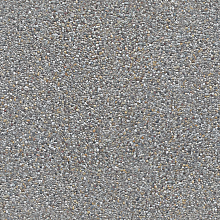 Seamless Concrete Pebble PBR Texture in 4K Resolution
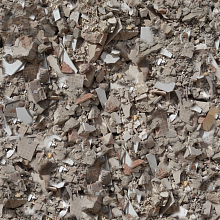 Seamless PBR Concrete Rubble Texture with Debris and Fragments
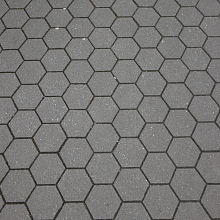 Seamless Hexagonal Concrete Tile PBR Texture 4K
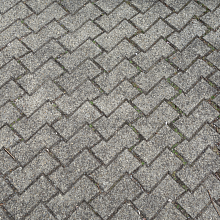 Realistic Concrete Paving Brick Pattern Texture