Expert Guide to Seamless PBR Wallpaper Textures for Realistic 3D Projects
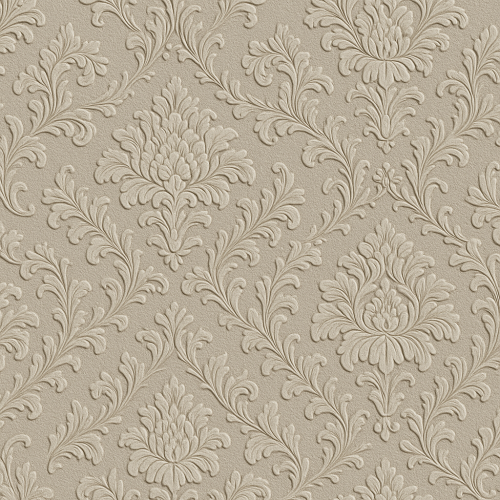
Acquiring high-quality wallpaper textures for physically based rendering (PBR) workflows demands a rigorous approach to capturing surface detail, color fidelity, and micro-variation that collectively inform the shader inputs—albedo, roughness, normal, ambient occlusion (AO), and height maps. Wallpaper materials present a unique challenge due to their often subtle embossed patterns, intricate weaves, and varying finishes, which can range from matte paper to semi-gloss vinyl coatings or metallic foils. Accurately documenting these surface characteristics requires deliberate choices in acquisition technology, lighting setups, and calibration strategies to ensure the textures integrate seamlessly within engines like Unreal Engine or Blender’s Shader Editor.
When considering scanning technologies, flatbed scanners and handheld 3D scanners offer complementary strengths. Flatbed scanners can deliver exceptionally high-resolution albedo captures due to their controlled illumination and tight optical path, minimizing distortion and lens aberrations. This is particularly beneficial for wallpaper samples where color accuracy and subtle texture gradients are crucial. However, flatbed scanners inherently capture only color data and cannot directly extract normal or height information, meaning additional steps are necessary to generate these maps. Techniques such as height-from-shading or digital sculpting from grayscale displacement maps derived via photometric data often supplement the base scan.
Handheld 3D scanners, particularly those employing structured light or laser triangulation, enable direct acquisition of accurate surface geometry, capturing micro-relief that is vital for generating normal and height maps. For wallpaper with embossed patterns or textured weaves, this can reveal the subtle undulations that contribute to believable specular reflections and normal map detail. The trade-off is that handheld scanners often have lower optical resolution for color capture compared to photographic methods and can introduce noise or surface artifacts that require post-processing. Furthermore, specular highlights on glossy or metallic wallpaper surfaces can interfere with scanner accuracy, necessitating surface matting sprays or polarization filters to mitigate reflective noise.
Photogrammetry stands out as a versatile and increasingly accessible method for capturing wallpaper textures, offering a balance between high-fidelity color capture and the ability to reconstruct detailed geometry. The technique involves capturing multiple overlapping photographs from different angles under controlled lighting conditions. When properly executed, photogrammetry can yield dense point clouds and textured meshes that provide the basis for generating normal, height, and ambient occlusion maps in addition to the albedo. Critical to success is the choice of camera and lens: a full-frame or APS-C sensor with a high-quality macro lens is preferred to maximize resolution and minimize distortion. Calibration using color charts and gray cards during the shoot ensures accurate color reproduction, which is essential for physically based albedo maps.
Lighting setup during photogrammetry acquisition requires careful consideration to balance shadow definition and highlight control. Diffuse, soft lighting minimizes harsh shadows that can confuse reconstruction algorithms, but some directional lighting is necessary to resolve surface relief. A common approach is to use a light dome or multiple diffused light sources arranged to evenly illuminate the wallpaper sample with subtle shadows that accentuate embossing or texture without overwhelming the base color. Polarizing filters on both the light sources and camera lens can reduce specular glare, improving the quality of color data and the integrity of surface detail in the reconstruction. Additionally, capturing a set of photographs under raking light—light at a low grazing angle—can be valuable for extracting height maps through image-based techniques like shape-from-shading or heightmap baking.
The physical preparation of wallpaper samples prior to scanning or photography is equally important. Samples should be mounted flat on a rigid, non-reflective surface to avoid warping and specular contamination. For rolled or fragile wallpaper, flattening under glass or acrylic plates can help maintain geometry without introducing distortion, but care must be taken to avoid additional reflections. In cases of metallic or heavily glossy wallpaper, applying a removable matte coating spray can reduce specular interference during scanning or photogrammetry, though this may slightly alter color and must be accounted for in post-processing.
Once the raw data has been acquired, the processing pipeline for wallpaper textures must focus on generating the full suite of PBR maps with physical accuracy. Albedo maps require color calibration and normalization to remove shadows and specular highlights, often through techniques like color space linearization and desaturation of specular regions. Height and normal maps can be derived either directly from scanned geometry or computationally from grayscale displacement maps obtained via photometric methods or shape-from-shading algorithms applied to raking light images. Careful attention should be paid to the scale and intensity of these maps to preserve fine micro-variations, which are critical for realistic specular behavior and light scattering in real-time engines.
Ambient occlusion maps for wallpaper are often subtle due to the relatively shallow relief, but baking or generating AO from high-resolution meshes can enhance visual depth in PBR shading. Where micro-variation in roughness is significant—such as the difference between matte paper and glossy printed patterns—procedural roughness masks or hand-painting may augment scanned data to emphasize these distinctions. Metallic maps are typically not applicable unless the wallpaper incorporates foil or metallic finishes; in such cases, precise reflectance measurement with gonioreflectometers or calibrated HDRI captures can inform accurate metallic and specular inputs.
Optimization for real-time engine use involves creating seamless, tileable textures that maintain continuity across UV boundaries without visible repetition. Wallpaper’s inherently repetitive nature benefits from tiled textures, but subtle micro-variation must be introduced to avoid artificial uniformity. Techniques include blending multiple scanned samples, adding procedural noise or detail masks in shader graphs, or using detail maps layered over the base albedo and roughness textures. In Unreal Engine, for example, leveraging Material Functions and Runtime Virtual Texturing can optimize texture memory and enable dynamic blending of variation maps. Blender’s node-based shader system allows similar workflows, combining baked PBR maps with procedural detail to replicate the tactile complexity of wallpaper surfaces.
In summary, acquiring wallpaper textures for PBR pipelines requires a multi-modal approach tailored to the material’s optical and geometric properties. High-resolution color capture via flatbed scanning or calibrated photogrammetry provides the foundation for accurate albedo maps, while structured light scanning or raking light photography aids in retrieving fine surface geometry for normal and height maps. Meticulous lighting design, sample preparation, and calibration underpin the fidelity of captured data. Subsequent processing must carefully extract and optimize PBR maps, ensuring seamless tiling and preservation of micro-variation. When integrated thoughtfully into real-time engines or offline renderers, these acquisition techniques yield wallpaper textures that convincingly convey the tactile richness and nuanced reflectance behavior essential for physically based shading.
Creating physically based rendered (PBR) wallpaper textures requires a nuanced integration of procedural generation and photographic editing to achieve both visual fidelity and practical usability in real-time engines such as Unreal Engine or offline renderers like Blender’s Cycles. Wallpaper, as a surface material, presents unique challenges due to its repetitive nature, fine pattern details, and the subtle interplay between fabric or paper fibers and printed motifs. This section delves into the technical workflows underpinning the production of wallpaper PBR textures, emphasizing the acquisition and authoring of base color (albedo), roughness, normal, ambient occlusion (AO), height, and metallic maps, alongside strategies for tiling, micro-variation, calibration, and optimization.
The foundation of a convincing wallpaper texture begins with high-quality photographic source material, typically acquired under controlled, diffuse lighting to minimize specular hotspots and shadows that can interfere with seamless tiling and physically based shading. A flatbed scanner or a macro lens on a DSLR camera mounted on a copy stand is often preferred to capture the wallpaper surface at sufficient resolution, preserving the intricate details of the paper grain, ink deposition, and any embossing or relief patterns. The photographic base color map serves as the albedo input for the PBR shader and must be color-corrected and desaturated of any lighting information, as PBR workflows rely on neutral albedo to achieve accurate light response.
Extracting and authoring the roughness map from photographic data demands careful consideration. Wallpaper surfaces often exhibit subtle variation—from matte paper fibers to glossy printed inks or varnished finishes. To isolate these variations, a common approach is to convert the source image to grayscale and then manually or semi-automatically enhance the contrast between rough and smooth areas. Tools like Photoshop’s high-pass filters combined with levels adjustments or frequency separation techniques allow for the elevation of micro-roughness details. Additionally, custom mask creation through selective channel isolation or hand-painting can help emphasize features such as embossed patterns or varnished highlights. Procedural noise generators, such as Perlin or Worley noise, can be layered to introduce controlled micro-roughness variation, reducing the visual repetitiveness of the roughness map when tiled.
Normals and height maps are critical for conveying the tactile qualities of wallpaper, especially embossed or textured surfaces. Photogrammetry-based normal map extraction, using tools like xNormal or Substance Designer’s height-to-normal filters, can effectively translate subtle surface undulations into normal information. When photographic height data is unavailable or insufficient, procedural generation becomes invaluable. For instance, pattern geometry can be recreated as vector shapes or height fields in procedural software, where noise functions and displacement modifiers simulate paper grain or fabric weave underlying the printed design. Combining photographic height with procedural detail ensures the normal map captures both macro embossing and micro surface imperfections, enhancing realism under dynamic lighting.
Ambient Occlusion (AO) maps provide shading cues in crevices and folds and can be baked from high-poly models of the wallpaper pattern or approximated through procedural ambient occlusion generators. For flat wallpaper surfaces, AO often appears as subtle shadowing around embossed motifs or seams. Procedural AO can be synthesized by applying curvature and cavity masks within Substance Designer, feeding into the AO channel. While AO is generally a multiplicative factor on the final shading, calibrating its intensity is crucial; excessive AO can flatten the material’s appearance, whereas too little diminishes depth perception.
Metallic maps are typically minimal or unused for wallpaper textures unless simulating foil accents or metallic inks. In such cases, metallic values close to one are assigned selectively to highlight foil patterns, while the rest of the surface remains non-metallic (value zero). Procedural masking techniques enable the isolation of metallic areas based on pattern geometry or color thresholds, maintaining physical plausibility and preventing unrealistic light interactions.
Tiling and seamlessness represent a core technical challenge in wallpaper texture authoring. Repetitive wallpaper patterns, when sampled at scale, easily reveal tiling artifacts and pattern repetition, breaking immersion. Photographic textures rarely tile perfectly without visible seams or color shifts, necessitating careful editing. Techniques such as edge mirroring, offsetting combined with clone stamping, and frequency domain blending help produce seamless base color textures. For procedural components, tileable noise functions and pattern generators inherently support seamless repetition, which can be layered over or under photographic elements to mask repetition or introduce variation.
Micro-variation is key to avoiding the “flat” or artificial look common in tiled wallpaper surfaces. Introducing subtle shifts in hue, brightness, or pattern scale across tiles can break the monotony. This can be achieved procedurally by blending multiple noise layers with low amplitude variation into the base color and roughness maps or by using vertex painting and world-space triplanar projection within the engine to add localized variation without visible seams. In Unreal Engine, for example, vertex color masks combined with runtime material parameter collections allow artists to modulate roughness or albedo saturation dynamically, simulating natural wear or lighting inconsistencies.
Calibration of PBR maps against reference materials under standardized lighting conditions is essential for physical accuracy. Utilizing HDRI environments or calibrated light probes within Blender’s Eevee or Unreal Engine’s physically based rendering system allows iterative adjustment of roughness and normal intensities until the wallpaper exhibits believable reflectance and depth. Comparing rendered results to real-world photographs or color cards ensures the base color matches the intended material and that roughness and normals respond correctly to light direction and intensity. Calibration also involves verifying that height and normal maps do not produce exaggerated or flattened relief, which can disrupt silhouette or shadow casting.
Optimization is a practical consideration, especially for real-time applications where wallpaper often covers large surface areas. While 4K textures provide ample detail, employing channel packing—storing roughness, metallic, and AO in separate color channels of a single texture—reduces draw calls and memory overhead. Using mipmaps with appropriate sharpening preserves detail at close range while minimizing aliasing at distance. In Unreal Engine, leveraging virtual texturing or runtime texture streaming further optimizes performance without sacrificing visual quality. Procedural textures can be baked into texture maps to reduce shader complexity or combined with detail maps that add high-frequency noise only when viewed up close.
Finally, integration into engines like Unreal or Blender benefits from leveraging their native PBR workflows and material editors. In Unreal Engine’s Material Editor, connecting base color, roughness, normal, AO, and height maps into the corresponding material nodes ensures consistent shading behavior. Height maps can feed into tessellation or displacement for added depth on high-end platforms, while in Blender, the Principled BSDF shader provides a straightforward node setup that respects all PBR inputs. Using triplanar mapping and world-aligned coordinates mitigates UV stretching, especially when wallpaper is applied to complex geometries or large walls with limited UV space.
In summary, the authoring of wallpaper PBR textures is an exercise in balancing photographic authenticity with procedural flexibility. Photographic captures provide rich base color and fine detail, while procedural methods supply seamless tiling, micro-variation, and enhanced surface detail through height and roughness modulation. Calibration against real-world references and optimization for engine constraints complete the workflow, resulting in wallpaper materials that convincingly respond to light and scale without visual artifacts or performance penalties. Mastery of these techniques enables 3D artists and technical directors to produce wallpaper textures that elevate environmental realism in both real-time and offline rendering contexts.
Creating physically based rendering maps for wallpaper textures requires a precise balance between capturing surface detail and ensuring correct material response under diverse lighting conditions. Wallpaper as a material often exhibits subtle micro-variations—such as woven fabric patterns, embossed relief, or slight glossiness from coatings—that must be faithfully represented to achieve convincing realism in PBR workflows. The process begins with carefully acquiring or authoring the base color (albedo) map, which forms the fundamental visual identity of the wallpaper surface. Unlike purely colored materials, wallpaper albedo maps should avoid baked-in lighting or shadows to maintain accurate energy conservation during rendering. This necessitates capturing or generating diffuse color data devoid of specular highlights or ambient occlusion, often achieved through calibrated photography under diffuse lighting or procedural texturing workflows.
When photographing wallpaper samples, it is critical to use a neutral light source with a known color temperature, employing color calibration charts to correct white balance and exposure. Multiple images under uniform illumination can be stitched or tiled to produce seamless albedo textures. In procedural or hand-painted workflows, subtle hue and saturation variations mimic natural dye inconsistencies or printing artifacts, enhancing realism. The albedo must represent the diffuse reflectance of the surface in linear space since any gamma correction applied downstream can skew energy conservation and lead to inaccurate shading.
The normal map is central to conveying the fine geometric detail of the wallpaper surface without increasing mesh complexity. For wallpaper, this typically includes embossed patterns, fabric weaves, or subtle surface undulations. Generating the normal map can be approached through high-resolution scans of physical embossed samples using photogrammetry or structured light scanning, followed by baking normal data onto a low-poly mesh. When physical scanning is impractical, height maps derived from grayscale scans or hand-painted bump maps can be converted into normal maps using tools like xNormal, Substance Designer, or Blender’s node-based workflows. It is essential to calibrate the intensity of the normal map carefully, as excessive values can produce unrealistic shading artifacts, while insufficient detail leads to a flat appearance. The normal map must be tangent-space oriented to ensure compatibility with most modern engines, with attention paid to consistent handedness to avoid lighting inconsistencies.
Roughness maps define how microfacets on the wallpaper surface scatter reflected light, controlling the apparent glossiness and specular sharpness. For wallpaper, roughness varies significantly depending on material type—flat matte paper, satin finishes, vinyl coatings, or metallic foils—each requiring tailored roughness profiles. Roughness maps can be derived from the same source images used for albedo by isolating specular response or by capturing glossiness using specialized equipment such as gloss meters. When authoring roughness procedurally, noise functions and masks simulate micro-variation, reflecting real-world surface imperfections and wear. For instance, subtle roughness gradients around embossed patterns or edges can emulate the differential polishing or wear typical of wallpaper surfaces. It is advisable to keep roughness values within a physically plausible range (generally 0 to 1, where 0 is perfectly smooth and 1 is fully rough) and to avoid overly compressed or stretched roughness maps, which can cause rendering inconsistencies.
Height maps, sometimes referred to as displacement or bump maps, represent the macro surface variations of wallpaper, such as raised embossing or fabric texture. These maps complement normal maps by providing real geometric displacement when supported by the rendering engine or shader. Height information can be sourced from grayscale scans of embossed samples or generated digitally by converting normal maps or bump maps back into height data, though this inversion process requires careful calibration to prevent inversion artifacts or loss of detail. In game engines like Unreal Engine, height maps are often used in conjunction with tessellation or parallax occlusion mapping to add depth without excessive geometry cost. When authoring height maps, pay close attention to the scale and intensity of displacement to maintain consistency with the physical scale of the wallpaper pattern, as unrealistic displacement can break immersion.
Ambient occlusion (AO) maps are frequently integrated into PBR workflows to simulate self-shadowing in crevices and recessed areas of wallpaper patterns. While AO is not strictly a PBR parameter, it enhances perceived depth and contrast when multiplied with the albedo or combined in the shader. AO maps can be baked from high-poly mesh data or generated procedurally, but must be kept separate from diffuse color to maintain correct material energy behavior. In tiled wallpaper textures, AO should seamlessly tile and avoid harsh edges or repetition artifacts, which can be achieved through careful baking and blending techniques.
Metallic maps are generally not applicable for most wallpaper surfaces, which are predominantly dielectric materials. However, specialty wallpapers that incorporate metallic foils or reflective elements may require a metallic map to define conductive areas accurately. In such cases, the metallic map is typically a binary or grayscale mask indicating metallic versus non-metallic regions. Careful attention must be paid to ensure that metallic regions have near-zero roughness to reflect light properly, while non-metallic areas retain their characteristic diffuse and specular properties.
Tiling and pattern repetition are critical considerations in wallpaper PBR texture creation. Since wallpapers are large-scale surfaces often covering entire rooms, textures must tile seamlessly both horizontally and vertically. This seamless tiling extends not only to the albedo but also to normal, roughness, height, and AO maps to prevent visible seams. Achieving this requires precise alignment during texture acquisition or authoring, with edge-aware blending techniques to mitigate discontinuities. Additionally, introducing micro-variation or subtle noise overlays within the tile helps disrupt obvious repetition patterns, which is essential in large renderings where the tiled nature of the texture may otherwise become apparent.
Calibration of texture maps is a key step before deployment in rendering engines. Linear workflows must be maintained, with correct gamma spaces assigned to each map: albedo in linear sRGB, normal maps in tangent space, roughness and metallic maps as linear grayscale, and height maps normalized to the expected displacement range. Using standardized color profiles and verifying maps in engine preview modes—such as Unreal Engine’s material editor or Blender’s Eevee/Cycles viewport—ensures that the textures behave as intended under various lighting scenarios. Adjustments to map intensity or contrast should be made iteratively, referencing physically based lighting models.
Optimization is an often overlooked but vital aspect of wallpaper PBR texture creation. Since wallpapers cover large surfaces, texture resolution and file size directly impact rendering performance. Efficient use of texture atlases, mipmapping, and compression formats (such as BC7 or ASTC for modern GPUs) helps maintain visual fidelity while reducing memory footprint. When using displacement or tessellation, performance costs can escalate; thus, consider baking displacement into normal maps for lower-end targets or using parallax occlusion mapping selectively. Additionally, consider that overly high-frequency details may cause aliasing; incorporating appropriate mipmap chains and anisotropic filtering mitigates these issues.
In game engines like Unreal Engine, wallpaper materials benefit from layered material setups where base color and roughness maps are combined with detail textures or decals to simulate dirt, wear, or user-customizable patterns. Subsurface scattering is rarely needed for wallpaper unless simulating thin, translucent paper types, but if required, it should be carefully tuned to complement the base maps. Blender’s PBR shader nodes allow similar flexibility, with the principled BSDF shader serving as a robust default for wallpaper materials. Leveraging Blender’s texture painting tools and node-based procedural generation can expedite authoring of micro-variations and mask blending.
In summary, creating PBR maps for wallpaper surfaces demands a meticulous approach to capturing or authoring accurate albedo devoid of baked lighting, highly detailed normal maps that represent embossing or weave, appropriately calibrated roughness reflecting surface finish, and height maps for physical displacement when supported. Ambient occlusion serves as a valuable enhancement but must be kept separate from the albedo. Seamless tiling and subtle micro-variation prevent noticeable repetition artifacts over large surfaces. Calibration to standard color spaces and optimization for target rendering engines ensure that wallpaper textures maintain their intended appearance and performance in a physically based rendering environment.
FAQ
What is covered in this guide?
This guide explains Expert Guide to Seamless PBR Wallpaper Textures for Realistic 3D Projects with practical notes for seamless PBR materials, texture setup, and production use.
Can I use these texture techniques in Blender, Unreal Engine, and Unity?
Yes. The workflow focuses on standard PBR maps and tileable materials that can be used in Blender, Unreal Engine, Unity, archviz, games, and VFX pipelines.
Where can I find textures for this workflow?
Use the AITextured texture library and the related texture links on this page to find seamless PBR materials and preview them before download.
Related Textures
 Procedural Lime Plaster Wall PBR Texture
 Procedural Stamped Sidewalk Concrete PBR Texture
 Procedural Fine Asphalt Road PBR Texture
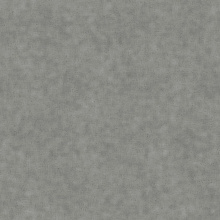 Procedural Pitted Concrete PBR Texture
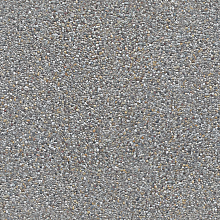 Seamless Concrete Pebble PBR Texture in 4K Resolution
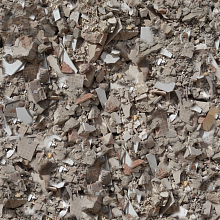 Seamless PBR Concrete Rubble Texture with Debris and Fragments
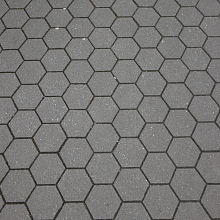 Seamless Hexagonal Concrete Tile PBR Texture 4K
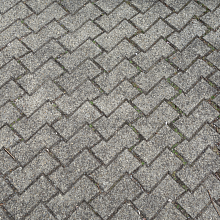 Realistic Concrete Paving Brick Pattern Texture