Harnessing Volumetric and Subsurface Scattering Maps in PBR Textures for Enhanced Realism
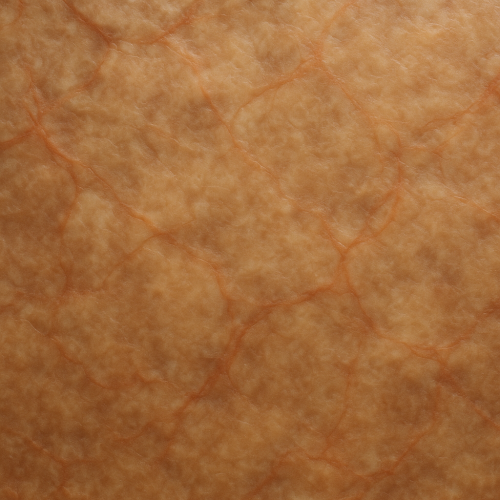
Physically Based Rendering (PBR) has revolutionized the way materials are simulated in real-time and offline rendering contexts, providing artists and technical directors with a robust framework to create photorealistic surfaces that respond consistently under varied lighting environments. Central to this methodology are the core PBR texture maps — albedo, roughness, normal, ambient occlusion, height, and metallic — each contributing distinct facets of a material’s visual and physical properties. However, as sophisticated as these maps are, they often fall short when representing complex light interactions within semi-translucent materials. This is where volumetric effects and subsurface scattering (SSS) emerge as indispensable components in pursuit of heightened realism.
Volumetric scattering pertains to the way light penetrates, scatters within, and exits a volumetric medium, fundamentally influencing the appearance of materials that are not purely opaque or reflective but possess some degree of translucency. Unlike surface-only models that assume light reflects or refracts at the interface, volumetric models consider the internal structure and composition of a material, enabling the simulation of subtle light diffusion and color bleeding effects that occur beneath the surface. Subsurface scattering, a specific form of volumetric interaction, characterizes the diffusion of light beneath a surface before it re-emerges, imparting a soft glow and depth that is critical for rendering organic materials such as human skin, marble, wax, and certain types of foliage.
The inclusion of volumetric and SSS maps in PBR workflows addresses a significant limitation of traditional PBR models: their inability to fully capture the translucency and internal light transport inherent to many real-world materials. For instance, human skin exhibits complex multilayered scattering due to epidermal and dermal layers, blood perfusion, and fine surface structures, which cannot be convincingly represented by albedo and normal maps alone. Similarly, materials like marble and wax possess semi-translucent qualities where light penetrates several millimeters before scattering, influencing color saturation, specular highlights, and overall material warmth. Foliage, often composed of thin, fibrous structures, benefits from volumetric models to simulate light transmission and subsurface color variation, enhancing realism especially under backlit conditions.
From a technical perspective, integrating volumetric and subsurface scattering maps into PBR pipelines requires an understanding of how these effects complement and extend the standard texture sets. The albedo map, which defines the base color of a material, must be carefully calibrated against SSS maps to avoid color bleeding artifacts or unnatural saturation. Typically, the albedo should represent the diffuse reflectance exclusive of subsurface effects, while the SSS map encodes parameters such as scattering radius, absorption coefficients, or scattering profiles tailored to the material’s optical properties. For example, in authoring skin textures, artists often separate epidermal and subdermal layers into distinct subsurface maps that define how light penetrates and scatters differently across layers, facilitating more nuanced control in rendering engines.
Acquisition of volumetric and subsurface scattering data can be approached through several means. Empirical measurement using devices like integrating spheres and multi-spectral cameras provides highly accurate scattering profiles but is often impractical for typical production pipelines. Consequently, most artists rely on a combination of physically inspired procedural textures, hand-painted maps, and photogrammetric captures refined through careful calibration. Techniques such as subsurface profile baking, where light transport simulations in high-resolution volumetric models are baked into 2D SSS maps, are common. Additionally, leveraging micro-variation in scattering parameters across a surface—akin to roughness or height map detail—prevents uniform translucency and enhances realism by introducing subtle heterogeneity, mimicking natural material imperfections.
Tiling and micro-variation remain critical considerations when authoring volumetric and SSS maps, particularly for large surfaces or assets intended for real-time engines like Unreal Engine or Blender’s Eevee and Cycles. Unlike traditional albedo or normal maps, SSS parameters must be carefully tiled to avoid visible repetition that would break immersion. This often entails layering noise or detail maps that modulate the scattering intensity or radius at a micro scale, thereby maintaining a natural, stochastic appearance. Moreover, balancing the tiling frequency with the underlying geometry’s scale ensures that the volumetric effect respects the material’s physical dimension, avoiding unnaturally sharp transitions or blurred scattering.
Calibration of volumetric and subsurface scattering parameters within PBR workflows is a nuanced process that demands both artistic intuition and scientific rigor. It involves iterative testing under diverse lighting conditions to fine-tune scattering radii, absorption values, and phase functions that dictate how light diffuses anisotropically within the material. This calibration is often conducted within target rendering engines, where real-time feedback enables artists to optimize maps for performance and fidelity. For instance, Unreal Engine’s subsurface profile system allows fine-grained control over scatter distance and falloff, facilitating realistic skin rendering by simulating blood flow and melanin concentration effects. Blender’s Principled BSDF shader similarly supports SSS parameters and volumetric scattering, providing artist-friendly controls that integrate seamlessly with existing PBR texture inputs.
Optimization is paramount when incorporating volumetric and subsurface scattering maps into real-time workflows, as volumetric light transport is computationally intensive. Efficient map encoding strategies, such as packing multiple scattering parameters into single texture channels or leveraging lookup tables (LUTs), reduce memory bandwidth while preserving fidelity. Level of detail (LOD) systems can dynamically adjust scattering complexity based on camera distance, minimizing performance costs without sacrificing visual quality. Furthermore, hybrid approaches that blend screen-space subsurface scattering with precomputed volumetric data offer a practical compromise between accuracy and speed, particularly important in interactive applications and game engines.
Practical authoring tips emphasize maintaining consistency across the entire PBR texture stack when integrating volumetric and SSS maps. Artists should ensure that the base albedo and roughness maps do not conflict with subsurface parameters; for instance, overly glossy surfaces may require attenuated scattering to prevent unrealistic highlights. Normal and height maps continue to influence light directionality and surface detail, which in turn affect scattering patterns, underscoring the need for a holistic approach. Ambient occlusion maps complement SSS by darkening crevices where light penetration is naturally limited, enhancing depth perception and material complexity.
In summary, volumetric and subsurface scattering maps represent an essential evolution in PBR texturing, enabling the authentic simulation of light behavior within translucent materials. Mastery of these maps requires a deep understanding of light-material interactions, precise calibration, and thoughtful integration with existing PBR workflows. As rendering engines continue to advance, offering more sophisticated subsurface and volumetric shading models, the role of these texture maps will only grow in importance, empowering artists and technical directors to push the boundaries of realism in digital material creation.
Capturing accurate volumetric and subsurface scattering (SSS) data for physically based rendering (PBR) textures is a nuanced challenge that demands a confluence of precise acquisition techniques, calibration workflows, and thoughtful integration with standard PBR maps. Unlike conventional surface parameters—such as albedo, roughness, normal, ambient occlusion, height, and metallic—volumetric and SSS data represent the light’s interaction beneath the material’s surface, requiring specialized methodologies to faithfully replicate these subtle optical phenomena. For the advanced artist or technical director aiming to elevate realism, understanding how to gather or procedurally generate these maps is crucial.
The first avenue for acquiring volumetric and SSS information lies in controlled photogrammetry setups augmented with targeted lighting conditions. Traditional photogrammetry workflows excel at capturing surface geometry and diffuse albedo but fall short in conveying subsurface light transport. To circumvent this, artists often employ multi-spectral or multi-angular capture rigs equipped with directional, polarized, and backlit illumination sources. By photographing the subject from multiple angles under varying lighting intensities—particularly using subsurface-penetrating wavelengths such as near-infrared—one can infer the scattering characteristics beneath the surface. This approach mandates precise camera calibration to mitigate parallax errors and maintain consistent exposure, ensuring that the subtle translucency cues are preserved. For example, photographing a human ear or a wax sculpture with a ring light positioned behind or to the side can reveal the extent and color bleed of subsurface scattering, data which can then be extracted via image differencing methods or custom shader analysis.
Specialized scanning equipment further refines volumetric and SSS capture by moving beyond passive imaging into active illumination and measurement techniques. Devices such as time-of-flight cameras, structured light scanners, and hyperspectral imagers can quantify how light diffuses through a material volume. Time-of-flight systems measure the delay of reflected light pulses, providing depth and indirect translucency information that can inform volumetric scattering profiles. Meanwhile, hyperspectral scanners capture reflectance data across a broad spectrum, enabling decomposition of surface albedo from subsurface absorption coefficients. Integrating this data into a PBR workflow requires converting raw spectral or temporal information into usable texture maps—often in the form of scattering albedo, mean free path length, and phase function parameters. This process is computationally intensive and typically involves custom software pipelines or plugins compatible with engines like Unreal Engine or Blender’s Cycles. For instance, exporting scattering profiles as texture maps aligned with the standard PBR UV layout facilitates direct plug-and-play with subsurface scattering shaders, allowing artists to maintain consistency with existing roughness and normal maps.
Where high-end scanning setups are not feasible, procedural generation techniques provide a powerful alternative for approximating volumetric and SSS effects. Procedural algorithms can synthesize scattering maps by analyzing existing texture sets—leveraging albedo and roughness variance to drive subsurface parameters. Artists often use noise functions and layered gradients to mimic the optical density variations found in organic materials such as skin, marble, or leaves. These procedural maps can be fine-tuned to introduce micro-variation, which is essential for breaking up uniform translucency and simulating the heterogeneous nature of real-world materials. In Blender, for example, the node-based shader editor allows the construction of procedural volumetric scattering networks that interact dynamically with base texture maps, enabling rapid iteration without reshooting or rescanning. This method also supports seamless tiling, crucial for large surface areas where texture repetition can betray artificiality. Artists should calibrate procedural parameters against reference captures or photographs to ensure plausible scattering distances and color shifts, preserving physical accuracy.
Calibration is a pivotal step bridging acquisition and final texture integration. To align volumetric and SSS maps with the traditional PBR stack, artists must normalize scattering intensities relative to the albedo and roughness maps. This often involves iterative test renders in the target engine, adjusting scattering coefficients and anisotropy parameters to match observed subsurface color bleeding and translucency under various lighting conditions. In Unreal Engine, the subsurface profile system allows for detailed control over scattering behavior, where artists can input custom scattering albedo and mean free path maps to drive material responses realistically. Similarly, Blender’s Principled BSDF shader includes subsurface scattering parameters that can be linked to texture maps, facilitating fine-grained control over scattering radius and color. Ensuring consistent scale between the height and normal maps and the subsurface scattering distances is essential to prevent visual artifacts such as shadow detachment or translucency mismatch.
Optimization is another critical consideration, especially when dealing with volumetric data, which tends to be more computationally demanding than standard surface textures. Artists should prioritize baking subsurface scattering parameters into low-frequency texture maps rather than relying on expensive real-time volumetric calculations. Techniques such as pre-integrated scattering profiles or texture atlasing can reduce memory footprint and improve shader performance. When working within game engines, it’s advisable to leverage engine-specific subsurface scattering profiles that can be referenced by multiple materials, allowing reuse and batching. Additionally, artists should compress volumetric and SSS maps carefully, balancing fidelity with performance—lossy compression can introduce banding in translucency or color shifts that undermine photorealism.
In practice, combining volumetric and subsurface scattering data with traditional PBR maps demands a holistic approach. For example, integrating height maps with scattering profiles can simulate subtle light penetration changes along surface micro-geometry, enhancing realism in materials like wax or human skin. Similarly, coupling roughness maps with volumetric scattering can influence the perceived softness or sharpness of translucency edges. Artists should also consider environmental lighting conditions and the rendering engine’s capabilities; physically based engines like Unreal Engine 5 support advanced subsurface scattering models that respond adaptively to global illumination and dynamic lights, whereas offline renderers like Blender’s Cycles provide more control at the cost of render time.
Ultimately, the acquisition and creation of volumetric and SSS maps represent a sophisticated extension of the PBR texturing pipeline. By leveraging a combination of photogrammetry with specialized lighting, active scanning hardware, and procedural authoring, artists can capture the complex interplay of light within materials that traditional PBR maps omit. When carefully calibrated and optimized for real-time or offline engines, these data enrich the visual fidelity of digital assets, enabling surfaces to convincingly emulate the subtle translucency and internal scattering that define natural materials. Mastery of these techniques not only advances technical artistry but also deepens the narrative potential of 3D assets through their enhanced tactile realism.
In physically based rendering workflows, volumetric and subsurface scattering (SSS) maps have emerged as indispensable components for achieving material realism beyond the surface interaction of light. Their integration into traditional PBR texture sets—comprising albedo, roughness, normal, ambient occlusion (AO), height, and metallic maps—demands a nuanced approach that balances physical accuracy with practical authoring constraints. The process of creating and calibrating volumetric and SSS maps begins with understanding their distinct roles within the light transport model and extends through precise alignment with existing texture channels, ensuring consistent behavior across renderers such as Unreal Engine and Blender’s Cycles or Eevee.
Volumetric maps primarily encode parameters governing light absorption, scattering coefficients, and phase functions within a material’s volume, effectively simulating how photons penetrate and diffuse through translucent media. Meanwhile, subsurface scattering maps typically define the spatial variation in scattering radius, subsurface color, and sometimes density, modulating the characteristic “glow” observed in organic and soft materials. Unlike the more surface-bound albedo and roughness maps, these volumetric and SSS maps operate in a domain that requires careful calibration to physical units or perceptually plausible approximations, often derived from measured data or heuristic authoring.
The acquisition or authoring of volumetric and SSS maps can be approached through multiple methodologies. Photogrammetry and multispectral capture methods, though technically demanding, can yield volumetric scattering parameters by analyzing light transport in controlled environments. However, such data is rarely accessible in typical production pipelines. Instead, artists frequently resort to procedural generation, hand-painting, or the use of specialized software such as X-Rite’s Munsell tools or dedicated subsurface scattering simulators embedded in tools like Substance Designer or Mari. These software packages enable the derivation of scattering maps either procedurally or via integration of measured material properties, allowing fine control over scattering radius and absorption spectra. For volumetric absorption, artists often craft grayscale or RGB textures representing extinction coefficients, carefully tuned to simulate materials like skin, wax, or marble, where internal light attenuation is crucial.
A critical challenge arises when integrating these volumetric and SSS maps with the traditional PBR texture stack. Albedo maps in PBR workflows denote the diffuse reflectance at the surface—effectively the light reflected without subsurface contribution—while roughness and metallic maps govern microfacet reflectance behavior. The presence of subsurface scattering complicates this model, as the apparent color and brightness of a material at the surface are partially the result of light re-emitted after volumetric transport. Consequently, a direct overlay of subsurface color onto albedo textures without compensation can result in exaggerated brightness or color shifts, breaking energy conservation principles fundamental to PBR.
To address this, a common calibration strategy involves separating the intrinsic surface albedo from the subsurface color contribution. This often requires artists to desaturate or darken the albedo texture to account only for surface reflection, while the subsurface scattering map encodes the color and scattering radius responsible for internal light transport. In practice, this can mean authoring the albedo map to exclude “subsurface bleed” colors—such as the reddish tones typical in skin—allocating that chromaticity exclusively to the scattering map. This separation aligns well with PBR shader models, such as Unreal’s subsurface profile system or Blender’s principled BSDF, which expect physically plausible inputs to maintain energy conservation and realistic shading.
Calibration also extends to matching the scale and units of scattering parameters to the rendering engine’s expectations. For instance, Unreal Engine’s subsurface profile requires scattering radius values in centimeters, whereas Blender’s subsurface scattering radius is normalized or specified in Blender units, necessitating conversion during texture export or shader parameter setup. Artists must therefore not only author scattering maps with correct coloration but also ensure their spatial scale corresponds accurately to the model’s real-world dimensions. Tiling and micro-variation techniques can further complicate this calibration. While traditional PBR maps rely heavily on tiling to optimize texture memory and break uniformity, volumetric and SSS maps demand subtle micro-variation to avoid repetitive patterns that become visually jarring under subsurface lighting. Procedural noise overlays or detail masks can be used judiciously to introduce stochastic micro-variations in scattering parameters, imbuing materials with natural heterogeneity without violating the physical basis of the scattering model.
An additional practical consideration is the optimization of volumetric and subsurface scattering maps within the constraints of real-time engines. These maps often require additional texture slots or channels, increasing memory footprint and bandwidth usage. Combining scattering parameters into fewer channels or leveraging packed texture formats—such as placing scattering radius in the alpha channel of an existing texture—can mitigate resource costs. Moreover, artists should consider the perceptual sensitivity of scattering parameters: fine-tuning map resolution and compression settings to balance visual fidelity against performance. For example, in skin rendering, the scattering radius map may benefit from higher fidelity to preserve subtle translucency effects, whereas for materials like jade or marble, lower resolution scattering maps can suffice given their more uniform volumetric properties.
Ensuring visual consistency across different renderers also necessitates iterative calibration workflows. Differences in subsurface scattering implementations—such as the choice between dipole approximation, screen-space SSS, or ray-traced volumetric scattering—can produce divergent results even with identical textures. Artists should therefore adopt a cross-platform approach, initially authoring scattering maps based on references and measured data, then validating and adjusting parameters within target engines. Tools like Shaderball previews in Substance Painter or live viewport rendering in Blender facilitate this iterative process, allowing real-time feedback on scattering intensity, color fidelity, and interaction with surface roughness and normals. Establishing a reference material library, complete with calibrated scattering parameters and corresponding PBR maps, can accelerate this process, serving as a benchmark for new assets.
Finally, the interplay between ambient occlusion and subsurface scattering deserves careful attention. While AO maps traditionally darken crevices to simulate occluded ambient light, in materials exhibiting strong subsurface scattering, excessive AO darkening can suppress the soft glow effect that volumetric transport imparts. Some workflows implement AO attenuation or separate AO maps for surface and subsurface components, ensuring that scattering effects remain visually prominent where appropriate. This nuanced modulation preserves the physical plausibility of the material, maintaining consistency across lighting conditions and views.
In summary, creating and calibrating volumetric and subsurface scattering maps within PBR workflows is a multi-faceted endeavor that demands both technical rigor and artistic sensitivity. By carefully authoring scattering parameters, decoupling surface albedo from subsurface color, attentively scaling scattering radii, and iteratively validating within target rendering engines, artists can harness these maps to unlock a higher level of material realism. This meticulous integration elevates the digital representation of organic and translucent materials, bridging the gap between measured physical phenomena and visually compelling artistry in real-time and offline rendering contexts alike.
FAQ
What is covered in this guide?
This guide explains Harnessing Volumetric and Subsurface Scattering Maps in PBR Textures for Enhanced Realism with practical notes for seamless PBR materials, texture setup, and production use.
Can I use these texture techniques in Blender, Unreal Engine, and Unity?
Yes. The workflow focuses on standard PBR maps and tileable materials that can be used in Blender, Unreal Engine, Unity, archviz, games, and VFX pipelines.
Where can I find textures for this workflow?
Use the AITextured texture library and the related texture links on this page to find seamless PBR materials and preview them before download.
Related Textures
 Procedural Stamped Sidewalk Concrete PBR Texture
 Procedural Fine Asphalt Road PBR Texture
 Procedural Pitted Concrete PBR Texture
 Seamless Concrete Pebble PBR Texture in 4K Resolution
 Seamless PBR Concrete Rubble Texture with Debris and Fragments
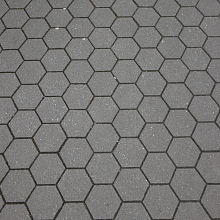 Seamless Hexagonal Concrete Tile PBR Texture 4K
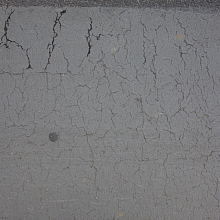 Cracked Asphalt Texture with Weathering