Integrating Multi-Scale Detail and UDIM Workflows for Hyper-Realistic PBR Textures
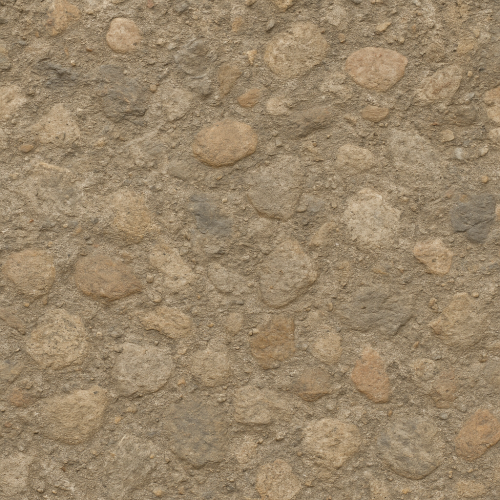
In the pursuit of hyper-realistic PBR (Physically Based Rendering) textures, the concept of multi-scale detail has emerged as a fundamental principle for achieving nuanced surface complexity that convincingly reacts to lighting and environmental conditions. Multi-scale detail encompasses the deliberate incorporation of texture information at various spatial frequencies—ranging from broad, large-scale surface variations down to fine-grained microstructure—within a single material representation. This layered approach to detailing is critical because real-world materials inherently exhibit complexity across multiple scales: from the overall color and form of a surface to subtle imperfections, micro-roughness, and even microscopic surface irregularities that influence reflectance and subsurface scattering. Without adequately capturing this hierarchy of detail, PBR textures risk appearing flat or artificial under dynamic lighting and close camera scrutiny.
At its core, multi-scale detail in PBR texturing involves the strategic organization and synthesis of diverse texture maps that contribute to the material’s appearance across these spatial scales. The albedo (diffuse) map must reflect the base color variability and pigmentation patterns visible at a macro level, while roughness maps encode the spatial distribution of microfacet orientations controlling specular reflection sharpness across both broad and fine scales. Normal maps add geometric perturbations to simulate surface irregularities, often layered to separate coarse shape features from micro-detail. Ambient occlusion (AO) maps provide contact shadowing cues predominantly at the meso-scale, enhancing depth perception and grounding. Height maps or displacement textures enable actual geometric variation, which can be subdivided into low-frequency forms for silhouette shaping and high-frequency noise for micro-reliefs. For metallic surfaces, the metallic map defines conductive versus dielectric regions, often requiring precise calibration to avoid visual artifacts at different scales.
The fidelity of multi-scale detail is critically dependent on accurate acquisition and authoring workflows. Photogrammetry and laser scanning technologies can capture high-resolution surface data encompassing multiple detail scales. However, raw scans usually require extensive processing, including retopology, texture baking, and channel packing, to distill this information into usable PBR maps. Texture artists often combine scanned data with hand-painted or procedurally generated elements to fill gaps, introduce artistic variation, and optimize performance. Crucially, the calibration between different maps—ensuring consistent scale, orientation, and alignment—is essential to prevent mismatches that break immersion. For instance, roughness variations must correlate logically with normal map microstructures; a smooth patch should not be paired with a noisy normal map, as it disrupts the physical plausibility of the material response.
One of the central challenges in managing multi-scale detail lies in texture resolution requirements. Capturing fine micro-variations alongside large-scale patterns necessitates extremely high-resolution textures, often exceeding the typical 4K or 8K dimensions. This is where UDIM (U-Dimension) workflows become indispensable in modern 3D pipelines. UDIM is a texturing scheme that breaks a model’s UV layout into multiple discrete tiles, each assigned a unique numerical identifier. This tiling strategy allows artists to allocate texture resolution dynamically, dedicating higher-resolution maps to areas requiring dense detail while economizing on less visible regions. By distributing texture data across UDIM tiles, it becomes feasible to maintain the integrity of multi-scale detail without overwhelming GPU memory or storage constraints.
In practical terms, UDIM workflows facilitate the layering and blending of multi-scale data with greater flexibility. Artists can author base color and roughness maps on one set of UDIM tiles representing macro-scale features, and overlay additional normal or height data on separate tiles optimized for micro-detail. This decoupling supports iterative refinement and modular updates, a boon for production pipelines dealing with asset revisions or platform-specific optimizations. Moreover, modern texturing tools such as Mari, Substance Painter, and Blender’s Texture Paint mode offer native UDIM support, enabling seamless painting, projection, and baking across large UV tile sets. This integration accelerates the workflow by allowing direct visual feedback on how multi-scale details interact under physically based lighting models.
When integrating multi-scale textures into real-time engines like Unreal Engine or offline renderers such as Blender’s Cycles, the UDIM approach aligns well with their advanced material systems. Unreal Engine’s support for UDIM textures allows artists to harness virtual texturing techniques, streaming texture data on demand to balance visual fidelity and runtime performance. This capability is particularly valuable when dealing with high-density micro-detail maps that would otherwise be prohibitive. Blender’s node-based shader system similarly benefits from UDIM, enabling complex layering of PBR maps with precise control over UV tile blending and texture filtering. Both engines require careful optimization strategies—such as mipmapping, anisotropic filtering, and texture compression—to ensure that multi-scale details preserve their intended look across varying distances and viewing angles.
Beyond technical implementation, achieving believable multi-scale PBR textures demands attention to tiling and micro-variation techniques. Repetitive patterns in tiled textures can break immersion, so artists often incorporate stochastic noise, mask-driven variation, or procedural detail overlays to disrupt uniformity. These methods simulate natural heterogeneity found in real materials, such as subtle scratches, dirt accumulation, or grain directionality, which interact with lighting in complex ways. Such micro-variation is crucial in roughness and normal maps, where even slight fluctuations can dramatically affect specular highlights and surface reflections. The ability to author these details at multiple scales and distribute them effectively across UDIM tiles is a potent combination that elevates the realism of PBR materials.
In summary, multi-scale detail in PBR texturing is not merely an additive process of stacking maps but a holistic strategy that requires precise acquisition, thoughtful authoring, and efficient management of high-resolution data. The synergy between multi-scale detailing and UDIM workflows empowers artists and technical directors to push the boundaries of realism while maintaining practical control over texture complexity and resource usage. As rendering engines continue to evolve, supporting ever more nuanced material representations, mastering the interplay of scale, resolution, and workflow integration will remain a cornerstone of producing hyper-realistic PBR textures that withstand the scrutiny of modern visual storytelling.
Capturing or generating base textures with rich multi-scale detail is a foundational step in producing hyper-realistic PBR materials, especially when integrating UDIM workflows where texture data spans multiple tiles to support large, complex assets. Achieving fidelity across both macro and micro surface features requires a careful balance of acquisition techniques, data calibration, and optimization strategies to ensure that the resulting maps—albedo, roughness, normal, ambient occlusion (AO), height, and metallic—maintain consistency and performance across diverse rendering engines such as Unreal Engine and Blender’s Eevee or Cycles.
Photogrammetry remains one of the most direct and physically accurate methods to obtain base textures that inherently capture multi-scale detail. The crux of photogrammetric workflows lies in acquiring high-resolution image sets under controlled lighting conditions to minimize specular highlights and color shifts, which can corrupt albedo data. Employing polarized light filters during capture and using gray cards for in-scene color calibration allows for extracting neutral albedo maps with minimal baked-in lighting. For macro detail, capturing the subject from multiple angles at moderate resolution suffices, but micro surface features—such as fine scratches, pores, or paint wear—require dense image overlap and higher focal lengths to resolve subtle variations. This multi-scale approach often demands hierarchical image sets or focus stacking to increase depth of field and sharpness across scales.
Once the raw photogrammetric data is processed through software like RealityCapture, Metashape, or Meshroom, the resulting high-density meshes and textures can be baked into UDIM-tiled PBR maps. Here, the challenge lies in preserving micro detail without introducing tiling artifacts across UDIM seams. It is essential to generate normal and height maps at resolutions that match the UDIM tile size, typically 4K to 8K per tile, to retain the fidelity of small-scale surface variation. The baking process should include cage meshes with sufficient offset to avoid ray miss artifacts and utilize high sampling rates to capture subtle surface undulations. Ambient occlusion maps baked on the high-poly mesh can enhance micro shadowing effects, which, when combined with roughness and metallic maps, contribute to realistic light interaction in physically-based renderers.
In parallel to photogrammetry, high-resolution scanning techniques such as structured light scanners and laser scanners provide precise surface geometry data with micron-scale accuracy. When integrated into a PBR workflow, these scanners excel at capturing microgeometry essential for displacement and height maps. The resulting scans often require retopology and UV unwrapping tailored for UDIM distribution, where each tile corresponds to a distinct UV island optimized for minimal distortion. Unlike photogrammetry, scanning workflows usually produce raw geometry without color information, necessitating additional photographic capture for albedo and roughness data. Cross-calibrating these datasets involves aligning scan normals with photogrammetric color captures, often achieved through reference markers or iterative closest point (ICP) algorithms.
Procedural generation techniques complement physical acquisition by enabling the synthesis of micro-variation and tiling textures that can seamlessly integrate with scanned or photogrammetric base maps. Using software such as Substance Designer or Blender’s procedural nodes, artists can create layered roughness, micro-normal, and height detail that emulate natural surface heterogeneity without repeating patterns. This approach is particularly effective for filling gaps in scanned data or extending base textures where physical capture is impractical. Procedural masks driven by curvature, ambient occlusion, or position maps can modulate detail intensity dynamically across UDIM tiles, ensuring cohesive transitions and reducing visible tiling artifacts.
Achieving seamless integration of multi-scale detail across UDIM tiles also demands rigorous UV layout and texture packing strategies. UV islands must be organized to maximize texel density for areas of high detail while maintaining consistent texel size to avoid variation in detail perception. Artists often employ UDIM tile sets with resolutions ranging from 4K to 16K per tile to accommodate both broad surface coverage and fine features. To prevent visible seams at tile borders, texture edge padding and pixel dilation are critical during baking and exporting stages. Furthermore, when exporting PBR maps, channel packing optimization—such as storing roughness and metallic in the alpha channels of albedo or height maps—can reduce memory overhead without sacrificing quality, especially in real-time engines like Unreal.
Calibration between physical capture and digital authoring tools is another essential facet. For instance, ensuring linear workflow consistency across texture maps involves converting albedo textures from sRGB to linear space before shading computations and maintaining proper gamma encoding during export. Normal maps must adhere to the target engine’s coordinate system conventions (e.g., DirectX vs. OpenGL tangent space) to avoid lighting discrepancies. Height maps intended for displacement require careful normalization and clamping to prevent artifacts during tessellation in engines like Unreal or Blender’s adaptive subdivision.
Optimization must balance detail fidelity with performance constraints. Techniques such as mipmapping and anisotropic filtering are standard but can blur micro details if base maps lack sufficient resolution. Employing detail normal maps or parallax occlusion mapping as layered overlays can preserve micro-geometry cues without inflating UDIM tile counts. In real-time engines, leveraging virtual texturing or texture streaming can dynamically allocate bandwidth to high-detail UDIM tiles only when visible, reducing GPU memory usage while maintaining visual quality.
Ultimately, the convergence of photogrammetry, high-resolution scanning, and procedural generation within a UDIM-based PBR workflow empowers artists and technical directors to craft base textures that faithfully represent complex materials across scales. Each acquisition technique brings unique strengths: photogrammetry’s color fidelity and macro-micro detail capture, scanning’s geometric precision, and procedural methods’ flexibility and scalability. The integration of these methods, coupled with meticulous calibration, UV management, and optimization attuned to target engines, defines the cutting edge of hyper-realistic PBR texturing workflows that push the boundaries of digital material realism.
In the realm of hyper-realistic PBR texturing, generating and calibrating the foundational material maps across UDIM tiles is a critical endeavor that demands both technical rigor and artistic nuance. The objective is to produce a cohesive set of albedo, roughness, normal, ambient occlusion, height, and metallic maps that not only exhibit physically accurate and consistent material responses but also preserve the subtle multi-scale surface variations necessary for realism. Achieving this across UDIMs requires a workflow that manages large texture datasets, ensures inter-tile continuity, and harmonizes the maps’ interdependencies to function predictably within modern rendering engines such as Unreal Engine and Blender’s Cycles/Eevee.
Starting with albedo, the base color map underpins all subsequent layers and defines the diffuse reflectance independent of lighting. For UDIM workflows, the challenge is twofold: maintaining color fidelity across tile boundaries and embedding micro-variation that prevents repetitive tiling artifacts. Acquisition often involves high-resolution photogrammetry or carefully captured texture references segmented into UDIMs, with subsequent authoring in tools like Mari or Substance Painter. Here, color calibration is paramount. One must normalize albedo values by referencing calibrated color targets or neutral gray cards captured during acquisition to avoid color shifts that break physical plausibility. Additionally, subtle chromatic variations—such as dirt accumulation, weathering, or pigment heterogeneity—should be painted or baked into individual UDIMs with attention to continuity, ensuring that adjacent tiles share border pixel data to prevent seams. This can be achieved by feathering edges or using UDIM-aware projection painting methods that extrapolate texture detail across tile boundaries.
Roughness maps require an equally meticulous approach. These maps control microfacet distribution and directly influence the specular highlight behavior. When authoring roughness across UDIMs, it is essential to maintain consistent average roughness levels per material type while embedding local micro-roughness variations that contribute to surface complexity. One practical approach is to derive roughness from real-world measured data or physically plausible procedural generators, then blend these with hand-painted details that reflect wear, surface contamination, or polishing gradients. Calibration involves verifying that roughness values remain within the canonical [0,1] range and correspond accurately to the expected specular response in target rendering engines. Since roughness non-linearly affects light scattering, minor inconsistencies across UDIM seams can cause visible discontinuities in glossiness. To mitigate this, artists often employ edge padding and seamless blending techniques at tile borders, and utilize viewport feedback in engines like Unreal to iteratively fine-tune roughness transitions.
Normal maps, critical for simulating fine geometric detail without additional geometry, present unique challenges in UDIM workflows. When generating normals, the priority is to preserve the directionality and magnitude of surface perturbations consistently across tile edges. This typically involves baking high-resolution sculpted detail onto the low-poly mesh segmented into UDIM tiles with care taken to maintain matching tangent spaces between adjacent tiles. Any mismatch in tangent basis or interpolation artifacts can manifest as visible seams or lighting discontinuities. To address this, artists must ensure that their baking pipelines correctly export tangent space normal maps with a consistent orientation convention (e.g., DirectX vs. OpenGL) and that normal maps for neighboring UDIM tiles are baked from a single continuous high-poly source, avoiding discontinuities at UV seams. Subsequent calibration involves visually inspecting normal map seams under directional lighting in engines like Blender’s Eevee or Unreal’s viewport, adjusting edge padding, and sometimes manually editing normals at borders to smooth transitions without blurring fine detail.
Ambient occlusion (AO) maps, which approximate soft shadowing in concavities and areas occluded from ambient light, are often baked from high-poly geometry and integrated into the PBR workflow to enhance depth perception and grounding of materials. For UDIM tiling, the AO bake must be seamless across tiles, as any discontinuity can produce jarring shadow artifacts. The bake should be performed at sufficiently high resolution to capture small-scale occlusion features and must be carefully aligned with the UV seams. To maintain multi-scale detail, it is advisable to bake AO at multiple resolutions or scales—combining cavity occlusion for fine crevices with broader occlusion for larger forms—and store these in separate maps or channels for compositing. Calibration of AO involves balancing its influence so that it complements rather than overpowers global illumination and shadowing in the render engine. In Unreal, AO is typically plugged into the ambient occlusion slot of the material, and its intensity can be modulated dynamically. Care should be taken to linearize AO maps and avoid gamma-related artifacts, ensuring that the baked occlusion contributes consistently across UDIMs.
Height maps, often used for parallax occlusion mapping or displacement, add an additional layer of geometric realism by simulating micro and macro surface relief. In a UDIM context, height maps must be continuous and calibrated to maintain consistent elevation ranges and scale across tiles, ensuring that displacement does not produce visible seams or abrupt height discontinuities. When authoring height maps, artists typically combine procedural noise with baked sculpted detail, carefully normalizing height values relative to the mesh’s intended displacement scale. Calibration here is twofold: first, to ensure that the height map’s grayscale values translate correctly into world units or engine-specific displacement parameters, and second, to verify that the height data aligns perfectly at UDIM borders to avoid gaps or overlaps in the displaced geometry. Practical workflows often involve baking displacement in a single pass over the entire UV layout, then splitting into UDIM tiles while retaining border padding and overlap. In Blender’s Cycles, displacement can be experimented with using adaptive subdivision and displacement modifiers, whereas in Unreal Engine, height maps feed into tessellation or virtual displacement shaders, requiring careful tuning of displacement scale and bias parameters to avoid artifacts.
Lastly, metallic maps define the metalness parameter in the PBR workflow, controlling the transition between dielectric and conductive reflectance models. Metallic maps are typically binary or near-binary masks but may contain grayscale values to simulate partial metalness or contamination. When authoring metallic maps across UDIM tiles, consistency is crucial, as abrupt transitions between metallic and non-metallic areas across tiles can lead to unrealistic reflections or shading discontinuities. Ensuring edge continuity involves careful painting or masking strategies that respect UV seams, often leveraging UDIM-aware painting tools that allow border blending. Calibration entails verifying that metallic values correctly correspond to the physical behavior expected in the engine—typically zero for dielectrics and one for metals, with intermediate values used sparingly and only when physically justified. Testing in engines like Unreal requires observing how the metallic map interacts with the roughness and albedo maps to produce plausible reflections and highlights, and adjusting the mask edges to avoid unrealistic “hard” transitions.
Throughout this process, optimization considerations are key. UDIM workflows inherently involve large texture sets, and balancing resolution, tile count, and map precision is essential to maintain manageable file sizes and performance budgets. Utilizing tiled texture formats such as OpenEXR or UDIM-aware workflows in Mari and Substance Painter streamlines map editing and export. Artists should also leverage mipmap workflows that respect tile boundaries, and employ edge-padding techniques that extend pixel data beyond tile limits to prevent bleeding or seams at runtime. Furthermore, procedural noise and detail generators can supplement baked data to introduce micro-variation without inflating texture sizes excessively.
Rendering engines provide critical feedback loops to validate the calibration of PBR maps across UDIMs. Unreal Engine’s physically based shading model, with its real-time viewport and robust material editor, allows immediate visualization of map interactions, including subsurface scattering, reflection, and AO effects. Similarly, Blender’s Cycles offers unbiased path-tracing with displacement and layered shader support, ideal for fine-tuning maps before baking final textures. In both engines, toggling between isolated UDIM tiles and the assembled model helps identify seams or inconsistencies. Shader complexity should be monitored, and where necessary, maps can be compressed or simplified without sacrificing critical detail. For example, normal maps might be stored in BC5 or ASTC formats, while roughness and metallic maps can be combined into channels to reduce texture fetches.
In summation, creating and calibrating essential PBR maps across UDIM tiles is a demanding, iterative process that integrates precise acquisition, thoughtful authoring, and meticulous calibration. It requires a holistic understanding of how each map influences the material’s physical behavior and how tile boundaries can be managed to maintain seamless surface detail. By leveraging advanced baking pipelines, UDIM-aware painting tools, and real-time rendering feedback, artists and technical directors can craft hyper-realistic materials that exhibit consistent, physically plausible responses and preserve intricate multi-scale surface features vital to immersive 3D experiences.
FAQ
What is covered in this guide?
This guide explains Integrating Multi-Scale Detail and UDIM Workflows for Hyper-Realistic PBR Textures with practical notes for seamless PBR materials, texture setup, and production use.
Can I use these texture techniques in Blender, Unreal Engine, and Unity?
Yes. The workflow focuses on standard PBR maps and tileable materials that can be used in Blender, Unreal Engine, Unity, archviz, games, and VFX pipelines.
Where can I find textures for this workflow?
Use the AITextured texture library and the related texture links on this page to find seamless PBR materials and preview them before download.
Related Textures
 Procedural Stamped Sidewalk Concrete PBR Texture
 Procedural Fine Asphalt Road PBR Texture
 Procedural Pitted Concrete PBR Texture
 Seamless Concrete Pebble PBR Texture in 4K Resolution
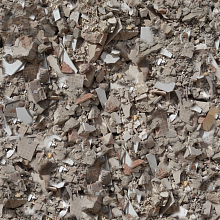 Seamless PBR Concrete Rubble Texture with Debris and Fragments
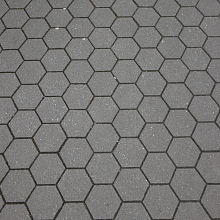 Seamless Hexagonal Concrete Tile PBR Texture 4K
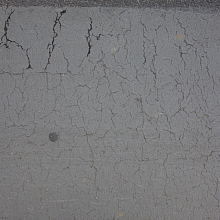 Cracked Asphalt Texture with Weathering