Integrating Photogrammetry and Procedural Techniques for Advanced PBR Texture Creation
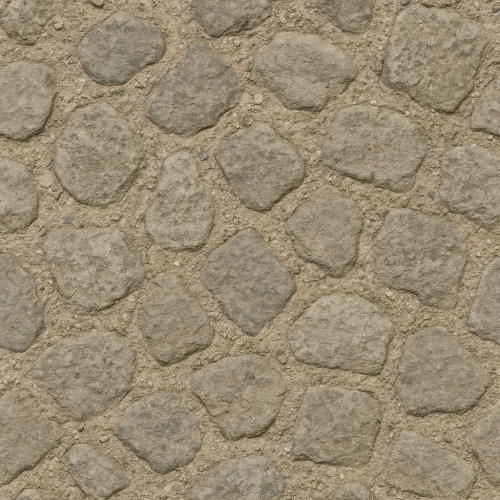
Physically Based Rendering (PBR) has become the definitive standard for achieving photorealistic materials in real-time and offline rendering pipelines. At its core, PBR relies on a set of texture maps that accurately represent the physical properties of surfaces under diverse lighting conditions. These typically include albedo (diffuse color), roughness, normal, ambient occlusion (AO), height (or displacement), and metallic maps. The quality and authenticity of these maps directly influence the fidelity of the rendered asset. Within this context, the integration of photogrammetry and procedural texturing techniques presents a compelling paradigm for advanced PBR texture creation, offering a synthesis of empirical accuracy and algorithmic versatility.
Photogrammetry leverages high-resolution photographic captures of real-world surfaces to reconstruct detailed texture data and geometry. This technique excels in acquiring authentic albedo information, intricate surface microgeometry, and subtle color variations that are difficult to replicate manually. Using calibrated camera arrays or structured capture setups, multiple overlapping images are processed through specialized software to generate dense point clouds and orthorectified texture maps. The resulting textures inherently embody real-world lighting nuances, imperfections, and material heterogeneity, making photogrammetry invaluable for achieving unparalleled realism. However, the process demands meticulous calibration—camera intrinsics, lens distortion parameters, and consistent lighting conditions must be rigorously controlled to minimize artifacts such as color bleeding, shadows, or specular highlights embedded in albedo maps.
Despite its strengths, photogrammetry brings challenges that complicate seamless integration into PBR workflows. Raw photogrammetric outputs often contain baked lighting information, requiring careful extraction or neutralization to produce physically accurate albedo maps. Additionally, generating complementary maps such as roughness or metallic from photographs alone is nontrivial, as these properties relate to microscopic physical interactions rather than macroscopic appearance captured in images. Techniques like converting specular highlights or leveraging multi-spectral captures can partially address this, but often necessitate subsequent manual refinement or procedural augmentation. Furthermore, photogrammetric textures can suffer from resolution inconsistencies and tiling issues, especially when applied to large or repetitive surfaces, necessitating advanced UV mapping or blending strategies.
Procedural texturing, in contrast, builds textures algorithmically through mathematical functions, noise generators, and rule-based systems. This approach allows for the creation of infinitely tileable, resolution-independent textures that capture micro-variation and stochastic detail absent from purely photographic sources. Procedural workflows excel in generating parameterized roughness maps, height-based micro-displacement, and channel-packed maps optimized for engine constraints. By employing fractal noise, cellular patterns, or gradient-based masks, artists can simulate natural surface variations such as rust, dirt accumulation, or surface wear with high controllability. Procedural methods also facilitate rapid iteration and non-destructive editing, enabling artists to tailor textures dynamically within tools like Substance Designer or Blender’s node-based material editors.
The chief advantage of procedural techniques lies in their adaptability and optimization potential. Since procedural maps are generated on-demand or baked at runtime, they can be efficiently scaled to different resolutions or engine requirements without quality loss. Moreover, procedural workflows integrate seamlessly with PBR engines such as Unreal Engine or Blender’s Eevee and Cycles, where shader graphs can manipulate material parameters in real-time, responding to environmental variables or interaction states. Procedural texturing also simplifies the creation of auxiliary maps critical to PBR pipelines, such as roughness or metallic, where physical accuracy can be approximated through algorithmic models rather than relying solely on photographic data.
However, procedural methods inherently lack the empirical authenticity embedded in real-world captures. Without photographic reference, procedural textures may appear synthetic or overly uniform, requiring extensive tuning to achieve believable complexity. Generating accurate albedo through procedural means alone is challenging, particularly for materials exhibiting subtle color gradients or non-uniformities. Consequently, procedural workflows often function best as complementary tools—enhancing or refining photogrammetric bases through layered detail, edge wear simulation, or channel-specific modulation.
The complementary nature of photogrammetry and procedural generation forms the foundation for advanced PBR texturing workflows. Photogrammetry provides a high-fidelity, physically grounded base layer capturing the macro features and authentic color data of materials. Procedural techniques then augment these bases with micro-variation, seamless tiling corrections, and material property modulation, addressing the limitations inherent in photographic captures. For instance, procedural roughness and height maps can be synthesized to supplement photogrammetric albedo, ensuring consistent surface response under varied lighting and viewing angles. Conversely, photogrammetric normal maps can be integrated with procedural noise to introduce fine-scale surface detail beyond the resolution of the capture.
Successful integration demands a rigorous calibration and optimization pipeline. Initially, photogrammetric captures must be processed to eliminate baked lighting and correct color profiles, often employing software tools like RealityCapture or Agisoft Metashape alongside manual retouching in Photoshop or Mari. Normal and height maps derived from photogrammetric geometry require careful extraction and filtering to preserve detail without introducing noise or distortion. Following this, procedural layers can be authored in Substance Designer, Blender, or custom GLSL/HLSL shaders, tuned to complement the photogrammetric base without overwhelming it. Channel packing is crucial for engine efficiency—embedding roughness, metallic, and AO maps into separate channels of a single texture reduces draw calls and memory usage, a consideration especially pertinent for real-time engines like Unreal.
Within game engines, PBR materials synthesized from this hybrid approach benefit from careful shader parameterization. Unreal Engine’s Material Editor, for example, allows blending of photogrammetric textures with procedural masks and noise nodes, enabling dynamic control over roughness variation or dirt accumulation driven by gameplay events. Blender’s Cycles and Eevee support node-based shader graphs where procedural detail can be layered atop image textures, facilitating both offline rendering and real-time viewport previews. Optimization strategies such as mipmap generation, texture streaming, and GPU compression formats (e.g., BC7 or ASTC) further ensure that the final materials maintain performance without sacrificing visual fidelity.
In practical terms, the integration of photogrammetry and procedural techniques unlocks a workflow that is both grounded in reality and enriched by creative flexibility. Artists and technical directors can harness the empirical accuracy of high-resolution scans while leveraging procedural algorithms to systematically extend detail, correct artifacts, and generate physically consistent auxiliary maps. This synergy addresses the perennial challenge of balancing authenticity, scalability, and performance in PBR workflows. By understanding the strengths and constraints of each method, texture creators can devise hybrid pipelines that produce materials exhibiting nuanced detail, accurate physical response, and efficient engine compatibility—qualities essential for next-generation visual storytelling across games, film, and virtual production.
The foundation of any advanced physically based rendering (PBR) texture workflow that integrates photogrammetry lies in the meticulous acquisition and processing of high-fidelity photographic data. Achieving accurate and production-ready PBR textures demands a comprehensive understanding of both the hardware setup and the software pipelines involved, alongside an appreciation for the nuanced challenges inherent in translating real-world surfaces into digital assets that perform predictably across rendering engines such as Unreal Engine and Blender’s Cycles or Eevee.
At the acquisition stage, the choice and configuration of equipment directly influence the fidelity and utility of the resulting texture maps. A high-resolution DSLR or mirrorless camera with a prime lens typically offers the best control over focal distortion and depth of field, critical for capturing the micro-details needed for generating normal and height maps. While smartphone cameras have improved, their optical limitations and sensor noise often compromise subtle surface detail capture, which is paramount for producing convincing roughness and ambient occlusion (AO) maps in PBR workflows. A sturdy tripod with a motorized or manual turntable setup can facilitate even coverage, especially for small to medium-sized objects. For architectural or environmental scans, handheld rigs with stabilized cameras combined with photogrammetry software that supports GPS tagging and multi-view stereo reconstruction become essential.
Lighting conditions during image capture must be carefully controlled to avoid specular highlights and shadows that can distort albedo and roughness information. Diffuse, even lighting—ideally under overcast skies or using light tents for smaller objects—helps isolate the surface color (albedo) without baked-in shadows or reflections. This is critical because the albedo texture serves as the base color input in PBR materials, and any contamination from lighting artifacts can introduce unwanted color shifts or inaccuracies in shading. Calibrating white balance manually before the shoot, and employing color reference charts in the scene, ensures consistent color fidelity across all images, which simplifies the later color correction steps in the pipeline.
Image capture strategy must maximize coverage and overlap. A typical photogrammetry shoot involves capturing 60 to 100% overlap between successive photos to allow the reconstruction software to accurately triangulate points and build a dense 3D mesh with high geometric fidelity. Multi-directional shots—capturing the subject from various angles, including oblique views—help capture surface geometry detail that is crucial for deriving height and normal maps. To enhance micro-variation data, close-up images focusing on fine surface textures are often interleaved with wider shots. This combination supports the creation of multi-scale textures that can tile seamlessly while preserving visual complexity when viewed up close, a factor essential for real-time engines where level of detail (LOD) systems dynamically adjust texture resolution.
Once the dataset is acquired, the photogrammetry software pipeline transforms raw images into usable PBR maps. Leading solutions such as RealityCapture, Agisoft Metashape, and open-source alternatives like Meshroom offer robust workflows for dense point cloud generation, mesh reconstruction, and texture baking. The initial step involves camera alignment and sparse point cloud generation, which must be carefully validated to ensure no misalignments or floating artifacts occur. Poor calibration at this stage can propagate errors, leading to distortions in geometry and texture projection, which hinder the generation of accurate normal and height maps critical for PBR shading models.
Subsequent dense reconstruction produces a high-resolution mesh that forms the basis for texture baking. Mesh decimation and retopology may be necessary to optimize the polygon count for real-time applications without sacrificing detail needed for normal map generation. UV unwrapping strategies greatly influence the quality of baked textures; a well-constructed UV layout minimizes stretching and seams, allowing for seamless tiling and micro-variation blending. Careful seam placement in less conspicuous areas and consistent texel density help maintain uniform detail, which is especially important when integrating procedural detail later to augment the photogrammetric base.
Texture baking workflows extract multiple PBR maps from the reconstructed mesh and aligned photographs. The albedo map is generated by projecting the original photographic data onto the mesh, carefully stripping out lighting and shadow information to isolate true surface color. Techniques such as high dynamic range (HDR) imaging and color grading are often employed post-baking to correct for any residual lighting artifacts and enhance color accuracy. Normal maps are derived from the high-poly mesh’s surface normals, encoding micro-surface detail that informs lighting calculations in PBR shaders. Height maps, capturing subtle displacement, are similarly baked and can be used for parallax occlusion mapping or tessellation in engines like Unreal. Ambient occlusion maps, baked either from geometry or approximated from the mesh’s cavity information, add contact shadowing effects that enrich surface detail without additional geometry.
Roughness and metallic maps are generally not directly captured through photogrammetry but require either manual authoring or procedural augmentation. Roughness variations are paramount to conveying material wear, dirt accumulation, or polish, and thus integrating procedural noise or hand-painted masks over the photogrammetric albedo can significantly enhance realism. Metallic maps, defining conductive surfaces, are typically binary or grayscale masks created based on material knowledge rather than derived from photographic data. Blending procedural textures with photogrammetry-derived maps enables artists to inject micro-variation and control that is otherwise unattainable from raw scans alone, ensuring that PBR materials respond authentically under different lighting environments.
Calibration and color space management throughout the pipeline are critical to maintaining consistency across maps and rendering engines. Linear workflow adherence, with proper gamma correction and color profile conversion, ensures that albedo textures do not appear overly dark or washed out when imported into engines like Unreal or Blender. Additionally, normal maps must be encoded in the correct tangent space format expected by the target renderer, as mismatches can cause lighting artifacts or inverted shading.
Optimization strategies focus on balancing fidelity and performance. Texture atlasing and mipmapping reduce draw calls and improve rendering efficiency, while strategic use of tiling textures allows for large surface coverage without excessive memory use. Incorporating procedural detail such as noise-based variation and detail maps layered over photogrammetric bases further aids in masking tiling repetition, which is a common pitfall when working with scanned textures. Leveraging engine-specific shader features—such as Unreal’s material layering system or Blender’s node-based compositor—enables dynamic blending of photogrammetric and procedural inputs, facilitating real-time adjustments and fine-tuning of material properties.
In practice, common pitfalls include insufficient image overlap leading to noisy reconstructions, inconsistent lighting corrupting albedo extraction, and improper UV layouts causing texture seams or stretching that break immersion. Overexposure or underexposure during capture can lose critical surface information, while failing to remove specular highlights in post-processing can result in unrealistic reflections in roughness maps. Iterative validation—reviewing scanned geometry and baked textures within target engines under various lighting conditions—helps identify and rectify these issues early.
Ultimately, the integration of photogrammetry data into a PBR texture authoring pipeline demands rigorous attention to detail throughout acquisition and processing. When executed with precision, the resulting albedo, normal, height, AO, roughness, and metallic maps form a robust foundation for physically plausible materials that faithfully replicate the complexity of real-world surfaces. Coupled with procedural techniques to enhance variation and optimize performance, this approach empowers artists and technical directors to produce textures that elevate visual fidelity in interactive and cinematic 3D applications alike.
Photogrammetry has revolutionized PBR texture creation by providing richly detailed, physically accurate albedo and normal data derived directly from real-world surfaces. However, despite its unparalleled fidelity, raw photogrammetry outputs present inherent challenges when adapted for production use, particularly regarding seamless tiling, micro-variation control, and the generation of complementary PBR maps such as roughness, metallic, and ambient occlusion (AO). Procedural techniques offer powerful solutions to these challenges, enabling artists and technical directors to extend photogrammetry-derived textures into versatile, infinite materials suitable for diverse applications in engines like Unreal or authoring tools such as Blender.
At the core of integrating procedural workflows with photogrammetry is the recognition that scanned data, while rich in detail, often encodes surface information tied strictly to the scanned object’s geometry and spatial context. The albedo captures subtle color variations and dirt patterns unique to a single physical instance; the normal maps reflect minute surface undulations; and the height maps encode precise micro-topography. However, these data sets rarely tile seamlessly, and their resolution and coverage are finite. Procedural methods, therefore, serve to decouple the texture from its original spatial constraints by introducing algorithmic noise, blending strategies, and synthetic map generation that enhance realism and adaptability without compromising the scanned data’s physicality.
One foundational procedural approach involves the application of noise-based micro-variation overlays to albedo and roughness maps. Photogrammetry-derived albedo often contains baked-in lighting artifacts and subtle color shifts tied to the scan environment. By blending the scanned albedo with procedurally generated noise patterns—such as Perlin, Worley, or cellular noise—artists can introduce controlled chromatic variation that breaks unnatural uniformity when tiled. The key is to calibrate noise amplitude and frequency carefully: too strong, and the procedural overlay overwhelms the original texture’s fidelity; too weak, and tiling artifacts become visible. Using blending modes like overlay or soft light within shader networks, combined with mask-driven modulation informed by curvature or ambient occlusion maps, allows procedural noise to enhance rather than obscure photogrammetry data.
Roughness and metallic channels illustrate an even more compelling use case for procedural augmentation. Photogrammetry pipelines traditionally struggle to capture physically accurate roughness and metallic data directly from scans, as these properties often require controlled lighting setups or additional instrumentation such as gonioreflectometers. Consequently, roughness maps are frequently generated procedurally or author-improved post-scan. By leveraging height and normal maps extracted from the photogrammetry model, procedural workflows can simulate microfacet distribution variations that inform roughness levels. For example, procedural noise functions modulated by curvature or slope data can generate spatially varying roughness that mimics wear patterns, surface oxidation, or material heterogeneity, which are difficult to capture via scanning alone. Metallic maps, typically binary or low-variation grayscale masks, lend themselves well to procedural patterning to suggest metal flakes, rust patches, or composite materials, especially when combined with scanned albedo and height data.
Ambient occlusion (AO) presents a unique challenge and opportunity in procedural enhancement. While baked AO from photogrammetry captures occlusion baked into the scan geometry, it is spatially fixed and does not tile. Procedural AO, generated via ray marching or screen-space techniques or derived from curvature and height data, can be seamlessly tiled and animated to add depth cues beyond the scanned surface. A hybrid approach that blends baked AO with procedural AO maps can preserve the authenticity of scanned micro-occlusions while extending the AO’s utility across tiled surfaces. This blending requires careful calibration of intensity and scale parameters to avoid visual conflicts or double-darkening effects in engine shaders. In Unreal Engine, for instance, material functions can be constructed to dynamically blend baked and procedural AO inputs using masks derived from curvature or vertex color channels.
Seam removal and seamless tiling form a critical bottleneck in adapting photogrammetry textures for large surfaces or game environments. Traditional photogrammetry textures are often produced as unique scan patches with edges corresponding to the physical object’s boundaries, resulting in visible seams or hard edges when tiled. Procedural techniques can mask and blend these discontinuities by generating edge-aware noise layers that gradually desaturate or morph albedo and roughness values across seams. One effective method is to employ procedural edge dilation combined with gradient blending controlled by masks extracted from scan borders or UV seams. This approach creates a soft transition zone that mitigates sharp edges without resorting to destructive texture painting. Additionally, procedural pattern generators—such as directional noise aligned with principal material features—can be overlaid on the tiled texture to visually disrupt repetition and further conceal seams.
Height maps derived from photogrammetry provide a rich source for procedural displacement and parallax effects but pose challenges when tiled due to discontinuities at texture borders. Procedural workflows can generate synthetic height variation patterns that either replace or modulate scanned height data to ensure tileability. Techniques include blending scanned height with seamlessly tiling fractal noise or applying edge-aware smoothing and mirroring operations on height maps. In Blender’s procedural shader graph, for instance, height maps can be combined with Voronoi or Musgrave noise modules, with blending weights driven by edge masks, ensuring that displacement maps remain continuous across tile boundaries. This is particularly beneficial for terrain or architectural materials where physical surface variation must extend indefinitely without obvious repetition.
Optimization considerations are paramount when integrating procedural techniques with photogrammetry in real-time engines. Procedural overlays and map blending can increase shader complexity and texture memory usage. To mitigate this, artists often bake combined procedural effects into new texture sets offline, producing optimized albedo, roughness, normal, and AO maps that retain procedural enhancements but reduce runtime calculations. When dynamic procedural control is necessary—for example, to simulate wetness or dirt accumulation—shader LOD systems and mask-driven parameterization can limit procedural evaluation to regions or conditions most perceptible to the viewer. In Unreal Engine, material instances and parameter collections allow artists to toggle procedural layers and adjust blending weights interactively, balancing visual fidelity with performance.
Calibration between scanned data and procedural inputs requires precise color space management and scale normalization. Photogrammetry albedo textures are typically linearized and color-calibrated during scanning; procedural noise, however, often assumes a neutral mid-gray baseline. To prevent tonal shifts, procedural patterns should be converted to the same color space and gamma as the scanned data before blending. Similarly, normal and height maps must share consistent tangent space and scale conventions. Height map amplitude scaling is crucial to avoid exaggerated displacement artifacts when combined with procedural noise. Using reference targets or scan metadata to establish baseline ranges ensures that procedural augmentations remain physically plausible and engine-compatible.
In practice, a typical workflow begins by importing cleaned photogrammetry albedo, normal, and height maps into the authoring tool—Blender’s Shader Editor or Unreal’s Material Editor. Procedural noise nodes and mask generation functions are layered atop the scanned textures, with blending weights controlled by curvature, AO, or vertex paint masks. Roughness and metallic maps are generated or refined procedurally using input from scanned height and normal data, enhanced with noise to simulate material heterogeneity. The combined textures are then baked into optimized sets, ensuring seamless tiling and micro-variation continuity. Iterative visual inspection under engine lighting conditions confirms that procedural enhancements integrate naturally with scanned detail while maintaining physical plausibility across varying viewing distances and lighting environments.
Ultimately, procedural techniques act as an essential bridge that transforms finite, object-specific photogrammetry captures into versatile, infinite PBR materials. By intelligently blending scanned data with algorithmic noise and pattern generators, artists overcome fundamental limitations of photogrammetry, achieving seamless tiling, enhanced micro-variation, and comprehensive PBR channel coverage. This synergy empowers the creation of richly detailed, physically grounded textures that perform efficiently across modern rendering pipelines, enabling photogrammetry to fulfill its full potential in advanced PBR workflows.
FAQ
What is covered in this guide?
This guide explains Integrating Photogrammetry and Procedural Techniques for Advanced PBR Texture Creation with practical notes for seamless PBR materials, texture setup, and production use.
Can I use these texture techniques in Blender, Unreal Engine, and Unity?
Yes. The workflow focuses on standard PBR maps and tileable materials that can be used in Blender, Unreal Engine, Unity, archviz, games, and VFX pipelines.
Where can I find textures for this workflow?
Use the AITextured texture library and the related texture links on this page to find seamless PBR materials and preview them before download.
Related Textures
 Procedural Lime Plaster Wall PBR Texture
 Procedural Stamped Sidewalk Concrete PBR Texture
 Procedural Fine Asphalt Road PBR Texture
 Procedural Pitted Concrete PBR Texture
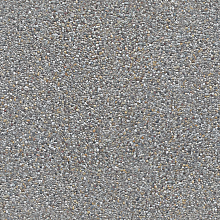 Seamless Concrete Pebble PBR Texture in 4K Resolution
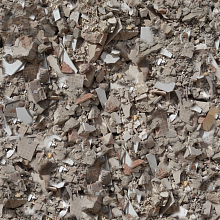 Seamless PBR Concrete Rubble Texture with Debris and Fragments
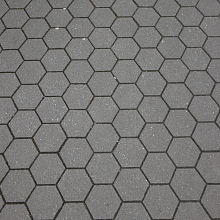 Seamless Hexagonal Concrete Tile PBR Texture 4K
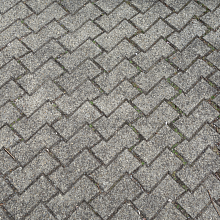 Realistic Concrete Paving Brick Pattern Texture