Integrating Photogrammetry and Procedural Techniques for Next Level PBR Textures
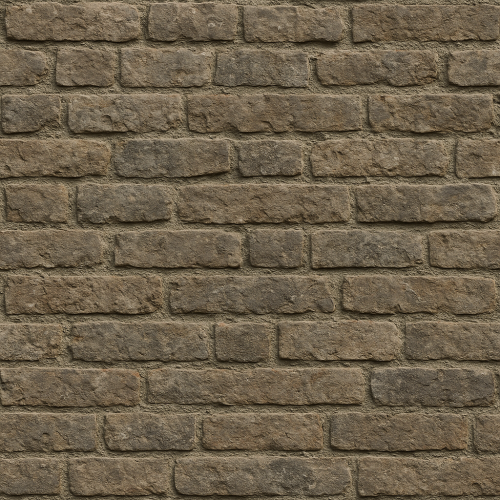
Photogrammetry and procedural texture generation represent two fundamentally distinct yet highly complementary paradigms in the creation of physically based rendering (PBR) materials. Understanding their individual strengths and limitations is crucial for developing integrated workflows that leverage the best of both worlds to produce rich, authentic, and versatile PBR textures suited to demanding real-time and offline rendering pipelines.
Photogrammetry, at its core, is a data-driven acquisition technique that captures real-world surface detail and color information through multiple photographic images. The process typically involves shooting a subject from numerous angles under controlled, diffuse lighting conditions to minimize specular contamination and shadows. These images are then processed with specialized software—such as RealityCapture, Agisoft Metashape, or open-source options like Meshroom—to generate dense 3D point clouds, textured meshes, and subsequently baked texture maps. The resultant PBR textures encompass high-fidelity albedo maps derived directly from the captured imagery, normal maps extracted from the reconstructed mesh geometry or through specialized normal map baking, ambient occlusion maps baked from the object’s geometry to simulate self-shadowing, and often height (displacement) maps that encode fine surface relief details. Metallic and roughness maps, however, often require manual or semi-automatic authoring steps since photogrammetric data rarely provide definitive cues for these parameters without additional calibrated capture setups or expert interpretation.
One of photogrammetry’s greatest advantages is its capacity to faithfully reproduce the nuanced complexity of natural and man-made surfaces, capturing micro-geometry and color variation with a level of detail and authenticity that is challenging to replicate procedurally. This makes photogrammetry particularly well-suited for assets where realism and contextual accuracy are paramount—architectural elements, natural environments, and intricate artifacts. However, photogrammetry inherently produces textures tied to a specific scanned object, often resulting in non-tileable textures that can be unwieldy in large-scale environments requiring extensive repetition or variation. Additionally, the capture process demands significant investment in time, equipment calibration, and controlled lighting setups to ensure color fidelity and minimize post-processing corrections. Mesh optimization and retopology are often necessary to achieve production-ready models suitable for real-time engines like Unreal Engine or authoring platforms such as Blender. Furthermore, baked maps can be large and costly in terms of memory footprint, necessitating careful optimization strategies such as mipmapping, texture atlasing, and level-of-detail (LOD) management.
In contrast, procedural texture generation is an author-driven, algorithmic approach that synthesizes textures through mathematical functions, noise algorithms, and programmable nodes. Procedural workflows—commonly implemented in tools like Substance Designer, Blender’s Shader Editor, or Houdini—allow artists and technical directors to define parametric texture maps that can be infinitely tiled and dynamically modified. Procedural methods excel at creating seamless albedo patterns with controlled color variation, physically plausible roughness distributions, normal perturbations simulating micro-surface detail, and ambient occlusion approximations generated via curvature or cavity maps derived from mesh topology or height data. Procedural metallic maps can be driven by masks or material IDs, enabling precise control over material layering and blending.
A key benefit of procedural texturing lies in its scalability and flexibility. Because textures are synthesized on demand or pre-baked from node networks, they are inherently resolution-independent and tileable, facilitating their use across large environments without repetition artifacts. Procedural workflows empower artists with parametric controls, enabling rapid iterations and easy adjustments to material properties such as roughness variation or albedo hue shifts. Moreover, procedural techniques can be tightly integrated within real-time engines like Unreal Engine using material shaders, or within offline renderers via shader graphs, enabling dynamic material responses to lighting and environmental parameters. This adaptability makes procedural texturing a powerful tool for creating stylized materials or enhancing photogrammetric scans with additional surface detail and variation.
However, procedural methods also have limitations. The synthetic nature of their output can sometimes lack the organic irregularities and micro-variations inherent in real-world surfaces, leading to perceptible repetitiveness or “manufactured” appearances if not carefully designed. Creating believable procedural materials demands considerable expertise in shader programming, noise functions, and material science principles. Additionally, while procedural texturing can generate a full suite of PBR maps, achieving the same level of photorealism and subtlety in albedo and normal detail as photogrammetry often requires complex node graphs and blending with scanned references.
Recognizing these complementary strengths and weaknesses opens the door to hybrid workflows that combine photogrammetry’s unparalleled realism with procedural texturing’s flexibility and scalability. For instance, photogrammetric albedo and normal maps can serve as a high-fidelity base, which procedural techniques then augment with tileable micro-variation layers, edge wear masks, or procedural roughness modulation to break up repetition and adapt materials to varying environmental contexts. Height and ambient occlusion maps baked from scans can be refined procedurally to enhance surface detail or generate curvature masks for wear and dirt effects. Metallic maps, often lacking in photogrammetric datasets, can be procedurally authored or derived by blending scanned data with masks informed by material IDs or semantic segmentation.
Calibration between photogrammetric data and procedural inputs is essential to maintain physical plausibility and artistic coherence. This involves aligning color spaces, normal map conventions (e.g., OpenGL vs. DirectX), and ensuring consistent scale and orientation of height and displacement maps. Texture resolution must be balanced carefully; photogrammetric captures can produce very high-resolution textures that need downsampling or mipmapping to optimize performance in engines like Unreal, while procedural maps can be generated at various resolutions depending on the target platform. Hybrid materials benefit from establishing consistent roughness and metallic ranges, preventing conflicting parameters that would cause shading artifacts or unrealistic highlights.
Optimization is a critical aspect of integrating these techniques, especially for real-time applications. Baking photogrammetric detail into optimized atlases or trim sheets reduces draw calls and texture swaps, while procedural detail can be encoded as shader functions or mask textures to minimize memory usage. Using engine features such as Unreal’s virtual texturing or Blender’s adaptive subdivision can further improve performance by streaming high-resolution data only where needed. Practical tips include generating multiple LODs for photogrammetric meshes, using procedural noise overlays to mask tiling in repeated photogrammetric surfaces, and leveraging engine-specific material nodes to blend scanned and procedural inputs seamlessly.
In summary, photogrammetry and procedural texture generation provide distinct yet synergistic approaches to PBR material creation. Photogrammetry anchors materials in real-world fidelity and authentic surface complexity, while procedural methods inject scalability, parametric control, and seamless tiling capabilities. Mastering both techniques and their integration enables 3D artists and technical directors to craft next-level PBR textures that balance visual realism with performance, adaptability, and artistic flexibility across diverse production pipelines involving tools like Unreal Engine and Blender. This foundational understanding paves the way for hybrid workflows that exploit the strengths of each method to achieve richer, more believable digital materials.
Capturing and processing photogrammetric base textures demands a meticulous approach to ensure the resultant data translates effectively into physically based rendering (PBR) workflows. The fidelity of the final textures hinges not only on the quality of the photographic input but also on the subsequent calibration, alignment, and extraction of texture maps that conform to PBR standards. This process begins with selecting the appropriate capture equipment and extends through careful data acquisition strategies, culminating in a rigorous software pipeline designed to generate high-resolution, accurate texture maps suited for integration into modern rendering engines such as Unreal Engine or Blender’s Cycles.
At the acquisition stage, the choice of camera and optics plays a pivotal role in defining the resolution, color accuracy, and geometric consistency of the base textures. A full-frame DSLR or mirrorless camera with a prime lens generally offers the best compromise between image sharpness and distortion control. Fixed focal length lenses with minimal chromatic aberration and distortion facilitate easier photogrammetric alignment and reduce the need for extensive lens correction during postprocessing. Maintaining a low ISO setting and shooting in RAW format preserves maximum dynamic range and color information, which is crucial for extracting precise albedo and roughness data. Lighting conditions must be diffuse and consistent to minimize shadowing and specular highlights, which can corrupt texture maps. Overcast days or the use of portable diffusers are standard practice, enabling neutral illumination that captures material color without directional biases.
Capture techniques for photogrammetry require comprehensive coverage and overlap to reconstruct accurate geometry and texture data. A minimum of 60-80% overlap between consecutive images is advisable to allow the photogrammetric software to reliably identify and match features across photographs. Circular or spherical capture patterns around the subject ensure that no surface angles are underrepresented, which is especially important for materials with complex microstructures or anisotropic properties. For larger-scale surfaces or terrain, grid-like capture patterns with varying camera elevations help capture subtle height variations and surface details. Maintaining consistent exposure and white balance settings across all images prevents color shifts that could introduce artifacts in the albedo map. Furthermore, the inclusion of calibrated color targets or reference cards within the scene enables post-capture color profiling and correction, aligning the texture’s colorimetry with physically accurate standards.
Once the image set is acquired, the processing pipeline begins with photogrammetric reconstruction software such as RealityCapture, Agisoft Metashape, or CapturingReality. The initial step involves image alignment, where the software detects common features and computes camera positions to generate a sparse point cloud. Critical here is the calibration of intrinsic camera parameters; some software allows explicit input of lens profiles or uses self-calibration algorithms that refine focal length and distortion coefficients. Accurate calibration reduces reprojection errors and enhances the geometric fidelity of the dense point cloud and mesh. After alignment, a dense point cloud is generated, followed by mesh reconstruction. Depending on the target use case, mesh decimation or retopology may be performed to optimize geometry for real-time rendering without sacrificing essential surface details.
The extraction of PBR texture maps from the reconstructed mesh is a nuanced stage that demands careful attention to material properties. The primary albedo map should be generated by projecting the source images onto the mesh while excluding lighting information such as shadows and specular highlights. Many photogrammetry tools offer “lighting removal” or “shadow trimming” functions that help isolate the diffuse color component, which is essential for accurate base color representation in PBR workflows. The albedo texture must maintain linear color space to preserve the correct energy distribution when used in physically based shaders.
Complementary maps such as roughness, normal, ambient occlusion (AO), height, and metallic significantly enhance the realism of the material but often require additional processing beyond raw photogrammetry output. Normal maps can be derived from the high-resolution mesh by baking the surface detail onto a lower-resolution game mesh, capturing microgeometry that influences light interaction. Height maps, representing displacement data, can be generated by converting the dense point cloud or from the mesh’s vertex color channels if available. Ambient occlusion maps, which simulate self-shadowing in crevices, can be baked using ray-tracing within 3D software like Blender or specialized baking tools, providing subtle depth cues that complement the PBR shading model.
Roughness and metallic maps, however, are generally not directly extractable from photogrammetry data due to their dependence on material-specific reflectance properties rather than geometric features. These usually require manual authoring or procedural refinement informed by the visual data. For instance, roughness variations can be painted or procedurally generated based on albedo luminance and surface texture, while metallic maps are often binary or grayscale masks indicating conductive versus dielectric areas, necessitating artist input for accurate material definition. Integrating procedural texturing techniques at this stage helps introduce micro-variation and tiling where the photogrammetric data alone is insufficient or non-repetitive, thus enabling scalable and optimized textures for game engines.
Calibration between the various texture maps is critical to prevent shading artifacts. Ensuring consistent UV layouts and texture resolutions across all maps allows seamless integration into physically based shaders. UV unwrapping strategies should prioritize minimizing distortion and seams, especially in areas of high detail or curvature, as these will be evident in the final render. Utilizing software such as Blender’s UV Editor or specialized unwrapping tools aids in achieving optimal UV shells that support both photogrammetric projection and procedural detail layering.
Optimization for real-time engines entails balancing texture resolution with performance constraints. High-resolution photogrammetric textures can exceed 8K in dimension, which may be impractical for real-time applications. Downsampling with high-quality filters, generating mipmaps, and employing texture compression formats such as BC7 (DirectX) or ASTC (mobile platforms) ensures efficient memory usage without compromising visual fidelity significantly. Additionally, tiling the textures or using trim sheets can reduce memory footprints and enable material reuse across assets, but requires careful alignment of photogrammetric data and procedural detail to avoid visible repetition.
When importing into rendering engines like Unreal Engine or Blender, it is vital to maintain linear workflow standards and correct gamma settings for each map type. Unreal Engine’s PBR pipeline expects albedo maps in sRGB space, whereas roughness and normal maps remain in linear space. Correctly setting the compression and sampler states for each texture type prevents artifacts and preserves the physical accuracy of the shading model. Blender’s Cycles renderer similarly benefits from precise node setups that respect the data encoding of each map, leveraging its principled BSDF shader to replicate real-world materials faithfully.
In sum, capturing and processing photogrammetric base textures for PBR materials is a complex yet rewarding endeavor that bridges real-world data acquisition with digital authoring expertise. By carefully controlling photographic conditions, leveraging robust software pipelines, and integrating procedural refinement, artists and technical directors can produce highly accurate, physically plausible textures that elevate the realism and versatility of 3D assets across visualization and interactive media platforms.
One of the critical challenges in leveraging photogrammetry-derived PBR textures lies in overcoming the inherent repetitiveness and uniformity that scanning workflows often impose. While photogrammetry excels at capturing authentic surface detail and complex material properties, its output frequently exhibits a high degree of tiling artifacts and lacks the subtle micro-variations that contribute to a material’s believability in dynamic lighting conditions. This is where procedural enhancement and micro-variation generation become indispensable tools to elevate scanned textures beyond their raw data fidelity, allowing artists and technical directors to imbue surfaces with nuanced imperfection and controlled randomness without compromising the seamlessness required for real-time or offline rendering.
At the core of this approach is the strategic integration of procedural algorithms that operate both as post-process modifiers and as dynamic texture layers complementing the scanned PBR maps. Photogrammetry pipelines typically produce a suite of calibrated maps—albedo (diffuse), roughness, normal, ambient occlusion (AO), height, and sometimes metallic—each encoding distinct physical attributes of the surface. However, these maps inherently capture macro- and meso-scale detail but often lack the fine-scale stochastic variation that natural materials exhibit. Procedural techniques, grounded in noise functions, fractal algorithms, and pattern generators, enable the injection of micro-variation patterns directly into these maps, breaking up uniformity and imparting a more organic and less “digital” appearance.
For albedo maps, procedural enhancement often involves subtle color variation and pattern modulation to simulate effects like dirt accumulation, fading, or minor pigment irregularities. This can be achieved by overlaying low-contrast procedural noise layers—such as Perlin, Worley, or domain-warped fractal noise—carefully calibrated in frequency and amplitude to avoid overwhelming the captured photographic data. The key is maintaining chromatic fidelity; procedural modifications should be applied in a manner preserving the original color profile, often by blending in LAB or HSV color spaces, where hue and saturation can be independently adjusted without desaturating or oversaturating the base texture. This approach ensures that the unique color nuances captured via photogrammetry remain dominant, while the procedural noise adds a soft veil of imperfection that disrupts tiling repetition.
Roughness maps benefit profoundly from procedural micro-variation as they directly influence the microsurface scattering and reflectivity behavior under physically based rendering models. Raw photogrammetry roughness outputs can appear overly uniform or suffer from compression artifacts, leading to unnatural specular highlights. By modulating roughness with procedural noise, artists can simulate fine scratches, surface wear, or micro-pitting that naturally occur on most real-world materials. Importantly, these procedural variations should be spatially coherent with the underlying geometry and aligned with known wear patterns—something achievable by using curvature, world-space coordinates, or ambient occlusion masks as masks or inputs to the procedural noise generators. Procedural roughness modification often involves high-frequency detail with low amplitude variations, carefully normalized to prevent excessively rough or overly smooth patches.
Normal maps, derived from scanned geometry or photogrammetry-based mesh displacement baking, represent the surface’s fine topography. Yet, many scanned normal maps may miss micro-surface details below the mesh resolution or suffer from tiling repetition in UV space. Procedural generation of additional micro-normal details is a robust method to augment the fidelity of these maps. Techniques include adding procedural bump or height noise, which can be converted into normal perturbations via derivative operations, or directly synthesizing normal variations using noise gradients. The challenge lies in ensuring that these procedural normal details do not create visual seams or discontinuities; this is often managed by generating tileable procedural noise using seamless tiling algorithms or by blending multiple noise octaves with varying frequencies and offsets. When implemented correctly, the result is a normal map that retains the authenticity of the scanned surface while gaining the intricate microstructure critical for realistic light scattering and specular behavior.
Ambient occlusion (AO) maps, although primarily baked from geometry, also benefit from procedural enhancement to correct or enrich shading variations. Photogrammetry-based AO maps can display high-frequency noise or inconsistent shadowing due to capture limitations or mesh imperfections. Procedural AO refinement can help in smoothing out these artifacts or in adding subtle micro-shadowing effects that simulate subsurface occlusion from micro-geometry. Procedural AO is often generated via screen-space or world-space noise patterns modulated by curvature or height data to simulate occlusion on a micro scale, improving the perception of depth and texture complexity.
Height maps, vital for parallax occlusion mapping or displacement workflows in engines like Unreal or Blender’s Cycles, are another channel where procedural micro-variation can significantly enhance the perceived detail. Since photogrammetry height maps are derived from mesh baking, they tend to have limited resolution and may lack fine micro-relief. Procedural fractal noise or cellular patterns can be layered onto the scanned height map, introducing realistic micro-bumps, scratches, or fabric weaves that dynamically interact with lighting and camera movement. This procedural layering requires careful calibration of amplitude and frequency to prevent geometric distortion or popping artifacts during displacement or tessellation. Additionally, procedural height augmentation must be synchronized with normal map perturbations to maintain shading consistency.
Metallic maps, when present, are often binary or low-detail in photogrammetry-derived textures, especially for non-metallic surfaces. Micro-variation here is subtler but can be critical for materials like weathered metals or composites where partial oxidation or paint wear exposes varying degrees of metalness. Procedurally generated masks or noise overlays can simulate these effects, allowing fine-grained control over the metallic response without reshooting or re-scanning the material.
Integration of these procedural enhancements requires a nuanced understanding of the engine or renderer’s material pipeline. In Unreal Engine, for instance, procedural micro-variation can be implemented within the Material Editor by layering noise functions and blending them with scanned texture samplers, utilizing world-space coordinates, triplanar mapping, or vertex color masks to minimize UV seam visibility. The engine’s built-in noise nodes are often flexible enough to generate tileable noise patterns, but for more advanced fractal or domain-warped noise, custom HLSL shaders or material functions are employed. Unreal’s runtime performance constraints necessitate optimization strategies such as pre-baking procedural variations into textures or using detail maps at higher texture resolutions only where necessary.
In Blender’s Shader Editor, procedural micro-variation is handled through node networks combining noise, Voronoi, Musgrave, or wave textures, which can be mixed with image texture nodes. Blender’s Cycles renderer excels at rendering these procedural layers directly, enabling artists to preview the micro-variation in real-time or through progressive renders. Moreover, Blender’s ability to bake procedural maps into image textures allows for exporting enhanced PBR textures that incorporate both scanned data and procedural detail, maintaining seamlessness and avoiding visible tiling.
Calibration of procedural effects to the photogrammetry data is critical. Artists must often empirically tune noise scale, amplitude, blending mode, and color space conversion to avoid overpowering the original scanned detail. A common practice involves using masks derived from curvature, ambient occlusion, or cavity maps to localize procedural micro-variation only to areas where natural surface heterogeneity is expected, such as edges, crevices, or material transitions. This targeted approach preserves the authenticity of flat or uniform regions while enhancing organic surfaces, reducing visual noise and potential tiling artifacts.
Optimization is an equally important consideration. Procedural micro-variation can be computationally expensive, especially in real-time engines. Therefore, it is often advantageous to bake procedural detail into secondary detail maps or detail masks, which can be overlaid on base textures using multi-channel blending techniques. This not only reduces shader complexity but also simplifies UV mapping by allowing repeated detail maps at higher frequencies while maintaining a seamless overall appearance. Furthermore, leveraging mipmapping and anisotropic filtering settings helps preserve the procedural detail’s crispness at various viewing distances and angles.
In summary, procedural enhancement and micro-variation generation serve as a vital bridge between the high-fidelity but repetitive nature of photogrammetry-derived PBR textures and the nuanced complexity observed in real-world materials. By intelligently blending procedural noise, fractal detail, and pattern correction into albedo, roughness, normal, AO, height, and metallic maps, artists can break up tiling artifacts and infuse scanned surfaces with the subtle imperfections that heighten realism. Mastery of these techniques requires a deep understanding of both the mathematical foundations of procedural noise and the practical constraints of rendering engines, alongside meticulous calibration and optimization to maintain seamlessness and performance. When executed skillfully, this hybrid workflow empowers creators to push PBR texturing into new realms of authenticity and visual richness.
FAQ
What is covered in this guide?
This guide explains Integrating Photogrammetry and Procedural Techniques for Next Level PBR Textures with practical notes for seamless PBR materials, texture setup, and production use.
Can I use these texture techniques in Blender, Unreal Engine, and Unity?
Yes. The workflow focuses on standard PBR maps and tileable materials that can be used in Blender, Unreal Engine, Unity, archviz, games, and VFX pipelines.
Where can I find textures for this workflow?
Use the AITextured texture library and the related texture links on this page to find seamless PBR materials and preview them before download.
Related Textures
 Procedural Lime Plaster Wall PBR Texture
 Procedural Stamped Sidewalk Concrete PBR Texture
 Procedural Fine Asphalt Road PBR Texture
 Procedural Pitted Concrete PBR Texture
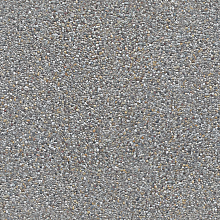 Seamless Concrete Pebble PBR Texture in 4K Resolution
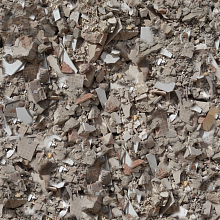 Seamless PBR Concrete Rubble Texture with Debris and Fragments
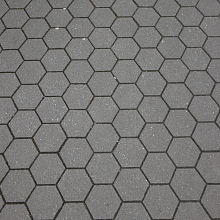 Seamless Hexagonal Concrete Tile PBR Texture 4K
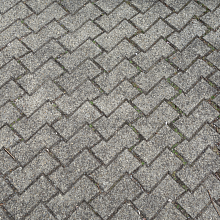 Realistic Concrete Paving Brick Pattern Texture