Mastering Abstract PBR Textures for Advanced 3D Design Workflows
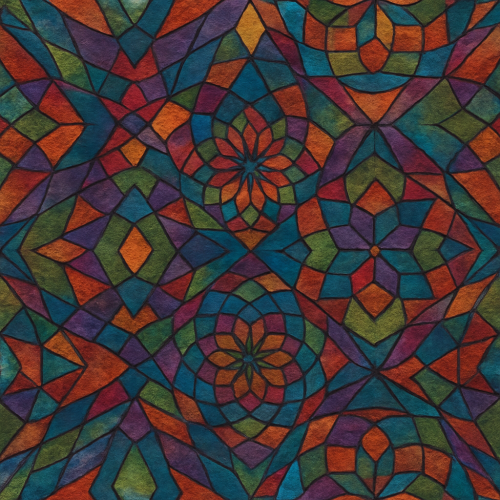
Acquiring high-quality abstract PBR textures requires a nuanced understanding of both the physical characteristics of the source material and the digital processes that preserve these details within a physically based rendering workflow. Unlike representational or naturalistic textures, abstract surfaces often feature complex, non-repetitive patterns and intricate microstructures that challenge conventional capture techniques. Achieving fidelity across all PBR channels—albedo, roughness, normal, ambient occlusion (AO), height, and where applicable, metallic—demands carefully selected acquisition methodologies tailored to the idiosyncrasies of abstract materials.
Photogrammetry remains a foundational technique for texture acquisition, primarily due to its ability to capture high-resolution color data alongside geometric detail. When targeting abstract textures, photogrammetry setups must be calibrated to emphasize surface nuance over broad form. This involves capturing images under controlled lighting conditions that minimize shadows and specular highlights, which can introduce noise or misinterpretation in albedo and roughness extraction. Utilizing diffuse dome lighting or employing polarized light filters reduces reflection artifacts, helping isolate intrinsic color information critical for accurate base color maps. Moreover, multi-angle captures with high overlap ensure that subtle surface variations—often the hallmark of abstract textures—are faithfully reconstructed in the resulting 3D model and texture maps.
The geometry derived from photogrammetry is often dense and irregular, necessitating retopology or normal map baking workflows to optimize for real-time engines like Unreal Engine or content creation suites such as Blender. When baking normal and height maps, it is essential to preserve micro-variation that contributes to realistic surface interaction with light. Abstract materials frequently exhibit fine-scale undulations or fractal-like patterns, which can be lost if baking parameters are overly aggressive or if mesh simplification removes critical detail. Employing high-resolution displacement maps as a source for normal baking, paired with software that supports multi-channel map extraction (such as Substance Designer or xNormal), ensures that roughness and AO maps retain correlation with geometric features. This coherence is vital for physically accurate shading, as roughness and AO often modulate light scattering and shadowing at micro scales.
Complementing photogrammetry, 3D scanning technologies—such as structured light or laser scanning—offer enhanced precision in capturing surface topography, especially when abstract textures include sharp edges or intricate relief patterns. These methods excel at producing highly accurate depth maps and normal information but typically lack color fidelity. As a result, a hybrid approach combining 3D scanning for geometry and high-resolution photography for albedo acquisition can produce superior results. Careful registration of the color data onto scanned geometry demands precise calibration of camera and scanner coordinate systems. Calibration targets and fiducial markers aid in aligning datasets to ensure that texture maps are spatially coherent, a prerequisite for seamless tiling and accurate PBR shading.
In the context of abstract textures, tiling presents a particular challenge. Unlike organic or man-made textures with repetitive motifs, abstract surfaces often lack clear repeating units, increasing the risk of visible seams. To address this, acquisition workflows incorporate scanning or photography across large surface areas, followed by digital processing to generate tileable textures with controlled micro-variation. Techniques such as edge mirroring, texture synthesis, and non-destructive cloning in tools like Substance Designer enable the creation of seamless bases from irregular acquisitions without sacrificing physical plausibility. Maintaining consistency across PBR channels during tiling is critical; for example, roughness and normal maps must seamlessly transition at edges, or lighting discrepancies will become apparent in real-time rendering.
Calibration extends beyond spatial alignment to the photometric domain. Accurate PBR workflows rely on linear workflows with correct color space management. Raw photographic inputs must be linearized and gamma-corrected to avoid skewing albedo data. Similarly, roughness maps benefit from calibrated light probes or controlled environment captures that provide reference lighting conditions, ensuring that the extracted microfacet distribution corresponds to physical reality rather than stylistic interpretation. When capturing abstract textures with metallic components—though less common—careful reflectance measurements are necessary, often requiring spectrophotometric data or reference materials to derive the metallic channel accurately.
Optimization is another consideration during acquisition and authoring. High-resolution scans and photographs generate massive datasets that can be unwieldy in production pipelines. Downscaling must be approached with an understanding of the perceptual impact on PBR channels. For example, aggressive compression of roughness or normal maps can introduce banding or loss of fine detail, degrading the material’s response to lighting. Employing mipmapping strategies and channel packing—such as combining ambient occlusion, roughness, and metallic maps into a single texture—can reduce resource load without sacrificing fidelity when done carefully. Engine-specific constraints, like Unreal Engine’s preference for packed maps and optimized texture streaming, should inform early decisions in acquisition resolution and map layout.
Finally, integrating acquired abstract PBR textures into rendering engines requires attention to shader configuration and material setup. Abstract textures often benefit from layered shader models that modulate roughness or normal intensity dynamically, enhancing perception of depth without additional geometry. In Blender’s shader editor, for example, normal maps derived from detailed captures can be fine-tuned with bump node adjustments or combined with procedural noise to augment micro-variation. Unreal Engine’s material editor supports similar workflows, allowing parameter-driven roughness variation that complements the acquired data. Ensuring the correct use of linear space inputs, proper normal map format (e.g., DirectX vs. OpenGL conventions), and consistent UV mapping underpins accurate and efficient rendering.
In summary, acquiring abstract PBR textures is a multidisciplinary process that balances physical accuracy with practical constraints. Photogrammetry and scanning, individually or in hybrid combinations, form the backbone of capturing complex surface attributes. Calibration in both spatial and photometric domains preserves the integrity of each PBR channel, while digital processing addresses tiling and optimization challenges inherent in abstract patterns. Successful integration into modern engines depends on thoughtful authoring that respects both the technical foundations of PBR workflows and the unique aesthetic requirements of abstract surfaces. Mastery of these acquisition techniques empowers artists and technical directors to create materials that are not only visually compelling but also physically grounded and performant within contemporary rendering pipelines.
Abstract PBR textures occupy a unique niche in material authoring, where the emphasis lies not on replicating real-world surfaces but on constructing visually compelling, non-representational patterns that maintain physical plausibility and seamless integration within interactive environments. Achieving this requires a nuanced synthesis of procedural generation techniques and sophisticated photo manipulation workflows, each meticulously calibrated to yield coherent albedo, roughness, normal, ambient occlusion (AO), height, and occasionally metallic channels that conform to the PBR paradigm. The dual approach leverages the infinite variability and resolution independence of procedural tools alongside the rich detail and organic complexity of photo-based sources, producing abstract textures optimized for tiling, micro-variation, and real-time rendering in engines such as Unreal and Blender’s Eevee or Cycles.
Procedural generation of abstract textures benefits greatly from fractal algorithms, noise synthesis, and vector-based pattern creation, which can be layered and combined within node-based environments like Substance Designer, Blender’s Shader Editor, or Houdini. Fractal noise functions—Perlin, Simplex, Worley, and their derivatives—serve as foundational elements for creating intricate geometric motifs that exhibit naturalistic variation without direct reference to real-world materials. When authoring the albedo channel, these noise patterns are typically remapped through gradient ramps or color blending nodes to produce smooth transitions and controlled color palettes that avoid visual repetition. For instance, one might generate a base fractal noise texture, then modulate its value range to isolate distinct bands of color, simulating abstract marbling or crystalline patterns. Critically, these color mappings must be calibrated to ensure energy conservation, avoiding emissive or overly saturated hues that would break physical plausibility in lighting calculations.
Roughness maps in procedural workflows are often derived from the same fractal or noise inputs, but inverted or adjusted to emphasize micro-variations that influence specular highlights and surface scattering. For example, a high-frequency noise pattern can be subtly injected into a base roughness value to simulate microsurface imperfections, adding tactile complexity without overwhelming the shader’s response. It is important to maintain a consistent relationship between albedo and roughness; bright or saturated regions typically correspond to lower roughness values in most natural materials, but with abstract textures this convention may be artistically bent—provided the relationship remains physically plausible and consistent across the tile.
Normal map derivation in a procedural context typically involves converting height or displacement maps generated by layered fractal noises into tangent-space normals using built-in nodes or external tools. The normal maps add critical surface detail that enhances light interaction and depth perception in the shader. For abstract textures, normal maps often emphasize geometric features such as sharp ridges, indentations, or kaleidoscopic symmetries, which can be synthesized by combining multiple noise layers at varying scales and orientations. Care must be taken to avoid steep discontinuities or high-frequency artifacts that can cause shading errors or aliasing in real-time engines. Generating seamless normal maps requires careful tiling strategies, such as employing domain repetition or mirroring techniques within the height map generation stage, ensuring that the final normal map aligns perfectly across texture edges.
Ambient occlusion for abstract textures is less straightforward than for organic or architectural materials because the source geometry is implicit rather than explicit. Procedurally generated AO maps can be approximated by emphasizing concave regions detected through curvature analysis of the height map or by simulating ambient shadowing via ambient occlusion nodes built into procedural tools. This indirect approach yields subtle shadowing that enhances depth cues without relying on baked geometry. When using photo-based manipulation, AO maps can be artificially constructed by selecting grayscale images with high contrast or by isolating shadows or dark regions through thresholding and blending techniques, ensuring their tonal ranges correspond appropriately to occluded and exposed areas within the abstract pattern.
Height maps themselves are central to both procedural and photo-based workflows for abstract PBR materials, serving as the basis for parallax occlusion effects, tessellation, or displacement in rendering engines. Procedural height maps can be authored by layering fractal noise at multiple octaves, adjusting amplitude and frequency to produce convincing surface undulations without excessive steepness. Kaleidoscopic patterns can be generated by symmetry operations—rotations and reflections—applied to noise or vector shapes, producing repeating yet non-trivial tiling that avoids obvious seams. Photo-based height maps require careful extraction from source images, often employing high-pass filters, edge detection, or channel isolation to capture textural detail without capturing unwanted color information. The resulting grayscale maps must be normalized and contrast-adjusted to fit within the expected displacement range of the target engine, preventing clipping or unnatural surface deformation.
Metallic channels in abstract textures are less commonly utilized but can be introduced to define regions of specular metalness for stylistic effect. Procedurally, metallic masks can be generated by thresholding noise patterns or by leveraging vector shapes to create crisp boundaries between metallic and dielectric areas. Photo-based metallic maps often derive from high-contrast masks extracted from source images, with levels fine-tuned to avoid abrupt transitions that cause shading artifacts. Because metallicity strongly impacts the Fresnel response and energy conservation, it must be carefully integrated with roughness and albedo maps to maintain believable reflections and light behavior.
Seamlessness and tiling are paramount concerns in abstract PBR texture authoring, especially given the frequent use of these materials for large surfaces or as detail overlays. Procedural generation inherently facilitates seamless tiling through domain repetition and periodic noise functions, but care must be taken when combining multiple noise layers to preserve tileability. Techniques such as using tileable noise functions (e.g., tileable Perlin noise) or applying seamless blending nodes can eliminate edge discontinuities. Geometric and fractal patterns benefit from symmetry operations that enforce consistent edge conditions, while kaleidoscopic synthesis naturally produces repeating motifs through rotational symmetry. In photo-based workflows, source images must be preprocessed to be tileable, often through manual cloning, cloning-stamping, or frequency separation followed by edge blending. When height and normal maps are derived from these sources, the seamlessness of the base image ensures correct alignment of surface details and shading continuity.
Micro-variation is critical to avoid the perception of artificiality in abstract textures. Procedural workflows exploit layered fractal noise at varying scales, injecting subtle randomness into roughness, normal, and height channels to simulate surface complexity. In photo-based workflows, micro-variation can be enhanced by blending multiple source images or adding noise overlays that preserve the underlying pattern while breaking uniformity. Calibration of these effects is essential to prevent visual noise from overpowering the primary design or causing performance issues in real-time engines.
When optimizing abstract PBR textures for engine usage, resolution and channel packing strategies play significant roles. Abstract patterns often benefit from higher texture resolutions due to their intricate detail and repetition; however, memory constraints necessitate efficient channel packing, such as combining roughness, metallic, and AO into a single texture using distinct color channels. Normal maps should be stored in high-quality formats (e.g., BC5 or BC7 compression) to preserve detail without introducing compression artifacts. In Unreal Engine, material instances can leverage procedural parameters and masks to dynamically vary patterns, enabling runtime customization of abstract textures without expensive texture swaps. Blender users can exploit the Shader Editor’s procedural nodes to generate abstract patterns directly within the material, reducing the need for external texture maps and allowing for real-time adjustments during look development.
Calibration across all channels is a continuous process, involving iterative rendering tests under varied lighting conditions to ensure that albedo values remain within physically plausible limits, roughness maps yield consistent specular responses, and normal maps contribute meaningful surface detail without causing shading anomalies. Using reference spheres or material balls within the engine viewport provides immediate visual feedback. Additionally, abstract PBR textures must be examined for their interactions with engine-specific features like subsurface scattering, clear coats, or anisotropy, adjusting channel data accordingly to maintain coherence.
In summary, the creation of abstract PBR textures through procedural and photo-based authoring demands a rigorous, scientifically informed approach that balances artistic freedom with technical constraints. By leveraging fractal and noise-based procedural generation alongside sophisticated photo manipulation, artists can craft infinite variations of seamless, physically accurate abstract materials that enrich 3D scenes with non-representational complexity. The integration of micro-variation, channel calibration, and engine-optimized workflows ensures these textures perform robustly in real-time applications, maintaining the visual fidelity and material believability essential to contemporary PBR pipelines.
Creating and refining PBR material maps for abstract textures demands a rigorous approach to both the generation of base data and the iterative calibration of each channel to ensure physically plausible interactions with light. Unlike representational textures rooted in real-world surfaces, abstract PBR materials often derive from procedural or algorithmic sources, which introduces unique challenges in maintaining visual complexity while adhering to the constraints of physically based rendering workflows. The core maps—albedo, roughness, metallic, normal, height, and often ambient occlusion—must be crafted with an understanding of their interdependent roles in simulating accurate surface responses.
The albedo map, or base color, serves as the foundational color information devoid of lighting or shading effects. For abstract textures, albedo generation frequently begins with procedural noise, fractal-based patterns, or mathematically derived color gradients. Crucially, the albedo must avoid embedded shadows, highlights, or color bleeding that would violate energy conservation principles. This means removing any baked lighting or indirect illumination cues that can mislead the shader’s lighting model. Calibration of the albedo often involves analyzing the output in neutral lighting environments within the engine, such as Unreal Engine’s material preview or Blender’s Eevee viewport, to verify that the colors correspond to plausible diffuse reflectance values. It is common practice to keep albedo colors within the physically plausible range—avoiding saturated colors beyond 1.0 in linear space—and to consider the spectral weighting of the color channels for accurate reflectance.
Roughness maps demand careful attention to micro-surface variation. In abstract materials, roughness is typically derived from procedural noise or carefully authored masks that modulate glossiness across the surface to break up uniform reflections. The challenge lies in balancing the scale of roughness details to avoid repetitive or tiled artifacts while maintaining visual interest. This often entails layering multiple noise functions at different frequencies and amplitudes to simulate micro-variation, which enhances the perception of irregularities on an otherwise smooth or uniform base. When authoring roughness maps, it is advisable to maintain a mid-range value distribution rather than extremes, as very smooth or very rough surfaces can flatten the visual complexity. Testing roughness under different lighting angles and intensities in the target engine reveals how specular highlights respond, allowing refinement of contrast and spatial variation.
Metallic maps in abstract PBR textures are less common but can be employed to introduce localized conductive surfaces or simulate surfaces with mixed dielectric and metallic properties. Since metallic is a binary or near-binary channel in most workflows, the key is ensuring sharp but natural transitions between metallic and non-metallic regions to avoid artifacts in the shader. Procedural generation of metallic masks often uses thresholded noise or pattern-based masks refined with edge softening techniques to prevent aliasing. In engines such as Unreal, metallic values influence the Fresnel reflection and diffuse contribution, so even slight miscalibration can produce unrealistic reflections or color tinting. When metallic behavior is intended, it is essential to verify that the corresponding albedo colors are appropriately dark for metals, as metals rarely exhibit high diffuse reflectance.
Normal maps are essential for simulating fine surface detail without increasing geometry complexity. For abstract textures, normal maps can be generated procedurally using noise functions, curvature maps, or height information. High-frequency detail in normal maps enhances the perception of micro-geometry, contributing to more believable light interaction. When creating normals from height maps, it is critical to manage the scale and intensity of the normal perturbations to avoid exaggerated shading artifacts, particularly at steep viewing angles. Tools like Substance Designer or Blender’s normal map nodes allow precise control over strength and blending modes. Additionally, layering multiple normal maps—such as macro and micro detail—requires careful blending to preserve depth cues without creating conflicting shading signals. Calibration involves previewing the normal map under dynamic lighting conditions, ensuring that highlights and shadows conform to the expected surface orientation changes.
Height maps, while optional depending on the shader pipeline, can provide parallax or displacement effects that enhance the dimensionality of abstract materials. The generation of height maps from procedural sources involves encoding relative depth information, often normalized between 0 and 1, with middle-gray representing mid-level surfaces. A common pitfall lies in introducing overly steep height variations, which can cause self-intersections or shading errors in real-time engines. Careful smoothing and edge tapering mitigate these issues. In engines like Unreal, height maps feed into tessellation or parallax occlusion mapping, demanding optimization to balance visual fidelity and performance. When authoring height maps for abstract textures, consider how height data aligns with normal and roughness maps to maintain consistent surface perception.
Ambient occlusion (AO) maps, though not strictly part of the PBR core, often complement abstract textures by enhancing local shadowing in crevices and folds. Procedural AO generation utilizes curvature or cavity detection algorithms applied to the height or normal data, producing masks that darken occluded areas. For abstract materials, AO maps help break up uniform lighting, adding depth cues that improve readability in complex patterns. However, care must be taken to avoid over-darkening, which can conflict with global illumination and dynamic lighting. Calibration involves iterative testing in the engine with varying light directions and intensities to ensure AO complements rather than dominates the shading.
Tiling and seamlessness are critical considerations in abstract PBR texture workflows. Procedural generation often facilitates tileable outputs, but subtle seams can still arise due to noise pattern repetition or map edge inconsistencies. Techniques such as blending edge pixels, employing seamless noise algorithms, or using triplanar mapping in the shader can mitigate these artifacts. Moreover, introducing random micro-variations or detail noise at the shader level can reduce perceptible tiling, a technique widely used in both Unreal Engine and Blender’s shader nodes. This approach introduces controlled randomness to break repetition without compromising material coherence.
Optimization also plays an important role in refining PBR maps for abstract materials. Balancing resolution against memory and performance constraints is essential, especially for real-time engines. Abstract textures, with their emphasis on pattern and detail, can often be compressed effectively using BC7 or ASTC formats without significant loss of visual fidelity. When generating normal and height maps, consider channel packing strategies to reduce texture count, such as embedding roughness or metallic data in alpha channels. Calibration tools within the engine, including real-time material editors and viewport previews, facilitate iterative refinement and optimization.
Finally, engine integration and shader configuration are critical aspects of refining abstract PBR materials. In Unreal Engine, the material editor’s node-based interface allows precise control over map blending, channel usage, and parameterization. Using material instances enables artists to expose parameters controlling roughness variation, normal intensity, or metallic thresholds, facilitating rapid iteration. Blender’s Principled BSDF shader provides comparable control, with the ability to plug in procedural textures directly, enabling a non-destructive workflow. Attention to color space management, such as ensuring albedo maps are in sRGB while roughness and metallic maps remain linear, is vital to maintain consistency. Viewing materials under HDR lighting setups with varying environmental reflections ensures that the abstract PBR texture behaves predictably and retains its intended complexity across lighting scenarios.
In summary, creating and refining PBR maps for abstract textures requires a precise balance between procedural generation techniques and physically based calibration. Each map—albedo, roughness, metallic, normal, height, and ambient occlusion—must be authored with an understanding of their physical implications and interactions. Through iterative testing in target engines, careful management of micro-variation, seamless tiling, and optimization strategies, artists can produce abstract PBR materials that not only exhibit rich visual complexity but also maintain predictable and physically accurate light responses.
FAQ
What is covered in this guide?
This guide explains Mastering Abstract PBR Textures for Advanced 3D Design Workflows with practical notes for seamless PBR materials, texture setup, and production use.
Can I use these texture techniques in Blender, Unreal Engine, and Unity?
Yes. The workflow focuses on standard PBR maps and tileable materials that can be used in Blender, Unreal Engine, Unity, archviz, games, and VFX pipelines.
Where can I find textures for this workflow?
Use the AITextured texture library and the related texture links on this page to find seamless PBR materials and preview them before download.
Related Textures
 Procedural Stamped Sidewalk Concrete PBR Texture
 Procedural Fine Asphalt Road PBR Texture
 Procedural Pitted Concrete PBR Texture
 Seamless Concrete Pebble PBR Texture in 4K Resolution
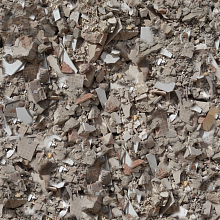 Seamless PBR Concrete Rubble Texture with Debris and Fragments
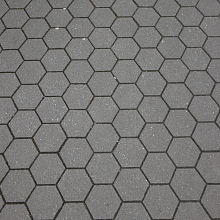 Seamless Hexagonal Concrete Tile PBR Texture 4K
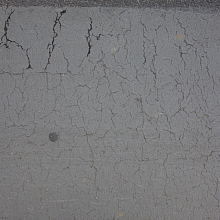 Cracked Asphalt Texture with Weathering