Mastering Glossy PBR Textures for Realistic Shiny and Wet Surface Effects
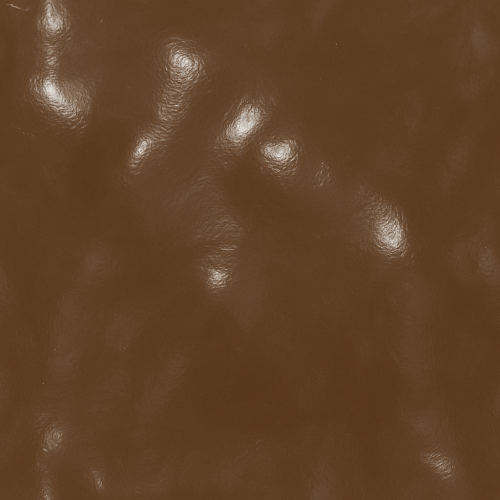
Capturing high-fidelity glossy PBR textures requires a disciplined approach to acquisition, as the very nature of reflective surfaces imposes unique challenges in gathering accurate physical data. Unlike diffuse or matte materials, glossy surfaces—such as lacquered wood, ceramic glazes, or polished plastics—exhibit complex specular reflections that can lead to pronounced artifacts or misinterpretations if improperly handled during capture. Achieving physically plausible albedo, roughness, and normal maps hinges on carefully controlling lighting conditions, camera settings, and post-processing workflows, while also considering how these elements integrate within PBR shading models in engines like Unreal Engine or Blender.
The core difficulty with glossy materials lies in isolating the diffuse and specular components of reflectance during acquisition. Photogrammetry, the most accessible and widely used method for texture capture, relies on multiple overlapping images to reconstruct surface geometry and texture. However, the specular highlights on glossy surfaces often violate the Lambertian assumption inherent in photogrammetric algorithms, causing inconsistent color sampling and noisy texture maps. To mitigate this, practitioners often employ polarization filters on both the light sources and camera lenses. Cross-polarization techniques effectively suppress specular reflections by filtering out polarized light reflected directly from the surface, revealing the underlying diffuse component. This separation is critical for generating accurate albedo (base color) maps that are free from specular contamination, ensuring that subsequent roughness maps correctly encode microfacet distribution rather than baked-in highlights.
In addition to polarization, controlled lighting setups are essential. Diffuse, soft light sources—such as large softboxes or light tents—minimize harsh reflections and help reveal subtle surface details. However, completely eliminating specular reflections is neither practical nor desirable; capturing these highlights is necessary for estimating roughness and specular response. Therefore, a dual-capture workflow is often adopted: one pass with polarized lighting to extract albedo, and another with directional, unpolarized illumination to capture specular intensity and distribution. The latter can be leveraged to derive roughness maps by analyzing the spread and intensity of specular highlights, either manually or through automated software that estimates microfacet parameters.
For glossy materials such as ceramic glazes, capturing the surface normals accurately is imperative due to the intricate microstructure that influences light scattering. Photogrammetric normal maps can suffer from smoothing artifacts, especially where specular highlights dominate. Supplementing photogrammetry with additional scanning modalities enhances fidelity. Structured light scanning or laser scanning systems provide high-resolution surface normals and geometric detail, which can be baked into normal maps that complement photogrammetric color data. Moreover, for materials exhibiting subsurface scattering or complex layered reflectance (e.g., lacquer with underlying wood grain), multi-spectral imaging or spectral reflectance scanning may be employed to separate surface and subsurface contributions, though these techniques require specialized hardware and expertise.
Calibration is a non-trivial aspect when capturing glossy PBR textures. Calibration targets with known reflectance values, such as diffuse gray cards or spectralon panels, should be included in the capture environment to facilitate color correction and linearization of albedo data. This ensures that the base color maps represent true diffuse reflectance under standardized illumination conditions, critical for physically based shading models that separate albedo from specular response. Some workflows also incorporate specular calibration spheres—chrome or silver-coated balls placed within the capture scene—to record environment lighting conditions and reflections. These reference spheres enable accurate reconstruction of environment maps used in specular and roughness calculations, and assist in calibrating the intensity and angular distribution of specular reflections captured in photographs.
Once raw captures are obtained, authoring glossy PBR textures necessitates careful processing to produce usable texture maps that conform to engine expectations. Roughness maps, in particular, often require manual refinement to ensure appropriate visual response. Since roughness encodes microfacet distribution affecting highlight sharpness, any noise or inaccurate data from reflections can cause unrealistic glossiness or dullness. Techniques such as frequency separation, Gaussian blurring, or procedural noise overlays can be applied to roughness maps to introduce subtle micro-variation, breaking uniformity and avoiding the appearance of plastic or artificial surfaces. Additionally, normal maps derived from photogrammetry or scanning must be tangent-space aligned and optimized for tiling where applicable. Glossy textures frequently benefit from micro-variation baked into normal and roughness maps to simulate small scratches, pits, or brush strokes that scatter light anisotropically, enhancing realism.
Tiling glossy textures introduces particular considerations. Because specular reflections and roughness variations are highly sensitive to pattern repetition, naive tiling can produce obvious artifacts, such as repeated highlight shapes or unnatural gloss transitions. To address this, tileable glossy textures often combine hand-painted or procedural noise with captured data, using techniques like triplanar projection blending or randomized tile offsets in shader implementations. In Unreal Engine, for instance, roughness and normal maps can be combined with procedural masks to dynamically introduce variation at runtime, mitigating tiling artifacts. Blender’s procedural node system similarly allows for layering scanned data with noise and curvature-based masks, enabling artists to author glossy materials that maintain plausibility over large surfaces.
Optimization for real-time engines imposes constraints on texture resolution, format, and performance costs. Glossy materials, due to their reliance on accurate roughness and normal maps, often require higher precision maps (e.g., 16-bit or BC5 compression) to preserve subtle highlight details without banding or quantization artifacts. Efficient use of texture channels is also paramount: for instance, packing ambient occlusion into unused channels of roughness or metallic maps can reduce shader fetches. Furthermore, roughness values must be carefully gamma-corrected and linearized before export, as incorrect encoding can drastically alter perceived glossiness. Unreal Engine’s Principled BSDF and Blender’s Principled BSDF shaders expect roughness in linear space, and deviations can cause highlights to appear either overly sharp or unnaturally dull.
Practical acquisition of glossy PBR textures also involves anticipating environmental factors. Outdoor photogrammetry sessions can be particularly challenging due to uncontrolled lighting and moving reflections. Overcast skies provide diffuse illumination that reduces specular interference but often flatten surface details. Conversely, sunny conditions introduce strong reflections and shadows that complicate albedo extraction. In studio environments, controlling reflections with black flags, neutral density filters, and matte backgrounds can isolate the subject and reduce unwanted bounce light. For objects with highly anisotropic gloss—such as brushed metals or directional lacquers—rotating the sample under fixed lighting or employing gonioreflectometers can capture angular dependencies of reflectance, informing anisotropy maps or custom shader parameters.
In summary, acquiring glossy PBR textures demands a nuanced blend of optical techniques, calibration protocols, and post-processing strategies to separate and accurately capture diffuse and specular components. Achieving physically plausible albedo, roughness, and normal maps for reflective materials requires specialized lighting setups, polarization filtering, and often multi-modal scanning to overcome the challenges posed by shininess and specular highlights. Effective authoring integrates these data into PBR workflows that account for tiling, micro-variation, and engine-specific requirements. Mastery of these acquisition techniques enables artists and technical directors to produce convincing glossy materials that respond predictably within real-time rendering engines, preserving the delicate balance between artistic control and physical accuracy.
Achieving convincing glossy surfaces within physically based rendering (PBR) workflows demands meticulous authoring strategies that integrate both procedural generation and photographic capture techniques. This hybrid approach enables artists to craft seamless, tileable textures that maintain realistic specular behavior, dynamic micro-variation, and nuanced color shifts—even under intense, high-gloss reflections. The challenge lies not only in faithfully replicating the optical properties of gloss but also in ensuring that these materials remain versatile across stylized and photorealistic pipelines and are optimized for real-time engines such as Unreal Engine or offline renderers like Blender’s Cycles.
A foundational principle in glossy PBR texture authoring is the accurate and calibrated creation of the roughness map, which governs the distribution and intensity of specular reflections. Procedural generation excels here due to its inherent control over spatial frequency and pattern variation. Artists frequently leverage noise functions—Perlin, Worley, or fractal-based—to produce smooth gradients or micro-detail that emulate subtle imperfections on glossy surfaces. This method permits fine-tuning the scale and intensity of roughness without visible tiling artifacts, a critical factor for surfaces like polished plastic, lacquered wood, or painted metal where even minor repetition breaks immersion. By layering multiple noise octaves with varying frequencies and contrast adjustments, one can simulate micro-scratches, fingerprints, or smudges that break uniform glossiness and introduce believable wear.
Simultaneously, procedural normal maps complement roughness by simulating the microgeometry that scatters light, reinforcing the perception of gloss. Using height maps derived from procedural displacement or curvature calculations, artists can generate normal maps that introduce subtle folds, undulations, or ripples—features commonly observed in smooth fabrics or synthetic materials. The key is balancing the amplitude of these normal perturbations; excessive distortion can scatter reflections unrealistically, while insufficient detail flattens highlights. Seamlessness in procedural normals is attained by employing tileable noise patterns or domain warping techniques, ensuring that the generated folds or bumps repeat without obvious seams. When integrated into a PBR workflow, these normal maps interact dynamically with the roughness and albedo textures, producing reflections that respond naturally to viewing and lighting angles.
Photographic authoring remains indispensable for capturing authentic color variations and fine surface details that procedural methods struggle to replicate. High-resolution, macro-scale photography of glossy materials—such as varnished wood, glazed ceramics, or polished stone—provides invaluable base color (albedo) data enriched with nuanced color shifts and subtle specular tints. To extract usable PBR channels from photographs, artists must employ careful calibration and post-processing workflows. This involves shooting under controlled, neutral lighting to minimize color casts, using color targets for white balance correction, and capturing multiple exposures to isolate highlight information critical for roughness extraction.
Converting photographic data into physically meaningful roughness maps requires specialized processing. One common technique is analyzing specular highlight falloff and distribution within the photographs to infer surface microfacet roughness. This can be achieved using custom shaders or software like Substance Designer, where reflection intensity maps are inverted and remapped through levels adjustments to generate roughness. Ambient occlusion and height maps may be extracted via photogrammetry or normal-from-height algorithms, further enhancing the surface’s depth and shadowing effects. Crucially, photographic textures often demand manual or semi-automated seam correction to ensure tileability, achieved through clone stamping, edge blending, or frequency-domain editing to suppress visible repetition.
Combining procedural and photographic techniques often yields the most robust glossy textures. For example, an artist might begin with a photographic albedo base to capture realistic color and diffuse detail, overlaying a procedural roughness map to introduce seamless micro-variation and avoid repetitive highlights. Normal maps can be procedurally generated or derived from height data extracted from photos, sometimes blended together to incorporate both real microgeometry and artist-driven detail. This hybrid approach facilitates rapid iteration and adaptability; procedural elements provide parametric control over glossiness and wear, while photographic inputs ground the material in reality.
Ensuring that glossy textures function correctly within real-time engines requires mindful optimization and calibration. In Unreal Engine, for instance, roughness maps should be linear and stored in an 8-bit channel, ideally packed alongside metallic or ambient occlusion channels to conserve texture memory. Artists must verify roughness calibration by previewing materials under multiple lighting conditions, including HDR environment maps and directional light sources, to observe highlight crispness and smoothness. Unreal’s physically based shading model interprets roughness as a scalar controlling the microfacet distribution’s variance, so small differences in map values can drastically alter perceived glossiness. Calibration against reference materials, such as measured BRDF data from real-world samples, helps maintain physical plausibility.
Blender’s node-based material editor offers flexible workflows to integrate procedural and photographic inputs. Artists can blend procedural noise textures with image textures within the roughness input socket, utilizing math nodes to control contrast and scale. Normal maps can be combined via vector math nodes or normal map blending nodes to superimpose procedural detail atop photo-derived normals. Blender’s viewport and render previews facilitate iterative refinement of glossiness parameters, with the ability to test materials under various HDRIs and light rigs. Additionally, baking procedural maps into textures for export ensures consistency when porting materials to game engines or other software.
Micro-variation within glossy surfaces is essential for avoiding the “plastic” or “overly perfect” appearance. Introducing slight, randomized variation in albedo hue and saturation across the texture can simulate subtle pigment shifts caused by wear, environmental exposure, or manufacturing inconsistencies. These color variations are best implemented in high-bit-depth textures (16-bit or higher) or procedural gradient overlays to prevent banding artifacts. Similarly, roughness maps benefit from low-amplitude noise overlays that modulate specular highlights subtly across the surface, preventing uniform reflection and enhancing realism.
Height maps, while less critical for purely glossy surfaces, provide valuable input for parallax or displacement effects that enhance perceived depth and curvature of folds or creases. Procedural height generation techniques, like fractal Brownian motion or ridged multifractal noise, can simulate soft wrinkles or smooth bulges in materials such as leather or coated fabrics. When baked and combined with normal maps, these height maps improve the interaction of light and shadow, reinforcing the material’s tactile quality.
Metallic maps play a secondary role in glossy texturing but remain vital for materials that combine gloss with metalness, such as chrome-plated surfaces or anodized aluminum. Accurate authoring involves isolating metallic regions in the albedo texture—generally desaturated, high-contrast masks derived from photographic or procedural sources—and ensuring that the metallic channel is binary or near-binary, reflecting physically plausible boundaries between dielectrics and conductors. The smoothness and reflectivity of these metals hinge on well-calibrated roughness maps, emphasizing the need for consistent cross-channel calibration.
Ultimately, the integration of procedural and photographic methods for glossy PBR texturing demands a pipeline that prioritizes physical accuracy, seamless tiling, and artistic flexibility. Consistent color management, careful channel packing, and iterative testing under engine-specific lighting conditions are essential steps. By leveraging the strengths of both approaches—procedural control for micro-variation and seamlessness, photographic fidelity for authentic color and detail—artists can produce glossy materials that convincingly respond to light and environment, enhancing immersion in both stylized and photorealistic 3D projects.
Creating and calibrating PBR maps for glossy surfaces requires a deep understanding of how light interacts with materials that exhibit high specularity and refined reflection characteristics. Glossy materials—such as polished metals, varnished wood, wet stone, or painted surfaces—demand precise control over multiple texture channels to achieve believable reflections and highlights without veering into unnatural sharpness or dullness. The primary maps involved—albedo (base color), roughness, metallic, and normal—must be authored and fine-tuned to convey subtle variations in glossiness and reflectivity, while additional maps like ambient occlusion (AO) and height can augment surface detail and shading fidelity.
Starting with the albedo map, it is critical to remember that glossy materials rarely contain direct specular information within the base color. PBR workflows stipulate that the albedo map should represent purely diffuse color data, devoid of shadows, reflections, or highlights. For glossy surfaces, the albedo often appears more saturated and less desaturated than rougher materials because the diffuse component is less obscured by scattering. However, care must be taken to avoid embedding any baked lighting or specular highlights, as these will conflict with physically-based lighting calculations in the engine. When authoring albedo for materials like polished metal or varnished wood, it is useful to reference high-fidelity photographic captures under neutral lighting, ensuring color accuracy. When sourcing from photos, removing specular highlights via techniques like frequency separation or inpainting is essential to maintain a clean base color. For painted or coated glossy materials, subtle color variation and micro-variation in the albedo enhance realism and prevent flatness, especially under varied lighting conditions.
The roughness map is the cornerstone for controlling glossiness and the sharpness of reflections. In PBR workflows, roughness defines the microsurface irregularities affecting the spread of specular reflections and highlights. A low roughness value corresponds to a highly polished, mirror-like surface, while higher values indicate rougher, more diffuse reflections. For glossy materials, it is necessary to author roughness maps with fine-grained detail to capture micro-variation that breaks up perfect reflections and prevents a plastic or artificial look. These subtle variations can be derived from high-resolution scans or photographs of the surface, emphasizing areas of wear, polishing patterns, or slight textural inconsistencies. In practice, a completely flat roughness map set to near zero often results in unnaturally sharp reflections that look computer-generated. Introducing noise or patterned variation within the roughness channel imparts a more organic, believable gloss. Additionally, roughness maps should be calibrated carefully in the engine. For example, in Unreal Engine, the linearity and contrast of the roughness texture can be adjusted through post-processing or material nodes to fine-tune the response under different lighting scenarios. In Blender’s Principled BSDF shader, the roughness input can be previewed interactively, allowing for iterative adjustment of roughness values and their distribution.
The metallic map plays a pivotal role for glossy surfaces that are inherently metallic, such as chrome, brass, or brushed aluminum. The metallic channel acts as a binary or near-binary mask distinguishing dielectric (non-metal) surfaces from metals, affecting both the albedo interpretation and the intensity of specular reflections. For metals, the albedo map is essentially treated as a specular color, while non-metals rely on the specular reflectance constant and roughness to define reflectivity. When authoring metallic maps for glossy metals, precision is key: sharp borders between metallic and non-metallic areas should be avoided unless the material genuinely exhibits such transitions (e.g., painted metal with exposed edges). Instead, smooth gradients or anti-aliased edges can enhance realism. The metallic map is typically a grayscale or single-channel texture, with values from 0 (dielectric) to 1 (metal). Partial metallic values (between 0 and 1) are generally avoided in strict metallic-roughness workflows, but some engines and workflows permit this for blended materials. Calibration of metallic maps should consider the albedo and roughness maps in tandem, as the combined effect determines the final appearance of reflections. In Unreal Engine, the metallic channel often comes packed in the red or blue channel of a texture atlas; understanding engine-specific packing is essential for correct texture authoring.
Normal maps are indispensable for glossy materials as they define the microgeometry that influences light scattering and reflection directionality. For glossy surfaces, subtle normal map details can create micro-facets that scatter reflected light, softening highlights and enhancing the perception of glossiness. When acquiring normal maps, high-resolution photogrammetry or scanned data can provide accurate micro-details. Alternatively, authoring normal maps procedurally or painting them manually allows control over the scale and intensity of surface features. It is important to calibrate the strength of normal maps appropriately: over-exaggerated normals can distort reflections and cause unnatural shading, while overly subtle normals fail to break up specular highlights. Moreover, normal map tiling and seamlessness must be addressed carefully for glossy materials, as repeated patterns in highlights and reflections become more noticeable compared to rough surfaces. Employing detail normal maps or blending multiple normal layers can introduce micro-variation at different scales, mitigating tiling artifacts and simulating complex surface conditions such as fine scratches, brush marks, or water droplets.
Ambient occlusion (AO) and height maps, while not always mandatory, contribute additional shading nuance, especially for surfaces with complex cavities or layered finishes. AO enhances the perception of depth by darkening crevices and occluded areas, which indirectly affects how glossy reflections are perceived. Height maps can be used for parallax occlusion mapping or displacement, adding genuine surface relief that modifies reflection behavior and silhouette. For wet or varnished surfaces, height maps can simulate thin liquid layers or varnish thickness, subtly influencing roughness and glossiness in conjunction with the primary maps. When integrating AO and height maps, it is important to maintain consistency across all texture channels to avoid mismatches that break the illusion of continuity.
Calibration is a critical step that bridges the gap between authored textures and their in-engine appearance. Once maps are created, iterative testing under relevant lighting conditions—HDR environment maps, directional lights, and area lights—ensures that the glossiness and reflectivity behave as intended. In engines like Unreal Engine, physically-based materials benefit from the use of calibrated reference values and material instances that allow real-time parameter tweaking. Profiling the material under varied light intensities and viewing angles reveals if roughness values are too low (resulting in overly sharp reflections) or too high (yielding a dull surface). Adjustments can be made by modifying texture contrast, remapping roughness curves, or blending multiple roughness maps for complex surfaces. For example, a wet surface may require a layered approach where a low-roughness layer simulates the water film atop a rougher underlying surface. In Blender, the Principled BSDF shader’s interactive viewport and the EEVEE or Cycles render engines facilitate quick visualization of changes, enabling fine-grained control over glossiness parameters.
Balancing glossiness, roughness, and reflectivity for diverse shiny and wet finishes demands both artistic intuition and technical rigor. Wet surfaces generally exhibit lower roughness due to the smoothness of water films, increasing the intensity and clarity of reflections. However, water also introduces subtle distortions from surface tension and flow, which can be simulated by normal map variations or animated normal maps. For varnished wood or polished stone, the interplay between reflective finish and the underlying material texture is crucial. Employing multi-layered shaders or blending maps allows the simulation of coatings, where the base material’s roughness map modulates the glossiness of the varnish layer. In this context, the metallic map might be zero, but the roughness and normal maps must be calibrated to reflect the coating’s characteristics accurately. For painted surfaces, specular intensity is typically lower than metals but higher than matte surfaces, so roughness maps must reflect that intermediate glossiness with subtle micro-variation. Additionally, the albedo color saturation and value influence the perceived specular strength, requiring simultaneous adjustment of all channels for visual harmony.
Optimization considerations are also paramount. Glossy materials with low roughness values tend to generate sharp reflections that can stress rendering performance, especially in real-time engines. Effective use of mipmapping and anisotropic filtering reduces aliasing and shimmering artifacts in reflections. Compression artifacts in roughness and normal maps can cause visible banding or noise in reflections, so selecting appropriate texture formats and compression settings is essential. Using grayscale textures for roughness and metallic maps reduces memory usage, but packing multiple maps into single channels (e.g., roughness in green, metallic in blue) can further optimize resource usage if carefully managed. When authoring tileable textures, seamlessness is critical to prevent visible repetition in glossy highlights; employing detail masks or noise overlays helps break uniformity.
In conclusion, PBR map creation and calibration for glossy surfaces demands meticulous attention to the physical properties of light interaction, combined with careful texture authoring and tuning within the target rendering engine. By isolating diffuse color in the albedo, carefully defining the roughness distribution with nuanced micro-variation, precisely assigning metallic values, and sculpting normal maps that simulate microsurface facets, artists can achieve realistic glossy finishes that respond dynamically to lighting. Calibration through iterative testing ensures that glossiness, roughness, and reflectivity coalesce into convincing shiny and wet materials, while optimization strategies maintain performance without sacrificing visual fidelity. This integrated approach underpins the successful implementation of glossy surfaces in contemporary PBR workflows.
FAQ
What is covered in this guide?
This guide explains Mastering Glossy PBR Textures for Realistic Shiny and Wet Surface Effects with practical notes for seamless PBR materials, texture setup, and production use.
Can I use these texture techniques in Blender, Unreal Engine, and Unity?
Yes. The workflow focuses on standard PBR maps and tileable materials that can be used in Blender, Unreal Engine, Unity, archviz, games, and VFX pipelines.
Where can I find textures for this workflow?
Use the AITextured texture library and the related texture links on this page to find seamless PBR materials and preview them before download.
Related Textures
 Procedural Dark Tree Bark PBR Texture
 Procedural Aged Oak Plank PBR Texture
 Seamless PBR Wood Planks Texture Featuring Natural Grain in 4K
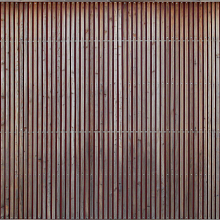 Seamless Wooden Facade PBR Texture in 4K Resolution
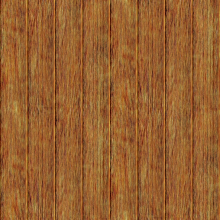 Rustic Aged Wood Planks Texture for 3D Modeling and Rendering
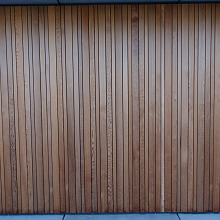 PBR Texture of Vertical Wooden Planks Wall
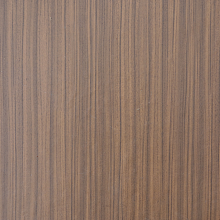 Seamless PBR Wood Texture Featuring Vertical Natural Grain Patterns
 Natural Wood Logs Texture with Snow for 3D PBR