Mastering Plaid PBR Textures for Realistic and Stylized 3D Surfaces
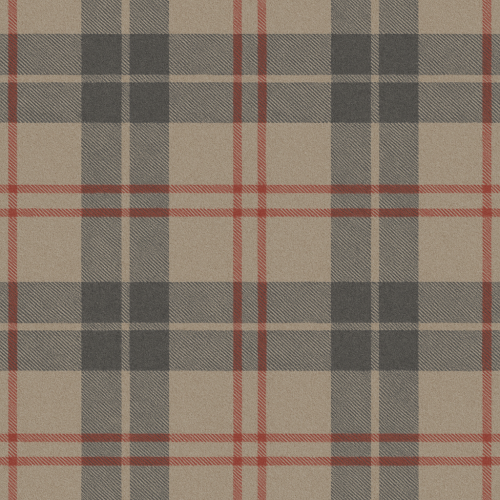
Acquiring high-fidelity plaid PBR textures demands a meticulous approach to capture the intricate weave of intersecting threads, the subtle color shifts inherent in yarns, and the physical characteristics that define both natural textiles and synthetic fabrics. Given the inherently repetitive geometry and pattern of plaid, combined with the complex interplay of diffuse coloration and surface microstructure, the acquisition process must ensure not only visual accuracy but also physical plausibility across all relevant PBR channels. This section delves into the primary methods of obtaining high-resolution plaid textures—high-resolution scanning and photogrammetry—and explores the challenges and best practices for preparing source data suitable for integration in physically based rendering workflows.
High-resolution scanning remains a cornerstone technique for capturing plaid patterns, particularly when working in a controlled environment where lighting and surface positioning can be tightly regulated. Unlike flat graphic patterns, plaid textiles possess subtle three-dimensionality due to the woven threads’ elevations, undulations, and fiber irregularities. Flatbed scanners or specialized textile scanners can capture the base color and fine weave detail with exceptional spatial resolution. However, flatbed scanning alone is insufficient for acquiring the full suite of PBR channels; it primarily produces high-quality albedo maps but lacks surface normal or roughness information.
To extend scanning data into a full PBR set, it is necessary to complement color data with measurements of surface relief and reflectance properties. One approach involves combining flatbed scanning with photometric stereo acquisition, wherein multiple images are taken under varying directional lighting conditions. This technique allows the derivation of accurate normal maps that capture micro-elevations of thread intersections and fiber texture. When executed correctly, photometric stereo can resolve the minute height differences between warp and weft threads, which is essential for generating convincing normal and height maps that contribute to believable light interaction within engines like Unreal Engine or Blender’s Eevee and Cycles renderers.
Capturing roughness and specular variability presents additional challenges. Plaid fabrics, especially natural materials like wool or cotton blends, exhibit heterogeneous roughness due to variations in fiber type, thread density, and finishing processes. Synthetic or blended textiles may have varying degrees of sheen or glossiness, complicating the acquisition of physically accurate roughness maps. Gonioreflectometers or custom-made devices equipped with multi-angle reflectance capture can provide spatially varying roughness and specular data, but these setups are often impractical for most artists. Instead, a common workflow involves approximating roughness variations by analyzing the diffuse albedo contrast and combining this information with empirical knowledge of fabric types. For example, intersections between threads may appear slightly rougher or smoother depending on the yarn twist and finishing, which can be manually painted or procedurally generated to enhance realism in the roughness channel.
Photogrammetry offers an alternative or complementary method for plaid texture acquisition, particularly when dealing with larger fabric samples or complex three-dimensional forms such as folded or draped cloth. Using a high-resolution camera rig, multiple overlapping images are captured from various angles under diffuse, neutral lighting conditions. These images feed into photogrammetric software that reconstructs a dense 3D point cloud and subsequently generates a detailed mesh with an associated texture map. Although photogrammetry excels at preserving real-world surface geometry, it is susceptible to several pitfalls when applied to plaid patterns.
One major issue is the repetitive nature of plaid itself; the consistent, repeating check pattern often causes feature ambiguity in image matching algorithms, leading to reconstruction errors or mesh distortions. To mitigate this, it is critical to introduce scale and orientation markers outside the plaid pattern to aid the software in establishing unique spatial references. Additionally, ensuring controlled lighting with minimal specular highlights and shadows reduces photometric noise and improves texture alignment. The reconstructed mesh can then be baked into tangent-space normal maps and ambient occlusion maps, capturing surface detail and self-shadowing effects that enhance the final PBR texture set.
Color calibration is another vital factor in acquiring plaid textures for PBR workflows. Accurate albedo maps must be free from lighting artifacts such as shadows or color casts, as these will corrupt the physically based shading models. Use of calibrated color targets and RAW image capture is recommended to maintain linear color profiles and consistent white balance throughout the acquisition process. Post-processing steps should include linearization of albedo textures and removal of any baked-in shadows or highlights to ensure compatibility with physically based lighting in real-time engines. This is particularly important for plaid, where subtle color shifts and thread color blending define the pattern’s characteristic look and should not be overshadowed by photographic imperfections.
After acquisition, preparing plaid textures for seamless tiling is essential since plaid patterns are inherently repetitive and often used to cover large surfaces without visible seams. Both scanned and photogrammetric textures require careful edge treatment to avoid mismatches. In scanning, this involves capturing a multiple of the basic plaid repeat unit and cropping precisely to the repeat boundaries. Minor color matching and edge blending may be necessary to eliminate visible seams. In photogrammetry, the 3D mesh can be reparameterized to a UV layout aligned with the plaid’s repeat, allowing baked maps to tile without discontinuities. Generating tileable height and normal maps can be challenging due to the physical thread displacement at edges; techniques such as mirroring and blending edge pixels or procedural correction in software like Substance Designer or Blender’s texture painting can resolve these issues.
Microvariation within plaid textures contributes critically to realism and helps avoid the artificial uniformity that plagues many tiled patterns. Even within a single fabric swatch, thread thickness, dye saturation, and weave tightness vary subtly. Capturing these microvariations requires high spatial resolution in both color and displacement data. In PBR workflows, these variations translate into spatially varying albedo, roughness, and normal detail. When acquisition cannot capture sufficient microvariation due to equipment limitations or surface homogeneity, procedural noise layers or subtle vertex displacement modifiers can be employed post-acquisition to simulate these effects. Furthermore, blending multiple plaid texture samples captured from different fabric batches or lighting conditions can enrich the material’s perceived complexity, especially when used with mask-driven blending in Unreal Engine’s material editor.
Calibration across all channels—albedo, normal, roughness, ambient occlusion, height, and metallic—is paramount to maintaining physical accuracy. Since plaid textiles rarely exhibit metallic properties, the metallic channel is typically set to zero or uniform black unless the fabric contains metallic threads, which must be sampled accordingly. Roughness and normal maps require calibration against a real-world reference by comparing rendered shader responses under known lighting conditions. Using standardized HDR environment maps and shader ball previews in software like Blender or Unreal Engine provides a practical way to verify channel accuracy before deployment. Adjustments should be minimal and grounded in measured data rather than artistic guesswork to preserve the integrity of the PBR workflow.
Optimization of plaid textures for real-time usage demands balancing resolution and memory footprint. Due to the geometric repetition of plaid patterns, tiling reduces the necessity for extremely large texture maps, but the base tile must retain sufficient resolution to preserve detail when magnified. Techniques such as mipmapping and anisotropic filtering improve texture sampling quality at oblique angles and distances, preventing blurriness or aliasing. Additionally, generating detail normal maps and roughness overlays can help maintain surface complexity without increasing the base texture size. When authoring materials in Unreal Engine or Blender, instancing plaid texture assets with parameterized variations reduces draw calls and enhances performance while maintaining visual fidelity.
In summary, acquiring plaid PBR textures is a multi-step process that requires high-resolution capture techniques, careful calibration, and diligent preparation to ensure physical accuracy and seamless integration into PBR pipelines. Both high-resolution scanning and photogrammetry have unique advantages and limitations, and often a hybrid approach yields the best results. Attention to pattern repeat alignment, microvariation preservation, and channel-specific calibration ensures that the final textures respond convincingly under diverse lighting conditions and maintain their characteristic visual complexity across various rendering engines and real-time applications.
Plaid patterns remain a staple in texturing due to their intricate interplay of regular geometry and subtle material variation, presenting unique challenges and opportunities within PBR workflows. Replicating these classic grid and checkered designs with procedural or photographic methods demands a careful balance between geometric precision and organic imperfection, especially when striving for realism while retaining artistic flexibility. Both approaches—procedural generation and photographic editing—can be optimized to produce high-fidelity plaid textures that integrate seamlessly into physically based rendering pipelines.
Starting with procedural generation, the core advantage lies in the ability to algorithmically control the exact dimensions, spacing, and layering of the plaid’s intersecting stripes. In software such as Blender’s shader editor or Substance Designer, plaid can be constructed by combining multiple linear gradient nodes or wave textures oriented perpendicularly, layered with additive or multiplicative blending modes to simulate the overlapping threads. These base gradient stripes form the albedo map foundation, where color blending at intersections often uses linear interpolation augmented by subtle hue shifts to mimic dye overlap and fiber translucency. To prevent the pattern from appearing unnaturally flat or repetitive, micro-variation can be introduced through noise functions applied selectively to color channels or stripe edges, simulating the slight irregularities that naturally occur in woven fabrics.
Beyond albedo, procedural workflows allow coherent generation of roughness and height maps directly tied to the stripe pattern. For instance, roughness variation can correspond to the change in fiber density at stripe intersections, where overlapping yarns create localized sheen differences. This effect can be emulated by modulating roughness values with a noise texture combined with the stripe mask to create subtle, plausible roughness gradients. Height maps, critical for baking realistic normal maps or driving parallax effects, can be generated from the same procedural base by assigning different height values to individual stripes and their intersections, often with soft falloff to avoid hard edges. These height variations replicate the raised weave intersections, enabling convincing light interaction and shadowing. Ambient occlusion (AO) maps can be baked or procedurally approximated by sampling the height map’s concavities, emphasizing the weave’s depth and adding realism without excessive geometry.
When metallic properties are relevant—typically minimal for fabric but sometimes applicable for threads with metallic fibers or embellishments—a separate mask generated via procedural patterns can isolate these areas. This mask controls the metallic channel in the PBR workflow, ensuring that metallic sheen is correctly localized without contaminating the organic textile regions.
Tiling is a critical consideration in procedural plaid creation. Since plaid is inherently repetitive, textures must tile seamlessly without visible seams or pattern misalignment. Procedural systems excel here, as patterns can be mathematically designed to loop perfectly. However, care must be taken to avoid obvious repetition artifacts, which can be mitigated by introducing large-scale variation in color tones or overlaying subtle noise textures that break uniformity. These micro-variations are essential to prevent the pattern from appearing synthetic or overly mechanical in engine use.
Calibration of procedural plaid textures involves close attention to scale and color accuracy relative to the target garment or surface. Calibrating the size of the stripes and grid spacing to real-world units ensures the pattern reads correctly at typical camera distances, avoiding distortion or loss of detail in game engines like Unreal Engine or Blender’s Eevee and Cycles renderers. Color calibration is equally important; procedural color outputs should be adjusted within linear color space workflows to maintain consistency across lighting conditions and match photographic references when necessary.
Photographic authoring of plaid textures offers a complementary approach, particularly effective when replicating specific fabric samples with complex color interactions, subtle gradients, and natural imperfections. High-resolution scans or macro photographs of plaid textiles serve as excellent starting points for albedo map creation. The challenge here lies in isolating the plaid pattern from lighting artifacts, shadows, and highlights to produce clean, tileable textures. This process typically involves careful image editing in software like Photoshop or Affinity Photo, where pattern edges are aligned, and seams are corrected to ensure seamless tiling. Using clone stamping, healing brushes, and content-aware fills, artists can remove unwanted artifacts while preserving the intricate weave detail.
Once a clean albedo base is established, photographic textures can be used to derive the other PBR channels. Roughness maps can be manually painted or generated via desaturation and contrast adjustment of the albedo or secondary grayscale images, representing the fabric’s micro-surface reflectivity variations. For greater accuracy, specialized texture capture setups using polarized light or multi-angle photography can isolate roughness and specular properties. Normal maps are often generated through photogrammetry or height map extraction using displacement filters on grayscale images. These normal maps capture the subtle surface undulations of the woven threads, critical for realistic light response. Ambient occlusion maps may be baked from 3D scanned geometry or approximated using curvature filters applied to the normal or height maps, emphasizing crevices between yarns.
Height maps derived from photographic data require particular attention to detail, as photographic height cues often contain noise or inconsistent lighting-induced shadows. Careful manual cleanup or use of machine learning-based denoising filters helps produce usable height data that can drive parallax occlusion mapping or displacement in real-time engines. Metallic maps are seldom relevant for standard plaid fabrics but can be integrated if the source material contains metallic threads; these must be hand-painted or extracted from specific photographic channels.
In terms of tiling photographic plaid textures, the main difficulty lies in the natural irregularities of woven fabric which often causes seams to become visible when the pattern repeats. To mitigate this, edge blending and seamless cloning techniques are applied to the photograph edges, sometimes combined with subtle procedural noise overlays or hand-painted detail to mask repetition. Additionally, partial desaturation or hue shifts across tiled UV islands can be introduced in shaders to further disguise repeats without compromising the fabric’s authentic appearance.
Engine integration of both procedural and photographic plaid textures requires balancing fidelity and performance. In Unreal Engine, procedural plaid can be implemented using Material Editor nodes, leveraging gradient and noise functions to create dynamic, customizable patterns controllable via parameters exposed to artists or technical directors. This flexibility supports real-time variation in stripe thickness, color palette, and sheen, enhancing adaptability for different garments or environmental conditions. Photographic plaid textures, once optimized and compressed appropriately (using BC7 or ASTC formats), are imported as texture assets with their PBR channels assigned in the material input slots. Normal and roughness maps must be carefully gamma corrected—normals linearized, roughness in linear space—to ensure accurate shading.
In Blender, procedural plaid can be authored entirely within the shader nodes, benefiting from the node system’s procedural power and real-time viewport preview. Procedural height and normal data can be converted into bump maps for Eevee or used in Cycles for displacement. Photographic plaid textures in Blender require UV unwrapping with well-planned seams, and shader setups must include appropriate mapping nodes to maintain tiling and scale consistency. Both engines benefit from the use of Mipmaps and anisotropic filtering to preserve detail at varying viewing angles and distances, crucial for plaid patterns where sharp grid lines can otherwise alias or blur undesirably.
Optimization strategies for plaid textures include limiting resolution to the smallest size that preserves pattern clarity at the intended viewing distance, compressing textures with minimal artifacting, and baking procedural variations into texture atlases when performance constraints preclude runtime generation. Additionally, introducing multi-channel packed textures (e.g., roughness in one channel, AO in another) reduces memory overhead while maintaining full PBR fidelity.
In conclusion, the creation of plaid PBR textures through procedural and photographic authoring requires a deep understanding of both the pattern’s geometric regularity and the fabric’s material complexity. Procedural methods excel in scalability, parametric control, and seamless tiling, offering stylized and customizable variants with dynamic roughness and height detail. Photographic methods provide unparalleled realism, capturing the nuanced color blending and microstructure of real fabrics but demand rigorous editing and calibration for seamless integration and performance efficiency. Mastery of both approaches, combined with precise channel calibration and engine-specific optimizations, enables the production of plaid textures that are both visually convincing and technically robust within PBR workflows.
Achieving a fully realized plaid texture within a physically based rendering (PBR) workflow necessitates a disciplined approach to crafting each of the essential maps—albedo (base color), roughness, metalness, normal, and height—while respecting the unique optical and material qualities inherent to woven textiles. Plaid patterns, with their characteristic intersecting stripes, subtle color variations, and fabric-specific reflectance properties, pose distinct challenges in capturing believable surface detail and light interaction. Successful construction of these maps requires careful consideration of both the macro-scale pattern geometry and the micro-scale fabric structure, ensuring the final shader responds realistically under varied lighting environments in engines like Unreal Engine or Blender’s Eevee and Cycles.
Starting with the albedo map, it is crucial to accurately represent the plaid’s color palette, which often includes soft whites and muted, cool aqua tones. Unlike purely flat color fills, these colors should exhibit subtle variations to simulate the dye absorption and fiber reflectance inherent in woven cloth. A common pitfall is producing albedo maps that are overly saturated or uniform, which results in an artificial, plastic-like appearance under PBR lighting. Instead, the albedo texture should be authored with a slightly desaturated, matte quality, avoiding any baked-in shadows or highlights that belong to other maps. When scanning or photographing fabric swatches, use a calibrated color workflow with color targets and neutral gray cards to maintain fidelity. If painting manually, sample directly from photographic references or employ color correction to neutralize lighting bias. The soft whites in the plaid demand special attention; they must be bright enough to suggest the fabric’s natural highlights but restrained to avoid clipping or overexposure in the albedo channel, as this can distort the energy conservation principle vital to PBR.
The roughness map encodes the microsurface scattering behavior of the plaid fabric, governing how sharp or diffuse reflections appear. Textile surfaces generally exhibit higher roughness values compared to metals or plastics due to their fibrous microstructure. For plaid, the roughness should not be uniform; variations arise from the weave density, yarn thickness, and the presence of different dye treatments. For example, the white threads might have a slightly lower roughness (thus appearing marginally smoother) compared to the aqua or darker colored threads, which may scatter light more diffusely due to deeper dye penetration or fiber composition. This subtle roughness variation enhances surface complexity and prevents the pattern from looking flat. Creating the roughness map often involves desaturating and inverting grayscale versions of the albedo or detail maps, then applying localized adjustments to simulate fiber-level micro-variations. This can be augmented by procedural noise or hand-painted detail to break repetition and reinforce the tactile quality of fabric. When authoring roughness in tools like Substance Painter or Designer, leverage curvature and cavity maps derived from the normal and height data to drive localized roughness changes, simulating the way light interacts differently with raised yarns versus recessed areas.
The metalness map in plaid textures is typically straightforward, as textile materials are non-metallic. This map should be set to zero across the board, ensuring the shader treats the surface as a dielectric material. However, certain specialized plaid fabrics might incorporate metallic threads or reflective elements, in which case localized metalness values would be necessary. For standard cloth, any metalness values above zero will conflict with PBR energy conservation and produce unnatural reflections, so it is essential to maintain a clean, black metalness map.
Normal maps are critical for simulating the subtle surface undulations and weave structure of the plaid fabric. Given that plaid is a woven pattern, the normal map should reflect the interlacing of warp and weft threads, capturing the raised yarn edges and depressions created by the fabric’s texture. This three-dimensional relief significantly affects how light grazes the surface, influencing both specular highlights and shadowing. Generating a normal map can begin with a high-resolution height map derived from macro photography or procedural generation. Photogrammetry or photobashing techniques can capture the intricate weave geometry, but care must be taken to remove color information and ensure the data encodes only surface orientation. When authoring the normal map, subtle directional anisotropy—reflecting the alignment of threads—can be enhanced by using directional blur and custom filters. This anisotropy is particularly important in plaid textures because it influences the way light glances off the fabric, contributing to realism. In engines like Unreal, anisotropic shading models can be utilized to further exploit these directional cues, improving the fidelity of the final render.
Height maps serve as the foundation for both the normal map and any parallax or tessellation effects. For plaid textures, the height map should represent the fabric’s weave depth, where individual threads rise above the base plane. This map is typically a grayscale image where lighter values denote higher elevations. Creating an accurate height map involves isolating the weave pattern, including the raised intersections of the plaid’s stripes and the subtle depressions between yarn bundles. Photogrammetric scans or displacement captures can be processed into height maps, or they can be generated procedurally using tileable weave patterns combined with noise to simulate micro-variations. The height map should be carefully calibrated for scale; excessive displacement values can cause unnatural silhouette distortions or surface artifacts in real-time engines, while too little will flatten the perceived depth. When using height maps in Blender’s Cycles or Unreal Engine’s tessellation pipeline, balance between performance and visual fidelity is crucial. For real-time applications, consider limiting tessellation levels or using parallax occlusion mapping as a more optimized alternative.
Ambient Occlusion (AO), while not one of the traditional PBR maps, plays an important supporting role in plaid textures by enhancing the perception of depth and thread separation. A well-crafted AO map can subtly darken the crevices between yarns, accentuating the weave pattern without introducing harsh shadows. AO can be baked from high-poly models or generated procedurally from the height map. For plaid, ensure AO is finely detailed enough to capture the narrow gaps between threads but not so strong as to create unrealistic contrast that contradicts the soft lighting typically found in fabric materials.
Tiling is a significant consideration when authoring plaid PBR textures. Plaid patterns are inherently repetitive, but careless tiling leads to obvious seams and pattern repetition that break immersion. To mitigate this, create tileable versions of the albedo, roughness, normal, and height maps with consistent pattern alignment and edge blending. Employing micro-variation through subtle noise overlays or secondary detail maps can disrupt the uniformity at a smaller scale, making tiling less perceptible. Additionally, consider using triplanar projection or blending multiple tiled textures with different offsets or rotations in the shader to further reduce repetition artifacts.
Calibration across all maps is essential to maintain physically plausible results. The albedo’s brightness and hue should be checked against reference photographs under neutral lighting conditions, ensuring the values fall within the sRGB range expected for textile materials. Roughness values must be tested in the target engine’s lighting environment to confirm that reflections behave realistically, avoiding overly glossy or matte outcomes. Normal and height maps should be previewed with directional light to verify that surface details respond appropriately without causing visual noise or aliasing. Iterative feedback loops between authoring software and rendering engines like Unreal Engine and Blender are vital; both engines provide real-time material previews that help diagnose and correct issues early in the workflow.
Optimization is another key factor, especially for real-time applications. Plaid textures, due to their complexity, can be texture-heavy when supporting high-resolution detail across multiple maps. Use compressed texture formats where possible, and consider channel packing strategies—for example, packing roughness, metalness, and AO into separate channels of a single texture—to reduce memory footprint and draw calls. When creating normal maps, prefer tangent-space normals with appropriate mipmapping to maintain detail at different viewing distances. Height maps can be downscaled or replaced with simpler bump maps when tessellation is not feasible. Leveraging engine-specific features such as Unreal’s virtual texturing or Blender’s texture baking can further streamline performance without compromising quality.
In practical terms, when importing plaid PBR textures into Unreal Engine, configure the material’s blend mode as opaque and assign the maps to their respective slots—Base Color, Roughness, Metallic (set to zero), Normal, and Height (if using tessellation). Enable anisotropic shading models if available and adjust roughness parameters to reflect the unique fiber properties. In Blender, use the Principled BSDF shader, ensure sRGB color space for albedo, linear for roughness and metallic, and connect normal and displacement nodes appropriately. Use the Displacement node with either bump mapping or true displacement depending on rendering engine and performance constraints.
By integrating these nuanced considerations across all PBR maps, plaid textures can convincingly replicate the interplay of light, shadow, and surface detail that defines woven fabrics. This comprehensive, map-driven approach ensures that the characteristic soft whites and cool aquas of plaid patterns are not only visually accurate but also physically plausible, delivering a tactile realism that holds up under diverse lighting scenarios and viewing conditions.
FAQ
What is covered in this guide?
This guide explains Mastering Plaid PBR Textures for Realistic and Stylized 3D Surfaces with practical notes for seamless PBR materials, texture setup, and production use.
Can I use these texture techniques in Blender, Unreal Engine, and Unity?
Yes. The workflow focuses on standard PBR maps and tileable materials that can be used in Blender, Unreal Engine, Unity, archviz, games, and VFX pipelines.
Where can I find textures for this workflow?
Use the AITextured texture library and the related texture links on this page to find seamless PBR materials and preview them before download.
Related Textures
 Procedural Lime Plaster Wall PBR Texture
 Procedural Stamped Sidewalk Concrete PBR Texture
 Procedural Fine Asphalt Road PBR Texture
 Procedural Pitted Concrete PBR Texture
 Seamless Concrete Pebble PBR Texture in 4K Resolution
 Seamless PBR Concrete Rubble Texture with Debris and Fragments
 Seamless Hexagonal Concrete Tile PBR Texture 4K
 Realistic Concrete Paving Brick Pattern Texture