Mastering Seamless Mermaid Scale Textures for PBR Workflows in 3D Design
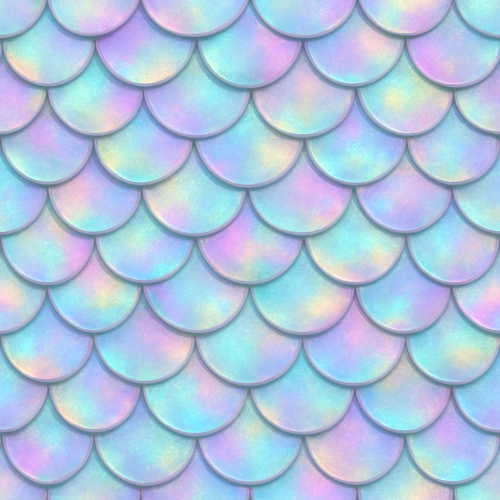
Capturing authentic mermaid scale textures for physically based rendering workflows demands a meticulous approach, as these surfaces combine intricate microgeometry with complex optical properties such as iridescence and subtle pastel coloration. The acquisition process typically begins with the selection or fabrication of a physical reference that mimics the desired scale pattern—whether sourced from natural analogs like fish or reptile scales or crafted materials designed to replicate mermaid aesthetics. The core challenge lies in accurately capturing the nuanced interplay between surface relief, reflectance, and color shifts caused by thin-film interference effects common to iridescent scales.
Photogrammetry and high-resolution scanning form the backbone of contemporary acquisition techniques. Photogrammetry, relying on multi-view stereo reconstruction from calibrated camera arrays, excels in capturing detailed color information and surface topology over moderately sized scale patches. However, the technique’s accuracy in microgeometry detail depends heavily on image resolution, lens quality, and lighting conditions. For mermaid scales, which often feature fine ridges and subtle embossing, it is essential to employ macro lenses with high resolution sensors (ideally full-frame or medium format) to resolve features on the order of tens of microns. A controlled environment with diffuse, adjustable lighting sources helps minimize specular highlights that may obscure surface detail, while specialized illumination setups emphasizing grazing angles can reveal fine surface undulations critical for normal and height map extraction.
High-resolution 3D scanning techniques, such as structured light scanning or laser scanning confocal microscopy, offer complementary advantages. Structured light scanners, capable of sub-millimeter accuracy, can more faithfully capture the micro-relief and curvature of scales, particularly when paired with multi-spectral cameras that capture subtle color gradations and iridescent shifts. Laser confocal microscopy or focus variation instruments push resolution further, resolving nano-scale surface textures that inform height and roughness maps. However, such equipment is less portable and demands careful calibration. For instance, ensuring that the scanner’s baseline and sensor alignment remain stable throughout acquisition is critical to avoid spatial distortions that would translate into incorrect normal map generation.
Lighting setup during acquisition is a pivotal factor in capturing the optical complexity of mermaid scales. Since these surfaces often exhibit iridescence—color shifts caused by light interference—the illumination must be designed to reveal these effects without overwhelming the image with specularity. Multi-directional LED arrays with adjustable intensity and color temperature provide the flexibility to simulate lighting conditions that accentuate pastel hues and subtle color gradients inherent to mermaid scales. Polarized light sources combined with linear polarizing filters on the camera lens can reduce unwanted reflections, revealing the base coloration and surface detail more accurately. Additionally, capturing the subject under varied lighting angles enables the creation of a light-dependent albedo dataset, which can be used to approximate the angular reflectance behavior in the PBR workflow.
Once raw photographic and scan data are acquired, preprocessing is essential to prepare the textures for PBR authoring pipelines. Photogrammetric reconstruction outputs a dense mesh and texture maps that often contain noise, misalignments, and lighting inconsistencies. Initial mesh cleanup involves removing outliers, filling holes, and retopologizing to create a clean, quad-based mesh suitable for baking. Texture maps—albedo, normal, and ambient occlusion—require color correction to neutralize color casts introduced by lighting or camera sensors, often performed in linear color space to preserve physical accuracy. The albedo map must be stripped of shadows and specular highlights to ensure it represents diffuse reflectance only, which is critical for PBR shading models to function correctly.
Normal maps derived from high-resolution scans or photogrammetry can contain high-frequency noise and artifacts caused by scanning errors or surface contamination. Applying smoothing and denoising filters while preserving edge definition is necessary to maintain detail without introducing visual artifacts. Height maps, which encode surface displacement, should be generated with attention to scale and depth range calibration, often requiring comparison against known physical measurements or scale bars included in the acquisition stage. Proper calibration ensures that the height maps translate accurately into displacement or parallax effects within game engines or rendering software.
Micro-variation, a key component for breaking uniformity and enhancing realism in tiled textures, can be incorporated during processing by extracting multiple scale samples from the raw data and blending variations in color, roughness, and normal maps. This approach prevents obvious repetition when the textures are tiled across large surfaces. Procedural noise or hand-painted variation layers can complement this step to introduce subtle differences in reflectance properties and surface microstructure.
When integrating mermaid scale textures into PBR engines such as Unreal Engine or Blender’s Cycles and Eevee renderers, optimization is crucial. Due to the complexity of iridescent materials, baked approximation techniques are often employed. For example, base color maps can be augmented with custom channel packing to store iridescence intensity or hue shift parameters in unused texture channels, facilitating shader-driven color shifts without the overhead of full spectral rendering. Roughness maps benefit from careful calibration to match the physical scattering properties of the scale surface, balancing smoothness with microfacet distribution to reproduce the soft highlights and subtle gloss typical of natural scales.
Ambient occlusion (AO) maps should be baked with high fidelity to emphasize the crevices between scales, reinforcing depth perception and shadowing in real-time rendering. When using displacement or parallax occlusion mapping, height maps must be optimized to maintain performance while preserving the impression of scale relief. Techniques such as mipmapping and anisotropic filtering improve texture sampling quality at oblique viewing angles, which is particularly important for close-up shots of scale surfaces.
In summary, the acquisition of mermaid scale textures for PBR workflows is a multi-stage process that balances high-resolution imaging, precise 3D scanning, and sophisticated lighting to capture both geometric and optical intricacies. The subsequent preparation of raw data demands rigorous cleanup, color correction, and calibration to ensure the extracted maps—albedo, roughness, normal, AO, and height—faithfully represent the physical properties of the scales. Incorporating micro-variation and optimizing texture maps for engine compatibility complete the pipeline, enabling the creation of convincing, reusable mermaid scale materials that respond accurately to dynamic lighting and viewing conditions within modern rendering environments.
Creating convincing mermaid scale patterns within a PBR texturing workflow demands a careful balance between the organic complexity of natural scale formations and the technical precision required for real-time rendering engines. This involves leveraging both procedural generation techniques and photographic manipulation to craft delicate, overlapping scales with the characteristic smooth glossiness and subtle iridescent sparkle intrinsic to mermaid aesthetics. The goal is to produce textures that not only tile seamlessly but also accommodate micro-variations essential for breaking repetition and enhancing realism. Here, we dissect the methodologies, toolsets, and workflow considerations necessary to achieve this within modern PBR pipelines, addressing key texture maps—albedo, roughness, normal, ambient occlusion (AO), height, and metallic—while focusing on calibration and optimization for engines such as Unreal Engine and Blender.
Procedural generation offers a fundamental advantage in creating mermaid scale patterns due to its parametric flexibility and inherent tileability. Tools such as Substance Designer excel in this domain, allowing artists to algorithmically define scale shapes, spacing, and overlap through node-based workflows. Typically, the base scale pattern starts with a hexagonal or teardrop cell distribution, which can be modulated via noise or curvature functions to introduce organic imperfection. Overlapping scales are best accomplished by layering multiple offset cell patterns with alpha blending or height-based masking to simulate the subtle depth between scales. Procedurally generated height maps serve as a critical input for both normal map derivation and parallax effects, defining the micro-geometry of each scale’s edge and curvature.
When authoring the albedo map procedurally, it is crucial to encode the pastel color palette characteristic of mermaid scales, often a blend of soft blues, pinks, purples, and greens with iridescent undertones. Instead of flat colors, subtle gradients and hue shifts across the scales can be introduced using gradient maps driven by curvature or world space coordinates to emulate light scattering effects. Procedural noise should be employed sparingly here to avoid unnatural uniformity while still providing micro-variation to prevent the texture from appearing too synthetic. For iridescence, while true optical interference is beyond standard PBR workflows, a practical approximation can be achieved by blending multiple color layers with varying roughness and specular intensity based on viewing angle, simulated through Fresnel masks or curvature-based masks within the procedural graph.
Photographic manipulation complements procedural techniques by providing rich, real-world detail and textural complexity that can be challenging to generate algorithmically. High-resolution photographs of fish scales, reptilian skin, or textured fabrics with similar overlapping patterns can be used as source material. These images undergo extensive correction—color grading to shift hues toward pastel and iridescent tones, desaturation to avoid oversaturation, and contrast adjustments to highlight scale edges. Photographs must be carefully tiled and edited to remove seams, often utilizing tools like Photoshop’s offset filter combined with clone stamping, healing brush, and frequency separation to maintain scale detail without obvious repetition. Once a seamless base is established, the image is converted into various PBR maps: the albedo is extracted with gamma correction applied; the roughness map is derived by desaturating and inverting the photographic specular highlights to correspond with the physical roughness of the scales; and the normal map is generated via software like xNormal or Substance Alchemist, which interprets the photometric depth cues into proper surface normals.
Ambient occlusion contributes to the visual grounding of the scales by simulating the soft shadows cast in the crevices between overlapping scales. Procedurally, this can be approximated by ambient occlusion generators that analyze the height map to darken recessed areas. Photographically, AO maps may be baked from high-resolution 3D scan data or approximated by manipulating shadows within the source images. It is important to keep AO subtle and integrated within the shader pipeline rather than baked solely into the albedo, as modern engines prefer AO as a separate grayscale input for dynamic lighting interaction.
Height maps, derived either procedurally or from photos, are integral to achieving believable micro-relief on the scales. These maps should encode fine ridges and scale edges with high precision but remain optimized in resolution and compression to balance quality with performance, especially for real-time applications. Height information enhances normal map fidelity via detail normal map generation and supports parallax occlusion mapping techniques in Unreal Engine, which create a convincing depth illusion without additional geometry. When authoring height maps procedurally, one can use gradient ramps and edge detection filters to accentuate scale boundaries, while photographic height maps may be refined using manual painting to emphasize or soften details as needed.
Metallic maps are generally minimal or unused for mermaid scales unless the design calls for specific metallic accents, such as iridescent flecks or embedded jewelry-like elements. In most cases, the scales themselves are dielectric, with metallic values set to zero. However, subtle specular intensity variations can be controlled entirely via roughness maps and specular settings within the shader, which better captures the glossy yet soft reflections characteristic of wet or bioluminescent surfaces.
Tiling must be handled with precision in both procedural and photographic approaches. Procedural patterns inherently tile due to their mathematical basis, but careful parameter adjustment is required to avoid visible repetition artifacts—this involves introducing randomness in scale size, rotation, or color variation at cell boundaries. When tiling photographic textures, it is vital to maintain consistent lighting and color correction across edges. UV layout strategies also play a role; for example, using UDIM workflows in Blender or Unreal Engine allows for higher detail and reduced repetition by assigning different texture tiles to different model parts.
Micro-variation is a core factor in avoiding flatness in scale patterns. Procedurally, this can be implemented through subtle noise layers affecting albedo tint, roughness variance, and normal map perturbations. Photographically, applying stochastic variation by blending multiple source images or layering hand-painted details can break monotony. Calibration of these variations is critical: excessive noise can disrupt the smooth, glossy finish, while too little results in unnatural uniformity. Iterative testing in engine preview modes, such as Unreal Engine’s Material Editor or Blender’s Eevee viewport, allows for real-time adjustments to roughness and specular parameters under dynamic lighting.
Optimization for real-time environments demands that texture resolutions and channel packing be carefully managed. Combining roughness, metallic, and AO maps into single RGB or RGBA textures reduces shader complexity and memory usage. Normal maps should be compressed with BC5 or equivalent formats, preserving detail without artifacting. Where possible, use mipmapping strategies that maintain detail in close-up views but smooth transitions at distance, avoiding aliasing on fine scale edges.
In Unreal Engine, the Mermaid Scale material setup benefits from using layered materials or material functions to isolate scale pattern generation, allowing easy iteration or swapping between procedural and photographic inputs. Utilizing engine features such as subsurface scattering can subtly enhance the translucent quality of scales, complementing the smooth glossiness. Dynamic parameters can drive iridescence simulation by modulating specular and emissive channels based on camera angle or lighting conditions, approximating the shifting colors seen in underwater environments.
Blender’s shader nodes provide a flexible environment for prototyping scale textures, where procedural generation can be combined with image textures within the Principled BSDF shader. The use of geometry nodes or texture coordinate manipulation aids in achieving accurate tiling and scale orientation on the 3D model. Normal and height maps authored externally can be imported and fine-tuned within Blender’s node editor to balance bump intensity and glossiness before exporting to game engines.
In conclusion, the synthesis of procedural generation and photographic manipulation in producing mermaid scale PBR textures facilitates the creation of delicate, overlapping scales with convincing glossy finishes and subtle sparkle effects. Mastery over the interplay of albedo, roughness, normal, AO, and height maps, combined with meticulous tiling, micro-variation, and optimization strategies, is essential to capture the characteristic iridescent pastel palettes and organic complexity while maintaining performance and visual fidelity within Unreal Engine, Blender, or other PBR workflows.
When creating physically based rendering (PBR) textures for mermaid scales, the goal is to capture the intricate interplay of light, color, and micro-detail that defines their unique, iridescent appearance. Achieving a convincing mermaid scale material involves meticulously crafting each PBR map—albedo, roughness, metallic, normal, and height—to work in concert, delivering a surface that convincingly shifts between subtle translucency, reflective highlights, and complex color gradations. This process requires both technical precision and artistic sensitivity to ensure the scales retain their fantastical quality without sacrificing physical plausibility.
Starting with the albedo map, it is crucial to avoid baked-in lighting or shadows, as these can conflict with dynamic lighting in the engine and reduce realism. Mermaid scales often exhibit a nuanced base color spectrum that includes soft pastel hues, iridescent blues, greens, and purples, with subtle tonal shifts across individual scales. To maintain color fidelity, it is advisable to source high-resolution photo references of natural fish scales or iridescent materials and use these as a starting point for hand-painting or procedural generation. Incorporating calibrated color profiles during authoring—such as working in a linear workflow and ensuring textures are in sRGB space—helps preserve accurate color rendition when imported into engines like Unreal Engine or Blender’s Eevee/Cycles. For added realism, subtle micro-variations in hue and saturation should be embedded within the albedo map, reflecting the natural heterogeneity of scales. This can be achieved through noise overlays or custom masks that modulate color values on a per-scale or even micro-scale basis.
The roughness map plays a pivotal role in replicating the shimmering quality of mermaid scales, as it controls the microsurface scattering and glossiness that dictate how light interacts with each scale’s surface. Unlike typical skin or matte surfaces, mermaid scales require a finely tuned roughness gradient that mimics the smooth, glass-like top layer overlaying a more diffuse base. Begin by creating a roughness map that is predominantly low—indicating a high gloss level—but incorporates subtle variations to simulate the natural imperfections and micro-scratches found on scales. These variations help break up specular highlights and prevent an overly plastic or uniform look. Procedural tools such as Substance Designer can be invaluable here, allowing you to generate tileable noise patterns that are weighted by curvature and ambient occlusion maps to accentuate edges and depressions. When calibrating roughness values, it’s essential to test textures under various lighting scenarios in your target engine, adjusting values so specular highlights maintain crispness without becoming overly sharp or mirror-like.
In the context of metallic maps, mermaid scales typically fall into a non-metallic or dielectric category, as their reflective properties arise from layered iridescence rather than true metalness. Therefore, the metallic map is usually kept at black (zero) across the entire texture unless specific artistic direction suggests otherwise. However, certain stylized interpretations may warrant localized metallic values to simulate pearl-like iridescent sheens or embedded metallic flakes. If metallic values are introduced, they must be subtle and carefully balanced to avoid conflicting with the roughness and albedo, as metallic surfaces interact differently with light and can drastically alter the perceived material if improperly calibrated.
The normal map is essential for conveying the three-dimensional relief of overlapping scales and their micro-structure, which is critical for light to refract and reflect accurately. High-quality, tileable normal maps should be generated from high-poly sculpts or derived from photogrammetry scans of natural scale surfaces where possible. These maps must capture the curvature of individual scales, the subtle ridges along their edges, and any fine surface imperfections. When authoring normal maps, consider layering detail maps to represent both macro- and micro-geometry. For example, a base normal map can define the overall scale shape and overlap, while a secondary detail normal map introduces fine bumps and scratches. In engines like Unreal, these can be combined using material layers or detail normal map blending, preserving sharpness at close view distances while maintaining efficient tiling at scale. Calibration involves checking normal orientation and ensuring tangent space is consistent with the engine’s coordinate system, as errors here can cause lighting artifacts that break immersion.
Height maps or displacement maps complement normal maps by providing real geometric displacement or parallax effects, further enhancing the sense of depth in the scales. These maps are particularly important when the material will be viewed in close-up or under strong directional lighting. Height maps should be authored to emphasize the raised edges of scales and the subtle valleys between them. When working within Blender’s Cycles or Unreal Engine’s tessellation and displacement systems, it is critical to optimize height map resolution and amplitude to avoid exaggerated or unnatural surface distortion. Using midpoint calibration and clamping displacement values can help maintain a balance between visible relief and performance. Additionally, integrating the height map into a parallax occlusion mapping shader offers a cost-effective alternative to tessellation, especially useful for real-time applications where polygon budgets are constrained.
Ambient occlusion (AO) maps, while not strictly part of the core PBR set, are invaluable for enhancing shadowing in the fine crevices between scales. AO maps should be authored or baked from high-poly geometry to capture the occlusion of light in the overlaps and recesses. In practical workflows, AO is typically multiplied with the albedo at runtime or combined within the material shader to soften light bleed and increase material depth. Careful calibration is necessary to avoid overly darkened areas that can flatten the texture or reduce color vibrancy, especially since mermaid scales are often imagined with a luminous quality.
Throughout the authoring process, tiling and seamlessness are crucial considerations. Mermaid scale patterns naturally repeat, so tileable texture sets must be crafted with consistent edge flows and matching color transitions to prevent distracting seams in large surfaces. Tools like Substance Designer facilitate the procedural creation of such seamless textures, enabling fine control over scale layout and randomness. Introducing micro-variation within the tile—through subtle noise, color shifts, or normal perturbations—prevents the pattern from appearing overly mechanical or synthetic when tiled extensively.
In terms of engine implementation, both Unreal Engine and Blender offer robust workflows for fine-tuning mermaid scale materials. Unreal’s material editor, with its support for layered materials, complex roughness blending, and tessellation, allows for dynamic control over the interplay of maps, including real-time adjustment of iridescence through custom shader parameters. Utilizing Unreal’s subsurface scattering options can further approximate the semi-translucent effect seen in natural scales. In Blender, leveraging Eevee’s screen-space reflections and Cycles’ path tracing can help preview material responses under varied lighting setups. The node-based shader editor permits intricate layering of textures and procedural masks that can simulate the complexity of mermaid scales without excessive texture resolution, preserving performance.
Optimizing these maps for runtime also demands attention. Given the detailed nature of scales, a balance must be struck between texture resolution, map channel packing, and shader complexity. For instance, roughness and metallic maps can often be combined into single channels of one texture to reduce memory usage, provided the shader supports unpacking. Normal maps should be generated at resolutions appropriate to the viewing distance, with mipmaps carefully authored to maintain detail without aliasing. Height maps might be downscaled or replaced with parallax occlusion for distant objects to conserve performance.
In conclusion, creating comprehensive PBR maps for mermaid scales requires a holistic approach that respects the physical principles of light interaction while embracing the artistic demands of iridescence and color variation. Through careful acquisition, authoring, calibration, and optimization of albedo, roughness, metallic, normal, and height maps, 3D artists can construct materials that convincingly render the shimmering, layered complexity of mermaid scales across a variety of real-time and offline rendering platforms.
FAQ
What is covered in this guide?
This guide explains Mastering Seamless Mermaid Scale Textures for PBR Workflows in 3D Design with practical notes for seamless PBR materials, texture setup, and production use.
Can I use these texture techniques in Blender, Unreal Engine, and Unity?
Yes. The workflow focuses on standard PBR maps and tileable materials that can be used in Blender, Unreal Engine, Unity, archviz, games, and VFX pipelines.
Where can I find textures for this workflow?
Use the AITextured texture library and the related texture links on this page to find seamless PBR materials and preview them before download.
Related Textures
 Procedural Lime Plaster Wall PBR Texture
 Procedural Stamped Sidewalk Concrete PBR Texture
 Procedural Fine Asphalt Road PBR Texture
 Procedural Pitted Concrete PBR Texture
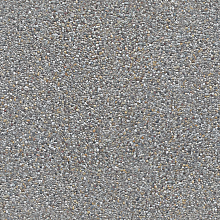 Seamless Concrete Pebble PBR Texture in 4K Resolution
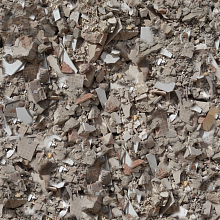 Seamless PBR Concrete Rubble Texture with Debris and Fragments
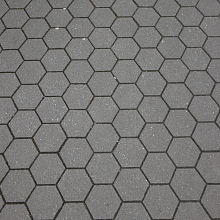 Seamless Hexagonal Concrete Tile PBR Texture 4K
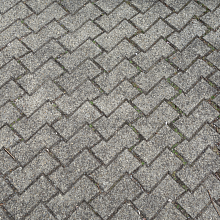 Realistic Concrete Paving Brick Pattern Texture