Mastering Seamless PBR Asphalt and Road Surface Textures for Realistic 3D Environments
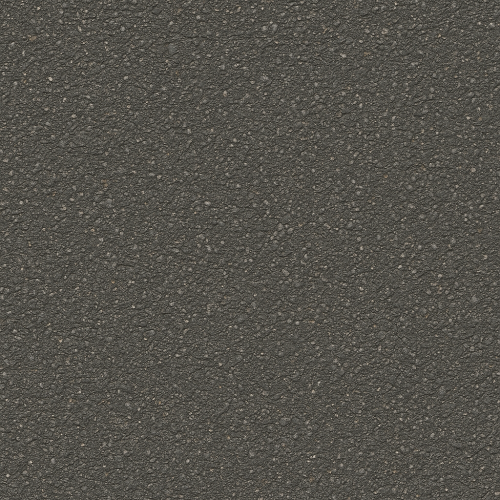
Realistic representation of asphalt and road surfaces within physically based rendering (PBR) workflows is a cornerstone for achieving immersive, believable 3D environments across gaming, architectural visualization, and visual effects pipelines. Unlike generic flat surfaces, asphalt and roads possess complex material characteristics that demand nuanced attention to detail in the acquisition, authoring, and integration of their PBR textures. Their unique interplay of microstructure, weathering, and functional wear patterns necessitates sophisticated texturing strategies to convincingly replicate their visual and physical attributes under dynamic lighting and varied viewing conditions.
At the heart of this challenge lies the intrinsic heterogeneity of asphalt as a material. Composed primarily of aggregate stones embedded in a bituminous binder, asphalt presents a non-uniform, multi-scale roughness profile. The aggregate elements contribute discrete specular reflections and subtle geometric variations, while the binder’s aged, often weathered surface introduces micro-fissures, oil stains, and patches of dirt or moss. These features are not only visually complex but also materially distinct, influencing the albedo, roughness, and normal surface properties in a way that defies simplistic or procedural texture generation. Accurate PBR texturing therefore begins with meticulous data acquisition—high-resolution photogrammetry scans or carefully controlled photobashing from calibrated photo sources are essential to capture the minute elevation changes and subtle tonal shifts inherent to real-world asphalt.
The canonical PBR texture set for asphalt and road surfaces extends beyond a simple diffuse map. The albedo map encodes the base color information, but for asphalt this often includes subtle chromatic variations caused by aggregate composition, tar oxidation, and surface deposits like dust and oil slicks. It must be tightly calibrated against real-world reference to avoid the common pitfall of overly saturated or flat color profiles that break immersion under physically accurate lighting. The roughness map is critical in defining the microsurface reflectance behavior, as asphalt’s roughness varies significantly depending on surface wear, moisture, and contamination. This map guides the specular reflections' glossiness and intensity, requiring fine gradients to represent the transition from polished tire tracks to matte, weathered patches. Normal maps in this context are indispensable for simulating the aggregate protrusions and micro-cracks without resorting to costly geometry. They must be derived from high-fidelity displacement or height data, ideally captured through photogrammetry or scanned microgeometry, then converted with attention to preserving directional lighting cues. Ambient Occlusion (AO) maps complement this by approximating self-shadowing effects in crevices and depressions, enhancing depth perception and contact shadows in real-time engines. Height maps, while sometimes overlooked, provide crucial parallax and tessellation inputs to augment surface relief dynamically, especially when viewed up close.
Metallic maps, although often minimal or uniform zero for asphalt, can still be relevant in specialized contexts such as embedded metal grates or manhole covers integrated into the road surface. Their inclusion ensures comprehensive material response in PBR workflows and facilitates seamless blending between varied road elements. The interplay between these maps demands careful balancing and iterative refinement—the artistic challenge is to maintain physical plausibility without sacrificing the artistic intent or performance constraints of the target engine.
Seamless tiling represents a significant hurdle in asphalt texturing, particularly because asphalt’s visual complexity can betray repeating patterns and obvious seams if not expertly managed. The inherently stochastic distribution of aggregates and wear patterns defies simplistic tileable textures. To overcome this, micro-variation techniques such as multi-layered detail maps, blending multiple texture sets with offset UV channels, or employing procedural noise overlays become indispensable. These approaches break up repetitiveness and add perceptual richness without incurring massive texture memory overheads. Additionally, high-frequency detail normal maps can be overlaid on lower-frequency base textures to simulate fine-grain roughness and subtle surface imperfections at close range. In practical terms, careful UV layout and texel density calibration are essential; roads viewed at oblique angles or from aerial perspectives require adaptable LOD strategies and mipmap biasing to preserve texture clarity without aliasing artifacts.
Calibration is arguably the most overlooked yet vital phase in authoring PBR asphalt textures. It involves the rigorous comparison of texture maps against real-world physical samples under controlled lighting conditions to validate albedo reflectance values, roughness scale, and normal map intensity. Tools like X-Rite color checkers, calibrated DSLR cameras, and lightboxes underpin precise color and reflectance capture during acquisition. Subsequent texture processing must maintain these calibrated values, using linear color workflows and proper gamma corrections, to ensure fidelity when imported into rendering engines. Unreal Engine and Blender, two of the most prevalent platforms for real-time and offline rendering respectively, provide robust PBR shader systems that benefit greatly from calibrated input textures. Unreal’s Material Editor allows for complex layered material setups, enabling procedural blending of multiple asphalt variations and dynamic wetness effects. Blender’s Principled BSDF shader facilitates physically accurate subsurface scattering and roughness interplay, making it ideal for previsualization and cinematic renders. Both engines support advanced features like tessellation, parallax occlusion mapping, and runtime texture streaming, which are instrumental in optimizing performance while retaining high visual fidelity.
Optimization techniques must be employed judiciously to balance realism with real-time constraints, especially in game engines where texture memory and shader complexity impact frame rates. Techniques such as texture atlasing, channel packing (e.g., combining roughness, metallic, and AO into a single texture), and adaptive resolution scaling are commonly used to compress the extensive data sets required for realistic asphalt surfaces. Additionally, the use of virtual texturing or sparse virtual textures in engines like Unreal can facilitate the streaming of high-resolution detail only where necessary, enabling expansive road networks without excessive resource consumption.
Practical authoring tips for mastering seamless PBR asphalt textures include starting with a well-curated, high-resolution photographic base that captures both macro and micro surface details. Avoid over-processing images to preserve natural variation, and leverage non-destructive editing workflows to maintain flexibility during iterative refinement. Employing tileable noise and grunge overlays can mask tiling artifacts effectively, while procedural masks driven by curvature or ambient occlusion maps can simulate realistic dirt accumulation and wear gradients. Validation of textures under multiple lighting environments and camera angles ensures that the material performs consistently and convincingly across diverse scenarios.
Ultimately, the mastery of seamless PBR asphalt and road surface textures hinges on a deep understanding of material physics, meticulous data acquisition, and sophisticated texturing workflows that balance artistic control with technical rigor. The resultant textures serve as a foundation for immersive 3D environments where roads are not mere flat planes but dynamic, tactile surfaces that respond authentically to light, weather, and interaction—significantly elevating the overall realism and viewer engagement in any digital scene.
Achieving photorealistic, seamless PBR asphalt and road surface textures hinges fundamentally on the method of texture acquisition. The fidelity and versatility of your PBR maps—albedo, roughness, normal, ambient occlusion (AO), height, and metallic—are directly tied to how effectively you capture or generate the underlying surface data. Within the pipeline of realistic environment creation, three primary acquisition methodologies prevail: photogrammetry-based scanning of real-world surfaces, fully procedural generation, and hybrid workflows that blend empirical capture with algorithmic augmentation. Each approach carries specific advantages and technical trade-offs, and understanding their nuances is critical for producing high-quality, tileable textures optimized for real-time engines like Unreal Engine or offline renderers such as Blender’s Cycles.
Photogrammetry remains the gold standard for capturing authentic surface detail from existing asphalt and road materials. This technique employs multiple high-resolution photographs taken under controlled lighting conditions, often coupled with calibrated camera rigs or turntables, to reconstruct the surface geometry and color information with sub-millimeter precision. The resulting dense point clouds and textured meshes provide a near-photorealistic foundation from which the suite of PBR maps can be extracted. Albedo textures derived from photogrammetry benefit from the accurate color fidelity and subtle chromatic variations inherent to real asphalt, capturing nuances such as aggregate color shifts, oil stains, and weathering patterns that are difficult to replicate procedurally.
Critically, the photogrammetric workflow must include rigorous calibration steps to ensure consistency across captures. This involves color calibration charts to standardize albedo data under various lighting conditions, neutral gray references to correct exposure, and the use of polarizing filters to minimize specular contamination in diffuse captures. The roughness map—essential for accurately simulating microfacet scattering—can be derived from a combination of specular highlight extraction and spatial variance in reflectance across the surface, but often requires manual refinement or supplemental imaging techniques such as photometric stereo. Normal maps are generated from high-resolution displacement data obtained during mesh reconstruction; however, to ensure seamless tiling, these normals must be carefully processed to avoid visible seams or repeating artifacts. Ambient occlusion maps benefit from baked global illumination calculations on the dense mesh, capturing cavity shading that enhances realism in crevices and cracks.
Height maps, essential for parallax occlusion or displacement mapping, are directly extracted from the reconstructed mesh’s depth information. However, raw depth data frequently includes noise and artifacts from scanning; thus, post-processing with smoothing filters and manual correction is mandatory. Metallic maps are generally trivial for asphalt textures, as road surfaces are predominantly non-metallic, but areas with embedded metallic elements (e.g., manhole covers, embedded rails) require manual masking or selective photogrammetric capture to encode metallicity accurately.
One inherent challenge with photogrammetry is the creation of tileable textures. Real-world surfaces exhibit randomness and spatial variation that resist naive repetition, leading to visible tiling artifacts in engine environments. To address this, texture artists often employ specialized software tools to segment and blend texture patches, leveraging seamless cloning and frequency separation techniques to generate tileable albedo and roughness maps without compromising the authenticity of the original capture. Additionally, micro-variation maps, generated by layering high-frequency detail textures, can be combined with the photogrammetric base to further mitigate repetitiveness in large surface applications.
By contrast, procedural generation offers a highly flexible alternative, enabling the creation of customizable asphalt and road textures from algorithmic rules rather than empirical data. Procedural methods excel at generating infinite variations with parametric control over surface features such as crack patterns, aggregate size distribution, roughness heterogeneity, and weathering effects. These textures are inherently tileable by design, circumventing many of the challenges associated with real-world captures. Procedural generators typically produce integrated PBR maps simultaneously; for example, procedural albedo maps are synthesized from layered noise functions and color gradients simulating aggregate and binder materials, while roughness maps are derived from fractal noise patterns that emulate microsurface irregularities.
Normal and height maps in procedural workflows are often generated through derivative operations on the height data or directly from noise functions, allowing artists to define the scale and intensity of surface bumps and indentations. Ambient occlusion can be approximated using curvature-based algorithms or screen-space ambient occlusion (SSAO) methods baked during texture generation. Metallic maps are usually absent or binary masks for embedded elements since procedural asphalt is primarily non-metallic. The primary advantage of procedural textures lies in their scalability and adaptability: artists can tweak parameters to reflect different pavement ages, climatic weathering states, or construction materials, generating bespoke textures on demand without the logistical overhead of capturing new real-world assets.
However, purely procedural textures may lack the subtle visual complexity and photorealistic fidelity that photogrammetry provides, particularly in capturing unpredictable dirt accumulation, oil stains, or nuanced aggregate color variation. Thus, many advanced workflows adopt a hybrid approach, combining photogrammetric data with procedural augmentation to leverage the strengths of both methods. In a typical hybrid pipeline, a photogrammetry-derived base texture provides authentic albedo and macrostructure, while procedural layers overlay micro-variation, dirt patterns, or crack networks selectively to enhance detail and mitigate tiling artifacts.
For instance, a base albedo and normal map extracted from photogrammetry can be blended with procedural noise textures that introduce variation in roughness or height maps. This hybridization is often implemented within node-based texturing tools such as Substance Designer or Blender’s shader editor, where masks derived from photogrammetric AO or curvature maps control the distribution of procedural detail layers. This approach preserves the realism of captured data while granting artists the flexibility to adapt texture properties dynamically, optimize textures for different LODs, or generate variants for diverse environmental contexts.
Calibration and optimization remain paramount in hybrid workflows. Artists must ensure that the combined procedural and photogrammetric data share consistent scale and orientation to prevent misalignment artifacts. Normal maps from both sources require blending in tangent space with careful normalization to avoid shading discontinuities. Additionally, to maintain performance in real-time engines like Unreal Engine, texture sets derived from hybrid workflows should be atlased and compressed judiciously. Employing mipmaps generated from height or normal data can enhance rendering efficiency without sacrificing perceptual quality at varying camera distances.
In terms of tiling and micro-variation, hybrid texturing excels by utilizing procedural detail layers to disrupt the inherent repetition of photogrammetric bases. By integrating high-frequency noise and stochastic masks, artists can simulate subtle shifts in roughness or slight displacements across tiled surfaces, thereby minimizing the viewer’s perception of repetition. Techniques such as triplanar projection combined with procedural blending further alleviate edge artifacts without requiring costly UV remapping.
Ultimately, the selection of acquisition method depends on project requirements, asset pipeline constraints, and desired visual fidelity. Photogrammetry offers unparalleled authenticity for high-end visualization but demands careful preprocessing and seamless editing to function in tiled environments. Procedural generation provides infinite adaptability and efficient tileability but can require considerable artistic effort to reach photorealistic complexity. Hybrid approaches strike a balance, harnessing the empirical accuracy of photogrammetry and the parametric flexibility of procedural workflows to produce seamless, optimized PBR asphalt and road surface textures suitable for both cinematic renders and interactive real-time environments.
Mastering these acquisition techniques, and understanding their interplay with PBR map authoring, calibration, and optimization for specific engines, equips 3D artists and technical directors with the tools necessary to elevate the realism and versatility of their road surface assets. Whether integrating high-resolution photogrammetric captures into Unreal Engine’s physically based shading framework or procedurally generating micro-variation maps within Blender’s node system, the deliberate choice and combination of acquisition methods underpin the successful creation of believable, seamless asphalt textures that hold up under close inspection and across diverse lighting conditions.
Creating and calibrating the essential PBR maps for asphalt and road surface textures demands a meticulous approach, as the ultimate goal is to capture the material’s distinctive visual and tactile complexity within physically based rendering frameworks. Asphalt, by its nature, exhibits a heterogeneous interplay of reflectance, micro-variation, and subtle surface imperfections, which must be faithfully conveyed across the albedo, roughness, normal, ambient occlusion, height, and metallic channels to achieve convincing realism in real-time engines like Unreal or offline renderers such as Blender’s Cycles. This process begins with thoughtful acquisition methodologies and extends through rigorous refinement and calibration tailored to the idiosyncrasies of asphalt’s physical and optical characteristics.
The albedo map represents the diffuse reflectance of the asphalt surface, stripped of any direct lighting or specular information. Given asphalt’s complex composition—aggregates of mineral stones bound by bitumen—the albedo tends to be a muted, dark gray to black base interspersed with lighter aggregate patches and occasional stains, weathering effects, or tire marks. Capturing this map typically involves high-resolution, diffuse-only photography under controlled lighting conditions to minimize shadows and specular highlights, often utilizing polarizing filters and cross-polarization techniques to isolate the diffuse component. When direct capture is impractical, carefully hand-painted or procedurally generated albedo textures can be augmented with photogrammetric references to preserve the stochastic nature of aggregate distribution and subtle tonal variation. It is crucial to avoid baked-in lighting artifacts in the albedo, as these can interfere with the physically based shading model’s energy conservation and light interaction. Post-capture, the albedo map should be calibrated to maintain realistic luminance levels consistent with measured reflectance values of asphalt, typically ranging between 5–15% reflectance, ensuring the material doesn’t appear unnaturally bright or flat.
Roughness is perhaps the most critical map for asphalt, dictating the microfacet distribution that controls specular highlight sharpness and glossiness. Asphalt surfaces exhibit significant spatial roughness variation due to aggregate size variability, surface wear, and occasional patches of oil or water. Generating an accurate roughness map requires capturing the micro-roughness heterogeneity, which can be approximated from high-magnification gloss or specular response measurements using devices like a glossmeter or through photometric stereo setups. In practice, roughness is often derived from inverted specular or gloss maps extracted from captured images, refined by hand or procedural noise to emulate micro-variation. The map should carefully encode the distinction between smooth, polished aggregates and the rougher bitumen matrix, as well as include subtle gradients where surface wear or embedded dirt alters reflectance properties. Calibration involves visually matching the roughness map’s effect on specular highlights within the target engine, iterating to ensure that the highlights on aggregates remain crisp yet subdued and that the overall surface exhibits the expected matte quality. In Unreal Engine, for instance, roughness values closer to 0.6–0.85 are typical for asphalt, but regional variation must be respected for realism.
Normal maps are indispensable for conveying the fine-scale surface microstructure of asphalt without resorting to costly geometry. The complex interplay of pebbles and fine cracks is best captured by photogrammetry or normal map baking from high-resolution mesh scans. When scanning is unavailable, normal maps can be generated procedurally using height maps or sculpted details, emphasizing subtle relief variations that produce believable shading and parallax effects. A high-fidelity normal map should encode the anisotropic and random surface undulations characteristic of asphalt, ensuring that the aggregates’ edges and voids cast realistic shadows and highlights under directional lighting. Calibration of normal intensity is essential; overscaled normals can produce exaggerated surface bumps that break immersion, while underscaled maps flatten the texture’s tactile richness. A typical workflow involves adjusting the normal map strength in the shader or material parameters within Blender or Unreal until the interplay of light and shadow convincingly mimics real asphalt.
Ambient occlusion (AO) maps complement normals by simulating the self-shadowing that occurs in crevices and around aggregates, enhancing depth perception in the absence of global illumination. AO for asphalt should emphasize the minute cavities between stones, fine cracks, and surface pitting. Generating AO can be approached via baked mesh ambient occlusion, photogrammetric ambient occlusion extraction, or procedural methods that leverage curvature and cavity detection algorithms. The AO map should be subtle and not overly dark; excessive occlusion can flatten the perceived albedo and disrupt the shading balance. When integrating AO maps into PBR workflows, especially in engines like Unreal, it is critical to ensure that AO is multiplied appropriately with the base color or ambient lighting to avoid double-darkening effects. Calibration often involves iterative refinement of AO intensity and blending modes to maintain the material’s natural appearance under varying lighting conditions.
Height maps provide an additional layer of surface detail, enabling parallax occlusion mapping, displacement, or tessellation to simulate the real geometry of asphalt microtopography. Height data is usually derived from photogrammetry or laser scanning, capturing the subtle elevation differences between aggregate surfaces and bitumen depressions. Unlike normal maps, height maps encode scalar elevation data and must be carefully smoothed to avoid unnaturally sharp transitions that can cause rendering artifacts. Calibration of height maps includes scaling the displacement effect to avoid excessive geometric distortion, which would break the illusion of continuity in tiled textures. Optimizing height map resolution and bit depth is also essential to balance visual fidelity with performance constraints, particularly for real-time applications. In Blender, height maps can be converted to displacement modifiers with adaptive subdivision, while Unreal Engine supports height maps for parallax occlusion materials that enhance realism without incurring full geometric cost.
The metallic map is typically the least relevant for asphalt, as bitumen and aggregate are inherently non-metallic materials. In standard PBR workflows, asphalt’s metallic values are uniformly zero, indicating dielectric behavior with no conductive reflectance. However, exceptions may arise if the textured surface includes metallic road markings, embedded metal debris, or wet patches that alter reflectance properties. In such cases, the metallic map must be selectively authored to reflect these localized variations, but this is generally outside the core asphalt texture scope. Maintaining metallic values at zero elsewhere is vital to prevent erroneous specular reflections and maintain physically plausible light interactions.
Tiling and micro-variation are critical considerations when authoring these maps for seamless use in large-scale environments. Asphalt’s visual randomness and surface irregularities must be preserved without obvious repetition or patterning. This is achieved by combining high-frequency detail maps with low-frequency variation layers and employing non-uniform tiling techniques or stochastic sampling. In practice, blending multiple albedo and roughness layers with subtle noise or procedural masks can break up tiling artifacts, while normal and height maps benefit from seamless offsets and carefully aligned edge blending. Cross-channel consistency is paramount; micro-variations encoded in roughness, normals, and height must correspond spatially to maintain material coherence. When exporting maps for engines like Unreal or Blender, it is advisable to use tiled UV layouts and test textures under diverse lighting angles to evaluate the effectiveness of the seamless tiling strategy.
Calibration and optimization must be iterative and engine-specific. Unreal Engine’s physically based shading model demands that maps conform to its linear workflow and sRGB conventions: albedo maps must be linearized, roughness and metallic maps remain in linear space, and normal maps follow the engine’s specific normal encoding format (usually DirectX or OpenGL conventions). Blender’s Cycles renderer requires similar attention to color space and map precision. Practical tips include maintaining 16-bit or higher precision for roughness and height maps to avoid banding, using lossless compression formats when possible, and leveraging engine-specific shader parameters to fine-tune map influence. Profiling performance impact is also critical, as high-resolution maps and displacement can strain real-time rendering budgets; thus, balancing visual fidelity with optimization strategies, such as mipmapping, LOD blending, and runtime texture streaming, is essential for scalable results.
In conclusion, the creation and calibration of asphalt’s core PBR maps require a nuanced understanding of its material structure and optical behavior. Through precise capture, careful refinement, and engine-aware calibration of albedo, roughness, normal, ambient occlusion, height, and metallic maps, artists can convincingly recreate asphalt surfaces that respond accurately to light and environment, delivering immersive realism in both real-time and offline rendered 3D environments.
FAQ
What is covered in this guide?
This guide explains Mastering Seamless PBR Asphalt and Road Surface Textures for Realistic 3D Environments with practical notes for seamless PBR materials, texture setup, and production use.
Can I use these texture techniques in Blender, Unreal Engine, and Unity?
Yes. The workflow focuses on standard PBR maps and tileable materials that can be used in Blender, Unreal Engine, Unity, archviz, games, and VFX pipelines.
Where can I find textures for this workflow?
Use the AITextured texture library and the related texture links on this page to find seamless PBR materials and preview them before download.
Related Textures
 Procedural Stamped Sidewalk Concrete PBR Texture
 Procedural Fine Asphalt Road PBR Texture
 Procedural Pitted Concrete PBR Texture
 Seamless Concrete Pebble PBR Texture in 4K Resolution
 Seamless PBR Concrete Rubble Texture with Debris and Fragments
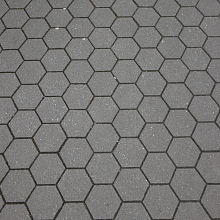 Seamless Hexagonal Concrete Tile PBR Texture 4K
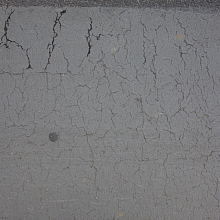 Cracked Asphalt Texture with Weathering