Mastering Seamless PBR Fabric Textures for Realistic Clothing and Upholstery
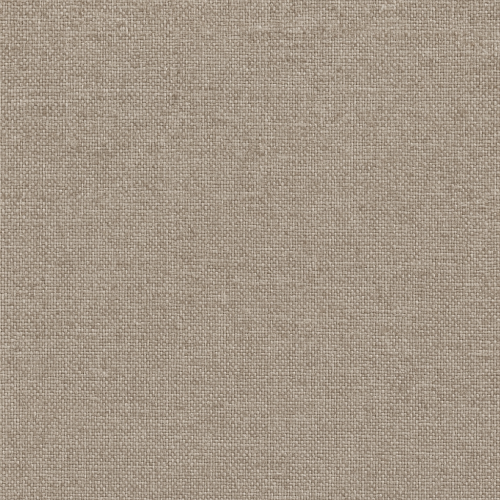
Physically Based Rendering (PBR) has revolutionized digital material creation by offering a systematic, physics-driven approach to simulating surface interactions with light. Within this paradigm, fabric textures present distinct challenges that require careful consideration and specialized techniques to achieve convincing realism, particularly for clothing and upholstery assets. Unlike hard surfaces such as metals or stone, fabrics exhibit complex microstructures, anisotropic scattering, and variable fiber orientations that influence their appearance. Consequently, mastering seamless PBR fabric textures is not merely an artistic endeavor but a technical imperative for 3D artists and technical directors working in games, architectural visualization (archviz), and visual effects (VFX).
At the heart of PBR workflows lies the generation and calibration of multiple texture maps—each encoding specific physical attributes of the surface. For fabric materials, these maps must collectively capture subtle surface details and optical properties that define the tactile quality and volumetric depth of fibers. The albedo (diffuse) map, for example, cannot be a simple flat color but must faithfully reproduce the diffuse reflectance of fibers, accounting for slight color variations caused by weave patterns or dye inconsistencies. Unlike metals, fabric’s albedo rarely contains any specular tint or metallic reflections, so the corresponding metallic map is almost always set to black (zero), enforcing a non-metallic behavior crucial for realistic shading.
Roughness maps play a pivotal role in fabric rendering by modulating the microsurface scattering of light. Fabric surfaces typically demonstrate a range of roughness values depending on fiber type and weave density; cotton might manifest a relatively matte, high-roughness surface, while silk’s smoother fibers yield lower roughness and sharper specular highlights. Crucially, these roughness maps must be authored with high fidelity to capture micro-variations that break uniformity. Uniform roughness often results in visually flat, synthetic appearances, whereas subtle noise and patterning within the roughness channel can simulate the irregularity of real-world fibers reflecting light at different angles.
Normal maps are indispensable for conveying the three-dimensional structure of fabric weaves and fiber orientations. Unlike height maps used primarily for parallax or displacement effects, normal maps encode surface normals at the pixel level to perturb light calculations dynamically. Creating normal maps for fabric involves carefully capturing the weave’s micro-reliefs—whether it be the raised threads of a basket weave or the fine ribbing of corduroy. High-resolution scans or photogrammetry-based captures of real textiles can yield excellent basemaps, which then undergo refinement in authoring software such as Substance Designer or Blender’s node system. For synthetic or stylized fabrics, procedural generation of normal maps can be employed, but must be calibrated against real-world references to avoid unnatural artifacting.
Ambient occlusion (AO) maps complement the normal and roughness data by approximating the self-shadowing effects that occur where fibers or threads intersect or fold. While AO is a screen-space effect in many real-time engines, baked AO maps enhance static lighting scenarios by simulating occluded light regions, adding depth and realism to fabric folds and crevices. The challenge in fabric AO maps lies in balancing contrast—overly aggressive occlusion can make textures appear dirty or overly dark, while insufficient AO results in flatness. In practice, AO maps for fabric are often subtle and combined multiplicatively with the albedo to gently modulate shadowing without compromising color fidelity.
Height maps, although sometimes optional, contribute significantly to realistic fabric texturing when used for parallax occlusion mapping or displacement in offline renderers. Height information captures the vertical relief of the weave structure, which is particularly effective for upholstery fabrics with pronounced textures such as velvet or chenille. The generation of height maps often leverages displacement capture from photogrammetry or height extraction from high-contrast albedo or normal data. However, height maps must be carefully optimized and calibrated to avoid exaggerated surface distortions that break silhouette coherence in animation or real-time applications.
The metallic map is perhaps the simplest channel in fabric PBR textures, as textiles are inherently non-metallic. This map is almost universally set to zero, reinforcing the dielectric nature of fabrics. However, certain engineered or novelty fabrics may incorporate metallic fibers or threads that require localized metallic encoding. In such cases, precision masking and proper calibration are critical to ensure accurate specular behavior without compromising the underlying dielectric appearance.
One of the most critical yet often underappreciated aspects of fabric PBR texturing is the creation of seamless textures capable of tiling without visible repetition or artifacts. Fabrics, by their nature, are repetitive in weave patterns but irregular in fiber orientation and coloration. Achieving seamlessness requires not only technical tiling in the 2D texture space but also the introduction of micro-variation—subtle noise, color shifts, or displacement modulation—to mask tiling artifacts during close inspection or large surface coverage. Procedural noise layers, multi-channel blending, and randomization nodes in tools like Substance Designer facilitate the generation of such micro-variations, enabling textures to maintain visual interest and authenticity over broad expanses without obvious repetition.
Calibration of fabric PBR textures is paramount to ensure consistency across diverse rendering engines and lighting environments. The physical correctness of maps must be maintained by adhering to standardized units and perceptual ranges. For example, albedo maps should be linearized or gamma-corrected appropriately before being input into rendering engines. Roughness values must be verified through iterative real-time previews in target engines such as Unreal Engine or Blender’s Eevee and Cycles renderers, as these engines interpret roughness and specular reflections with subtle differences. Calibration workflows often include test scenes with controlled lighting setups, such as HDRI environments and directional lights, to evaluate the behavior of fabric materials under various viewing angles and intensities.
Optimization is another essential consideration, especially in real-time contexts like game engines. Fabric textures tend to require high-resolution maps to capture detailed weave patterns, which can quickly become performance bottlenecks. Therefore, efficient texture packing strategies—combining roughness, metallic, and AO maps into single channels of packed textures—are commonly employed to reduce memory overhead. Mipmapping and anisotropic filtering help maintain sharpness and reduce aliasing artifacts on fabric surfaces viewed at oblique angles. Additionally, artists must judiciously balance texture resolution with LOD (level of detail) systems to preserve fabric fidelity without compromising frame rates.
Within game engines such as Unreal Engine, fabric materials benefit from physically accurate shading models that support anisotropic reflections, a nuanced effect critical to reproducing the directional sheen of silk, satin, or velvet. Unreal’s material editor allows fine-tuning of anisotropy parameters, normal map orientation, and roughness variations to simulate fiber directionality convincingly. Blender’s shader nodes offer similar capabilities, with principled BSDF shaders that incorporate anisotropic inputs and subsurface scattering options, enabling offline rendering artists to achieve photorealistic cloth materials. Both platforms benefit from PBR texture workflows that emphasize proper input map calibration, seamless tiling, and layered detail.
Practical tips for fabric PBR texturing include starting with high-quality source data—either through calibrated photogrammetry, high-resolution scans, or meticulously crafted procedural textures. Employing nondestructive workflows with node-based authoring tools facilitates iterative refinement and experimentation with map blending and micro-variation. Utilizing reference photography and real-world fabric swatches for color calibration and physical property matching ensures materials respond accurately to lighting. Finally, continuous testing across multiple engines and lighting conditions is vital to confirm that fabric textures retain their intended appearance and performance characteristics throughout production pipelines.
In summary, the importance of seamless, high-quality PBR fabric textures cannot be overstated within physically based rendering workflows. The unique optical and structural complexities of textiles demand a multifaceted approach to map creation, calibration, and optimization. Achieving believable fabric materials hinges on a deep understanding of PBR principles combined with meticulous attention to microdetail, seamless tiling, and engine-specific nuances. For artists and technical directors striving to elevate realism in clothing and upholstery across games, archviz, and VFX, mastering these fabric-specific challenges is a foundational step toward truly immersive digital materials.
Achieving high-fidelity, seamless PBR fabric textures begins with a rigorous acquisition process that captures the intricate interplay of weave patterns, thread-level variation, and the subtle surface imperfections intrinsic to real-world textiles. The fidelity of your base data fundamentally dictates the quality and believability of your final material in any physically based rendering pipeline, whether targeting Unreal Engine, Blender’s Cycles, or other real-time and offline platforms. Mastery of various acquisition techniques—photogrammetry scanning, macro photography, and procedural generation—enables the artist or technical director to construct a comprehensive set of PBR maps that accurately represent fabric’s complex optical and tactile properties.
Photogrammetry scanning remains a cornerstone method for capturing authentic fabric detail, particularly for upholstery and clothing materials with distinct, tactile surface topologies. By carefully photographing a fabric sample from multiple angles under controlled, diffuse lighting, one can reconstruct a highly detailed 3D mesh along with a suite of texture maps. Key to success here is the calibration of the capture environment to avoid specular highlights and ensure consistent exposure, as these can introduce noise and artifacts in normal and roughness extraction. Employing a light dome or softbox setup minimizes harsh shadows and hotspots, providing a more uniform illumination that enhances the photogrammetric software’s ability to discern subtle surface undulations like thread twists and weave irregularities. The resultant mesh can then be used to bake high-resolution normal and height maps, capturing the micro-relief of individual yarns.
However, photogrammetry alone often produces geometry that is too dense or noisy for real-time engines, necessitating optimization workflows post-scan. Decimation algorithms must preserve the salient weave topology without collapsing critical thread-level details. From the optimized mesh, baking tools (Marmoset Toolbag, xNormal, or Blender’s baking system) generate normal, ambient occlusion (AO), and height maps. AO captures the occlusive shadows within the fabric’s interstitial spaces, enhancing depth perception without relying solely on lighting. Height maps extracted from the high-res mesh provide displacement cues for parallax occlusion mapping or tessellation in engines like Unreal, enhancing realism in close-up views. Calibrating the height map intensity is crucial; excessive displacement exaggerates the fabric structure and breaks the illusion, while insufficient detail can make the surface appear unnaturally flat.
Macro photography offers a complementary approach, often favored for capturing albedo and roughness textures with unmatched clarity of color variation and reflectivity nuances. Using a high-magnification lens (preferably a macro lens with at least 1:1 reproduction ratio) and a color-calibrated camera, artists can document the thread color heterogeneity, subtle dye inconsistencies, and dirt or wear marks that define fabric authenticity. The albedo map derived from these images must be meticulously white-balanced and color-corrected using calibrated color targets and software like Adobe Lightroom or Capture One. Preserving the diffuse color fidelity ensures that subsequent roughness and metallic maps reflect physically plausible light interaction.
Roughness, in particular, benefits from targeted photography under controlled lighting conditions that accentuate specular microfacets. By capturing a series of images with directional light at grazing angles, one can infer the roughness distribution—threads with varied fiber types and finishes exhibit heterogenous specular behavior, which must be encoded in the roughness map. This map governs the microfacet scattering model in PBR shaders, dictating how matte or glossy the fabric appears. For fabrics with metallic threads, a sparse metallic map is also necessary; metallic fibers reflect light differently and require precise masking to prevent contamination of the diffuse channel, preserving the physically accurate energy conservation essential in PBR workflows.
Integrating these photographic inputs into a seamless texture demands rigorous tiling and micro-variation strategies. Real fabrics rarely repeat perfectly; a small repeating pattern becomes visually jarring when tiled over large surfaces. One solution is to capture multiple overlapping samples and blend them using specialized software (Substance Designer, Quixel Mixer) to generate stochastic variation layers. These layers introduce subtle albedo shifts, roughness fluctuations, and normal map noise that mimic natural thread irregularities and wear patterns, enhancing realism without adding geometric complexity. When authoring normal maps, it is imperative to retain the directional anisotropy of the weave, as it affects light reflection and fabric sheen, especially in materials like silk or satin. Tools like Substance Designer allow for directional noise and curvature-aware filters to preserve this anisotropy in the final output.
Procedural generation complements photographic and scanned data by filling in gaps where acquisition is impractical or to amplify microdetails beyond camera resolution. Procedural noise algorithms can simulate fiber fuzz, pilling, or subtle fabric wear that occurs over time. These details are often encoded into roughness and normal maps, providing dynamic micro-variation that reacts convincingly to changing lighting environments. Procedural workflows also enable rapid iteration and customization, facilitating the creation of fabric variants (e.g., different thread counts or finishes) without reshooting or rescanning. In Blender, for example, procedural nodes can be used to overlay noise patterns onto baked maps, while in Unreal Engine, material functions can dynamically modulate surface properties based on world-space parameters or vertex colors, enhancing texture richness.
Calibration across all acquisition methods is paramount to ensure physical plausibility and consistency. For instance, the albedo map must be energy-conserving—no pixel should exceed the reflectance threshold that would violate Lambert’s law. Similarly, roughness and metallic maps must be cross-validated so that combined they do not produce unrealistic lighting responses. Gamma correction, linear color space workflows, and consistent bit-depth are non-negotiable to maintain fidelity from capture through to engine import. When importing textures into Unreal Engine, using the appropriate compression settings—such as BC7 for albedo and BC5 for normal maps—preserves detail without excessive memory overhead.
Finally, optimization strategies must address the balance between texture resolution, performance budgets, and visual impact. Fabric textures are often tiled across large surfaces but require high resolution for close-up inspection; mipmapping combined with detail masks can prioritize quality where needed. Additionally, leveraging engine-specific features like Unreal’s virtual textures allows for streaming high-resolution detail selectively, optimizing memory usage. In Blender’s Cycles, displacement mapping based on height maps can be adaptively subdivided to avoid unnecessary geometry generation in distant views.
In summary, acquiring high-quality PBR fabric textures is a multifaceted process that demands a combination of precise photogrammetry, calibrated macro photography, and thoughtful procedural augmentation. Success hinges on capturing the nuanced topology of thread weaves, subtle color variations, and the myriad micro-imperfections that define real-world fabric. Coupled with meticulous map extraction, calibration, and optimization tailored to the target rendering engine, this approach ensures that the final material exhibits the tactile richness and optical authenticity essential for believable clothing and upholstery in modern 3D applications.
Creating and calibrating essential PBR maps for fabrics demands an acute understanding of both the physical characteristics of textile materials and the nuances of digital shader workflows. Unlike hard surfaces, fabrics exhibit complex microstructures—woven threads, fibers, fuzz, and often subtle translucency—that profoundly influence their reflectance and scattering properties. Effective PBR texturing requires not only high-fidelity capture or procedural authoring of maps such as albedo, roughness, normal, ambient occlusion (AO), height, and metallic, but also meticulous calibration to ensure these maps interact correctly under physically based lighting models within engines like Unreal or renderers such as Blender’s Cycles or Eevee.
The albedo map for fabric is foundational, yet deceptively challenging. It encodes the base diffuse color without baked-in shadows or highlights, reflecting the intrinsic coloration of the fibers and weave patterns. Fabric albedo often exhibits low overall saturation due to the presence of multiple fiber types and their interaction with light, so avoiding oversaturated or overly contrasty albedo textures is paramount. When authoring albedo, one must carefully strip out any baked lighting information to preserve physical accuracy. Photogrammetry and high-resolution scanning provide excellent starting points but require post-processing to remove shadows and specular bleed, often through techniques such as multi-angle capture and cross-polarization filtering. Procedural albedo generation, especially for synthetic fabrics like polyester or nylon, lets artists modulate weave patterns and color variation, emulating the subtle micro-variations inherent in real textiles.
Roughness maps for fabrics are among the most critical for realism and must be tailored to the specific material. Unlike metals or plastics, most fabrics have high roughness values with significant local variation caused by weave tightness, fiber orientation, and surface treatments such as coatings or wear. Wool, for example, presents a soft, matte roughness with subtle higher-frequency variation due to fuzz and fiber ends, while silk or satin exhibits smoother, more specular surfaces with lower roughness values. The roughness map should encode these micro-variations to break up specular reflections realistically. When authoring, it is essential to calibrate roughness levels using reference materials and physically based shader previews to ensure that highlights do not appear unnaturally sharp or overly broad. Tools like Substance Painter or Designer allow procedural blending of roughness noise with masks derived from height or normal maps to simulate fiber clumping or pilling, enhancing visual complexity without sacrificing physical plausibility.
Normal maps for fabric are equally nuanced. They must capture the intricate surface geometry of individual threads and fiber bundles at micro and meso scales, translating subtle undulations of the weave and fiber direction into directional lighting cues. High-frequency normal detail is crucial for fabrics because it dramatically influences how light scatters and glances across the surface, contributing to the tactile sensation of texture. When authoring normal maps, scanning techniques such as photometric stereo or high-resolution displacement-to-normal baking from microgeometry scans yield the best results. Alternatively, procedural generation methods can simulate weave patterns by encoding thread direction and curvature mathematically. Calibration involves balancing the normal map’s intensity so that it complements rather than overwhelms the underlying height map and does not introduce unnatural shading artifacts, especially at glancing angles. In engines like Unreal, the interpretation of normal maps can be adjusted through compression and mipmapping settings, so testing at multiple LODs is advised.
Ambient occlusion (AO) maps for fabrics serve to accentuate subtle shadowing in the crevices of the weave and between fiber bundles, enhancing depth perception without artificially darkening the overall material. AO is particularly important for loosely woven or textured fabrics where thread intersections create natural occlusion. However, AO maps for fabrics should be low contrast and carefully calibrated to avoid introducing unrealistic dark patches that break immersion. Unlike hard surfaces, AO on fabrics often benefits from a combination of baked global illumination and procedural ambient occlusion layers blended together. When authoring AO maps, artists must ensure that the occlusion is scale-appropriate—capturing micro-scale shadowing rather than macro shading—and that it integrates smoothly with engine lighting models, which often incorporate their own AO approximations. Calibrating AO strength is typically an iterative process, adjusting opacity in shader parameters to harmonize with engine ambient lighting.
Height maps, or displacement maps, are indispensable for conveying the physical depth and topology of fabric surfaces. They define the microrelief of weave patterns, thread thickness, and fiber bunching, providing essential data for parallax occlusion mapping or tessellation-based displacement in real-time engines and offline renderers. For fabrics, height maps typically feature subtle variations rather than extreme displacement, as exaggerated height can break the illusion of softness and flexibility. Generating height maps from scanned data involves converting grayscale depth captures or normal map derivatives into usable displacement textures, often requiring smoothing to eliminate noise while preserving weave detail. Procedurally, height maps are synthesized from mathematical representations of weave patterns, with parameters controlling thread diameter, spacing, and overlap. Calibration focuses on matching the height map intensity to physical thread dimensions, which can be measured in millimeters from reference fabric samples, ensuring that the resulting surface relief interacts correctly with lighting and shadowing in the shader.
Metallic maps for fabrics are generally negligible since most textiles are non-metallic by nature. The metallic channel in PBR workflows serves to define whether a surface behaves like a metal or dielectric, influencing reflectance and energy conservation in the shader. For virtually all natural and synthetic fabrics, the metallic value is zero. However, exceptions exist in specialized textiles that incorporate metallic threads or reflective coatings, such as lame, metallized nylon, or fabrics with foil prints. In these cases, metallic maps must be authored with precision to isolate the metallic fibers or areas, often using masks derived from high-resolution albedo or height maps combined with manual painting. Calibration involves verifying that metallic regions in the shader produce appropriate specular colors and energy conservation without bleeding into non-metallic fabric regions, which would cause unrealistic reflections.
Tiling and micro-variation are critical considerations across all map types for fabric materials. Fabrics are inherently repetitive in their weave but rarely perfectly uniform due to manufacturing inconsistencies, wear, and environmental effects. When authoring PBR maps, seamless tiling is essential to avoid visible repetition artifacts on large surfaces such as upholstery or clothing. Techniques such as gradient-based seam hiding, multi-tile blending, and procedural noise overlays help break up repeat patterns. Micro-variation maps can be layered atop base textures to simulate fiber fuzz, dirt accumulation, or abrasion selectively. In engines like Unreal Engine, the use of detail maps and runtime decals can add stochastic variation without significantly increasing texture memory. Calibration ensures that the scale of tiling matches the real-world scale of the fabric, typically informed by physical measurements or reference photography with scale indicators. Miscalibration in tiling scale leads to unnatural perceived fabric density or thread size.
Optimization for real-time engines introduces additional constraints. High-resolution scans or detailed procedural maps must be balanced against memory budgets and performance targets. Therefore, efficient map packing strategies are often employed, such as combining AO and roughness maps into single channels or using compressed texture formats optimized for normal maps like BC5. Calibration here involves not only physical accuracy but also perceptual fidelity, prioritizing the most visually impactful details while pruning redundant or imperceptible data. Testing in target engines—such as Unreal Engine’s physically based shader model or Blender’s principled BSDF—is indispensable, as different renderers interpret maps slightly differently. For example, Unreal’s roughness channel is inverted compared to some tools, necessitating conversion workflows to maintain consistency.
In summary, creating and calibrating PBR maps for fabrics is a multifaceted endeavor that hinges upon an intimate grasp of textile microstructure and physically based rendering principles. Each map—albedo, roughness, normal, ambient occlusion, height, and metallic—must be authored with discipline to capture the delicate interplay of light and fiber, and then meticulously calibrated against real-world references and within target rendering environments. Only through this rigorous process can artists achieve the convincing tactile realism of fabrics in digital clothing and upholstery, ensuring that the final textures behave predictably and believably under diverse lighting and viewing conditions.
FAQ
What is covered in this guide?
This guide explains Mastering Seamless PBR Fabric Textures for Realistic Clothing and Upholstery with practical notes for seamless PBR materials, texture setup, and production use.
Can I use these texture techniques in Blender, Unreal Engine, and Unity?
Yes. The workflow focuses on standard PBR maps and tileable materials that can be used in Blender, Unreal Engine, Unity, archviz, games, and VFX pipelines.
Where can I find textures for this workflow?
Use the AITextured texture library and the related texture links on this page to find seamless PBR materials and preview them before download.
Related Textures
 Procedural Stamped Sidewalk Concrete PBR Texture
 Procedural Fine Asphalt Road PBR Texture
 Procedural Pitted Concrete PBR Texture
 Seamless Concrete Pebble PBR Texture in 4K Resolution
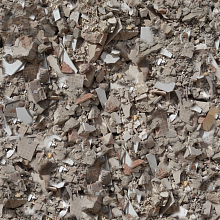 Seamless PBR Concrete Rubble Texture with Debris and Fragments
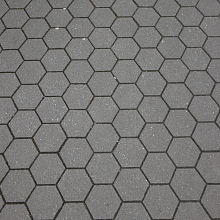 Seamless Hexagonal Concrete Tile PBR Texture 4K
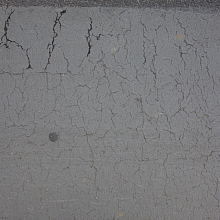 Cracked Asphalt Texture with Weathering