Mastering Seamless PBR Textures for Weathered Painted Surfaces in 3D Workflows
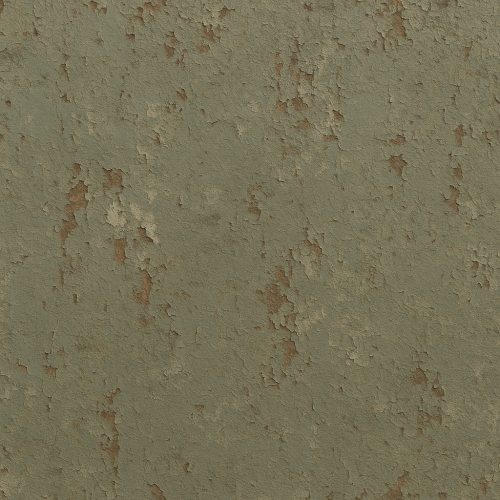
Weathered painted surfaces represent one of the more intricate and visually compelling challenges in physically based rendering (PBR) workflows. Unlike pristine or uniformly aged materials, these surfaces embody a complex interplay of physical and chemical processes that shape their appearance over time. The fidelity with which these subtleties are captured and reproduced directly influences the perceived realism and narrative depth of 3D assets across diverse applications, from games and architectural visualization to high-end visual effects. Understanding the multifaceted nature of weathered paint—involving phenomena such as chipping, peeling, fading, and dirt accumulation—is essential to mastering seamless PBR texture authoring tailored to these nuanced materials.
At the core of the challenge lies the heterogeneous behavior of paint degradation and surface contamination, which manifests through intricate spatial variations in both color and microgeometry. Paint, as a layered coating system, exhibits a range of wear effects driven by environmental exposure, mechanical abrasion, UV radiation, moisture ingress, and chemical interactions. These effects do not simply alter the albedo; they modulate the surface roughness, influence subsurface scattering in some cases, and profoundly affect the microsurface normals and height profiles. Consequently, a well-rounded PBR workflow must move beyond simplistic color and roughness maps and embrace the full suite of PBR texture channels—albedo, roughness, normal, ambient occlusion (AO), height, and metallic—to accurately encode the interplay of optical and tactile characteristics that define weathered painted surfaces.
Starting with albedo, weathered paint surfaces seldom maintain uniform coloration. The base paint layer may be patched with exposed substrate or primer, creating abrupt chromatic transitions. Color fading induced by prolonged UV exposure typically results in desaturation and subtle shifts in hue, often towards warmer or bleached tones. Importantly, these color variations are rarely homogeneous; rather, they manifest as spatially complex patterns influenced by the geometry, exposure angle, and local environmental conditions. To encode this convincingly, albedo textures must incorporate these nuanced discolorations while avoiding artificial repetition or tiling artifacts that can betray the material’s authenticity. Achieving this often requires the integration of high-resolution photographic references combined with procedural noise and masks to simulate stochastic variation and micro-fading.
Roughness maps play an equally critical role by defining the microsurface scattering behavior that governs specular reflection glossiness. Weathering processes tend to increase surface roughness non-uniformly. For example, chipping exposes raw metal or wood substrates that may have inherently lower roughness compared to the surrounding oxidized or dirt-laden paint. Peeling paint introduces sharp transitions between different material layers, each with distinct roughness signatures. Dirt accumulation—often found in crevices and recesses—tends to increase roughness due to particulate scattering, while polished or worn-down areas might exhibit lower roughness. The authoring challenge is to sculpt these roughness variations in tandem with albedo and normal maps, ensuring coherence that passes both close-up scrutiny and dynamic lighting conditions. Normal maps derived from high-detail surface scans or sculpted displacement maps help capture the microgeometry of chips, scratches, and peeling edges, providing essential geometric cues that enhance the material’s tactile realism.
Ambient occlusion (AO) and height maps augment this realism by simulating shadowed crevices and subtle depth variations, respectively. AO maps accentuate local self-shadowing effects, critical for emphasizing paint chips and surface recesses where dirt and grime preferentially accumulate. Height maps, meanwhile, enable parallax or tessellation-based displacement techniques in modern engines—raising peeled paint flakes or corroded edges above the underlying surface. Proper calibration of height and normal data is essential to avoid visual artifacts such as self-intersections or unnatural silhouette distortions. These maps must be carefully optimized for engine compatibility and performance, balancing high-frequency detail retention against texture memory constraints.
Metallic maps, while often underutilized in painted surfaces, become relevant when paint wear exposes metallic substrates. In such cases, accurate binary or gradient metallic values are necessary to differentiate non-metallic paint layers from underlying metal, ensuring correct Fresnel reflectance behavior. This differentiation is paramount in PBR systems that rely on energy-conserving BRDF models, as misclassification can result in unrealistic specular highlights or diffuse scattering.
A fundamental consideration in authoring weathered paint textures is managing tiling and micro-variation. Since weathering patterns are inherently non-repetitive, naive tiling inevitably leads to discernible repetition that disrupts immersion. To mitigate this, artists often deploy a combination of high-resolution base maps augmented by procedural layering techniques, such as noise masks, fractal patterns, or stochastic grunge overlays. These procedural elements introduce micro-variation at multiple scales, breaking up uniformity without sacrificing visual coherence. Additionally, texture arrays, triplanar projections, or mesh-specific UV channel optimizations can be employed to further minimize stretching and visible seams. Efficient use of blending masks to combine clean paint, chipped regions, and dirt layers facilitates dynamic wear simulations, which can be driven by vertex colors or engine-side parameters for real-time control.
Calibration and optimization are equally critical stages in the PBR workflow for weathered painted materials. Accurate color calibration against known reference materials or color charts ensures that albedo maps reproduce physically plausible diffuse reflectance values, preventing energy conservation violations in shading. Similarly, roughness calibration against measured BRDF data or photogrammetric captures ensures realistic glossiness and highlight falloff. Normal and height maps must be converted and encoded using formats compatible with target engines—for instance, tangent-space normals optimized for Unreal Engine or Blender’s Cycles renderer—while maintaining sufficient bit depth to preserve detail without inflating texture size. Mipmapping strategies and texture compression settings (such as BC5 for normals or BC7 for albedo) must be carefully tuned to balance visual fidelity and runtime performance, especially in game engines where resource constraints are stringent.
Speaking of engines, integrating weathered painted PBR textures into platforms like Unreal Engine or Blender involves understanding their specific shader models and material pipelines. Unreal Engine’s physically based shading pipeline expects maps conforming to its metallic-roughness workflow, requiring precise channel packing—commonly metallic in the red channel, roughness in green, and AO in blue—to optimize texture fetches. Its material editor allows the layering of dirt and wear masks, supporting dynamic blending and runtime parameterization, which is invaluable for interactive wear effects. Blender, particularly when using the Principled BSDF shader, readily supports the full complement of PBR inputs but demands careful attention to UV mapping and texture node setups to replicate wear convincingly. Both engines benefit from high-quality, seamless input textures that respect the physical constraints of PBR models, underscoring the value of rigorous authoring pipelines.
In practical terms, achieving believable weathered paint in PBR necessitates iterative refinement. Artists should leverage photogrammetry or high-resolution scans of real-world weathered surfaces as primary references or base textures, integrating these with procedural masks to extend surface variation beyond capture limitations. Regular validation under diverse lighting conditions—including HDRI environments and dynamic directional lights—helps verify the interplay of roughness, normal, and albedo contributions. Additionally, careful attention to edge wear and transition zones facilitates natural blending between intact paint and exposed substrate, avoiding hard edges or unconvincing patterns. Where performance budgets allow, dynamic wear layering driven by engine-side parameters can add compelling realism and interactivity.
In sum, weathered painted surfaces in PBR workflows demand a comprehensive, multidimensional approach to texture authoring. This approach must synergize detailed map acquisition and creation, meticulous calibration, strategic tiling and micro-variation management, and engine-specific integration. Mastery of these elements unlocks the ability to produce materials that convey the rich history and environmental exposure encoded in weathered paint, ultimately elevating the visual storytelling and immersive quality of 3D scenes.
Capturing the nuanced complexity of weathered painted surfaces for physically based rendering (PBR) workflows demands a rigorous approach to texture acquisition. The fidelity of base data directly influences the realism and material believability in real-time or offline rendering engines such as Unreal Engine or Blender’s Cycles, making the choice and execution of acquisition methods critical. Two predominant paradigms exist for generating these textures: photogrammetry-driven capture and procedural generation. Each offers unique advantages and challenges, and often they are used complementarily to build robust, tileable, and physically accurate PBR maps essential for depicting weathered paint’s multifaceted wear characteristics.
Photogrammetry is widely regarded for its unparalleled ability to harvest authentic surface detail from the real world, capturing the subtle interplay of paint degradation, chipping, rust bloom, and differential roughness that defines aged coatings. The acquisition pipeline begins with high-resolution image capture, ideally using cameras equipped with prime lenses to minimize distortion and chromatic aberration. Consistent lighting conditions—preferably diffuse natural light or controlled softbox setups—are paramount to avoid specular highlights that can confound texture extraction. Multiple overlapping images, typically exceeding 60% overlap, are taken from varying angles around the subject surface, enabling dense point cloud reconstruction.
To faithfully capture the micro-variation in weathering, attention must be paid to sensor calibration and scene preparation. Color calibration charts and grayscale targets should be included in the frame to allow for post-processing color correction and white balance normalization, ensuring albedo maps remain physically plausible and free from color casts. Additionally, capturing neutral density references aids in linearizing the input data, an essential step for accurate roughness and specular response extraction. For height and normal information, structured light scanners or photometric stereo setups can be integrated to enhance geometric fidelity beyond what pure photogrammetry offers, especially when resolving minute paint cracks, peeling edges, and surface pitting.
The resulting raw data is processed through photogrammetry software suites such as RealityCapture or Agisoft Metashense, generating high-density mesh reconstructions and texture projections. Careful retopology and mesh decimation are often necessary to optimize the geometry for baking PBR maps while preserving critical surface features. Baking workflows focus on extracting multiple texture channels: the albedo captures the diffuse reflectance without lighting or shadowing artifacts, roughness maps quantify the microsurface scattering variability caused by weathering, and normal maps encode fine-scale bump detail essential for realistic light interaction. Ambient occlusion (AO) maps derived from baked occlusion rays reveal crevices where grime and rust tend to accumulate, contributing to visual depth. Height maps, extracted via displacement or parallax data, enhance surface relief perception in engines that support tessellation or parallax occlusion mapping.
An often overlooked but vital aspect is the generation of tileable textures from photogrammetric captures. Real-world surfaces rarely present perfectly repeating patterns, so creating seamless tiles involves meticulous cloning, blending, and micro-variation retention. Techniques such as offset tiling with edge blending in image processors or custom shader adjustments within node-based materials (Substance Designer, Blender’s Shader Editor) are employed to maintain natural irregularities without obvious repetition. Micro-variation in roughness and albedo must be preserved to avoid visually flat surfaces, particularly for weathered paint where subtle differences in gloss and pigmentation signal age and exposure.
Procedural generation offers a flexible alternative or supplement to photogrammetry, particularly when scene constraints, time, or budget limit physical capture. Node-based software like Substance Designer excels at synthesizing complex weathering effects by algorithmically layering noise, masks, edge detection, and directional wear patterns to emulate paint degradation. The procedural approach allows artists to control parameters such as chipping density, rust bloom progression, and dirt accumulation with precision, enabling rapid iterations and seamless tiling by design.
A procedural workflow typically starts with base shape generators that simulate paint layers and substrate materials. Subsequent nodes apply erosion and edge wear effects driven by curvature maps or ambient occlusion inputs, mimicking natural paint peeling along edges and crevices. Noise functions of varying scales introduce micro-roughness variation, affecting the roughness map’s fidelity and thus the perceived gloss heterogeneity. Normal maps can be generated via heightmap derivatives or directly from procedural displacement nodes, ensuring surface detail aligns with the synthetic wear patterns. Metallic maps, though often binary in painted surfaces, can be procedurally modulated in areas where paint has worn away to reveal metallic substrates beneath, aiding in physically accurate reflections.
Procedural textures inherently benefit from perfect tiling and parametric control, allowing artists to introduce global or localized weathering effects without visible seams. Integration with engines like Unreal Engine is streamlined through material instances that expose procedural parameters, facilitating runtime adjustments or artist-driven customization. Moreover, procedural methods support dynamic micro-variation layering, where subtle noise and pattern shifts break visual monotony, enhancing realism at close inspection.
Calibration remains critical in procedural authoring to ensure maps conform to PBR principles. Albedo textures must avoid self-shadowing baked into color channels, which can cause lighting inconsistencies. Roughness values should be anchored to physically plausible ranges, typically between 0 (mirror-like) and 1 (fully diffuse), calibrated through reference materials and real-world weathering observations. Normal and height maps require consistent tangent space orientation and resolution alignment to prevent shading artifacts. Cross-checking these maps in physically based shaders within Blender or Unreal’s material editors helps verify that weathering effects respond correctly under dynamic lighting and environmental reflections.
Optimization strategies are vital regardless of acquisition method. Photogrammetry outputs often require downscaling or mipmap generation to balance fidelity and performance, especially for real-time engines. Baking multiple texture maps into combined channels—such as storing roughness, metallic, and AO in different color channels of a single texture—reduces memory footprint. Procedurally generated textures can be baked into texture atlases or cached as static assets to avoid runtime computational overhead, depending on the project’s performance budget.
Ultimately, mastering the acquisition of weathered paint textures involves a hybrid methodology that leverages the authenticity of photogrammetry alongside the flexibility of procedural generation. High-quality base data from scans grounds the material in reality, while procedural layers impart controlled wear and tiling continuity. By meticulously calibrating and optimizing PBR maps—albedo, roughness, normal, AO, height, and metallic—artists can craft seamless, physically plausible textures that convincingly convey the passage of time on painted surfaces within any 3D workflow.
Physically Based Rendering (PBR) workflows hinge on the precise creation and calibration of multiple texture maps, each encoding specific material attributes that collectively simulate realistic surface interactions with light. When dealing with weathered painted surfaces—complexly layered with varying degrees of paint degradation, substrate exposure, and accumulated grime—the fidelity of these maps becomes paramount. Achieving a convincing representation requires not only accurate data capture or generation but also meticulous calibration to reflect the nuanced interplay between paint layers and underlying materials. This section delves into the technical intricacies of authoring and fine-tuning the essential PBR texture maps—albedo, roughness, normal, ambient occlusion (AO), height, and metallic—tailored specifically for weathered painted surfaces, emphasizing their interdependent roles and practical considerations for integration in engines like Unreal and Blender.
The albedo map, often referred to as the diffuse or base color texture, encodes the intrinsic color information of the surface without lighting or shadow influence. For painted surfaces, this map must capture the base paint color, subtle variations from wear, fading, dirt deposits, and any exposed underlying materials such as rusted metal or aged wood. Unlike simple flat colors, weathered paint demands a multi-layered approach in albedo authoring. Photogrammetric capture or high-resolution scans of real-world painted surfaces provide invaluable raw data, but often require extensive retouching to remove lighting artifacts, specular highlights, or shadows that can contaminate the albedo channel. When authoring from scratch, procedural texturing tools or hand-painting in software like Substance Painter or Mari allow controlled layering of paint chips, scratches, and substrate colors, which can be blended using masks derived from height or ambient occlusion maps to simulate wear patterns realistically. Crucially, the albedo map must avoid encoding any reflectance or gloss information—this is commonly a pitfall that breaks physical plausibility. Calibrating albedo values to realistic reflectance levels involves referencing measured spectral data or industry-standard albedo ranges; for instance, fresh paint colors typically have mid to high reflectance values, whereas exposed rust or dirt areas exhibit lower reflectance and more muted hues.
Roughness maps are central to defining the microsurface detail that governs specular reflection blur. For painted surfaces, roughness varies markedly across intact paint, worn zones, and corroded substrates. A freshly applied paint layer generally exhibits low roughness values due to its smoothness, resulting in sharper specular reflections. As paint weathers and degrades, microcracks, dust accumulation, and surface erosion increase roughness locally, scattering reflected light and softening highlights. When crafting roughness maps, one must carefully translate these physical changes into grayscale values, where darker pixels represent smoother regions and lighter pixels correspond to rougher areas. The challenge lies in balancing global roughness trends with high-frequency micro-variation that prevents the surface from appearing unnaturally uniform. Techniques to achieve this include blending procedural noise with hand-painted masks or leveraging curvature and ambient occlusion maps to modulate roughness dynamically—edges of chipped paint typically have increased roughness due to exposed substrate and accumulated dirt. Calibration of roughness values should be informed by real-world references and iterative shader previews in target engines; Unreal Engine’s material editor, for example, offers real-time feedback, enabling artists to fine-tune roughness levels to mimic the expected specular response of aged paint and adjacent materials.
Normal maps encode fine surface detail by perturbing surface normals to simulate small-scale bumps and dents without additional geometry. For weathered painted surfaces, normal maps must capture the micro-topology of paint chips, peeling edges, fine scratches, and corrosion pits. When authoring, it’s critical to generate or bake normals from high-resolution sculpted meshes or photogrammetric data representing the weathering features. Alternatively, height maps derived from displacement or grayscale masks can be converted into normal maps using tools like xNormal or Substance Designer, allowing procedural control over micro-detail frequency and amplitude. A key consideration is maintaining consistency between normal and height maps to avoid conflicting surface cues that can break immersion. The normal map should be calibrated to avoid excessive exaggeration of relief, which can introduce unrealistic shading artifacts, especially under dynamic lighting. Subtlety is often more effective—weathered paint rarely presents extreme normal deviations but rather gentle undulations and minute surface irregularities. In Blender’s shader editor or Unreal’s material graph, the normal map’s influence can be further modulated by blending it with a secondary detail normal map to introduce micro-variation at different texture scales, enhancing the seamlessness of tiling textures.
Ambient occlusion (AO) maps simulate the self-shadowing effect caused by crevices, cracks, and other occluded geometry features. For painted surfaces, AO maps not only deepen the perception of surface detail but also help accentuate paint chips, cracks, and exposed substrates by darkening recessed areas where dirt and grime tend to accumulate. AO maps can be baked from high-poly meshes or generated procedurally, but their calibration requires careful attention to avoid over-darkening. Over-saturated AO maps can unnaturally dampen surface brightness and reduce the visual fidelity of paint layers. It is advisable to use AO maps as subtle multiplicative masks on albedo or ambient lighting inputs rather than as standalone shadow layers. In engine pipelines like Unreal, AO is often integrated with other maps such as roughness or metallic in packed textures, necessitating that AO values remain within a calibrated range—typically between 0.4 and 1.0—to maintain material realism without creating overly harsh shadowing effects.
Height maps provide scalar displacement information and are particularly valuable for simulating layered paint thickness and peeling effects. Height maps can be used in tessellation or parallax occlusion mapping to convey actual relief on low-poly models, enhancing realism without geometry complexity. For weathered paint, height maps must carefully represent the subtle elevation differences between intact paint, chipped edges, and substrate exposure. When authoring height maps, it’s important to maintain a consistent scale relative to the model’s UV layout and engine displacement settings. Excessive height contrast can cause visual artifacts or unnatural silhouette deformation. Additionally, height maps should be coherent with normal maps; inconsistencies between the two lead to lighting discrepancies that break physical plausibility. Calibration often involves iterative testing in the target renderer, adjusting height map contrast to balance visual impact with performance constraints, especially when tessellation is enabled. In Blender, height maps can be previewed with displacement modifiers, whereas Unreal Engine offers sophisticated parallax occlusion features that can leverage height data effectively while optimizing shader cost.
Metallic maps are arguably the most straightforward but no less critical for painted surfaces. Since paint is generally non-metallic, the metallic map should encode zero values across intact paint layers. However, weathering often exposes metallic substrates such as rusting iron or aluminum panels beneath chipped paint. Hence, metallic maps must be precisely masked to identify these exposed metal regions, assigning a value of one (pure metal) in these areas while maintaining zero elsewhere. Accurate masking avoids rendering artifacts such as incorrect fresnel reflections or specular highlights on non-metallic areas. When authoring metallic maps, artists frequently rely on grayscale masks derived from albedo or height maps, refined manually to capture paint chip boundaries accurately. Calibration is usually binary for metallic values, but partial metallic values (between 0 and 1) can be used in specialized cases such as painted metal flakes or composite materials, though these are rare in weathered paint contexts. Ensuring metallic maps align perfectly with albedo and roughness maps is critical, as metallic values directly influence how specular reflections are calculated in PBR workflows.
An overarching challenge when creating these maps for weathered painted surfaces is maintaining seamless tiling and micro-variation. Given that weathering patterns often involve localized detail—like isolated rust spots, scratch clusters, or dirt streaks—simply repeating a texture tile can quickly reveal obvious repetition and break immersion. To mitigate this, artists employ multi-scale detail layering, combining macro-scale base maps with high-frequency detail maps that introduce stochastic variation. Procedural noise generators and curvature-based masks can dynamically modulate roughness or normal maps, while detail albedo overlays add subtle color variation without requiring large texture footprints. In engines like Unreal, material functions allow blending multiple texture samplers driven by triplanar or world-space coordinates, reducing visible seams and enhancing natural variation across large surfaces. Blender’s node-based shader system similarly supports procedural detail layers and blending modes, enabling artists to fine-tune the interplay between paint degradation and substrate exposure dynamically.
Calibration and optimization are iterative and context-dependent processes. Artists must continuously validate map values under intended lighting conditions and engine settings. Utilizing physically accurate lighting setups—HDRI environments, directional lights, and area lights—helps reveal inconsistencies or unrealistic responses caused by incorrect map encoding. Tools like Unreal’s material editor viewport or Blender’s Eevee/Cycles render previews enable rapid feedback loops. Additionally, channel packing (e.g., combining roughness, AO, and metallic maps into single texture channels) is a common optimization technique that reduces memory usage without sacrificing quality, but requires careful normalization and gamma correction to preserve map fidelity. It is essential to maintain linear color spaces for roughness and height data and sRGB for albedo to prevent tone mapping artifacts.
In sum, creating and calibrating the essential PBR texture maps for weathered painted surfaces demands a synergistic approach that respects the physical properties of paint and substrates, the subtlety of weathering processes, and the technical constraints of real-time rendering engines. Through disciplined authoring techniques, rigorous calibration against real-world references, and strategic optimization, artists can deliver highly believable materials that convincingly convey the layered complexity and tactile richness of aged, weathered paint in any 3D workflow.
FAQ
What is covered in this guide?
This guide explains Mastering Seamless PBR Textures for Weathered Painted Surfaces in 3D Workflows with practical notes for seamless PBR materials, texture setup, and production use.
Can I use these texture techniques in Blender, Unreal Engine, and Unity?
Yes. The workflow focuses on standard PBR maps and tileable materials that can be used in Blender, Unreal Engine, Unity, archviz, games, and VFX pipelines.
Where can I find textures for this workflow?
Use the AITextured texture library and the related texture links on this page to find seamless PBR materials and preview them before download.
Related Textures
 Procedural Dark Tree Bark PBR Texture
 Procedural Aged Oak Plank PBR Texture
 Seamless PBR Wood Planks Texture Featuring Natural Grain in 4K
 Seamless Wooden Facade PBR Texture in 4K Resolution
 Rustic Aged Wood Planks Texture for 3D Modeling and Rendering
 PBR Texture of Vertical Wooden Planks Wall
 Seamless PBR Wood Texture Featuring Vertical Natural Grain Patterns
 Natural Wood Logs Texture with Snow for 3D PBR