Mastering Seamless Tactile PBR Textures for Realistic 3D Surfaces
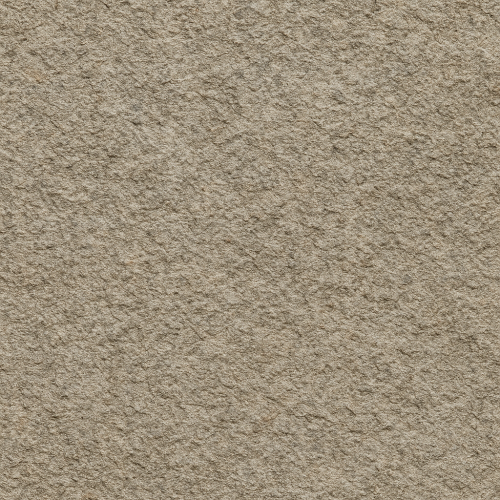
Capturing tactile surface details with high fidelity is fundamental to producing physically based rendering (PBR) textures that convincingly replicate the nuanced interplay of light and material inherent in real-world fabrics, stones, and metals. The success of such textures rests heavily on the precision and quality of the acquisition stage, which must preserve micro-variations—minute surface undulations, subtle roughness offsets, and intricate normal deviations—that define a material's visual and tactile authenticity. Among the most effective methods for obtaining these detailed datasets are photogrammetry and scanning technologies, each offering distinct advantages and challenges that require careful consideration within the PBR workflow.
Photogrammetry leverages multiple overlapping photographs taken under controlled lighting conditions to reconstruct a 3D surface and derive texture maps. When targeting tactile details, the photographic setup must emphasize capturing micro-variations through high-resolution imagery and consistent illumination. Employing diffuse, polarized, or cross-polarized light setups can reduce specular highlights, thereby isolating surface albedo and subtle roughness cues more effectively. The camera’s resolution and sensor quality directly impact the ability to resolve fine-scale fabric weaves, stone grain, or metal patinas. Using macro lenses can enhance detail capture for small-scale textures, although care must be taken to maintain consistent focus and minimize lens distortion, which can propagate errors into normal and height map extraction.
Post-capture processing in photogrammetry software involves generating a dense point cloud followed by a mesh reconstruction that underpins normal and height map baking. The fidelity of these maps is highly dependent on mesh resolution and the precision of texture projection. To preserve micro-variations, it is essential to maintain a high polygon count in the mesh or to employ displacement baking techniques that capture fine relief without excessive mesh complexity. Normal maps generated from these high-resolution meshes encode the subtle surface undulations critical for tactile realism, while height maps can be leveraged for parallax occlusion or tessellation within real-time engines such as Unreal Engine or Blender’s Eevee and Cycles renderers.
Ambient occlusion (AO) maps derived from the mesh geometry further augment tactile perception by simulating self-shadowing within crevices and folds, intensifying the sense of depth and complexity. However, it is imperative that AO baking avoids over-darkening or bleeding, which can obscure fine details, especially in porous stones or fibrous fabrics. Calibration tools and baking parameters should be meticulously tuned to balance AO intensity with base color integrity.
Scanning technologies, encompassing laser scanning, structured light, and photometric stereo, provide complementary or alternative approaches to photogrammetry, often excelling in capturing precise surface topography. Laser scanners, with their ability to deliver high-precision depth measurements, are particularly adept at capturing the micro-relief variations in hard surfaces like stone and metal, where reflective properties and geometry complexity can pose challenges for purely photogrammetric methods. Structured light scanners project known patterns onto the surface and measure deformation to reconstruct geometry, offering fast and accurate results suitable for small to medium-sized objects.
Photometric stereo, which uses multiple images captured under varying directional lighting to estimate surface normals, excels at discerning fine-scale normal variations that might be lost in traditional photogrammetry. This technique is especially beneficial for materials with complex microstructures such as woven fabrics or hammered metals, where subtle anisotropy and surface roughness gradients are paramount.
Once raw geometry and texture data are acquired through scanning, converting this information into PBR texture maps involves several critical steps. The base color (albedo) map must be extracted by neutralizing lighting effects and specular reflection from photographs or scans, ensuring that it represents the true diffuse color unaffected by shading or highlights. Techniques such as color calibration charts and reference gray cards used during capture facilitate this correction. It is crucial to separate metallic properties accurately, as scanning methods inherently do not differentiate metalness; this channel typically requires manual authoring or procedural refinement informed by the material’s physical characteristics.
Roughness maps can be inferred either from the microgeometry captured in height and normal maps or derived from specialized imaging modalities such as specular reflectance capture or BRDF measurements. In tactile materials, roughness often exhibits micro-variation rather than uniformity, so preserving subtle gradients and localized deviations is essential. These variations impact how light scatters and are critical for believable fabric softness, stone weathering, or metal wear.
One of the inherent challenges in acquisition is the translation of raw data into tileable textures suitable for real-time applications. Tiling tactile textures demands that micro-variations seamlessly repeat without visible patterning or obvious seams. Achieving this often involves carefully blending multiple scans or photographs, employing procedural noise overlays, or using software tools that support seamless texture synthesis while preserving the integrity of micro-geometry. Height and normal maps require particular attention during tiling, as discontinuities in surface relief can produce glaring artifacts when rendered, especially under dynamic lighting in engines like Unreal Engine, where tessellation or displacement mapping may amplify these inconsistencies.
Calibration and optimization are critical throughout the workflow. Calibration begins at capture with color charts and scale references to ensure consistent color fidelity and accurate dimensional data. In processing, mesh simplification must balance polygon reduction with retention of detail critical to tactile perception. Normal and height map resolutions should be chosen to optimize memory usage without sacrificing visible detail; typical resolutions range from 2K to 4K for high-quality assets, but may be downscaled for performance considerations in game engines. Normal map compression settings within Unreal Engine or Blender must be tested to prevent banding or loss of subtle detail, which directly affects the perceived realism of tactile surfaces.
Within PBR workflows, combining multiple baked maps—albedo, roughness, normal, AO, height, and metallic—enables precise control of material response under varying lighting conditions. For example, in Unreal Engine, height maps can drive tessellation or displacement modifiers to enhance micro-relief, while AO maps enrich shadowing without introducing lighting artifacts. Blender artists can leverage the node-based shader editor to blend baked normal maps with procedural noise or bump maps, enhancing tactile complexity while maintaining controllable tiling. Both pipelines benefit from physically accurate linear workflows and consistent gamma correction to ensure that micro-variations in roughness or albedo translate predictably into rendered output.
In summary, acquiring tactile PBR textures demands a rigorous approach to capture and processing that prioritizes the preservation of micro-variations fundamental to material realism. Photogrammetry and scanning technologies each provide unique strengths in reconstructing detailed geometry and surface properties, but their outputs require careful calibration, baking, and optimization to integrate seamlessly into PBR workflows. Attention to lighting control during capture, high-resolution mesh reconstruction, precise map extraction, and intelligent tiling strategies collectively underpin the creation of tactile textures that convincingly replicate the subtle interplay of light and surface that defines fabric, stone, and metal in the real world.
The creation of tactile PBR textures demands an intricate balance between capturing the subtle irregularities of real-world surfaces and ensuring technical compatibility with modern rendering engines. Both procedural generation and photographic authoring serve as foundational approaches, each with distinct advantages and challenges when aiming to produce tactile materials that convincingly convey surface roughness, micro-geometry, and spatial variation in physically based rendering workflows.
Procedural authoring leverages mathematical and algorithmic techniques to synthesize texture maps such as albedo, roughness, normal, ambient occlusion (AO), height, and sometimes metallic, enabling a high degree of control and seamlessness. Procedural workflows are particularly advantageous when creating tileable textures that must exhibit naturalistic surface variation without obvious repetition artifacts. Tools like Substance Designer or Blender’s procedural shader nodes allow artists to generate base color information that simulates diffuse reflectance patterns while incorporating subtle chromatic noise and dirt variation to avoid uniformity. Roughness maps, critical for defining microfacet distribution and thus tactile perception, can be procedurally modulated using fractal noise or cellular patterns to replicate material granularity, scratches, or worn patches. Procedurally generated normal maps are often derived from height information or synthesized via noise functions, ensuring fine detail that contributes to the perception of surface unevenness under dynamic lighting.
A key procedural technique is the blending of multiple noise layers at different scales to simulate micro and macro surface variations. For example, combining low-frequency noise for large undulations with high-frequency noise for micro-roughness produces a more believable tactile texture. Calibration of these noise parameters is crucial; excessive amplitude or frequency can produce unnatural sharpness or repetitiveness, while insufficient variation results in a flat appearance. Procedural AO maps can be generated by simulating occlusion in crevices and depressions based on height data, further enhancing tactile realism by emphasizing light occlusion in concave areas. The height map itself, central to both normal map derivation and parallax effects, should maintain a balanced dynamic range to avoid artifacts in engine displacement shaders.
Photographic authoring, on the other hand, begins with high-resolution captures of real surfaces using calibrated camera setups, controlled lighting, and often photogrammetry or photometric stereo methods to acquire detailed surface data. This approach excels at capturing the intrinsic complexity and randomness of real-world tactile surfaces, including subtle imperfections, dirt, and wear that are challenging to reproduce procedurally. However, raw photographic data often contains non-uniform lighting, perspective distortion, and noise, necessitating careful post-processing and map extraction to fit PBR workflows.
The workflow typically starts with a high-quality albedo capture, ensuring that the base color is free from shadows and specular highlights to maintain energy conservation principles. Techniques such as cross-polarization or diffuse-only lighting setups are commonly employed during acquisition to minimize specular contamination. The roughness map can be derived either from direct grayscale captures under varying lighting or by manual retouching informed by the physical properties of the material, often aided by photometric measurements. Normal maps are frequently generated from height or displacement maps obtained via photogrammetric reconstruction or structured light scanning, or alternatively by converting grayscale height data using specialized filters. Ambient occlusion maps may be baked from high-poly geometry or approximated from height maps using curvature-based algorithms, providing static shading cues that enhance the tactile sense of depth.
Ensuring tileability with photographic textures presents unique challenges. Natural surfaces rarely tile seamlessly, so techniques such as edge blending, offset copy with clone stamping, and frequency domain manipulation are employed to remove visible seams. Multiscale decomposition—separating images into base and detail layers—allows artists to tile the base layer while reapplying detail layers with randomized offsets or masks to break repetition. This approach preserves natural irregularities and tactile micro-variations without obvious tiling artifacts. Additionally, the use of detail masks or procedural overlays on top of photographic textures can reintroduce subtle noise and variation lost during tiling optimizations.
Calibration between photographic captures and procedural maps is critical when combining these methodologies. For example, procedural roughness or normal maps may be layered over photographic albedo to enhance micro-variation while maintaining consistent lighting response. Matching the gamma, color space, and dynamic range of photographic inputs to the procedural outputs ensures seamless integration in the final PBR material. It is also essential to linearize textures before processing and apply appropriate tone mapping for engine compatibility, particularly when targeting physically accurate renderers like Unreal Engine’s deferred shading pipeline or Blender’s Cycles renderer.
Optimization considerations are paramount throughout the authoring process. High-resolution photographic captures can be prohibitively large, so downsampling with edge-preserving filters and generating mipmaps that retain critical tactile details without blurring are standard practices. Procedural textures offer scalability but may impose computational overhead at runtime if computed dynamically; baking procedural outputs into texture maps balances flexibility and performance. When authoring height maps for use in tessellation or parallax occlusion mapping, quantization and range normalization prevent rendering artifacts like popping or shadow acne. Additionally, compressing normal maps using formats like BC5 or ASTC, which preserve vector precision, is advisable to maintain tactile fidelity in real-time engines.
In practical engine usage, tactile PBR textures benefit from layered material setups that combine base maps with detail maps to simulate complex surface microstructure. Unreal Engine’s material editor facilitates this by allowing the blending of multiple normal and roughness maps, coupled with tessellation or displacement for enhanced depth perception. Blender’s node editor similarly enables intricate layering and procedural adjustments, with the added advantage of being able to preview physically accurate shading in Cycles or Eevee. Artists should leverage engine-specific features such as mipmap biasing, anisotropic filtering, and shader complexity analysis to fine-tune tactile texture appearance and performance.
Ultimately, the creation of tactile PBR textures through procedural and photographic authoring demands a disciplined approach to capturing and synthesizing surface detail. Procedural methods excel at generating seamless, controllable variations ideal for tiling and scalability, while photographic workflows anchor tactile realism in authentic surface data. Combining both approaches—carefully calibrated and optimized—yields materials that convincingly communicate the nuanced interplay of light, shadow, and micro-geometry essential to tactile perception in physically based rendering environments.
Creating and optimizing PBR maps for tactile surfaces requires a methodical approach to ensure that the physical qualities of texture—roughness, depth, reflectivity, and microstructure—are convincingly conveyed without introducing visual artifacts or inconsistencies. For tactile materials, the interplay between the various texture maps must be carefully calibrated to produce a realistic sense of touch and materiality that responds appropriately under different lighting conditions and viewing angles. This process begins with the accurate acquisition or authoring of each map—BaseColor (Albedo), Normal, Roughness, Metallic, Ambient Occlusion (AO), and Height—followed by rigorous balancing and optimization tailored to the target rendering engine, be it Unreal Engine, Blender’s Eevee/Cycles, or similar.
The BaseColor map forms the chromatic foundation of any tactile surface, representing the diffuse reflectance without embedded lighting or shadowing. It is critical that this map remains neutral with respect to lighting information, as baked shadows or highlights can interfere with the PBR shader’s dynamic response. When authoring BaseColor maps for tactile surfaces, one must strive for subtle color variation that hints at microscopic material inconsistencies—this micro-variation can be introduced via hand-painting, procedural noise, or scanned source imagery. For example, a worn leather surface benefits from slight hue shifts and saturation drops around creased areas, which can be captured in the BaseColor without resorting to baked shadows. Ensuring the BaseColor map resides mostly within the sRGB color space and maintains a consistent mid-tone value allows downstream maps like Roughness and Normal to drive the material’s tactile expressiveness more effectively.
Normal maps are paramount in conveying the fine surface undulations that give tactile surfaces their characteristic feel. For tactile materials, normal maps must capture both macro and micro details—larger scale bumps, scratches, and folds, as well as subtle grain or fabric weave patterns. When authoring normals, it is advisable to generate them from high-resolution sculpted meshes or photogrammetric data that preserves these nuances. To avoid common pitfalls, normal maps should be carefully checked for seams and discontinuities, especially when tiling textures. Employing blending techniques such as gradient-based edge fading or introducing slight randomization in tile edges can mitigate visible repetition artifacts. Furthermore, maintaining a consistent tangent space orientation is crucial for correct lighting response, particularly in engines like Unreal, which expect DirectX normal map conventions by default. When importing into Blender, confirm the normal map settings, including color space (non-color data) and normal map node usage, to preserve accurate shading.
Roughness maps play an essential role in tactile perception by controlling the microsurface scattering of light. For tactile textures, roughness must be calibrated to reflect real-world surface characteristics: a rough stone might have a high roughness value with fine-grained variation across the surface, while a slightly worn metal might exhibit low roughness interspersed with localized patches of increased roughness due to oxidation or wear. These maps are often derived from grayscale height or curvature data, hand-painted masks, or procedural generators. Crucially, roughness must be smooth and free of high-frequency noise that can produce unnatural specular highlights or flickering under motion. To achieve this, roughness maps often require subtle blurring or noise reduction, balanced against the need to preserve micro-variation that prevents a flat, artificial look. When optimizing for real-time engines, consider the precision of roughness channels; 8-bit maps can suffice, but dithering or noise channels might be added to simulate finer gradations in roughness at runtime.
Metallic maps are generally binary or near-binary, indicating which parts of the surface are conductive metals versus dielectrics. For tactile materials, this map is typically straightforward but must be consistent with the BaseColor and Roughness maps. Misalignment can cause perceptual dissonance—such as metallic highlights appearing on areas that visually read as non-metallic. When authoring metallic maps, avoid grayscale values that imply partial metallicity unless the material physically supports such intermediate states (e.g., oxidized metals). Metallic maps should also be optimized for minimal aliasing when tiled, as abrupt changes in metallicity can cause shimmering or flickering in reflections. In workflows using Unreal Engine, metallic maps are often combined into the R channel of a packed map alongside roughness and AO, so channel calibration and compression artifacts must be accounted for during authoring and export.
Ambient Occlusion maps add depth perception by simulating the soft shadows cast in crevices and cavities, enhancing tactile realism. However, AO should never be baked into the BaseColor or Roughness maps; instead, it remains a separate grayscale map to be multiplied at the shader level. When generating AO, either from high-poly mesh baking or procedural methods, it is important to capture both large-scale occlusion—such as folds or overhangs—and subtle self-shadowing at the micro surface level. Overly strong AO can cause materials to look unnaturally dirty or flat, so intensity calibration is necessary, often requiring iterative testing under dynamic lighting. In real-time engines, AO maps are typically combined into packed textures, and compression can reduce subtle gradients, so dithering or higher bit-depth formats may be warranted for tactile surfaces that rely heavily on AO detail.
Height maps serve a dual role: they can be used for parallax occlusion mapping, tessellation displacement, or simply to generate baked normal maps. For tactile surfaces, height maps must accurately encode the macro and micro surface relief without introducing aliasing or banding. High-frequency noise should be controlled to prevent shimmering artifacts under motion or close inspection. When authoring height maps from sculpted data, it is advisable to normalize the height range carefully to maintain consistent displacement magnitude across the surface, avoiding exaggerated bumps or unnaturally flat areas. In engines like Unreal, height maps can be plugged into tessellation shaders or parallax occlusion nodes, but their precision and tiling behavior must be tested extensively to prevent popping or stretching artifacts. In Blender, height maps can be utilized in displacement modifiers or shader nodes, but care must be taken with UV scale and subdivision levels to preserve detail without excessive computational cost.
Tiling and micro-variation are critical considerations when creating PBR textures for tactile surfaces. Because tactile details are often subtle and repetitive patterns can break immersion, it is essential to introduce randomized noise, detail masks, or multi-layered blending techniques to disguise tiling seams. One common technique is to overlay procedural noise or detail maps that vary at different scales, combined with vertex color masks or triplanar projection to reduce visible repetition. This approach enables tactile materials to retain a natural, handcrafted feel even when tiled extensively across large surfaces. Additionally, the UV layout should be optimized to minimize stretching and maximize texel density in areas of close inspection, ensuring that fine tactile details remain crisp.
Calibration and balancing of all PBR maps must be done iteratively within the target engine’s viewport under realistic lighting setups. This is particularly important for tactile materials, where subtle changes in roughness or normal intensity can dramatically alter the perceived material softness or hardness. Artists should use neutral lighting environments, such as HDRI maps with controlled intensity and color temperature, to observe how maps interact. Adjustments to roughness curves, normal map strength, and AO intensity should be made in concert, as these parameters are interdependent and contribute collectively to the tactile impression. Testing in both static and dynamic lighting scenarios—such as directional sunlight and indoor point lights—is necessary to catch issues like specular aliasing or shadow banding early.
Optimization should not be overlooked, especially for real-time applications. While tactile surfaces demand high-frequency detail, excessive texture resolution or overly complex maps can degrade performance. Employing texture packing strategies—such as combining roughness, metallic, and AO into a single texture—reduces draw calls and memory usage. When compressing maps, choose formats that preserve detail and avoid blockiness, such as BC7 for color and BC5 for normals in DirectX environments. Mipmapping and anisotropic filtering settings must be configured to maintain tactile detail at oblique viewing angles and distances. Finally, consider the use of procedural or runtime detail maps to augment base textures dynamically, enabling high tactile fidelity without exorbitant memory costs.
In summary, creating and optimizing PBR maps for tactile surfaces is a nuanced process that demands attention to the accurate capture and calibration of each map’s contribution to material realism. By carefully authoring BaseColor without baked lighting, generating detailed yet seamless Normal maps, calibrating Roughness for realistic light scattering, ensuring Metallic maps align with physical properties, incorporating subtle but effective AO, and producing clean Height maps for surface relief, artists can achieve tactile materials that convincingly engage the viewer’s senses. Successful workflows integrate iterative engine-based testing, tiling disruption techniques, and performance-conscious optimization to produce tactile PBR textures that hold up under scrutiny across a variety of lighting and rendering contexts.
FAQ
What is covered in this guide?
This guide explains Mastering Seamless Tactile PBR Textures for Realistic 3D Surfaces with practical notes for seamless PBR materials, texture setup, and production use.
Can I use these texture techniques in Blender, Unreal Engine, and Unity?
Yes. The workflow focuses on standard PBR maps and tileable materials that can be used in Blender, Unreal Engine, Unity, archviz, games, and VFX pipelines.
Where can I find textures for this workflow?
Use the AITextured texture library and the related texture links on this page to find seamless PBR materials and preview them before download.
Related Textures
 Procedural Lime Plaster Wall PBR Texture
 Procedural Stamped Sidewalk Concrete PBR Texture
 Procedural Fine Asphalt Road PBR Texture
 Procedural Pitted Concrete PBR Texture
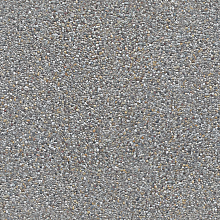 Seamless Concrete Pebble PBR Texture in 4K Resolution
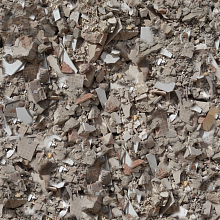 Seamless PBR Concrete Rubble Texture with Debris and Fragments
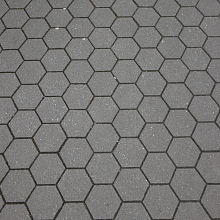 Seamless Hexagonal Concrete Tile PBR Texture 4K
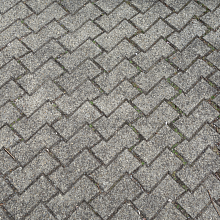 Realistic Concrete Paving Brick Pattern Texture