Mastering White and Gold PBR Textures for Luxurious 3D Designs
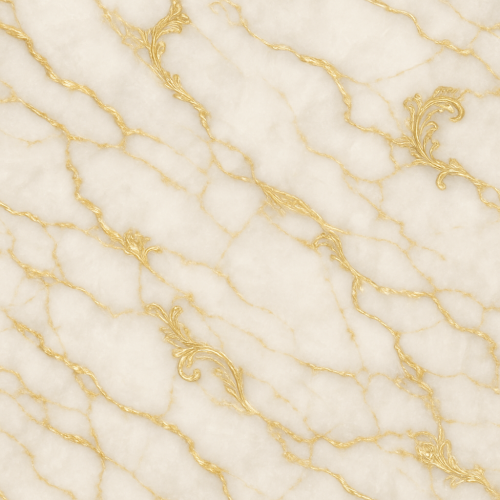
Acquiring high-fidelity PBR textures for white and gold surfaces demands a rigorous approach that balances precise material capture with the technical constraints of physically based rendering workflows. Unlike many other material types, white and gold textures present unique challenges due to their extreme reflectivity, subtle chromatic variations, and sensitivity to lighting conditions. Achieving accurate and reusable data—encompassing albedo, roughness, normal, ambient occlusion (AO), height, and metallic maps—relies heavily on choosing the right acquisition techniques, optimizing capture setups, and applying meticulous calibration and post-processing.
Starting with gold textures, the primary complexity lies in capturing the metal’s anisotropic reflectance and nuanced surface imperfections. Gold’s appearance in PBR is largely dictated by its metallic map being set to full metal (value 1), with the base color map encoding the rich yellow to reddish hues characteristic of various gold alloys. Unlike non-metallic surfaces, gold’s albedo does not represent diffuse reflection but rather the color of specular reflection. Consequently, traditional diffuse-based photogrammetry can be misleading if not combined with accurate reflectance measurements. To address this, acquisition techniques must emphasize capturing both the geometric microstructure and the reflective properties under controlled lighting.
Photogrammetry remains a powerful tool for capturing gold textures, but it requires careful lighting design. A multi-light dome setup with controllable LED arrays or flash units arranged in a hemispherical pattern is ideal. This arrangement allows for capturing multiple lighting angles, enabling the reconstruction of surface normals and roughness variations from the way highlights shift across the surface. These highlight shifts are crucial for characterizing microfacets and anisotropy. However, the strongly specular nature of gold can cause overexposed highlights or saturation in standard photography. Using polarization filters—both on the camera lens and the light sources—helps reduce glare and isolate diffuse and specular components, which can then be separated algorithmically during post-processing.
High dynamic range imaging (HDRI) is essential for gold texture capture. By bracketing exposures and merging them into HDR images, one preserves the full range of brightness levels, from deep shadows in surface crevices to sharp specular peaks. This step is particularly critical for generating accurate roughness maps, as loose shadows can distort perceived surface roughness, while highlight clipping can flatten the appearance of microstructure. Calibration targets with known reflectance values, such as Spectralon panels or NIST-traceable standards, should be included in the capture to aid in linearizing the tonal response and to ensure the eventual base color maps conform to physically plausible reflectance values.
In addition to photogrammetry, structured light scanning or laser scanning can enhance the acquisition of fine geometric detail on gold surfaces. These methods provide high-resolution height and normal data, indispensable for generating detailed normal and height maps that drive realistic light interaction in engine shaders. Since gold surfaces often contain subtle scratches, dents, and polishing marks that affect specular behavior, capturing these micro-variations improves realism, especially when combined with anisotropic roughness maps. However, the reflective nature of gold can introduce noise or artifacts in laser scanning due to specular reflections; thus, surface mattification sprays—typically removable and non-destructive—may be applied selectively to aid scanning accuracy without compromising texture authenticity.
White textures, conversely, require a distinct approach, as they often represent diffuse, non-metallic materials with minimal color variation but complex surface detail. Pure white surfaces are challenging because they tend to reflect and scatter light uniformly, leading to low contrast in base color and normals. Consequently, capturing subtle roughness and micro-variation is critical to avoid flat or artificial results in PBR workflows. Photogrammetry for white materials benefits from diffuse, even lighting to prevent harsh shadows or highlights that can obscure fine detail. A softbox or a light tent setup is commonly used to create this effect, yielding images with balanced exposure across the entire surface.
For white materials, meticulous exposure calibration is required to avoid clipping the highlights, which would lose detail in the brightest areas, or crushing shadows, which would suppress micro-geometry. Using calibrated gray cards and color checkers in the frame enables consistent white balance and exposure normalization across multiple shots and sessions. Since white surfaces often have low albedo variation, the roughness map becomes a more critical driver in visual differentiation. Capturing roughness can be augmented by employing synthetic directional lighting during image capture or using photometric stereo techniques, where multiple images under varying directional light enable the reconstruction of surface normals and roughness features with high fidelity.
Ambient occlusion (AO) maps for both white and gold materials must be carefully derived to complement the base color and roughness without introducing unintended color bleeding or artifacts. In acquisition workflows, AO can be approximated from photogrammetric geometry or via baked maps from high-resolution scans. However, for white surfaces, AO must be subtle—overly aggressive AO can appear as dirt or discoloration on pristine materials. Calibration involves balancing the AO intensity and blending it with the base color to maintain a clean, believable white appearance. For gold, AO highlights crevices and imperfections that influence specular behavior, but care must be taken to preserve the metal’s reflective characteristics without artificially darkening the albedo.
Post-processing and optimization are critical stages following acquisition. Raw photographic data must be linearized and converted into texture maps that fit within the PBR paradigm. For gold, this means extracting the correct base color values representing the Fresnel reflectance at normal incidence, typically around 0.9 reflectance for pure gold in the visible spectrum. Using measured spectrophotometric data as a reference helps ensure that the base color map is physically plausible. Roughness maps should be derived from specular highlight variance or from microgeometry scans, with noise reduction and detail enhancement applied judiciously to preserve micro-variation. Normal and height maps benefit from multi-scale filtering to maintain high-frequency detail without aliasing in real-time engines such as Unreal Engine or Blender’s Eevee and Cycles renderers.
Tiling and seamlessness are essential considerations in acquisition and authoring since real-world gold and white materials are often used as repeating textures in large-scale assets. Photogrammetric captures rarely result in perfect seamlessness due to perspective distortions and lighting inconsistencies. To address this, captured textures must be carefully tiled using offset clone stamping, seam carving, or procedural blending techniques. For gold, maintaining consistent anisotropy direction across tiles is paramount to avoid visible seams in reflections. Utilizing engine-specific shader parameters for anisotropic roughness direction can mitigate tiling artifacts, but the underlying texture must be coherent.
In practical engine usage, white and gold textures require tailored shader setups to exploit the acquired data fully. Unreal Engine’s physically based shading pipeline, for instance, benefits from separating the metalness channel (gold set to 1, white set to 0), accurate base color with linear color space input, and roughness maps that control microfacet distribution precisely. Normal maps should be imported with correct orientation and compression settings to preserve detail without introducing artifacts. In Blender, using the Principled BSDF shader node, gold textures require correct index of refraction (IOR) values and anisotropic roughness inputs to replicate realistic highlights, while white materials rely heavily on correct roughness and AO inputs to simulate diffuse scattering.
Finally, iterative calibration between capture, authoring, and engine preview is critical. Reference materials and color charts should be used at every stage to cross-check the fidelity of the albedo and roughness maps. Testing textures under multiple lighting conditions, including directional light, HDRI environments, and indirect lighting, helps validate their robustness. For gold, observing the Fresnel effect and highlight behavior in situ confirms the physical accuracy of the texture set. For white materials, ensuring the texture does not appear chalky or plastic-like under diverse lighting confirms the success of the acquisition and authoring pipeline.
In summary, acquiring high-quality white and gold PBR textures is a multidisciplinary process that integrates advanced photogrammetry, controlled lighting, spectral measurement, and precise post-processing. Understanding the physical and optical properties of these materials guides the capture strategy and ensures the resulting textures integrate seamlessly into PBR workflows, delivering realistic, engine-ready materials that respond convincingly across varied lighting environments.
Creating high-quality white and gold PBR textures requires a nuanced approach that balances the inherent complexity of metallic reflectance with the subtleties of light-colored, often delicate surfaces. Achieving this balance demands careful attention to both procedural generation and photographic editing techniques, ensuring that the final output harmonizes opulence with simplicity — a critical factor when these textures are applied across diverse creative styles, from classical interiors to modern minimalism.
In the context of physically based rendering workflows, the albedo, roughness, metallic, normal, ambient occlusion (AO), and height maps each play a distinct role in conveying the material's physicality. For white and gold textures, the albedo channel tends to be less saturated and more nuanced, especially in the white regions, where subtle variations prevent the surface from appearing flat or overly synthetic. Gold areas, conversely, require precise calibration of the metallic and roughness maps to capture the characteristic warmth and specular behavior of real gold, with its distinct reflectance curve.
Procedural methods excel at generating base patterns such as damask motifs and marble swirls, which are often desired in white and gold textures for their classical elegance. Utilizing node-based systems like Blender’s Shader Editor or Substance Designer enables the creation of complex, tileable patterns that can be infinitely scaled without visible repetition. For example, damask patterns can be constructed by layering sinuous curves and floral shapes using noise functions modulated by gradient masks. Marble textures benefit from the use of procedural noise types such as Perlin or Voronoi, warped by turbulence functions to simulate the characteristic veining. The key to integrating gold speckles procedurally lies in controlling their distribution density and size variance with stochastic noise generators, ensuring randomness without clustering that might appear unnatural.
Once the procedural base is established, the challenge becomes blending these elements seamlessly. This involves careful mask creation and edge blending, typically achieved through smoothstep functions or curvature-based masks that transition gold speckles or filigree elements into the white base. Edge wear or micro-scratches can be procedurally introduced via detail normal maps or roughness variations, which serve to break up uniform reflectance and add micro-variation necessary for realism. Micro-variation is especially important on gold surfaces, where pristine, mirror-like reflections are rare outside of polished jewelry; slight roughness gradients and subtle noise are crucial for mimicking aged or hand-crafted finishes.
Photographic editing complements procedural generation by injecting real-world imperfection and complexity. High-resolution photographs of white marble, delicate textiles, or gilded surfaces can be acquired under controlled lighting conditions to minimize shadows and color casts, ensuring the fidelity of albedo captures. These photographs serve as the base for color and detail extraction, but require extensive editing to fit PBR expectations. For instance, the white areas often need desaturation and level adjustments to avoid introducing unwanted hues that could skew material perception under varied lighting. Gold regions typically demand selective hue shifts and contrast enhancement to replicate the characteristic yellow-orange tint and specular highlights inherent to metallic gold.
The photographic maps must be carefully decomposed into their respective PBR channels. Albedo should be free of baked-in shadows and highlights to maintain light interaction flexibility. Roughness maps can be derived by desaturating and inverting photographic grayscale images of surface gloss, or generated through manual painting and procedural overlays to better control the material’s microsurface. Normal maps are often created using photogrammetry or converted from displacement maps extracted from height data, either captured through photogrammetric methods or generated via edge detection and bump mapping from photographic textures. Ambient occlusion maps, critical for enhancing depth perception, can be baked from detailed 3D scans or approximated in 2D by blending shadowed regions extracted from photos with procedural noise to prevent overly harsh occlusion.
Height maps serve dual purposes: defining macro surface relief such as marble veins or embossed damask patterns and driving parallax occlusion or tessellation shaders in engines like Unreal Engine. For white and gold textures, height values should be subtle to maintain the texture’s elegance, avoiding exaggerated relief that might conflict with the desired simplicity. Calibration of height and normal maps is essential to ensure that, when combined, they do not produce conflicting surface details or unnatural shading artifacts. Fine-tuning the height map intensity and normal map strength in the engine viewport, leveraging real-time feedback, is recommended to strike this balance.
Metallic maps for gold are typically binary or near-binary, with gold areas set to full metallic (value of 1) and white or non-metal areas set to zero. However, to simulate gold leaf or partially worn gilding, a nuanced approach can involve grayscale metallic masks combined with roughness variations, mimicking the irregularities found on aged surfaces. This can be procedurally controlled or painted manually, with noise functions modulating metallic presence to create believable micro-variation. In Unreal Engine, the metallic workflow is straightforward: feeding these masks into the metallic input slot ensures that gold areas reflect light with the correct Fresnel behavior and energy conservation properties.
Tiling and optimization are critical considerations when authoring white and gold textures. Given the complex patterns involved, such as damask motifs, seamless tiling must be achieved without visible seams or pattern repetition that draws attention. Procedural generation inherently supports seamlessness through the use of tileable noise and pattern functions. Photographic textures, when employed, require careful edge extraction and cloning techniques to remove seams, often supplemented by blending with procedural noise to mask repetition. Resolution choices depend on the project’s target platform and viewing distance, but generally, 2K or 4K textures provide sufficient detail for close-up shots, especially when combined with normal and height maps that enhance perceived detail.
Engine usage further informs the texturing workflow. In Blender, procedural textures can be previewed in the Eevee or Cycles renderers, allowing iterative adjustment of roughness and normal map intensities. Blender’s node system also facilitates baking procedural maps into texture files for use in game engines. Unreal Engine offers powerful material editing capabilities, including layered materials and vertex painting, which can be leveraged to blend white and gold regions dynamically or simulate wear and patina effects in real-time. Calibration in the engine viewport is essential, as PBR materials interact strongly with scene lighting and reflections, particularly with metallic surfaces. Artists should test textures under varied lighting conditions — directional, HDR, and dynamic light sources — to ensure consistent appearance.
In summary, authoring white and gold PBR textures is a meticulous process that requires a hybrid approach, combining procedural pattern generation with photographic editing to capture both the intricate motifs and reflective qualities characteristic of these materials. The workflow demands precise control over each PBR channel, careful blending of elements, and rigorous calibration within target engines. Through procedural micro-variation and photographic authenticity, these textures can achieve a refined balance of opulence and simplicity, adaptable across a wide spectrum of creative projects.
When crafting physically based rendering (PBR) textures for materials that combine white surfaces with metallic gold elements, the process demands nuanced control over each texture map to faithfully reproduce their fundamentally different optical and physical properties. White, typically a dielectric material, and gold, a highly reflective metal with a distinctive warm hue, present contrasting challenges in PBR workflows. Achieving photorealism hinges on accurately generating and calibrating albedo, metallic, roughness, normal, height, and ambient occlusion maps that together convey the subtle interplay of light, reflectivity, and surface detail inherent to these materials.
Starting with the albedo or base color map, it is critical to recognize that metals do not rely on albedo for diffuse coloration in the same way dielectrics do. For gold, the albedo map encodes the surface’s intrinsic color and implicitly contains the metal’s spectral reflectance characteristics. Since gold exhibits a unique, warm yellow-orange tint, the albedo must precisely capture this tone without desaturating or muddying the color. This often requires careful calibration against physical reference samples or spectrophotometric data to ensure the hue and saturation fall within physically plausible ranges. Overly bright or pastel gold colors violate energy conservation rules and break realism. In contrast, the white dielectrics must feature an albedo that represents a near-neutral, highly desaturated color with controlled brightness to avoid appearing plastic or chalky. The white albedo values often hover near the upper end of the brightness scale but need subtle variations to prevent a flat, uniform appearance. Incorporating micro-variation in the albedo through subtle noise or texture overlays can add realism, mimicking surface imperfections or material inconsistencies seen in real-world white surfaces such as painted metals, ceramics, or plastics.
The metallic map is straightforward in its binary application for white and gold materials: gold elements receive a metallic value of 1.0, indicating full conduction and specular reflection, while white surfaces are assigned 0.0, denoting dielectric behavior. This strict dichotomy must be respected because the metallic map fundamentally alters how the material shader calculates reflectance and energy conservation. Partial metallic values between 0 and 1 typically produce non-physical results unless intentionally used for stylization or edge cases. It is essential to ensure that the metallic map’s edges align precisely with the geometry’s material boundaries to avoid blending artifacts, especially in engine workflows like Unreal Engine or Blender’s Principled BSDF shader.
Roughness is perhaps the most influential map in conveying the tactile quality and luminous finish of gold and white materials. For gold, the roughness map controls the sharpness and intensity of specular reflections. Real-world gold surfaces can range from highly polished, mirror-like finishes with roughness values near 0.05 to more diffuse, brushed, or oxidized surfaces exhibiting roughness values upwards of 0.3 or more. Capturing this range requires high-resolution roughness maps with fine-scale variation to simulate microfacet distribution accurately. Techniques such as deriving roughness from high-quality scans or procedural noise combined with photographic references enable the creation of maps that represent realistic surface wear, brushing patterns, or micro-scratches. These micro-variations are crucial for breaking up uniform reflections and enhancing photorealism. For white materials, roughness values are typically higher and more uniform, often between 0.3 and 0.7, depending on whether the surface is matte plastic, ceramic, or painted metal. However, even subtle roughness variation improves the material’s interaction with indirect lighting and prevents the surface from appearing unnaturally smooth.
Normal maps are indispensable for imparting the fine surface detail that modulates light interaction beyond what roughness alone can achieve. For gold, normal maps can simulate minute surface imperfections such as micro-grooves from polishing, casting marks, or fine scratches, which create anisotropic reflections characteristic of brushed or satin gold finishes. Generating these normal maps can involve photogrammetry, high-resolution displacement scans, or carefully authored height maps baked into normals. It is essential to maintain consistent tangent space orientation and proper smoothing groups during baking to ensure the normal map’s fidelity. In the case of white surfaces, normal maps often replicate subtle surface texture such as brush strokes, porous ceramic finishes, or slight embossing. Unlike metals, these normal features influence diffuse light scattering and shadowing more prominently, and thus require balanced intensity to avoid over-exaggeration.
Height maps support enhanced surface detail through parallax occlusion mapping or tessellation, and while not always mandatory, they add significant depth to both gold and white materials. When authoring height maps for gold, focus on capturing fine relief features—such as engraved patterns, hammered textures, or raised filigree—that contribute to the material’s perceived richness. For white surfaces, height maps can accentuate surface roughness or manufacturing marks, adding subtle depth without overwhelming the base color. Proper calibration is critical; excessive height map intensity can cause geometric artifacts or silhouette distortion, especially in real-time engines. Height maps should generally remain low contrast and high frequency, with their displacement scale carefully tuned in the material editor.
Ambient occlusion (AO) maps complement normal and height data by simulating the self-shadowing of surface details, enhancing depth perception and realism. For white and gold materials, AO maps must be baked from high-resolution meshes that capture the microtopology of the surface. In metallic gold, AO helps delineate crevices and intricate details, reinforcing the perception of volume under strong reflections. For white materials, AO contributes to the softness and subtle shadowing in diffuse regions, preventing the surface from appearing overly flat. When integrating AO maps into PBR shaders, it is advisable to multiply the AO with the diffuse or base color channel rather than the specular component, as metals reflect light differently and do not benefit from AO in specular highlights.
Tiling and texture repetition require particular attention when authoring PBR maps for white and gold materials, especially for assets intended to cover large surfaces. Gold details, often applied as trims, filigree, or small accents, demand high-resolution maps with seamless tiling or well-planned UV layouts to avoid visible repetition that breaks immersion. Employing micro-variation techniques such as blending multiple noise layers or using detail masks can disrupt pattern uniformity. For white surfaces, tiling must preserve subtle variations in albedo and roughness to avoid large-scale monotony. When possible, procedural texturing or triplanar projection combined with vertex painting can enhance variation over extended areas without significant texture memory overhead.
Calibration and optimization are essential final steps. Color calibration against real-world reference materials—using tools like spectrophotometers or calibrated photography—is recommended to match the gold’s spectral reflectance and white’s neutrality accurately. Additionally, ensure that all maps adhere to linear workflow conventions with correct gamma handling: albedo maps in sRGB space, and metallic, roughness, normal, height, and AO maps in linear space. Optimizing texture resolution based on the target engine and asset importance, such as using 2K or 4K maps selectively, balances fidelity and performance. In Unreal Engine, leveraging its physically based material model, one can use the Metallic workflow combined with the Roughness and Specular inputs to fine-tune reflections dynamically. Blender’s Principled BSDF shader offers similar controls, with the added advantage of node-based procedural enhancement for micro-variation. Ensuring normal maps are imported with correct space settings and that height maps are properly linked to displacement nodes or parallax occlusion modules is equally important.
In summary, the creation of PBR maps for white and gold materials involves a rigorous process of capturing and authoring maps that respect the fundamental physical differences between dielectrics and metals. The albedo, metallic, roughness, normal, height, and AO maps must be carefully calibrated and combined to reproduce the luminous, warm reflectance of gold and the subtle nuances of white surfaces. Attention to micro-variation, tiling, color accuracy, and engine-specific shader integration ensures that these materials achieve photorealistic results suitable for both offline rendering and real-time applications.
FAQ
What is covered in this guide?
This guide explains Mastering White and Gold PBR Textures for Luxurious 3D Designs with practical notes for seamless PBR materials, texture setup, and production use.
Can I use these texture techniques in Blender, Unreal Engine, and Unity?
Yes. The workflow focuses on standard PBR maps and tileable materials that can be used in Blender, Unreal Engine, Unity, archviz, games, and VFX pipelines.
Where can I find textures for this workflow?
Use the AITextured texture library and the related texture links on this page to find seamless PBR materials and preview them before download.
Related Textures
 Procedural Lime Plaster Wall PBR Texture
 Procedural Stamped Sidewalk Concrete PBR Texture
 Procedural Fine Asphalt Road PBR Texture
 Procedural Pitted Concrete PBR Texture
 Seamless Concrete Pebble PBR Texture in 4K Resolution
 Seamless PBR Concrete Rubble Texture with Debris and Fragments
 Seamless Hexagonal Concrete Tile PBR Texture 4K
 Realistic Concrete Paving Brick Pattern Texture