Optimizing PBR Texture Pipelines for Virtual Reality Applications
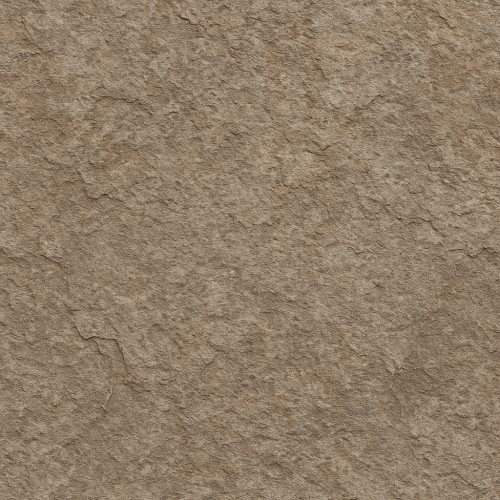
Physically Based Rendering (PBR) has become the cornerstone of realistic material representation in modern 3D graphics, enabling artists and technical directors to achieve consistent, plausible visuals under diverse lighting conditions. However, when transitioning from traditional desktop or cinematic 3D applications to virtual reality (VR) environments, the requirements and constraints for PBR textures undergo a significant transformation. Understanding these differences is paramount for optimizing texture pipelines that not only uphold visual fidelity but also respect the stringent performance budgets inherent to VR hardware and real-time rendering engines.
At its core, PBR relies on a set of texture maps that encode material properties in a physically accurate manner. These typically include an albedo map representing the diffuse color without baked shadows or lighting, a roughness map controlling microfacet scattering to define surface glossiness, a normal map that simulates fine-scale surface details without additional geometry, an ambient occlusion (AO) map that approximates self-shadowing in crevices, a height or displacement map to influence geometric detail through parallax or tessellation, and a metallic map that delineates conductor versus dielectric behavior crucial for accurate reflectance. Each of these maps serves a distinct role in the shading pipeline, and their correct calibration and interplay define the material’s final appearance.
In VR, the challenge is twofold. First, the visual system demands a high level of realism and immersion because the user experiences the environment from a first-person perspective with stereoscopic vision, wide field of view, and low latency requirements. Artifacts or discrepancies in material rendering become much more apparent, as the user can closely inspect surfaces from varying angles and distances. Second, VR hardware—especially standalone headsets—imposes tight constraints on GPU performance, memory bandwidth, and texture storage. Unlike offline rendering or even traditional real-time applications, VR must sustain high frame rates (commonly 90 Hz or above) and low latency to avoid motion sickness and ensure comfort. This necessitates a delicate balance between texture resolution, complexity, and shader cost.
The acquisition and authoring of PBR textures in VR pipelines begin with careful source material capture and creation. Photogrammetry and high-resolution scanning remain popular for generating base textures, providing high-fidelity albedo, roughness, and normal data directly from real-world surfaces. However, the raw data often requires extensive processing to optimize for VR constraints. For instance, albedo textures must be linearized and cleaned to remove baked lighting effects, ensuring consistent response under dynamic lighting in VR engines such as Unreal Engine or Blender’s Eevee renderer. Since VR emphasizes close-up inspection, albedo maps should be free of color bleeding from shadows or highlights, as these can break immersion and realism.
Roughness and metallic maps need precise calibration because they govern the physically correct reflection behavior. Inaccurate roughness values can result in either overly glossy or unnaturally matte surfaces that feel “off” in VR. During authoring, artists often utilize calibrated reference materials and standardized workflows (e.g., using spectrophotometer data or industry-standard materials libraries) to ensure that roughness and metallic channels reflect real-world physical properties accurately. Moreover, since VR scenes often include dynamic lighting and environment probes, the consistency of these parameters across assets is critical to avoid jarring visual transitions.
Normal maps, while essential for adding geometric detail without increasing polygon count, must be carefully generated and optimized. High-frequency normal details improve micro-variation and surface realism but come at the cost of shader complexity and memory consumption. In VR, where each eye renders a separate view, doubling the effective pixel workload, excessive normal map detail can degrade performance or cause aliasing artifacts. Techniques such as normal map compression, mipmapping strategies tailored for VR (including anisotropic filtering and mip bias adjustments), and the use of detail normal maps combined with tiling textures help maintain the illusion of complexity without overwhelming the renderer.
Ambient occlusion maps play a complementary role by enhancing perceived depth and contact shadows in crevices. However, baked AO maps must be carefully balanced with real-time global illumination systems prevalent in VR engines. Over-reliance on baked AO can conflict with dynamic lighting, creating inconsistent shading. Modern VR pipelines often favor minimal or no baked AO, instead relying on screen-space or voxel-based AO approximations that respond dynamically to the user’s viewpoint and scene changes. When baked AO is used, its intensity and blending with other maps must be finely tuned to avoid visual discrepancies.
Height or displacement maps introduce parallax and geometric variation that enrich surface detail. In VR, these maps can significantly increase immersion by providing believable depth cues, especially when combined with parallax occlusion mapping or tessellation. However, the computational overhead is substantial. Many VR applications opt for optimized parallax techniques or rely on normal maps to simulate height variations instead of full displacement. When height maps are included, their resolution and precision should be chosen judiciously, often lower than in offline rendering, and combined with efficient shader implementations to maintain frame rates.
Tiling and micro-variation textures are critical to avoid visible repetition artifacts that break immersion. Since VR users can inspect surfaces up close and from multiple angles, repeating patterns become blatantly obvious and distracting. To counteract this, authors employ micro-variation layers, procedural noise, or detail overlays that modulate roughness, normals, or albedo at a finer scale. These layers are often authored as separate texture sets or generated procedurally within the shader to reduce memory usage. Proper UV layout and texture coordinate manipulation also play a significant role in minimizing visible tiling. Techniques such as triplanar mapping or stochastic tiling assist in masking repetition without additional texture memory cost.
Calibration across the entire PBR pipeline is vital to ensure consistency and physical accuracy. This involves both color space management and technical validation. Albedo textures must be stored in a linear color space without gamma correction, while roughness and metallic maps are typically linear grayscale channels. Normal maps use a specialized tangent-space encoding requiring precise unpacking in shaders. Tools like Substance Painter or Quixel Mixer provide integrated workflows that enforce these standards, but manual verification remains essential. It is equally important to calibrate textures with respect to the target rendering engine’s assumptions. Unreal Engine, for example, expects metallic maps to be binary or near-binary, while Blender’s PBR shaders may tolerate a wider dynamic range. Understanding these nuances prevents inconsistencies in material appearance across platforms.
Optimization strategies permeate every aspect of the PBR texture pipeline in VR. Texture resolution must be carefully balanced against memory constraints. While desktop applications might use 4K or higher textures for close-up assets, VR often requires aggressive downscaling or mipmap biasing to maintain frame rates. Texture compression formats optimized for VR hardware, such as ASTC on mobile devices or BC7 on desktop GPUs, reduce memory footprint while preserving visual quality. Additionally, texture atlasing or virtual texturing techniques can consolidate multiple materials into fewer texture sets, reducing state changes and draw calls.
Shader complexity associated with PBR materials also demands optimization. Shaders must efficiently sample and combine multiple texture maps while minimizing branching and expensive lighting calculations. Pre-integrated BRDF lookup tables, importance sampling, and baked indirect lighting are commonly employed to reduce runtime cost. In engines like Unreal, material instances and parameter overrides allow reuse of shader permutations, further optimizing performance. Blender’s Eevee renderer, while capable of real-time PBR, benefits from baked light probes and simplified shading models in VR contexts.
Practical tips for artists and technical directors include establishing a robust texture naming and versioning system to track optimized assets, leveraging engine-specific profiling tools to identify bottlenecks, and iteratively testing materials within VR builds rather than static renders. Early integration of VR-specific constraints in the authoring pipeline prevents costly rework. Moreover, adopting physically accurate but simplified materials—favoring fewer texture maps or channel packing where possible—can yield substantial performance gains without noticeably sacrificing realism.
In summary, PBR textures in virtual reality represent a specialized subset of traditional physically based workflows, constrained by the demands of immersion, stereoscopy, and hardware limitations. Success in this domain hinges on a holistic understanding of material science, texture authoring, calibration, and engine-specific optimizations. By meticulously balancing visual fidelity with computational efficiency, artists and technical directors can craft compelling, believable VR experiences that sustain the high frame rates and low latency essential for user comfort and presence. This balance forms the foundation upon which optimized PBR texture pipelines are built for virtual reality applications.
Achieving high-fidelity PBR textures for virtual reality demands a nuanced approach to acquisition that balances photorealism, performance, and seamless integration into VR pipelines. The inherently close proximity and immersive nature of VR expose texture imperfections and resolution shortfalls more acutely than traditional rendering contexts, necessitating acquisition techniques that prioritize detail preservation, efficient data management, and adaptability to dynamic engine workflows. Photogrammetry and procedural generation stand as complementary methodologies, each offering unique advantages and challenges when tailored specifically for VR texture pipelines.
Photogrammetry remains the gold standard for capturing authentic surface details, providing a rich foundation for generating the core PBR maps—albedo, roughness, normal, ambient occlusion, height, and metallic—directly from real-world materials. However, raw photogrammetric data often arrives with spatial redundancies and texture inconsistencies unsuited for VR’s stringent performance budgets. Therefore, optimizing resolution and detail starts with meticulous calibration of capture parameters: high-resolution sensor arrays coupled with controlled lighting environments reduce noise and specular contamination in albedo captures, while multi-angle coverage ensures comprehensive geometric detail for accurate normal and height map derivation.
Critical to VR texture optimization is the management of texture resolution relative to the expected viewer distance and platform capabilities. Unlike traditional offline rendering, VR requires maintaining perceptual fidelity at very close range without overwhelming GPU memory bandwidth. This necessitates generating base captures at resolutions that exceed the target engine mip levels, enabling effective downsampling and mipmap generation while preserving micro-detail. For example, albedo and roughness maps benefit from high-resolution initial captures (4K or greater per tile) to retain subtle variations in surface color and specular response that contribute to material realism under diverse lighting. Normal and height maps must also be captured or derived at resolutions that support fine-scale surface perturbations without aliasing artifacts, which can break immersion under VR’s stereoscopic scrutiny.
Managing large texture sets in VR pipelines often involves leveraging UDIM workflows to segment complex surfaces into manageable tiles while maintaining seamless continuity. Photogrammetry outputs frequently produce dense, overlapping UV shells that require UV unwrapping and retilement to conform to UDIM standards. This step is critical not only for organizational clarity but also for engine compatibility, particularly with Unreal Engine’s virtual texturing systems or Blender’s texture painting workflows. Ensuring tile adjacency without visible seams involves rigorous texture bleeding and edge padding techniques during baking and post-processing, preserving the illusion of continuous surfaces when viewed at varying angles and distances in VR.
Procedural generation complements photogrammetry by providing scalable, tileable textures that introduce micro-variation and reduce repetition—key to avoiding the telltale patterns that degrade immersion. Procedural methods excel at generating roughness and metallic maps where material properties vary subtly across surfaces, such as rust gradients or wear patterns, which might be impractical to capture comprehensively with photogrammetry alone. By integrating noise functions, curvature-based masks, and layered blending within software like Substance Designer or Blender’s node-based shader editor, artists can author parametric textures that adapt dynamically to mesh topology and lighting conditions, further enhancing realism in VR.
A practical optimization is hybridizing photogrammetric albedo with procedural roughness and height maps, marrying real-world color fidelity with algorithmically generated surface detail. This approach reduces texture memory overhead by limiting photogrammetry to the most visually impactful channels while leveraging procedurals for secondary maps that benefit from variation over repetition. Furthermore, procedural workflows enable rapid iteration and customization for different VR hardware targets, allowing artists to tune texture complexity dynamically based on platform performance constraints.
Calibration across acquisition and authoring phases is paramount to ensuring that PBR maps function cohesively within VR engines. Color calibration between capture devices and engine shaders minimizes discrepancies in albedo appearance, while linear workflow adherence and proper gamma correction preserve physical accuracy. For roughness and metallic maps, grayscale normalization and channel packing strategies optimize texture channels, often combining roughness, metallic, and ambient occlusion into single textures to reduce draw calls and memory footprint. Within Unreal Engine, the use of packed textures feeds directly into the physically based shading model, streamlining material setup and improving runtime efficiency. Blender’s PBR viewport and baking tools similarly benefit from well-calibrated inputs, facilitating accurate previewing and texture validation before export.
Seamless tiling and micro-detail variation also hinge on the intelligent use of texture blending and detail masks. Even in photogrammetric captures, subtle procedural overlays can mask tiling artifacts and introduce stochastic variation essential for VR environments where players can inspect surfaces at millimeter scale. Micro-normal maps, generated procedurally or baked from high-poly sculpts, add depth without the cost of additional geometry, a crucial optimization for VR’s tight polygon budgets. Techniques like triplanar projection and detail map layering within engine shaders further mitigate UV stretching and seams, maintaining texture fidelity under rapid head movements and varying viewing angles typical of VR.
Efficient handling of UDIM sets involves automated texture streaming and level-of-detail (LOD) management, particularly in Unreal Engine’s virtual texture system. By segmenting textures into UDIM tiles with resolution matched to their spatial importance, pipelines can prioritize streaming tiles corresponding to the player’s gaze and distance, conserving memory and bandwidth. Artists and TDs must collaborate to define appropriate UDIM boundaries aligned with mesh topology and expected player interaction zones, ensuring minimal visible pop-in or texture swapping during gameplay. Blender’s recent UDIM support and texture painting tools also enable iterative refinement of these tiles, facilitating a feedback loop between acquisition, authoring, and engine integration.
In sum, optimizing PBR texture acquisition for VR hinges on a holistic strategy that harmonizes the strengths of photogrammetry and procedural generation, calibrated rigorously for physical accuracy and engine compatibility. High-resolution, well-calibrated captures combined with intelligent UDIM management and procedural augmentation deliver textures that withstand the scrutiny of VR’s immersive environments without compromising performance. Mastery of these acquisition techniques empowers artists and technical directors to push the boundaries of visual realism while adhering to the demanding constraints of virtual reality pipelines.
Physically Based Rendering (PBR) textures are the cornerstone of achieving believable material representation in virtual reality environments, where visual fidelity must be balanced meticulously against performance constraints. The creation and calibration of the essential PBR maps—albedo, roughness, normal, ambient occlusion (AO), height, and metallic—demand a workflow that prioritizes both physical accuracy and engine-specific optimization. This process is especially critical in VR, where close user inspection and real-time rendering impose stringent requirements on texture resolution, shading precision, and resource efficiency.
The albedo map serves as the foundational color input that drives diffuse reflectance without baked-in lighting or shadows. Its creation typically begins with high-quality photographic capture or procedural generation, ensuring that the base color data remains within a physically plausible range. Crucially, albedo must exclude any specular or emissive information to prevent shading artifacts downstream. When authoring albedo for VR, it is imperative to calibrate the texture so its luminance values avoid unnatural saturation or desaturation that can break immersion under dynamic lighting. This involves maintaining RGB values under the linear workflow’s constraints and avoiding colors that exceed a maximum reflectance of roughly 95%, as physically, surfaces rarely reflect above this threshold. In engines like Unreal Engine and Blender’s Eevee or Cycles, careful gamma correction and linear space conversion are necessary to preserve color fidelity. Furthermore, since VR environments often employ tiled textures to conserve memory, albedo maps should be designed with seamless tiling and subtle micro-variations—small imperfections in hue or pattern—to prevent repetitive visual artifacts that easily become distracting in stereoscopic displays.
Roughness maps dictate the microsurface scattering behavior, controlling the spread and intensity of specular reflections. Their calibration is crucial for conveying material properties such as glossiness or weathering. When authoring roughness maps, it is essential to work in linear grayscale and avoid compressing values to extremes, which can flatten visual nuance or generate aliasing in specular highlights. For VR, where head movement and close proximity to surfaces expose imperfections, roughness maps should incorporate micro-variation through techniques like procedural noise overlays or painted detail to break up uniformity and simulate realistic surface wear. These maps often benefit from contrast adjustments and histogram equalization to expand the range of roughness values, thereby enhancing the material’s perceptual depth without increasing texture resolution. Given VR’s performance sensitivities, roughness maps are frequently downsampled or combined with metallic or AO maps into packed channels, but calibration must ensure that such channel packing does not degrade the grayscale precision necessary for subtle roughness gradations.
Normal maps provide critical surface detail by perturbing vertex normals to simulate fine geometry without additional polygons. Their creation can stem from high-resolution sculpting or photogrammetric sources and requires conversion into a tangent space format compatible with the target engine. In VR, the fidelity of normal maps is paramount because small inaccuracies can become visually jarring under dynamic lighting and head-tracked viewing angles. Calibration involves verifying that normal vectors conform to standardized ranges (usually encoded as RGB values between 0 and 1) without artifacts such as seams or compression-induced banding. Additionally, integrating detail normals—small-scale surface noise—via overlay or blending techniques can enhance realism without the overhead of increased mesh complexity. It is also vital to consider the normal map’s mipmap generation settings; aggressive mipmap filtering can blur fine details, so anisotropic filtering or preservation of high-frequency components is recommended, especially in Unreal Engine’s texture settings. The choice of normal map compression formats (e.g., BC5 for DirectX platforms) must balance quality and VRAM footprint, as excessive compression can introduce color shifts that disrupt lighting calculations.
Ambient occlusion maps approximate the self-shadowing effects caused by ambient light occlusion in crevices and concavities. Their principal role in PBR pipelines is to multiply the indirect diffuse lighting term, enhancing depth perception. AO maps are best derived from baked global illumination passes or procedural approximation and require careful calibration to avoid over-darkening or unnatural blackening of textures, which can flatten material appearance. In VR, where lighting conditions and user viewpoints vary dynamically, AO maps should be subtle and blend seamlessly with engine-based dynamic AO solutions to prevent double occlusion or lighting inconsistencies. It is common practice to encode AO in a dedicated texture channel or multiplex it with roughness/metallic maps; however, this demands precise calibration to maintain proper contrast and avoid cross-channel contamination. Additionally, AO maps should be authored with smooth gradients and minimal noise to reduce temporal instability and shimmering artifacts during VR motion.
Height maps, representing displacement or parallax information, provide an additional layer of geometric detail, enabling effects like parallax occlusion mapping or tessellation. Their acquisition can be from grayscale scans or derived from sculpted high-res meshes. For VR, where the cost of tessellation is often prohibitive, height maps are primarily used for parallax or relief mapping techniques that simulate depth without additional geometry. Calibration of height maps involves normalizing values to a consistent scale that matches the engine’s displacement parameters; excessive height ranges can cause silhouette popping or texture swimming. It is also critical to harmonize height map resolution and precision with the normal map to ensure that parallax effects do not conflict visually with normal-based shading. In Unreal Engine, height maps are often stored in the alpha channel of normal maps or a separate grayscale texture, so calibration must prevent compression artifacts that degrade the height gradient smoothness, which can otherwise cause aliasing or popping in VR headsets.
The metallic map defines whether a surface behaves like a metal or dielectric, influencing both specular reflectance and diffuse color contribution. Metallic values are binary or near-binary, typically 0 (non-metal) or 1 (metal), although some materials require intermediate values to capture mixed properties like anodized metals or dirt layers. The precision of the metallic map is critical because misclassification can lead to physically implausible shading—non-metals erroneously reflecting colored highlights or metals incorrectly absorbing diffuse lighting. In VR workflows, metallic maps must be calibrated to align with the engine’s PBR implementation nuances, such as Unreal’s linear metalness scale and energy-conserving BRDF models. Artists often employ a strict thresholding approach but introduce micro-variation or subtle noise to mimic surface contamination or oxidation effects, thereby increasing realism without costly shader complexity. Since metallic maps are computationally inexpensive, their calibration focuses on accuracy and channel packing compatibility rather than performance optimization.
Throughout the entire pipeline, careful attention to texture tiling and micro-variation is paramount for VR applications. Repetition in textures is highly noticeable due to the immersive nature of VR and the user’s ability to inspect surfaces from close proximity and multiple angles. Employing techniques such as randomized UV offsets, detail masks, or blending multiple tileable texture sets can mitigate this issue. Furthermore, authoring textures with micro-variation embedded within the albedo, roughness, and metallic maps reduces the reliance on expensive shader-based noise functions, thus preserving performance on constrained VR hardware.
Calibration also involves rigorous cross-engine testing. Unreal Engine’s physically based shading model, which uses a metallic-roughness workflow, demands linearized input textures and expects certain channel packings (e.g., roughness in the green channel, metallic in blue or red). Blender’s Eevee and Cycles engines support various workflows but require consistent color space conventions and normal map standards. It is essential to validate that all maps adhere to linear color space for roughness, metallic, and height, while albedo remains in sRGB space for correct gamma correction. Calibration should include visual comparisons in engine viewport previews under representative lighting environments and VR preview modes to detect discrepancies such as over-bright albedo, incorrect roughness response, or normal map seams. Additionally, iterative compression tests help ensure that texture artifacts do not introduce distracting visual noise or temporal instability when viewed in VR headsets.
In sum, creating and calibrating essential PBR maps for VR involves a tightly integrated workflow that balances physical accuracy, perceptual realism, and engine-specific constraints. Each map must be authored with an understanding of its role within the PBR shading model and tuned to the unique demands of VR rendering, including close-range inspection, stereoscopic consistency, and strict performance budgets. By meticulously calibrating albedo, roughness, normal, ambient occlusion, height, and metallic maps—while incorporating tiling strategies and cross-engine compatibility checks—technical artists can produce textures that elevate immersion and maintain the responsiveness essential for compelling virtual reality experiences.
FAQ
What is covered in this guide?
This guide explains Optimizing PBR Texture Pipelines for Virtual Reality Applications with practical notes for seamless PBR materials, texture setup, and production use.
Can I use these texture techniques in Blender, Unreal Engine, and Unity?
Yes. The workflow focuses on standard PBR maps and tileable materials that can be used in Blender, Unreal Engine, Unity, archviz, games, and VFX pipelines.
Where can I find textures for this workflow?
Use the AITextured texture library and the related texture links on this page to find seamless PBR materials and preview them before download.
Related Textures
 Procedural Lime Plaster Wall PBR Texture
 Procedural Stamped Sidewalk Concrete PBR Texture
 Procedural Fine Asphalt Road PBR Texture
 Procedural Pitted Concrete PBR Texture
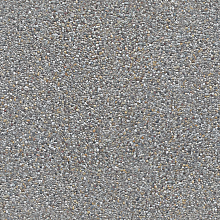 Seamless Concrete Pebble PBR Texture in 4K Resolution
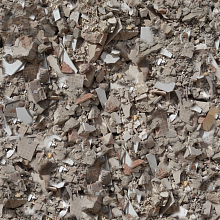 Seamless PBR Concrete Rubble Texture with Debris and Fragments
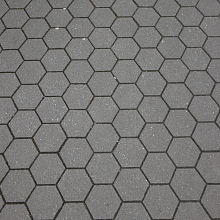 Seamless Hexagonal Concrete Tile PBR Texture 4K
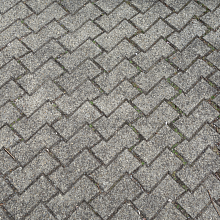 Realistic Concrete Paving Brick Pattern Texture