Optimizing PBR Texture Workflows for Real-Time Engines and Photorealistic Rendering
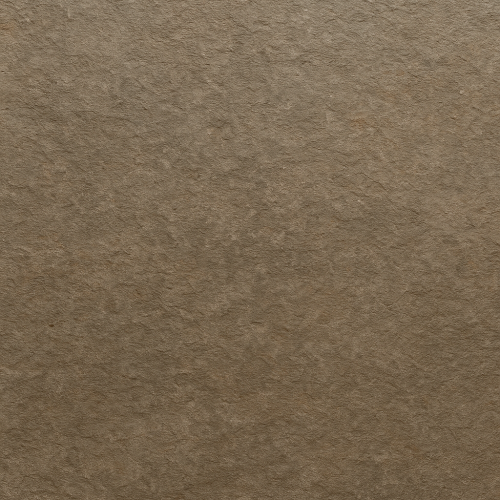
Physically Based Rendering (PBR) has become the industry standard for achieving realistic material representation across both real-time engines and offline photorealistic rendering pipelines. The cornerstone of PBR’s success lies in its ability to simulate light interaction with surfaces using physically grounded parameters, enabling artists and technical directors to craft materials that respond predictably under varied lighting conditions. However, the process of creating and managing PBR textures is far from trivial, particularly when balancing the competing demands of visual fidelity and computational performance. This balance becomes critically important when the same textures must serve both real-time game engines such as Unreal Engine and offline renderers like Blender’s Cycles, which inherently have different performance budgets and rendering architectures.
Optimizing the PBR texture workflow starts with a comprehensive understanding of the individual texture maps that comprise a fully realized PBR material. Standard maps include albedo (diffuse color without lighting information), roughness (controlling microsurface scattering), normal (simulating fine surface detail), ambient occlusion (AO), height or displacement, and metallic channels, each representing distinct physical properties. The precise calibration and interplay of these maps are essential not only for achieving photorealism but also for maintaining consistency across different rendering environments. For instance, while offline renderers may leverage high-resolution, layered displacement maps and complex shader graphs to produce subtle surface variations, real-time engines often require more aggressive texture compression and simplified shader inputs to meet frame rate targets.
One of the key challenges in PBR texture authoring is managing the resolution and bit-depth of these maps to maximize visual detail without incurring excessive memory overhead or bandwidth consumption. Albedo maps must be free of baked lighting or shadows to retain physical accuracy, and their color space is typically linear or sRGB depending on the engine’s workflow. Roughness and metallic maps, often stored as single-channel grayscale or combined into packed textures, demand careful calibration to avoid artifacts such as banding or overly flat surfaces. Normal maps require consistent tangent space conventions and must be generated or edited with precision tools to avoid lighting inconsistencies. AO maps can be baked or hand-painted but should be treated as a subtle multiplier rather than a dominant shading component. Height maps, when used for parallax occlusion or tessellation, must be carefully filtered and quantized to preserve surface detail without introducing noise.
Tiling and micro-variation represent another critical aspect of workflow optimization. Many materials, especially those applied over large surfaces like concrete, fabric, or natural stone, rely on seamless tiling textures augmented by micro-variation maps or detail overlays to break up repetition and enhance realism. Generating these assets requires a combination of procedural techniques, photogrammetry, and manual sculpting or painting. The workflow must include strategies for texture coordinate manipulation and blending modes that maintain consistent PBR responses at multiple scales, ensuring that tiling does not produce visible seams or unnatural patterns. Moreover, micro-variation maps often incorporate subtle normal or roughness perturbations that contribute to a material’s perceived complexity without increasing base texture resolution.
Calibration across engines and rendering pipelines is essential to maintain material fidelity. Different engines interpret PBR inputs slightly differently; for example, Unreal Engine expects metallic and roughness values in specific ranges and supports packed textures where metallic, roughness, and ambient occlusion are stored in distinct channels of a single image. Blender’s Cycles renderer, conversely, offers greater flexibility but requires careful node setup to replicate the same physical behavior. Artists must therefore establish consistent workflows that include color space management, channel packing strategies, and shader parameter tuning to ensure that materials look correct regardless of the target platform. This often involves iterative testing and profiling within each engine’s viewport or rendering context.
Optimization also extends to texture compression and mipmap generation. Real-time engines typically employ hardware-accelerated compressed texture formats such as BC7 or ASTC, which introduce quantization artifacts that can degrade material quality if not anticipated during authoring. It is crucial to preview textures under target compression schemes early in the workflow, adjusting map detail and contrast accordingly. Mipmaps, which reduce texture resolution based on camera distance, can exacerbate issues like normal map flattening or roughness shifts if not generated with appropriate filters or edge padding. Automated tools and engine-specific plugins can assist in generating optimized mip chains that preserve material characteristics at varying scales.
Practical workflow enhancements include leveraging procedural texturing and material layering to reduce the number of unique textures required. Procedural masks and noise functions can generate AO or roughness variation on-the-fly, decreasing texture memory usage and improving adaptability. In engines like Unreal, Material Functions and Parameter Collections enable artists to create reusable, modular shader components that encapsulate complex behaviors efficiently. In Blender, node groups and attribute-driven shaders facilitate similar modularity. These approaches not only optimize performance but also streamline iteration and collaboration across teams.
In conclusion, mastering the PBR texture workflow demands a synthesis of artistic intuition and technical rigor. The dual mandate of achieving photorealistic results while respecting real-time performance constraints requires careful planning at every stage—from texture acquisition and authoring through calibration, packing, and engine integration. By understanding the physical basis of each map, applying disciplined optimization techniques, and embracing engine-specific best practices, artists and technical directors can craft materials that deliver consistent, high-quality visuals across diverse rendering platforms without compromising efficiency. This foundation sets the stage for more advanced workflow strategies and tooling that further enhance productivity and visual impact in subsequent stages of the pipeline.
The foundation of any physically based rendering (PBR) workflow lies in the quality and accuracy of the base textures that define the surface’s visual and tactile characteristics. Acquisition techniques—most notably photogrammetry and procedural texture generation—play a crucial role in establishing this foundation. Each approach brings strengths and limitations that directly influence subsequent map creation, optimization strategies, and ultimately the fidelity and performance of real-time and offline photorealistic rendering pipelines.
Photogrammetry remains one of the most reliable methods for capturing authentic, high-resolution material data from the physical world. By leveraging a series of calibrated photographs taken under controlled yet practical lighting conditions, photogrammetric pipelines reconstruct detailed geometry and derive texture maps that capture the nuances of real-world surfaces. When executed correctly, this process yields an abundance of high-fidelity data, including albedo (diffuse color) maps free from baked lighting, normal maps encoding microgeometry, ambient occlusion (AO) that reflects subtle self-shadowing, and height or displacement maps capturing macro and micro surface variations.
The technical rigor begins with image capture. Consistent exposure, neutral white balance, and color calibration against standardized targets (such as X-Rite ColorChecker charts) are imperative to produce albedo maps that are spectrally accurate and neutral in lighting influence. This ensures that the albedo represents intrinsic surface color, not skewed by shadows or specular highlights. Additionally, capturing a diverse set of angles with sufficient overlap enables robust 3D reconstruction, which is critical for generating precise normal and height maps. In practical terms, using a turntable or controlled rig can improve coverage and repeatability, especially when scanning smaller material samples.
Following capture, the photogrammetry software pipeline—commonly leveraging tools like RealityCapture, Metashape, or open-source alternatives—processes the images into dense meshes and texture atlases. A critical step here is mesh decimation balanced with preserving geometric detail relevant for normal and displacement map baking. Excessive simplification can smooth out microgeometry that contributes to the perceived roughness and tactile realism, while overly dense meshes may hinder real-time performance and complicate texture UV unwrapping. Therefore, strategic retopology or baking workflows are often employed to generate optimized low-poly meshes paired with high-resolution baked maps.
The maps extracted from photogrammetric data require careful calibration for PBR workflows. The albedo map must be linearized and corrected to remove any shadow or highlight contamination. This often involves manual or automated shadow removal techniques, such as histogram equalization or localized color correction. Roughness maps typically are not directly captured but inferred from specular behavior or derived from grayscale variations in the surface texture. Some photogrammetry solutions utilize multi-light setups or polarized photography to estimate roughness and metallicity, but these data often require refinement through artistic intervention or procedural augmentation.
Ambient occlusion baked from the dense mesh serves as a critical input to enhance depth and realism. However, since AO from photogrammetry is geometry-dependent, it may not always align perfectly with the final low-poly model used in engines like Unreal or Blender. Consequently, rebaking AO on the game-ready mesh or blending procedural AO maps is a common practice to maintain consistency and avoid lighting artifacts.
Height maps derived from photogrammetry capture surface relief with sub-millimeter precision, enabling parallax occlusion mapping or tessellation in real-time engines. However, raw height data often contains noise or scanning artifacts, necessitating filtering and smoothing, ideally performed in a manner that preserves edge definition and micro-detail critical to believable roughness and normal generation.
Procedural texture generation offers a complementary or alternative approach, particularly valuable when photogrammetry is impractical or when artists require seamless tiling textures with parametric control. Procedural methods synthesize base maps algorithmically, using noise functions, cellular patterns, and material-specific algorithms to mimic natural irregularities and microvariations that would otherwise require extensive photographic capture.
Procedural generation excels in producing perfectly tileable albedo, roughness, and height maps, crucial for large-scale environments or assets needing close inspection without visible repetition. The control over micro-variation allows artists to embed subtle heterogeneity in roughness and metallic values, which is critical in avoiding the “plastic” or “flat” look often associated with uniform parameters. For example, a procedural roughness map can introduce stochastic variation that simulates dust accumulation, wear, or surface anisotropy. Similarly, procedural normal maps can be layered to simulate complex surface detail beyond what is feasible in baked photogrammetric normals.
Calibration in procedural workflows involves tuning parameters to physically plausible ranges. The albedo colors should fall within reflectance values consistent with real materials (generally not exceeding 1.0 in linear space). Roughness values must respect energy conservation principles, avoiding values that would imply unrealistic specular reflections. Metallic values are likewise constrained between 0 and 1, with procedural masks used to define metal versus dielectric regions dynamically. Modern procedural tools integrated within Unreal Engine’s material editor or Blender’s node system enable iterative, real-time visualization of these parameters, streamlining the calibration process.
A significant advantage of procedural acquisition is the ease of optimization. Since all maps are generated from base parameters and functions, resolution can be adapted on the fly to match performance budgets. Moreover, procedural maps can be combined with baked photogrammetric data in layered shaders, leveraging the best of both worlds: photorealistic authenticity and parametric flexibility. For instance, base albedo and normal maps acquired by photogrammetry can be augmented with procedural roughness variation and dirt masks to add realism and reduce tiling artifacts.
Optimization considerations also extend to texture compression and mipmapping strategies. High-resolution photogrammetric textures often require careful resizing and channel packing (e.g., encoding roughness, metallic, and AO into separate channels of a single texture) to minimize GPU memory footprint without sacrificing visual fidelity. Procedural textures, when baked to bitmaps for engine compatibility, benefit from similar packing strategies, though some engines now support procedural materials natively, allowing them to be evaluated at runtime with minimal memory overhead.
Ultimately, the choice between photogrammetry and procedural generation—or a hybrid approach—depends on project requirements, asset scale, and available resources. Photogrammetry provides unmatched authenticity and detail for unique, complex materials, but demands meticulous capture, calibration, and optimization workflows. Procedural generation offers unparalleled flexibility, scalability, and ease of iteration, especially for generic or repetitive materials needing seamless tiling and parameter control.
In real-time engines like Unreal, incorporating these acquisition techniques effectively can significantly enhance the realism and performance of PBR materials. Unreal’s material editor supports blending photogrammetric textures with procedural masks and allows dynamic roughness and metallic adjustments, facilitating layered material creation that responds to game logic or environmental conditions. Blender’s shader nodes similarly enable artists to combine baked photogrammetric maps with procedural noise and detail layers, providing a robust environment for texture refinement and validation prior to export.
In summary, mastering acquisition techniques through both photogrammetry and procedural generation is essential for creating high-quality PBR textures that balance photorealism with optimization constraints. The fidelity of albedo, roughness, normal, AO, height, and metallic maps directly correlates with the accuracy of capture or sophistication of procedural algorithms. Calibration and optimization strategies must be integrated early in the pipeline to ensure maps are physically plausible, engine-compatible, and resource-efficient. By understanding and leveraging the strengths of each approach, texture artists and technical directors can establish a versatile workflow that scales across asset types and rendering targets, ultimately delivering compelling, believable materials within real-time and offline photorealistic environments.
The creation and calibration of Physically Based Rendering (PBR) textures represent the cornerstone of achieving material realism in both real-time engines like Unreal Engine and offline photorealistic renderers such as Blender’s Cycles. Mastery of this process hinges on understanding not only the individual maps—albedo, roughness, normal, ambient occlusion, height, and metallic—but also their interplay within the material shader pipeline. A methodical approach to acquisition, authoring, and calibration ensures that materials respond to lighting and viewing conditions with physical accuracy, preserving consistency across diverse lighting environments and engine platforms.
The albedo map serves as the fundamental color information of the surface, stripped of lighting and shadow details to maintain energy conservation in the rendering equation. Unlike traditional diffuse maps, albedo must exclude any baked lighting, specular reflections, or ambient occlusion effects, which can otherwise corrupt the physically based workflow. To create accurate albedo textures, one often begins with high-quality photographic sources, ideally captured under diffuse, neutral lighting to prevent color bias. These images require careful desaturation of any specular highlights and shadows using tools that separate diffuse albedo from lighting, such as the use of specular/diffuse separation algorithms or manual retouching. When authoring from scratch or enhancing scanned data, albedo colors should be maintained within physically plausible ranges—avoiding oversaturation or exceeding the reflectance limits of the material type. For example, metals exhibit near-zero diffuse albedo, while dielectrics range between low to medium reflectance. Calibration here involves verifying that the albedo map’s linear color values correspond to realistic reflectance values, often cross-referenced against measured material databases or reference charts.
Roughness textures define the microsurface scattering characteristics, directly influencing the glossiness and sharpness of specular reflections. Unlike older spec/gloss workflows, PBR roughness values range from 0 (perfectly smooth mirror) to 1 (completely rough, diffuse reflection). Creating roughness maps typically involves grayscale height or microfacet detail extraction from high-resolution scans or procedurally generated microstructures. Calibration of roughness is critical because improper values lead to non-physical light behavior, such as overly sharp or excessively blurred highlights. To ensure accurate roughness calibration, artists should validate maps by rendering the material under standardized lighting setups—such as a chrome ball or a neutral gray sphere with a known light source—and adjust roughness values to match the expected highlight spread and intensity. A practical tip is to employ roughness variations that correspond to real material wear and micro-variations, avoiding uniform flatness which breaks immersion. Engine-specific calibration is often necessary: Unreal Engine’s roughness input is linear and directly controls the microfacet distribution, while Blender’s Principled BSDF shader expects similar values but may respond differently depending on the light path settings and denoising.
Normal maps encode perturbations of surface normals to simulate fine geometric detail without increasing mesh complexity. Their creation involves baking from high-poly meshes or generating from height maps using algorithms such as Sobel filters, with attention to tangent space conventions. Normal maps require precise calibration to align correctly with the mesh UVs and engine-specific coordinate systems—Unreal uses a left-handed coordinate system with Y-inverted green channels, whereas Blender’s normal maps typically follow OpenGL conventions. Misaligned normal maps produce shading artifacts, so verifying the orientation and flipping channels as necessary is a foundational step. Additionally, normal maps can benefit from micro-variation layering, combining detail normal maps with base surface normals to simulate multiscale surface roughness. When authoring, one must ensure the normal intensity is not exaggerated beyond physical plausibility, as excessive normal map strength can create unrealistic shadowing and highlight distortions.
Ambient occlusion (AO) maps approximate the occlusion of ambient light in crevices and recessed areas, enhancing perceived surface depth and contact shadows. While AO is not strictly part of the core PBR workflow, it remains a valuable component for both real-time and offline rendering, especially when baked into the albedo or multiplied as a separate mask. AO maps are typically baked from high-poly geometry or generated through ambient occlusion algorithms within software like Substance Painter or xNormal. Calibration involves balancing the AO intensity to avoid over-darkening, which can cause unnaturally harsh shadows that conflict with global illumination solutions. In engines like Unreal, AO maps are often combined with roughness or metallic channels in packed textures, necessitating careful contrast and gamma adjustments to preserve subtle occlusion gradations. Because AO is an approximation, it is advisable to validate its effect under various lighting scenarios and tweak its influence dynamically within engine materials.
Height maps capture the surface displacement data, representing micro- and macro-scale variations useful for parallax occlusion mapping or tessellation. Height information can be derived from photogrammetry, sculpting, or procedural generation. Unlike normal maps, height maps require linear calibration to maintain accurate displacement magnitudes; excessive height values can produce geometric distortion and silhouette artifacts, while insufficient values fail to convey surface depth. Calibration often includes normalizing the height range and adjusting the height scale parameter within the shader or engine to match the physical scale of the asset. A best practice is to maintain consistent units across height maps to ensure seamless integration with tessellation or parallax techniques in Unreal or Blender, which interpret height data differently depending on the chosen displacement method. For real-time engines, optimization involves balancing height map resolution and scale to prevent performance degradation while preserving perceptible detail.
The metallic map is a binary or near-binary mask that distinguishes between conductive (metal) and non-conductive (dielectric) surfaces. Metals reflect almost entirely via their specular component, with negligible diffuse reflection, whereas dielectrics reflect a combination of diffuse and specular light. Creating metallic maps involves identifying metal regions accurately—often from reference photos or material IDs—and encoding these as white (metallic=1) and black (metallic=0) values, with gray values representing intermediate or layered materials, though true PBR metals are generally binary. Calibration is crucial because incorrect metallic values distort energy conservation, causing unrealistic reflections or diffuse responses. Artists should cross-reference metallic maps against albedo maps; metallic areas should have near-zero diffuse albedo, and any color information there should be subdued or desaturated. Within Unreal Engine, metallic input directly modulates the Fresnel reflectance, so small errors can produce visually jarring inconsistencies, especially under dynamic lighting. In Blender, the Principled BSDF interprets metallic similarly but may require tweaking based on the renderer’s BRDF implementation.
Tiling and micro-variation are essential considerations throughout the PBR map creation process to avoid conspicuous repetition and enhance realism. Seamless tiling requires careful edge matching and consistent detail scale, often achieved through procedural noise overlays, hand-painted variation, or blending multiple texture sets. Micro-variation is critical for breaking uniformity in roughness and normal maps, simulating natural imperfections like scratches, dirt, and wear. These subtle details can be layered using masks or height-blended normal maps, which not only enrich material complexity but also aid in physically accurate light scattering. Calibration involves adjusting the intensity and scale of these variations to maintain subtlety without overwhelming the base material properties or causing noise amplification in the final render.
Optimization is inherently tied to calibration: texture resolution, bit-depth, and channel packing schemes must be balanced against performance budgets, especially in real-time engines. Utilizing combined texture channels—for example, packing roughness, metallic, and AO into a single RGB map—reduces GPU memory usage and draw calls but requires careful calibration to avoid cross-channel interference. Bit-depth calibration is also critical; roughness and metallic maps often benefit from 8-bit precision, while height and normal maps may require higher fidelity to preserve detail. During the calibration phase, iterative testing in target engines—using representative lighting setups and post-processing conditions—is indispensable. Unreal Engine’s Material Editor provides real-time feedback on map influence via the shading model, allowing immediate adjustments. Blender’s viewport with Eevee or Cycles renders similarly enable visualization of subtle material shifts caused by map calibration.
In conclusion, the comprehensive creation and calibration of PBR maps demand a meticulous, physics-informed approach that balances accurate data acquisition, authoring precision, and engine-specific calibration. By attentively managing albedo purity, roughness distribution, normal orientation, AO subtlety, height accuracy, and metallic fidelity, artists and technical directors can produce materials that behave consistently and convincingly under varied lighting. The integration of micro-variation and tiling techniques further refines realism, while optimization considerations ensure performance viability in demanding real-time contexts. Ultimately, this rigorous workflow empowers the creation of materials that not only look photorealistic but also adhere to the underlying physical principles governing light-material interaction.
FAQ
What is covered in this guide?
This guide explains Optimizing PBR Texture Workflows for Real-Time Engines and Photorealistic Rendering with practical notes for seamless PBR materials, texture setup, and production use.
Can I use these texture techniques in Blender, Unreal Engine, and Unity?
Yes. The workflow focuses on standard PBR maps and tileable materials that can be used in Blender, Unreal Engine, Unity, archviz, games, and VFX pipelines.
Where can I find textures for this workflow?
Use the AITextured texture library and the related texture links on this page to find seamless PBR materials and preview them before download.
Related Textures
 Procedural Lime Plaster Wall PBR Texture
 Procedural Stamped Sidewalk Concrete PBR Texture
 Procedural Fine Asphalt Road PBR Texture
 Procedural Pitted Concrete PBR Texture
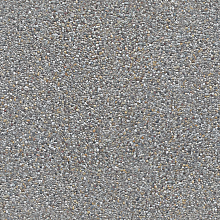 Seamless Concrete Pebble PBR Texture in 4K Resolution
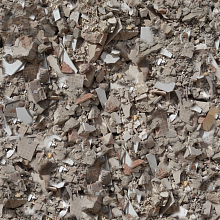 Seamless PBR Concrete Rubble Texture with Debris and Fragments
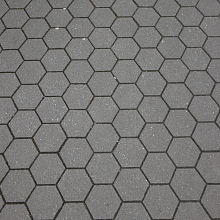 Seamless Hexagonal Concrete Tile PBR Texture 4K
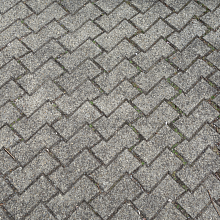 Realistic Concrete Paving Brick Pattern Texture