Optimizing Seamless PBR Textures for Large Scale Terrain and Landscape Workflows
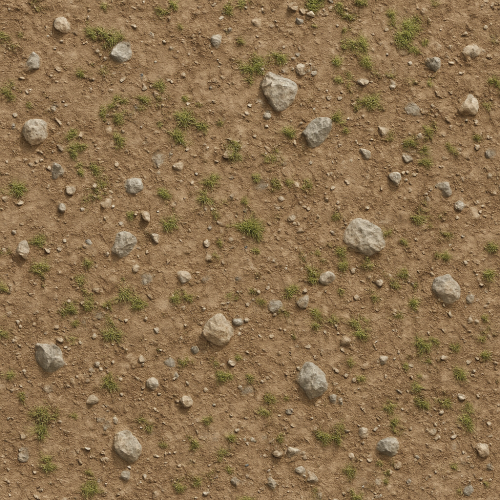
In the realm of large-scale terrain and landscape creation, physically based rendering (PBR) texturing occupies a pivotal role, serving as the foundation for conveying material authenticity and environmental coherence. Unlike smaller assets or isolated props, expansive outdoor environments demand a fundamentally different approach to texture authoring and optimization. The sheer scale of terrains—often spanning kilometers in virtual space—introduces unique technical and artistic challenges that necessitate careful consideration from the outset. Achieving seamless, scalable, and physically accurate texturing for these vast domains is essential not only for visual fidelity but also for performance and workflow efficiency across diverse platforms such as game engines, architectural visualization (archviz), and visual effects (VFX) pipelines.
A core challenge in large-scale terrain texturing lies in the intrinsic tension between detail and repetition. Because terrains cover immense areas, tileable textures must be employed to manage memory budgets and rendering costs. However, naive tiling inevitably leads to visible patterns, breaking immersion. The solution involves sophisticated strategies to minimize repetition artifacts while preserving high-frequency detail crucial for realism. This begins at the authoring stage, where high-quality PBR maps—albedo, roughness, normals, ambient occlusion (AO), height, and metallic—are generated with seamlessness as a primary constraint. Each map contributes uniquely to the final material response under dynamic lighting, and their calibration across scales directly affects perceived material authenticity.
The albedo map, representing diffuse surface color, must be carefully balanced to avoid color banding or unnatural saturation shifts when tiled extensively. For terrains, subtle hue variations and micro-patterns rooted in natural phenomena—such as soil heterogeneity, moss deposits, or mineral staining—must be embedded to break uniformity. Meanwhile, roughness maps control specular reflection sharpness and must align with physical expectations of the terrain’s surface properties. For example, wet soil patches exhibit lower roughness and a distinct specular behavior compared to dry, cracked earth. Ensuring that roughness variations correspond logically with albedo variations prevents conflicting visual cues, reinforcing material believability.
Normal maps play a critical role in conveying surface detail beyond the geometric mesh resolution. Given the impracticality of modeling every pebble or grass blade, normal maps simulate microgeometry that interacts with light to create depth cues. For large terrains, the challenge is twofold: generating high-frequency normal detail that can tile seamlessly, and incorporating macro-variation to simulate geological features like erosion patterns or rock formations without obvious repetition. Techniques such as blending multiple normal maps or leveraging procedural noise overlays can introduce variability while maintaining physical plausibility.
Ambient occlusion maps contribute subtle shadowing effects from ambient light, enhancing depth perception and grounding objects within the environment. While baked AO is often employed for static scenes, large outdoor terrains benefit from dynamic or screen-space AO solutions integrated within rendering engines. In these cases, AO textures must be carefully authored to avoid over-darkening or flattening of surface details, especially when combined with global illumination. Height maps, also known as displacement or parallax maps, provide critical surface height information that can be used for tessellation or parallax occlusion mapping, adding real geometric complexity without heavy polygon counts. Accurate height data must be scaled appropriately to the terrain’s physical dimensions to avoid visual artifacts or exaggerated surface features.
The metallic map, while less prevalent in natural terrains, becomes important in environments featuring man-made or mineralized elements such as metallic ores or rusted machinery embedded in the landscape. Correct interpretation of metallicity ensures coherent energy conservation and accurate reflection behavior under varied lighting conditions.
Scaling these maps to large terrains requires careful calibration. Texture resolution must strike a balance between fidelity and memory constraints. Utilizing mega-textures or virtual texturing techniques allows engines like Unreal Engine or Blender’s Eevee and Cycles renderers to stream high-resolution textures dynamically, reducing the memory footprint while maintaining sharp detail where the camera focuses. However, these systems depend heavily on properly authored seamless textures and well-constructed mipmaps to prevent blurring or aliasing as textures scale with distance.
Micro-variation techniques are indispensable for mitigating tiling repetition. This involves overlaying detail maps, procedural noise, or secondary texture layers that modulate base maps subtly across the terrain. Such micro-variation mimics natural randomness, such as the scattering of small rocks, dirt clumps, or vegetation patches, and can be implemented via shader blending layers or vertex color masks. These methods require tight integration between the texture authoring pipeline and shader systems within the engine to ensure consistent real-time results.
Calibration is another critical aspect of large-scale terrain texturing workflows. Artists must frequently validate texture appearance in context, using engine viewport previews or dedicated look-dev scenes that simulate the target environment’s lighting and atmospheric conditions. Color management, gamma correction, and linear workflow adherence are vital to ensure that albedo and roughness maps respond predictably under physically based lighting models. Unreal Engine’s PBR pipeline, for instance, expects albedo textures to be sRGB encoded while roughness and metallic maps are linear, necessitating consistent texture export and import settings. Blender’s principled BSDF shader similarly relies on precise texture input formats to achieve accurate material response.
Optimization must run parallel to artistic considerations. Texture atlasing, channel packing, and compression schemes reduce draw calls and memory usage without sacrificing quality. For example, packing roughness, metallic, and ambient occlusion maps into individual channels of a single texture minimizes texture fetch overhead in shaders. However, such packing demands careful channel calibration during authoring to avoid unwanted cross-channel interference. Additionally, employing texture compression formats optimized for the target platform—BC7 for PC, ASTC for mobile—preserves visual fidelity while enhancing performance.
In practical terms, large-scale terrain texturing workflows often integrate procedural generation tools alongside hand-painted details. Software like Substance Designer and Quixel Mixer enable the creation of complex, tileable PBR materials with parametric control over roughness and height variation, which can then be layered onto terrain meshes within Unreal or Blender. Combining procedural base layers with scanned albedo and normal data from photogrammetry or satellite imagery can yield highly realistic landscapes that maintain consistency across vast areas.
Ultimately, the successful optimization of seamless PBR textures for large-scale terrain hinges on a multidisciplinary understanding of material science, shader programming, and engine-specific constraints. It demands iterative testing, precise calibration, and a harmonious blend of procedural and hand-authored content to achieve immersive, scalable environments. As real-time rendering capabilities continue to evolve, mastering these principles empowers artists and technical directors to push the boundaries of outdoor realism in games, archviz presentations, and cinematic visual effects alike.
Acquiring high-fidelity PBR textures for expansive terrain and landscape projects demands a nuanced understanding of diverse sourcing methodologies, each with inherent strengths and constraints. When developing albedo, roughness, normal, ambient occlusion (AO), height, and metallic maps at scale, the choice of acquisition technique profoundly impacts not only visual realism but also workflow efficiency, data management, and real-time performance within engines like Unreal or authoring suites such as Blender.
Photogrammetry scanning remains the gold standard for capturing authentic material characteristics directly from natural environments. This method leverages high-resolution photographic capture from multiple angles combined with advanced Structure from Motion (SfM) and Multi-View Stereo (MVS) algorithms to reconstruct dense geometry and texture data. The resultant texture maps—particularly albedo and normal maps—exhibit unparalleled micro-detail fidelity and authentic lighting interaction cues essential for realistic terrain surfaces. Beyond diffuse color, photogrammetry pipelines can generate precise height maps from depth reconstructions, enabling subtle relief and parallax effects in shader displacement.
However, photogrammetry inherently produces non-tiling, high-resolution texture sets that, left unoptimized, present challenges in large-scale terrain application. To reconcile this, specialized processing involving retopology and texture baking is employed. Baking high-frequency geometric details into normal and height maps facilitates the creation of tileable texture assets while preserving the nuanced surface features captured. Seamless tiling is critical for terrain texturing, as it prevents visible repetition artifacts across vast surfaces. To this end, tools like Substance Designer or Quixel Mixer can be used to generate seamless variants by blending photogrammetric detail with procedural noise and patterning.
Calibration of photogrammetric data to fit PBR workflows is another vital step. Raw albedo maps often contain baked-in lighting and shadows due to uncontrolled capture conditions; therefore, removing these baked shadows via color correction and relighting techniques ensures physically accurate base color data. Similarly, separation of specular and roughness information requires careful extraction or manual painting, as photogrammetry does not natively provide these maps. Ambient occlusion is typically derived from baked high-poly meshes or synthesized using screen-space methods, though native AO from photogrammetry scans can be noisy and inconsistent, necessitating filtering or re-baking onto optimized geometry.
Procedural generation embraces an entirely different approach, synthesizing PBR texture maps algorithmically through node-based authoring environments such as Substance Designer, Blender’s Shader Editor, or Houdini. This technique excels in creating perfectly tileable textures with parameter-driven micro-variation, addressing the tiling challenges of photogrammetry. Procedural methods allow for the dynamic creation of complex surface attributes—such as roughness gradients, noise-induced normal perturbations, and height-based edge wear—while maintaining full control over resolution and memory footprint.
Procedural workflows enable artists to encode physical material behaviors directly into the texture generation pipeline. For instance, roughness maps can be derived from noise functions modulated by slope or curvature data, simulating erosion or water flow effects typical in natural terrains. Similarly, metallic maps, though less common in natural landscapes, can be procedurally generated to simulate mineral veins or man-made deposits. The ability to iterate rapidly and manipulate parameters at runtime or bake them into static textures is invaluable for large-scale terrains where uniformity and variation must be balanced carefully.
A critical advantage of procedural generation lies in seamless tiling without visible repetition. By leveraging fractal noise, cellular patterns, and blending operations, artists can produce textures that maintain micro-variation across infinite terrain extents. This is particularly important in real-time engines like Unreal, where texture repetition can break immersion. Furthermore, procedural outputs can be optimized by controlling texture resolution and channel packing—combining roughness, metallic, and AO into single textures to minimize draw calls and memory usage.
Despite their strengths, purely procedural textures may lack the organic complexity and authenticity of real-world materials, especially for terrains where subtle color shifts, biological growth, and geological formations play a crucial role in visual storytelling. This limitation paves the way for hybrid workflows that combine photogrammetry’s realism with procedural generation’s flexibility.
Hybrid acquisition workflows often begin with photogrammetric capture to obtain a high-quality base albedo and normal map, which provides the foundational realism. This base is then imported into node-based tools where procedural masks and noise are layered to introduce controlled variation and seamless tiling. For example, a photogrammetric albedo map can be masked and blended with procedural noise patterns to break repetition and introduce seasonal or environmental effects such as moss, dirt, or dry patches. Procedural roughness and AO maps can be generated and modulated based on photogrammetric height data, adding micro surface variations that reflect environmental wear and aging.
This fusion approach extends to height map generation as well. Photogrammetric depth data may be non-uniform or incomplete; supplementing it with procedural fractal noise or erosion simulations refines terrain displacement for large-scale landscapes. The resulting height maps support vertex displacement or tessellation shaders within engines like Unreal, enabling detailed terrain deformation without excessive geometry overhead.
Calibration in hybrid workflows is paramount to ensure consistent PBR response across all maps. Aligning the dynamic range of roughness and metallic maps derived from procedural sources with photogrammetric albedo and normal data requires careful balancing. Tools like Substance Designer provide histogram adjustment nodes and channel blending operations to normalize these inputs. Similarly, baking AO from high-poly photogrammetric meshes and combining it with procedural AO layers enhances shading realism by capturing both global occlusion and fine-scale surface details.
Optimization strategies are essential in all acquisition methods to maintain performance in large-scale terrain rendering. Texture atlasing, mipmapping, and virtual texturing techniques (e.g., Unreal’s Virtual Texturing system) allow for efficient streaming of high-resolution PBR maps across vast landscapes. Channel packing—embedding multiple grayscale maps into different RGB channels of a single texture—reduces memory footprint without sacrificing map fidelity. Additionally, edge padding and careful UV layout design prevent seams during texture sampling, a critical consideration when blending photogrammetric and procedural elements.
In Blender, procedural texturing benefits from real-time viewport feedback and shader node flexibility, enabling iterative refinement before baking textures for export. Integration with Unreal Engine’s material system is streamlined through common texture formats and PBR conventions, but attention must be paid to color space conversions—particularly linear versus sRGB handling of albedo and roughness maps—to preserve physical correctness.
In conclusion, the acquisition of PBR textures for large-scale terrains is a multifaceted endeavor. Photogrammetry offers unmatched authenticity but requires extensive processing for tiling and map separation. Procedural generation provides unparalleled control and seamless variation but may lack organic complexity. Hybrid workflows synthesize the strengths of both, producing high-quality, optimized PBR maps—albedo, roughness, normal, AO, height, and metallic—that meet the demanding visual and performance criteria of modern terrain and landscape projects. Mastery of these acquisition techniques, combined with rigorous calibration and optimization, forms the backbone of successful large-scale PBR texturing pipelines.
Creating perfectly seamless terrain textures that tile flawlessly across expansive landscapes is a cornerstone challenge in large-scale environment authoring. Achieving this demands a sophisticated interplay of acquisition, authoring, and calibration techniques, ensuring that each PBR map—albedo, roughness, normal, ambient occlusion, height, and metallic—integrates harmoniously over vast UV spaces, often distributed across multiple UDIM tiles. The goal is to avoid distracting repetition or visible seams, while preserving the subtle micro-variations that imbue natural terrain with visual complexity and realism.
At the outset, texture acquisition must emphasize high-resolution detail and minimal directional bias. Photogrammetry remains a favored technique for capturing real-world terrain surfaces, but raw scans require substantial preprocessing to adapt them for seamless tiling. Key to this is the normalization of lighting conditions across captured images, ensuring that albedo maps reflect true diffuse color without baked shadows or highlights. This base albedo must be carefully linearized and gamma-corrected to maintain consistent color fidelity when tiled. Height and normal maps derived from photogrammetry or displacement scans often contain inherent discontinuities at tile boundaries; these must be smoothed using advanced edge-blending algorithms, such as Poisson blending or gradient-domain stitching, which preserve detail continuity while eliminating abrupt transitions.
When authoring seamless textures procedurally or through manual painting in tools like Substance Designer or Mari, the challenge becomes balancing pattern repetition with natural randomness. Procedural node graphs can incorporate fractal noise layers, cellular textures, and directional warps that break up uniformity. However, indiscriminate noise addition risks destroying the physically based shading coherence critical to PBR workflows. To mitigate this, artists often utilize mask-driven micro-variation techniques that selectively perturb roughness or normal map details without altering underlying albedo chromaticity or height displacement excessively. For instance, subtle variation in roughness modulates specular response, creating the illusion of surface heterogeneity such as patches of damp soil or weathered rock, while carefully controlled normal map noise adds micro-facet detail enhancing light scattering realism.
Blending edges between tiles is an essential step to prevent visible seams, especially across UDIM boundaries where texture pages meet. Rather than relying solely on simplistic mirroring or overlapping, advanced workflows employ multi-scale edge blending: a combination of feathered alpha blending for base color and height map continuity, paired with frequency separation techniques that treat low-frequency color gradients and high-frequency detail maps independently. This approach allows seamless transitions in albedo and height without sacrificing sharpness in fine details. Height maps, crucial for parallax occlusion and tessellation-based displacement in engines like Unreal Engine or real-time viewers like Blender’s Eevee, require particular attention, as even minor discontinuities can produce noticeable artifacts in silhouette. Smooth interpolation across UV borders, reinforced by manual correction where automatic blending falls short, ensures physical plausibility and visual coherence.
Color calibration across large-scale terrain textures introduces another layer of complexity. When multiple UDIM tiles compose a single terrain, maintaining consistent color temperature, saturation, and luminance is vital to avoid patchiness. Calibration workflows frequently incorporate reference color targets and linear workflow validation to anchor all tiles within a unified color space. In practice, this involves iterative linear adjustments using tools like Photoshop’s curves or dedicated LUT-based color grading, often guided by perceptual metrics such as CIEDE2000 to quantify inter-tile color variance. Calibrating roughness and metallic maps in tandem prevents unintended shifts in visual glossiness or specular highlights that might betray texture tiling. Subtle variation in these maps is preserved by maintaining a controlled dynamic range and leveraging high-bit-depth texture workflows (16-bit or 32-bit float) to avoid quantization artifacts during blending.
Optimization is a critical consideration when working with these high-fidelity, large-scale textures. Despite the push for maximal detail and seamlessness, texture resolution must be balanced against performance budgets, especially in real-time engines like Unreal Engine. Techniques such as mipmap generation with anisotropic filtering help maintain sharpness at oblique viewing angles while reducing aliasing. Importantly, mipmaps for normal and height maps demand specialized filtering—often employing normal map-aware filters that respect vector data rather than simple color averaging—to prevent the introduction of shading errors. Furthermore, UDIM workflows benefit from dynamic streaming systems, allowing engines to load only visible tiles at runtime, reducing memory overhead. When authoring textures, embedding consistent naming conventions and metadata for UDIM indexing expedites pipeline integration and automatic texture array generation.
In practice, integrating these complex seamless textures into engine workflows requires rigorous testing across multiple lighting environments and camera distances. Unreal Engine’s physically based shading model, coupled with its virtual texturing system, provides robust support for large terrains textured via UDIMs. Artists often harness the engine’s material layering system to blend multiple seamless texture sets using vertex painting or procedural masks, further enhancing micro-variation and breaking repetition at runtime. Blender users benefit from the Cycles renderer’s node-based shader system, where seamless textures can be combined with procedural noise and baked AO to approximate naturalistic terrain surfaces even in offline renders. In both environments, ensuring the correct linear workflow, including sRGB color space for albedo and linear space for roughness and height maps, is paramount to maintaining physically accurate shading.
A practical tip for maintaining seamlessness during texturing is to employ tile-aware brush alphas and stamping methods when painting directly on terrain meshes. This approach prevents brush strokes from creating repetitive patterns or seams at tile edges. Additionally, leveraging displacement-aware painting tools allows artists to sculpt height variations in concert with texture painting, reinforcing the visual integration of texture and geometry. When working with photogrammetry-derived data, combining manual hand-painting with procedural masking can correct residual artifacts and introduce controlled variation that the raw capture cannot provide.
Ultimately, the creation and calibration of seamless terrain textures for large-scale landscapes is a multidisciplinary endeavor that synthesizes meticulous texture acquisition, nuanced authoring techniques, precise edge blending, and rigorous color calibration. It requires an intimate understanding of PBR map interdependencies and the shading models of target engines to ensure that tiled textures not only repeat without visible seams but also sustain the organic complexity and physical plausibility of natural terrain. Mastery of these methods empowers artists and technical directors to deliver immersive, believable environments that hold up under close scrutiny and expansive scale alike.
FAQ
What is covered in this guide?
This guide explains Optimizing Seamless PBR Textures for Large Scale Terrain and Landscape Workflows with practical notes for seamless PBR materials, texture setup, and production use.
Can I use these texture techniques in Blender, Unreal Engine, and Unity?
Yes. The workflow focuses on standard PBR maps and tileable materials that can be used in Blender, Unreal Engine, Unity, archviz, games, and VFX pipelines.
Where can I find textures for this workflow?
Use the AITextured texture library and the related texture links on this page to find seamless PBR materials and preview them before download.
Related Textures
 Procedural Lime Plaster Wall PBR Texture
 Procedural Stamped Sidewalk Concrete PBR Texture
 Procedural Fine Asphalt Road PBR Texture
 Procedural Pitted Concrete PBR Texture
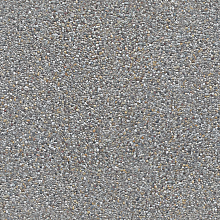 Seamless Concrete Pebble PBR Texture in 4K Resolution
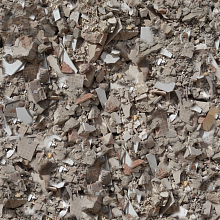 Seamless PBR Concrete Rubble Texture with Debris and Fragments
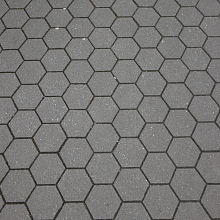 Seamless Hexagonal Concrete Tile PBR Texture 4K
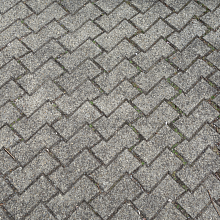 Realistic Concrete Paving Brick Pattern Texture