Pink Flower Seamless PBR Textures for Realistic Floral 3D Materials
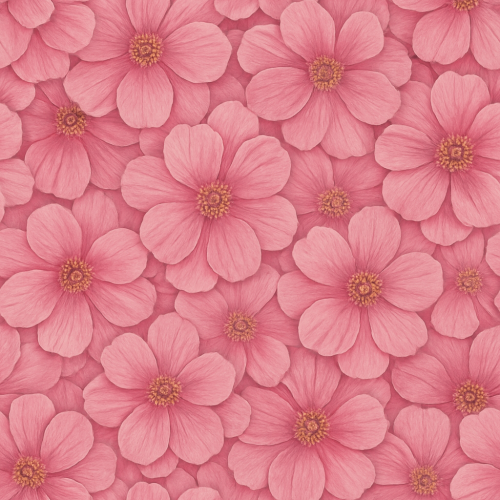
Capturing the intricate details of pink flowers for physically based rendering (PBR) textures demands a nuanced approach, balancing the fragility of organic surfaces with the technical rigor required for accurate, high-fidelity data. The acquisition process begins with an understanding that pink flowers, with their delicate petals and subtle color gradients, present unique challenges not only in capturing geometry but also in preserving the nuanced optical properties critical for realistic shading. Achieving a comprehensive PBR workflow involves generating accurate albedo maps alongside roughness, normal, ambient occlusion, height, and—where applicable—metallic maps. The fidelity of these maps hinges on the initial capture techniques, which must be carefully selected and executed.
High-resolution scanning, particularly using structured light or laser scanners, offers one pathway to capture the minute topographical variations of petals and leaves. However, the inherent translucency and thinness of petals often cause issues with laser scanning due to subsurface scattering and surface transparency, leading to noisy or incomplete scans. To mitigate this, scanning is best performed under controlled lighting conditions where the light source minimizes translucency effects. Employing a diffuser can reduce specular highlights that interfere with scanner sensors, while matte sprays—applied judiciously—can enhance surface detectability without compromising color fidelity. Yet, spray application requires subsequent digital correction to restore true albedo colors, making this a trade-off that must be carefully managed to preserve the natural pink hues.
Photogrammetry, an increasingly popular alternative, leverages multiple overlapping photographs to reconstruct 3D geometry and texture data. For pink flowers, photogrammetry excels in capturing color variation and subtle veining across petals, crucial for generating a realistic albedo map. However, capturing consistent and reproducible data is challenging due to the translucent and reflective qualities of petals, which cause variability in lighting and color throughout the image set. To address this, a cross-polarized lighting setup is often utilized, where polarizing filters on both light sources and camera lenses reduce glare and specular reflections, enabling more uniform capture of diffuse color information. The resulting images allow for more accurate base color extraction with minimal post-processing correction.
When capturing photogrammetry data, it is imperative to maintain a stable and consistent environment, ideally with a light tent or controlled studio setup, to avoid shadows or color shifts that could introduce artifacts during texture baking. The use of high-resolution cameras with macro lenses is recommended to resolve the fine details of petal microstructure, such as surface ridges and trichomes, which contribute significantly to normal and height map fidelity. Multiple focal depths may be required to ensure sharp detail across the petal curvature, necessitating focus stacking techniques that combine sharp regions from several images into a single texture source.
Following geometry reconstruction, baking maps such as normals, ambient occlusion, and height from the high-poly mesh to a low-poly game-ready model is an essential step. Given the complexity of flower geometry, careful retopology is usually necessary to optimize mesh density for real-time engines like Unreal Engine or Blender’s Eevee while preserving critical detail. The baking process benefits from high-resolution source meshes that capture petal undulations and vein structures in sufficient detail to produce convincing normal maps. Ambient occlusion maps should be baked using ray-traced methods to capture the subtle shadowing effects within petal folds and between overlapping leaves, enhancing realism in the final shader.
Accurate roughness maps are equally critical for pink flowers, as the interplay of waxy petal surfaces and matte leaf textures dictates light scattering behavior. These maps can be derived from calibrated photographic data or measured with a gonioreflectometer when available. When direct measurement is not feasible, roughness extraction can be approximated by analyzing specular reflections and microfacet distribution visible in the diffuse and specular image sets. In practical terms, artists often combine grayscale masks generated from color or luminance data with hand-painted adjustments to fine-tune roughness values, ensuring that glossy petal surfaces contrast convincingly against the more diffuse leaves.
Color calibration remains paramount throughout acquisition and authoring. Employing color checker charts and gray cards in the photographic setup allows for accurate white balance and color profile correction during post-processing. This step is crucial for pink flowers, as subtle shifts in hue or saturation can undermine the perceived realism when rendered under various lighting conditions. Calibrated albedo textures ensure that in-engine shaders reproduce the flower’s true coloration, maintaining consistency across different environments and time-of-day lighting setups.
Micro-variation within the texture set is another vital consideration. Pink flowers rarely exhibit uniform coloration or surface properties; instead, they feature gradients, vein patterns, and slight imperfections that break repetition and add visual interest. To achieve seamless tiling while preserving this micro-variation, it is advisable to capture multiple texture patches from different regions of the flower and blend them using procedural texturing techniques or layered materials within the engine. This approach prevents noticeable repetition artifacts when textures are tiled over larger surfaces, such as in vegetation scattering or billboard instancing.
Optimization for engine usage involves balancing texture resolution with performance constraints. While initial captures may produce extremely high-resolution textures (4K or higher), downsampling and mipmap generation are necessary to maintain real-time rendering efficiency. In Unreal Engine, for instance, texture streaming settings can be adjusted to prioritize sharpness in camera focus areas while reducing resolution for distant petals. Additionally, channel packing techniques—such as combining roughness, metallic, and ambient occlusion maps into a single texture’s RGB channels—reduce memory footprint without compromising quality.
In Blender’s shading workflow, the physically based shader nodes benefit from the distinct input maps generated during acquisition. The normal map influences surface microdetail under dynamic lighting, while the height map can be used for parallax occlusion mapping or displacement to enhance silhouette complexity. The roughness and albedo maps control the shader’s specular response and base coloration, respectively, requiring careful calibration to avoid subsurface scattering artifacts that might otherwise soften or desaturate the pink tones. Metallic maps are rarely applicable in pink flower textures unless capturing incidental elements like stamen tips or pollen with metallic luster, but when present, they must be accurately isolated during the authoring process.
In summary, acquiring pink flower PBR textures integrates meticulous scanning or photogrammetric capture under controlled lighting, calibrated color management, and detailed post-processing to generate a comprehensive suite of texture maps. Delicate organic surfaces necessitate adaptations in technique to mitigate translucency and specular challenges, while maintaining micro-variation and optimizing for real-time engine constraints ensures visually compelling, physically accurate flower materials. Mastery of these acquisition techniques sets a solid foundation for producing pink flower textures that convincingly replicate the subtle complexity inherent in natural petals and foliage.
The creation of pink flower PBR textures benefits significantly from a hybrid approach that merges photographic source material with procedural authoring techniques. This combination leverages the inherent realism of high-quality photographic captures while compensating for their typical limitations—such as repetition artifacts and limited variation—through the flexibility and control of procedural methods. Achieving a natural, versatile floral pattern demands careful attention to both the acquisition and manipulation of photographic data as well as the algorithmic generation of detail and variation across the PBR texture channels, including albedo, roughness, normal, ambient occlusion (AO), height, and occasionally metallic maps.
Photographic acquisition remains the foundational step in capturing the subtle chromatic and structural complexity inherent to pink flowers. High-resolution macro photography under controlled lighting conditions allows for the capture of critical detail, including petal translucency, vein structures, and the delicate color gradients from soft blush tones to deeper magentas. When photographing, it is imperative to maintain a consistent light angle and intensity to minimize shadows that could cause unwanted artifacts in albedo and roughness maps. Additionally, the use of a polarizing filter can reduce specular highlights on waxy or dewy petals, yielding cleaner diffuse color data. For normal and height map extraction, photogrammetry or photometric stereo setups can be employed to capture microgeometry with fidelity, though these often require additional calibration and cleanup.
Once photographic data is obtained, the challenge shifts to transforming the raw images into tileable, physically accurate PBR textures. Floral patterns rarely conform to perfect repetition, so seamless tiling is achieved by carefully selecting image regions and employing edge-blending techniques that avoid obvious seams while retaining natural randomness. This process can be facilitated by frequency separation methods, which isolate high-frequency detail (such as petal veins and surface noise) from low-frequency color gradients. These layers can then be manipulated independently—low-frequency layers can be tiled using traditional offset and mirror techniques, while high-frequency detail can be procedurally generated or cloned to break uniformity.
Procedural authoring excels in introducing micro-variation and amplifying surface detail that photographic sources might miss or replicate excessively. For instance, procedural noise and curvature-based masks can be layered over the photographic albedo to subtly vary saturation and brightness, simulating natural pigment dispersion and petal aging. This variation is crucial for avoiding the “stamped” appearance common in photographic textures. In the roughness channel, procedural inputs are particularly valuable; pink flower petals typically exhibit a range of micro-surface properties, from velvety matte regions to glossier wet spots. By combining base roughness values derived from photographic data with procedural noise and curvature-driven modulation, artists can replicate specular heterogeneity that reacts realistically to light changes.
Normal maps derived from photographic sources often require augmentation through procedural detail maps. Photogrammetry or normal map baking can capture primary geometric features—such as petal curvature and veins—but will often lack consistent micro-detail or suffer from noise that disrupts tiling. Procedural generation of fine normal detail, using fractal noise or cellular patterns tuned to match petal microstructures, can be layered atop photographic normals to enhance perceived depth and tactile realism. This layered approach also facilitates optimization: the base normal map defines the macroscopic form, while procedural detail layers can be selectively enabled or baked at different resolutions depending on engine requirements.
Ambient occlusion and height maps further benefit from the procedural-photographic hybrid workflow. AO maps extracted directly from photographic normal maps or baked from high-poly geometry can sometimes appear flat or overly uniform when tiled. Introducing procedural AO variation based on curvature, cavity detection, or random perturbation ensures shadowing that responds plausibly to surface complexity and avoids monotony. Height maps, critical for parallax or displacement effects in engines like Unreal Engine or Blender’s Eevee and Cycles, can be refined by layering procedural detail that accentuates petal edges, veins, and surface undulations. Because height data influences silhouette and tactile perception, careful calibration is required to balance realism with performance, especially when targeting real-time applications.
Calibration across all PBR channels is essential to maintain physical plausibility and ensure consistent material response in rendering engines. Photographic albedo must be linearized and color-calibrated to reflectance values (albedo typically excludes shadows and highlights), which can be achieved through color profiling and the use of reference color charts during acquisition. Roughness values derived from photographs often need remapping or inversion depending on the capture method; for example, specular exponent maps may be converted to roughness through power functions. Normal maps should be verified for correct tangent space orientation and consistent compression settings to prevent artifacts. AO and height maps require range normalization to ensure they function correctly within shader parameters. Tools such as Substance Painter or Designer provide procedural workflows and real-time previews, facilitating iterative calibration against target engines.
Optimization is another critical consideration when authoring pink flower PBR textures for production. High-resolution photographic data can quickly become unwieldy, so it is standard practice to generate mipmaps with tailored filtering that preserve critical detail without introducing blurriness or aliasing. Procedural detail layers can be baked into texture atlases or combined as shader overlays to reduce texture fetches. For real-time engines like Unreal Engine, utilizing runtime virtual textures or texture streaming can help manage memory footprint while maintaining visual fidelity. Additionally, separating channels into packed textures—such as roughness, metallic (if applicable), and AO combined into a single map—reduces texture count and draw calls. The pink flower’s lack of metallic features means the metallic channel is often set to zero or omitted, but careful packing of complementary maps enhances performance without sacrificing quality.
In Unreal Engine, the Material Editor allows the integration of procedural noise functions and masks alongside photographic textures, enabling dynamic variation based on world position or vertex colors. This facilitates the creation of large-scale floral surfaces that avoid repetition and respond to environmental factors such as wetness or dirt accumulation. Blender’s node-based shader system similarly supports mixing photographic inputs with procedural noise and curvature maps, allowing artists to preview and tweak PBR channel interactions in real time. Baking procedural detail into texture maps for export remains a common practice for pipeline compatibility and performance optimization.
In summary, combining photographic sources with procedural authoring techniques provides a robust workflow for creating pink flower PBR textures that are both highly realistic and versatile. Photographic data anchors the materials in natural detail and color accuracy, while procedural methods introduce the variation and seamlessness necessary for large-scale application. Attention to channel-specific calibration, careful tiling, and optimization tailored to target rendering engines ensures that these textures perform well in both real-time and offline contexts. This hybrid approach empowers artists and technical directors to generate floral patterns that maintain the subtle beauty and complexity of pink flowers without compromising on performance or scalability.
Creating physically based rendering (PBR) maps for pink flower materials demands a carefully calibrated approach to capture the subtle interplay between the flower’s organic surface properties and its interaction with light. Unlike more uniform or synthetic surfaces, flower petals exhibit complex micro-variations in color, translucency, and surface roughness, all of which must be faithfully translated into PBR texture maps to achieve realistic shading. The process begins with the acquisition or authoring of high-fidelity source images or scans, which serve as the foundation for each individual map—albedo, normal, roughness, metallic, and ambient occlusion—while additional consideration is given to height or displacement maps to enhance surface detail in engine implementations such as Unreal Engine or Blender.
The albedo, or base color map, for pink flowers requires particular attention to color fidelity and the avoidance of baked-in lighting information. Since flower petals are often thin and semi-translucent, the albedo texture should capture the true pigment color of the petals without shadows or highlights that would otherwise distort the diffuse color data. This can be achieved by photographing petals under diffuse, even lighting conditions, ideally using a light tent or softbox to minimize specular reflections and shadows. When working from photographic sources, images must be meticulously color-corrected and white balanced to maintain a consistent pink hue that accurately represents the natural variation seen in petals—from soft pastel pinks to deeper magentas—without drifting toward unnatural saturation or hue shifts. Alternatively, procedural or hand-painted albedo maps can be created in software like Substance Painter or Photoshop, incorporating subtle mottling and vein patterns to reflect the natural pigmentation heterogeneity.
The roughness map plays a pivotal role in defining how light scatters across the petal surface, influencing the perceived softness and slight sheen characteristic of flowers. Petals are rarely uniform in roughness; micro-variations caused by fine surface textures and waxy coatings create areas of higher and lower glossiness. To author an effective roughness map, it is common practice to extract detail from high-resolution photographs or scanned microstructures, emphasizing the natural variance rather than a flat value. When starting from a grayscale photograph, inversion and calibration against real-world measurements or references are necessary to ensure roughness values fall within plausible ranges—typically petals exhibit roughness values that translate to semi-glossy surfaces, somewhere between 0.3 and 0.6 in linear roughness. It is advisable to desaturate and blur the base image to remove distracting noise, then layer in hand-painted or procedural noise to simulate the subtle granularity of the petal’s surface. In Blender or Unreal Engine, roughness maps must be linearized correctly, and artists should verify the map’s effect by previewing under a variety of lighting conditions, including HDR environment maps, to ensure the surface responds realistically.
Normal maps convey the fine-scale surface undulations and vein structures that are crucial for breaking up specular highlights and increasing the tactile realism of the flower petals. Generating normal maps for pink flowers typically involves photogrammetry or photometric stereo capture methods to obtain accurate microgeometry. When this is not feasible, high-resolution displacement or height maps derived from macro photography can be converted into normal maps using tools like xNormal, Substance Designer, or Blender’s baking system. It is critical to maintain the correct tangent space orientation and consistent scale of the normal map to prevent shading artifacts within the target engine. The intensity of the normal map should also be carefully calibrated; over-exaggeration can lead to unnatural bumpiness, while under-representation results in a flat, unconvincing surface. To enhance micro-variation, artists often combine multiple normal maps—one representing larger vein structures and another with fine-grained surface noise—using layered blending techniques before exporting the final map.
Ambient occlusion (AO) maps for flower petals capture the self-shadowing effects caused by microscopic folds, creases, and overlapping petal layers. AO provides subtle depth cues that enhance the perception of volume and surface complexity under diffuse lighting. For pink flowers, AO maps should be generated with care to avoid excessive darkening that can dull the delicate color and translucency inherent to petals. Baking AO from high-resolution geometry in Blender or Unreal Engine’s baking tools can yield clean results, but artists often need to adjust the AO map’s contrast and opacity to balance its contribution during shading. It is beneficial to keep AO maps as grayscale textures, ensuring they modulate only the indirect lighting component without interfering with direct specular reflections. In practice, AO maps for flowers are typically used sparingly and combined with subsurface scattering (SSS) effects to preserve the petal’s natural light transmission properties.
Although metallic maps are a staple of PBR workflows, their relevance to pink flower materials is minimal, as petals are non-metallic by nature. Consequently, the metallic map for pink flowers is generally a flat black (zero metallic) texture, ensuring no metallic reflections interfere with the organic appearance. However, if one is texturing associated elements such as pollen grains or the flower’s reproductive structures, which may possess slightly reflective or waxy surfaces, a subtle metallic value can be integrated. For the petals themselves, explicitly setting metallic to zero simplifies shader complexity and prevents unintended artifacts.
Height or displacement maps play a complementary role by defining larger-scale surface relief beyond what normal maps can convey. When combined with tessellation or parallax occlusion mapping in real-time engines like Unreal Engine, height maps enhance the visual depth of petals, accentuating veins and folds that catch light dynamically. Height maps are typically generated from grayscale photographs or scanned microgeometry, carefully filtered to remove noise and normalized to a narrow range, as excessive displacement can cause clipping or silhouette distortion. Additionally, height maps may be combined with normal maps via baking workflows or procedural generation tools to maintain consistency between surface geometry and shading cues.
Tiling and texture repetition present unique challenges for pink flower materials due to their organic and irregular patterns. Unlike man-made surfaces, flower petals rarely exhibit perfectly repeating textures; therefore, seamless tiling must be approached with subtlety. When authoring textures for tiled surfaces—such as a field of flowers modeled with instances—micro-variation techniques become essential. This can include blending multiple albedo and roughness variants, introducing procedural noise overlays, or using vertex color masks to break repetition in shader graphs. UV layouts should be optimized to maximize texture resolution on critical visible areas while minimizing stretching that could distort the petal patterns. In Blender and Unreal Engine, tools like triplanar mapping or procedural blending nodes can be leveraged to further reduce visible seams and improve the natural appearance of tiled flower textures.
Calibration and optimization are critical final steps to ensure the PBR maps perform correctly across different rendering engines and lighting setups. Artists should consistently test textures under a range of environment maps, directional lights, and color temperatures, paying close attention to how the petal’s pink hues shift under varied illumination. Since flower petals often exhibit subsurface scattering, integrating PBR maps with SSS shader parameters requires fine-tuning to balance translucency and surface reflectance. Optimization involves minimizing texture sizes and channel packing where possible—for instance, combining roughness, metallic, and AO maps into a single RGB file—to reduce memory footprint without sacrificing quality. Additionally, mipmap generation settings should be carefully configured to preserve color and detail fidelity at varying camera distances.
When deploying the final pink flower PBR textures in Unreal Engine, the material setup should prioritize physically accurate shading models. Unreal’s default Lit shader supports all necessary inputs: albedo, normal, roughness, metallic, AO, and height maps. The albedo texture must be set to sRGB color space, while roughness, metallic, and AO maps should use linear color space to prevent gamma correction artifacts. Height maps can be incorporated via tessellation or displacement nodes, but performance considerations may dictate using parallax occlusion mapping instead. Similarly, in Blender’s Cycles or Eevee rendering engines, PBR textures are plugged into Principled BSDF shaders with appropriate color space assignments and subsurface scattering parameters to mimic light transmission through the petal tissue.
In summary, the creation of PBR maps for pink flower materials is a nuanced process that demands precise capture or authoring of each texture channel to represent the flower’s delicate coloration, surface micro-structure, and light interaction. The interplay between albedo, roughness, and normal maps must be carefully balanced to simulate the soft reflectivity and subtle surface detail of petals. Ambient occlusion enhances depth perception without overpowering translucency, while metallic maps are generally omitted due to the non-metallic nature of flowers. Height maps enrich the surface topology and, together with thoughtful tiling strategies and calibration in target engines, enable the realistic rendering of pink flowers in a physically plausible manner. Mastery of these workflows ensures that 3D flower assets achieve an authentic and visually compelling presence across a wide range of lighting environments and rendering platforms.
FAQ
What is covered in this guide?
This guide explains Pink Flower Seamless PBR Textures for Realistic Floral 3D Materials with practical notes for seamless PBR materials, texture setup, and production use.
Can I use these texture techniques in Blender, Unreal Engine, and Unity?
Yes. The workflow focuses on standard PBR maps and tileable materials that can be used in Blender, Unreal Engine, Unity, archviz, games, and VFX pipelines.
Where can I find textures for this workflow?
Use the AITextured texture library and the related texture links on this page to find seamless PBR materials and preview them before download.
Related Textures
 Procedural Lime Plaster Wall PBR Texture
 Procedural Stamped Sidewalk Concrete PBR Texture
 Procedural Fine Asphalt Road PBR Texture
 Procedural Pitted Concrete PBR Texture
 Seamless Concrete Pebble PBR Texture in 4K Resolution
 Seamless PBR Concrete Rubble Texture with Debris and Fragments
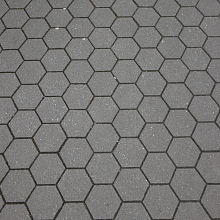 Seamless Hexagonal Concrete Tile PBR Texture 4K
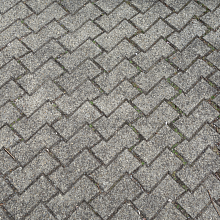 Realistic Concrete Paving Brick Pattern Texture