Wild Flower Seamless PBR Textures for Realistic Natural Surfaces
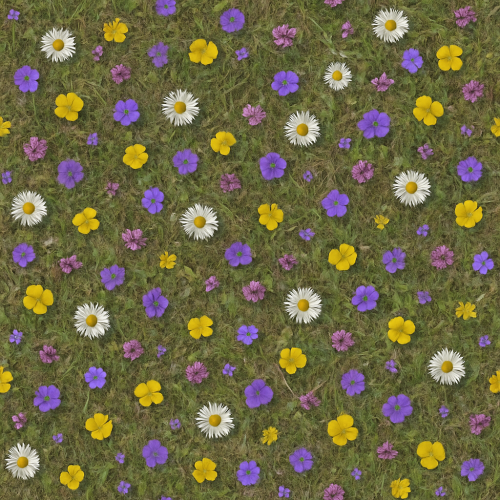
Capturing high-fidelity wild flower textures for physically based rendering (PBR) workflows demands meticulous attention to both the intrinsic qualities of the subject and the technical constraints of texture acquisition. Wild flowers present unique challenges due to their delicate, often translucent petals, fine structural details such as slender stems and veins, and complex surface properties that influence how light interacts with them. Achieving accurate albedo, normal, roughness, ambient occlusion (AO), height, and, where applicable, metallic maps requires a combination of carefully chosen photogrammetry and scanning techniques paired with calibrated lighting and environmental controls.
Photogrammetry remains the foundational method for capturing the rich detail and true color of wild flowers. However, standard photogrammetry techniques must be adapted to account for the translucency and fine geometrical features inherent to these organic subjects. Equipment selection plays a critical role: a high-resolution DSLR or mirrorless camera with a macro lens is essential to resolve micro-variations on petals and leaves. Macro lenses with focal lengths in the 90–105mm range strike a balance between working distance and detail capture, minimizing distortion while allowing close-up shots. Using a full-frame sensor camera enhances dynamic range and color fidelity, which is vital for capturing subtle hue variations and translucency gradients in petals.
Lighting setup is crucial. Diffused, even illumination minimizes harsh shadows that can obscure detail or cause specular highlights to saturate sensor data, which would complicate subsequent albedo extraction. Utilizing a light tent or a softbox with neutral white LED lights calibrated to a color temperature around 5500K ensures consistent and daylight-balanced lighting conditions. The use of cross-polarized filters on both the light sources and camera lens effectively reduces specular reflections, allowing the camera to capture the true diffuse albedo without contamination from specular highlights. This is essential for generating a clean base color texture that accurately represents the flower’s pigmentation and translucency.
To capture translucency, a complementary light source positioned behind or beneath the sample can be employed to simulate subsurface scattering effects. This backlighting reveals the internal structure and veining of petals and leaves, which can be baked into subsurface scattering (SSS) maps or used to inform shader parameters in engines like Unreal Engine or Blender’s Cycles. Though these SSS maps are not standard PBR channels, their acquisition is indispensable for photorealistic rendering of delicate flora. Capturing multiple lighting passes—diffuse front light, backlight for subsurface detail, and cross-polarized to isolate diffuse albedo—enables the author to generate a comprehensive texture set.
In addition to photogrammetry, structured light scanning or laser scanning can enhance the acquisition of fine geometric details. These methods yield accurate normal and height maps crucial for simulating micro-surface variation, which significantly affects roughness and the way light scatters on petals and leaves. However, the fragility and translucency of wild flowers make laser scanning challenging; reflective and transparent surfaces often produce noise or missing data. To mitigate this, applying a removable matte spray can improve scan quality by reducing subsurface scattering and reflections, though care must be taken to avoid altering color or texture irreversibly. Alternatively, multi-view stereo photogrammetry combined with depth-from-focus techniques can supplement geometry capture without physically altering the subject.
Calibration is integral throughout the acquisition pipeline. Color calibration using a standardized color checker ensures that the albedo textures are true to life and consistent across multiple capture sessions. This is particularly important when capturing wild flowers in situ, where ambient lighting conditions vary. Calibration targets should be included in each shot sequence and color profiles corrected in post-processing software before texture authoring begins. For roughness and specular data, reflectance standards can be measured with a spectrophotometer or comparable device to derive accurate roughness values corresponding to the flower’s surface finish. These measurements inform the creation of roughness maps that drive microfacet distributions in PBR shaders.
When authoring textures, the albedo map must be carefully desaturated of any baked-in shadows or lighting gradients; this is facilitated by the cross-polarization method and controlled lighting. Normal maps derived from high-resolution geometry capture encode subtle surface undulations such as petal wrinkles and fine veins, enhancing realism in engine rendering. Height maps created from displacement data support parallax occlusion or tessellation techniques, enabling depth perception on close inspection, critical for wild flower models viewed at macro scales. Ambient occlusion maps should be baked with care to avoid excessive darkening in thin or translucent areas, as it can produce visual artifacts in subsurface scattering.
Creating seamless, tileable textures from wild flower data presents inherent difficulties due to the organic, non-repetitive nature of the subject. Instead of forcing tiling, many PBR workflows recommend using high-resolution non-tiled texture sets combined with shader-based procedural variation to simulate micro-variation across large surfaces. Techniques such as detail normal overlays, noise-based roughness modulation, or vertex color blending can introduce subtle randomness that prevents repetition without compromising the authentic appearance captured in the original scans. For projects requiring tiling, carefully edited texture patches combined with edge blending and clone stamping in software like Substance Painter or Mari can produce acceptable results, though this demands significant manual intervention.
Optimization for real-time engines such as Unreal Engine or Blender’s Eevee renderer involves balancing texture resolution against performance budgets. While wild flower textures benefit from 4K or higher resolution albedo and normal maps to preserve detail at close range, roughness and AO maps can often be downscaled without perceptible loss due to their lower spatial frequency content. Compression settings in engine texture importers should be chosen to preserve color fidelity and normal map integrity—BC7 compression for albedo and BC5 for normals are typical choices. Utilizing mipmaps and anisotropic filtering reduces aliasing artifacts when textures are viewed at oblique angles or distances.
In Unreal Engine, the physically based material setup leverages captured texture maps to recreate the subtle light interactions characteristic of wild flowers. The albedo map feeds the base color input, while the normal map drives surface perturbations. Roughness maps modulate specular reflection intensity and glossiness, crucial for capturing the soft, matte finish of petals contrasted with the slightly waxy or glossy surfaces of stems or leaves. Ambient occlusion maps multiply the base diffuse to enhance shadowed crevices, though care must be taken to avoid over-darkening. Height maps can be connected to tessellation or displacement nodes if the engine supports it, adding real geometric relief. Translucency and subsurface scattering parameters are adjusted using the backlit texture data and calibrated shader values to simulate light transmission through petals realistically.
In Blender, similar workflows apply, especially when using the Cycles renderer. The Principled BSDF shader accommodates all standard PBR inputs, and the inclusion of subsurface scattering nodes driven by translucency maps enhances realism. Texture baking workflows in Blender can integrate multiple passes, including diffuse, normal, AO, and height maps, from photogrammetry-derived meshes. The material node graph allows for fine control over blending these maps and incorporating procedural variations to break up repetition without losing the fidelity of the original captures.
In summary, the acquisition of wild flower texture data for PBR involves a delicate balance of photographic precision, scanning technology, and calibrated lighting to faithfully capture color, translucency, and geometric detail. By leveraging macro photography with cross-polarized lighting, multi-pass capture strategies, and complementary scanning methods, artists can generate comprehensive texture sets that inform accurate shading models in real-time and offline rendering engines. Coupled with rigorous calibration and thoughtful optimization, these techniques ensure that the intricate beauty of wild flowers is rendered with both fidelity and efficiency in digital environments.
Creating physically based rendering (PBR) textures for wild flowers demands a balance between botanical fidelity, visual richness, and technical versatility. Whether employing procedural generation or photographic-based workflows, the goal is to produce maps that accurately capture the subtle intricacies of petal surfaces, leaf veins, and floral gradients while ensuring seamless integration into real-time engines like Unreal Engine or offline renderers such as Blender’s Cycles. This section delves into both methodologies, highlighting nuanced techniques to replicate organic patterns, soft pastel tones, and vibrant chromatic variations within the constraints of PBR texture authoring.
Procedural texture generation offers unique advantages when crafting wild flower materials, particularly in achieving seamless tiling and controlled micro-variation. Unlike photographic textures, which rely on real-world captures, procedural workflows build texture maps algorithmically, often through node-based systems in software like Substance Designer or Blender’s procedural shader editor. The core challenge lies in simulating the irregular yet coherent morphology of floral elements—petal striations, pollen dustings, and subtle translucency—without introducing obvious repetition or synthetic artifacts.
To begin, the albedo or base color map requires careful construction of organic color gradients and patterns. Procedural noise functions such as Perlin, Worley, or Voronoi cell noise can be layered and modulated to imitate petal textures. For instance, using a combination of softened cellular noise and anisotropic directional noise can replicate the fibrous streaks common in petals, while color ramps mapped to noise intensity control the transition between pastel pinks, yellows, and vibrant magentas. The key is to avoid harsh edges or overly mechanical repetition; blending multiple noise types with varying scales and offsets ensures the flower’s surface appears natural. Additionally, introducing subtle hue and saturation shifts on a per-petal or per-pixel basis simulates biological variation within a single plant, essential for breaking uniformity when the texture tiles across a mesh.
Roughness maps in procedural workflows benefit from a layered approach as well. Petal surfaces are rarely uniform; some areas are matte and velvety, while others exhibit slight glossiness due to moisture or waxy coatings. By assigning roughness values through noise-driven masks, one can simulate these micro-variations. For example, low-frequency noise can define broad matte regions, while high-frequency noise modulates glossy specular highlights at the detail level. Integrating curvature-based masks into the roughness channel further enhances realism by mimicking how edges or raised areas of petals reflect light differently than recessed zones. In procedural systems, this curvature information can be derived from mesh normals or generated within shader graphs, allowing dynamic adjustment based on viewing angle and lighting.
Normal and height maps are crucial for conveying the subtle relief of flower surfaces—veins, petal folds, and pollen granules. Procedurally, displacement can be synthesized by combining fractal noise with directional patterns aligned to the petal’s growth axis. Height information generated in this manner can feed into normal map conversion nodes, producing bump detail without requiring high-poly geometry. Careful calibration of height map intensity is necessary to avoid exaggerated surface distortion, which can break the illusion of organic softness. Ideally, normal maps incorporate multi-scale detail: larger veining patterns at lower frequencies and fine-grained surface roughness at higher frequencies. Utilizing curvature and ambient occlusion (AO) maps procedurally derived from the height data can further enhance shading realism by simulating subtle shadowing in crevices and around veins.
Ambient occlusion maps in procedural workflows often stem from simulated self-shadowing algorithms that approximate how light interacts with micro-geometry. While not strictly necessary for all PBR pipelines, AO maps add depth and contrast to the albedo and roughness when multiplied or blended in shader setups. Procedural AO can be generated by rendering ambient occlusion passes within the node graph or baked from height and normal textures. For wild flowers, the AO map should emphasize the delicate folds and petal overlaps, ensuring these areas receive nuanced shadowing without overwhelming the overall brightness.
Metallic maps typically remain unused in most wild flower materials since botanical surfaces lack metal-like reflectance. However, if authoring textures for floral elements with metallic features (e.g., dew drops with metallic dust or iridescent petals), metallic maps can be procedurally assigned by isolating those specific regions through masks derived from noise or pattern analysis.
Photographic texture workflows begin with acquisition, where high-resolution macro photography or flatbed scans of wild flowers serve as the foundational data. Accurate color calibration during capture—using standardized color charts and controlled lighting environments—is critical to preserve the pastel tones and vibrant hues characteristic of wild flora. Post-capture, images undergo extensive editing to produce usable texture maps.
The albedo map extraction involves color correction, removal of unwanted shadows, and desaturation of specular highlights to isolate the true diffuse color. Software like Photoshop or Affinity Photo facilitates frequency separation techniques: separating high-frequency details from low-frequency color information allows for retouching without losing delicate petal textures. To achieve seamless tiling, images often require careful edge blending through clone stamping, offset filters, or content-aware fills. Given the organic shapes of flowers, tiling must be subtle to avoid obvious repetition, which can be mitigated by breaking patterns along petal boundaries or blending patch edges with natural gradients.
Creating roughness maps from photographic data requires converting specular reflections captured in images into grayscale maps representing surface microfacet scattering. This can be approximated by inverting and processing the specular channel extracted via high-pass filters, isolating blurred highlight regions, or using polarization filters during capture to control specularity. The roughness map should accentuate the varied tactile qualities of petals and leaves, such as the matte fuzziness of a daisy or the waxy sheen of a tulip. Calibration involves matching roughness values to real-world measurements or reference materials, ensuring physically plausible reflectance in the target engine.
Normal map generation from photographic sources is a multi-step process. Height maps are first derived via displacement extraction algorithms—displacement from grayscale height data can be generated using tools like CrazyBump, xNormal, or Substance Designer’s height map filters. These height maps then convert into normal maps representing surface orientation changes. However, photographic height extraction often captures large-scale surface undulations, sometimes missing micro-detail. Combining procedural detail overlays with photographic normal maps can restore fine granularity lost in the capture process. This hybrid approach leverages the best of both worlds: photographic authenticity and procedural precision.
Ambient occlusion maps for photographic textures typically come from baking AO passes on high-poly models or approximating AO through ambient occlusion filters applied to height maps. Since photographic data lacks intrinsic AO information, baking is often necessary when a high-resolution mesh is available, or screen-space AO techniques can be employed dynamically within the engine.
In terms of tiling and micro-variation, photographic textures pose unique challenges. Wild flowers rarely exhibit easily tileable patterns due to their irregular shapes and complex color transitions. To address this, texture authors often create multiple tileable variants or use trim sheets that isolate specific flower parts—petals, stems, leaves—allowing artists to assemble diverse floral compositions with micro-variation introduced through vertex blending or shader-based randomization. In Unreal Engine, material functions and parameters enable dynamic variation of albedo tint, roughness intensity, and normal map strength per instance, breaking monotony in large environments filled with repeated floral assets.
Calibration and optimization are vital in both workflows. Procedural textures often demand computational overhead, especially when dynamically generated at runtime. Baking procedural outputs into texture maps for import into engines reduces cost while preserving quality. Conversely, photographic textures may require resolution scaling, mipmap generation, and compression balancing to maintain visual fidelity without taxing memory budgets. Using texture arrays or atlases within Unreal Engine streamlines resource management, particularly when multiple flower species with distinct textures populate a scene.
Practically, integrating these textures into engines involves configuring material graphs to correctly interpret maps according to PBR workflow conventions. Albedo maps should be sRGB encoded, while roughness, metallic, AO, and height maps remain linear. Normal maps require tangent-space format, and their intensity often warrants tweaking to harmonize with engine lighting. In Blender, utilizing the Principled BSDF shader facilitates straightforward channel connections and physically accurate shading, with subsurface scattering parameters adjusted to simulate petal translucency. Unreal Engine’s Material Editor allows granular control over blend modes, two-sided rendering (critical for thin petals), and translucency, enabling artists to simulate light transmission and ambient color bleeding realistically.
Ultimately, achieving convincing wild flower PBR textures hinges on an iterative process of acquisition, authoring, calibration, and integration. Procedural and photographic techniques each offer distinct benefits: procedural methods excel in controlled variation and seamless tiling, while photographic approaches provide authentic color and detail fidelity. Combining both through hybrid workflows—such as augmenting photographic albedo with procedural roughness and normal overlays—produces textures that not only capture the botanical essence but also meet the stringent demands of modern physically based rendering pipelines.
Creating accurate Physically Based Rendering (PBR) maps for wild flower surfaces demands a nuanced approach that balances the delicate, often translucent nature of petals with the more solid, fibrous textures of stems and leaves. Unlike typical foliage or hard surfaces, wild flower materials require particular attention to subtle variations in translucency, micro-surface detail, and color fidelity. The objective is to capture the intricate interplay of light as it passes through and reflects off petals, while maintaining physically plausible responses in real-time engines such as Unreal Engine or offline renderers like Blender’s Cycles.
The starting point in the workflow is the acquisition or creation of the albedo (base color) map. For wild flowers, this map must accurately represent the soft gradients and fine color shifts that occur naturally within petals. These variations are rarely uniform; they exhibit subtle chromatic aberrations, vein-like pigmentation, and occasional speckles or spots. Photogrammetry or high-resolution scanning can provide a faithful base, but raw captures often include baked lighting and shadows that must be removed to maintain physical correctness. Techniques such as color calibration against a neutral reference target and subsequent desaturation or shadow removal in image editing software are critical. If authoring from scratch, hand-painting or procedural texturing should incorporate low-frequency color gradients that replicate the petal’s natural translucency and pigmentation patterns. The albedo must avoid any indication of specular highlights or shadows, as these belong in separate maps.
Normal maps for wild flower surfaces present a particular challenge due to the fine-scale undulations and vein structures on petals and leaves. Generating these involves either high-resolution scanning followed by normal map extraction or detailed sculpting in a digital sculpting tool like ZBrush or Blender’s sculpt mode. It is essential to capture the micro-variations that break up the surface and contribute to light scattering, such as subtle bumps and vein ridges. However, the normal map should not exaggerate these details to the point of appearing artificial or overly crisp, which can detract from the organic softness of petals. To achieve this, a multi-resolution approach is beneficial: combine a low-frequency normal map that conveys the overall curvature and a high-frequency normal detail map that adds micro-roughness. This layered approach also aids in optimizing shader performance by allowing selective detail blending.
Roughness maps are crucial in defining the specular reflection characteristics of flower surfaces. Petals typically exhibit a semi-matte finish with soft, diffuse reflections punctuated by localized glossier areas where the thin epidermis is smooth or slightly moist. Capturing this requires a roughness map with fine-grained variation. Unlike metals or plastics, there is no uniform roughness value. Instead, the map should encode subtle changes—lower roughness near vein edges or along natural folds, and higher roughness on the more fibrous or pollen-covered areas. Roughness maps can be derived from glossiness scans or authored by hand, but calibration against reference photographs under controlled lighting conditions is essential to ensure realism. In practice, artists should tweak roughness values iteratively within the target rendering engine, observing how specular highlights behave and adjusting to avoid overly sharp reflections that break the organic illusion.
Metallic maps are typically unutilized or set to zero for wild flower materials because petals, leaves, and stems are predominantly dielectric. However, caution is warranted if the plant surface includes metallic-like features, such as dew droplets or specialized scales on certain species that exhibit iridescence or partial metalloids. In such rare cases, a carefully masked metallic map can add realism, but it is generally advisable to maintain a metallic value of zero and rely on other maps to convey subtle reflectance variance.
Ambient occlusion (AO) maps serve to enhance the perception of depth and shadowing in crevices and under overlapping petals or leaf structures. For wild flowers, AO maps should be subtle and finely detailed, accentuating the natural folds and overlaps without introducing harsh shadowing that contradicts the soft illumination typical of outdoor environments. AO can be baked from high-poly models or derived from curvature maps and then blended into the diffuse lighting pipeline. When working in engines like Unreal, AO maps are often combined with roughness or cavity maps to optimize shader complexity, but this requires careful channel packing and verification to avoid loss of detail.
Height or displacement maps play an important role when simulating the slight elevation changes on petal surfaces. These maps enhance the tactile realism of the material by allowing parallax occlusion or tessellation shaders to simulate depth beyond normal mapping. Height maps should be derived from either photogrammetry depth data or sculpted detail maps, ensuring a smooth gradient to prevent artifacts during tessellation. Because petals are thin and pliable, the height map values must be restrained to small amplitude ranges to avoid unnatural silhouette distortion.
Translucency maps, or more broadly subsurface scattering parameters, are arguably the most critical aspect in crafting believable wild flower materials. Petals exhibit a characteristic light transmission behavior where incident light penetrates the surface, scatters internally, and exits at different points, creating a soft glow effect. This cannot be accurately represented by standard PBR maps alone. Instead, subsurface scattering (SSS) or subsurface transmission (SST) shaders must be employed. The key is to calibrate the SSS radius and color to match the thickness and pigmentation of the petals. In practical terms, this often involves using an opacity or translucency map that defines regions where light transmission is higher—typically the petal edges and thinner areas. Additionally, the scattering profile should be tuned to favor warmer tones, as real petals tend to scatter light in a way that enhances their saturated color. Testing in the target engine’s material editor is crucial, as translucency parameters are highly sensitive to lighting conditions and camera angles.
Tiling and micro-variation are equally important considerations. Wild flower textures rarely tile uniformly in nature, so creating seamless textures with randomized micro-variations is essential to avoid visible repetition. Techniques such as overlaying noise maps, procedural variation, or blending multiple texture sets can disrupt pattern uniformity. In Blender or Unreal, vertex painting or decals can be used to add localized variation without increasing texture resolution, which helps maintain performance. Additionally, introducing slight color shifts or roughness variance at a micro-scale level replicates natural heterogeneity in petal surfaces caused by environmental factors like sun exposure or water droplets.
Calibration and optimization rounds are indispensable to finalize wild flower PBR textures. This entails iterative rendering tests under a range of lighting scenarios—direct sunlight, diffuse overcast, and artificial light—to verify that albedo colors remain consistent and that specular and translucency behaviors are physically plausible. Tools such as HDR light probes and reference spheres can assist in matching material responses to real-world observations. Optimization involves balancing texture resolution against memory budgets, particularly in game engines. Using channel packing (combining AO, roughness, and metallic maps into single textures) and mipmapping strategies ensures efficient rendering without sacrificing visual fidelity.
In summary, creating accurate PBR maps for wild flower surfaces hinges on capturing the delicate interplay of translucency and subtle surface variation. The albedo map must faithfully represent soft, graded pigmentation devoid of baked lighting; normal and height maps articulate fine-scale surface undulations; roughness maps encode nuanced reflectivity; metallic maps are generally unused; AO maps enhance depth perception; and translucency parameters simulate light scattering within thin petals. This workflow demands a calibrated approach combining high-quality data acquisition, thoughtful authoring, and iterative testing within the intended rendering environment to achieve a realistic and performant material suitable for real-time and offline rendering applications.
FAQ
What is covered in this guide?
This guide explains Wild Flower Seamless PBR Textures for Realistic Natural Surfaces with practical notes for seamless PBR materials, texture setup, and production use.
Can I use these texture techniques in Blender, Unreal Engine, and Unity?
Yes. The workflow focuses on standard PBR maps and tileable materials that can be used in Blender, Unreal Engine, Unity, archviz, games, and VFX pipelines.
Where can I find textures for this workflow?
Use the AITextured texture library and the related texture links on this page to find seamless PBR materials and preview them before download.
Related Textures
 Procedural Stamped Sidewalk Concrete PBR Texture
 Procedural Fine Asphalt Road PBR Texture
 Procedural Pitted Concrete PBR Texture
 Seamless Concrete Pebble PBR Texture in 4K Resolution
 Seamless PBR Concrete Rubble Texture with Debris and Fragments
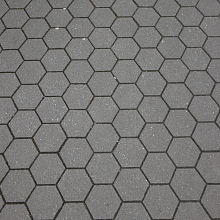 Seamless Hexagonal Concrete Tile PBR Texture 4K
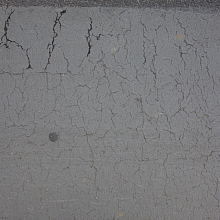 Cracked Asphalt Texture with Weathering