Expert Guide to Glass Textures for Photorealistic PBR Workflows
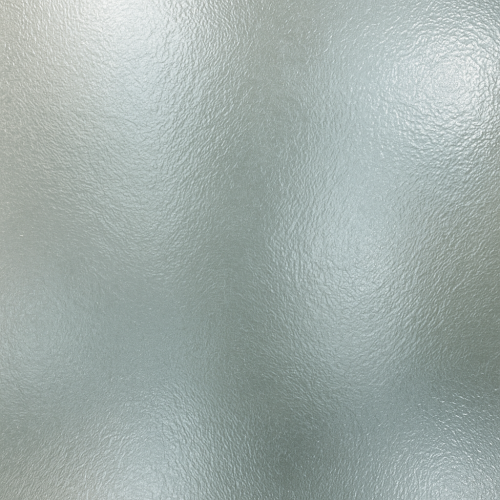
Capturing realistic glass textures for physically based rendering workflows presents unique challenges rooted primarily in the material’s inherent transparency and specular nature. Unlike opaque surfaces, glass does not readily lend itself to traditional photogrammetry or scanning techniques due to the interplay of light transmission, reflection, and refraction. Consequently, acquiring accurate texture maps that faithfully represent glass surfaces requires a nuanced approach, combining specialized photographic methods with careful calibration and post-processing to extract meaningful PBR parameters such as albedo, roughness, normal, ambient occlusion (AO), and height data.
The primary obstacle in capturing glass textures is the material’s transparency, which undermines the assumptions of standard photogrammetry pipelines that rely on stable, diffuse surface features. When shooting glass, the camera sensor captures a mixture of transmitted light, internal reflections, and external environmental reflections, resulting in images that are difficult to interpret algorithmically. To mitigate this, acquisition setups must focus on isolating surface-specific information. One common strategy involves placing the glass object against a uniform, controlled background, often matte and neutral in color, to minimize complex light interactions that confuse feature matching algorithms. Additionally, polarizing filters on both the camera lens and light sources can help reduce unwanted reflections and glare, making surface details more discernible.
High-resolution scanning methods, such as structured light or laser scanning, face similar complications. These techniques rely on projecting known patterns onto surfaces and measuring deformation to reconstruct geometry. Transparent glass scatters and transmits the projected light rather than reflecting it predictably, leading to noisy or incomplete scans. To circumvent this, some practitioners apply temporary coatings, such as a removable matte spray or talcum powder, to the glass surface to artificially create a diffuse layer that can be scanned. While this method facilitates capturing high-fidelity normal and height data, it is critical to ensure the coating is thin and evenly applied so as not to distort micro-geometry. Subsequent cleaning is mandatory to restore the glass to its original state. Alternatively, refractive index matching liquids can be used to reduce surface reflections, though this approach is more suited to laboratory conditions and may not be practical for all acquisition contexts.
Specialized photography remains the cornerstone of glass texture acquisition, especially when aiming to generate accurate albedo and roughness maps. Unlike opaque materials, the albedo of glass is minimal and often overshadowed by reflections and refractions. In many PBR workflows, the base color map for glass is close to neutral or even black, reflecting the material’s low diffuse albedo. However, surface imperfections such as scratches, fingerprints, dust, or frosting impart subtle color and translucency variations that are essential for realism. Capturing these details requires controlled lighting setups that accentuate micro-variations without overwhelming the transparency. Cross-polarized lighting configurations are particularly effective, as they suppress specular highlights and reflections, allowing the camera to capture the diffuse component of surface irregularities more clearly.
Generating a roughness map for glass is equally complex. Since glass surfaces vary from perfectly smooth and mirror-like to frosted or sandblasted, their roughness dictates how light scatters at the microfacet level. Capturing roughness directly through photography involves acquiring multiple images under varying lighting angles to observe the spread and intensity of specular highlights. Techniques such as photometric stereo, where the object is illuminated from different directions in sequence, can be employed to infer roughness variations. However, these methods necessitate precise camera and light calibration to prevent errors. In practice, roughness maps for glass are often authored by combining photographic data with procedural or hand-painted detail to emphasize wear, weathering, or manufacturing marks that influence light scattering.
Normal and height maps are critical for conveying the micro-geometry of glass surfaces, especially for simulating surface imperfections like etching, chips, or distortion patterns. Since photogrammetry struggles with transparent surfaces, these maps are typically acquired through a combination of high-resolution scans (with temporary coatings if necessary) and macro photography. Photometric stereo can also contribute to normal map generation by analyzing shading variations under directional lighting. When working in software like Blender or Unreal Engine, these maps can be further refined by baking additional detail or layering procedural noise to simulate micro-roughness and subtle surface anomalies that break up reflections and enhance realism.
Ambient occlusion (AO) maps are less straightforward for glass due to its transparency; conventional AO assumes occlusion of diffuse light, which glass largely transmits. However, AO can still be relevant for glass when it contains inclusions, dirt, or frosting that locally occlude light paths. In such cases, AO maps are typically created from the geometry itself, using baking tools within 3D packages to approximate light blocking on surface imperfections rather than the transparent areas. These maps can then be blended with other texture channels to augment surface detail without compromising the material’s inherent translucency.
Calibration and optimization are essential steps to ensure that captured data translates accurately into PBR workflows. Color calibration targets and neutral gray cards should be included in the photographic session to maintain consistent white balance and exposure across images. This consistency is vital for producing albedo maps that are physically plausible and engine-ready. When working with roughness and normal maps, it is important to validate the linearity and encoding formats—normal maps should use tangent space conventions compatible with the target engine (e.g., Unreal Engine expects normal maps in DirectX format by default, whereas Blender may use OpenGL), while roughness maps typically require linear grayscale data. Applying appropriate gamma correction and ensuring the maps are packed with correct bit-depth (often 16-bit for roughness and normals to preserve subtle gradients) will prevent artifacts and loss of detail during real-time rendering.
Tiling and micro-variation are additional considerations for glass textures, particularly when the material must cover large surfaces such as windows, glass panels, or facades. Purely tiled photographic textures tend to reveal repetition, which breaks immersion. To counter this, authors often combine high-resolution base textures with procedural noise or detail maps to introduce stochastic micro-variation at multiple scales. For example, blending a noise texture to modulate roughness or normal intensity can simulate the unevenness of etched glass or subtle dust accumulation. When working in Unreal Engine or Blender, shader nodes can be set up to blend tiled base textures with procedural detail maps dynamically, allowing for seamless repetition without obvious patterning. Furthermore, utilizing triplanar projection or decals can help mask seams and enhance realism on complex geometries.
In practice, many PBR artists employ hybrid workflows for glass texture acquisition. Initial photographic captures provide color and roughness reference, while high-resolution scans or macros yield normal and height details. These inputs are then carefully combined and calibrated in authoring software, with manual adjustments to fine-tune roughness levels, add dirt or smudge overlays, and optimize maps for target engines. Understanding the physical properties of glass—such as its refractive index, Fresnel effect behavior, and typical surface imperfections—is crucial when interpreting captured data and translating it into PBR parameters. By adopting a methodical approach that balances acquisition constraints with creative authoring techniques, artists can achieve glass textures that convincingly interact with light in real-time environments, preserving both the material’s clarity and subtle surface complexity.
Creating physically based rendering (PBR) textures for glass materials involves a nuanced balance between optical accuracy and artistic control. Glass, inherently complex due to its transparency, reflectivity, and refractive qualities, demands sophisticated authoring approaches. Both procedural and photographic workflows offer distinct advantages and challenges for replicating glass surfaces ranging from perfectly clear panes to frosted finishes and intricately patterned stained glass. This discussion unpacks these workflows with a focus on core PBR maps—albedo (or base color), roughness, normal, ambient occlusion (AO), height, and metallic—while addressing practical considerations in tiling, micro-variation, calibration, optimization, and integration within rendering engines such as Unreal Engine and Blender.
Procedural generation of glass PBR textures harnesses algorithmic methods to simulate the material’s characteristic optical phenomena without relying on photographic source data. This approach excels in flexibility, enabling artists to parameterize glass attributes like clarity, surface irregularities, and decorative elements dynamically. Procedural workflows typically begin by defining the base color map, which, for clear glass, is often near-neutral, subtler in hue to mimic the minimal absorption of visible light. When simulating stained glass, the albedo becomes more saturated and chromatically rich, often derived by layering procedural color gradients or noise functions to reflect the uneven pigmentation inherent in hand-crafted glasswork.
Roughness maps are critical for glass, as they dictate the degree of light scattering and surface gloss. Procedurally, roughness can be generated using noise textures or fractal patterns that simulate the microfacet distribution of the glass surface. For clear glass, roughness values are very low, often close to zero, to achieve the characteristic sharp reflections and refractions. Frosted glass, by contrast, requires higher roughness values, typically in the 0.4 to 0.6 range, distributed with subtle noise to replicate the micro-etched or sandblasted surface effect. Procedural roughness can be modulated with detail maps at different scales to introduce micro-variation, preventing repetitive patterns and enhancing realism.
Normal maps in procedural workflows are synthesized from mathematical functions that recreate surface imperfections such as scratches, pits, or the subtle waviness found in handmade glass. These perturbations are essential for breaking up reflections and refractions to avoid an overly pristine appearance. Techniques like Perlin noise, cellular noise, or Voronoi patterns can generate these perturbations, often layered and combined with displacement or height maps to simulate depth variations. Height maps, while less commonly used for transparent materials, are valuable when simulating etched or embossed glass decorations, influencing both the normal and parallax effects in rendering engines.
Ambient Occlusion (AO) maps are more nuanced in glass materials due to their transparency, but they remain useful when the glass is embedded within a frame or involves complex geometry, such as stained glass panels with lead came. Procedurally generated AO can emphasize the shadowing effect where glass borders meet supporting structures, enhancing depth and realism. Metallic maps are generally uniform black (zero) for glass, as it is a dielectric, but decorative metallic inclusions in stained glass can require non-zero metallic values localized in the texture.
An essential advantage of procedural authoring is the ease of controlling tiling and scale. Glass textures often need to tile seamlessly across large surfaces, such as windows or facades. Procedural generation inherently supports infinite tiling without visible seams, since the underlying noise functions can be made periodic or wrapped. This contrasts with photographic workflows, where tiling requires careful cropping, patching, and sometimes manual cloning to avoid obvious repetition. Additionally, procedural methods facilitate rapid iteration and parameter adjustments, allowing artists to fine-tune glossiness, color tint, or surface roughness interactively, which is beneficial during look development or when adapting materials for different lighting environments.
Photographic authoring, on the other hand, provides a direct path to realism by capturing the physical properties of real-world glass through high-resolution images. This process begins with acquiring source images under controlled lighting, ideally using a lightbox or HDR environment to capture subtle reflections and translucency. Clear glass panels can be challenging to photograph due to reflections and transparency; thus, specialized techniques such as photographing frosted glass or stained glass under backlighting are often employed to isolate color and surface detail. These images form the basis of the albedo map, which needs to be carefully color-corrected to remove lighting artifacts and ensure consistency.
The roughness map in photographic workflows is often derived from specular or glossiness captures, or generated via image processing techniques that extract microfacet distribution from diffuse and specular highlights. Photogrammetry or focus-stacked macro photography can capture fine surface irregularities, which are then translated into normal maps by converting grayscale height data into normal vectors. Techniques such as photometric stereo may also be used to acquire detailed normal and height information. Since the roughness and normal maps stem directly from physical samples, they inherently contain micro-variation that enhances realism, albeit potentially introducing noise or unwanted details that require careful cleaning and calibration.
Ambient Occlusion is less straightforward in photographic workflows for glass, given its transparency, but can be approximated by capturing or calculating shadow maps within the supporting geometry or frame environment. Height maps, often used for decorative stained glass, can be captured through macro photography of relief patterns or generated synthetically by combining photographic detail with manual painting in texture painting software. Metallic maps remain mostly unused unless the glass contains metallic inclusions, which can be captured photographically but are rare.
Tiling photographic glass textures is a significant challenge. Unlike procedural textures, photographic images must be carefully processed to create seamless repeats. Techniques include cloning and blending edges, frequency separation to isolate high-frequency detail, and generating additional variation maps to mask tiling artifacts. For large surfaces, multiple photographic samples may be combined with procedural noise overlays to introduce randomization and break pattern repetition without sacrificing realism.
Calibration and optimization are vital regardless of workflow. Procedural textures should be calibrated against measured physical parameters of glass, such as index of refraction and typical roughness ranges, to ensure believable shading when used in engines like Unreal or Blender’s Cycles and Eevee. This often involves iterative rendering tests with realistic lighting setups, adjusting procedural parameters to match expected reflectance and translucency. Photographic textures require careful color management, linear workflow adherence, and normalization of roughness and normal data to match engine expectations. In both cases, texture resolution should balance detail fidelity and memory constraints, with mipmapping and compression settings tuned to preserve critical surface details without excessive performance costs.
In Unreal Engine, glass materials are typically authored using the translucent or masked blend modes, leveraging PBR maps to control appearance. Roughness maps directly influence the specular response, while normal maps add surface detail critical for believable light interaction. Height maps can be utilized with parallax occlusion mapping to simulate depth on etched or patterned glass. Procedural textures can be implemented through material functions or plugins within Unreal’s shader graph, allowing real-time parameter control. Photographic textures require UV mapping that minimizes distortion, and often, multiple texture sets are layered for stained glass effects—combining albedo with emissive maps for backlit translucency.
Blender supports both procedural and photographic workflows through its node-based shader system. Procedural glass materials can be constructed using noise textures, Voronoi patterns, and custom math nodes to generate roughness and normal inputs on-the-fly, providing artist-friendly controls for micro-variation and tiling. Photographic textures are imported as image textures, with normal and roughness maps connected to Principled BSDF shader inputs. Blender’s displacement and bump nodes enable height detail, while the use of the Filmic color management ensures physically plausible lighting response. The ability to bake procedural textures into image maps also facilitates optimization and sharing across platforms.
In practice, blending procedural and photographic approaches often yields the best results for glass materials. For example, a photographic base color map can be augmented with procedural noise overlays on the roughness and normal channels to introduce subtle micro-variation and reduce tiling artifacts. Similarly, procedural masks can isolate areas for different roughness or metallic values, simulating dirt, wear, or decorative metal strips in stained glass. This hybrid approach leverages the authenticity of photographic detail while retaining the flexibility and scalability of procedural generation.
In summary, procedural and photographic authoring of glass PBR textures each bring distinct strengths to the table. Procedural methods excel in flexibility, seamless tiling, and parameter-driven control, making them ideal for generic or stylized glass surfaces, including frosted and etched variants. Photographic workflows provide unmatched realism and intricate detail for decorative stained glass and unique samples but require careful calibration, tiling management, and optimization to integrate effectively into real-time engines. Mastery of both workflows, along with an understanding of their interplay with engine-specific shading models, is essential for producing convincing glass materials that meet the demands of modern PBR pipelines.
Creating comprehensive PBR maps for glass requires a nuanced understanding of both the physical properties of glass and the technical workflow that translates these properties into digital textures. Unlike opaque materials, glass’s visual realism in PBR pipelines hinges on accurately capturing transparency, light transmission, internal reflections, and subtle surface imperfections. While the Base Color, Normal, Roughness, Metallic, Ambient Occlusion (AO), and Height maps remain the foundational elements of a PBR workflow, their treatment for glass diverges in critical ways from more diffuse or metallic surfaces.
The Base Color (Albedo) map for glass is unique in that it rarely carries strong color information in the traditional opaque sense. Pure glass is essentially clear, with any tint coming from impurities or coatings. Therefore, the Base Color map often consists of very subtle coloration or a near-neutral tone, typically grayscale or lightly tinted depending on the type of glass being simulated—greenish for recycled glass, amber for certain automotive glasses, or blue-green for marine glass. This map should be calibrated carefully to avoid introducing unwanted coloration that can disrupt the refractive quality of the material. In practical terms, when authoring the Base Color, it is advisable to work in a linear workflow and use reference photography or measured spectral data when available. Additionally, the Base Color map can include minor dirt, smudges, or coating residues to break up the pristine clarity and add realism.
Normal maps for glass are less about simulating large-scale surface relief and more about capturing micro-surface distortions that affect light refraction and reflection. Glass almost always exhibits some form of micro-roughness or subtle waviness due to manufacturing processes, weathering, or handling. These tiny distortions influence the Fresnel effect and cause light to scatter in complex ways. The normal map should therefore encode fine bumps, scratches, or etched patterns. These details can be generated procedurally or baked from high-resolution geometry scans. When authoring normal maps for glass, it is essential to ensure that the vector space and tangent bases are consistent with the target engine—Unreal Engine requires tangent-space normals, for instance. Since glass surfaces are often large and planar, normal maps should be tiled carefully to avoid obvious repetition; introducing micro-variation through noise layers or detail masks can mitigate tiling artifacts while preserving realism.
Roughness maps for glass play a pivotal role in controlling the sharpness of reflections and highlights. Unlike metals, where roughness modulates the microfacet distribution leading to diffuse or sharp specular reflections, glass roughness controls the degree of surface scattering and thus affects light transmission and clarity. A perfectly smooth glass surface has near-zero roughness, producing sharp, mirror-like reflections and clear transparency. However, most real-world glass exhibits spatially varying roughness due to fingerprints, dust, or wear. When authoring roughness maps, it is effective to use grayscale textures that encode subtle gradients and localized rough patches. These can be derived from photogrammetry, hand-painting, or procedural noise. The roughness map often requires calibration against reference renders or real-world samples, as even minor deviations can cause the glass to appear unnaturally matte or overly reflective. In engines such as Unreal, roughness maps can be combined with mipmaps to optimize performance without sacrificing visual fidelity at different viewing distances.
The Metallic map for glass is generally straightforward: glass is a dielectric and thus non-metallic, meaning the metallic value is typically zero across the surface. This map can usually be a flat black texture. However, there are edge cases where glass may be combined with metallic coatings—such as mirrored glass or certain architectural treatments—where the metallic map must encode these localized variations precisely. In those instances, the metallic map functions as a mask delineating glass from metallic features. Careful attention should be paid to ensure seamless blending between metallic and dielectric zones to prevent visual artifacts in reflections and shading.
Ambient Occlusion (AO) maps for glass require a different mindset compared to opaque surfaces. Since glass is transparent, internal shadows and occlusion do not manifest in the same way. Nonetheless, AO maps remain useful for simulating dirt accumulation, grime in crevices, or coatings on the glass surface. When generating AO maps, it is important to differentiate between true occlusion caused by geometry and secondary effects caused by environmental contamination. Baking AO from high-poly models should focus on surface nooks and edges where dirt would realistically settle. Alternatively, AO can be hand-painted or derived from ambient dirt masks. These maps should be subtle and combined multiplicatively with the Base Color or Roughness maps, especially in engines like Unreal Engine, where AO can affect indirect lighting contributions and improve the perception of depth around frame edges or embedded hardware.
Height maps or displacement maps for glass are often overlooked but can significantly increase surface complexity and depth perception. While glass is classically smooth and planar, many types include etched patterns, frosted areas, or subtle surface undulations. Height maps allow these micro-reliefs to be represented either via parallax occlusion mapping or tessellation in real-time engines. When authoring height maps, it is important to maintain a low-contrast grayscale range to prevent exaggerated displacement that breaks the illusion of transparent depth. Calibration is critical here; excessive height contrast may cause shading errors or silhouette artifacts, especially when viewed at grazing angles. Height maps should therefore complement normal maps by providing macro-scale surface variations, while the normal map handles micro-details. In Blender’s shader editor, height maps can be plugged into displacement nodes with adaptive subdivision to maximize visual impact without inflating polygon counts unnecessarily.
Tiling and micro-variation are especially critical for glass textures because the human eye is highly sensitive to uniformity in transparent materials. To achieve believable surface complexity, PBR maps must incorporate subtle, non-repetitive patterns. This is often achieved by layering multiple noise textures or detail masks with different scales and blending modes. For example, roughness maps can be combined with procedural fingerprints and dust patterns placed via decals or vertex painting, while normal maps can integrate random scratches or surface mottle effects. Using triplanar mapping or world-space projection in engines like Unreal can further reduce obvious texture seams on large glass surfaces. Additionally, leveraging detail maps that tile at higher frequencies atop base maps can introduce micro-variation without requiring massive texture resolutions.
Optimization considerations also play a significant role in the practical deployment of glass PBR maps. Since transparency and refraction calculations are expensive, balancing texture resolution and shader complexity is essential. It is advisable to compress textures using formats that preserve subtle grayscale variations, such as BC7 or ASTC, to retain details in roughness and normal maps without excessive memory use. Where possible, reusing maps across different glass assets with minor color or roughness tweaks can reduce texture counts. In Unreal Engine, material instances enable parameter-driven variation without duplicating base maps, while in Blender, node groups facilitate modular shader setups. Additionally, mipmapping strategies should be tailored to avoid blurring critical micro-details in normal and roughness maps at distance, which can otherwise flatten the appearance of the glass.
In summary, each PBR map for glass serves a specialized function that must be carefully authored to reflect the interplay of transparency, reflection, and surface imperfections. The Base Color map anchors the subtle tint and contamination; the Normal map encodes micro-surface distortions critical to refractive behavior; Roughness controls clarity and gloss; Metallic is typically absent unless simulating coated or mirrored variants; AO adds localized grime and enhances perceived depth; and Height maps impart fine surface relief that augments realism through displacement. Combined with thoughtful tiling, micro-variation, and calibration against real-world references, these maps create a layered, physically plausible glass material that performs robustly across rendering engines and viewing conditions.
FAQ
What is covered in this guide?
This guide explains Expert Guide to Glass Textures for Photorealistic PBR Workflows with practical notes for seamless PBR materials, texture setup, and production use.
Can I use these texture techniques in Blender, Unreal Engine, and Unity?
Yes. The workflow focuses on standard PBR maps and tileable materials that can be used in Blender, Unreal Engine, Unity, archviz, games, and VFX pipelines.
Where can I find textures for this workflow?
Use the AITextured texture library and the related texture links on this page to find seamless PBR materials and preview them before download.
Related Textures
 Procedural Lime Plaster Wall PBR Texture
 Procedural Stamped Sidewalk Concrete PBR Texture
 Procedural Fine Asphalt Road PBR Texture
 Procedural Pitted Concrete PBR Texture
 Seamless Concrete Pebble PBR Texture in 4K Resolution
 Seamless PBR Concrete Rubble Texture with Debris and Fragments
 Seamless Hexagonal Concrete Tile PBR Texture 4K
 Realistic Concrete Paving Brick Pattern Texture