Expert Guide to Parquet PBR Textures for Realistic Wooden Floors
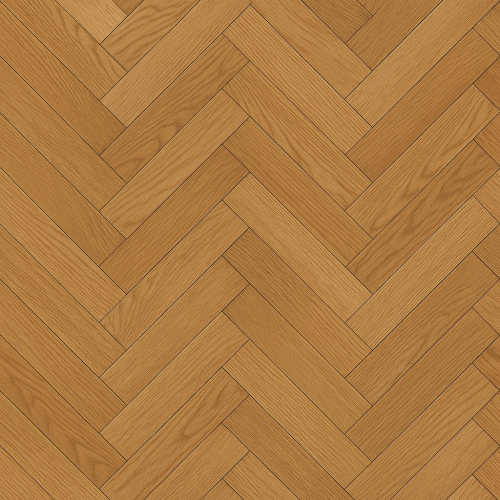
Acquiring high-fidelity parquet textures for physically based rendering (PBR) workflows requires a methodical approach to capture not only the visual detail of the material’s surface but also its intricate micro-variations and physical properties that influence light interaction. Parquet, composed of interlocking wood pieces with varying grains, finishes, and wear patterns, presents specific challenges and opportunities in capturing data suitable for generating a full PBR texture set. Photogrammetry and high-resolution scanning remain the most effective acquisition techniques, each with distinct considerations for equipment setup, lighting, and post-processing to ensure the resulting raw data can be translated into accurate albedo, roughness, normal, ambient occlusion (AO), and height maps, while preserving tileability and physical accuracy.
Starting with photogrammetry, the process hinges on capturing a dense array of overlapping photographs under controlled lighting conditions. For parquet surfaces, a medium focal length lens (between 50mm and 85mm) is preferred to minimize distortion and maintain detail fidelity across the frame. The camera should be mounted on a stable tripod with a macro or close-focus capability to capture the shallow depth of field required for the intricate wood grain and joint details. Consistent aperture settings, typically around f/8 to f/11, balance depth of field and sharpness. The key to successful photogrammetry lies in the lighting setup: diffuse, even illumination is critical to avoid specular highlights and shadows that can confuse the reconstruction algorithms and lead to noisy normal maps or inconsistent albedo captures. Employing a light tent or softboxes to create a near-ambient lighting environment minimizes hard shadows and ensures that the subtle color variations and micro-roughness of the parquet finish are accurately captured. Multiple light sources arranged to reduce shadowing from the parquet’s three-dimensional edges enhance the ability to resolve fine relief details in the height and normal maps.
In addition to diffuse lighting, capturing directional lighting passes can aid in extracting accurate roughness and specular response data. Utilizing a controlled light source at varying angles allows the acquisition of gradient information necessary to approximate the spatial distribution of specular highlights. When combined with cross-polarized photography—a technique that employs polarizing filters on both the light source and camera lens—surface reflections can be minimized or isolated, facilitating the separation of diffuse albedo from specular components. This separation is crucial in parquet, where varnished or lacquered finishes create complex reflectance patterns that affect roughness calibration.
High-resolution scanning, particularly structured light or laser scanning, complements photogrammetry by providing precise geometric data of the parquet surface. Structured light scanners project known patterns onto the surface and analyze deformation to reconstruct microgeometry with sub-millimeter accuracy. For parquet, this data is invaluable in generating height maps and high-quality normal maps that capture the subtle bevels, inlays, and joint imperfections characteristic of the material. When selecting a scanner, resolution and accuracy thresholds should be matched to the scale of parquet elements—boards typically ranging from a few centimeters to decimeters in length require scanning resolutions of at least 50-100 microns per pixel to faithfully capture grain and finish details.
The scanning process necessitates careful calibration to align the color data with geometric data. Many scanners offer integrated color cameras, but the resultant color textures often suffer from lower fidelity compared to dedicated photogrammetry setups. Therefore, a workflow that integrates photogrammetry-derived albedo with scanning-derived geometry is standard practice. This alignment requires precise registration, which can be facilitated by using fiducial markers or calibration grids placed around the acquisition area. These markers provide reference points to stitch images and scans together, ensuring the final texture maps correspond spatially and can be projected correctly onto 3D models.
Post-processing of raw data is a critical phase that transforms dense, often noisy captures into clean, tileable PBR texture maps. For albedo, careful color correction and desaturation of specular highlights are necessary to approximate the true diffuse color of the parquet. Software such as Substance Designer or Mari can be used to refine albedo maps, removing lighting inconsistencies and compensating for slight exposure variations during capture. The use of high dynamic range (HDR) imaging techniques during acquisition can assist in preserving subtle tonal variations, which are essential for convincing wood textures.
Roughness maps are derived by analyzing the spatial distribution of specular reflections captured during directional lighting passes or by extracting microfacet variation from the surface normal and height data. Since parquet finishes vary widely—from matte oiled surfaces to high-gloss varnishes—empirical calibration against physical samples or reference materials is recommended. This calibration can involve measuring the glossiness of the original surface using a glossmeter and comparing it to the generated roughness values, adjusting the maps accordingly to match the physical appearance under PBR shading models.
Normal maps generated from the high-resolution scans require filtering to remove noise and ensure consistency at different mip levels, which is essential for rendering engines like Unreal Engine or Blender’s Eevee and Cycles. Baking normal maps from high-poly scanned geometry onto low-poly models or plane proxies benefits from the precise geometry captured during scanning, preserving the parquet’s characteristic bevels and grain relief. Similarly, height maps extracted from geometry must be optimized for use in parallax occlusion mapping or displacement workflows, balancing detail with performance considerations.
Ambient occlusion maps are typically baked from the scanned geometry or synthesized using curvature maps and cavity extraction algorithms. Given parquet’s interlocking board pattern, accurate AO enhances the perception of depth between joints and subtle surface irregularities. However, care must be taken to avoid AO bleeding in tile seams, which can disrupt the tiling illusion in large surface applications. Techniques such as edge padding and seam-aware baking workflows aid in producing seamless AO maps.
Creating tileable parquet textures introduces additional complexity, as the natural wood grain and joint patterns are inherently non-repetitive. One strategy involves capturing larger surface areas and then manually or algorithmically extracting tileable regions that maintain consistent grain flow and board alignment. Software tools with procedural capabilities, such as Substance Designer, can assist in blending and masking seams by leveraging micro-variation extracted from the raw data. Incorporating subtle noise or variation in roughness and normal maps prevents the tiled texture from appearing artificially uniform, which is a common pitfall in parquet texturing.
From an engine usage perspective, Unreal Engine and Blender both support complex PBR workflows and can leverage the detailed texture maps produced through these acquisition techniques. Unreal Engine’s material editor allows for fine-tuning roughness, normal, and AO inputs alongside dynamic lighting to replicate the nuanced appearance of parquet floors under varying lighting conditions. In Blender, the shader nodes can be combined to create physically accurate subsurface scattering effects for certain parquet finishes, enhancing realism further.
Finally, optimization remains essential when integrating these high-resolution textures into production pipelines. While initial captures may exceed several thousand pixels in resolution, downscaling and mipmap generation tailored to the target platform’s performance budget are necessary. Maintaining consistent texel density across scenes ensures the parquet texture’s detail is neither over- nor underrepresented relative to other assets. Leveraging texture compression formats that preserve normal map fidelity, such as BC5 or ASTC, contributes to runtime efficiency without sacrificing visual quality.
In summary, acquiring parquet PBR textures through photogrammetry and high-resolution scanning demands a rigorous approach that balances equipment precision, controlled lighting, and meticulous post-processing. The resultant multi-channel texture sets—covering albedo, roughness, normal, AO, and height—form the foundation for realistic parquet materials in modern rendering engines, capturing both the macroscopic pattern and microscopic intricacies that define the material’s visual and physical character.
Creating authentic parquet PBR textures that convincingly replicate the complexity and subtlety of real wood flooring demands a rigorous approach to both procedural generation and photographic enhancement. Parquet patterns—ranging from classic herringbone to intricate geometric motifs—pose particular challenges due to their repetitive yet non-trivial tessellation, the interplay of grain direction, and the natural variation inherent to wood surfaces. This section unpacks the core methodologies for authoring these textures with an emphasis on physically based rendering (PBR) workflows, ensuring that the final materials not only tile seamlessly but also convey the nuanced optical and tactile qualities expected in modern real-time engines such as Unreal Engine and offline renderers like Blender’s Cycles.
Procedural generation of parquet patterns begins with an accurate mathematical layout of the pattern grid. Unlike simple tiled wood planks, parquet requires precise control of plank orientation, scale, and relative positioning. For instance, a herringbone pattern is defined by planks rotated typically at 45 or 90 degrees to each other, arranged in an interlocking zigzag. To author this procedurally, one typically constructs a base tile containing a single or pair of planks aligned accordingly, then replicates and offsets this tile across the UV space. The key to a convincing result lies in avoiding visible seams and unnatural repetition. This is achieved by introducing controlled randomness in plank length, width, and grain orientation within a narrow range, simulating the subtle variations found in handcrafted flooring. Procedural noise functions—such as Perlin or Worley noise—can modulate these parameters at the pattern tile level, ensuring that repeated tiles differ enough to break pattern monotony without compromising the overall tessellation.
Within shader authoring tools or texture generation suites like Substance Designer, the parquet layout is often implemented via vector or shape nodes that precisely define plank shapes and their placement. This vector approach facilitates the generation of mask maps that separate grout lines or gaps from the wood surfaces, enabling independent control over materials properties such as roughness and height. For example, grout or filler material typically exhibits higher roughness and a slightly recessed height compared to the wood planks. The height map, critical for parallax or displacement effects, can be derived from these masks combined with procedural noise to simulate subtle surface unevenness. Normal maps complement this by encoding fine grain details and edge beveling, which is essential for catch-light and shading fidelity. These normal details can be generated procedurally by blending directional grain patterns with edge wear maps, often derived from curvature or ambient occlusion outputs baked from high-poly geometry or synthesized within the node graph.
Texture painting remains a critical step to enhance procedural bases or photographic sources, especially when aiming to encode realistic micro-variation and aging effects. Photographic captures of parquet flooring often suffer from lighting inconsistencies, lens distortion, or uneven wear that must be carefully corrected and calibrated to function as tileable PBR textures. High-quality photographic inputs should be captured with diffuse, specular, and height information in mind—typically employing controlled lighting setups such as cross-polarized flash to minimize specular highlights and capture true albedo. These photographs require extensive post-processing to remove perspective distortion and to isolate individual planks, often using image editing software or specialized tools like Nuke or Photoshop. The goal is to produce seamless tiles where grain direction and color transitions across edges are continuous or deliberately masked by grout lines.
Once photographic bases are established, their PBR channels must be extracted and refined. The albedo channel should be color calibrated to neutralize lighting color casts, ensuring consistency across the entire texture set. Roughness maps can be derived from grayscale inversions of the specular response, enhanced with hand-painted or procedurally generated noise to emulate the natural variation in varnish wear and wood porosity. Normal maps are typically generated using photogrammetry or height maps converted via specialized software like xNormal or CrazyBump, but these often need manual refinement to emphasize plank edges and inlays—details that significantly influence light interaction in real-time engines. Ambient occlusion maps can be baked from high-poly models or approximated by blending curvature and height data, providing subtle shadowing that grounds the parquet pattern’s three-dimensionality.
Blending photographic and procedural techniques is a powerful strategy to overcome the limitations of either approach alone. For example, a procedural parquet layout can serve as a mask to place photographic plank details non-repetitively across a surface, with procedural noise layered to add micro-variation in roughness and height. This hybridization allows the artist to maintain control over pattern accuracy and tileability while benefiting from the realism innate to photographic grain and aging. In practice, this involves working within a node-based material editor (such as Unreal Engine’s Material Editor or Blender’s Shader Editor) where multiple texture sets are combined with mask-driven lerps and blend modes. Careful calibration of UV scaling is essential here—photographic details must be scaled to match the real-world plank dimensions established by the procedural layout, maintaining consistency in perceived size and wood fiber directionality.
Optimization is a crucial consideration throughout this process. Parquet materials, especially those with multiple PBR channels and high-frequency detail, can be texture memory intensive. Techniques such as channel packing—storing roughness, metallic, and ambient occlusion in separate RGB channels of a single texture—are standard practice to reduce draw calls and texture fetches. Furthermore, the use of tiling textures augmented with randomized macro-variation via shader-driven vertex or pixel offsets can dramatically decrease texture resolution requirements while preserving visual complexity. Engine-specific features like Unreal Engine’s virtual texturing or Blender’s UDIM workflows facilitate managing large texture sets for floor areas measured in tens or hundreds of square meters, enabling artists to maintain high detail without performance penalties.
When authoring parquet PBR textures for real-time use, it is important to consider the interaction of light with the material at multiple scales. Wood grain anisotropy affects both diffuse and specular reflections, and while many PBR workflows treat wood as isotropic, incorporating anisotropic reflections can elevate realism. This requires additional maps or shader parameters that align with plank orientation, which can be generated procedurally by encoding grain direction into vector maps and feeding them into anisotropic BSDF models available in engines like Unreal. Similarly, subtle edge wear and finish irregularities can be simulated by blending procedural masks that target plank edges with varying roughness and height offsets, emulating the tactile feel of aged flooring.
In conclusion, the digital authoring of parquet PBR textures demands a multi-faceted approach combining precise procedural pattern generation, meticulous photographic capture and enhancement, and strategic blending techniques to simulate natural wood variation. Success hinges on rigorous calibration of all PBR channels, careful UV layout and tiling strategies, and leveraging engine-specific capabilities for optimization and shading fidelity. By integrating procedural control with photographic authenticity, artists can create parquet materials that not only tile seamlessly but also respond realistically to lighting and environment, essential for immersive architectural visualization, game environments, or high-end VFX production.
Creating and calibrating PBR maps for parquet wooden floors requires a meticulous approach to ensure the material behaves realistically under varying lighting conditions while preserving the intricate characteristics of wood grain, joint patterns, and surface wear. The process begins with the accurate generation of the BaseColor (albedo) map, which serves as the foundation for realistic coloration. Unlike diffuse maps from traditional workflows, the BaseColor in PBR workflows must be free of baked-in shadows or lighting information to maintain physically plausible energy conservation. When authoring parquet textures, high-resolution source photography or photogrammetry scans of real wood planks can provide an excellent starting point. However, these sources often contain unwanted lighting artifacts and color casts that need to be corrected in post-processing. Removing specular highlights and shadows from the source images is crucial; this is commonly achieved through techniques such as high dynamic range (HDR) imaging combined with exposure fusion or using specialized software to neutralize illumination variance. The goal is a BaseColor map that accurately represents the diffuse reflectance properties of the wood species and finish without darkening from self-shadowing or bright spots from reflections.
After establishing a clean albedo, attention shifts to the Roughness map, which dictates how light scatters across the parquet surface and fundamentally influences the perception of glossiness and surface wear. Wood floors, especially parquet, are rarely uniform in roughness due to natural grain variation, finishing layers, and accumulated micro-scratches or polish wear. To capture this, generating a roughness map from microscopic surface details is essential. One effective approach is to derive roughness values from grayscale scans or microphotographs that reveal the fibrous texture of the wood, or alternatively, use procedural noise and grunge overlays to simulate subtle micro-variation. Calibrating roughness values should be guided by real-world reference measurements or calibrated render tests, ensuring the map outputs physically plausible roughness values typically ranging between 0.1 (highly polished areas) and 0.6 (worn or untreated wood). Careful tonal balancing avoids overly glossy surfaces that look plastic or overly matte surfaces that appear chalky. The map should be subtly varied to break uniformity but avoid harsh transitions that would betray the natural continuity of wooden floors.
The Normal map plays a pivotal role in simulating the fine surface undulations and joint separations characteristic of parquet flooring. Unlike flat wooden planks, parquet patterns often include beveled edges, plank seams, and slight warping, which must be captured to enhance realism under dynamic lighting. Creating normal maps can be approached through high-resolution photogrammetry scans or from height maps derived from displacement data, which are then converted into tangent-space normals. Calibration involves adjusting the intensity of normal map details to balance between subtle grain relief and exaggerated edge definition—too strong a normal map can make the floor appear unnaturally rough, whereas too weak will fail to convey the physical depth of joints and wood fibers. In practice, a normal strength multiplier between 0.5 and 1.0 is common, but final values should be tuned within the target engine, such as Unreal Engine or Blender’s Eevee/Cycles, to account for the specific shading models and lighting setups. Incorporating micro-variation within the normal map, such as small scratches or dents, improves tactile realism and prevents the material from looking overly uniform.
Roughly complementary to the Normal map, the Height map provides additional surface displacement data that can be used for parallax occlusion mapping or tessellation. For parquet floors, height information accentuates plank bevels, slight warping of individual tiles, and surface imperfections like chips or uneven wear. Height maps are typically grayscale images representing relative depth, generated either from photogrammetric scans or manually painted in texture authoring tools. Calibration involves scaling the height values so that the displacement effect remains believable without causing geometric distortion or visual popping in real-time engines. For example, subtle height variations between 0.1 to 0.5 millimeters relative to the base plane are usually sufficient to convey surface irregularities. Care must be taken to synchronize height map data with the Normal map to avoid conflicting surface cues. In real-time engines, height maps can be optimized by using 8-bit grayscale textures and compressed formats, balancing fidelity with performance.
Ambient Occlusion (AO) maps enhance the perception of depth by simulating the soft shadows cast in crevices and tight corners where ambient light is occluded. For parquet flooring, AO plays a significant role in emphasizing plank seams, grain depressions, and edge bevels. Typically, AO maps are generated by baking ambient occlusion from a high-poly mesh or via ray-traced calculations on the texture’s geometry. In cases where geometry is limited, procedural AO or curvature maps can be used to approximate occlusion. Calibration of AO maps involves ensuring that shadowed areas do not become too dark, which could artificially dampen the material’s brightness and color fidelity. A balance is struck where AO subtly darkens crevices without overpowering the BaseColor or roughness response. When integrating AO in engines like Unreal, it is common practice to multiply the AO map with the diffuse or ambient lighting inputs, so maintaining the AO map in a linear color space with careful gamma correction is important for accurate shading.
The Metallic map is generally minimal or absent for parquet wooden floors, as wood is a dielectric material with negligible specular metalness. However, in cases where the parquet finish includes metallic inlays, brass strips, or decorative metal elements, a metallic map is essential to differentiate these areas. The map is a grayscale or binary texture indicating metallic (value 1) and non-metallic (value 0) regions. For the wooden areas, the metallic value should be zero to maintain physically accurate reflections. If metallic inlays are present, these must be carefully masked and the metallic map calibrated so that the metals reflect light with correct energy conservation and Fresnel behavior. When authoring metallic maps, it’s important to ensure crisp transitions between wooden and metallic regions to avoid unwanted blending artifacts.
Tiling and micro-variation are critical considerations throughout the PBR map creation process for parquet floors. Because parquet patterns repeat over large floor areas, seamless tiling is a necessity to avoid visible repetition artifacts. Achieving seamlessness involves careful editing of all PBR maps—BaseColor, Normal, Roughness, AO, and Height—to tile perfectly without obvious seams. This can be done using software such as Substance Designer or specialized tiling filters. Moreover, introducing subtle micro-variation in color tones, roughness values, and normal perturbations breaks monotony and enhances realism. This can be achieved by layering noise maps or blending multiple parquet patterns with randomized UV offsets. These micro-variations simulate natural inconsistencies in wood grain, finish wear, and installation imperfections.
When integrating these calibrated PBR maps into engines like Unreal Engine or Blender, it is essential to use linear color space workflows for all non-color data (Normal, Roughness, AO, Height), and sRGB for BaseColor. Unreal Engine’s material editor provides tools to fine-tune parameters such as roughness and normal intensity in real-time, enabling iterative calibration based on lighting conditions. Blender’s Principled BSDF shader aligns well with PBR workflows and allows for previewing the material under HDR environment maps to verify physical accuracy. Particular attention should be paid to texture compression settings within the engine to avoid artifacts that distort the subtle details of parquet surfaces. For example, using BC7 compression for BaseColor and BC5 for Normal maps in Unreal Engine preserves high fidelity.
In summary, generating and calibrating PBR maps for parquet wooden floors demands a rigorous workflow that begins with clean, shadow-free BaseColor maps and extends through the precise crafting of Roughness, Normal, AO, Height, and optionally Metallic maps. Each map’s values must be calibrated to maintain physical plausibility, support seamless tiling, and capture the nuanced imperfections intrinsic to wooden parquet floors. Iterative testing in target rendering engines ensures that surface responses to light—whether specular highlights on polished wood or subtle shadowing in plank joints—are both believable and artistically controlled, resulting in a highly convincing digital material suitable for diverse visualization contexts.
FAQ
What is covered in this guide?
This guide explains Expert Guide to Parquet PBR Textures for Realistic Wooden Floors with practical notes for seamless PBR materials, texture setup, and production use.
Can I use these texture techniques in Blender, Unreal Engine, and Unity?
Yes. The workflow focuses on standard PBR maps and tileable materials that can be used in Blender, Unreal Engine, Unity, archviz, games, and VFX pipelines.
Where can I find textures for this workflow?
Use the AITextured texture library and the related texture links on this page to find seamless PBR materials and preview them before download.
Related Textures
 Procedural Dark Tree Bark PBR Texture
 Procedural Aged Oak Plank PBR Texture
 Seamless PBR Wood Planks Texture Featuring Natural Grain in 4K
 Seamless Wooden Facade PBR Texture in 4K Resolution
 Rustic Aged Wood Planks Texture for 3D Modeling and Rendering
 PBR Texture of Vertical Wooden Planks Wall
 Seamless PBR Wood Texture Featuring Vertical Natural Grain Patterns
 Natural Wood Logs Texture with Snow for 3D PBR