Create a Unity HDRP Mask Map from a PBR Texture Set
Learn how to convert standard PBR texture maps into a Unity HDRP mask map with metallic, AO, detail mask and smoothness channels.
When to use this workflow
Use this workflow when the material imports into Unity but the surface still looks flat, glossy in the wrong places, incorrectly scaled or miswired.
Unity HDRP uses a mask map to reduce sampler count and keep material inputs consistent. The usual channel layout is R metallic, G ambient occlusion, B detail mask and A smoothness.
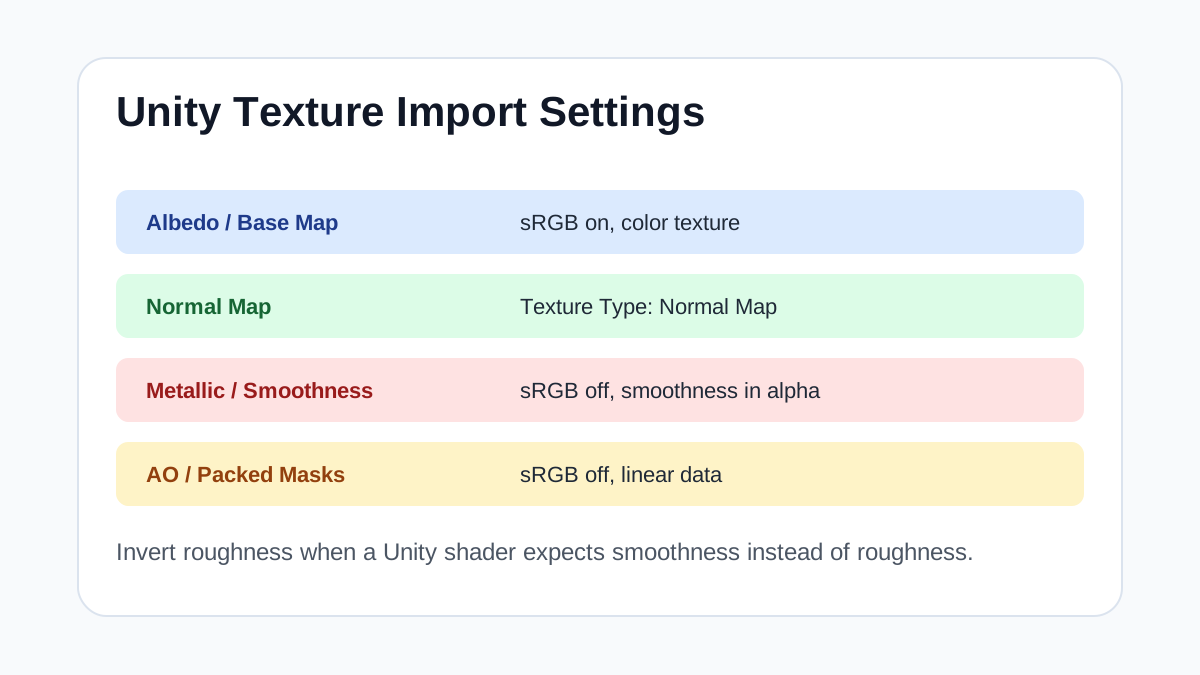
If your source library provides roughness instead of smoothness, invert roughness before placing it in alpha. This one step is the difference between a correct material and a surface that looks wet or flat for the wrong reason.
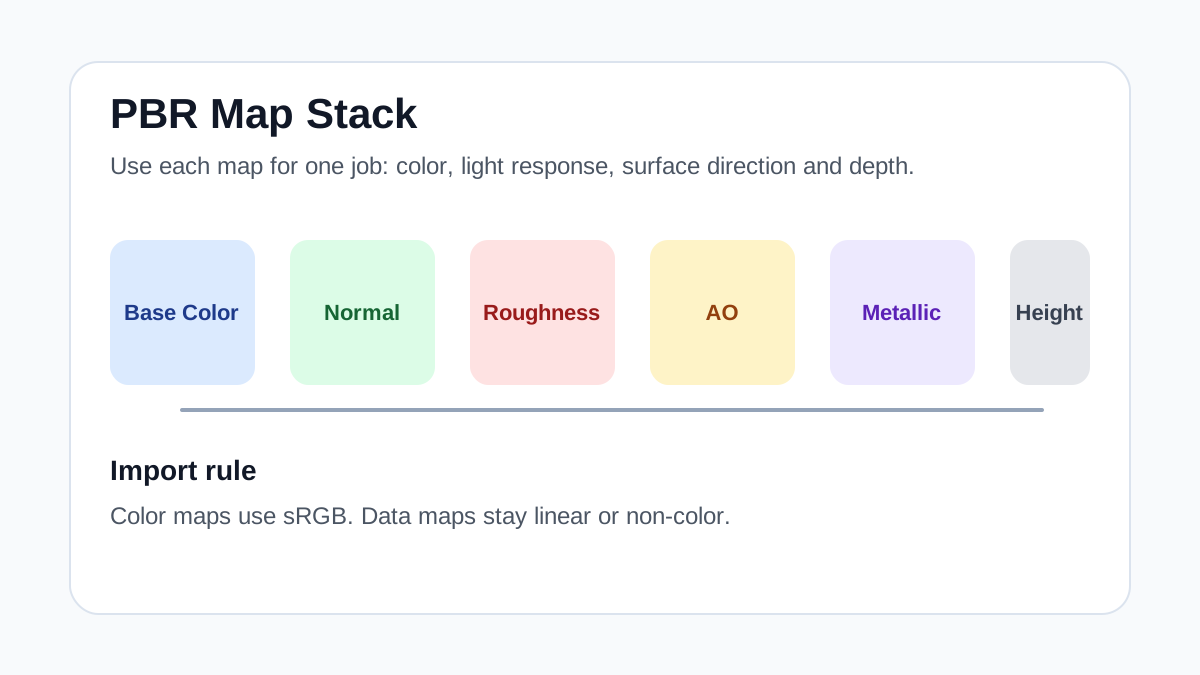
Texture Import Settings
| Texture map | Import setting | Color space / sRGB | Usage notes |
|---|---|---|---|
| Base Map | HDRP Lit material Base Map | sRGB on | Keep color clean and control reflections through mask and smoothness data. |
| Normal Map | Texture Type: Normal Map | Unity handles as normal data | Check strength in the material; strong normals can make hard surfaces look noisy. |
| HDRP Mask Map | R Metallic, G AO, B Detail Mask, A Smoothness | sRGB off | Invert roughness before placing it in alpha; use white B channel when no detail mask is needed. |
| Height Map | Height Map / Displacement input if the shader and asset need it | sRGB off | Use for hero assets, not every tiled background material. |
Practical Material Parameters
| Material focus | Recommended UV scale | Roughness range | Normal strength range | Best use cases | Common visual issues |
|---|---|---|---|---|---|
| Painted, brushed or oxidized metal | 0.5-2 m for panels, asset-specific for trims | 0.18-0.75 depending on polish and rust | 0.15-0.6 | Panels, machinery, trims, sci-fi props | Wrong metallic mask, rust treated as metal, flat roughness |
Step-by-Step Workflow
- Prepare metallic, AO and roughness maps from the downloaded PBR set.
- Invert roughness to create smoothness for the alpha channel.
- Pack metallic into R, AO into G, a white detail mask into B and smoothness into A.
- Import the mask map with sRGB disabled.
- Assign the mask map in an HDRP Lit material and compare it under neutral lighting.
Quality Checklist
- Smoothness responds correctly when roughness is inverted.
- AO affects creases without crushing the whole surface.
- Metallic is used only for metal pixels.
- The mask map is imported as linear data.
Common Mistakes
- Putting roughness directly into alpha without inversion.
- Leaving the blue detail mask black and accidentally disabling detail contribution.
- Mixing Unity Standard metallic-smoothness rules with HDRP mask map rules.
Useful Next Steps
- Browse Metal PBR textures for source materials that match this workflow.
- Use Unity Unreal Blender Mapper to preview, pack or prepare maps before importing them into your scene.
- Return to the workflow guide library for related Blender, Unreal Engine, Unity and optimization workflows.
Recommended Textures for This Workflow
FAQ
Which texture maps do I need for Create a Unity HDRP Mask Map from a PBR Texture Set?
Start with base color, normal and roughness. Add AO, height, metallic or packed engine maps when the material and target renderer support them.
Should I always use 4K or 8K textures for this workflow?
No. Use 4K or 8K only for close camera views or hero assets. For background surfaces, 1K or 2K textures with good tiling and mipmaps are often more efficient.
How does this guide fit into a Unity pipeline?
Use the guide as a setup checklist before final material tuning. Check scale, color space, map routing, tiling and performance in the target scene rather than judging the texture from the thumbnail alone.