Mastering Sci-Fi PBR Textures for Futuristic Environments and Assets
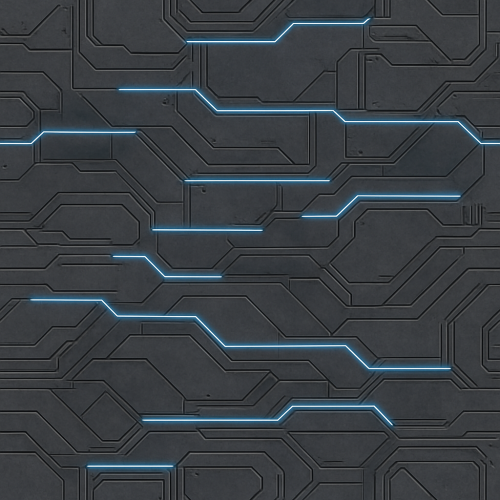
Acquisition Techniques for Sci-Fi Texture Creation
In the pursuit of crafting convincing sci-fi PBR textures, the initial step of acquiring high-quality base materials is critical. Unlike traditional organic or natural textures, sci-fi surfaces often embody a blend of synthetic, industrial, and futuristic elements. This necessitates a targeted approach to gathering source data that accurately reflects the complexity and nuance of high-tech materials. Photogrammetry, scanning synthetic surfaces, and generated imagery have emerged as complementary acquisition methods, each with distinct advantages and challenges in the context of PBR workflows.
Photogrammetry remains a foundational technique for capturing real-world detail, but when applied to sci-fi texturing, it requires specialized subject selection and capture strategies. Industrial objects—machinery, electronic devices, vehicle panels, and architectural elements—often exhibit the kind of wear, surface complexity, and material variation that translate well into sci-fi assets. Surfaces such as brushed metals, anodized coatings, painted plastics, carbon fiber composites, and etched alloys are prime candidates. To maximize fidelity, careful attention must be paid to lighting conditions during capture. Diffuse, even lighting reduces harsh shadows and specular highlights that can complicate texture extraction, but some directional lighting is often necessary to reveal microstructure details like surface scratches, grain, or embossing.
Capturing multiple overlapping images at varying angles and exposure levels is essential for generating high-resolution, distortion-free texture maps. Captured photos should be calibrated using color charts and reflectance standards to ensure physical accuracy in albedo data. This calibration is pivotal for PBR workflows where the albedo channel must remain within plausible reflectance values—typically avoiding over-saturated colors or unnaturally bright whites that break energy conservation. Additionally, reference captures of neutral materials enable accurate calibration of roughness and metallic channels during authoring.
Once raw photogrammetry data is processed into high-fidelity textures and meshes, the challenge is adapting these captures into seamless, tileable textures suitable for sci-fi environments. Unlike organic or architectural textures, sci-fi surfaces often require modularity and repetition without obvious tiling artifacts. Achieving this involves a combination of retopologizing mesh data for clean UV layouts, and using texture editing techniques such as edge blending, clone stamping, and procedural noise overlays to mitigate repetition. Tools like Substance Designer or Quixel Mixer facilitate the generation of tileable height and roughness maps by synthesizing micro-variations from the base capture, thereby preserving realism while supporting the modular demands of sci-fi asset pipelines.
Scanning synthetic surfaces extends photogrammetry’s capabilities, especially when dealing with materials that are difficult to capture accurately through photography alone. Structured light scanners or laser scanners can retrieve precise surface normals and height data from engineered materials such as circuit boards, microchip housings, or polymer coatings, which often exhibit fine, repetitive detail crucial to sci-fi aesthetics. These methods produce high-density normal and height maps that, when combined with albedo captures, form a comprehensive PBR texture set. The fidelity of these scans aids in generating convincing specular and roughness variations inherent to metallic or coated surfaces.
When scanning, particular attention must be paid to the reflectivity and translucency of synthetic materials. Glossy or semi-transparent coatings can cause data noise or dropouts in scans, necessitating the use of matte sprays or polarizing filters during acquisition to achieve consistent results. Post-processing steps include noise reduction, hole filling, and detail amplification to optimize normal and height maps for engine use. Calibration against known physical standards ensures the roughness channel reflects realistic microfacet distributions, which is essential for achieving credible specular highlights in physically based shading models.
generated imagery has recently gained traction as a supplementary resource for sci-fi texture creation. Leveraging deep learning models trained on extensive datasets of industrial and futuristic materials, AI can synthesize novel base color and pattern variations that might be impractical to source physically. These synthetic textures can inspire new design directions or fill gaps where physical capture is unfeasible. However, AI outputs typically require substantial post-processing to conform to PBR constraints. For example, albedo maps generated by AI often display color bleeding or unrealistic luminance levels, which must be corrected to maintain energy conservation principles.
Integrating generated textures effectively into a PBR pipeline involves decomposing color information to isolate diffuse reflectance from specular effects, then procedurally deriving accurate roughness and metallic maps based on material context. Normal and height maps can be generated or enhanced using neural network-based embossing techniques or traditional height-from-albedo algorithms, but these require careful calibration and validation against real-world references. Importantly, AI textures should be tested extensively within target engines such as Unreal Engine or Blender’s Eevee and Cycles renderers to verify their behavior under dynamic lighting and post-processing, ensuring seamless integration with physically based shading models.
Reference material sourcing for sci-fi textures also benefits from curated image libraries and technical documentation of future-facing materials. Industrial design blueprints, material science publications, and manufacturer datasheets provide invaluable data on reflectance properties, microstructure, and layering of advanced coatings. These references inform the generation of accurate metallic and roughness values, which are critical for replicating materials such as conductive polymers, nano-textured metals, or photochromic surfaces. By grounding texture creation in documented physical parameters, artists can avoid guesswork and ensure consistency across asset sets.
Once base materials and references are acquired, preparing them for seamless tiling involves both procedural and manual intervention. Micro-variation is essential to prevent monotonous repetition in sci-fi environments, where surfaces often cover large volumes and are subjected to dynamic lighting. Techniques such as blending multiple noise layers, incorporating dirt masks, and applying grunge overlays derived from high-frequency detail maps increase visual complexity without compromising physical accuracy. For roughness maps, subtle variation in glossiness can simulate wear patterns or manufacturing inconsistencies, enhancing realism. Normal maps benefit from layered detail, combining large-scale geometric features with fine microfacet noise to interact convincingly with light.
Calibration and optimization remain crucial throughout this process. Textures should be optimized for target engine performance without sacrificing fidelity. In Unreal Engine, for instance, using MipMap generation settings that preserve normal map detail and employing compression formats like BC5 for normal maps or BC7 for albedo can strike a balance between quality and memory footprint. Blender users should consider baking procedural detail maps at appropriate resolutions and leveraging node-based shaders to recreate micro-variation in real time where possible. Consistent use of color spaces, such as sRGB for albedo and linear for data maps, ensures accurate shading.
In summary, acquiring and preparing base materials for sci-fi PBR textures demands a multi-faceted approach combining high-resolution photogrammetry of industrial subjects, precise scanning of synthetic surfaces, and the judicious use of generated imagery. The process emphasizes physical accuracy, seamless tiling, micro-variation, and rigorous calibration to meet the stringent demands of modern real-time engines. By carefully selecting subjects, controlling capture conditions, and applying advanced post-processing workflows, artists can develop a rich library of modular, believable sci-fi textures that enhance the immersive quality of futuristic digital environments.
Creating sci-fi PBR textures from scratch involves a deliberate fusion of procedural generation techniques and photographic authoring methods, tailored to produce the distinctive visual language of futuristic, technological surfaces. This approach hinges on the meticulous design of intricate grid layouts, techno patterns, and decorative surface details that are characteristic of sci-fi aesthetics. Achieving a convincing, tactile quality in the final texture maps—albedo, roughness, normal, ambient occlusion (AO), height, and metallic—requires an integrated workflow that balances procedural flexibility with photographic realism, while maintaining technical discipline in tiling, micro-variation, calibration, and optimization for real-time engines such as Unreal Engine and content creation suites like Blender.
Starting with procedural generation, modern tools like Substance Designer or Blender’s procedural shader nodes allow artists to build complex, parametric grids and repetitive techno motifs that form the backbone of sci-fi textures. These patterns often emulate circuit boards, control panels, or modular paneling, composed of fine lines, geometric shapes, and layered detail that can be algorithmically repeated at various scales. The advantage of procedural authoring lies in its ability to generate perfectly tileable base patterns that maintain visual interest over large surfaces without obvious repetition. By leveraging noise functions, directional masks, and gradient maps, artists can create subtle variations in surface roughness and height, which are critical for believable material interaction with light.
For instance, a tiled grid pattern can be created using a checkerboard or hexagonal node as the foundation, which is further refined by overlaying thin line masks to simulate panel seams or circuitry tracks. These masks can be modulated by noise inputs to break perfect uniformity, introducing micro-variations that prevent the texture from appearing artificially flat. Height and normal maps derived from these procedural layers must be carefully calibrated to ensure they do not produce exaggerated surface distortions that disrupt the silhouette or cause shading artifacts in engines. This calibration involves adjusting height intensities and normal map strengths, often previewed in real-time viewport shaders within Substance Designer or Blender’s Eevee to validate the visual impact under dynamic lighting.
Photographic authoring complements procedural generation by injecting real-world surface complexity and imperfections that elevate sci-fi textures beyond purely synthetic constructs. High-resolution photographs of metallic surfaces, circuit boards, scratched panels, or industrial materials serve as a rich source of albedo and detail information. These photos require careful preprocessing: color correction to fit the intended color palette, desaturation or tinting to conform to the stylized sci-fi color scheme, and the extraction of grayscale maps for roughness and height information. Techniques such as high-pass filtering and channel separation isolate micro-surface details like scratches, dust, and edge wear, which can then be integrated as overlays or masks in the procedural network.
Blending photographic elements with procedural overlays is essential to enrich texture complexity and realism. For example, a base procedural grid can be combined with photographic surface wear to simulate panels that are both technologically precise and physically aged or used. This integration is typically achieved via mask blending nodes or layer blending modes that respect the physical properties of PBR channels: the albedo map must not contain baked lighting, roughness maps should encode plausible microfacet distributions, and normal maps must be derived or recalculated to maintain consistency. In practice, the photographic roughness map might be multiplied with a procedural noise map to introduce controlled variation, while the height map from a photo can be subtly combined with procedural height to enhance perceived depth.
Tiling and seamlessness remain paramount in sci-fi textures, especially given their frequent application on large-scale environment assets or modular models. Procedural textures inherently offer perfect tiling capabilities, but photographic elements often require manual correction. Techniques such as edge mirroring, offsetting, and cloning in Photoshop or Substance Designer’s tile sampler node are used to eliminate visible seams. Furthermore, micro-variation is introduced primarily through noise overlays and slight hue/saturation shifts in the albedo to disrupt pattern monotony. Procedural generators can randomize these variations per tile instance, which is invaluable for breaking up uniformity without sacrificing tiling integrity.
Calibration between texture channels is a critical step to maintain physical accuracy in PBR workflows. The roughness map must correspond logically with the height and normal maps; for example, raised panel edges or embossed circuitry lines should correlate with lower roughness values, reflecting their typically smoother surfaces, while recessed areas may carry higher roughness and darker AO values. Ambient occlusion maps, often baked or derived through curvature and cavity maps, complement height and normal maps by accentuating crevices and enhancing depth perception. Metallic maps, less frequently used in purely technological sci-fi textures, are applied judiciously to denote conductive surfaces or reflective accents such as chrome or brushed metal components. Ensuring these maps are consistent in scale and intensity prevents shading anomalies and contributes to a cohesive material response in engines.
Optimization for real-time engines like Unreal Engine requires a balance between detail fidelity and performance. Procedural textures exported as bitmap sets should be baked at appropriate resolutions—typically 2K for medium-detail assets, up to 4K for hero surfaces—while considering mipmapping to preserve detail at varying camera distances. Normal maps are often stored in the OpenGL or DirectX standard format depending on the engine, with attention given to channel orientation. Roughness and metallic channels are commonly packed into single texture channels (e.g., roughness in the green channel, metallic in the blue) to reduce texture fetches. In Unreal Engine, material instances can utilize texture parameter overrides to dynamically adjust procedural parameters or blend weights, enabling further in-engine control over appearance.
Within Blender, procedural sci-fi textures benefit from its node-based shader editor, which supports real-time preview in Eevee and high-quality offline rendering in Cycles. Blender’s procedural noise, wave, and Voronoi textures can be layered to create complex base patterns, while custom normal maps can be generated on the fly using bump or normal map nodes derived from height inputs. Baking these procedural setups into texture maps is straightforward, facilitating export for game engines or external renderers. Blender’s UV unwrapping and texture painting tools also allow manual refinement of seams and localized detail painting, which can be combined with procedural masks to add wear or dirt selectively.
A practical tip is to maintain a non-destructive workflow by keeping procedural graphs modular and parameterized, allowing iterative experimentation with grid density, mask sharpness, and noise intensity without losing control over the final output. Photographic elements should be sourced from calibrated capture setups or quality texture libraries, ensuring consistent lighting and exposure to avoid mismatches in the combined texture. Additionally, always preview textures under multiple lighting conditions and viewing angles to catch issues related to normal map orientation or roughness anomalies. Employing engine-specific shader setups during authoring—such as Unreal’s material editor with its physically based shading models—ensures that textures behave as intended in their final context.
In summary, the procedural and photographic authoring of sci-fi PBR textures demands a rigorous, technically informed approach that leverages the strengths of each method. Procedural generation provides scalable, perfectly tileable base patterns and micro-variations essential to the genre’s high-tech aesthetic, while photographic authoring contributes authentic surface complexity and imperfection. Their disciplined integration, combined with careful calibration of PBR channels and optimization for target engines, results in sci-fi textures that are not only visually striking but also physically plausible and performant across diverse digital environments.
Creating comprehensive PBR maps for sci-fi textures entails a rigorous approach to authoring each channel with an acute understanding of how they interrelate to produce convincing material responses under diverse lighting environments. Unlike organic or natural materials, sci-fi assets often demand a synthetic, sometimes otherworldly aesthetic that relies heavily on precise control over reflectance, micro-detail, and subtle surface imperfections. This means that beyond mere replication of real-world materials, PBR maps for sci-fi must be engineered to articulate futuristic surfaces—whether sleek metallic alloys, glowing polymers, or complex composite materials—with a fidelity that holds up in dynamic engines like Unreal Engine or Blender’s Eevee and Cycles.
The foundational map in this workflow is the BaseColor (or albedo). Unlike traditional diffuse textures, BaseColor in PBR workflows is strictly limited to pure color information, devoid of lighting or shading baked into it. For sci-fi textures, this often means working with a palette that features highly controlled chromatic elements—saturated hues, neon glows, or subtle gradients that suggest embedded energy sources or worn circuitry. When authoring BaseColor, it's critical to avoid dark colors that can be confused with shadowing; the RGB values should be calibrated to represent only the intrinsic color of the material. This calibration can be assisted by color profiles and consistent reference usage, ensuring that the BaseColor maintains fidelity across varying lighting conditions. For example, a sci-fi alloy’s BaseColor might be a subdued steel blue with faint hints of iridescence, which will be modulated by the Metallic and Roughness maps to generate the desired reflectivity and gloss.
The Metallic map plays a pivotal role in defining the dichotomy between dielectrics and metals—a fundamental principle in PBR. Sci-fi materials frequently blend metallic and non-metallic properties, producing hybrid surfaces that are partially conductive or treated with futuristic coatings. Precise authoring of the Metallic map as a grayscale mask is essential; values of 1 (white) represent fully metallic surfaces, whereas 0 (black) denotes dielectrics. Intermediate values are rarely physically accurate but can be employed cautiously for artistic control, especially when layering complex materials such as painted metals or rusted alloys on sci-fi hulls. In practical workflows, the Metallic map is often generated procedurally or painted with tileable masks to ensure seamless repetition, with micro-variations introduced via noise or hand-painted detail to avoid flat, uniform surfaces that break immersion.
Roughness maps exert significant influence on a surface’s specular response by controlling the microsurface scattering of light. Sci-fi textures utilize roughness to convey both pristine, mirror-like finishes on high-tech components and heavily worn, matte areas on industrial or battle-damaged elements. Effective Roughness maps are not simply binary but contain nuanced grayscale values that represent varied surface conditions. Achieving convincing roughness involves layering procedural noise, scratches, and subtle gradients, often driven by curvature and ambient occlusion data baked from the high-poly model. This layering ensures micro-variation, preventing surfaces from appearing overly uniform or artificial. During authoring, it is advisable to calibrate roughness values by previewing materials in physically accurate lighting setups, such as HDRI environments with varying intensities, to verify that reflections and highlights behave as intended.
Normal maps are indispensable for introducing detailed surface geometry without the computational cost of additional polygons. For sci-fi assets, normal maps often encode complex panel lines, rivets, circuit traces, and embossed logos—features that define the genre’s aesthetic. Authoring normal maps can be approached through high-resolution sculpting in programs like ZBrush or Substance Painter, or through photographic scanning of mechanical parts adapted for sci-fi use. When generating these maps, attention must be paid to tangent space consistency and correct encoding to avoid lighting artifacts in real-time engines. Normal maps should also incorporate subtle noise and micro-bumps to simulate the minute imperfections inherent in manufactured materials. This micro-detail is crucial for breaking the synthetic perfection that can make sci-fi surfaces feel sterile, thereby enhancing believability.
Ambient Occlusion (AO) maps complement the normal and roughness maps by simulating self-shadowing in crevices and recessed areas, adding depth and grounding objects visually. Unlike traditional AO baked into diffuse textures, PBR workflows treat AO as a separate grayscale map that modulates indirect lighting and global illumination in engines. For sci-fi textures, AO often accentuates panel edges, seams, and mechanical joints, emphasizing the layered construction typical of futuristic machinery. High-quality AO baking requires careful setup of cage meshes and ray distance parameters to avoid bleeding or over-darkening. Additionally, AO maps can be combined or multiplied with curvature maps to amplify edge wear or grime, contributing to a lived-in appearance. When imported into engines like Unreal, AO is typically plugged into the ambient occlusion input of the material, interacting with the engine’s lighting model to enhance ambient shadowing without artificially darkening the BaseColor.
Height or displacement maps provide heightfield data used for parallax occlusion mapping or tessellation, enabling physical displacement of the geometry surface for heightened realism. Sci-fi materials benefit greatly from height maps that accentuate panelization, engraved symbols, or raised circuitry. Producing height maps typically involves converting grayscale alphas from sculpted displacement or detailed micro-surface textures. Proper calibration of height intensity is critical; excessive displacement can cause geometry distortion or silhouette artifacts in real-time rendering. For tiled sci-fi textures, seamless height maps require careful edge matching and often the use of procedural noise to break repetition. When used in engines like Unreal Engine, height maps must be optimized for performance, as parallax occlusion mapping can be costly; thus, balancing visual fidelity with rendering budgets is essential.
Tiling and variation are paramount in sci-fi texturing to avoid monotonous surfaces that betray repetition. Unlike organic textures, sci-fi assets often feature large planar surfaces intended to tile seamlessly, such as spaceship hulls or futuristic flooring. To maintain interest, micro-variation is introduced by layering detail maps with procedural noise, vertex painting, or decals that break up uniformity. For instance, subtle grime streaks, scorch marks, or interface wear can be masked in roughness or AO channels, adding complexity without compromising tiling. Authoring tiled PBR maps is facilitated by software that supports non-destructive layering and seamless clone stamping, enabling iterative refinement while preserving edge continuity.
Calibration and validation of PBR maps should be conducted in physically accurate lighting environments that mimic intended deployment scenarios. Utilizing HDRI maps with varying intensities and color temperatures helps verify that BaseColor remains consistent, metallic surfaces reflect appropriately, and roughness responds naturally. Tools such as Marmoset Toolbag or real-time viewers in Unreal Engine or Blender provide immediate feedback on how maps interact under different conditions. This iterative process is crucial for sci-fi materials, where the interplay of emissive elements, metallic reflections, and surface wear must harmonize to maintain immersion.
Optimization cannot be overlooked, especially when targeting real-time engines. Map resolutions should be chosen with regard to asset scale and camera proximity, employing mipmaps and compression formats suited for each channel to balance performance and quality. For example, Normal maps typically use BC5 compression for preserving detail, whereas BaseColor maps may utilize BC7 for higher color fidelity. Ambient Occlusion and Roughness maps, being grayscale, can often be combined into single channels to save texture slots, but this requires careful channel packing and consistent shader setups.
In summary, the creation of comprehensive PBR maps for sci-fi textures is a highly technical endeavor that demands precision in each channel’s authoring, a strong grasp of physical material principles, and an artistic sensibility for synthetic and alien aesthetics. By meticulously calibrating BaseColor, Metallic, Roughness, Normal, AO, and Height maps within a robust workflow—leveraging procedural techniques, high-resolution sculpting, and iterative validation in real-time engines—artists can achieve the complex, believable materials that define sci-fi environments and assets. This integrated approach ensures surfaces respond predictably across lighting scenarios while maintaining the genre’s characteristic blend of futuristic sophistication and tactile authenticity.
FAQ
What is covered in this guide?
This guide explains Mastering Sci-Fi PBR Textures for Futuristic Environments and Assets with practical notes for seamless PBR materials, texture setup, and production use.
Can I use these texture techniques in Blender, Unreal Engine, and Unity?
Yes. The workflow focuses on standard PBR maps and tileable materials that can be used in Blender, Unreal Engine, Unity, archviz, games, and VFX pipelines.
Where can I find textures for this workflow?
Use the AITextured texture library and the related texture links on this page to find seamless PBR materials and preview them before download.
Related Textures
 Procedural Dark Tree Bark PBR Texture
 Procedural Aged Oak Plank PBR Texture
 Seamless PBR Wood Planks Texture Featuring Natural Grain in 4K
 Seamless Wooden Facade PBR Texture in 4K Resolution
 Rustic Aged Wood Planks Texture for 3D Modeling and Rendering
 PBR Texture of Vertical Wooden Planks Wall
 Seamless PBR Wood Texture Featuring Vertical Natural Grain Patterns
 Natural Wood Logs Texture with Snow for 3D PBR