Harnessing Dynamic Weathering Effects in Seamless PBR Textures for Realistic 3D Environments
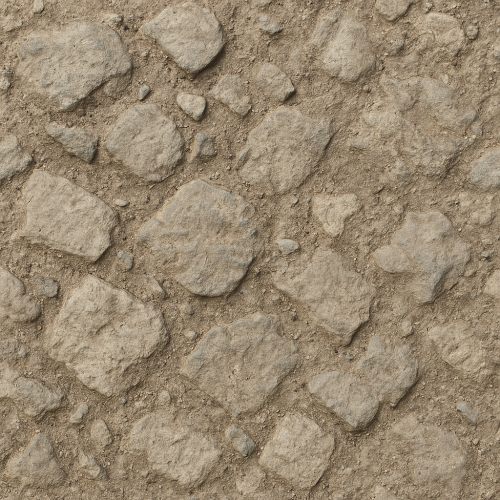
Dynamic weathering represents a pivotal advancement in the evolution of physically based rendering (PBR) workflows, fundamentally shifting how artists and technical directors approach the creation of materials for 3D environments. Traditional PBR textures, while robust in simulating accurate light-material interactions through carefully curated albedo, roughness, normal, ambient occlusion (AO), height, and metallic maps, often remain static artifacts. They capture a single moment in time—whether pristine or pre-aged—failing to convey the subtle and continuous transformations that surfaces undergo in real-world settings. Introducing dynamic weathering into seamless PBR textures not only elevates visual fidelity but also enhances environmental storytelling by enabling materials to react responsively to temporal and contextual stimuli, a necessity for immersive games, architectural visualization (archviz), and visual effects (VFX).
At its core, dynamic weathering encapsulates the integration of time-dependent and environment-driven changes within the texture data, allowing materials to evolve as conditions fluctuate. This evolution can manifest as water stains that accumulate after rainfall, dust and grime buildup in sheltered crevices, fading and erosion from prolonged sun exposure, or corrosion influenced by ambient humidity and temperature. Such effects are inherently complex because they involve layered physical processes and spatially variable impacts, demanding sophisticated authoring techniques that go beyond static map painting. The challenge lies in encoding these transformations in a manner that remains seamless, tileable, and computationally efficient while preserving the integrity of fundamental PBR attributes.
From an acquisition standpoint, capturing the subtleties of weathering dynamics begins with high-resolution, photogrammetric scans or photorealistic hand-painted textures, augmented by multispectral imaging where possible. These reference sources provide the necessary fidelity to discern micro-variations in surface roughness, subtle shifts in albedo tone due to oxidation or dirt, and precise normal perturbations from material degradation. However, raw data acquisition alone is insufficient; it must be systematically deconstructed into the canonical PBR map channels. Albedo maps must reflect not just base coloration but also nuanced discoloration patterns induced by weathering agents, such as rust’s characteristic orange hues or moss’s muted greens. Roughness maps require careful calibration: weathered patches often exhibit increased roughness due to surface pitting or particulate accumulation, whereas eroded areas may become smoother, necessitating spatially varying roughness values encoded via grayscale masks or procedural noise layers.
Normal maps play a critical role in conveying the micro-geometry alterations caused by weathering. Subtle indentations from acid rain or chipping edges from mechanical wear must be translated into precise normal perturbations to affect light scattering convincingly. Meanwhile, ambient occlusion channels serve to accentuate crevice darkening where moisture or dirt tends to accumulate, often dynamically modulated to simulate wetness or drying cycles. Height maps enable parallax and displacement effects, which are invaluable in simulating depth changes from erosion or crust buildup, contributing tangibly to the tactile realism of surfaces. Metallic maps, although typically binary or near-binary, must also adapt to environmental factors such as surface corrosion, which can transition metals into semi-non-metallic states, thereby influencing reflectivity and Fresnel responses dynamically.
Seamless tiling and micro-variation are paramount when integrating dynamic weathering into PBR textures. Weathering rarely occurs uniformly; instead, it follows stochastic and fractal patterns shaped by environmental exposure, material composition, and geometry. To avoid visual repetition that breaks immersion, textures must incorporate layered detail maps, procedural noise generators, and mask-driven blending techniques. These elements introduce subtle spatial variation in all PBR channels, ensuring that weathering effects such as dirt accumulation or paint peeling appear organic rather than tiled. Achieving seamlessness in dynamic contexts demands additional complexity: weathering progression must tile consistently without abrupt discontinuities in the temporal domain. This often involves leveraging tileable mask sets animated or blended over time, combined with runtime shader logic that interpolates weathering intensity based on environmental parameters.
Calibration and optimization of dynamic weathering textures involve iterative workflows tightly coupled with real-time engine feedback loops. Artists must validate that albedo brightness and saturation remain within physically plausible ranges to prevent energy conservation violations, especially as weathering alters surface reflectivity. Roughness values must be balanced to maintain believable BRDF behavior under varying lighting conditions. Normal and height maps require fine-tuning to avoid exaggerated geometric artifacts that can cause shading anomalies or shadow artifacts in engines like Unreal Engine or Blender’s Eevee and Cycles renderers. Profiling performance is crucial: dynamic weathering effects, if naively implemented, can introduce significant shading and memory overhead. Effective optimization strategies include channel packing (e.g., combining AO, roughness, and metallic into a single texture), runtime mipmapping tailored for fading weathering layers, and leveraging engine-specific material instancing to minimize draw calls.
Within Unreal Engine, dynamic weathering is often realized through Material Parameter Collections combined with World Position offsets and vertex painting, enabling localized and global weathering control driven by gameplay or environmental triggers. Custom shader nodes facilitate blending between base and weathered texture sets, modulated by curves or noise textures that simulate gradual change. Blueprint scripting can expose parameters for dynamic weathering intensity, enabling artists and designers to choreograph weather cycles or player interactions that affect material states. Similarly, Blender’s procedural node system allows for intricate weathering animations by layering noise textures with gradient ramps and vector displacement, with the added advantage of baking these animations into texture sequences or vertex color channels for real-time use in game engines.
Practical implementation of dynamic weathering demands a rigorous pipeline that integrates texture authoring tools such as Substance Painter, Designer, or Quixel Mixer with engine-specific shader development. Artists should adopt a modular approach, creating base PBR texture sets and supplementary weathering masks that can be layered and blended dynamically. This separation of concerns facilitates non-destructive editing and reusability across assets and projects. It also enables easier tuning of weathering progression curves and interaction with environmental parameters like humidity, temperature, or proximity to water bodies. When dealing with large-scale environments, texture streaming and level-of-detail (LOD) management must account for the additional complexity introduced by dynamic weathering layers, balancing visual quality with runtime performance.
In conclusion, dynamic weathering in seamless PBR textures constitutes a sophisticated frontier in material authoring that bridges static photorealism with responsive environmental storytelling. By harnessing time-based and environmental drivers to modulate the canonical PBR channels—albedo, roughness, normal, AO, height, and metallic—artists can create materials that breathe and evolve, enriching immersion and believability. Mastering this technique requires not only technical prowess in texture acquisition, decomposition, and shader programming but also an intimate understanding of the physical and chemical processes underlying weathering phenomena. When executed with precision and optimization in mind, dynamic weathering transforms 3D surfaces from mere visual assets into living components of their digital worlds, capable of conveying narrative depth and environmental authenticity across games, archviz, and VFX pipelines.
Capturing authentic weathered surface details in physically based rendering (PBR) textures is paramount to achieving convincing material realism in 3D environments. The intricate interplay of micro- and macro-scale features—ranging from subtle erosion and grime accumulation to pronounced rusting and cracking—must be encoded meticulously across the full suite of PBR maps. These include albedo, roughness, normal, ambient occlusion (AO), height, and metallic channels, each conveying distinct physical properties essential for accurate light interaction. Two principal acquisition methodologies dominate the workflow: photogrammetry-based scanning and procedural generation. Leveraging the strengths of both, while carefully addressing challenges of seamlessness, resolution, and engine compatibility, enables the creation of dynamic weathering textures that adapt naturally within real-time and offline renderers such as Unreal Engine and Blender’s Cycles.
Photogrammetry remains the gold standard for harvesting authentic weathering data, as it captures the complex, stochastic patterns that naturally occur on surfaces exposed to environmental forces. By photographing real-world weathered materials under controlled lighting conditions, high-fidelity texture maps can be extracted with millimeter-level precision. The workflow typically involves capturing a dense set of overlapping images from multiple angles, enabling the reconstruction of detailed geometry and surface reflectance characteristics via structure-from-motion (SfM) and multi-view stereo (MVS) pipelines. From the resulting mesh, displacement maps (height), normal maps, and ambient occlusion can be baked with high accuracy, preserving the subtle surface undulations and occlusions caused by corrosion pits, chipped paint, and accumulated dirt.
A critical aspect of photogrammetric acquisition is ensuring proper calibration and alignment of the captured data. Color calibration targets must be included in the shooting environment to normalize albedo maps against color casts introduced by ambient lighting variations. Similarly, consistent exposure and white balance across all images are essential to prevent artifacts in the albedo and roughness maps, which directly influence the material’s perceived weathering state. For roughness extraction, specialized setups using cross-polarized lighting or photometric stereo can isolate surface scattering properties, capturing microfacet distribution variations that convey weather-induced surface degradation such as surface pitting or matte grime layers.
One inherent limitation of photogrammetry is the challenge of generating seamless, tileable textures from finite real-world samples. Weathered surfaces are rarely uniform and often contain large-scale features that disrupt tiling, such as cracks or localized staining. To reconcile this, captured data must undergo careful post-processing. Techniques include edge blending, gradient-domain texture synthesis, and patch-based seamless cloning, which help in creating tileable textures without perceptible seams. Additionally, micro-variation can be introduced via procedural noise overlays or detail normal maps to break repetitive patterns that can emerge from tiling, thus maintaining visual authenticity at multiple scales.
Procedural generation complements photogrammetry by offering unparalleled flexibility in authoring weathering effects that adapt dynamically to varying environmental parameters or gameplay conditions. Procedural techniques rely on algorithmic noise functions, erosion simulations, and layered mask blending to produce customizable weathering patterns in real-time or during texture baking. For instance, procedural roughness maps can simulate gradual surface roughening due to oxidation or particulate deposition, while height maps can emulate progressive material degradation such as chipping or rust buildup. Procedural AO and curvature maps can further enhance the perception of depth and accumulated grime in recessed areas, critical for conveying age and wear convincingly.
The advantage of procedural methods lies in their parametric control and infinite scalability. Artists and technical directors can author modular weathering systems where exposure levels, directional wind erosion, or rainfall intensity dynamically influence the material’s visual state. This is particularly useful in engines like Unreal Engine, where material graphs and runtime shader parameters can drive on-the-fly weathering transitions without requiring multiple texture sets. Blender’s node-based shader editor similarly supports procedural layering and detail blending, allowing artists to maintain high-resolution outputs while experimenting with variations before baking out texture maps for deployment.
However, purely procedural weathering often lacks the nuanced randomness and irregularity found in nature, which can render materials somewhat artificial if not carefully tuned. Hence, a hybrid approach that integrates photogrammetry-acquired base textures with procedural overlays and modifications yields the richest results. Starting with a high-resolution scanned base albedo and normal map, procedural masks can selectively modulate roughness and height channels to simulate evolving weathering states. For example, a photogrammetric rust base can be augmented with procedural noise-driven pitting and flaking to introduce additional micro-variation and break tile repetition. This fusion ensures that the underlying material retains authentic spatial detail while gaining the adaptability and parametric control afforded by procedural generation.
Maintaining seamlessness and high resolution in these combined workflows requires meticulous attention to texture resolution and UV layout. Photogrammetric captures often produce extremely high-resolution textures (4K to 8K and beyond), which may be downsampled or tiled for performance optimization. When integrating procedural elements, it is essential to match their resolution and mapping space to avoid blurring or misalignment artifacts. Utilizing UDIM or trim sheet workflows can help distribute high-detail weathering over large assets while maintaining consistent texel density. Additionally, baking procedural details directly onto photogrammetric bases can lock in combined effects, reducing shader complexity at runtime.
Optimization for real-time engines demands balancing texture fidelity with memory and performance constraints. In Unreal Engine, the use of virtual texturing and texture streaming allows efficient handling of large weathering texture sets, enabling detailed materials without exorbitant VRAM costs. Material instances and parameter collections can control procedural weathering intensity dynamically, while runtime texture blending can further enhance realism. Blender, while primarily an offline renderer, benefits from baking combined procedural and scanned weathering into PBR maps for game asset export or real-time previews using Eevee.
Practical authoring tips include maintaining consistent lighting and scale references during photogrammetry sessions, capturing multiple weathering stages for temporal blending, and designing procedural masks with input from curvature and ambient occlusion maps to localize effects realistically. When compositing, leveraging high-bit-depth image formats (EXR or TIFF) preserves subtle height and roughness gradations critical for believable weathering. Finally, iterative testing within target engines is indispensable to fine-tune texture filtering, mipmapping, and shader parameters that influence the perceived quality of weathered materials under dynamic lighting and environmental conditions.
In summary, the acquisition of weathered surface details for seamless PBR textures thrives on an informed interplay between photogrammetric authenticity and procedural adaptability. By harnessing the precise capture of real-world aging phenomena and augmenting them with flexible algorithmic enhancements, artists and technical directors can craft richly detailed, high-resolution weathering textures. These textures not only elevate visual fidelity but also empower dynamic environmental storytelling within modern 3D pipelines, from Blender’s robust authoring environment to the real-time prowess of Unreal Engine.
Creating weathering maps that convincingly convey the physical and chemical transformations of materials exposed to environmental forces is a cornerstone of realistic PBR texturing for dynamic 3D environments. The process demands meticulous attention to the interplay between multiple texture channels—albedo, roughness, normal, ambient occlusion (AO), height, and metallic—and their evolving characteristics under weathering influences such as UV degradation, moisture, abrasion, and oxidation. Achieving a seamless, physically plausible representation of weathering hinges on an integrated approach to acquisition, authoring, calibration, and optimization tailored for modern rendering engines like Unreal Engine and Blender’s Cycles/Eevee.
Starting with the albedo map, weathering effects manifest primarily as chromatic shifts, surface staining, and localized fading or discoloration. Unlike simple dirt overlays, authentic weathering requires a nuanced capture of spectral changes driven by prolonged exposure to sunlight, water runoff, and particulate deposition. For natural materials like wood or stone, this entails an albedo map that integrates subtle bleaching, moss growth hues, or mineral deposits while maintaining the base material’s color fidelity. Acquisition often begins with high-resolution photographs under controlled lighting, supplemented by multispectral imaging to isolate weathering-induced color shifts from intrinsic material tones. In authoring, layering procedural masks based on erosion patterns or moisture accumulation zones facilitates micro-variations that break uniformity and simulate natural randomness. Critically, these maps must be linearized and gamma-corrected appropriately to preserve energy conservation during rendering. When calibrating albedo maps for game engines, it’s imperative to avoid overly saturated colors that can result in non-physical brightness or energy spikes, thereby ensuring consistency with engine tone mapping and global illumination models.
The roughness map plays a pivotal role in dictating the microfacet distribution of the surface, directly influencing the perceived glossiness and specular highlights altered by weathering. Weathered surfaces typically exhibit heterogeneous roughness profiles—areas subjected to abrasion or polishing manifest lower roughness (glossier), while corroded or dirt-laden patches increase roughness due to micro-scale surface irregularities. Capturing this variability requires blending data-driven inputs such as photometric roughness from measured BRDF scans with procedural noise functions that model particulate accumulation or surface pitting. Authoring techniques often utilize curvature maps and cavity detection to enhance edge wear and recessed areas, reinforcing the tactile realism of weathering. To optimize roughness maps for engines like Unreal, it is advisable to employ 8-bit grayscale textures with subtle dithering to mitigate banding artifacts on smooth gradients, while ensuring the roughness values align with the engine’s physically based specular models—typically within a 0 to 1 range where 0 is mirror-like and 1 is fully diffuse.
Normal maps are indispensable for simulating fine-scale surface detail induced by weathering, such as micro-cracks, chipped paint, or granular erosion. Unlike height maps, normal maps encode directional perturbations of surface normals, amplifying light interaction without geometric complexity. Acquisition often involves photogrammetry or multi-light capture setups to extract high-fidelity normal detail tied to weathering features. In authoring, combining baked normals from high-poly models with hand-painted or procedural detail layers allows for controlled enhancement of weathering artifacts without overwhelming the base geometry. Implementing tangent space normal maps with precise channel packing ensures compatibility across rendering pipelines, especially when targeting multiple engines with differing normal map conventions. Calibration requires careful attention to the normal map strength parameter to avoid exaggerated shading artifacts that can break immersion. Additionally, blending weathering normal details with base surface normals must preserve the underlying material’s macro shape, thereby maintaining the integrity of silhouette and large-scale features.
Ambient Occlusion (AO) maps complement weathering by simulating diffuse shadowing within crevices and recessed areas where dirt and moisture naturally accumulate. Weathering-induced AO variations are often more pronounced, emphasizing the contrast between exposed and sheltered regions affected by grime buildup or biological growth. Generating AO maps ideally involves ray-traced occlusion baking from high-resolution meshes, capturing the nuanced shadowing that enhances the perception of depth and weathering severity. Authoring may incorporate manual adjustments to emphasize specific weathered zones, such as rust streaks or sediment deposits, through grayscale masks that modulate occlusion intensity. For real-time engines like Unreal or Blender’s Eevee, precomputed AO maps must be balanced against dynamic lighting to prevent overly dark shading that can obscure detail or disrupt PBR energy conservation. Integrating AO with other maps via channel packing or texture atlases can optimize memory usage without sacrificing the fidelity of weathering representation.
Height maps, though often underutilized, add critical parallax and displacement effects that accentuate weathering’s physical dimension, such as chipped edges, surface erosion, or raised corrosion. Height data, stored as single-channel grayscale textures, represents relative surface elevation and enables tessellation or parallax occlusion mapping in compatible engines. Acquisition involves either direct scanning of surface topology or derivation from photogrammetric point clouds, followed by meticulous cleanup to isolate weathering-specific height variations. In authoring, procedural noise and erosion algorithms simulate natural degradation patterns, while manual sculpting refines critical weathering features for visual impact. Calibration must consider engine-specific displacement scales to avoid exaggerated geometry deformation that can cause shadowing artifacts or silhouette distortion. Optimizing height maps for seamless tiling is paramount when weathering effects need to repeat across large surfaces without visible seams, often achieved through domain warping or gradient blending techniques.
The metallic map is arguably the most sensitive channel when depicting weathering, as it directly controls the metalness parameter that distinguishes conductive from dielectric surface behavior. Weathering processes such as oxidation, patination, or corrosion alter the metallic properties nonlinearly, often creating transitional zones between metallic and non-metallic states. Accurate metallic map creation requires a hard mask approach where weathered regions transition smoothly between 0 (dielectric) and 1 (metal), reflecting real-world material transformations. Acquisition can leverage hyperspectral imaging or reflectance measurements to discern oxidized metal from bare metal surfaces, supplemented by manual refinement to capture subtle gradients. Authoring demands precise control over edge blending to prevent abrupt changes that cause rendering artifacts or unnatural reflections. When integrating metallic maps into PBR workflows, it is crucial to maintain strict binary or near-binary values where appropriate, as many engines interpret intermediate values ambiguously, potentially breaking energy conservation. Calibration includes verifying that metallic values align with the albedo and roughness maps to ensure physically plausible reflectance behavior—oxidized metal areas should exhibit reduced specular intensity and altered albedo hue consistent with corrosion products.
Throughout the creation of these weathering maps, attention to tiling and micro-variation is indispensable for avoiding repetitiveness that breaks immersion in large-scale environments. Employing techniques such as detail masks, procedural noise layers, and multi-scale blending enhances the natural randomness inherent in weathering phenomena. Seamless tiling can be achieved through careful edge blending, use of gradient masks, and leveraging engine-specific features like Unreal’s virtual texturing or Blender’s node-based texture manipulation to introduce per-instance variation. Calibration across multiple maps ensures consistent weathering cues; for example, roughness increases should correlate spatially with albedo discoloration and normal map erosion details, reinforcing the perceptual coherence of weathering.
Optimization for target engines demands a balance between fidelity and performance. Compressing maps using formats such as BC7 or ASTC preserves critical details in albedo and normal maps while minimizing memory footprint. Channel packing strategies—combining roughness, metallic, and AO into single textures—reduce texture fetch overhead without compromising quality when maps share similar resolution requirements. Calibration workflows often involve iterative testing within engine environments, adjusting map intensities, and comparing renders under dynamic lighting conditions to validate that weathering effects respond realistically to environmental changes.
Ultimately, creating weathering maps that integrate seamlessly into physically based rendering pipelines is a multifaceted challenge that interfaces acquisition technology, artistic authoring, and rigorous calibration. Mastery over the subtle shifts in color, reflectivity, microgeometry, and material properties that weathering induces empowers artists and technical directors to elevate the verisimilitude of 3D environments, fostering immersion through textures that evolve and respond with authentic physicality.
FAQ
What is covered in this guide?
This guide explains Harnessing Dynamic Weathering Effects in Seamless PBR Textures for Realistic 3D Environments with practical notes for seamless PBR materials, texture setup, and production use.
Can I use these texture techniques in Blender, Unreal Engine, and Unity?
Yes. The workflow focuses on standard PBR maps and tileable materials that can be used in Blender, Unreal Engine, Unity, archviz, games, and VFX pipelines.
Where can I find textures for this workflow?
Use the AITextured texture library and the related texture links on this page to find seamless PBR materials and preview them before download.
Related Textures
 Procedural Dark Tree Bark PBR Texture
 Procedural Aged Oak Plank PBR Texture
 Seamless PBR Wood Planks Texture Featuring Natural Grain in 4K
 Seamless Wooden Facade PBR Texture in 4K Resolution
 Rustic Aged Wood Planks Texture for 3D Modeling and Rendering
 PBR Texture of Vertical Wooden Planks Wall
 Seamless PBR Wood Texture Featuring Vertical Natural Grain Patterns
 Natural Wood Logs Texture with Snow for 3D PBR