Mastering Halloween PBR Textures for Realistic Spooky 3D Environments
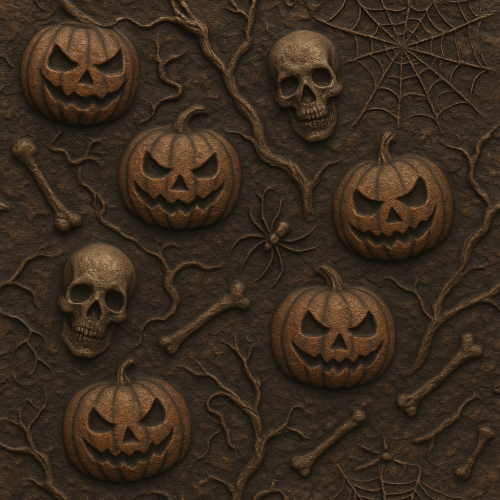
Capturing authentic Halloween surfaces for physically based rendering textures demands a meticulous approach to photogrammetry and 3D scanning, tailored to the specific material qualities and intricate details characteristic of seasonal objects. The challenge lies in accurately translating the visual and tactile complexity of surfaces such as cracked candle wax, weathered wooden crates, and the varied topology of pumpkin skins into high-fidelity PBR maps—namely albedo, roughness, normal, ambient occlusion (AO), height, and where applicable, metallic. Achieving this fidelity begins with the acquisition process, which must be optimized for resolution, lighting, and calibration, ensuring data integrity throughout the texture authoring pipeline and eventual deployment in real-time engines like Unreal Engine or offline renderers such as Blender’s Cycles.
A foundational consideration is the choice between photogrammetry and structured-light or laser scanning, each with distinct advantages and limitations. Photogrammetry excels in capturing subtle color variations and fine surface detail when multiple overlapping photos are taken under controlled lighting, making it ideal for organic materials like pumpkin skins and wax. Conversely, 3D scanning techniques often provide superior geometric accuracy, beneficial for hard surfaces such as aged wood, where capturing micro-geometry can enhance normal and height map generation. However, scanning often requires supplementary high-resolution photography to capture color data, necessitating careful alignment and calibration between datasets.
Resolution is paramount; Halloween-themed textures often involve intricate micro-variations, such as the fine fissures in dried wax or the rough grain of splintered wood. To capture these, camera setups should use high-resolution sensors paired with macro lenses when photographing small-scale details. Photogrammetry workflows benefit from capturing between 50 to 150 images per object or surface area, with significant overlap (typically 70-80%) and varied angles to reconstruct fine geometry and complex occlusions. For pumpkin skins, emphasizing cross-polarized lighting reduces specular highlights that can interfere with diffuse color capture, thereby yielding clean albedo maps. When lighting, diffuse, soft illumination minimizes shadows and highlights, ensuring detail isn’t lost or unevenly represented, which is crucial for generating accurate roughness and AO maps.
Calibration and color management during acquisition are critical to maintain consistency across maps. Utilizing calibrated color charts and gray cards within the capture environment allows for post-processing color correction, ensuring that albedo maps faithfully represent the diffuse reflectance without baked-in lighting or color casts. This step is essential because PBR workflows rely on physically accurate albedo inputs; any deviation can result in unrealistic material responses under dynamic lighting in engines like Unreal. Similarly, capturing reference images with known exposure values and white balance settings facilitates linear workflow adherence, enabling the precise extraction of roughness and specular reflectance data during texture authoring.
Converting photogrammetric reconstructions or scans into usable PBR maps demands careful post-processing. The dense point clouds or meshes generated must be cleaned of noise and optimized for UV unwrapping. In the case of organic Halloween surfaces, tiling is often necessary to extend textures across large areas, such as a weathered wooden fence or a pumpkin patch environment. Achieving seamless tiling with high-detail micro-variation requires generating texture sets with procedural or manual blending techniques that preserve unique surface features while avoiding obvious repetition. Tools such as Substance Designer or Quixel Mixer are commonly integrated into this workflow to enhance base scans with additional micro-detail normal maps or to refine roughness channels, ensuring subtle glossiness variations typical of wax or rough bark are maintained.
Normal map extraction benefits from multi-scale detail capture. High-frequency details like the ridges on pumpkin skins or the cracking patterns in wax can be derived from high-resolution height maps generated from photogrammetry meshes or displacement data, while broader shape information is captured from lower-resolution geometry. Combining these through layered normal map baking preserves both macro and micro surface details, enhancing the tactile realism of the material in real-time engines. Ambient occlusion maps, although sometimes baked from geometry, can also be generated from the photogrammetric mesh by simulating global illumination occlusion, providing critical shadowing cues that reinforce depth and texture roughness.
Height maps derived from photogrammetric data are instrumental in driving parallax occlusion mapping or tessellation shaders, especially in engines like Unreal Engine where dynamic lighting and camera movement expose surface relief. For Halloween textures, the subtle depth of wax drips or the shallow pits and bumps on pumpkin skins can be accentuated with these height maps to enhance visual complexity without costly geometry. When authoring height maps, it is advisable to normalize the data carefully to avoid artifacts in engine displacement, maintaining a balance between visual impact and performance constraints.
Metallic maps are generally sparse in Halloween-themed materials; however, for objects like rusted metal hinges on wooden crates or metallic candle holders, accurate scanning and color capture ensure that the metallic channel correctly represents conductive surfaces. Photogrammetry alone may not suffice for such materials, necessitating additional reference capture under controlled lighting to isolate specular and metallic properties. Authoring metallic maps involves thresholding reflectance data and combining it with roughness to simulate patina and corrosion faithfully.
Optimization is a continuous concern. Raw photogrammetry data is often unwieldy, with excessively large texture maps and dense meshes unsuitable for real-time use. Decimation and retopology workflows reduce mesh complexity while preserving key silhouette and surface features. Texture baking merges high-resolution detail into normal and height maps applied on optimized UV layouts, facilitating efficient tiling and mipmapping. Compression settings in Unreal Engine or Blender’s texture import pipelines must be tuned to retain critical detail without introducing banding or artifacts, particularly in roughness and normal maps, where precision significantly impacts material response.
In practical engine usage, physically accurate texture inputs derived from photogrammetry enable the exploitation of dynamic lighting and global illumination features. In Unreal Engine, for instance, leveraging the mesh distance fields and tessellation features with height maps can create convincing wax drips or wood splinters that react naturally to changing light angles. Similarly, in Blender, displacement modifiers driven by height maps combined with PBR shaders yield realistic renders that faithfully capture the organic complexity of Halloween surfaces. Real-time previews during authoring facilitate iterative refinement of texture maps, ensuring that the final materials respond correctly to both direct and indirect lighting scenarios.
In sum, capturing Halloween-themed PBR textures through photogrammetry and scanning is a multi-faceted technical endeavor that demands rigorous attention to equipment calibration, lighting strategy, data resolution, and meticulous post-processing. The goal is to produce texture maps that not only reproduce the visual intricacies of seasonal materials but also integrate seamlessly into physically based shading models, supporting dynamic lighting and material interactions in modern rendering engines. By adhering to these principles, artists and technical directors can create immersive, authentic Halloween environments with surfaces that convey tangible realism and atmospheric depth.
Creating convincing Halloween-themed PBR textures demands a meticulous blend of procedural generation and photographic inputs, carefully calibrated to evoke the unsettling, decayed ambiance characteristic of haunted environments. The challenge lies not only in replicating overt features such as cracked paint, moss-covered wood, or rusted metal but also in capturing the subtle, often chaotic imperfections and weathering effects that lend authenticity and depth to spooky materials. A rigorous PBR workflow, encompassing albedo, roughness, normal, ambient occlusion (AO), height, and where applicable, metallic channels, forms the backbone of these efforts.
Starting with albedo or base color, photographic sources provide a rich foundation. High-resolution captures of real-world subjects—peeling wallpaper, moldy stone, aged leather—serve as invaluable references. However, raw photographs rarely meet the needs of seamless tiling required for game engines or large surfaces. To address this, one must carefully isolate and remove lighting and shadow information through calibrated lighting setups during capture or post-processing techniques such as high-pass filtering and neutralizing color casts. This ensures the albedo remains a pure representation of the material’s inherent color, free from baked-in shadows or highlights that would conflict with dynamic lighting in engines like Unreal or Blender’s Eevee and Cycles.
Photographic textures often exhibit repetitive patterns when tiled, which can break immersion in close-up shots. To mitigate this, introduce micro-variation procedurally. For instance, blending multiple photographic albedo samples using noise-driven masks or curvature maps can disrupt uniformity. Techniques such as vertex color blending or triplanar projection within the engine further help to break texture repetition without noticeable seams. In particular, procedural noise layers—Perlin, Worley, or cellular noise—can be composited with photographic data to simulate dust, grime, or subtle discoloration variations across surfaces, essential for evoking the neglected and eerie character of Halloween materials.
Procedural authoring excels in generating weathering and imperfection maps that are otherwise difficult to capture photographically. Roughness and height maps benefit significantly from procedural layering. For example, roughness can be modulated by combining base roughness derived from photographic data with procedural masks simulating dirt accumulation, moisture, or surface scratches. This approach allows precise control over spatial variation, critical for materials like rusted iron or wet stone where glossiness fluctuates dramatically. Height or displacement maps generated procedurally can enhance surface relief beyond what normal maps provide, especially for cracked plaster or warped wood textures. Utilizing fractal noise patterns and erosion simulations mimics natural wear and tear, imparting a tactile quality that heightens realism.
Normal maps, whether baked from high-poly meshes or derived from photographic data, are integral to the perception of depth and detail in Halloween textures. When working with photographic inputs, converting grayscale height or bump maps into normals requires careful calibration to avoid exaggerated or flattened features. Procedural normal map generation can augment photographic normals by adding micro-scratches, pockmarks, or fungal growth textures through layered noise and directional vector manipulation. This composite normal map approach enriches the tactile complexity of the surface, crucial for materials like decayed wood or corroded metal where fine details contribute to the unsettling aesthetic.
Ambient occlusion maps play a vital role in reinforcing shadowed recesses and crevices typical of haunted surfaces. While AO can be baked from geometry, procedural AO layers can simulate grime accumulation in crevices or the shadowing effect of moss and dirt buildup. Combining baked AO with procedural masks driven by curvature and cavity maps allows artists to emphasize wear patterns consistent with environmental exposure, such as dirt settling in cracks or water stains along vertical surfaces. This layered AO approach ensures that subtle shadowing effects remain dynamic and responsive to lighting conditions within engines.
Metallic maps, though less common in Halloween materials dominated by organic and decayed surfaces, are essential for accurately representing rusted or corroded metals. Photographic metallic data often requires desaturation and thresholding to isolate metallic regions, which can then be refined procedurally to simulate patchy corrosion. By blending metallic and roughness channels, one can simulate the transition from exposed metal to oxidized, non-metallic surfaces. This interplay is crucial in materials like tarnished iron gates or weathered lanterns, where metallic properties vary spatially and temporally.
Tiling is a persistent concern for large surfaces such as haunted mansion walls or graveyard stones. Achieving seamless tiling without visible repetition necessitates a hybrid approach. Procedural methods can generate base noise and damage patterns that tile naturally, while photographic textures provide detailed micro-structure. Using engine tools like Unreal’s Landscape Layer Blend or Blender’s node-based shader system, artists can overlay procedural masks to blend multiple texture sets dynamically, breaking up monotony. Additionally, UV space optimization—such as using UDIMs or triplanar mapping—helps distribute texture resolution effectively, preserving detail without excessive memory overhead.
Calibration between photographic and procedural elements is critical to maintain consistent material perception under various lighting scenarios. This involves ensuring that albedo values are linearized and matched to the roughness and normal maps’ intensity. For example, controlling the perceived glossiness of a wet, slimy surface requires correlating lower roughness with specular highlights that complement the albedo’s saturation and value. Calibration is often performed iteratively using engine viewport previews under HDRI lighting setups, adjusting roughness and normal intensities to avoid unrealistic sheen or flatness. Proper gamma correction and color space management are equally important to prevent mismatches that could break immersion.
Optimization considerations are paramount when authoring Halloween PBR textures for real-time engines. Procedural layers, while flexible, can introduce computational overhead if not carefully managed. Baking procedural noise and masks into texture maps during asset preparation strikes a balance between visual fidelity and performance. When dynamic variation is required, leveraging engine-specific features like Unreal’s Material Functions or Blender’s node groups can modularize the shader code, enhancing maintainability and reducing shader complexity. Texture resolution should be tailored to the asset’s screen space footprint, with mipmaps generated to ensure smooth transitions and prevent aliasing artifacts.
In practical terms, workflows often begin with high-quality photographic scans corrected for lighting and perspective distortions, followed by procedural augmentation to introduce natural variation and weathering. Tools like Substance Designer remain popular for procedural map generation, while photogrammetry pipelines supply detailed albedo and normal data. Integration into Unreal Engine involves setting up physically based materials using the Metallic/Roughness workflow, ensuring that the base color inputs are sRGB-corrected and roughness maps inverted appropriately. Blender artists must pay attention to shader nodes’ color space settings, especially when mixing procedural and photographic inputs, to maintain PBR consistency.
Ultimately, the key to convincing Halloween PBR textures lies in the nuanced interplay between the organic irregularities captured through photographic sources and the controlled randomness introduced through procedural authoring. By layering imperfections—stains, cracks, moss, and dust—with calibrated PBR channels, artists can replicate the eerie and timeworn surfaces that define the haunted aesthetic. This synthesis not only elevates visual fidelity but also affords the flexibility necessary for diverse applications, from cinematic renders to interactive experiences, ensuring that spooky materials convincingly respond to light and environment in any engine.
Creating and calibrating PBR maps for Halloween-themed textures demands a precise understanding of how each map governs the interaction of light and materials within physically based rendering workflows. The objective is not merely to replicate surface details but to evoke the eerie, atmospheric qualities intrinsic to Halloween assets—whether that be weathered pumpkins, decrepit wooden doors, or spectral fabrics—while maintaining photorealistic fidelity under dynamic lighting conditions typical of engines like Unreal Engine and Blender’s Eevee or Cycles.
Starting with the BaseColor (albedo) map, its role is foundational yet nuanced. Unlike traditional diffuse textures, the BaseColor in PBR must exclude any baked-in lighting or shadows to preserve physical accuracy. For Halloween textures, this means capturing the subtle tonal variations and color shifts that define aged or organic materials. Consider a pumpkin’s skin: it should feature not only the saturated orange hues but also desaturated patches, bruises, and faint veining that hint at decay. This micro-variation prevents flatness and supports believable subsurface scattering effects when paired with translucency shaders. When authoring BaseColor maps, hand-painting or high-quality photo references are essential. Photogrammetry scans of real-world objects can provide a valuable starting point but often require desaturation and color correction to remove baked shadow information. Calibration involves ensuring that the BaseColor values remain within a physically plausible range, typically avoiding extreme saturation or brightness that could cause unrealistic energy conservation violations when combined with other maps.
Normal maps introduce surface detail by perturbing the surface normals to simulate microgeometry without increasing polygon count. For Halloween assets, this is critical in conveying texture complexity—whether it’s the fine ridges on a carved pumpkin, the rough grain of ancient wood, or the subtle weave of tattered cloth. Normal maps can be generated via high-poly sculpting in ZBrush or Blender’s Multiresolution modifier, then baked onto a low-poly mesh. Alternatively, height maps derived from photogrammetry or procedural textures can be converted to normals using software like Substance Designer or xNormal. The calibration of normal maps entails verifying the correct tangent space orientation and ensuring the normal intensity is balanced. Over-exaggerated normal strength can lead to unnatural lighting artifacts, while insufficient strength results in bland surfaces. In practice, small variations in normal map intensity should be fine-tuned in the engine’s material editor, aligning the bumpiness with the roughness and height maps to maintain coherent surface perception.
The Roughness map governs the microsurface scattering of light, controlling how shiny or matte the surface appears. This map is perhaps the most expressive for mood-setting in Halloween textures. A weathered graveyard stone might exhibit high roughness with subtle variations to indicate moss patches or erosion, whereas a glossy, wet-looking eyeball prop demands low roughness to evoke specular highlights and wetness. Roughness maps are often authored in grayscale, with white representing maximum roughness (fully diffuse reflection) and black representing smooth, mirror-like surfaces. Calibration involves ensuring that roughness values correspond to physically plausible surface conditions. Overly dark roughness can create unnatural specular spikes, breaking immersion. For Halloween assets, introduce micro-variations and noise within the roughness map to simulate imperfections like dirt, scratches, or moisture droplets, which are essential for breaking uniformity and enhancing realism. Tools like Substance Painter allow painters to procedurally or manually add these variations, which should be carefully balanced to avoid visual noise that distracts from the intended mood.
Metallic maps are generally less prominent in Halloween textures unless the object contains metal components, such as rusted iron gates or tarnished brass lanterns. The map is binary or near-binary, indicating whether a surface is metallic (white) or dielectric/non-metal (black). In cases where aged or corroded metals are represented, the metallic map can be combined with roughness and BaseColor maps to simulate oxidation or patina effects. Calibration here is straightforward but critical: misclassifying a surface’s metallicity can cause incorrect Fresnel reflections and energy conservation errors. When authoring metallic maps, ensure that transitions between metal and non-metal areas are clean, with edge wear simulated through roughness and height maps rather than metallic values to avoid unrealistic reflections.
Ambient Occlusion (AO) maps contribute to the subtle shadowing of crevices and cavities by simulating how ambient light is occluded in tight spaces. While modern engines calculate AO dynamically, baked AO maps remain valuable for static assets, enhancing depth perception and grounding objects within scenes. For Halloween textures, AO maps emphasize details like the recesses of carved pumpkin faces, the cracks in old wood, or the folds in fabric. AO maps are typically baked from high-poly models or generated from height maps using tools like xNormal, Substance Designer, or Blender’s baking utilities. Calibration involves adjusting the AO intensity so that it complements rather than overwhelms the lighting. Excessive AO darkening can crush shadow detail and reduce readability, while too subtle AO reduces the sense of volume. Additionally, the AO map should be multiplied with the BaseColor in the shader or combined in specific channels depending on engine requirements; for example, Unreal Engine often packs AO in the ambient occlusion slot or within the metallic map’s ambient occlusion channel for optimization.
Height maps, also known as displacement or parallax maps, provide grayscale data representing vertical displacement of surface geometry. For Halloween textures, height maps are instrumental in simulating deep carvings, cracked surfaces, and pronounced wrinkles, adding tangible depth beyond normal map illusions. Height maps are derived from sculpted high-poly meshes or generated procedurally, then refined manually to remove noise or unwanted artifacts. In engine usage, height maps enable parallax occlusion mapping or tessellation displacement, which are particularly effective in close-up shots to enhance realism. Calibration of height maps requires ensuring the displacement amplitude is physically appropriate; exaggerated displacement can cause silhouette popping or clipping, especially in tessellation workflows. It’s advisable to maintain a consistent scale across all Halloween assets to ensure uniformity in perceived detail. When combined with the normal map, height maps can reinforce fine details while larger-scale displacement creates macro-geometry variations.
Tiling and pattern variation are critical considerations across all PBR maps to prevent obvious repetition in Halloween scenes, which often feature multiple instances of similar props like pumpkins, tombstones, or wooden crates. Authoring seamless textures or employing procedural texturing techniques can mitigate tiling artifacts. Moreover, introducing micro-variation through noise masks or layered detail maps within the roughness and normal channels helps break uniformity. For example, adding subtle dirt accumulation along edges or randomizing the intensity of cracks and scratches can drastically improve perceived realism. In Unreal Engine, the use of material instances with randomized texture offsets or blend masks facilitates this variation without increasing texture memory overhead. In Blender, UV randomization and procedural noise textures can achieve similar effects.
Optimization is paramount for real-time Halloween scenes, especially when deploying on constrained hardware or VR platforms. The resolution of each PBR map should be balanced between detail and performance. BaseColor and Normal maps generally warrant higher resolution to preserve detail, while roughness, AO, and metallic maps can be lower resolution due to their grayscale nature and lesser perceptual sensitivity. Compression settings matter: for instance, using BC7 or ASTC formats preserves detail and reduces artifacts in color maps, while BC5 or BC4 are suitable for normal and grayscale maps respectively. It is also important to consider mipmap generation, especially for normal maps, to maintain correct normal vector interpolation at varying distances.
When importing into engines like Unreal Engine, proper texture setup and material configuration is essential. Unreal expects BaseColor maps in sRGB color space, while normal, roughness, metallic, AO, and height maps should be linear to ensure accurate shading. Unreal’s material editor allows for combining AO with roughness or metallic channels to reduce texture fetches. Additionally, height maps can be plugged into tessellation or parallax nodes, with adjustable parameters to fine-tune displacement strength dynamically. In Blender, careful node setup within the Principled BSDF shader is required, ensuring that BaseColor connects to the Base Color input, normal maps to the Normal input via a Normal Map node, roughness maps to Roughness, and so forth, with correct color space settings and gamma corrections applied.
In conclusion, the creation and calibration of PBR maps for Halloween textures necessitate a disciplined, physically informed workflow that accounts for the unique visual characteristics of spooky materials. Each map carries distinct information that, when accurately authored and combined, enables 3D engines to render surfaces with believable depth, reflectivity, and color behavior. Attention to detail in micro-variations, tiling, and calibration of intensity across maps ensures that the textures contribute meaningfully to the atmospheric storytelling integral to Halloween visuals, all while maintaining the technical rigor required for photorealistic rendering.
FAQ
What is covered in this guide?
This guide explains Mastering Halloween PBR Textures for Realistic Spooky 3D Environments with practical notes for seamless PBR materials, texture setup, and production use.
Can I use these texture techniques in Blender, Unreal Engine, and Unity?
Yes. The workflow focuses on standard PBR maps and tileable materials that can be used in Blender, Unreal Engine, Unity, archviz, games, and VFX pipelines.
Where can I find textures for this workflow?
Use the AITextured texture library and the related texture links on this page to find seamless PBR materials and preview them before download.
Related Textures
 Procedural Stamped Sidewalk Concrete PBR Texture
 Procedural Fine Asphalt Road PBR Texture
 Procedural Pitted Concrete PBR Texture
 Seamless Concrete Pebble PBR Texture in 4K Resolution
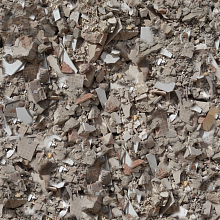 Seamless PBR Concrete Rubble Texture with Debris and Fragments
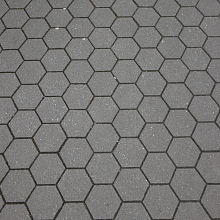 Seamless Hexagonal Concrete Tile PBR Texture 4K
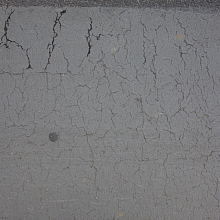 Cracked Asphalt Texture with Weathering